
Babies develop at different speeds, so your baby’s timeline may look different from another child’s. Still, many skills tend to appear in a familiar order, and watching that progress can help you understand what your baby is learning.
Development includes more than walking or talking. Movement, communication, thinking, and social-emotional skills all grow during the first year, often through small changes you notice during play, feeding, and everyday routines. You can also review these baby developmental milestones for a closer look at common signs of progress.
This guide follows key changes from birth to 12 months using milestone ranges, not strict deadlines, because a single late skill doesn’t automatically mean something is wrong. If your baby was born prematurely, use corrected age when checking milestones, since development is compared with the expected age after accounting for the weeks your baby arrived early. Next, we’ll look at what these stages may look like month by month.
Watch a baby milestones overview
Important Development Stages in Babies From Birth to 3 Months
During the first three months, your baby begins moving with more purpose and responding more clearly to people. Development still varies, but many babies show noticeable changes in head control, vision, sounds, and social connection by the end of this stage.
The CDC’s developmental milestone guidance can help you track common skills without treating them as strict deadlines. Your baby’s pediatrician can also help you understand progress, especially if your baby was born early.
Movement and Physical Skills at 2 to 3 Months
By 2 to 3 months, your baby’s neck muscles are getting stronger. During supervised tummy time, your baby may lift their head and upper chest for short periods. At first, the head may wobble or drop quickly, but repeated practice helps build control in the neck, shoulders, and upper body.
You may also notice more purposeful movement. Instead of waving randomly, your baby may move both arms and legs when excited, stretch toward a nearby toy, or kick during play. Their hands may open briefly instead of staying tightly closed, which gives them more chances to touch and explore.
Vision is improving, too. Your baby may watch you move across the room, look at a toy for several seconds, or follow an object briefly with their eyes. Slow movements and high-contrast toys are easier to follow than fast or distant objects.

Head control develops gradually, so brief lifts are meaningful progress. At this age, babies do not need to sit or crawl. Those skills come later, after they build more strength and coordination. For age-appropriate ideas, try these tummy time activities by age, always placing your baby on a firm, safe surface while awake and supervised.
Early Communication and Social Connection
Your baby is also learning through everyday interaction. They may calm when you pick them up or speak softly, look closely at your face, and turn toward a familiar voice. Eye contact can last only a few seconds, but those moments show growing attention and recognition.
Sounds often become more varied during this period. Your baby may make noises other than crying, including early vowel-like sounds or the beginnings of cooing. A social smile may appear when you talk, smile, or approach. Learn more about when babies start smiling and how reflexive smiles differ from social smiles.
Talking back and forth supports early language learning. Pause after your baby makes a sound, copy it, and respond with warm facial expressions. These simple exchanges teach your baby that communication involves taking turns.
How Baby Development Changes Between 4 and 6 Months
Between 4 and 6 months, your baby often shifts from mostly supported movement to active exploration. Stronger muscles make floor play more rewarding, while better vision and attention increase interest in people, toys, and everyday sounds.
Milestones may appear in a different order or take more time. Use the CDC’s 4-month milestone guide as a reference, not a deadline.
Rolling, Reaching, and Building Strength
During tummy time, your baby may push up on their forearms at about 4 months. By around 6 months, they may straighten their arms and lift the chest higher. These movements strengthen the shoulders, arms, back, and neck for later sitting and crawling.
Reaching becomes more purposeful, too. Your baby may swing an arm toward a toy, hold it when you place it in their hand, or bring both hands to their mouth. Place one soft, washable toy nearby during supervised floor play, then give your baby time to reach without moving it too far away.

Rolling often begins with a tummy-to-back roll because gravity helps with the movement. Some babies roll back to tummy first, while others rock, twist, and practice for weeks before completing either direction. You can read more about when babies typically roll over as you watch for these changes.
By 6 months, some babies sit briefly with support or lean forward on their hands for balance. A few may sit without help for short moments, but steady independent sitting usually comes later. Offer plenty of clear floor space, and never leave your baby unattended on a bed, couch, changing table, or other raised surface. Once rolling starts, falls can happen quickly.
Babbling, Recognition, and Back-and-Forth Play
Social communication becomes more active during this stage. Your baby may smile spontaneously to get your attention, laugh or chuckle when you play, recognize familiar people, and turn toward the sound of your voice. By 6 months, many babies also take turns making sounds, squeal, or blow raspberries.
Daily routines provide easy practice. Talk while changing a diaper, name objects during feeding, and read aloud with your baby close enough to see your face. After you speak, pause for several seconds so your baby has room to answer with a coo, squeal, smile, or movement.
Copying your baby’s sounds can turn a quiet moment into a conversation. Smile back, imitate a short coo, then wait again. Simple social games, such as peekaboo or singing the same song, help your baby enjoy the rhythm of taking turns.
The Big Learning Leap Between 7 and 9 Months
Between 7 and 9 months, babies often become more mobile, curious, and socially aware. They begin connecting movement with problem-solving: reaching for a toy may lead to rolling, pivoting, scooting, or pulling closer to furniture. These changes can happen in different orders, so use milestones as helpful guideposts rather than strict deadlines.
Crawling, Sitting, and Exploring With Both Hands
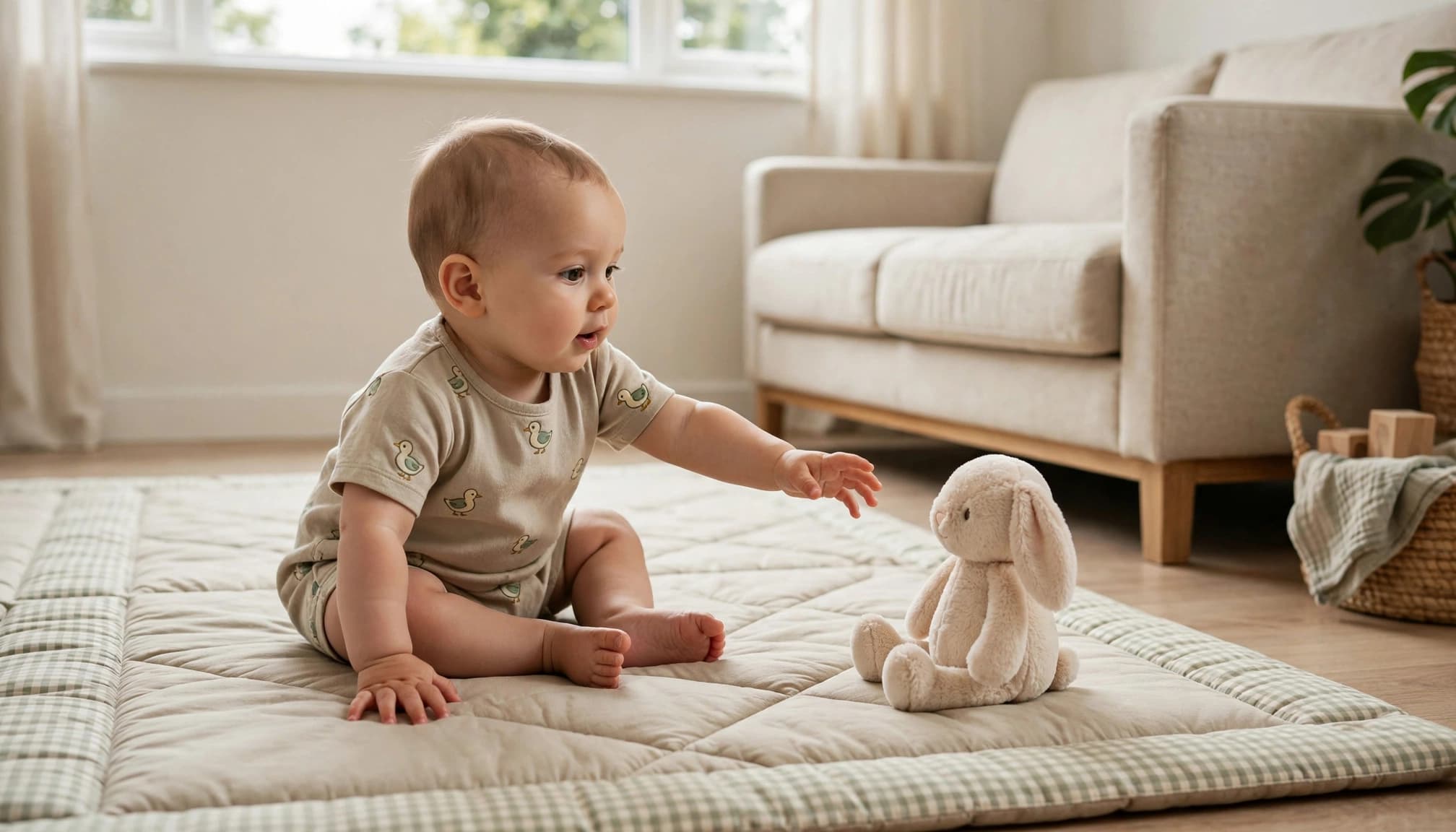
Many babies sit without support by around 9 months and may get into a sitting position on their own. For more detail, see these baby sitting milestones. Once sitting feels steady, your baby can use both hands to examine toys, bang objects together, and reach for something just out of range.
Movement may look different from one baby to another. Some babies crawl on their hands and knees, while others army crawl, scoot on their bottoms, roll across the floor, or pivot in circles. Some crawl later, and some skip traditional crawling altogether. A baby who finds another safe way to move forward is still practicing balance, coordination, and problem-solving.
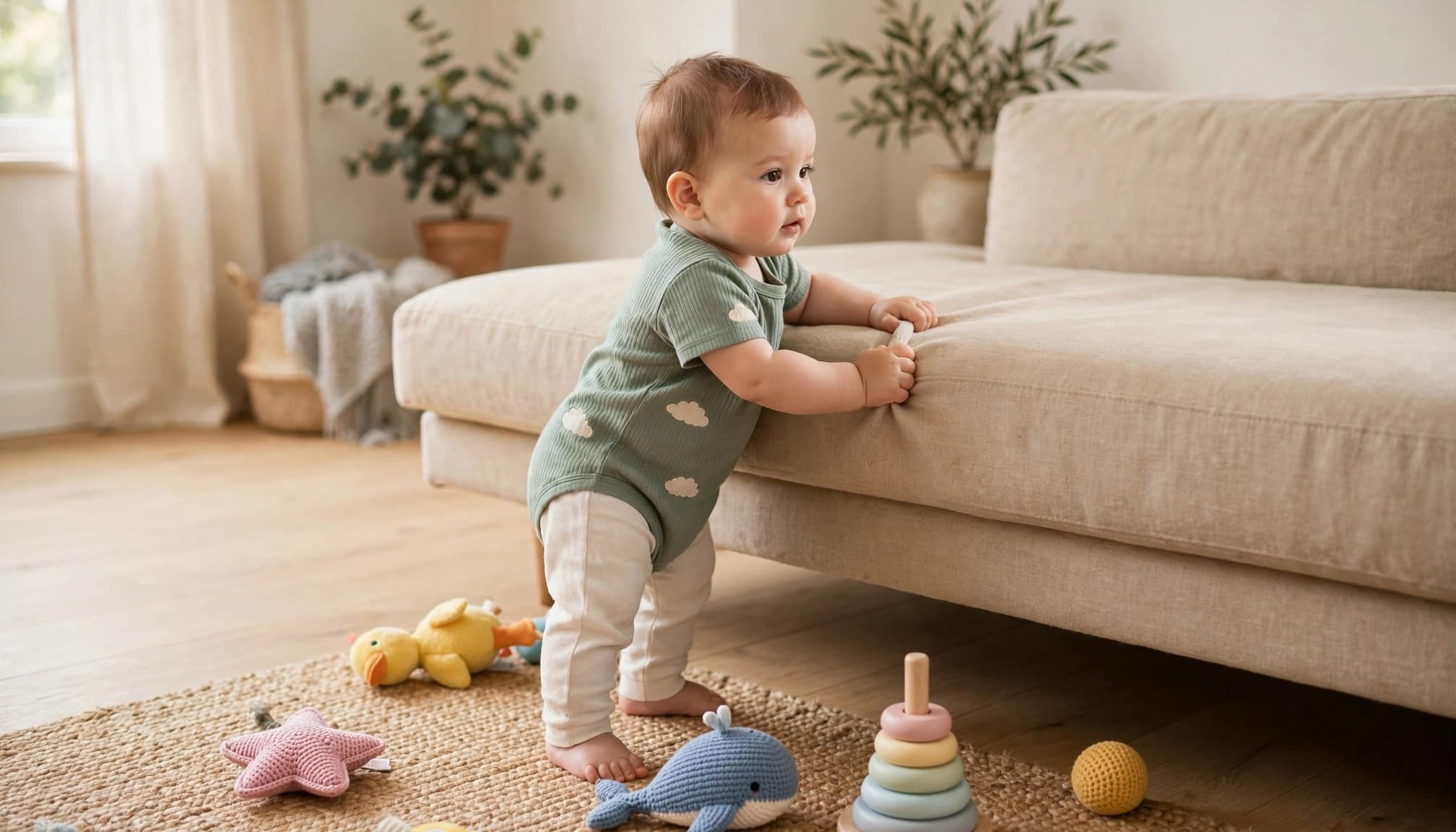
You may also see your baby pull up while holding a couch or sturdy table. Keep furniture stable, because a new ability to stand can appear before you expect it. Babies also begin transferring objects from one hand to the other and using their fingers to rake or pick up small pieces of food. These skills show improving hand control, but small items remain choking hazards.
Responding to Names, Gestures, and Hidden Objects
Communication becomes more varied during this stage. Your baby may look when you say their name, make several different sounds, and babble with changing tones. They may also lift their arms to be picked up, smile during peekaboo, or show clear reactions when you leave the room.
Social awareness grows alongside memory. A baby who becomes shy, clingy, or cautious around strangers is noticing the difference between familiar and unfamiliar people. The CDC’s 9-month milestones also include looking for a toy after it disappears from view. That search shows that your baby is beginning to remember that an object still exists, even when they can’t see it.
Babyproofing for New Mobility
As soon as your baby can roll, reach, crawl, or pull up, scan each room from floor level. Secure heavy furniture and televisions, cover electrical outlets, install safety gates near stairs, and lock cabinets containing cleaners, medicines, or sharp objects. Keep cords, small toys, coins, and food that could cause choking out of reach.
Never leave your baby alone near water or on a bed, couch, changing table, or other raised surface. A baby who could only lie still a few weeks ago may now reach the edge or pull against nearby furniture. Babyproofing needs regular updates because every new movement expands what your child can access.
What to Expect From 10 to 12 Months
The end of the first year often brings stronger communication, purposeful play, and growing independence. Your baby may understand more of your words, use gestures to get your attention, and find new ways to reach, hold, and investigate objects.
Milestones can appear in different orders. The CDC’s 12-month milestone guide offers a helpful reference, but it isn’t a deadline for every child.
First Words, Gestures, and Understanding Simple Directions
By around 12 months, your baby may wave goodbye, point toward something interesting, or lift their arms when they want to be picked up. They may call a parent “mama,” “dada,” or another special name. Babbling can also sound more varied, with changes in pitch and different consonant sounds.
Your baby may understand the meaning of “no” by pausing briefly or stopping an action. They may also follow a simple direction when you add a gesture, such as holding out your hand while saying, “Give it to me.” Understanding usually comes before clear speech, so don’t pressure your baby to repeat words.
Instead, respond to every attempt to communicate. Name the object your baby points toward, describe what you’re doing, and pause so they can answer with a sound, look, or gesture. Picture books, songs, and short back-and-forth conversations build language without turning play into a test. These language-building play activities for babies can also give you simple ideas for everyday practice.
Pulling Up, Cruising, and Using Small Objects
Physical development at this age often centers on standing with support. Your baby may pull up on a sturdy sofa, walk while holding furniture, and shift between nearby surfaces. Independent steps are not required by 12 months. Some babies walk soon after their first birthday, while others take several more months to gain the balance and confidence they need.
Hand control improves as well. Your baby may pick up small pieces between the thumb and pointer finger, place a block into a cup, or take a few sips from a cup without a lid while you hold it. Social games, such as pat-a-cake, peekaboo, and copying sounds, support purposeful play and shared attention.
Keep choking safety in mind as your baby explores finger foods. Offer only foods prepared in safe, age-appropriate shapes and textures, keep small objects off the floor, and stay within arm’s reach during meals. Secure furniture before cruising begins, since standing babies can pull down anything within reach. For guidance on walker-style products, review these safe baby walker tips.
How to Track Baby Milestones Without Comparing Babies
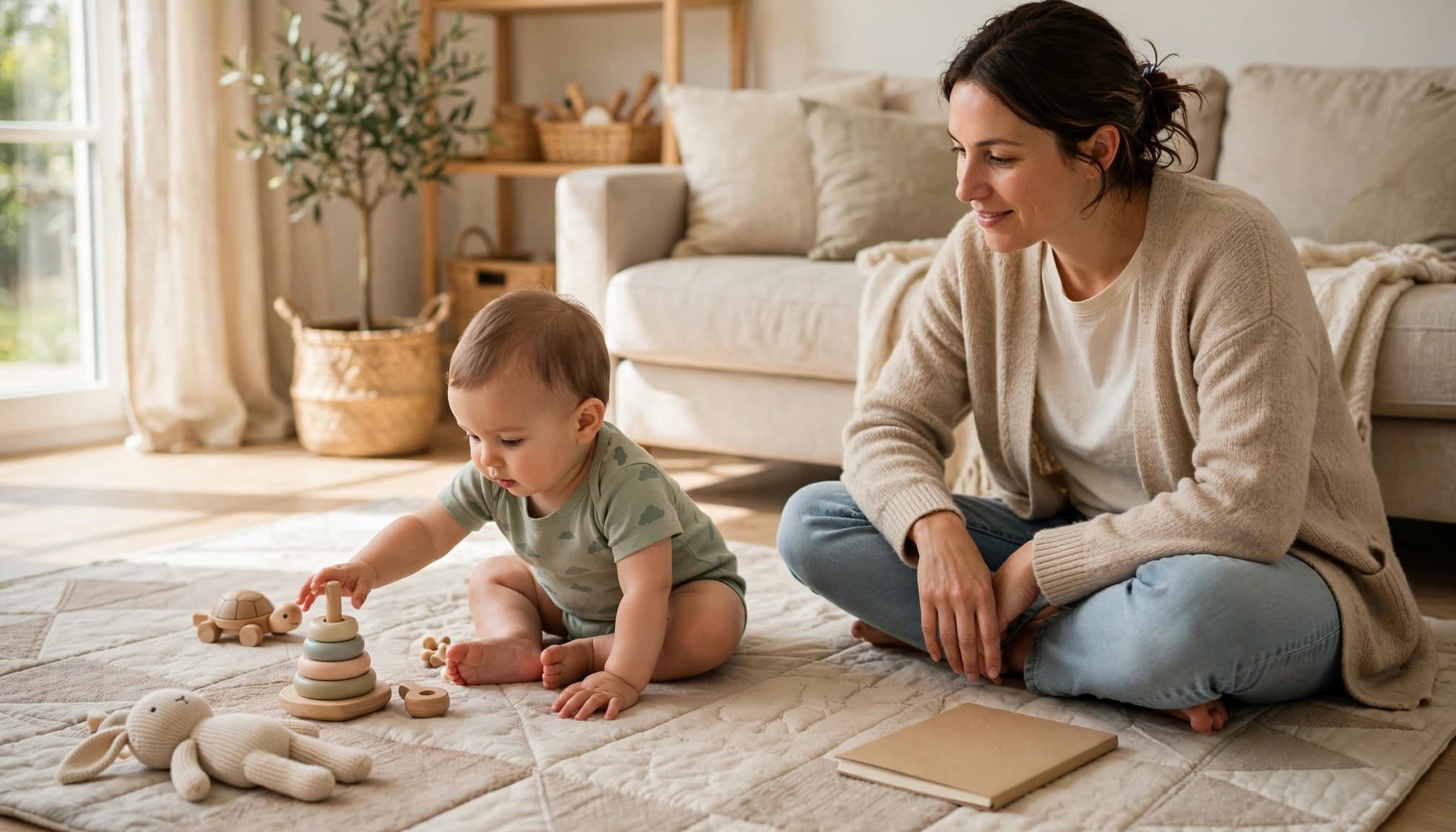
Milestone tracking should help you notice progress, not turn your baby’s development into a pass-or-fail test. Use a trusted checklist as a guide, then focus on what your baby is learning over time.
Why Milestone Ranges Are More Helpful Than Exact Deadlines
Milestone checklists describe skills that most babies can do by a certain age. They don’t promise that every baby will perform a skill on the same day. Sleep, temperament, health, opportunities to practice, and premature birth can all affect timing.
Instead of comparing your baby with a sibling, neighbor, or social media post, watch for steady progress. Write down new skills, such as reaching for a toy, making a consonant sound, sitting with less support, or turning toward your voice. Bring those observations to well-child visits so your pediatrician can see the broader pattern.
Check progress across all four areas:
- Social-emotional: smiling, enjoying interaction, or responding to familiar people.
- Language and communication: making sounds, babbling, responding to voices, or using gestures.
- Cognitive: looking for hidden objects, exploring toys, or solving simple problems.
- Movement: rolling, sitting, reaching, crawling, pulling up, or using both hands.
If your baby’s age falls between two checklist ages, use the younger checklist. For babies born more than three weeks early, use corrected age during the first year. Calculate it by subtracting the number of weeks your baby was born early from their chronological age. For example, a 4-month-old baby born 6 weeks early would be tracked at about 2 1/2 months corrected age. You can also review this guidance on adjusted age for premature baby milestones.
When to Talk With a Pediatrician About Development
Contact your pediatrician if your baby isn’t meeting several expected milestones, progress seems to stop, or your baby loses a skill they already learned. You also don’t need to wait if something about your baby’s development concerns you.
Near the first birthday, examples to discuss include not responding to their name, not babbling with consonant sounds, or not using gestures such as pointing or waving. You should also call about not bearing weight on the legs, not moving forward in any way, or showing no interest in social interaction.
A single missed milestone doesn’t diagnose a condition. Still, a cluster of concerns or any loss of skills deserves timely attention. Call between appointments if needed, share your notes or videos, and ask whether your baby needs developmental screening or additional support.
Conclusion
Your baby’s first year brings steady changes, beginning with head control, eye contact, and social smiles. Over time, rolling, sitting, babbling, and reaching show growing strength and communication. Next, many babies find new ways to move, such as crawling or scooting, then pull up, cruise along furniture, use gestures, and say early words. For a closer look at the earliest stage, review these first-month baby milestones.
Every baby follows a personal timeline, so use milestones as helpful guideposts rather than strict deadlines. Talk, read, sing, and play on the floor each day. Offer safe chances to reach, move, explore, and interact, and attend regular checkups so your pediatrician can follow your baby’s progress.
If your baby loses a skill, stops making progress, or you have ongoing concerns, contact the pediatrician promptly. Early conversations can clarify what you’re seeing and connect your family with support when needed.
Save pin for later


- Newborn Skin Peeling: Common Causes and Warning Signs - September 20, 2026
- Sticky Eyes in Babies: Causes, Treatment, and Warning Signs - September 20, 2026
- Baby Development Stages: Milestones From Birth to 12 Months - September 20, 2026