
Most babies start sitting with support around 6 months and sit on their own by about 9 months, but that timeline can move a little from one baby to the next. When do babies sit up? It happens in stages, not all at once, and that progress depends on tummy time, steady head control, and stronger trunk muscles.
If your baby is still wobbling or needs support, that’s often part of normal development. Gentle floor play and simple ways to help baby sit up can build strength without pushing your baby too fast. A short, helpful video can also make the steps easier to see, and this baby sitting-up tutorial is a useful visual guide.
If your baby isn’t gaining head control or still can’t sit with support by 6 months, or sit alone by 9 months, it’s smart to check in with your pediatrician. Next, let’s look at the typical ages and the simple ways you can help along the way.
The sitting-up milestone usually happens in a few stages
Babies do not go from lying down to sitting on their own overnight. Sitting builds in small steps, and each one gives you a better clue that your baby is getting stronger and more balanced.
The early signs usually start with head control, then move into supported sitting, then tripod sitting, and finally independent sitting. The CDC’s 4-month milestone checklist shows why that early neck strength matters so much. Some babies also show interest in sitting before they can do it alone, so curiosity is part of the picture too.
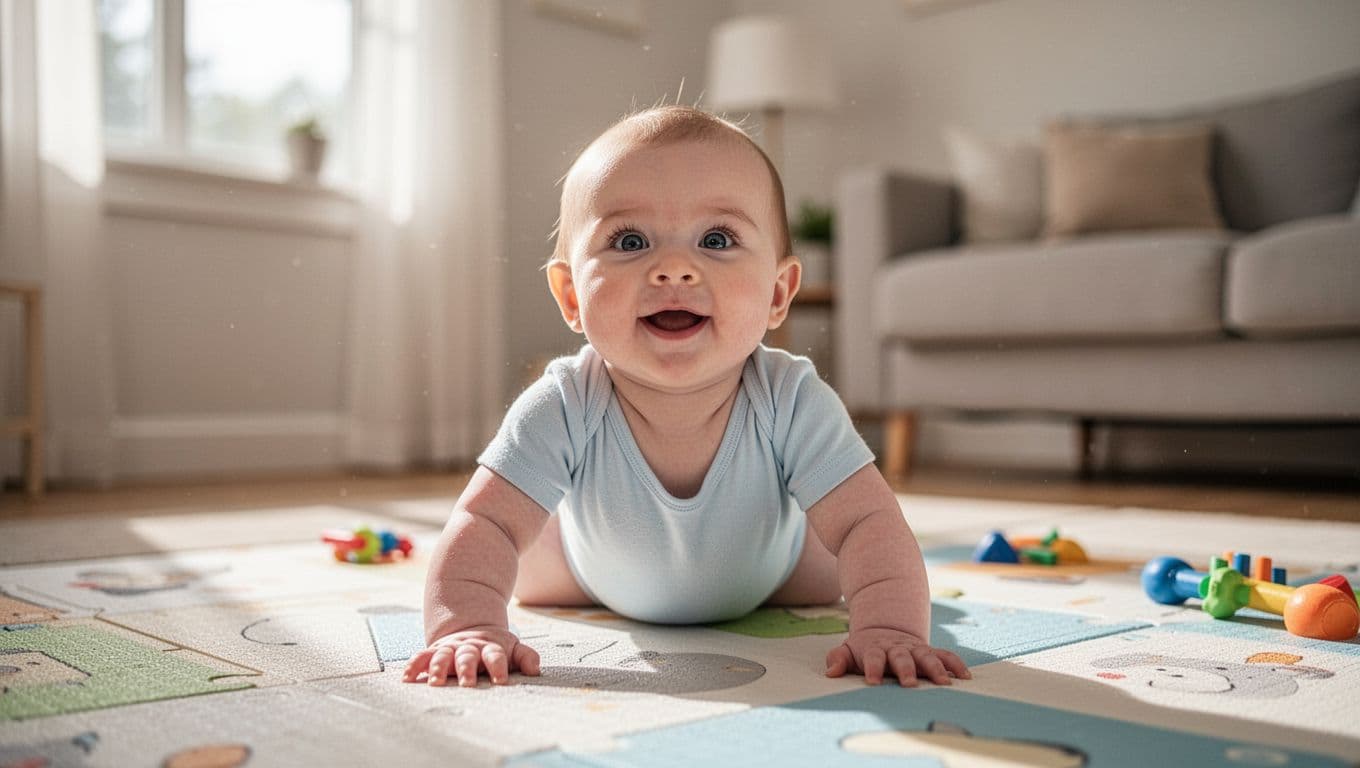
Early signs your baby is getting ready to sit
One of the first signs is steady head control. Your baby can hold the head up without a lot of wobbling when you hold them upright, and that matters more than trying to rush the skill.
You may also notice stronger pushing during tummy time, rolling, and more interest in reaching for toys while supported. Those are all signs that the neck, shoulders, and core are getting ready for the next step. If you want a related milestone to compare with, when babies start rolling over often fits into the same stretch of development.
Some babies also seem eager to sit before they can really balance. They may lift their chest, lean forward, or try to pull into a sitting position with help. That interest matters, because it shows they are practicing the right muscles even if they still need support.
What propped sitting and tripod sitting look like
Propped sitting is the stage where a baby sits with help and uses the hands or arms for balance. You might see this on your lap, between pillows, or on the floor with your hand nearby.
Tripod sitting comes next. In this position, the baby sits with the hands in front and the legs spread out for support, almost like a little triangle of balance. The posture is still wobbly, and that is normal.

Wobble is part of the process. A baby who topples after a few seconds is still practicing.
Many babies need help at first, and short practice sessions are enough. A soft floor, close supervision, and a few minutes of supported sitting can help your baby build confidence before moving on to steady independent sitting.
Typical ages for sitting up, from first support to sitting alone
Sitting usually arrives in stages, and the timeline is broader than many parents expect. A baby may steady well with help for a while, then balance in a tripod sit, then finally sit alone without that constant wobble.
The CDC’s developmental milestone list is a helpful reference for the ages most babies reach these skills. If you want one simple rule, think progress, not perfection, because the body builds this skill step by step.

A quick way to picture the range is to look at the main sitting stages side by side.
| Sitting stage | Typical age | What you may notice |
|---|---|---|
| Sitting with support | 4 to 6 months | Baby stays upright with help on your lap, with pillows, or with a hand nearby. |
| Tripod sitting | 6 to 7 months | Baby leans forward on the hands for balance and still tips easily. |
| Sitting alone | About 9 months | Baby sits without support, though a brief topple can still happen. |
Those ages are based on when most babies reach the milestone, so a little earlier or later can still be normal. Floor time, tummy time, and daily practice all help, and tummy time for rolling milestones can support the same core strength babies need for sitting.
How to think about timing if your baby was born early
If your baby was born preterm, corrected age gives a fairer picture of development. It simply means you count age by the due date, not just the birthday, so a baby born early is compared with babies at the same developmental stage.
A simple example helps. If your baby was born about 2 months early and is 4 months old on the calendar, development is often compared with a 2-month-old instead. That matters because sitting, head control, and other motor skills often follow the corrected timeline for a while.
The American Academy of Pediatrics explains that preemie milestones should be tracked with adjusted age until about age 2. That keeps you focused on your baby’s real progress, not just the date on the calendar.
For preterm babies, corrected age often gives the clearest view of what is typical right now.
Why some babies sit earlier or later than others
Some babies are eager movers, while others take their time. Personality plays a part, because a baby who loves floor play and reaching may practice sitting more often than a baby who prefers to stay curled up and content.
Other common reasons for variation include:
- Lots of floor time: Babies who spend more time on the floor often get more chances to build trunk strength.
- Prematurity: Preterm babies often reach sitting on a corrected-age schedule.
- Low muscle tone: Some babies need more time to build the stability sitting requires.
- Other developmental differences: If a baby has broader motor delays, sitting may come later too.
Boys and girls may also hit some milestones at slightly different times, but small gaps are usually less important than the size of the delay. A baby who sits a few weeks later than a sibling often just needs more practice, while a much bigger gap is the one worth bringing up with your pediatrician.
The main thing to watch is steady progress. If your baby keeps getting stronger, reaches for toys, and needs less support over time, that usually points in the right direction.
Simple ways to help your baby build the strength to sit
The goal here is simple: build the neck, shoulder, core, and balance strength that sitting needs. Short, frequent practice works better than long sessions, because babies learn best when they stay calm and alert.
If you want a few more play ideas for home, baby floor activity ideas can help you keep things fresh without making practice feel like work.
Use tummy time to strengthen the muscles behind sitting
Tummy time helps your baby lift the head, push up on the arms, and build upper body strength. Those same muscles help your baby stay steady once sitting starts to click.
Start small, then add more time as your baby tolerates it. Even a few minutes at a time can help, especially when you repeat it through the day. The benefits of tummy time include stronger neck, shoulder, and core muscles, which support later milestones like sitting and rolling.
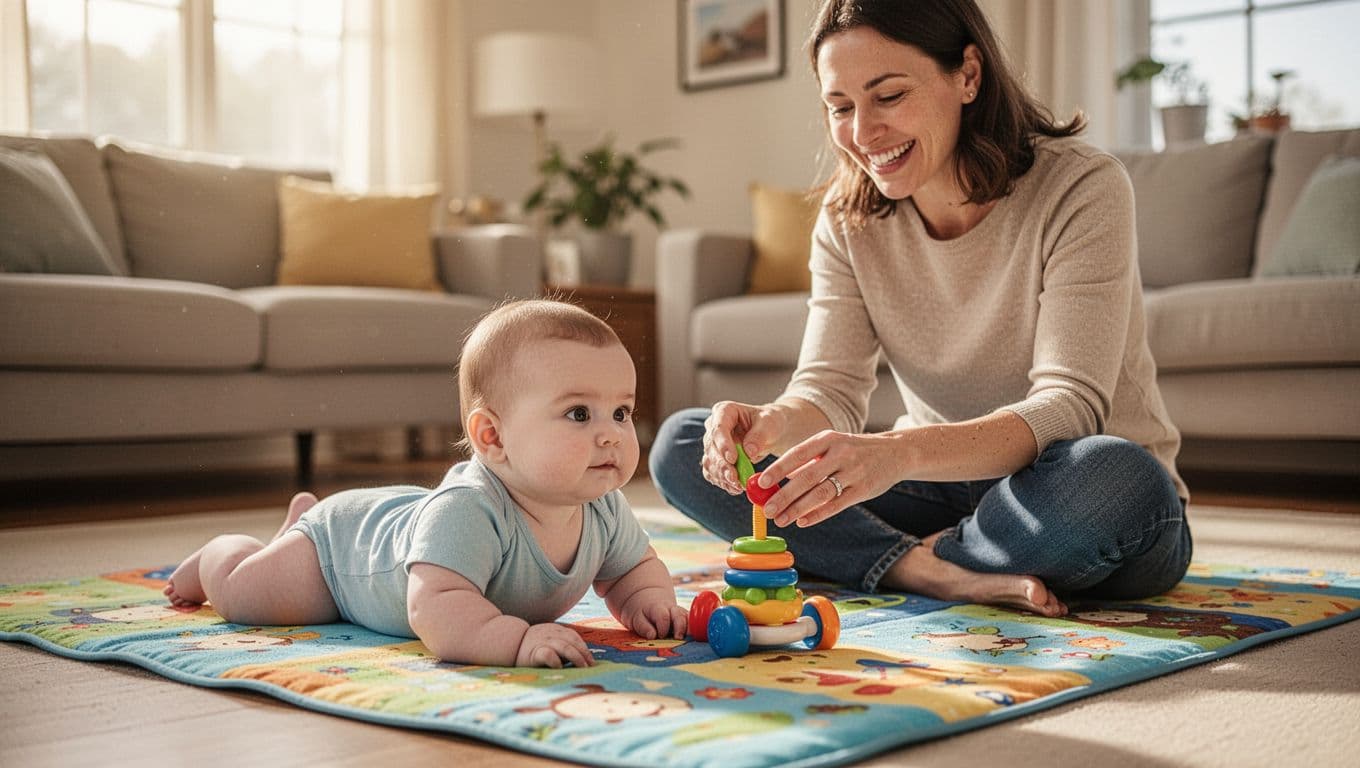
Make tummy time easier by getting down on the floor with your baby. Your face, voice, and eye contact can help a lot. If your baby needs a little extra support, try a rolled towel under the chest or start with tummy time on your chest first.
Short, happy practice beats one long session that ends in fussing.
Try supported sitting and short play sessions on the floor
Supported sitting gives your baby a safe way to practice balance before sitting alone. You can sit your baby between your bent legs, or use a firm floor surface with your hand close by for support.
Place a toy within easy reach so your baby leans, looks, and reaches forward. That simple reach helps the body learn how to stay centered and make small balance corrections.
Stay right next to your baby during these practice sessions. Never leave a baby unattended in a sitting position, especially on soft surfaces like beds, couches, or pillows. A quick tip-over can happen fast.
Build balance with simple movements and toy play
Once your baby is comfortable on the floor, use play to add gentle balance work. Rolling, reaching for toys, and shifting weight side to side all teach the body how to stay upright.
You can also help your baby move from the floor into sitting with support. That movement gives the hips, trunk, and shoulders a chance to work together, and it feels more like play than practice.
A few easy ideas fit into everyday routines:
- Roll a toy a short distance and encourage your baby to follow it.
- Hold a toy slightly to one side so your baby turns and reaches.
- Guide a side-lying roll into a supported sit.
These small moves matter more than they look. They help your baby learn balance in a natural way, one little shift at a time.
How much tummy time do babies need before they can sit better?
Tummy time builds the muscles babies use for sitting, rolling, and later crawling. It strengthens the neck, shoulders, arms, and core, so your baby can hold the head up and steady the trunk with more control.
A simple age-based guide helps, but it does not need to turn into a strict schedule. The goal is steady practice, not perfect timing.
| Age range | General tummy time goal | What it often looks like |
|---|---|---|
| Newborn to 1 month | A few short sessions each day | Chest-to-chest or a brief floor session |
| 1 to 2 months | Several short sessions, adding time slowly | More head lifting and less wobble |
| 3 to 4 months | Longer play periods spread through the day | Pushing up on forearms and turning the head |
| 5 to 6 months | Plenty of awake floor time each day | Reaching, pivoting, and rolling with more control |
The AAP tummy time recommendations support starting early with short, supervised sessions and increasing gradually. That approach works better than trying to squeeze in one long stretch.
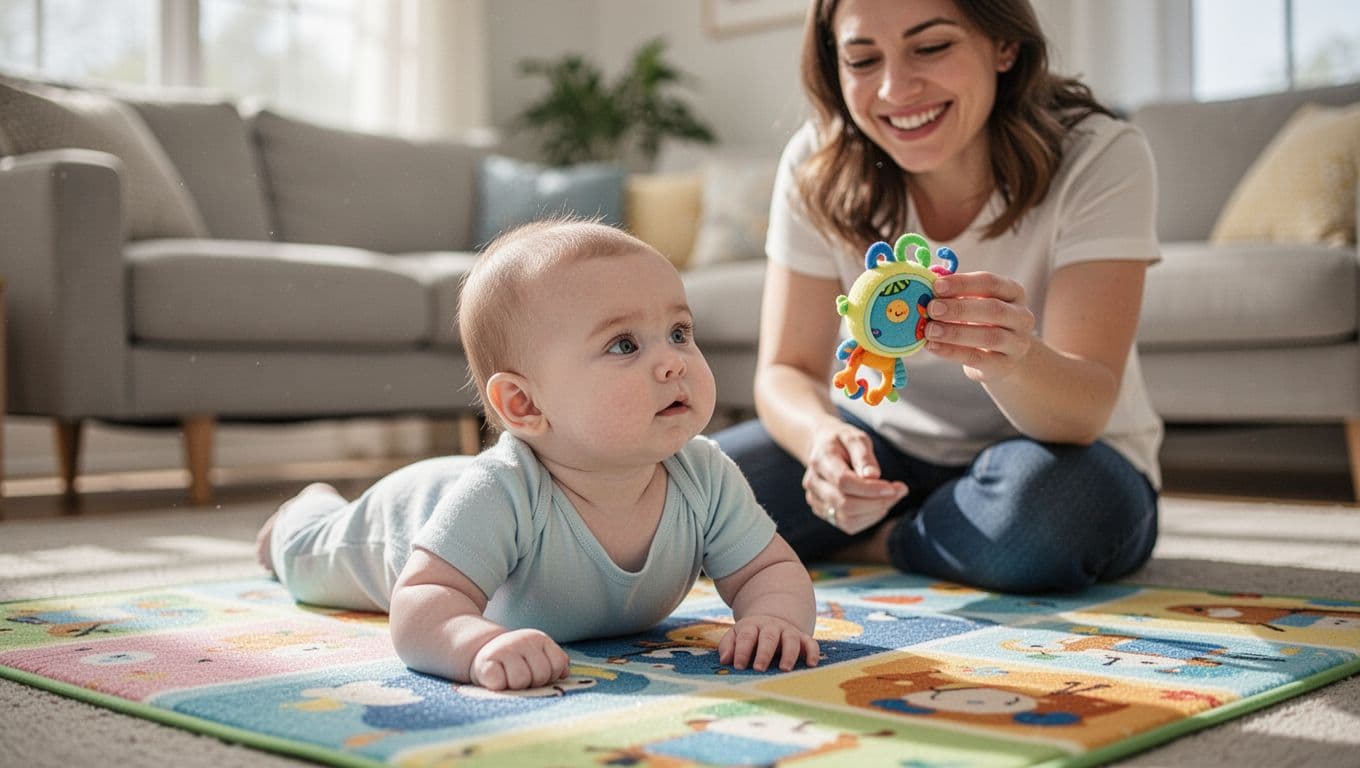
Short sessions are usually easier for babies to handle. After a nap, after a diaper change, or during a calm, alert window often works best. As your baby gets stronger, tummy time becomes less of a struggle and more of a normal part of play.
If you want more floor-play ideas, strength-building exercises during tummy time can make practice feel lighter and more varied.
What to do if your baby hates tummy time
Some fussing is normal. Tummy time asks babies to work against gravity, so a little protest does not mean something is wrong.
Start small and stay flexible. A minute or two at a time is enough in the beginning, especially if you repeat it through the day. Over time, most babies tolerate it better as their muscles get stronger.
A few simple changes can make a big difference:
- Try tummy time after a nap when your baby is rested.
- Use a mirror or toy at eye level for a reason to look up.
- Place your baby on your chest first if the floor feels too hard.
- Keep sessions brief, then stop before the crying builds.
- Lie down beside your baby so your face stays in view.

Chest tummy time is a good bridge for babies who dislike the floor. It still works the neck and shoulder muscles, but it feels more comforting. Then, as your baby settles in, you can move back to short floor sessions and build up from there.
The main sign to watch is progress. If tummy time gets a little easier each week, your baby is building the strength needed for sitting and, later, crawling.
When to call the doctor about sitting delays
Some sitting delays are just part of a baby moving at their own pace. Still, a few patterns deserve a call. If your baby has poor head control by 4 months, does not roll or lean on the arms by around 6 months, is not sitting with support by about 6 months, or is not sitting alone by 9 months, bring it up with the pediatrician.
Also watch for stiffness, floppiness, a strong one-sided preference, or any loss of skills. If your baby used to do something and now cannot, that matters. The CDC’s milestone checklist is a helpful reference, but your day-to-day observations matter too.

If something feels off, don’t wait for the next big milestone. Bring it up at the next well visit, or sooner if the delay feels clear.
Questions parents should ask at a checkup
A checkup is a good time to be direct and simple. You do not need a perfect list. A few clear questions can help your doctor decide whether your baby just needs more time or needs a closer look.
You might ask:
- Does my baby’s muscle tone look normal? This helps the doctor check for stiffness, floppiness, or uneven strength.
- Should we use corrected age? This matters if your baby was born early.
- Does my baby need early intervention? If there is a delay, early help can start sooner.
- Would physical therapy help? Some babies benefit from guided exercises and hands-on support.
- Are there other milestones we should watch? That gives you a clearer picture of the next steps.
It also helps to describe what you see at home. Mention whether your baby sits better with support, tips to one side, avoids rolling, or seems tired very fast during floor play. If you’re unsure what normal looks like, a broader guide on baby development red flags can make those warning signs easier to spot.
Bring up concerns during routine visits, but do not wait if the delay feels obvious. Early questions often lead to simple reassurance. If there is a real issue, they also help your baby get support sooner.
Conclusion
Sitting up is one of those milestones that builds in stages, and the timing can vary more than many parents expect. Some babies need more support early on, while others seem ready sooner, but both can still be on a normal path.
Regular floor play, tummy time, and short supported sitting sessions give babies the practice they need to build strength and balance. Small, repeated moments matter more than long workouts, and progress often shows up little by little.
If your baby is gaining control and getting steadier, that is a good sign. If the delay feels bigger than expected, or your instincts keep telling you something is off, check in with your pediatrician.
Save pin for later


- Can I Give A Half-boiled Egg To My Baby? - September 25, 2026
- What Are The Nutritional Benefits Of Eggs For Babies - September 25, 2026
- When Should I Avoid Giving Eggs To My Baby? - September 25, 2026