Choosing the right baby walker matters because safety, balance, and confidence all start with the right support. The best options help your baby practice movement without wobble, tip risk, or too much speed, which gives you more peace of mind during those first steps.
In 2026, both sit-in and push walkers are still popular, but the safest picks are stable, low to the ground, and easy to control. This guide focuses on walkers that help babies move with confidence, plus a curated list of 18 picks and a simple buying guide to help you choose with less guesswork. For a quick visual comparison, watch this baby walker review.
What Makes a Baby Walker Safe Enough for First Steps?
Safety comes before bells, lights, and extra toys. A baby walker should feel solid, move at a controlled pace, and use materials you trust near your child. If your baby is still building balance and trunk strength, helping baby learn to sit without injury can also support a safer path toward those first steps.
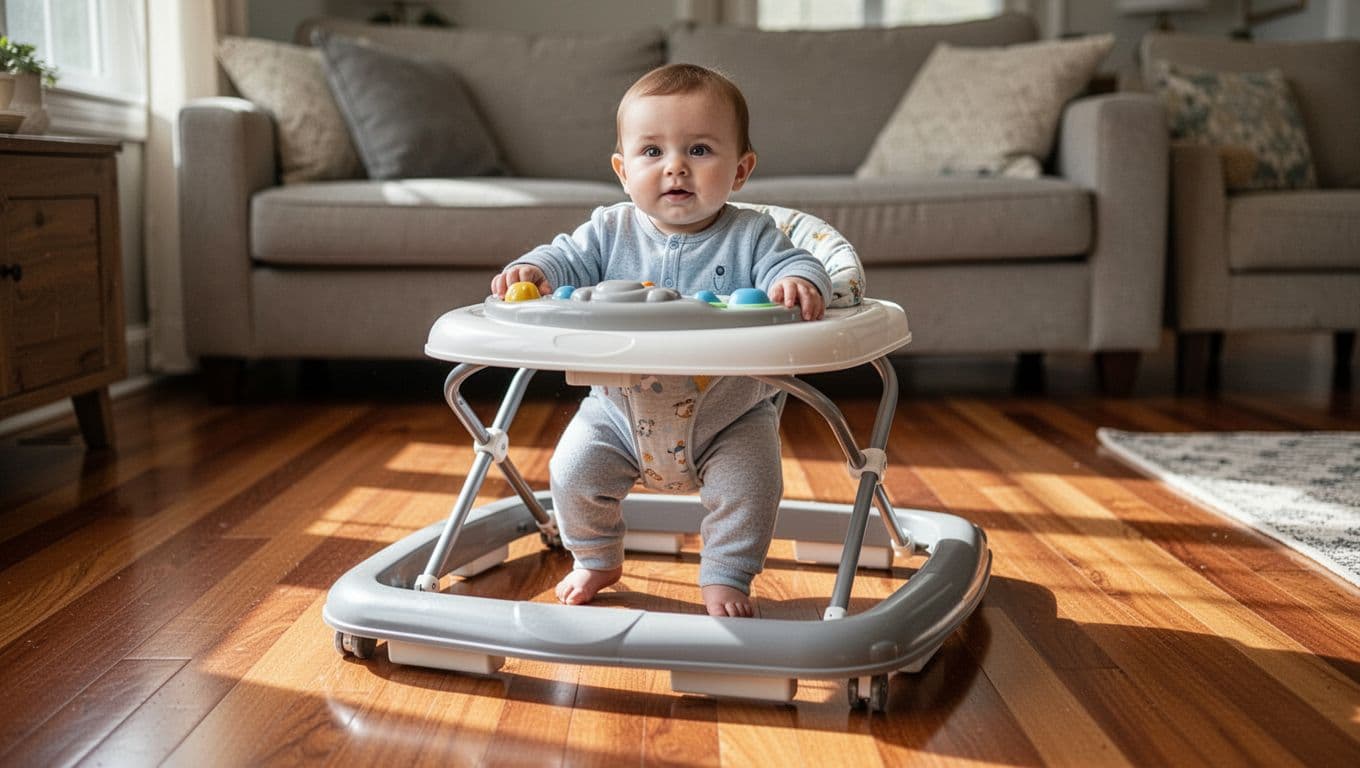
A walker can look fun and still be a poor choice. The safest ones are the ones that help your baby stay upright without slipping, tipping, or racing across a smooth floor.
Look for a wide base and steady frame
A wide base gives the walker a bigger footprint, which helps it stay planted. That matters because babies lean in different directions as they learn, and a narrow frame can wobble when weight shifts.
A steady frame also gives your child a cleaner sense of support. Instead of fighting a shaky seat or a flimsy stand, your baby can focus on balance, leg movement, and small steps.
When you shop, pay more attention to stability than to flashy extras. Toys, lights, and music are nice, but they do nothing if the walker tips easily. A strong frame with a broad stance is the part that helps most.
If the base feels light or narrow in product photos, keep looking.
Choose speed control and non-slip details
Smooth floors can make a walker move faster than you expect. That is why wheel resistance matters. A little drag helps the walker roll with control instead of sliding like a shopping cart on tile.
Look for rubber grips, non-slip feet, or wheels that are designed to slow down on hard floors. These details help the walker stay manageable in kitchens, hallways, and living rooms, where polished surfaces can turn a small push into a big glide.
It also helps to check how the walker behaves at corners and thresholds. A safer model should feel steady when your baby shifts weight or changes direction. If it starts to fishtail or roll too freely, that is a warning sign.
For extra peace of mind, pair the walker with a babyproofed space. Essential tips for babyproofing matter just as much as the product itself.
Check materials, finish, and safety certifications
The best baby walkers use non-toxic or BPA-free materials, smooth edges, and sturdy parts that do not pinch little fingers. You want a finish that feels clean and safe to touch, with no rough seams, sharp corners, or loose hardware.
Certifications also help narrow the field. In the U.S., the CPSC infant walker guidance is a useful reference point, and labels tied to ASTM, CPSC, EN, or JPMA can add confidence when they appear on the box or product page.
Keep the check simple:
- Non-toxic materials help reduce worry about chewing and daily contact.
- Smooth construction lowers the chance of cuts, snags, or pinched skin.
- Trusted safety marks show the walker has met a recognized standard.
A safe walker should feel boring in the best way. It should be solid, clean, and predictable, because those are the traits that matter when your baby takes those first wobbly steps.
The 18 Best Baby Walkers for Safe First Steps
These picks cover different styles, price points, and materials, so you can match the walker to your baby and your home. Some families want a stable sit-in model for supervised play, while others want a wooden push walker that slows things down and builds balance.
If your baby is still working on core strength, tummy time to build walking muscles helps set the stage for steadier steps later on.
Pick the walker that fits your floor first. A great model on carpet can feel too quick on tile.
Best overall baby walker for most families
The Joovy Spoon Walker is the balanced pick for most homes. It has a wide base, three height settings, and a large tray that wipes clean fast, which matters when snacks, drool, and toys all end up in one place.
Parents like it because it feels practical instead of fussy. The seat pad is easy to remove and wash, and the fold-flat design makes storage less of a headache.
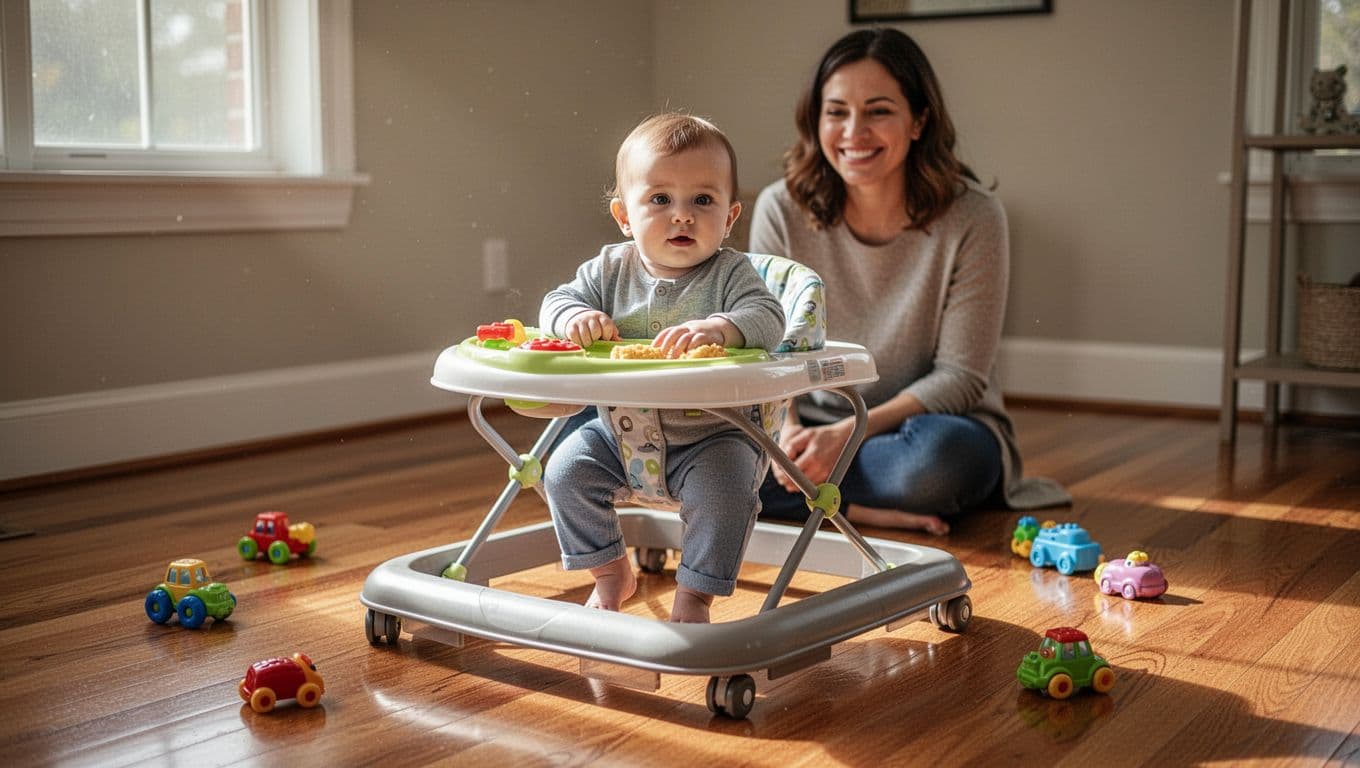
It stands out for general use because it does the basics well. The walker feels steady, the setup is simple, and the everyday cleanup is easy. If you want one model that covers comfort, safety, and convenience without extra clutter, this is the one to beat.
Best wooden push walker for natural balance practice
The Radio Flyer Classic Walker Wagon is the best fit when you want a wooden push walker that moves at a calmer pace. Its solid build gives babies support as they practice standing and walking, and the adjustable speed dial helps keep the wheels from rolling too freely.
Natural materials are a big part of the appeal here. Wood feels warmer in the home, and it tends to hold up well over time, which makes this a smart pick if you want something that lasts past the first walking stage.
This model also has a longer useful life than many plastic walkers. It can carry toys, books, or small treasures, so it keeps earning its place after the first steps feel more solid.
Best interactive push walker for play and learning
The VTech Sit-to-Stand Learning Walker is a strong choice for babies who need a little extra motivation. The activity panel adds lights, sounds, and hands-on toys, but the real value is how it supports movement while keeping the base wide and manageable.
That matters because entertainment should never overshadow stability. Here, the toy panel encourages standing and cruising, while the walker itself still gives your baby a steady place to push and practice.
It also grows with your child in a useful way. The removable panel can be used for floor play, so the walker stays relevant even when your baby is not ready to cruise yet. For busy babies, that kind of flexibility helps a lot.
Best premium wooden walker with a clean design
The HABA Walker is the premium pick for parents who want a wooden walker that looks clean and feels sturdy. Its beech wood build, rounded edges, and non-toxic finish give it a polished look without making it feel fragile.
This is the kind of walker that blends into the home instead of taking over the room. It feels solid in use, and the quieter roll is a plus if you don’t want a loud toy echoing across hardwood floors.
For a closer look at how sturdy wooden walkers compare in hands-on testing, BabyGearLab’s baby walker rankings are a useful reference. The HABA option makes sense if you want durability, safer materials, and a cleaner design that still works hard every day.
Best budget-friendly walker that still feels safe
The Safety 1st Ready, Set, Walk! DX is the value pick for parents who want the basics done right. It gives you a stable frame, height adjustment, and anti-tip details without padding the price with features you may not need.
Low cost should never mean weak stability, and this model gets that part right. It feels secure enough for supervised use, while still staying simple enough for families who just want a solid starter walker.
It also keeps the experience straightforward. You get a practical design, quick setup, and an easy-to-store frame, which is helpful if you need something that works without taking over your budget or your living room.
How the top walkers compare by age, style, and home setup
The best baby walker depends on where your baby is developmentally and where the walker will live in your home. A model that feels stable on carpet may roll too fast on tile, and a walker that feels supportive for a new sitter may feel bulky once your baby starts cruising.
This quick breakdown helps narrow the field fast:
| Baby stage | Best walker style | Best home setup |
|---|---|---|
| New sitter | Sit-in walker | Open, supervised play area |
| Pulling to stand | Push walker | Hardwood, tile, or low-pile carpet |
| Mixed-stage family use | Hybrid walker | Rooms with enough storage space |
| Small apartment or tight corner | Wooden push walker | Compact rooms and shared living spaces |
That simple split makes shopping easier. If your baby still needs more support, look at sit-in options first. If your baby is already standing and stepping along furniture, a push walker usually fits better.
Sit-in walkers versus push walkers
Sit-in walkers hold your baby in a seat, so they offer more support and can feel easier for younger babies who are still building balance. Push walkers work in a more upright way, which means your baby stands, bears weight, and moves with a more natural pattern.
That difference matters. Many parents prefer push styles because they encourage steadier movement and better posture, while sit-in models can be useful for short, supervised play when a baby needs extra support. For a closer look at that split, push toy walkers vs sit-in walkers shows why the standing style gets the edge for development.
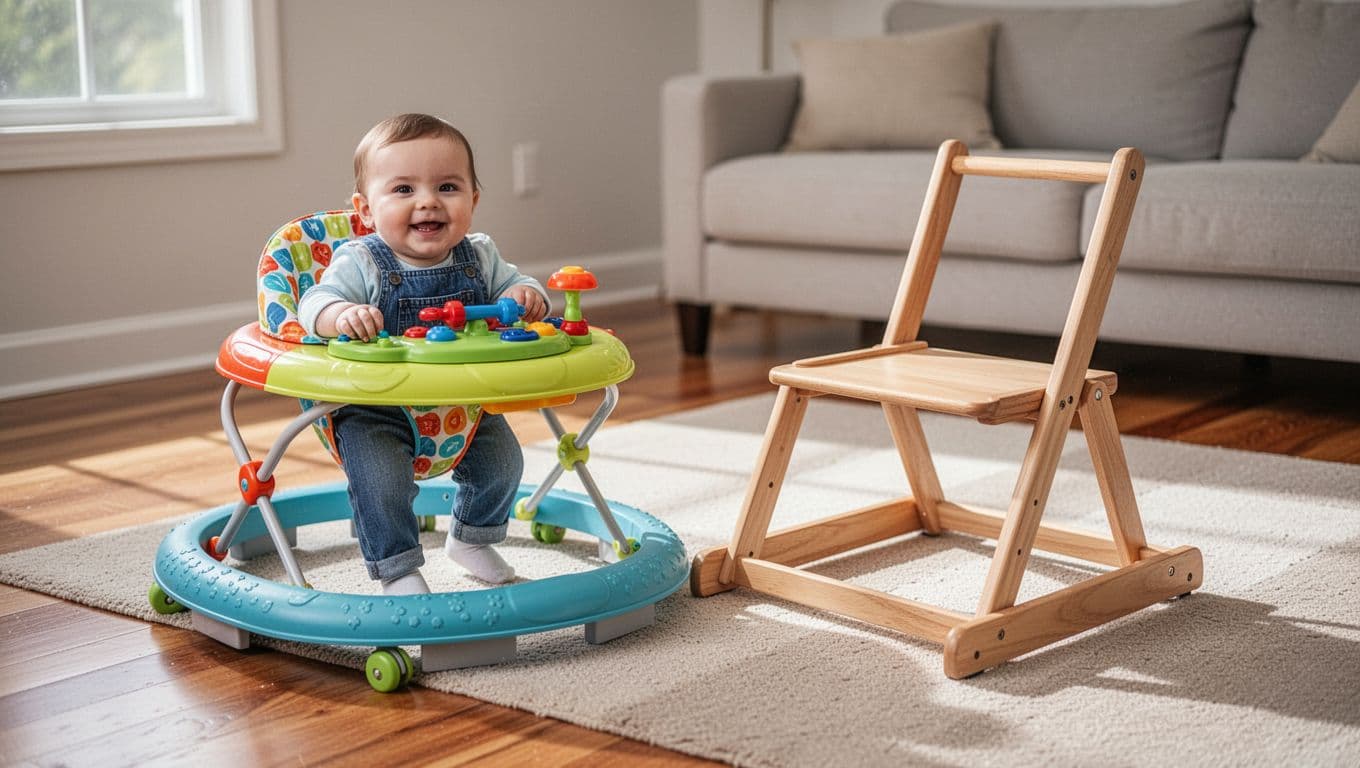
If your baby is still working on core strength, strengthening baby’s legs through play helps build the muscles that walkers depend on. Then, when your child is ready, a push walker feels less like a toy and more like a practice tool.
Hybrid walkers sit in the middle. They can switch between support modes, which sounds appealing, but they also take up more room and can feel like too much product for a small house.
Push walkers usually match a baby’s natural movement better, while sit-in walkers give more support for babies who are not ready to stand and push yet.
Which walkers work best for hardwood, tile, or carpet
Floor type changes everything. A walker with hard plastic wheels may glide too fast on hardwood or tile, while the same walker may feel stuck on thick carpet.
Wheel grip matters because it controls speed and traction. On slick floors, foam wheels or soft, grippy wheels often work better because they slow the walker down and help it stay steady. On carpet, larger wheels and a lighter frame usually roll more smoothly because they do not sink as much into the fibers.
That is why a good walker should match the room, not just the baby. Healthline’s baby walker roundup also points out that hardwood, tile, and carpet each change how a walker performs.
A quick floor guide helps:
- Hardwood works best with soft wheels or good resistance, so the walker does not race across the room.
- Tile needs extra grip because it can feel slick and unforgiving.
- Carpet calls for bigger wheels and a frame that can move without getting bogged down.
For mixed floors, choose a walker that feels controlled on the slickest surface in your home. That usually gives you the safest overall fit.
Best choices for small spaces and easy storage
If your living room doubles as a playroom, storage matters as much as style. A walker should help your baby move, not take over the whole room.
Foldable designs are the easiest win here. They tuck beside a couch, slide into a closet, or fit under a bed without much effort. Lightweight frames help too, because you can move them out of the way fast when it is time to clean up or switch rooms.
Wooden push walkers often work well in tight spaces because they have a smaller footprint and a simpler shape. They do one job well, which means less bulk and fewer parts to store.
When space is tight, look for these features:
- Fold-flat frames that store quickly after use
- Lightweight builds that are easy to carry from room to room
- Compact bases that do not block walkways
- Simple wooden push designs that stay neat in the corner
Hybrid walkers can still work in small homes, but they need more room than a basic push model. If your space is limited, the cleaner the design, the easier your day feels.
A walker that fits your home also gets used more often. That makes it a smarter buy than a bigger model you end up moving around all week.
How to choose the right walker for your baby’s stage
Choosing the right walker starts with your baby’s body, not the box. Head control, trunk strength, and interest in standing tell you far more than age alone. The best match feels supportive, moves at a controlled pace, and fits what your child can already do.
A quick guide makes the choice easier:
| What your baby is doing | Better match | Why it fits |
|---|---|---|
| Holds head up well, sits with support, and likes to stand | Sturdy push walker | Gives upright practice without forcing a seated position |
| Pulls up and cruises along furniture | Low-speed push walker | Matches balance work and side steps |
| Still wobbly with support and spends most of the day on the floor | Wait a little longer | Floor play builds the strength walker use depends on |
For families watching early milestones, when babies start rolling over is one of the first signs that core control is improving.
When a baby is ready to try a walker
A baby is ready to try a walker-style toy when head control is strong, sitting feels steady, and standing starts to look exciting. Pulling up, cruising along furniture, and briefly balancing without a full collapse are all good signs.
Some babies show these signs early, and others need more time. That pace is normal, so watch what your baby can do today instead of chasing a date on the calendar.
What matters most for babies under 1 year
For babies under 1, support matters more than extras. If you compare seated walkers, look for a snug seat, steady back support, and wheels that move slowly. If you choose a push walker, pick a low frame with enough resistance that it does not race ahead.
Short, supervised practice works best. The American Academy of Pediatrics says walkers do not help babies learn to walk, and HealthyChildren’s movement guidance points out the tipping risk as well. Every baby develops at a different pace, so your child’s balance and strength should guide the choice.
What parents should check before the first use
Before the first use, set up the space first and the walker second. A safe room matters as much as the product itself.
Start with the basics:
- Assemble the walker fully and check for loose parts.
- Clear floors of cords, toys, rugs, and sharp edges.
- Block stairways and keep doors to unsafe rooms closed.
- Confirm the weight limit and height settings before each use.
- Stay close the entire time, even during a short session.
For a practical safety checklist, CHOP’s baby walker safety tips is a useful reference. When the setup is right, you get fewer surprises and your baby gets a safer place to practice.
A few smart habits that make walker time safer
Even the best baby walker works better in a prepared space. Small habits matter here, because they lower the chance of slips, bumps, and sudden speed changes before they start.
The goal is simple: keep the walker area open, keep sessions brief, and check the product often. Those three steps make walker time calmer for you and easier for your baby to handle.
Create a safe play area first
Clear the floor before the walker comes out. Cords, toys, pet bowls, and loose rugs can all snag wheels or trip up a baby who is still learning how to move.
Block stairs with a gate and keep the walker away from bathrooms, kitchens, and sharp furniture edges. Hot stoves, sinks, and low table corners are not places for practice. A safe route should feel boring, open, and easy to scan at a glance.
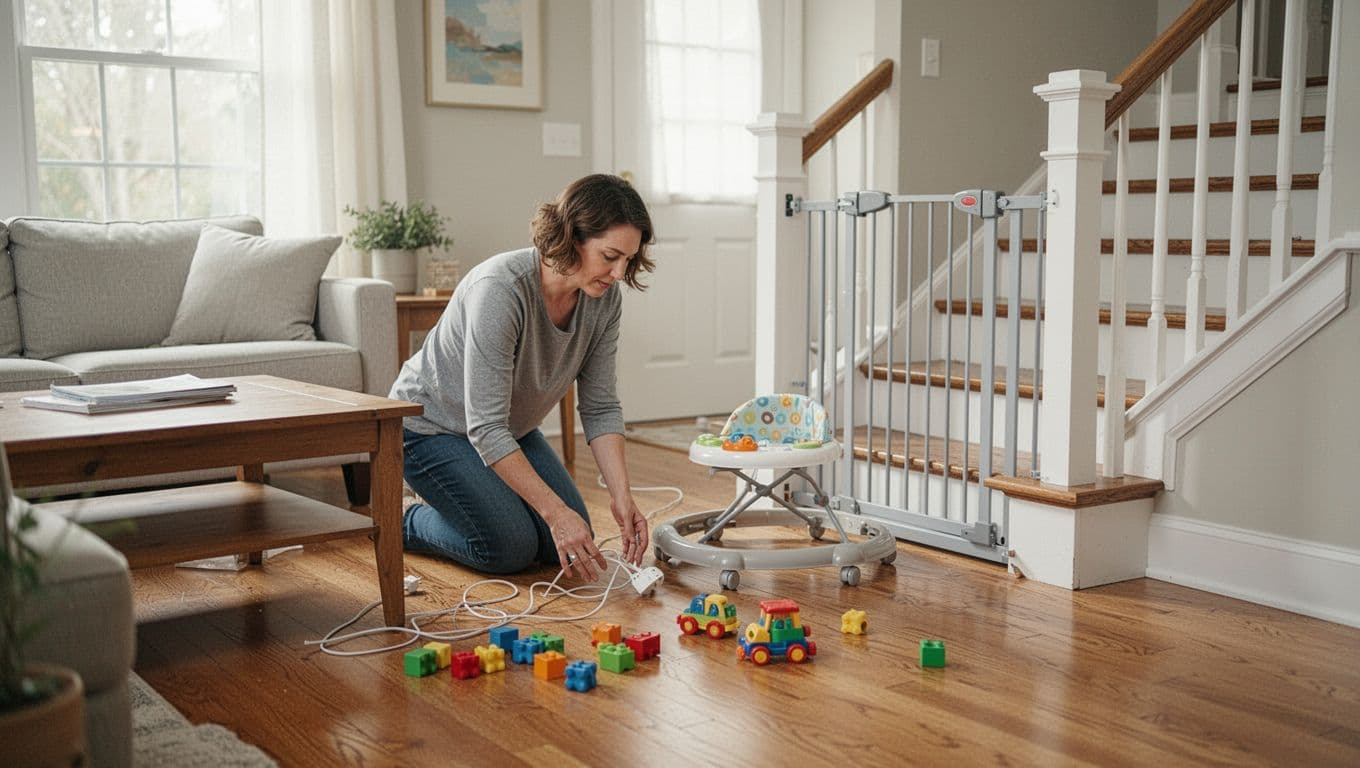
A good setup is the easiest safety upgrade you can make. If the room is ready, the walker has fewer surprises to roll into.
Keep walker time in one babyproofed room, not all over the house.
Keep sessions short and supervised
Walker time should feel like practice, not a long hangout. Short sessions work better because your baby stays fresher, and you stay focused on what the walker is doing.
Stay within arm’s reach the whole time. Babies can move fast in a walker, and adult eyes need to stay on them every second. That matters even in a room that feels safe.
A simple rhythm helps:
- Set the walker in one cleared area.
- Stay close and watch every move.
- End the session when your baby looks tired or frustrated.
Short bursts also keep the experience positive. Once your baby gets sloppy or restless, it’s time to stop and switch to floor play.
Watch for wear, loose parts, or fast wheels
Inspect the walker often so it stays safe over time. Wheels can loosen, trays can crack, and seats can stretch or shift with regular use.
Check the fasteners, wheel resistance, seat fabric, and tray locks before each session. If the walker starts rolling too fast, wobbling, or squeaking in a new way, stop using it until you figure out why.
For the most current product rules, the CPSC infant walker guidance is a useful reference. It covers the safety features walkers are expected to meet, including stability and stair protection.
A quick monthly check keeps things simple:
- Spin the wheels and feel for looseness.
- Press on the seat and tray to check for movement.
- Look over the frame for cracks or bent parts.
- Replace the walker if anything feels unstable.
A safe walker should stay predictable every time you use it. If it no longer feels steady, it no longer belongs in playtime.
Conclusion
The safest baby walker is the one that fits your baby, your floor type, and your home space. A wide base, controlled movement, non-toxic materials, and close supervision matter more than extra features.
That same focus keeps the choice simple. Pick the walker that feels steady in your room, moves at a calm pace, and supports your child without adding risk.
The best walker builds confidence during those first steps. It should help your baby practice safely, not rush development.
Save pin for later

- Can I Give A Half-boiled Egg To My Baby? - September 25, 2026
- What Are The Nutritional Benefits Of Eggs For Babies - September 25, 2026
- When Should I Avoid Giving Eggs To My Baby? - September 25, 2026