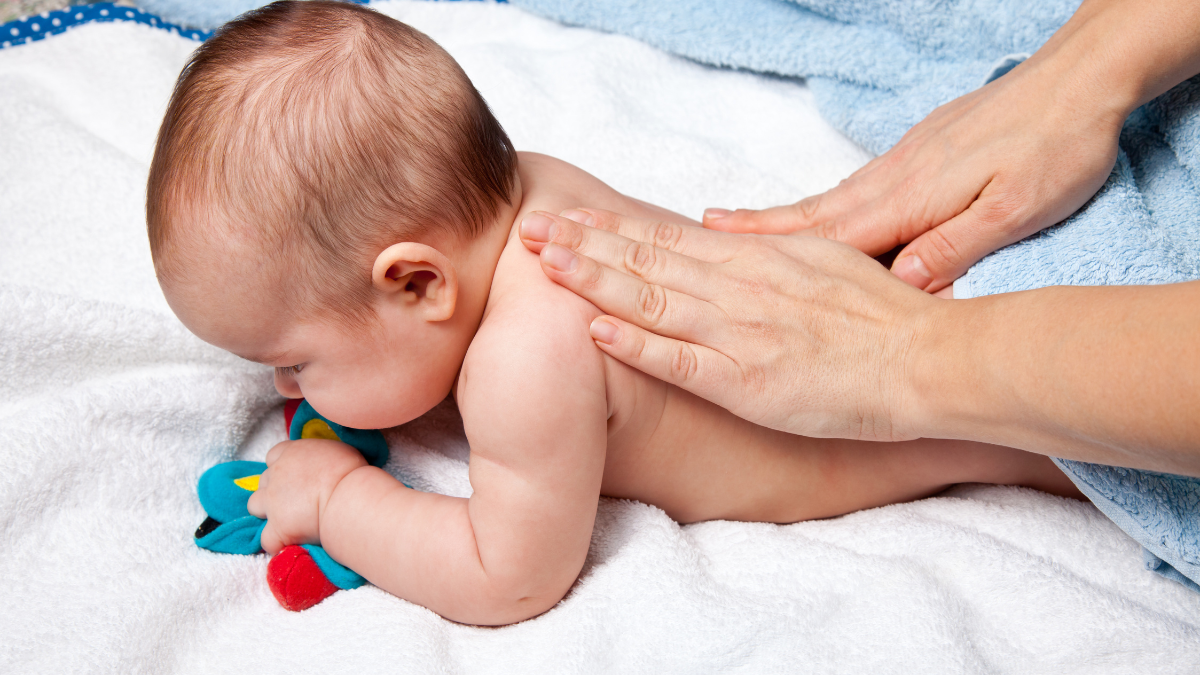
Baby massage is a simple way to calm your baby, ease gas, and create a closer bond through gentle touch. Many parents also use it to help build a soothing bedtime routine, and it doesn’t take special training to get started.
When you keep the pressure light and follow your baby’s cues, massage can feel comforting for both of you. It can be part of a newborn massage for better sleep routine, or a quiet way to settle a fussy tummy after feeding.
The steps below will show you how to massage your baby safely and gently, so you can feel more confident from the first touch.
What to know before you start massaging your baby
Before you begin, keep the goal simple: baby massage should feel calm, gentle, and led by your baby’s response. There is no need to turn it into a strict routine or a long session.
A good first massage starts with the right timing, a relaxed baby, and a light touch. If your baby was born early, has a health concern, or is recovering from an illness, check with your pediatrician first. For many families, that extra guidance makes the first few tries much easier.
When baby massage is usually safe to begin
Many parents start after the newborn stage, once baby is settled and feeding well. Others begin earlier with doctor approval, especially if the baby is healthy, full-term, and comfortable with touch.
If your baby was premature, had a medical issue at birth, or is still healing, ask for clear guidance before you begin. A pediatrician can tell you whether massage is a good fit and what areas to avoid.
A helpful rule is to start when baby is stable, alert, and not dealing with any new symptoms. If anything feels off, wait and check first. That small pause is better than pushing ahead too soon.
Signs your baby is ready, and signs to stop
Ready babies usually give easy-to-read cues. Their arms stay loose, their body looks soft, and they may hold eye contact or stay quietly alert. That is the sweet spot for massage, when their attention is present but not overstimulated.

If your baby shows interest, keep going slowly. If they pull away, they are telling you enough.
Watch for these stop signs:
- Crying or fussing
- Stiff arms or legs
- Turning the head away
- Arching the back
- Falling asleep
When you see any of those cues, stop the massage and try again later. The best sessions feel more like a conversation than a lesson. In other words, your baby leads, and you follow.
Why timing matters after feeding and before sleep
Massage works best when your baby is calm, not hungry, and not just fed. A full belly can make the experience uncomfortable, so it helps to wait about 45 minutes after feeding. That gives your baby time to digest and lowers the chance of spit-up.
Timing also matters at bedtime. Massage can be part of a soothing night routine, but if it wakes your baby up, save it for earlier in the day. The best routine is the one that actually helps your baby settle.
For a simple reference, Children’s Wisconsin infant massage tips also suggest waiting after feeding and watching for a calm, alert state. That matches what many parents notice at home, a relaxed baby is far more open to touch than a sleepy or hungry one.
If you want to pair massage with other soothing habits, try it after a bath or during a quiet wake window. A calm room, warm hands, and a baby who is content make a big difference.
Set up a calm, safe space before you begin
A good baby massage starts before the first touch. When the room feels warm, quiet, and prepared, your baby is more likely to stay relaxed, and you can focus on gentle contact instead of scrambling for supplies.
Keep the setup simple. You only need a few basics, a safe surface, and enough time to move slowly without interruptions.
What you need, and what you can skip
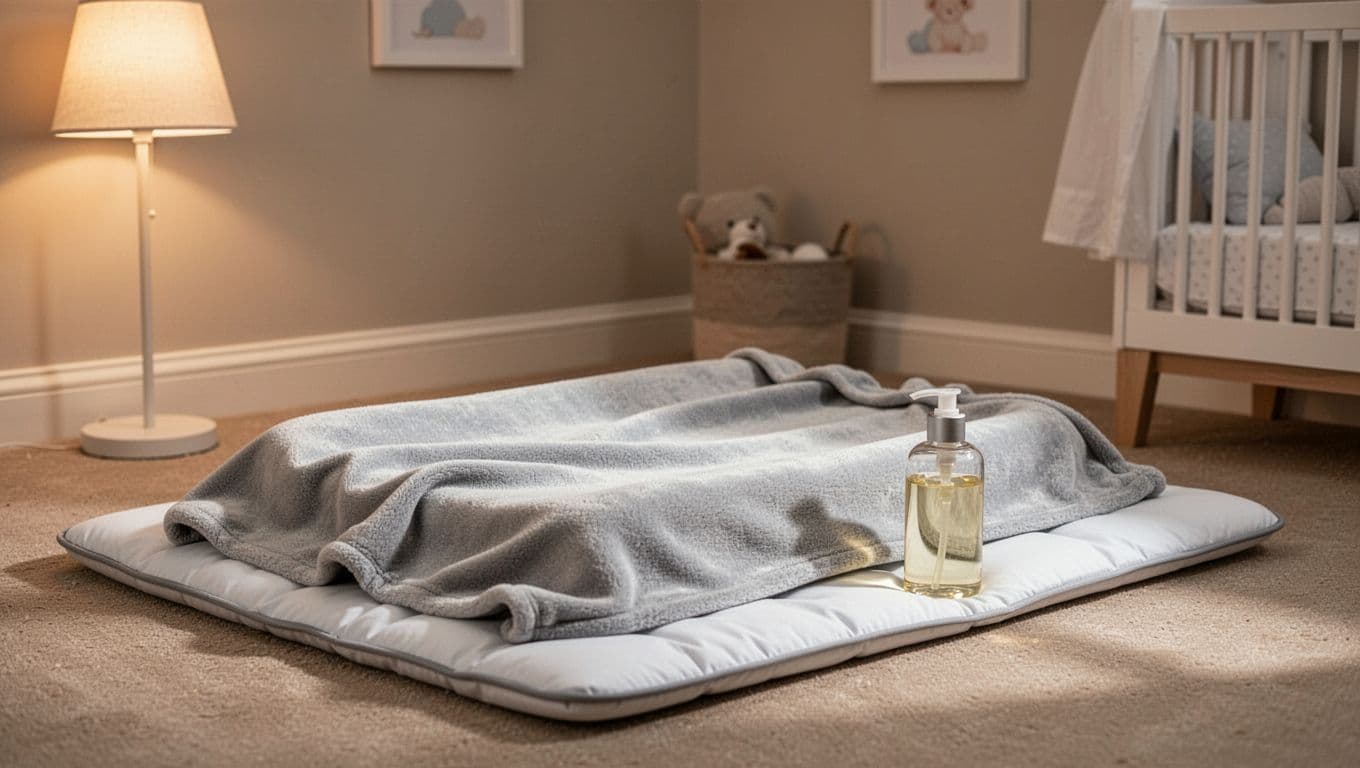
You do not need a fancy kit or special massage tools. A soft blanket, towel, or changing mat is enough for most babies, as long as the surface feels clean and supportive.
Use a setup that helps your baby stay comfortable:
- Soft blanket or towel for a cozy base
- Changing mat if you want a firmer, wipeable surface
- Clean hands with short nails
- A small amount of oil or lotion if your baby is old enough for it
You can skip anything that feels unnecessary. Toys, scented sprays, warming devices, and elaborate products are not required. A calm space and a steady touch matter far more than extra gear.
How to choose a safe oil or lotion
For many families, the safest choice is a plain, unscented baby-safe product. Fragrance-free lotion or a simple edible oil can help your hands glide without pulling on delicate skin. If your baby is a newborn, keep it extra gentle and use only what feels necessary.
A few simple rules help here:
- Pick products made for babies or ones your pediatrician approves.
- Avoid strong fragrances, essential oils, and perfumed blends.
- Do a patch test first on a small area of skin.
- Watch for redness, dryness, or irritation before using it again.
The American Academy of Pediatrics notes that baby massage can use a natural oil, but adult massage oils and nut-based oils are best avoided. Some parents choose to skip products at first and use dry hands only, especially with very young newborns.
For more sensitive skin, a simple, fragrance-free product is usually the safest place to start. If your baby has eczema, a history of allergies, or very reactive skin, ask your pediatrician before trying anything new. You can also use fragrance-free baby skin care products if you want a gentler option for everyday care.
Newborn skin is still developing, so less is usually better. A plain product, or no product at all, is often the safest start.
The best room temperature and lighting for massage
The room should feel warm enough that your baby stays comfortable with minimal clothing, but not so hot that they get sweaty. A range around 68 to 72 F works well for many homes. If the room feels drafty or cold to you, it will likely feel cold to your baby too.
Lighting matters just as much. Soft, dim light helps the room feel peaceful, and it keeps your baby from getting overstimulated. A lamp with a warm bulb is often better than bright overhead lights.
Before you begin, set up everything within arm’s reach:
- The blanket, towel, or mat
- Clean diaper and clothes for after the massage
- Oil or lotion, if you’re using it
- A burp cloth or wipe for quick cleanups
That small bit of prep keeps the massage smooth. It also helps if you already have a quiet bedtime routine space in mind, because babies usually relax faster when the setting feels familiar.
When the room is ready, the massage feels less rushed and more soothing. That calm setup gives you room to notice your baby’s cues, which is what matters most.
How to massage your baby from head to toe
A full baby massage does not have to be long or complicated. You can work through the body in a simple order, or stop after one area if your baby is happy with that.
A few calm strokes on one area can be enough. Your baby’s mood decides how far you go.
Start with the parts many babies enjoy most, then move toward the chest, arms, back, face, and head. Keep your hands warm, your pressure light, and your pace steady. If your baby gets fussy at any point, pause and try again later.
Start with gentle opening strokes to help your baby relax
Begin with slow, light strokes on the legs or torso so your baby can settle into the touch. This first step is less about technique and more about comfort. It tells your baby that your hands are safe, warm, and not in a hurry.
Keep both hands moving in a steady rhythm. A long stroke down the leg or across the tummy often works better than lots of small, quick movements. If your baby seems tense, rest your hands still for a moment before you continue.
For many parents, this soft opening sets the tone for the whole massage. If your baby enjoys it, you can keep going. If not, one gentle area is enough for the day.
Massaging your baby’s legs and feet
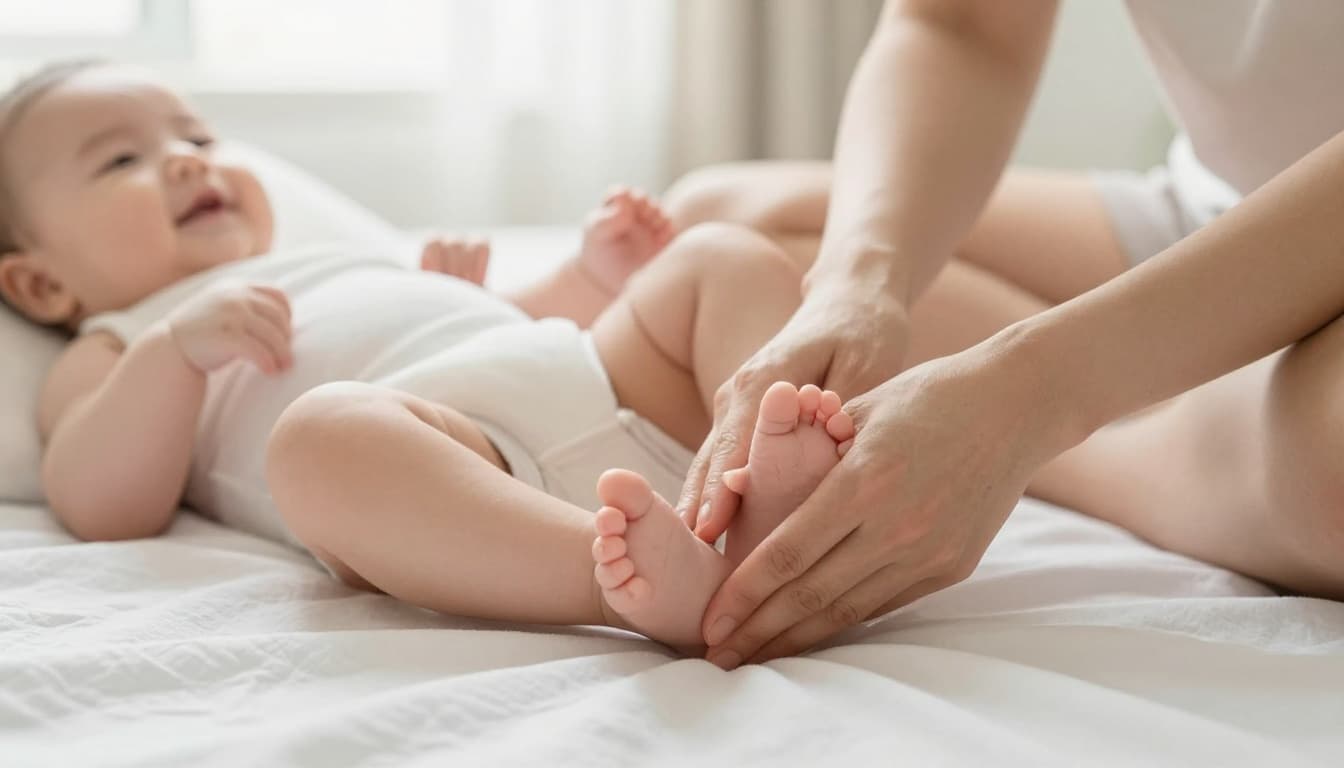
The legs are often the easiest place to start because many babies relax right away. Hold one thigh gently and stroke down toward the ankle, then switch sides. You can also use soft squeezes along the length of the leg, like you are smoothing out a wrinkled ribbon.
Move to the feet with extra care. Use your thumb to gently rub the soles, then lightly stroke each tiny toe. Avoid the knee joint, and never pull or twist the leg.
A little foot work can feel very soothing, especially after a bath or before bed. Some babies even stop fussing as soon as their feet are touched.
Massaging your baby’s tummy for gas and comfort
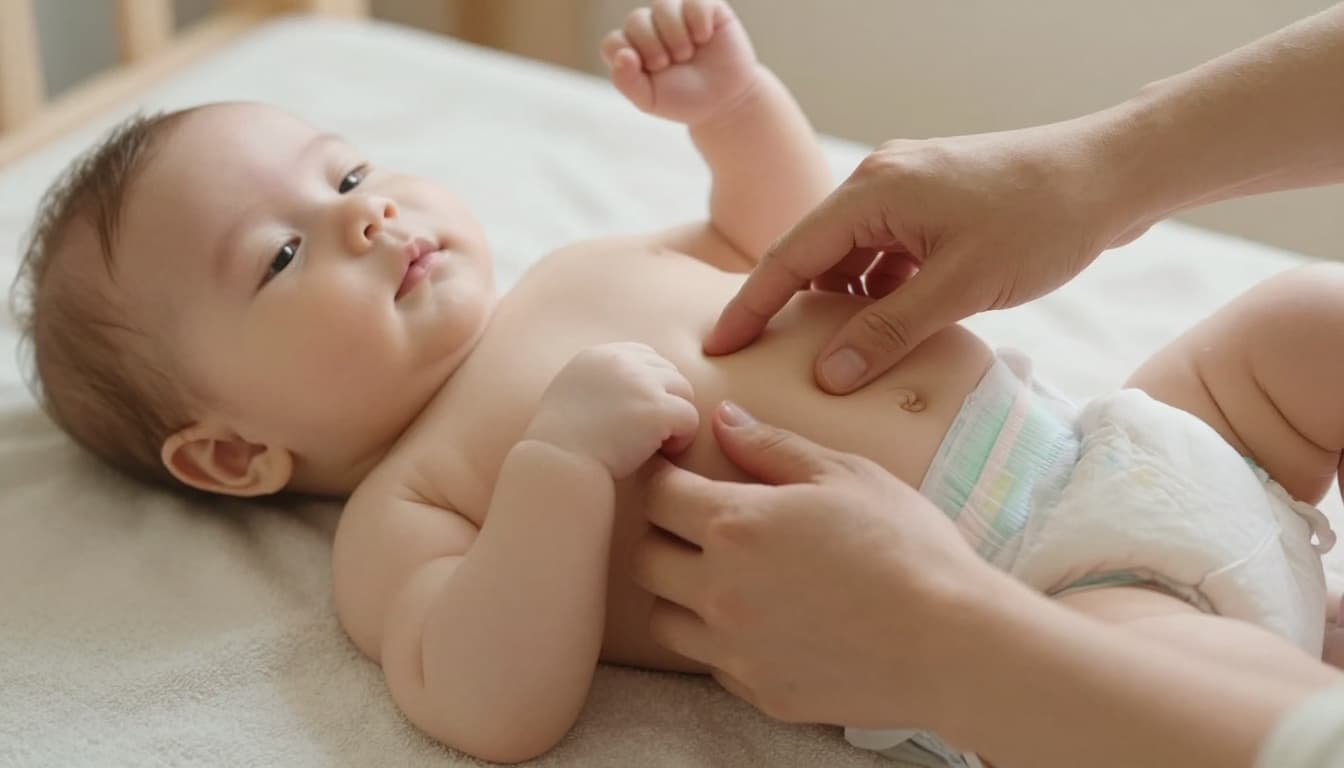
For tummy massage, use very light pressure and move in gentle clockwise circles. That direction follows the natural path of digestion, which is why it often feels comforting for gassy babies. Soft strokes can also help your baby settle and relax after a busy day.
If the umbilical area has not healed yet, stay away from it. Also, stop right away if your baby tenses up, cries, or seems uncomfortable. Some babies love tummy touch, while others want more time before they accept it.
A simple clockwise belly massage can pair well with other gas-relief habits, such as bicycle legs or burping. If you want more ideas for easing gas, these baby fart relief tips can help you build a calm routine.
Massaging your baby’s chest, arms, hands, and back
After the tummy, move to the chest with light strokes across the upper body. Keep your touch soft and even, then shift to the shoulders, upper arms, and forearms. A smooth motion down the arm helps the baby feel held and secure.
Next, open each hand with care. Gently stroke the palms, then rub each finger one by one. Tiny hands can be sensitive, so move slowly and stop if your baby pulls away.
The back is often the most calming part of the massage. You can place your baby on the tummy or across your lap, then stroke from the shoulders down toward the bottom. Use a firm but gentle touch, not a tickly one. For a clear step-by-step flow, Stanford Children’s infant massage guide shows the same simple order many parents use at home.
What to do for your baby’s face and head
The face and head need the lightest touch of all. Use only a fingertip-soft pressure on the forehead, cheeks, jawline, and temples. Think of it as a whisper, not a stroke.
Avoid the soft spots on the head, and never press firmly on the face. If you include the scalp, keep it very gentle and only do it when your baby is calm and open to touch. Some babies enjoy a few soft circles on the scalp, while others prefer to skip this part.
Facial massage should always stay brief and delicate. A few light passes are enough, especially for younger babies.
Keep the massage flexible and follow your baby’s lead
You do not need to do every body part every time. One day your baby may enjoy legs and feet only. Another day, you may get through the whole routine with ease.
Watch for relaxed hands, soft legs, and a calm face. Those are good signs to continue. If your baby stiffens, turns away, or starts fussing, stop and try again later.
A short massage can be just as useful as a longer one. The best routine is the one your baby accepts, because comfort always comes before checklists.
How to read your baby’s signals during massage
Baby massage works best when you watch your baby, not the clock. A relaxed body, soft face, and steady breathing usually mean your baby feels safe and content. Tight muscles, turning away, or fussing mean it’s time to slow down.
The key is to treat massage like a back-and-forth conversation. The HealthyChildren guide on baby massage gives the same advice, watch for comfort, and stop if your baby shows distress. That simple habit takes the pressure off and helps you build trust.
Cues that mean your baby is enjoying it
When your baby likes the massage, the body usually looks loose and easy. Arms may rest at the sides, hands may open, and the face may look soft instead of tense. You might also notice calm breathing, cooing, or steady eye contact with you.
Some babies stay very still when they enjoy touch. Others become more alert and look right at your face, which is also a good sign. If your baby stays settled through the strokes, you can usually keep going.

A little stretching or passing gas can also be normal. In many cases, that just means your baby is relaxing and the body is letting go of tension. If the stretch looks loose and comfortable, there is no need to stop.
Cues that mean it is time to pause or stop
Discomfort shows up fast when a baby has had enough. Watch for these clear signals:
- Fussing or crying
- Turning the head away
- Rigid arms or legs
- Pushing your hands away
- Hiccups with distress
- Clenched fists or a tense face
If you see any of these, pause right away. A short break can help, but if the fussing continues, end the massage and try again later. A few calm moments are better than forcing a full routine.

How to keep massage short and stress-free
If you’re just starting out, keep the session brief. Ten to 15 minutes is plenty, and even that may be more than your baby wants at first. A few calm minutes on one leg, foot, or arm can still be a good massage.
Follow your baby’s mood instead of trying to finish a full routine. If your baby is happy after two minutes, stop there and count it as a win. Over time, your baby may enjoy longer sessions, but the safest habit is to end while things still feel calm.
Common mistakes to avoid when massaging a baby
Baby massage should feel calm, light, and easy to follow. The best sessions are slow enough for your baby to relax into them, and simple enough for you to notice their cues.
Small mistakes can make massage feel uncomfortable fast. A little more patience, a softer touch, and better timing usually fix the problem.
Using too much pressure or moving too fast
Baby massage is not an adult massage in miniature. Deep rubbing, tapping, or quick strokes can feel harsh on delicate skin and developing muscles. Slow, steady touch works better because it gives your baby time to settle and understand what’s happening.
Keep your pressure light and even. If your hands feel rushed, your baby probably will too. A long glide down the leg or arm usually feels better than several fast passes over the same spot.
If your baby tenses up, pulls away, or looks startled, ease up right away.
A good rule is to move like you’re smoothing fabric, not kneading dough. The NCT baby massage tips also stress gentle, baby-led touch, which lines up with what most parents see at home, slower is usually better.
Massaging when the baby is upset, tired, or hungry
Timing matters more than many parents expect. If your baby is already crying, overstimulated, hungry, or exhausted, massage can add to the stress instead of easing it. In that state, even soft touch may feel like too much.
Choose a calm window when your baby is awake and content. After a nap, after a bath, or during quiet play often works well. If feeding just ended, give your baby time to digest first, since a full belly can make massage uncomfortable.
A few signs that the timing is off include:
- Crying that does not settle
- A stiff body or clenched fists
- Turning the head away
- Yawning, rubbing eyes, or zoning out
- Fussing as soon as you start
If those show up, stop and try later. For more on what to avoid, this guide to common baby massage mistakes gives a useful reminder about pressure, timing, and feeding gaps.
Forgetting safety basics like temperature, posture, and support
A safe setup matters just as much as your touch. Keep the room warm, the surface secure, and your baby supported the whole time. Babies can chill quickly, especially when they’re partly unclothed, so a cold room can turn a soothing moment into a fussy one.
Stay close and keep one hand ready to support your baby’s body, head, or neck when needed. That matters most for younger babies who still need extra stability. Also, avoid slippery lotions on a surface that makes it hard to hold your baby securely.
A few simple habits help keep things safe:
- Use a stable, padded surface.
- Keep your baby within arm’s reach at all times.
- Support the head and neck when needed.
- Skip massage if your baby has a fever or recent vaccination discomfort.
- Check that your hands are clean, warm, and free of jewelry.
The Nurofen baby massage guide gives the same practical message, warm hands, a calm space, and a gentle pace matter. When the setup is right, you can focus on comfort instead of worrying about slips, chills, or awkward positioning.
A safe massage does not need to be perfect. It just needs to feel steady, warm, and responsive to your baby’s cues.
Conclusion
Baby massage works best when you keep it simple. A few gentle strokes, a warm room, and your baby’s own cues are enough to make it feel safe and soothing.
What matters most is calm connection, not perfect technique. Small sessions can still support bonding, comfort, and sleep, especially when they fit into a steady routine.
Start slowly, pay attention to what your baby tells you, and let massage happen when it feels right. It can be a quiet part of everyday care, much like skin-to-skin newborn bonding, and that steady touch often means more than a long session ever could.
Save pin for later


- Helicopter Parenting: 10 Signs You’re Doing It and How It Affects Your Kid - September 22, 2026
- 10 Things You Shouldn’t Do in Front of Your Baby (and What to Do Instead) - September 22, 2026
- 15 Effective Ways to Deal With Stubborn Children (Without Yelling) - September 22, 2026