


Seeing your baby stick out their tongue can be surprising, but it’s usually a normal part of feeding, reflexes, and early development. Babies do it when they’re hungry, full, teething, or exploring how their mouths work.
If teething seems to be part of it, baby teething relief strategies can help you compare the signs, and this quick video may help too:
. The next section breaks down the most common reasons, what changes with age, and when tongue sticking is worth a call to the doctor.
The most common reasons babies stick out their tongues
Most of the time, tongue sticking is part of normal baby behavior. In the first months, babies use their mouths to feed, feel, and practice new movements, so a little tongue action is usually just another piece of early development. Sources on infant behavior, including baby sticking tongue out: causes and what to do, list reflexes, hunger, and imitation among the most common reasons.
A tongue that pops out now and then is usually a sign of learning, not a problem.
Hunger and the tongue-thrust reflex
Newborns are born with a tongue-thrust reflex, also called the extrusion reflex. When something touches the lips or tongue, the baby pushes the tongue forward. This is one of the primitive reflexes babies start with, and it helps with feeding because it supports latching and sucking.

You may notice this movement before a feed, along with rooting, lip smacking, or turning the head toward your hand or chest. Those are all common hunger cues. If you are breastfeeding, tongue position matters too, and avoiding shallow latch mistakes in newborns can help you understand what a good latch looks like.
This reflex is strongest early in life, then fades as babies get better mouth control and start getting ready for solids. Most babies outgrow it over the first several months.
Exploring the world through the mouth
Babies learn with their mouths the way older kids learn with their hands. They taste, touch, and test everything they can reach, including air, their lips, fingers, and toys. Tongue sticking can be part of that early sensory exploration, especially when your baby is still figuring out what their mouth can do.

At this stage, the tongue is almost like a tiny practice tool. Your baby may push it out, pull it back in, or move it side to side as they build early oral motor skills. That movement helps them get used to chewing, sipping, and later, speaking.
Copying your face or getting a reaction
Older babies often copy the people around them. If you stick out your tongue, smile, or make a funny face, your baby may answer with the same move. That is a simple form of imitation, and it shows they are paying close attention to you.
This can turn into a little back-and-forth game fast. Your baby does it, you laugh, and then your baby does it again because the reaction is fun and familiar. In that way, tongue sticking becomes part of early social play, not just a body reflex.
How age and development change tongue habits
Tongue sticking changes fast in the first year. In the early months, it often comes from reflexes and feeding needs, then later it becomes part of play, teething, and oral practice.
That shift is normal. As your baby gains better mouth control, the tongue usually stays in the mouth more often and shows up less during rest.
What is normal in the first 6 months
In newborns and young infants, tongue protrusion is very common because the mouth is still learning its job. The tongue-thrust reflex pushes the tongue forward when the lips or mouth are touched, and that helps babies feed. It also explains why you may see tongue sticking during bottle feeds, nursing, rooting, or alert wake times.
A newborn does not use the tongue the same way an older baby does. Early on, the movement is automatic, and it fades as oral control improves. A clear age-by-age breakdown from Voice and Speech Canada shows this pattern well, with reflexive tongue movement being most common in the first months.

During the first 6 months, occasional tongue sticking is usually part of normal feeding and early oral control.
You may also notice it when your baby is awake and curious. At that stage, the mouth is still a work in progress, so small, frequent tongue movements are part of learning.
Why it may show up again after 6 months
After 6 months, tongue sticking can return for new reasons. Teething is a big one, since sore gums often make babies push, chew, and move their tongues more. Stuffy noses can also matter, because a baby who mouth-breathes may let the tongue rest forward more often.
At the same time, older babies are using their tongues in more active ways. They are getting ready for solids, thicker purees, and soft textures, so the tongue has to help move food around the mouth. If you’re wondering what that stage looks like, simple meals for infants at 9 months can show how feeding changes as texture skills grow.

By the end of the first year, tongue habits should look more intentional and less reflex-driven. Your baby is building the control needed for chewing, swallowing, babbling, and eventually speech, so the tongue is doing a lot more work behind the scenes.
As oral coordination improves, tongue protrusion usually becomes less frequent at rest. It may still pop out during teething, feeding practice, or playful imitation, but it should not dominate every part of the day.
Teething, drooling, and other common causes parents notice
Teething and a few everyday changes can make tongue sticking easier to spot. In many babies, the tongue comes out as a simple comfort move, especially when the gums feel sore or the mouth feels different than usual.
That usually shows up with other small clues. You may see more drool, more chewing, shorter naps, or a baby who seems a little more irritable than normal.
Why teething can make the tongue come out more
When teeth start pushing through, the gums can feel swollen and tender. Many babies answer that pressure by pressing their tongues forward, rubbing their gums, or chewing on anything nearby.
HealthyChildren’s guide to drooling notes that extra saliva is common during this stage. That drool, plus sore gums, can make the tongue seem like it is out all the time.
A teething baby often does not have just one symptom. You may notice:
- Drooling that soaks bibs and shirts
- Chewing on hands, toys, or blankets
- Fussiness that comes and goes
- Red or puffy gums where a tooth is close to breaking through
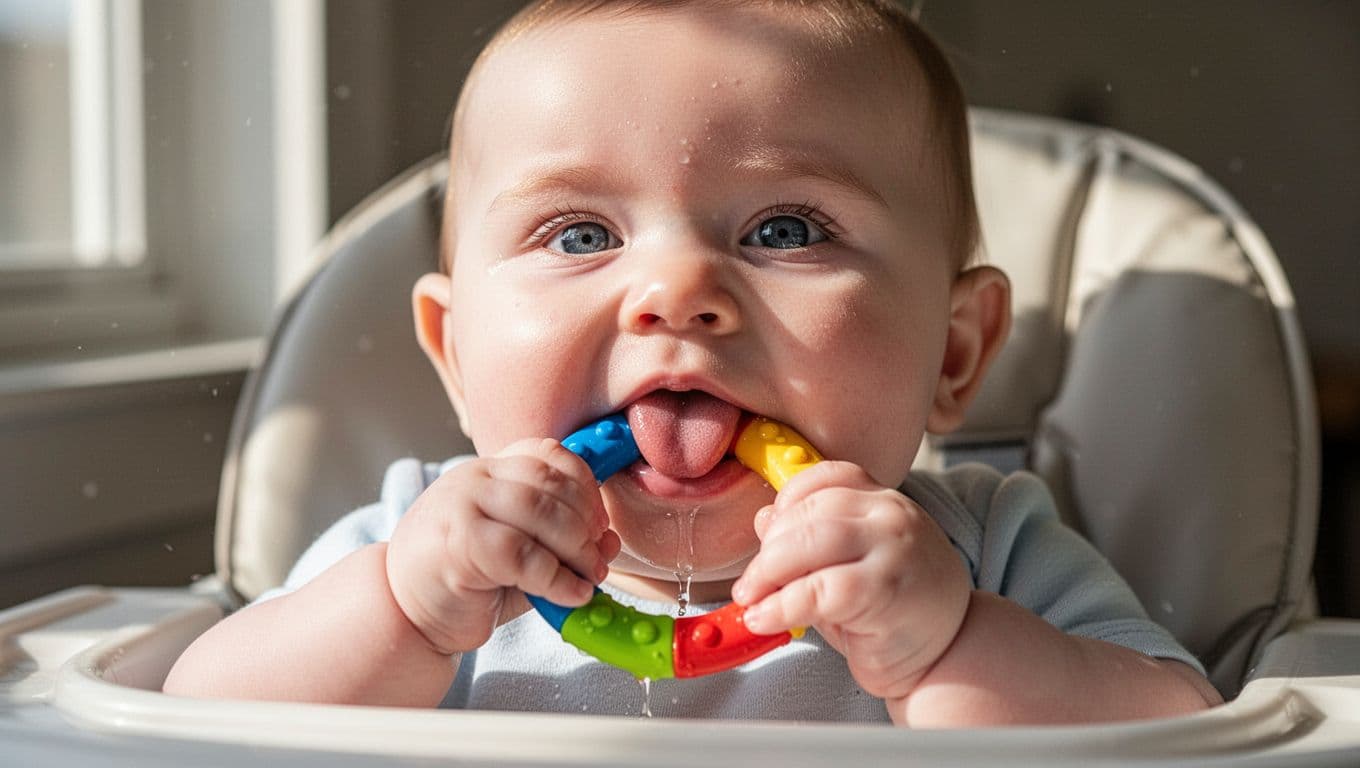
A tongue that sticks out during teething is often a comfort habit, not a warning sign.
The key clue is the pattern. If the tongue comes out along with drooling and gum rubbing, teething is a likely reason. If your baby also seems unusually sick, has a fever, or stops feeding well, that points to something else.
Mouth breathing, congestion, and feeding changes
A stuffy nose can change the way a baby holds the mouth. Babies breathe mostly through their noses early on, so even mild congestion can push the mouth open and make the tongue rest farther forward.
Vinmec explains that mouth breathing can show up when a baby has nasal blockage. In daily life, that may look like a baby sleeping with the mouth open, sounding snuffly, or pausing feeds more often.
Feeding changes can also make tongue movement stand out. When you start solids, change bottle flow, or adjust breastfeeding positions, your baby has to work harder to move food and milk around the mouth. During that learning phase, the tongue may poke out more as your baby practices new mouth skills.
A few common examples include:
- a baby pushing puree back out before swallowing
- more tongue movement after the first spoonfuls of solids
- a bottle-fed baby pausing and tongue-thrusting during a faster nipple flow
- a breastfed baby adjusting latch as feeding patterns change
That is normal for many babies. The tongue is learning a new job, and like any new skill, it can look a little messy at first.
When tongue sticking could point to a health issue
Most babies stick out their tongues now and then, and that is usually fine. The concern starts when the tongue seems to stay forward most of the time, or when it comes with feeding, breathing, or growth problems.
A single moment does not tell the whole story. Doctors look at the pattern, because a tongue that affects eating, swallowing, or comfort can point to something worth checking.

Signs that make doctors look deeper
A baby who sticks out their tongue once during play is not the same as a baby whose tongue rests forward all day. The difference matters, because ongoing tongue protrusion can affect feeding and growth over time.
Watch for signs like these:
- The tongue is out most of the time, even when your baby is calm or asleep.
- Feeding feels hard, with weak sucking, frequent slipping off the breast or bottle, or long feeds.
- Swallowing seems off, with gagging, coughing, or milk coming back out often.
- Breathing looks labored, especially if your baby sleeps with the mouth open or sounds noisy.
- Weight gain is slow, or your baby seems hungry soon after feeds.
- Muscle tone seems low, such as a floppy body, weak head control, or delayed movement. If that sounds familiar, delayed rolling in low tone infants can help you compare other early signs.
- Drooling is heavy and constant, far beyond what you would expect for age.
The red flag is a pattern that affects eating, growth, or comfort, not one isolated tongue-out moment.
If the tongue position comes with poor feeding or low tone, bring it up at the next visit. Pediatricians often want to see the full picture, not just one symptom.
Possible conditions behind a constantly protruding tongue
A tongue that stays forward can happen for a few different reasons. Sometimes the cause is simple, like a small jaw. Other times, it involves muscle tone, tongue size, or tongue-tie, which is when the tissue under the tongue is too tight. The Mayo Clinic’s tongue-tie overview explains how that tight band can affect feeding and tongue movement.
Here are a few possibilities doctors may consider:
- Low muscle tone can make it harder for a baby to keep the tongue and mouth in a resting position.
- A larger tongue may simply have less room in the mouth, so it appears to hang out more often.
- A small jaw can crowd the tongue forward and make the mouth look open.
- Tongue-tie can change how the tongue moves, especially during feeding.
Babies with mouth breathing, swelling, or oral irritation can also hold the tongue forward. The Vinmec review on babies sticking out their tongue notes that low tone, a larger tongue, and mouth breathing can all play a part.
Only a clinician can sort out the cause with a proper exam. That is why a persistent tongue position matters, even when your baby otherwise seems well.
What parents can watch for at home before calling the pediatrician
A baby sticking out their tongue is often harmless, so the best first step is simple observation. Look at the pattern, not just the moment. If it comes and goes during play, feeding, or teething, that usually points to normal baby behavior.
The bigger question is whether your baby seems comfortable and feeds well. If the tongue shows up with other symptoms, or it starts to affect eating, breathing, or growth, that deserves a closer look.

Questions to ask yourself about the pattern
Start with the basics. Does the tongue come out only during play, or do you see it during feeds too? Does it happen after meals, when your baby is relaxed, or almost all day? A tongue that appears only in a few situations is usually less concerning than one that stays out at rest.
It also helps to watch how your baby acts around it. If your baby is calm, feeding well, and gaining weight, that is reassuring. If the tongue sticks out with fussiness, drooling, gagging, or trouble latching, the pattern matters more.
A few quick questions can help you sort it out:
- Does it happen during nursing, bottle-feeding, or when solids are offered?
- Does the tongue come out more after a feed, when your baby is sleepy, or when they are excited?
- Does your baby seem bothered, or do they look comfortable?
- Is the tongue out for a second, or does it stay forward for long stretches?
If you are unsure how to describe what you see, take a short video. That gives your pediatrician a much clearer view than a memory alone. It can help show how often it happens, what your baby looks like during feeds, and whether the tongue rests forward or just pops out now and then.
When to get medical advice sooner
Call your pediatrician sooner if the tongue is always out, even when your baby is calm or asleep. Also reach out if feeding is difficult, your baby slips off the breast or bottle often, or meals take much longer than usual.
Breathing changes matter too. Noisy, strained, or mouth-open breathing should not be brushed off, especially if your baby looks like they are working hard to breathe. Baby oral thrush symptoms and home care can also be helpful to review if you notice white patches, mouth pain, or feeding discomfort.
Watch weight gain as well. If your baby is not gaining well, seems tired during feeds, or gets hungry again right away, that is worth a call. In short, trust the pattern when it starts to affect feeding, breathing, or growth, because that is when tongue sticking out moves from “normal” to “needs a check.”
Conclusion
A baby sticking out their tongue is usually a normal part of growth. It often comes from feeding reflexes, teething, mouth exploration, or simple curiosity.
The main thing to watch is the pattern. Occasional tongue sticking is usually nothing to worry about, especially when your baby is feeding well, breathing comfortably, and gaining weight.
If the tongue stays out most of the time, or it comes with feeding, breathing, or growth concerns, a pediatric check is the right next step. Most of the time, though, that tiny tongue is just another sign your baby is learning how their body works.
Funny little habit. So let’s jump in and find out what that little tongue might be trying to tell you.
Save pin for later


- 10 Things You Shouldn’t Do in Front of Your Baby (and What to Do Instead) - September 22, 2026
- 15 Effective Ways to Deal With Stubborn Children (Without Yelling) - September 22, 2026
- Birth Order Influence: 8 Things Parents Should Know About Each Child - September 22, 2026