
Seeing a flat spot on your baby’s head can feel alarming, but baby flat head syndrome, also called positional plagiocephaly, is common and usually treatable. It happens when pressure on a soft skull stays on one spot for too long, and it’s different from craniosynostosis, which needs medical care.
Simple changes, like repositioning, more supervised tummy time, and less time in swings or car seats, often help the head round out over time. That’s why tummy time and neck strength matter, especially when a baby favors one side, and a short visual guide like this video can also help. Next, we’ll look at the common causes, warning signs, treatment options, and when to call your pediatrician.
What baby flat head syndrome actually is
Baby flat head syndrome is a shape issue, not a brain development problem. It happens when a baby’s soft skull stays under pressure in one spot long enough to flatten. Most babies with this condition are healthy, and the change is usually noticed in the first few months of life.
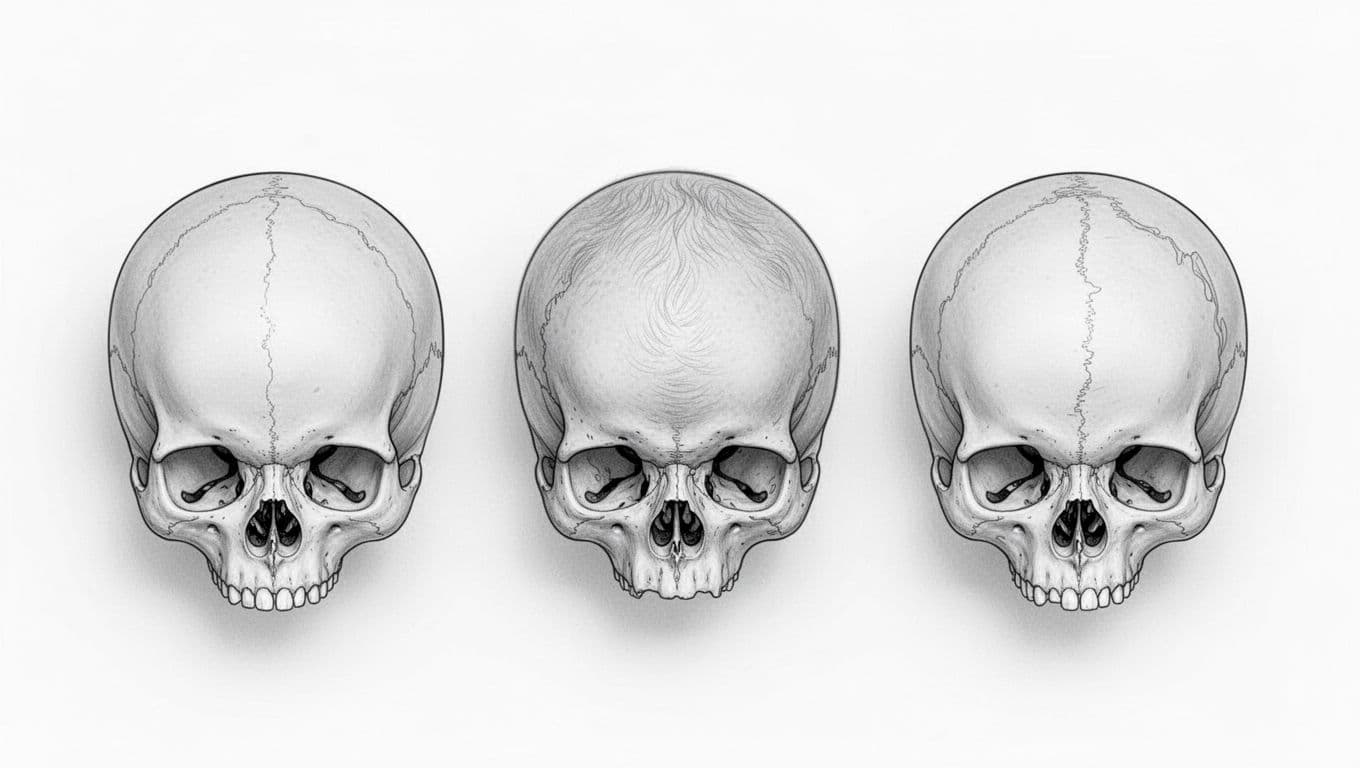
The two main shape patterns
The two common patterns are easy to spot once you know what to look for. Brachycephaly is flat across the back of the head, so the head can look wider than usual. Positional plagiocephaly is flat on one side, which can make the head look a little uneven from above.
A baby can also have both shapes at the same time. That happens when pressure keeps landing in the same area, whether from sleep position, time in baby gear, or a strong head-turning preference. Johns Hopkins Medicine explains deformational plagiocephaly well, and KidsHealth gives a simple breakdown of what parents often see first.
Why it shows up so early
Newborn skulls are meant to be flexible, which helps during birth and rapid growth. That flexibility also means the head can flatten more easily when pressure stays on one side for too long. Because babies spend so much time lying down early on, the flat spot often appears before parents expect it.
Tummy time helps reduce that constant pressure, and it also gives neck muscles a chance to work. If you want a practical place to start, newborn tummy time ideas can make that daily routine feel more manageable.
If the head shape is changing, the skull itself is usually still healthy and growing normally.
What it does and does not mean
This condition changes the shape of the skull, but it does not change how the brain grows. That difference matters, because the word “flat” can sound more serious than it is. In most cases, the concern is appearance and comfort, not brain damage.
A pediatrician can confirm the difference between positional flattening and a skull shape problem that needs closer care. That quick check matters most when the flattening looks severe, keeps getting worse, or comes with a stiff neck.
Why some babies develop a flat spot on their head
A flat spot usually develops because a baby’s soft skull gets repeated pressure in the same place. That pressure can happen during sleep, while sitting in baby gear, or even before birth if the head has less room to move.
The good news is that this is usually about position and pressure, not something a parent caused. Once you know what shapes the head, you can make small changes that help relieve that pressure over time.
Long periods in one position can shape the skull
Babies need back sleeping for safe sleep, and that guidance should stay in place. Still, if a baby spends a lot of awake time on the back, the same spot can press against a mattress, a car seat, a swing, or a bouncer for hours each day.
That kind of steady pressure can flatten a soft skull little by little. Car seats, strollers, swings, bouncers, and other seated gear are helpful in short stretches, but they should not replace floor time when a baby is awake and supervised.

A simple habit helps a lot, give your baby time off their back during the day. Supervised tummy time, carrying, and changing positions often can ease pressure before a flat spot gets bigger. If you want a few easy ideas, fun tummy time play ideas can make that time feel easier to build into your day.
Tight neck muscles can make head turning harder
Some babies develop a tight neck muscle on one side, called torticollis. In plain terms, that means turning the head one way feels easier than the other, so the baby keeps looking the same direction much of the time.
When that happens, the same part of the head keeps resting against a surface. Over time, that can make flattening worse, especially if the neck tightness is not addressed early. The HealthyChildren guide on positional skull deformities and torticollis explains why early treatment matters.
You may notice that your baby always turns toward one side, has trouble turning the other way, or prefers feeding on the same side. Those small clues matter, because neck tightness and head flattening often go hand in hand.
Before birth factors can also play a role
Some flat spots begin before a baby is even born. When space is tight in the womb, the head can rest under pressure for a long time, which makes flattening more likely after birth too.
This can happen with twins or multiples, a cramped uterus, or low amniotic fluid. Babies who had pressure on the head before birth may also arrive with a slight shape difference already in place. A review in JAMA on flat head syndrome notes that pregnancy and early infancy can both affect head shape.
These factors are not about blame. They just help explain why one baby may be more prone to a flat spot than another, even when the day-to-day care looks similar. When that pressure starts early, the soft skull is easier to shape, so small differences in position can show up fast.
How to spot the signs early
Early flat head syndrome usually starts as a small shape change, not a dramatic one. That’s why it can be easy to miss at first, especially if your baby looks happy, feeds well, and moves normally. Looking at the head shape from a few angles helps you catch changes before they become more obvious.
Common head shape changes parents may notice
A quick look from above and from the front often shows the clearest clues. The shape may still seem mild, but a small flat area can stand out once you know what to watch for.
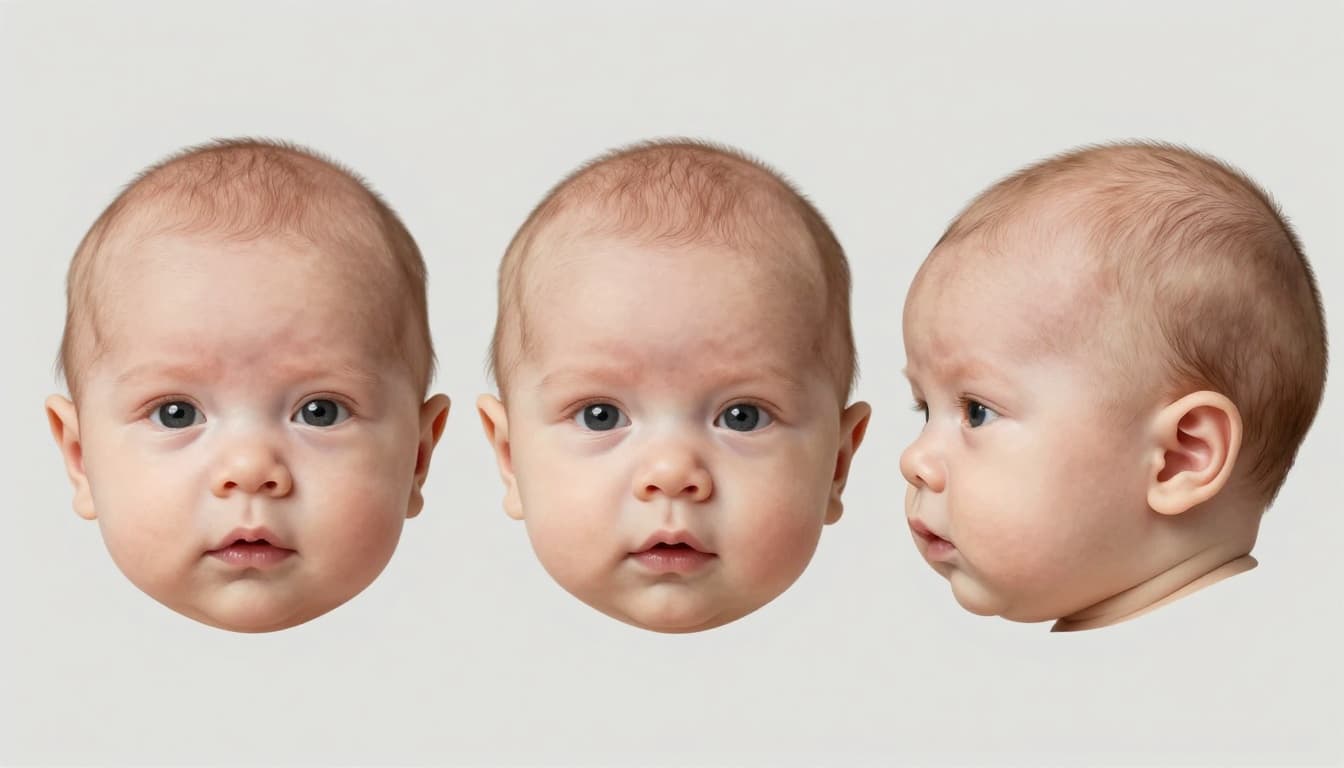
You may notice:
- Flatness on one side or the back of the head.
- One ear sitting a little farther forward than the other.
- One side of the forehead sticking out more.
- Facial unevenness, such as one cheek or eye looking slightly different.
- A bald spot in the flattened area, since that side rubs more against the mattress or carrier.
These changes can be subtle at first. A baby can still look healthy and comfortable while the head shape shifts a little. That’s why bath time, diaper changes, and overhead photos can help you spot patterns early.
The NHS guide on flat head syndrome explains that uneven head shape may show up on one side or across the back, and the ears may not line up the same way.
A small flat spot is easier to notice and easier to address than a more settled shape change.
When flat head syndrome can look more noticeable
Flat head syndrome is often first seen around 2 to 4 months, and many parents notice it even earlier, around 6 to 8 weeks. It can seem worse during this stage because babies still spend a lot of time lying down before they gain fuller head control.
That does not mean the shape will stay that way. As babies move more, sit up, roll, and crawl, pressure spreads out across the skull instead of staying in one spot. Over time, that often helps the head round out on its own.
If your baby seems to prefer one position, early action helps. More supervised tummy time, more holding, and more awake time off the back of the head can make a real difference. If you want a practical place to start, baby sitting development via tummy time supports the neck and head control babies need as they get stronger.
The Boston Children’s Hospital guide on plagiocephaly notes that flattening is often most noticeable in the first few months and usually improves as babies gain strength and reach movement milestones.
The main takeaway is simple, check head shape early, watch it over time, and bring up anything that keeps getting flatter. A small change today is easier to address than a deeper flat spot later.
How doctors tell flat head syndrome apart from something more serious
Most of the time, the diagnosis starts with a simple office visit. A pediatrician looks at your baby’s head shape, asks about sleep and positioning, and checks whether the flattening fits positional plagiocephaly or a problem that needs more workup, like craniosynostosis.
That difference matters because flat head syndrome is usually a pressure-related shape issue. Craniosynostosis involves early fusion of skull bones, so doctors want to rule it out when the head shape looks unusual or the pattern does not fit the usual picture.
What the pediatrician looks for during an exam
The exam is careful, but it usually feels routine. The doctor measures head size and checks whether growth is tracking normally over time. They also look at the skull from above, from the front, and from behind to see how the shape lines up.

During that exam, the pediatrician often checks for:
- Ear alignment, since one ear may sit farther forward with flat head syndrome.
- Forehead position, because one side can look more prominent.
- Neck tightness, which can point to torticollis and explain why your baby favors one side.
- Sleep and positioning habits, including back-sleeping, time in swings or car seats, and tummy time.
Photos can help too. Some doctors use repeat photos, tape measurements, or other tracking tools to compare changes over time. That makes it easier to see whether the shape is improving or staying the same.
The diagnosis is usually based on head shape, history, and physical exam first.
A pediatrician also asks when you first noticed the flattening. Flat head syndrome often shows up after birth and gets more noticeable over time. Craniosynostosis, on the other hand, is often present at birth or looks different in a way that does not match simple pressure flattening. For a plain-language overview of that difference, the HealthyChildren guide on uneven head shape explains how doctors sort out the two conditions.
When a doctor may order more testing
Most babies do not need scans. If the head shape looks typical for flat head syndrome, the exam is usually enough to guide care. That keeps the process low-stress and avoids unnecessary tests.
Testing may come up if the head shape looks unusual, if the flattening is severe, or if the doctor sees signs that suggest craniosynostosis. In those cases, imaging helps confirm whether the skull bones are still open as expected. A scan is not about scaring parents, it’s about making the right diagnosis the first time.
If more testing is needed, the doctor will explain why and what it can show. The goal is simple: confirm that the shape issue is positional, or catch a skull-closure problem early enough to treat it well. The Mayo Clinic overview of craniosynostosis diagnosis gives a good summary of when imaging may be used.
A pediatrician may also move faster on testing if:
- the flattening was present very early
- the skull has a hard ridge along a suture line
- the head shape does not improve with repositioning
- the face or ears look uneven in a way that seems more than positional
That short list helps parents know why the doctor is paying close attention. In most cases, the visit ends with reassurance, a plan for repositioning or tummy time, and a follow-up to watch the head shape over time.
Treatment options that help most babies
The best treatment depends on age, head shape, and how severe the flattening is. In many babies, simple home changes are enough, especially when you start in the first months of life. If the flat spot is not improving, doctors may add physical therapy or, for more pronounced cases, a helmet.
Earlier treatment usually works better, because a baby’s skull changes fastest in the first months.
Repositioning and more tummy time at home
For many babies, repositioning is the first step. The goal is to spread pressure around the head instead of letting it rest on the same spot all day and night. The CNS guideline on repositioning notes that this approach helps, especially when it starts early.
A few simple changes can make a real difference:
- Turn your baby’s head gently to the other side when you place them down to sleep, while still keeping them on their back.
- Change the direction your baby faces in the crib so they naturally look both ways.
- Hold your baby upright more often when they’re awake.
- Switch arms during feeds so your baby doesn’t always rest or turn the same way.
- Limit long stretches in swings, bouncers, car seats, and other baby gear.

Tummy time is the other big piece of home care. Start small if needed, even a few minutes at a time, then build up as your baby tolerates it. Short, frequent sessions are easier than one long stretch, and they still help strengthen the neck, shoulders, and upper back.
If you need fresh ideas, age-appropriate tummy time ideas can help you keep it fun and manageable.
Physical therapy for babies with tight neck muscles
Physical therapy helps most when a baby has torticollis, or tight neck muscles that make head turning harder. If your baby prefers one side, PT can loosen that pull and make it easier to turn the head both ways.
A therapist may teach gentle neck stretches, positioning tips, and simple exercises you can do at home. That matters because better neck movement means less constant pressure on one side of the skull. The APTA guideline on physical therapy supports PT as part of care for positional plagiocephaly.
This treatment is encouraging for parents, because it gives you a plan you can follow every day. As your baby gains more range of motion, head shape often improves too.
When helmet therapy may be recommended

A cranial helmet, also called a cranial molding orthosis, gently guides head growth over time. It does not squeeze the skull. Instead, it gives the flatter area room to round out as the baby grows.
Doctors usually consider helmet therapy for moderate to severe cases, especially when repositioning and physical therapy have not helped enough. It’s often started around 4 to 6 months, when the skull is still growing quickly. Many babies wear it for a few months, sometimes longer, and the fit is checked along the way.
Helmet therapy is not needed for every child. Babies with mild flattening often improve with home care alone.
Why surgery is rarely needed
Surgery is not used for positional plagiocephaly itself. It is only considered when the diagnosis is actually craniosynostosis, where skull bones fuse too early. That’s why a proper exam matters so much, because the right diagnosis leads to the right treatment.
How to lower the risk before and after birth
You can’t control every factor that leads to a flat spot, especially before birth. Still, good prenatal care gives you a chance to catch concerns early, and simple daily habits after birth can reduce pressure on one area of your baby’s head.
The big idea is easy to remember. Keep sleep safe, keep baby moving, and keep pressure from settling in one place for too long. The Safe to Sleep tummy time guide is a helpful reference for those early weeks.
Safe sleep and head position can work together
Babies should still sleep on their backs, every time. That rule stays in place because back sleeping is the safest sleep position, even if you’re watching for head flattening.
You can still make small changes that spread out pressure during sleep. Try alternating which direction your baby faces in the crib, and vary the side you place them down from so they do not always turn the same way to look around. The goal is simple, change the pressure point without changing the sleep rule.

A few small habits help here:
- Place baby on the back for all naps and nighttime sleep.
- Keep the crib flat, firm, and clear.
- Change which end of the crib baby’s head points toward.
- Talk with your pediatrician if your baby always turns the head to one side.
Back sleeping stays the rule. Head position changes happen around that rule, not instead of it.
If you want a simple refresher on safe sleep setup, these baby sleep positioning tips are a good place to start.
Daily movement matters, even for young babies
Babies need more than time on their backs. Awake movement helps relieve pressure, build strength, and encourage head turning in both directions.
Start with tummy time, even if it’s brief. Short, frequent sessions work well when a baby resists longer stretches. A few minutes after diaper changes or naps can add up fast, and the AAP safe sleep recommendations support supervised tummy time as part of early development.

Movement can come in several forms:
- Tummy time while baby is awake and watched.
- Upright holding after feeds or during quiet time.
- Babywearing for close contact and less time on the back of the head.
- Supervised floor play on a blanket or mat.
These options help a baby change position often, which keeps pressure from building in one spot. They also give you a chance to notice if your baby prefers looking one way more than the other.
Cutting down on container time helps too
Car seats, swings, bouncers, and strollers all have a place, but they should not take up most of the day. When babies spend long stretches in these containers, the same part of the head keeps pressing against a surface.
Use them when you need them, then move baby out of them when the trip or nap is over. Awake time on the floor, in your arms, or in a carrier gives the head more variety and less repeated pressure.
A simple daily goal helps:
- Use baby gear for transport or short breaks.
- Give baby more awake time off the gear.
- Mix in floor play, tummy time, and holding often.
That pattern matters from the newborn stage onward. Small shifts each day do more than one big change once a week, and they fit naturally into real family life.
When to call your baby’s doctor
Mild flat head syndrome often improves with repositioning, tummy time, and more time off the back of the head. Still, don’t wait it out if the shape is getting more uneven or your baby seems stuck looking the same way. Early treatment works best, and a smaller change is much easier to correct than a head shape that has settled in.
If you’re unsure, call sooner instead of waiting for the next checkup. A routine visit is useful, but it should not be the first time you mention a change that worries you. Regular baby checkups matter, yet a new concern deserves its own call.
Get help sooner if the flat spot is getting worse
A flat spot that keeps deepening needs attention. When the head shape looks flatter week by week, home care alone may not be enough.
Watch for these signs:
- the flat area is becoming more obvious
- one ear looks farther forward
- the forehead or cheek looks more uneven
- your baby always turns the head the same way
- repositioning and tummy time are not helping after a few weeks
The earlier a doctor sees a worsening flat spot, the easier it is to guide growth in the right direction.
Waiting too long can make the shape harder to change. That does not mean your baby has a serious problem, but it does mean the window for simple fixes may be closing. A quick exam can tell you whether you need repositioning tips, physical therapy, or a closer follow-up.

Watch for feeding, movement, or neck concerns
Trouble turning the head, favoring one side, or a stiff neck can point to torticollis, which often needs an exam. If your baby seems uncomfortable turning one way, or feeds better on one side, mention it right away. Cleveland Clinic’s torticollis overview explains how neck tightness and flat head syndrome can go together.
Call your baby’s doctor if you notice:
- limited head turning
- a head tilt that keeps coming back
- neck tightness or stiffness
- trouble breastfeeding or bottle-feeding on one side
- delayed movement, such as not pushing up during tummy time
Early support can make recovery easier. Physical therapy, gentle stretches, and positioning changes often help babies move more freely, which also reduces pressure on the same part of the skull. If the neck stays tight, the head shape can keep following that same pattern.
Conclusion
That first flat spot can be worrying, but baby flat head syndrome is common and usually treatable. When parents catch it early, small changes often make a real difference.
Repositioning, tummy time, and physical therapy can help most babies, and helmet therapy is an option for some moderate to severe cases. The main goal is simple, reduce pressure on one area and give the skull room to round out as your baby grows.
If your baby’s head shape looks uneven or it isn’t improving, check in with your pediatrician. A quick visit can confirm the cause and help you choose the right next step.
Save pin for later


- 10 Things You Shouldn’t Do in Front of Your Baby (and What to Do Instead) - September 22, 2026
- 15 Effective Ways to Deal With Stubborn Children (Without Yelling) - September 22, 2026
- Birth Order Influence: 8 Things Parents Should Know About Each Child - September 22, 2026