
Most babies get their first tooth between 6 and 10 months, but a healthy range is wider, so your baby may be earlier or later. The lower front teeth usually come in first, and that first breakthrough can catch you off guard.
You might notice extra drool, sore gums, chewing, and a fussier mood before that tooth appears. If you want help easing the rough patches, baby teething relief tips can make those days easier.
Teething can look different from baby to baby, so it helps to know what’s normal and what isn’t. Keep reading for the usual timeline, the signs to watch for, and when it’s time to call a doctor or dentist.
The usual age range for a baby’s first tooth
Most babies get their first tooth around 7 months, but the normal range is wider than many parents expect. A first tooth often shows up between 6 and 10 months, and some healthy babies start earlier or later than that.
That wide window matters. Tooth timing is more like a soft bell curve than a fixed deadline, so one baby may pop a tooth at 4 months while another stays tooth-free past the first birthday and still be fine. For a simple dental overview, the ADA’s baby teeth guide gives a helpful snapshot of what usually comes next.
The first tooth is often a lower front tooth, and the rest usually follow in a familiar pattern.
What the first tooth timeline looks like month by month
The first tooth usually appears in the lower central incisors, which are the two bottom front teeth. After that, the upper central incisors often come in next, so the smile starts to look fuller pretty quickly.
A simple timeline helps set expectations without turning into a full tooth chart.
| Age window | What usually happens |
|---|---|
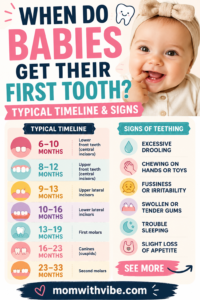
| 6 to 10 months | Lower central incisors often appear first |
| 8 to 12 months | Upper central incisors usually follow |
| 9 to 13 months | Upper lateral incisors may come in next |
| 10 to 16 months | Lower lateral incisors and first molars often follow |
After those front teeth, the next phase usually feels less predictable, but the order still tends to follow a rough pattern. If you want a baby-teeth map, the front teeth generally appear before the back ones, and the molars come later.

Why some babies teethe earlier or later than others
Family history is the biggest reason. If you or your partner got teeth early, your baby may follow the same pattern. If first teeth came in later for you, that can show up in your child too. Teeth timing often runs in families the same way eye color or height does.
Premature babies can also follow a different timeline, so doctors often look at corrected age instead of birth age when they judge development. That gives a more accurate picture of where your baby should be.
Small differences between boys and girls can happen, but they usually do not explain much on their own. In other words, sex is not a major cause of early or late teething, and timing alone rarely points to a problem. If your baby is otherwise growing well, a slightly early or late first tooth is usually just part of normal variation.
How to tell teething signs from normal baby fussiness
Teething can look like a small storm at home. Some babies get extra clingy, drooly, and cranky for a few days, while others barely react at all. The key is to watch for mouth-focused changes, because teething usually stays close to the gums.
The most common teething clues parents see first
The first signs often start before you can see a tooth. Drooling is one of the earliest clues, and it may show up before the gum looks different. Babies also love to chew on their hands, toys, blankets, or anything they can grab, because pressure on the gums can feel better.
Swollen or tender gums are another common hint. You may notice a small white spot under the gum, or a pink, puffy area where the tooth is close to breaking through. Around the same time, your baby may seem fussier than usual or wake more often at night.
These signs often show up together near the end of the teething process, when the tooth is about to emerge. That said, not every baby has obvious symptoms. Some babies are mildly bothered, while others act almost the same as usual.
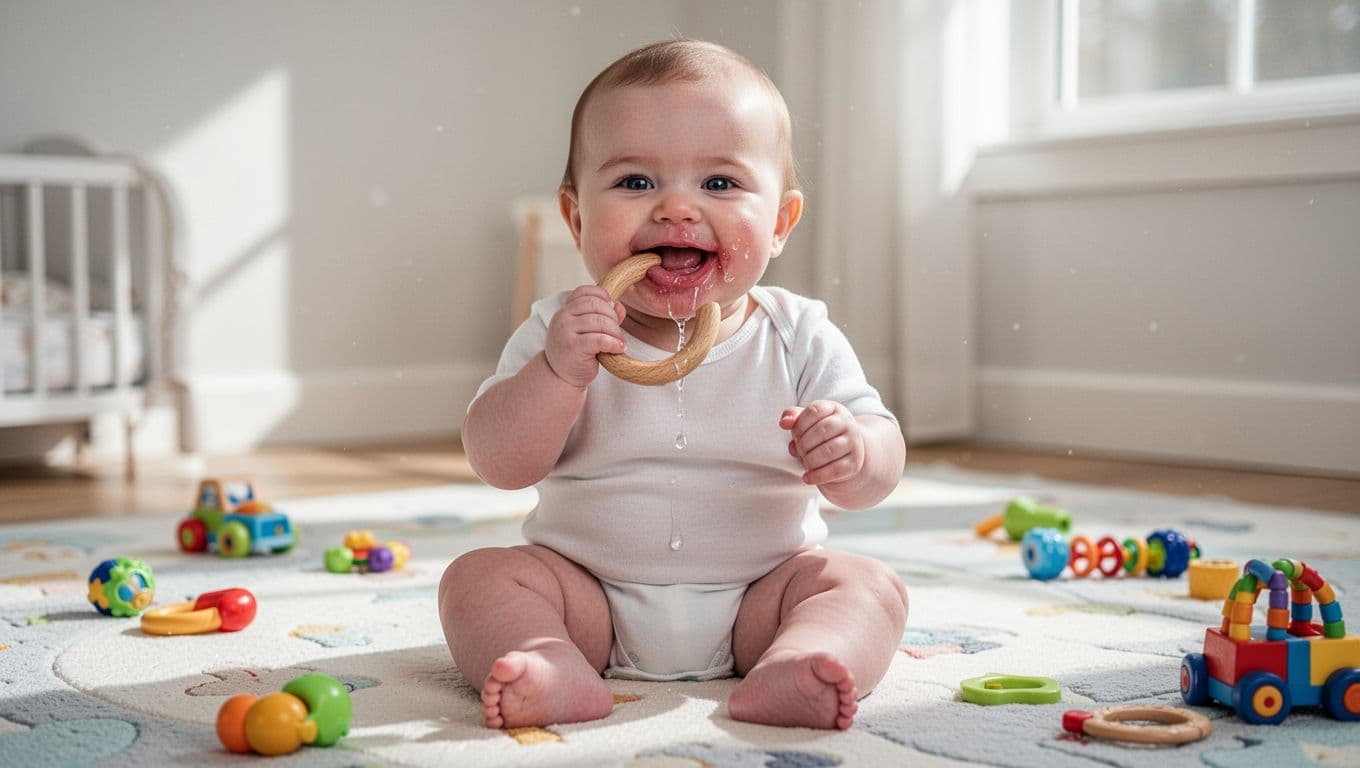
A quick checklist can help you spot the pattern:
- Drooling more than usual
- Chewing or gnawing on hands and toys
- Red, swollen, or tender gums
- Extra fussiness or clinginess
- Short naps or more night waking
For a simple reference on the usual teething pattern, MedlinePlus teething signs gives a clear overview. If the signs are mild and your baby still feeds, plays, and settles fairly well, teething is a likely fit.
Signs that are probably not just teething
Some symptoms need a second look. A fever of 100.4 F or higher, vomiting, diarrhea, a bad rash, cough, congestion, or severe symptoms are not usually caused by teething alone. Teething can happen at the same time as illness, so it’s easy to blame the wrong thing.
That matters because babies get sick for many reasons, and teething can hide the real cause. If your baby seems much more miserable than usual, or the symptoms spread beyond the mouth, pause and check for another cause.
A few signs should push you to call the pediatrician:
- Fever at or above 100.4 F
- Vomiting or diarrhea
- Rash that spreads beyond the face
- Trouble drinking enough milk or formula
- Extreme sleepiness or hard-to-soothe crying
Teething usually causes discomfort, not full-body illness.
The Cleveland Clinic teething guide explains the same point clearly, teeth can make babies uncomfortable, but fever and other major symptoms should not be brushed off as normal teething. If your baby has a fever or seems genuinely sick, treat it like an illness first, not a teething problem.
Teething often brings a mix of drool, chewing, and crankiness, but the symptoms stay fairly mild. Once you know the difference, it gets easier to tell when your baby is simply uncomfortable and when something else may be going on.
The order baby teeth usually come in
Baby teeth usually follow a fairly steady path, even if the timing feels unpredictable day to day. Most babies start with the bottom front teeth, then the top front teeth, and work their way outward toward the sides and back of the mouth.
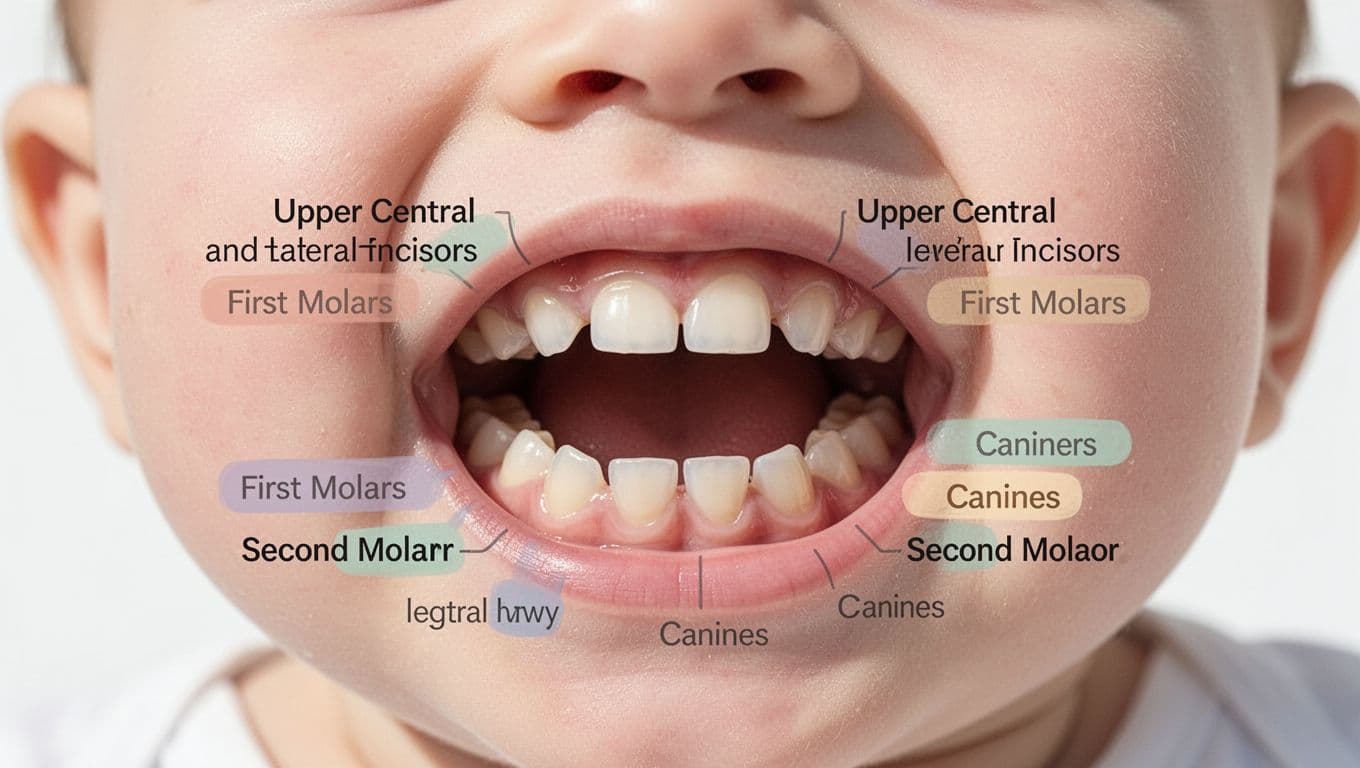
That pattern helps if you are checking your baby’s gums and wondering what comes next. You do not need a perfect chart, just a simple sense of the usual sequence. The image below gives a quick visual of that order.
Which teeth usually appear after the first tooth
After the first lower front tooth breaks through, the other lower central incisor often follows soon after. Next, many babies get the upper central incisors, which are the two front teeth on top. That is usually when the smile starts to change fast.
After the front teeth, the lateral incisors tend to come in next. These are the teeth beside the front teeth, and they fill in the edges of the smile. Then the first molars appear farther back, followed by the canines, the pointier teeth between the side teeth and the molars.
The second molars usually come in last. They are the back chewing teeth, and they can take a while. According to HealthyChildren’s teething guide, all 20 baby teeth are often in place by about age 3.
A simple way to picture the usual order is:
- Lower front teeth
- Upper front teeth
- Side teeth
- First molars
- Canines
- Second molars
Baby teeth usually come in like a wave, starting at the front and moving back over time.
That slower, front-to-back pattern is normal. It also explains why teething can seem to last for months, since new teeth keep coming in one group at a time. MouthHealthy’s eruption charts are a helpful reference if you want a broader look at the full set.
What is normal if the sequence looks a little different
The order is common, but it is not exact for every baby. One tooth may break through a little early, or the left and right sides may not match at first. That kind of mismatch is usually normal.
You may also see one front tooth come in before its pair on the other side. Or a lower tooth may appear before an upper one that usually comes soon after. Small timing gaps like that happen all the time, and they usually even out as more teeth emerge.
What matters most is the overall pattern, not a perfect schedule. If your baby is growing well and the gums look healthy, a slight shift in sequence is usually nothing to worry about.
A helpful rule is to watch the mouth over time, not just on one day. If a tooth seems stalled for a long time, or if you notice swelling, pain, or anything that looks unusual, that is the point to check in with your pediatrician or pediatric dentist.
Safe ways to soothe a teething baby at home
When teething hits, simple comfort usually works best. Your goal is to calm sore gums, give safe pressure to chew on, and keep things easy for your baby and you.
The best home remedies are gentle, low-effort, and easy to supervise. If your baby still seems very uncomfortable, ask your pediatrician before using any medicine.
Comfort measures that usually help most
Start with a clean finger and gently rub your baby’s gums for a minute or two. That steady pressure can feel soothing, almost like a small massage for tender spots.
A cool, wet washcloth is another easy option. Let your baby chew on it while you watch closely. You can also offer a chilled teething ring or other safe teething toy made for infants. Keep it in the fridge if needed, but make sure anything chilled is cool, not frozen.
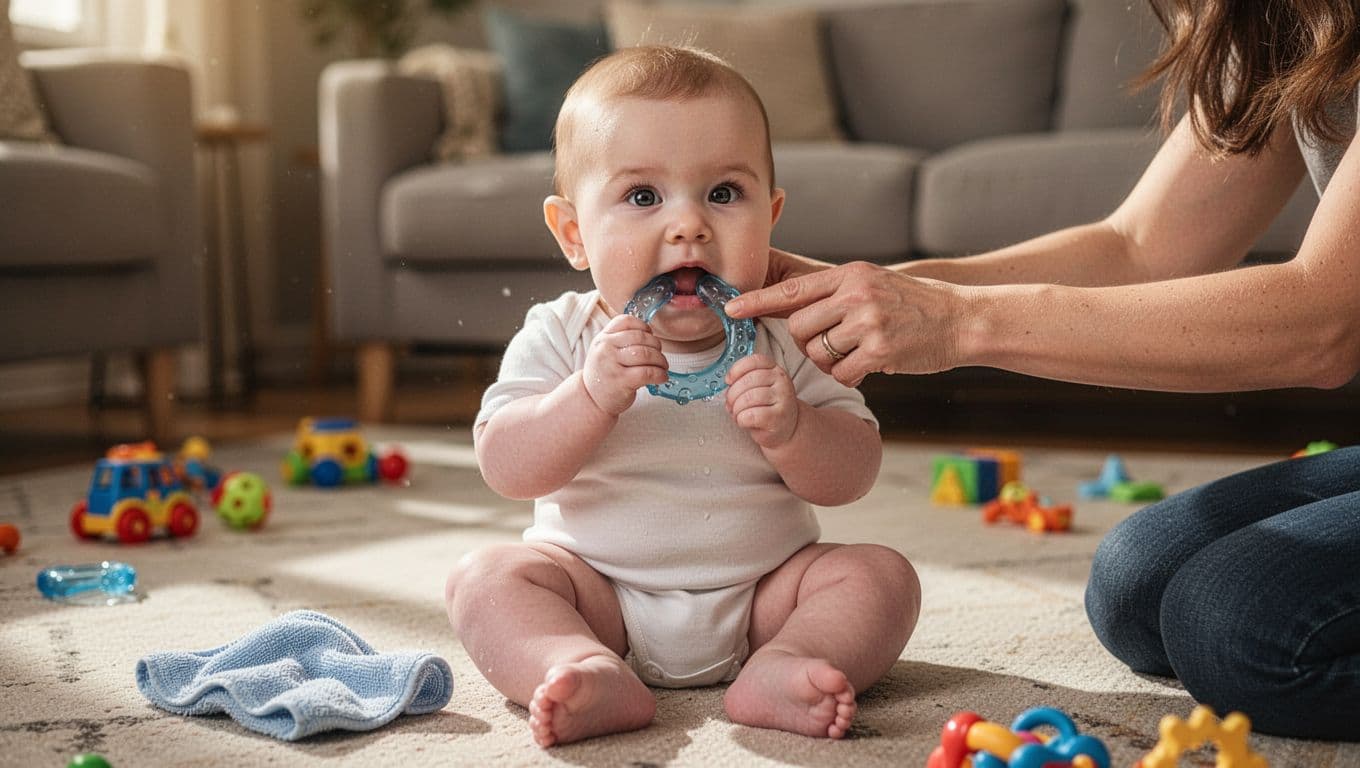
A few safe options that usually help most are:
- Clean finger gum rubs for short, gentle pressure
- Cool washcloths that are damp, not dripping
- Firm rubber teething rings kept cool in the fridge
- Baby-safe teething toys made for chewing, with no loose parts
Cool relief is enough for most babies. Frozen items can be too hard and can irritate gums.
If your baby still seems miserable after comfort care, the FDA’s teething pain guidance recommends talking with your pediatrician about medicine such as acetaminophen. Use any medicine only as directed for your baby’s age and weight.
What to avoid when your baby is teething
Some teething products look helpful but can create real risks. Amber necklaces are a no-go because they can lead to strangulation and choking. Those risks matter even during short naps or while your baby is being held.
Avoid numbing gels with benzocaine, too. Some products are not recommended for infants, and they can do more harm than good. The same goes for homeopathic teething tablets or other untested remedies, which may have unsafe ingredients or inconsistent doses. If you’re unsure about those products, the article on teething tablets safety for babies is a helpful place to start.
Also skip frozen objects and any hard item that could hurt the gums. A toy that is too cold or too solid can feel worse, not better. Choking risks matter here, so anything your baby chews should be sturdy, age-appropriate, and easy to supervise.
A calm rule works well: if a remedy is messy, hard, or hard to monitor, leave it out. Safe teething care should feel simple, not stressful.
When teething needs a doctor or dentist check
Most teething is mild and passes with home comfort measures. Still, some symptoms are a sign to call your pediatrician or dentist instead of waiting it out. The safest rule is simple, if the symptoms go beyond sore gums and mild fussiness, get them checked.
Signs your child needs a pediatrician can overlap with teething concerns, so it helps to watch the whole picture, not just the mouth. If something feels off, trust that instinct and ask for advice.

Red flags that should not wait
Some symptoms are not typical teething symptoms and need prompt medical attention. Fever, bad diarrhea, vomiting, trouble drinking, and signs of infection can point to an illness instead of teething. The Mayo Clinic teething guide also notes that major symptoms like fever and diarrhea should not be brushed off as normal teething.
Call your pediatrician soon if your baby has any of these:
- A fever of 100.4 F or higher
- Vomiting or severe diarrhea
- Trouble drinking, nursing, or taking a bottle
- A swollen face or gums that look very inflamed
- Nonstop crying or pain that does not settle
- A rash, cough, congestion, or other illness symptoms
- Signs of dehydration, such as fewer wet diapers, a dry mouth, or no tears
If symptoms spread beyond the mouth, teething is probably not the full story.
These signs matter because babies can get sick at the same time they are teething. That can make the problem look smaller than it is. If your baby refuses fluids, seems unusually sleepy, or gets worse instead of better, call your pediatrician right away.
When delayed teething is worth asking about
If your baby has no teeth by about 18 months, bring it up with a doctor or dentist. Late teething is often harmless, especially when it runs in the family, but it still deserves a check if you have concerns.
A delay is more worth asking about when it comes with other developmental issues, slow growth, or concerns about feeding and overall health. In those cases, the tooth delay may just be one piece of a bigger picture. If your child seems healthy otherwise, the visit is usually reassuring more than alarming.
The next step also matters: the first dental visit is recommended by age 1, or within six months of the first tooth. The ADA’s first dental visit guidance is clear on that timeline. Even if everything looks normal, that early visit helps your child start with good oral care and gives you a chance to ask about brushing, fluoride, and feeding habits.
If you are unsure whether a symptom is just teething, ask early. A quick check can rule out illness and give you peace of mind.
Conclusion
Most babies get their first tooth around 6 to 10 months, but a healthy timeline can be wider than that. The first tooth often shows up with drool, chewing, and sore gums, and those mild signs are usually part of normal teething.
Simple comfort measures, like a cool teething ring or a gentle gum rub, can help on the hard days. If your baby has a fever, vomiting, bad diarrhea, or pain that seems too strong for teething, call your pediatrician or dentist.
The main thing is to watch the pattern, not worry over every small change. A first tooth may arrive early, late, or right on schedule, and all three can still be normal.
Save pin for later

- Can I Give A Half-boiled Egg To My Baby? - September 25, 2026
- What Are The Nutritional Benefits Of Eggs For Babies - September 25, 2026
- When Should I Avoid Giving Eggs To My Baby? - September 25, 2026