Yes, bassinet sleep is a safe, common choice for newborns when you use it the right way. For tired parents, that matters, because the first weeks bring a lot of guesswork about what feels safe, what fits your space, and when your baby has outgrown the bassinet.
The basics are simple, a firm flat surface, back sleeping, a bare sleep space, and a bassinet that meets safety standards. If you want a quick reminder on safe back sleeping for babies, this safe sleep video helps, and next we’ll look at the age and size limits, when a bassinet makes sense, when to move to a crib, and what to avoid.
Why bassinets are often the best first sleep space for newborns
For the first weeks, a bassinet fits the rhythm of newborn life better than most larger sleep setups. It keeps your baby close, keeps your hands free, and gives you a clear place to put baby down for every nap and nighttime stretch.
That early convenience matters. Newborns feed often, wake often, and need a lot of soothing. A bassinet keeps those wake-ups manageable without turning your bed into the sleep space.
Close enough for night feeds without full bed-sharing
A bassinet makes room-sharing easier, and that’s a big reason many parents start there. You can keep baby right beside your bed, then respond fast for feeding, burping, diaper changes, or a quick cuddle.
That setup is different from bed-sharing. Room-sharing means baby sleeps in the same room, but on a separate surface. Bed-sharing means baby sleeps on the same mattress as an adult, which is a different risk level and not the same choice at all.
A bassinet gives you closeness without giving up a separate sleep space.
For many families, that middle ground is the sweet spot. You stay within reach, but baby still has an independent place to sleep. The American Academy of Pediatrics also recommends a separate sleep surface in the parents’ room for the early months.
If you want a deeper look at the practical side of this setup, the room-sharing sleep benefits are easy to see in real life.
A snug size that can feel calmer for tiny babies
Bassinet sleep can also feel more settling for a newborn because the space is small and defined. A large crib can feel a little open at first, while a bassinet gives tiny babies a snuger environment during those early months.
That said, the comfort comes from safe design, not from adding extras. A firm, flat mattress and a bare sleep space are what matter most. No pillows, loose blankets, bumpers, or toys should go inside.
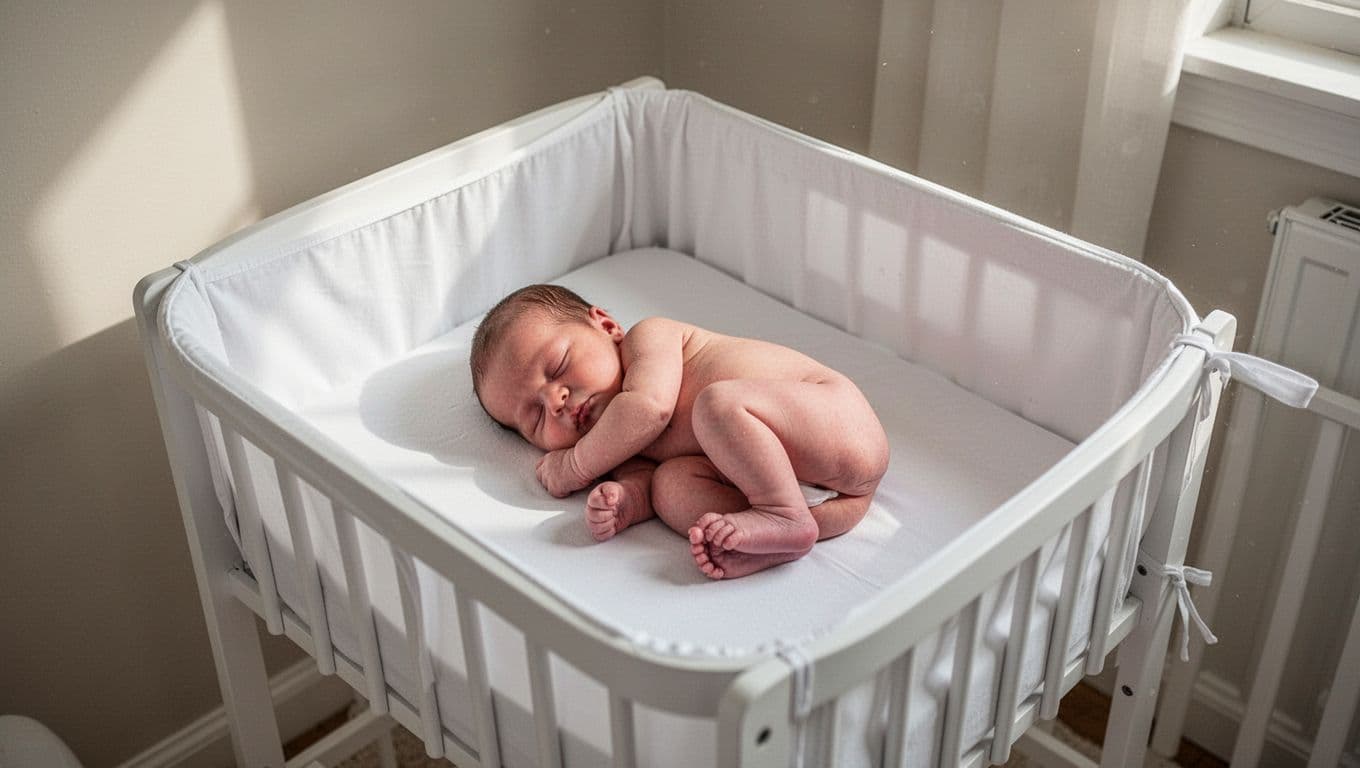
Bassinet sleep is also temporary by design. Once your baby gets bigger, starts moving more, or reaches the product’s limits, it’s time to move on to a crib or another approved sleep space.
How to tell if a bassinet is actually safe for sleep
A safe bassinet is simple, not fancy. The product should give your baby a firm, flat place to sleep, with no extras that can shift, sag, or trap air. Price and style do not matter nearly as much as whether the bassinet meets current safety rules and supports a bare sleep space.
If you want the shortest test, ask yourself this: Would I trust this product for an overnight sleep without adding anything to it? If the answer is no, it does not belong in your baby’s sleep setup.
What a safe bassinet setup should look like
The safest setup is plain. Baby goes on the back, on a firm, flat mattress, with a fitted sheet only. That means no pillows, no loose blankets, no stuffed toys, and no bumpers of any kind.
Room temperature matters too. Keep the room comfortable, then dress baby in light layers. A sleep sack is a better choice than loose bedding because it stays in place and does not cover the face. For a quick refresher on the basics, essential safe bedding for newborns keeps the sleep space clean and simple.
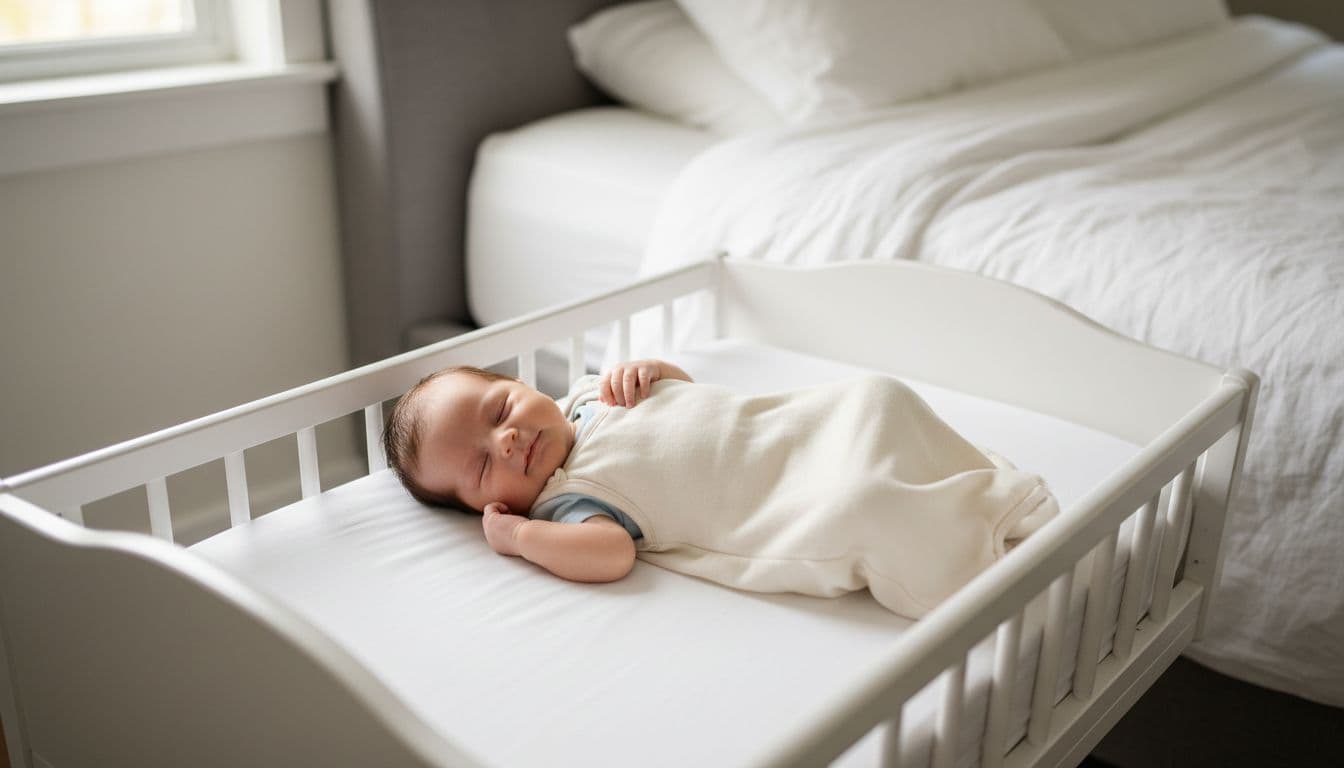
Bare, flat, and separate is the safest bassinet setup.
The American Academy of Pediatrics also recommends a safe, separate sleep surface in the parents’ room, which is why the setup matters as much as the product itself. See the AAP safe sleep guide for parents for the full guidance.
Features to avoid in bassinets and bedside sleepers
Some products look cozy, but cozy is not the goal. Soft sides, deep padding, extra inserts, wedges, weighted pieces, and any built-in incline can raise the risk of suffocation or falls. A sleep product should stay flat and stable, not act like a lounger.
Before you use any bassinet or bedside sleeper, check for these red flags:
- Soft or padded sides that collapse inward
- Extra inserts or cushions that change the fit
- Wedges or inclines that tilt the sleep surface
- Weighted sleep products or products made to hold baby in place
- Loose attachment points on bedside sleepers
- Any gap between the sleeper and adult mattress
Also check for recalls before every new use, especially with hand-me-down gear or secondhand purchases. The CPSC safe sleep page and its recall database are the best places to start.
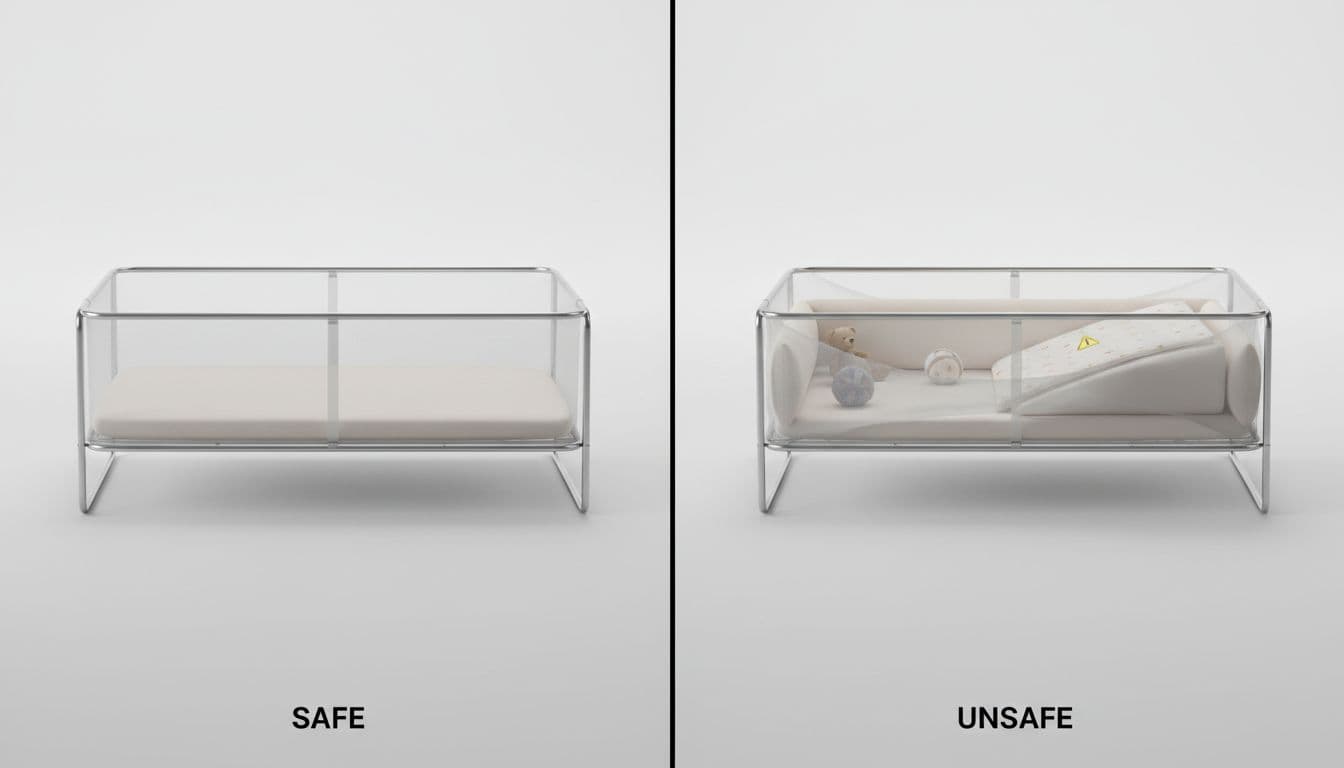
Choose products made for infant sleep only, and make sure they meet current federal safety rules. If a bassinet asks you to add cushions, tilt it, or use it like a nest, skip it.
Why a bassinet should always stay separate from your bed
Room-sharing and bed-sharing are not the same thing. Room-sharing means baby sleeps in the same room as you, but on a separate surface. Bed-sharing means baby sleeps on the adult mattress, and that changes the risk.
A bassinet should sit beside your bed, not inside it. That separate sleep surface helps prevent rolling, trapping, and suffocation hazards, especially when parents are half-asleep. If you are using a bedside sleeper, it should attach securely and sit flush against the mattress with no opening between the two surfaces.
That separation is the whole point. You stay close for feeds and comfort, while baby still has a dedicated sleep space that meets safety standards.
When a bassinet makes sense, and when it does not
A bassinet is a smart choice for many newborns, but it’s not the only safe option. The best setup depends on your space, your baby’s size, and how often you need to get up at night.
For some families, a bassinet feels like the easiest bridge between constant newborn care and a safer sleep routine. For others, a crib or mini crib is simpler from day one, and that choice can save you a move a few weeks later.
Best situations for using a bassinet
A bassinet makes the most sense in the early newborn weeks, when your baby is waking often and still tiny. It keeps sleep close to your bed, so night feeds and diaper changes feel less exhausting.
It’s also a good fit if you’re recovering from birth and want less distance between you and your baby. When getting up feels slow or sore, having the sleep space within arm’s reach can make nighttime care easier.
Small bedrooms are another strong reason to use one. If a full crib crowds the room, a bassinet gives you a separate sleep surface without turning the nursery or bedroom into a tight squeeze. If you’re trying to keep baby gear simple, simplifying newborn care routines often starts with choosing the right sleep space.
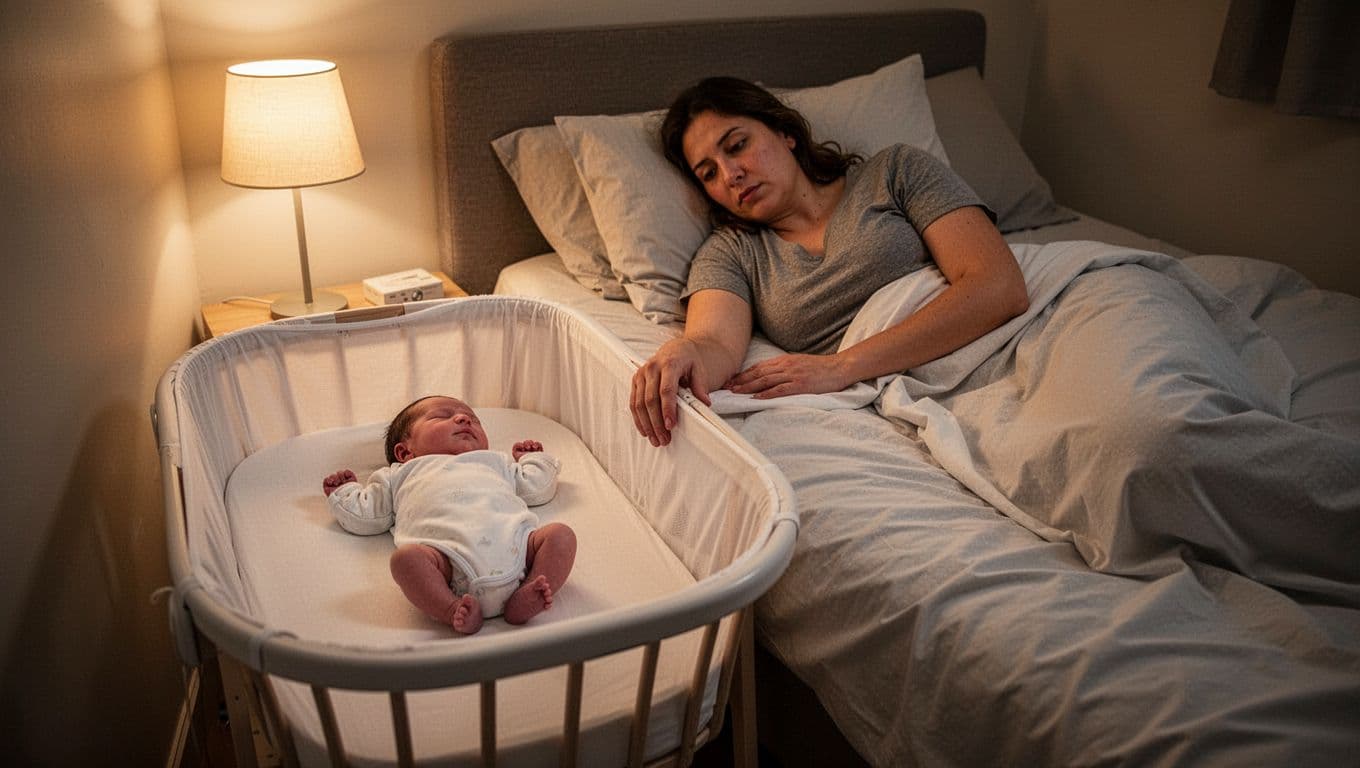
A bassinet works best when convenience and close access matter more than long-term use.
It can also help if you want to move baby from room to room during the day. A lightweight bassinet is easier to carry than a crib, so it can fit better into real life. That said, it still needs to stay on a flat, stable surface and be used only for sleep.
The AAP says a separate sleep surface in your room is the safest setup for the early months, and a bassinet can fit that plan well. See the AAP safe sleep guidance for parents for the full recommendation.
When to skip the bassinet and go straight to a crib
Some babies outgrow a bassinet fast, so skipping it can make sense from the start. A crib or mini crib is a better pick if your baby is already large, moves a lot in sleep, or seems likely to hit the weight limit quickly.
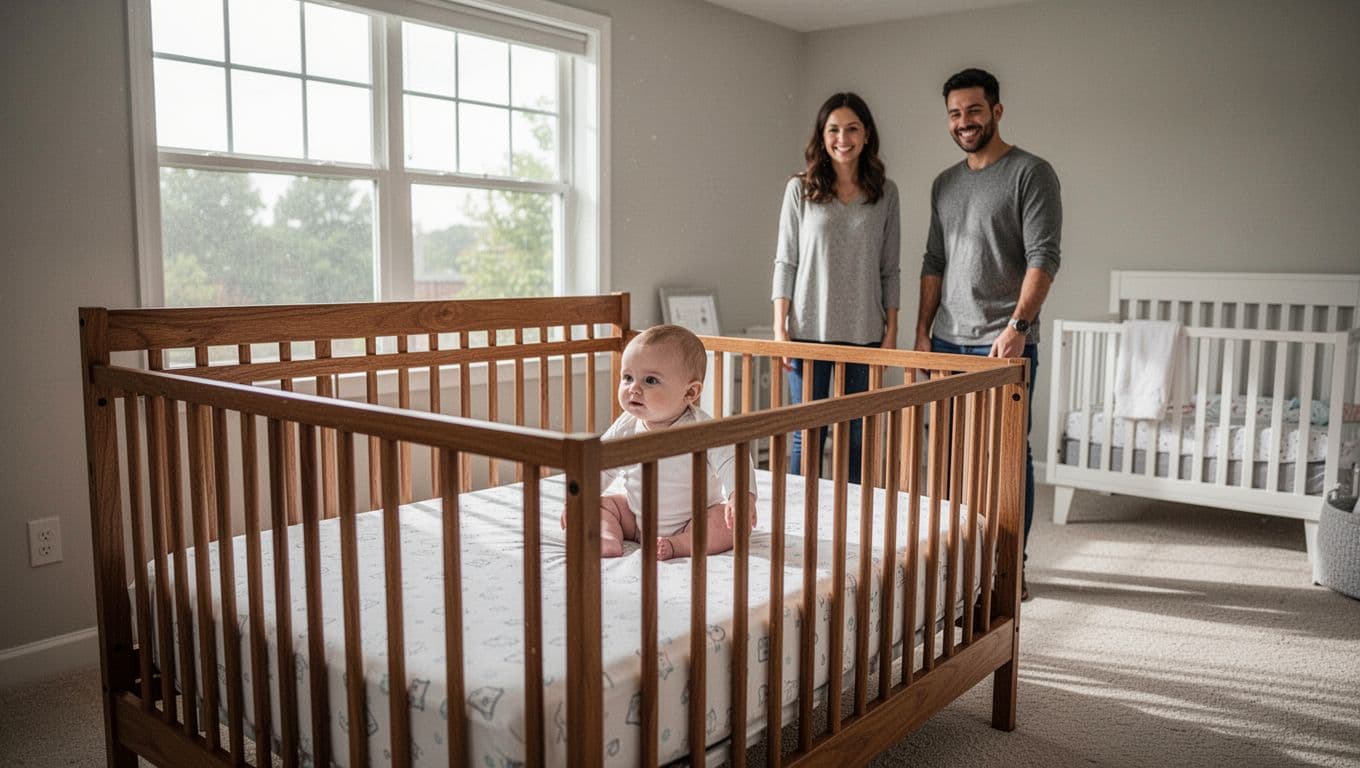
A crib also works better if you want one sleep space that lasts longer. Many parents prefer to set up the room once and skip a mid-stage transition.
That choice is practical in a few common situations:
- Your baby is close to or already above the bassinet weight limit.
- Your baby kicks, rolls, or scoots a lot during sleep.
- You want fewer gear changes in the first few months.
- You already have room for a crib or mini crib beside your bed.
A crib can be the simpler answer, and it’s safe from day one when set up correctly. The same rules still apply, firm mattress, fitted sheet only, and no loose items in the sleep space. If your baby seems restless in a smaller bassinet, a larger sleep surface may fit better without changing the safety basics.
How long babies can safely sleep in a bassinet
Bassinet sleep is short-term by design. There is no single age that fits every baby, because the safest cutoff depends on the product manual, your baby’s size, and how much your baby moves during sleep.
Most bassinets are built for the newborn stage, often until about 5 months, but many babies need to move sooner. Always check the label for the exact weight and height limits, then watch your baby, not just the calendar. The AAP safe sleep guidance also says babies should sleep on a firm, flat surface that meets current safety standards.
Common signs it is time to move to a crib
The clearest sign is movement. If your baby starts rolling, pushing up on hands, sitting, or scooting more during sleep, the bassinet is no longer the best fit.
Size matters too. If your baby is getting close to the weight limit, looks cramped, or can touch the sides too easily, it is time to switch. A bassinet should feel snug, not tight.
Watch for these signs:
- Rolling or trying to roll during sleep
- Pushing up on hands or knees
- Sitting up unassisted
- Scooting, twisting, or shifting a lot
- Reaching the product’s weight or height limit
- Appearing cramped or pressing against the sides
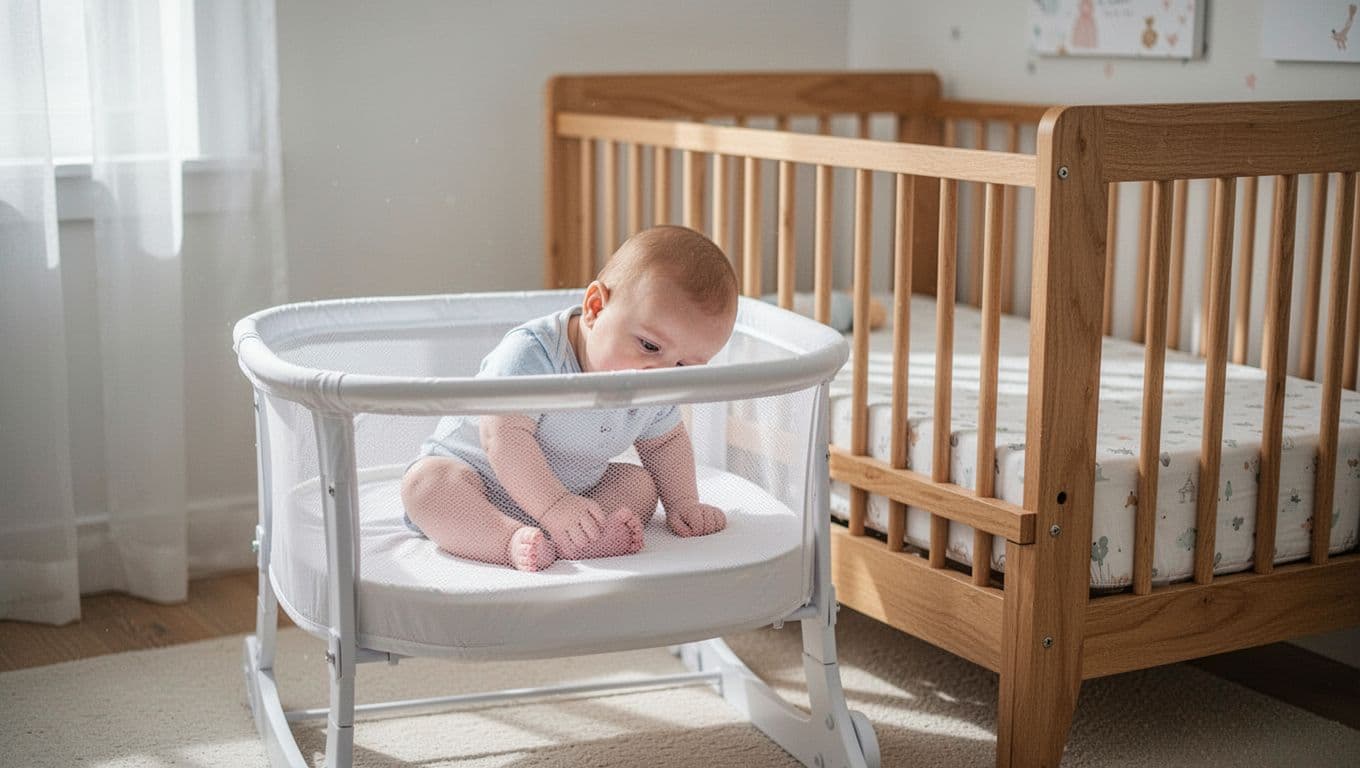
If your baby seems too big for the space, trust that signal. The move to a crib is a normal step, not a setback. It just means your baby is growing the way babies do.
Why waiting too long can become unsafe
Bassinets are made for a limited window, and that limit matters. Once a baby outgrows the bassinet, the sides are no longer high enough, the mattress fit can become less secure, and active movement can raise the risk of a fall or unsafe position.
That is why the manual is so important. The manufacturer sets the weight, height, and use limits for a reason, and those limits are part of safe sleep, not a suggestion.
A crib gives your baby more room to move safely. If you want the transition to feel smoother, keep the same bedtime rhythm and use simple, repeatable cues. Gentle crib sleep routines can help your baby adjust without turning the change into a struggle.
The key point is simple. Once your baby is too big or too mobile for the bassinet, move to a crib or another approved sleep space right away.
Safer sleep alternatives if a bassinet is not the right fit
If a bassinet feels too small, too temporary, or just awkward for your home, you still have safe options. The key is to choose a sleep space that is firm, flat, and made for infant sleep, then keep the setup bare.
That means the same basic sleep rules still apply. Baby should sleep on the back, on a fitted sheet only, with no pillows, blankets, or soft extras. The goal is simple, a space that works for your home and still supports safe sleep.
Full cribs and mini cribs for longer use
A full-size crib is a strong choice if you want one sleep space that can last through the newborn stage and into toddlerhood. It gives your baby more room to stretch, roll, and grow, which can save you from making a second move a few months later. For parents who want a longer-term setup, a crib is often the most practical pick, and safe sleep setup for newborns starts with the same firm, bare surface.
Mini cribs work well when space is tight. They are a smart option for smaller bedrooms, apartments, or shared spaces where a full crib would feel too large. Even though they take up less room, they still need to meet current safety standards and use a firm mattress with a tight fitted sheet.
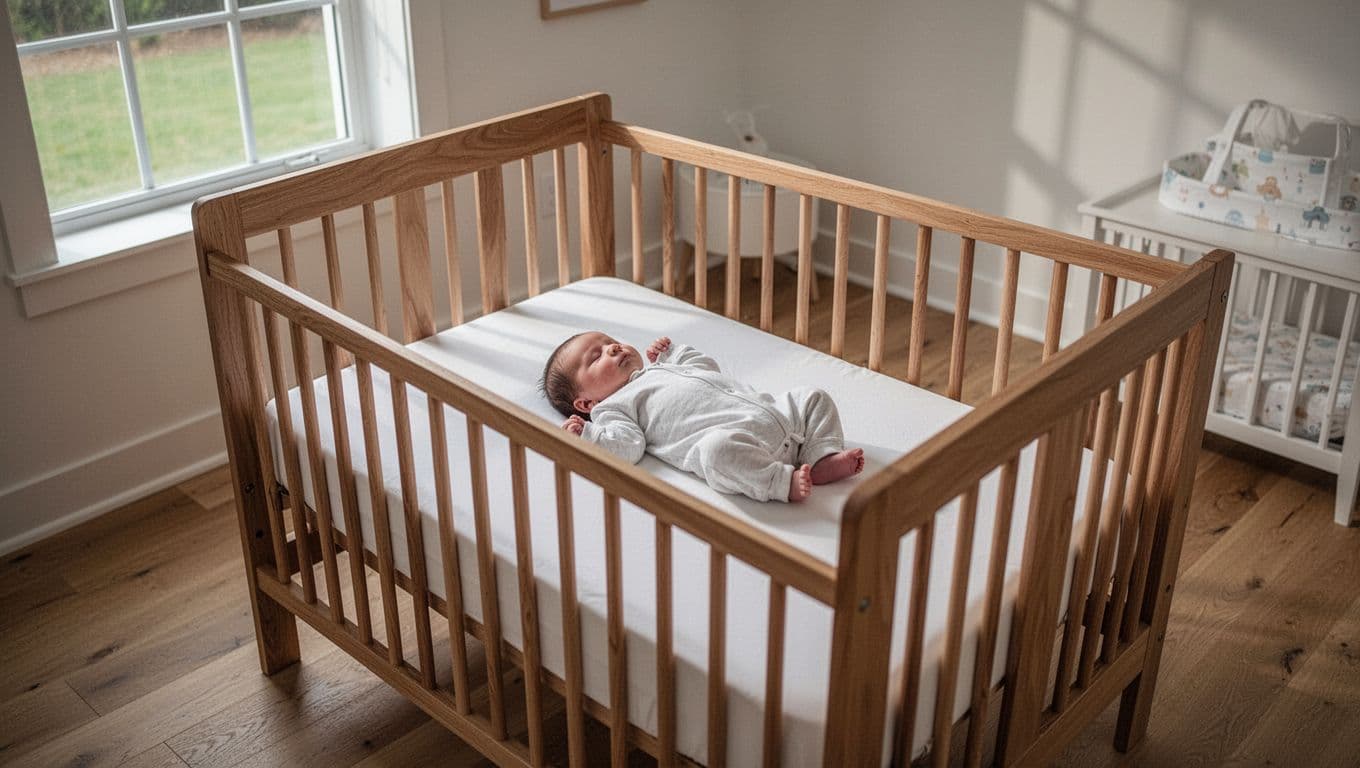
The CPSC says the safest sleep surface is firm and flat, with nothing extra inside the crib, bassinet, or play yard. See the CPSC crib safety guide for a clear checklist before you buy or set up a crib.
Portable play yards for travel or small spaces
Portable play yards can also work as a sleep space when they meet safety standards and have a firm, flat surface. They are especially useful if you move baby between rooms or need a sleep setup for travel, grandparents’ houses, or a small apartment.
These products are popular because they fold up easily, but portability does not change the sleep rules. Use the play yard only as directed, skip any extra padding, and keep the inside bare except for the fitted sheet. The CPSC safe sleep guidance is clear about using products made for sleep and avoiding soft add-ons.
A portable play yard can be a good bridge between home and travel. If your baby sleeps well in one, you get a safe option that moves with your routine instead of fighting it.
Conclusion
Yes, your baby can sleep in a bassinet, and for many newborns it is a safe, practical choice. The key is keeping the setup simple, firm, flat, and bare, with your baby on their back in the right age and size window.
A bassinet works well when it fits your space and your baby still fits it well. Once your baby starts rolling, pushing up, or getting close to the limit, move to a crib or other approved sleep space.
That simple rule keeps the decision clear, a bassinet is fine when it still fits your baby, and a crib is the next safe step when it does not.
Save pin for later

- 15 Effective Ways to Deal With Stubborn Children (Without Yelling) - September 22, 2026
- Birth Order Influence: 8 Things Parents Should Know About Each Child - September 22, 2026
- 5 Ways to Manage Your Toddler’s Anger Issues Without Losing Your Cool - September 22, 2026