

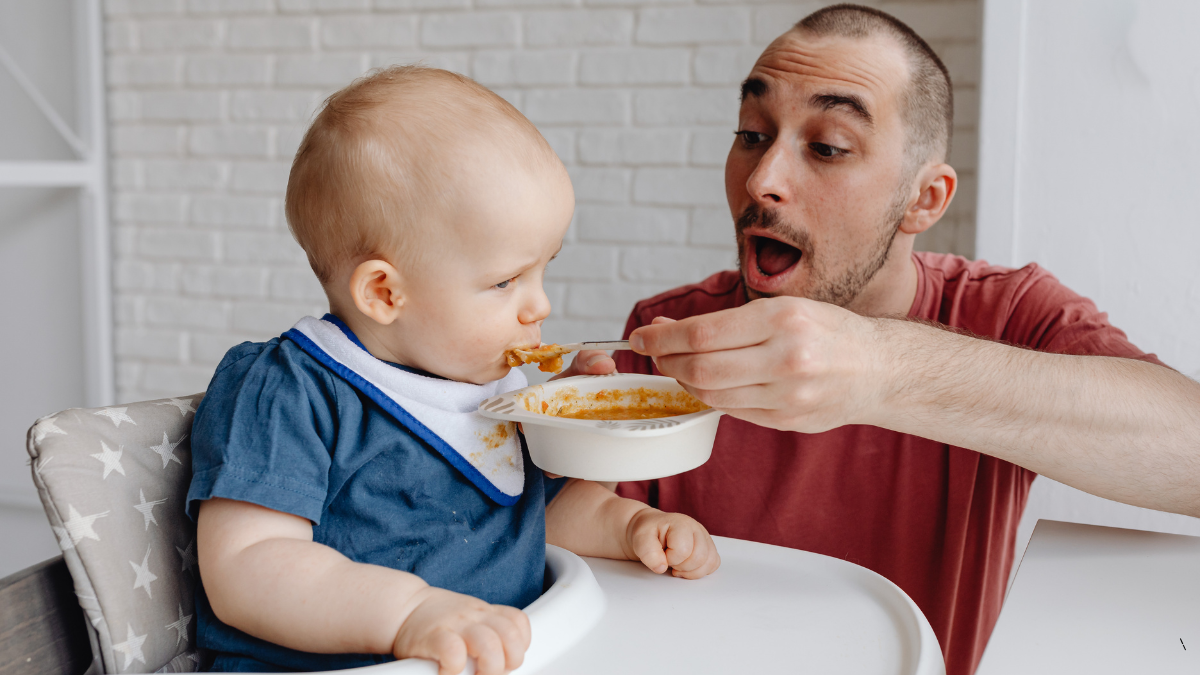
When bedtime turns into a long stretch of rocking, feeding, and starting over, you start looking for small wins. The right baby sleep foods won’t fix every sleep issue, but they can help support a calmer night by keeping little tummies full and blood sugar steadier.
For babies and toddlers around 6 months to 2 years, evening foods can also bring in sleep-related nutrients like tryptophan, magnesium, calcium, and vitamin B6. That said, age matters, allergies matter, and choking risk matters too, so the safest choices depend on where your child is in their feeding stage.
If your bedtime routine needs more support, these tips to help your baby sleep better can help tie everything together. Next, let’s look at the foods that are worth adding to the evening routine, and how to serve them safely.
YouTube: 5 Magic Foods For Good Sleep in Babies
How food affects baby sleep more than most parents realize
Food can change bedtime more than many parents expect. A baby’s body is not just filling up, it is also using nutrients to build calming brain chemicals, steady energy, and support sleep cycles.
That means the right evening snack can help a baby feel settled, while the wrong timing or the wrong amount can do the opposite. A tummy that is too empty may lead to wake-ups. A tummy that is too full can cause discomfort, spit-up, or restlessness.
The sleep-friendly nutrients to look for
Some foods are linked to better sleep because they bring in nutrients the body already uses for calm and rest. A good review of infant sleep nutrition explains that the science is still limited, but the pattern makes sense.
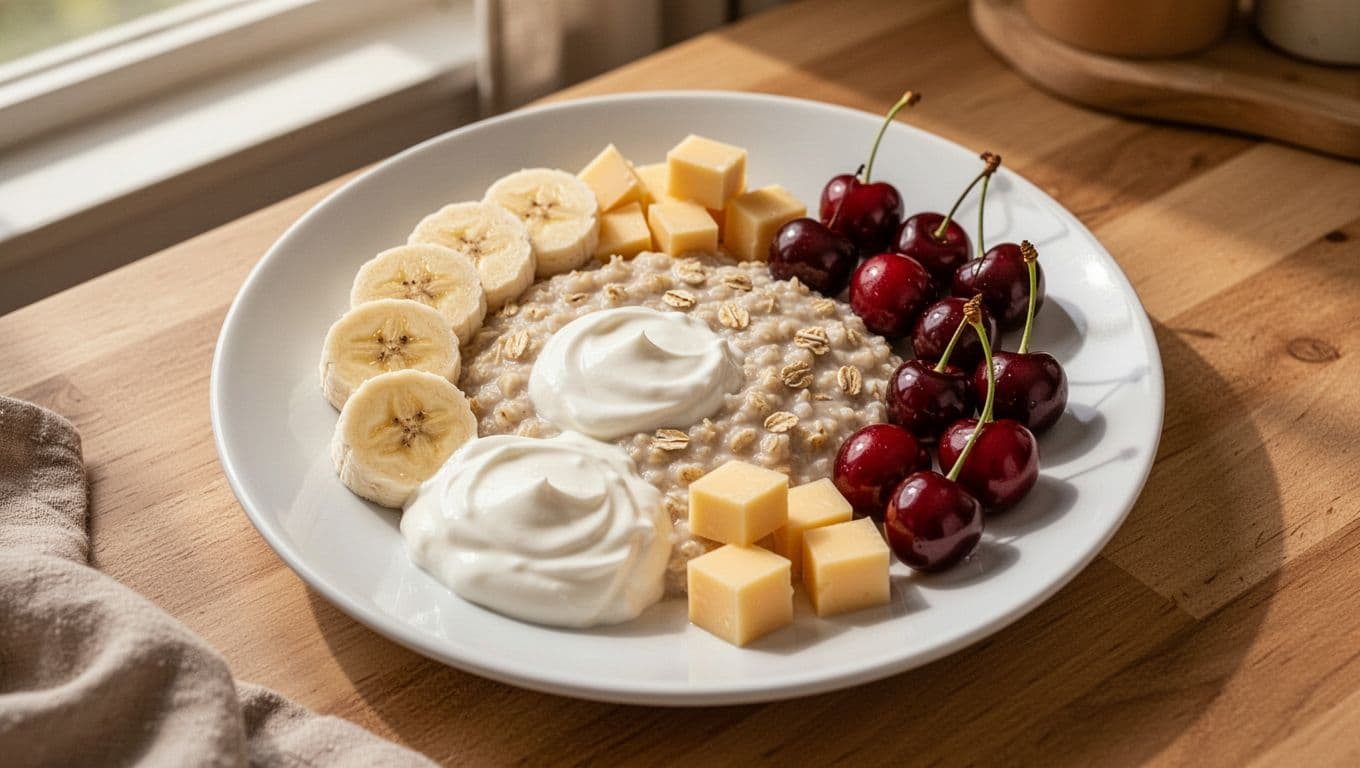
- Tryptophan is an amino acid, a building block of protein. The body uses it to make serotonin and melatonin, which help set a calmer mood and sleep rhythm.
- Magnesium helps relax muscles and supports the nervous system. When a baby is less tense, settling down at night can feel easier.
- Calcium helps nerves and muscles work the right way. It also plays a role in melatonin production.
- Vitamin B6 helps the body turn food into brain chemicals that support calm, including serotonin.
- Natural melatonin is the sleep signal the body makes on its own. Foods that support melatonin pathways may help bedtime feel smoother, though healthy babies should not get melatonin supplements without medical advice.
Why timing matters just as much as the food itself
Even the best bedtime foods work better when you serve them earlier in the evening. That gives the stomach time to digest before sleep, which can reduce fussiness and keep bedtime from turning into a full belly battle.
Try to avoid offering a large snack right as lights go out. Sugar-heavy foods can also give a quick burst of energy, then a crash, which is the last thing you want before sleep. A small, balanced evening food works better than a late, heavy one.
Bananas, the easiest bedtime fruit for little tummies
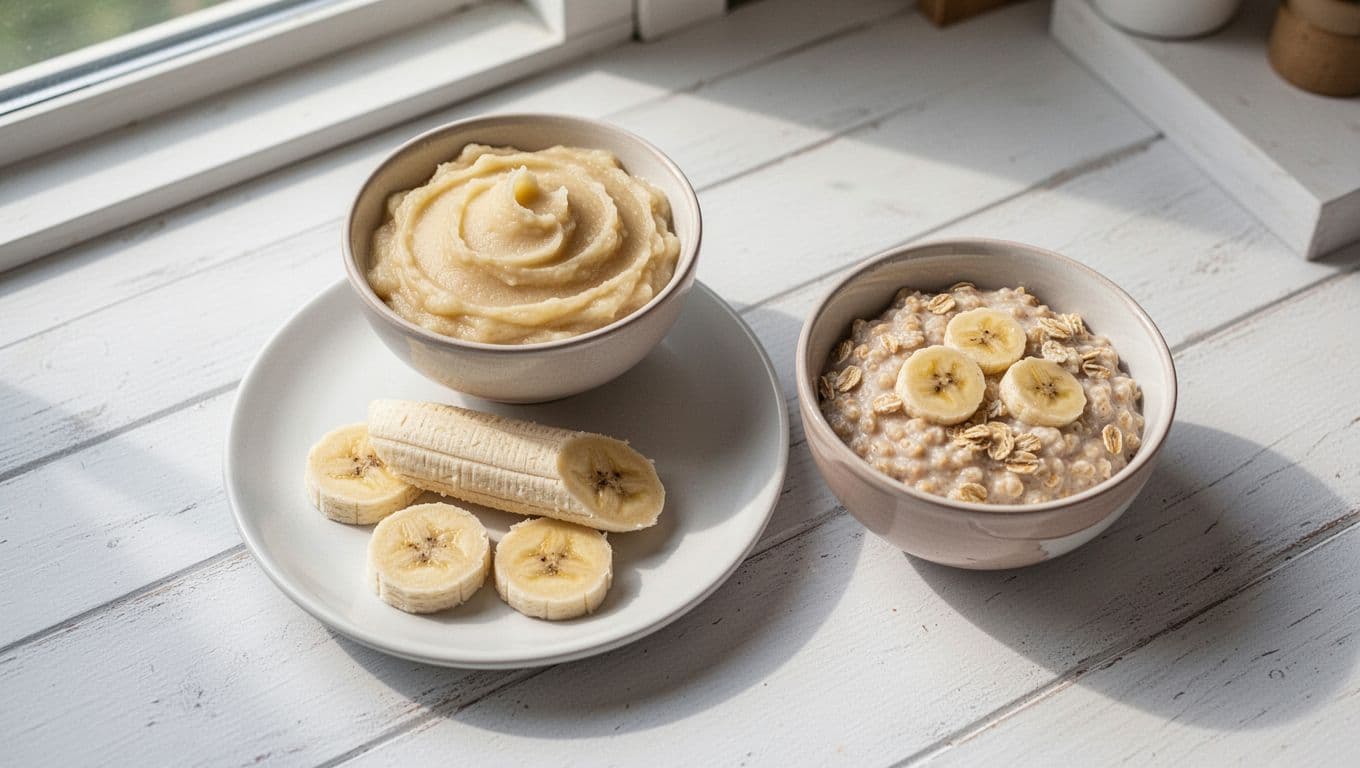
Bananas earn a spot on the bedtime menu because they are soft, mild, and easy to digest. They bring potassium, magnesium, and vitamin B6, which support calm muscles, steady nerves, and a comfortable tummy. A plain banana is also easy to mash, so it fits baby feeding stages without much fuss, as noted in this baby-led weaning banana guide.
How to serve bananas safely by age
For babies 6 to 12 months, start with 1 to 3 tablespoons of ripe mashed banana. Stir it into oatmeal for a smoother texture, or thin it with breast milk, formula, or water if it feels too thick. For 1 to 2 years, offer soft slices or small chunks that squish easily, and keep the portion modest so bedtime stays calm.
The first few times you serve banana, watch closely for any rash, swelling, vomiting, or diarrhea. That extra attention matters whenever a new food enters the routine.
Easy banana pairings that can make dinner more filling
Banana works well with foods that keep hunger down longer. Oatmeal adds slow-release carbs, yogurt brings creaminess and protein, and a small amount of nut butter works only if your child has already tried it safely and age-appropriately.
If you want a fuller evening plate, healthy meal ideas for 9-month-old babies can help you build around banana without making dinner too heavy. That balance helps little tummies stay settled through the night.
Oatmeal can help babies feel full and calm before bed
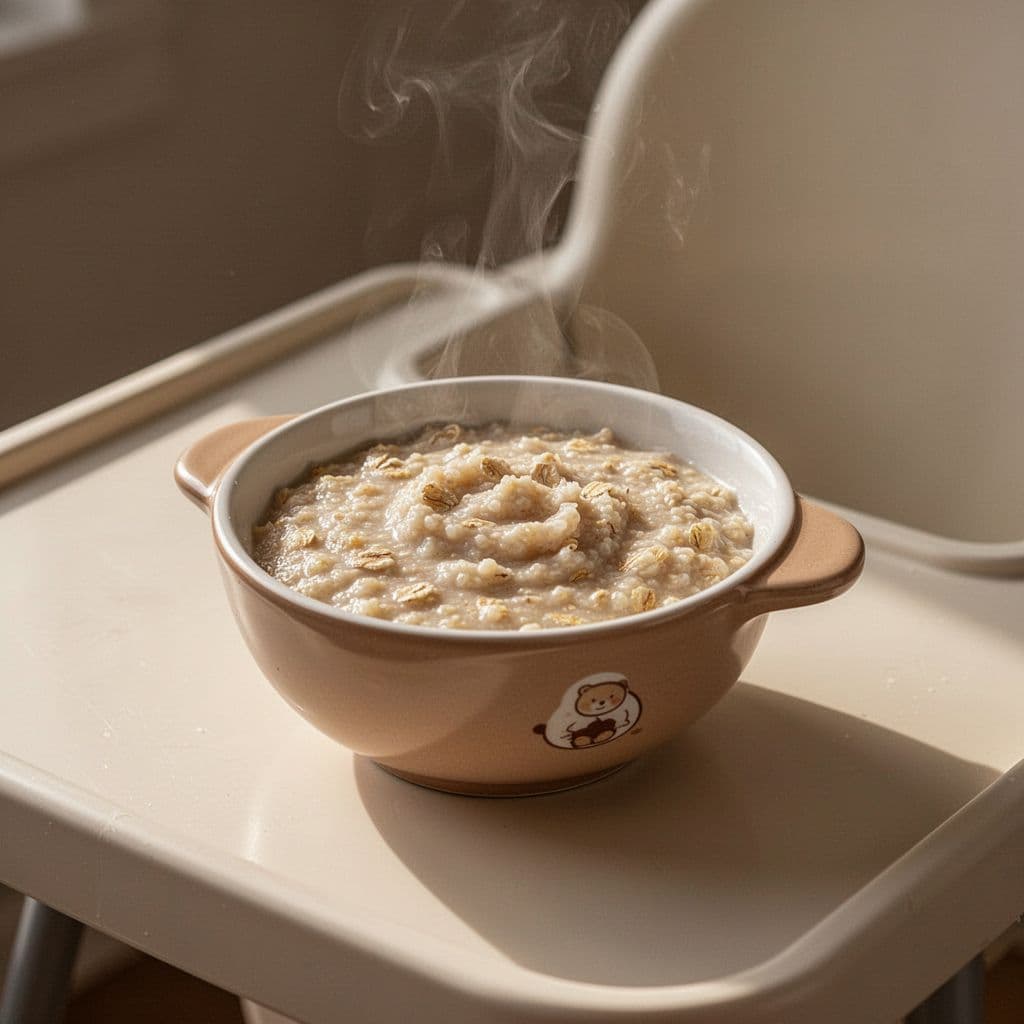
Oatmeal is a smart evening food because it is soft, easy to serve, and gentle on tiny tummies. It also has complex carbs, which break down more slowly than sugary snacks, so babies stay satisfied longer. That matters at bedtime, when a full belly can help reduce hunger-related wake-ups and make the last part of the routine feel calmer. For a wider look at how food and sleep connect, see pediatric sleep and nutrition tips.
Why oats work better than sugary bedtime snacks
Sugary snacks can give a quick burst of energy, then leave a baby hungry again soon after. Oats work differently. They digest more slowly, so they help keep energy steadier and the stomach more settled.
That slower digestion can also support how the body uses tryptophan, an amino acid tied to sleep hormones. Oatmeal does not guarantee a better night, but it is a better bedtime choice than cookies, cereal, or sweet pouches right before sleep.
A calm belly often matters more than a sweet taste at bedtime.
Simple oatmeal ideas for babies and toddlers
Keep the bowl plain, soft, and age-appropriate. For younger babies, iron-fortified baby oatmeal is often a strong choice because it mixes smoothly and adds an important nutrient.
A few easy options work well:
- Plain baby oatmeal made with breast milk, formula, or water
- Oats mixed with mashed banana for a little natural sweetness
- Soft oatmeal with milk or yogurt for older toddlers who already handle dairy well
Keep added sugar out of the bedtime bowl. If you want more flavor, use fruit instead. A small serving is usually enough to feel filling without making bedtime too heavy.
Yogurt or warm milk can be a soothing nighttime choice
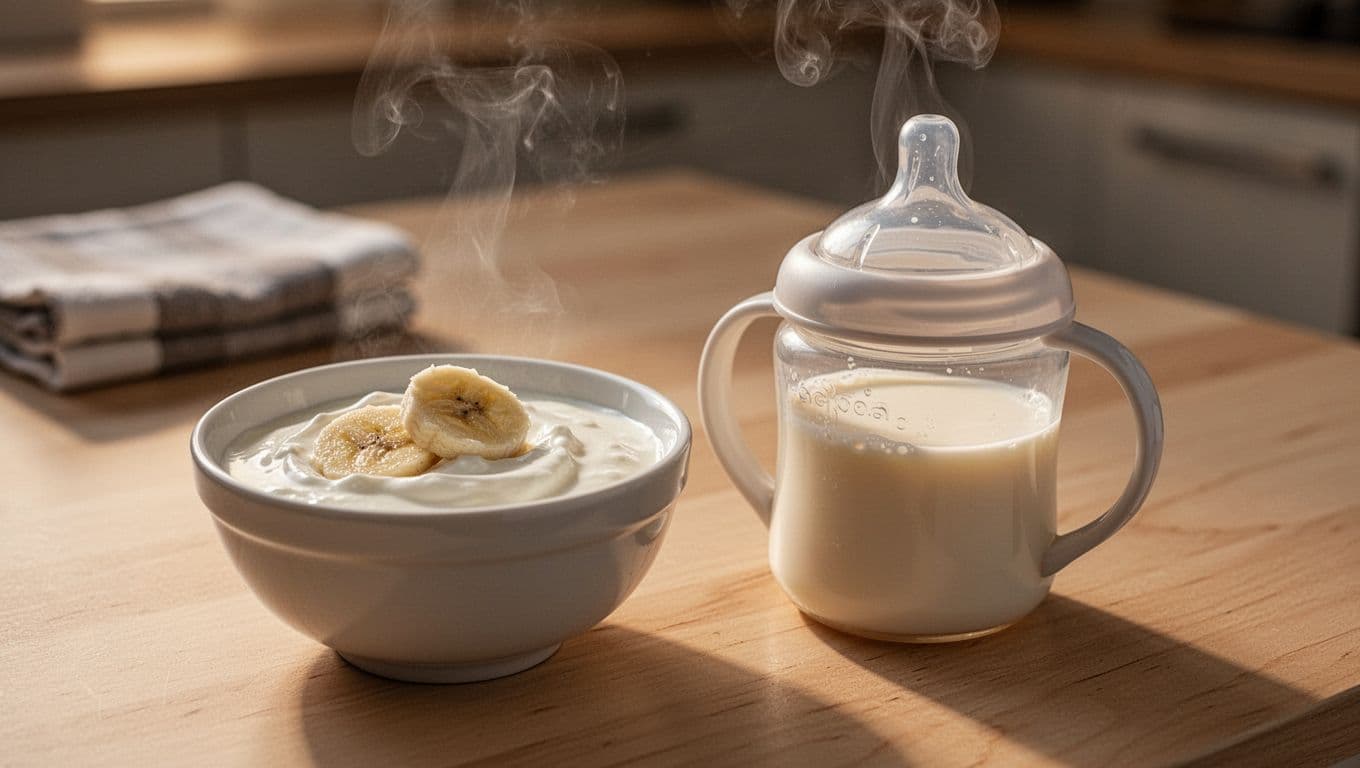
Dairy can fit well into a bedtime routine when your child is old enough and the portion stays small. Yogurt and warm milk both bring protein, calcium, and tryptophan, which are tied to fullness, bone support, and a calmer wind-down. The warm or creamy feel can also be comforting, almost like a soft blanket for the stomach.
What parents need to know about age and dairy safety
Age matters here. Breast milk or formula should stay the main milk source before 12 months, while yogurt can be introduced once your baby starts solids, usually around 6 months. The CDC’s guidance on cow’s milk and milk alternatives is clear about this timing, and it helps keep feeding safe and simple.
Choose pasteurized, plain, unsweetened yogurt so bedtime doesn’t come with extra sugar. Added sugar is not helpful at night, and it can make a small snack less balanced. After 12 months, whole cow’s milk can join the routine as a drink, but before that, it should stay out of the bottle or cup as a replacement for breast milk or formula.
Bedtime serving ideas that stay gentle on the stomach
Keep servings small so the stomach doesn’t feel too full right before sleep. A few spoonfuls often do the job better than a big bowl.
Try these simple options:
- Plain yogurt with mashed banana for a soft, mild snack
- A small cup of warm milk for toddlers who already drink cow’s milk
- Breast milk or formula as part of the normal bedtime routine for younger babies
A gentle routine matters too. If you want more structure around the evening wind-down, this relaxing bedtime routine for little ones can help you pair food with consistent sleep cues. When the snack is small and the routine is steady, bedtime usually feels a lot less bumpy.
Eggs are a protein-rich dinner food that may support better sleep
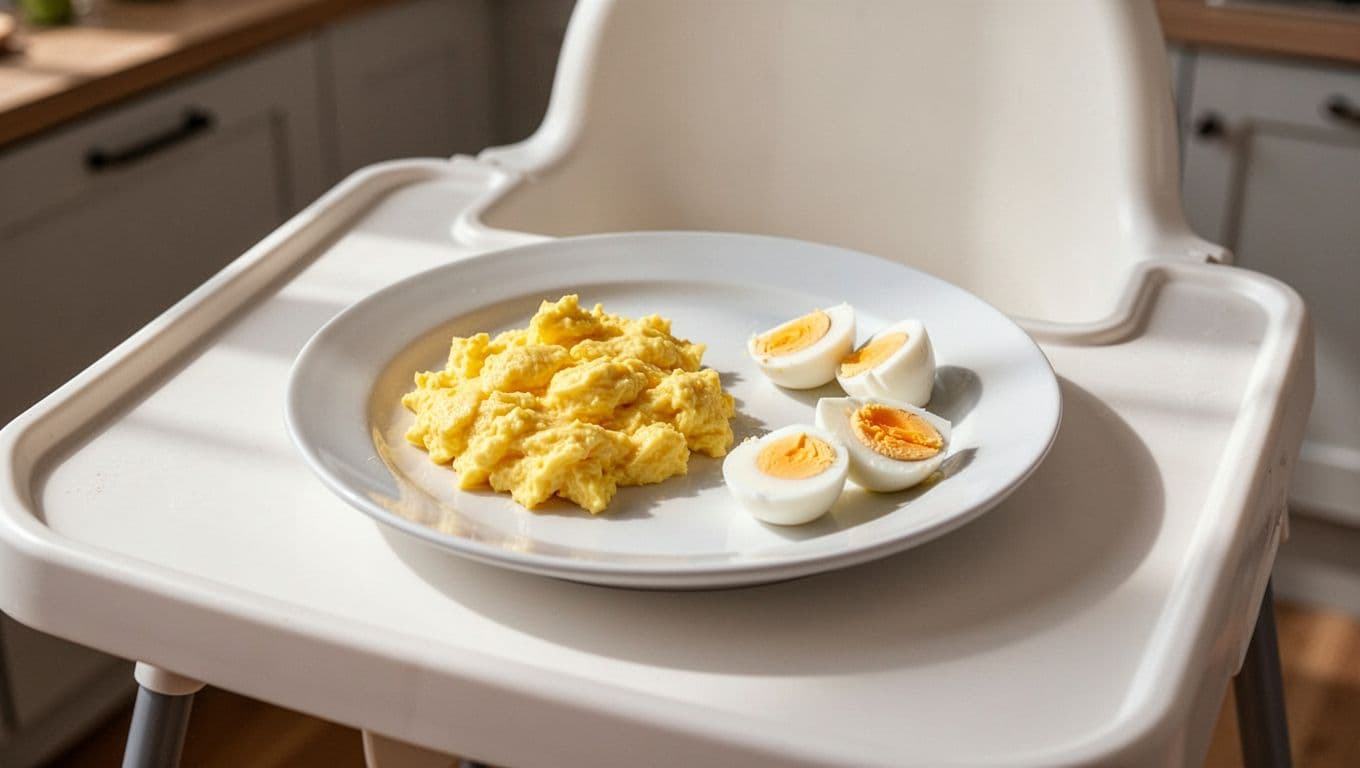
Eggs can be a smart evening food because they do two things at once, they help babies feel full and they bring in nutrients the body uses for growth. When dinner includes protein, little tummies often stay satisfied longer, which can mean fewer wake-ups tied to hunger.
Eggs also fit well with other brain-supporting baby foods, since they contain tryptophan and B vitamins. Those nutrients support the body’s sleep-related processes, but the bigger win is usually simple: a balanced dinner can keep blood sugar steadier overnight and help bedtime feel calmer.
Why eggs can help prevent wake-ups from hunger
A baby who goes to bed hungry is more likely to stir, fuss, or wake sooner. Protein helps because it digests more slowly than sugary snacks, so it keeps hunger from coming back too fast.
That’s why eggs can work well at dinner, especially when you pair them with a soft carb like oatmeal or mashed sweet potato. The goal is not a heavy meal, just one that leaves your baby comfortably satisfied. For more on timing solid foods, HealthyChildren’s solid food guide is a helpful reference.
A full belly does not guarantee better sleep, but it can remove one common reason for night waking.
The safest way to serve eggs by age
Eggs should always be fully cooked, with no runny yolks or loose whites. For younger babies, serve soft scrambled eggs, well-mashed egg, or tiny soft pieces that are easy to gum.
Start with a small amount, then wait and watch for allergy signs like hives, swelling, vomiting, or trouble breathing. If your baby tolerates eggs well, you can slowly make them a regular part of dinner.
Spinach and other soft greens bring key minerals to the bedtime meal
Spinach and other soft greens can fit nicely into a baby bedtime meal because they add magnesium, iron, and folate. Those nutrients support the body in small but useful ways, yet they are not a sleep fix on their own.
The goal is support, not magic. A soft green at dinner can help, but sleep still depends on the full routine.
Why magnesium-rich greens may matter for restless sleepers
Magnesium helps muscles relax and supports the nervous system, so it may be one piece of a calmer bedtime. Iron also matters, because low iron can affect sleep quality in some children, and folate helps the body make brain chemicals that keep the nervous system balanced.
Still, spinach is not a sleep magic trick. A small serving at dinner can support a healthy routine, but it won’t fix teething, overtiredness, or a missed nap. For a simple look at the limits of magnesium for baby sleep, see BabyCenter’s take on magnesium and sleep.
How to hide greens in baby-friendly meals
Leafy greens work best when they are cooked soft and mixed into foods your baby already accepts. That keeps the texture smooth and the flavor mild.
Easy options include:
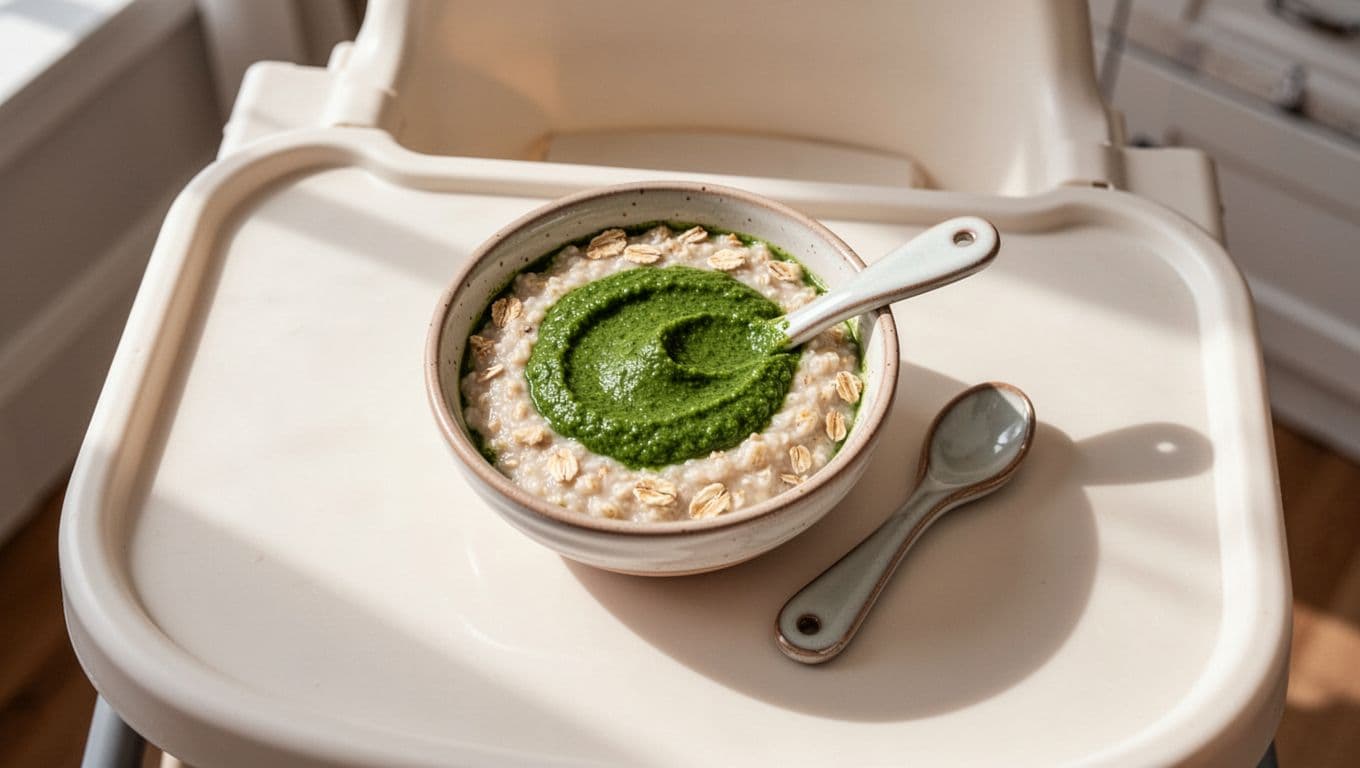
- Spinach puree stirred into oatmeal, mashed potato, or yogurt for older babies
- Finely blended spinach mixed into scrambled eggs
- Soft greens pureed into mild soups for babies who already eat spoon-fed meals
Keep portions small, and stay with soft textures. A few spoonfuls are enough, especially at bedtime, when a heavy meal can do more harm than good.
How to build a sleep-friendly evening routine around these foods
The food choices matter, but the pattern matters just as much. A calm evening works best when dinner is predictable, portions stay small, and the last snack happens early enough for the stomach to settle before bed. For many babies over 6 months and toddlers, that means a simple meal about 1 to 1.5 hours before bedtime, followed by the same wind-down steps each night.
Consistency does more for sleep than a perfect menu.
A simple bedtime meal formula that works
A good evening plate does not need to be fancy. Start with one sleep-supporting food, add a familiar starch, then finish with a soft fruit or dairy option if your child tolerates it well.
For example, you can pair:
- Banana or oatmeal with plain yogurt for younger babies who eat spoon foods
- Eggs with soft toast or mashed sweet potato for older babies and toddlers
- Spinach mixed into scrambled eggs with a little oatmeal or fruit on the side
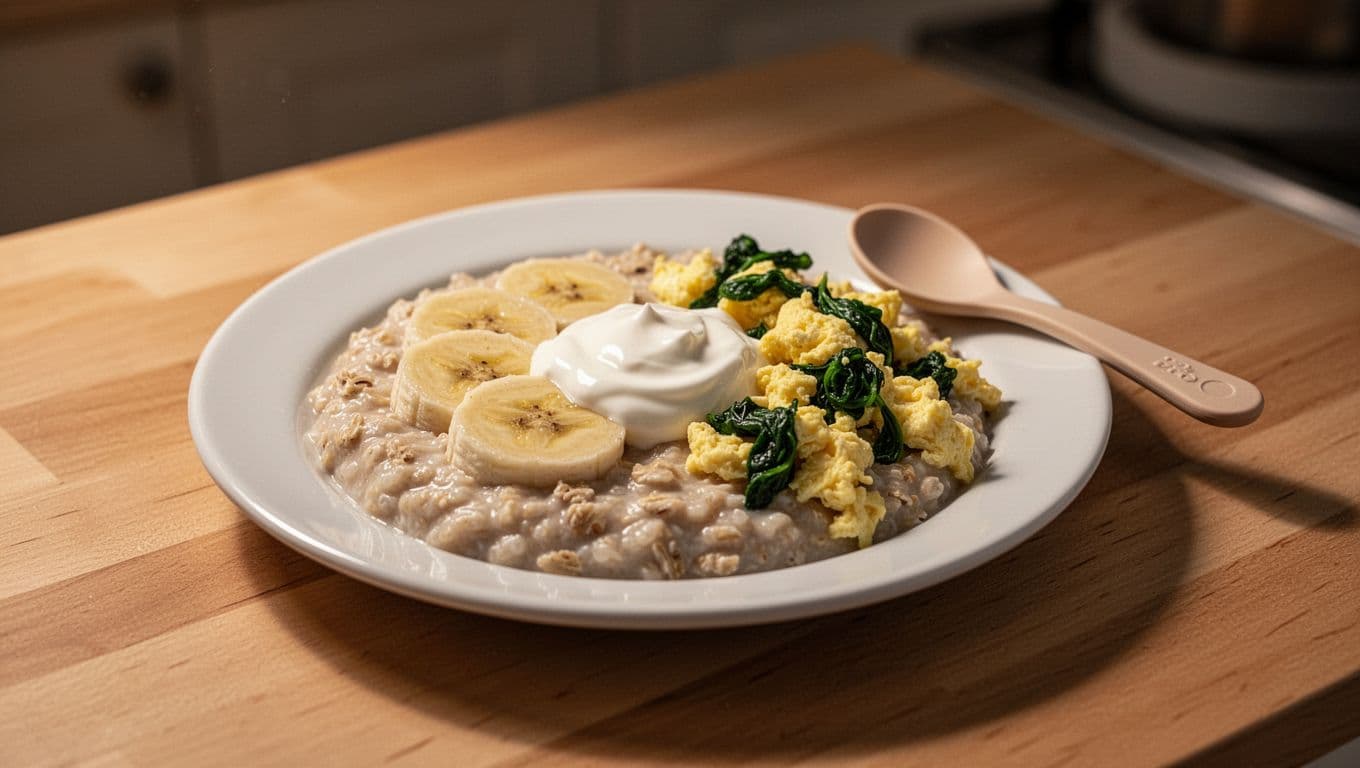
Keep the portion small enough that your child is satisfied, not stuffed. If dinner already happened earlier, a light bedtime snack is usually enough. The goal is a repeatable routine your child can learn, not a new menu every night. If you want a simple rhythm to follow, bedtime routines for sleep training can help you match food with the rest of the evening.
Foods and habits that can make sleep worse
Some evening habits work against sleep, even when the food looks harmless. Sugary snacks, too much juice, and big portions right before bed can leave little bodies too wired or too uncomfortable to settle well.
Screen-heavy routines can also make bedtime harder. Bright lights, loud shows, and fast-moving videos keep the brain alert when it should be winding down. A calmer path is better: food, teeth, a short book, then bed.
For a broader look at what to avoid near bedtime, Huckleberry’s bedtime routine guide is a helpful reference. Keep the routine steady, and the evening feels less like a scramble and more like a signal that sleep is next.
Conclusion
Bananas, oats, yogurt or warm milk, eggs, and spinach are not miracle cures, but they can support baby sleep when you serve them safely and at the right time. The real win is a steady routine that keeps your child full enough, calm, and ready for rest.
Small portions matter, and so does timing. A simple evening meal, paired with predictable bedtime cues, often works better than chasing the perfect food. If you want to build that rhythm even more, these gentle sleep training techniques for babies can fit well with a food-based bedtime plan.
Watch what works for your child, then keep it simple. If sleep problems keep going, talk with your pediatrician, because sometimes the issue is bigger than bedtime food alone.
Save pin for later


- 10 Things You Shouldn’t Do in Front of Your Baby (and What to Do Instead) - September 22, 2026
- 15 Effective Ways to Deal With Stubborn Children (Without Yelling) - September 22, 2026
- Birth Order Influence: 8 Things Parents Should Know About Each Child - September 22, 2026