


Sticky eyes are common in newborns, and they’re often caused by a blocked tear duct rather than a serious infection. Tears can’t drain properly, so they mix with mucus and leave your baby’s lashes watery, sticky, or crusted, often without redness.
As a parent, you’ll want to know what’s causing the discharge, how to clean your baby’s eye safely, whether antibiotic drops are needed, and when to call a doctor. A blocked tear duct usually causes watery or sticky discharge while the eye remains white; conjunctivitis more often causes a red, swollen, inflamed eye. You can gently clean the discharge with clean water and fresh cotton, but don’t use leftover medication without medical advice. This guide also explains the warning signs that need prompt care, especially in babies under 30 days old, and it doesn’t replace advice from your pediatrician. Start by learning more about the common causes of sticky eyes.
Helpful video:
Causes and treatment of sticky eyes in babies: what parents should know
Sticky discharge usually happens because tears and normal eye secretions cannot drain properly. Treatment depends on the cause, but a baby with a clear, comfortable eye often needs gentle cleaning and observation rather than antibiotic drops.

A blocked tear duct is the most common cause
A congenital nasolacrimal duct obstruction means the small drainage channel between the eye and nose hasn’t opened fully. A thin membrane may still cover the channel, or the passage may be too narrow for tears to flow normally. As a result, tears and mucus collect around the eyelids and lashes.
Your baby may have a watery eye, white or pale yellow sticky material, or lashes that stick together after sleep. The problem can affect one eye or both. With a simple blocked tear duct, the white part of the eye usually stays clear rather than red.
Blocked tear ducts are common and generally harmless. As your baby’s face grows, the channel often opens on its own. Symptoms may improve over several weeks or months, and many cases clear by the time a child reaches 1 year old.
You can usually wipe away discharge with clean water and fresh cotton for each eye. If your pediatrician recommends tear duct massage, ask them to show you the correct technique. Avoid using leftover eye medication, because antibiotics don’t treat an uncomplicated blocked duct.
Conjunctivitis and other less common causes
Conjunctivitis, also called pink eye, becomes more likely when the eye itself looks red, irritated, swollen, or painful. Thick yellow or green discharge can also occur. Viral and bacterial infections cause different patterns, but parents usually can’t identify the cause reliably at home. The CDC’s guidance on pink eye in newborns explains why early assessment matters.
Other possibilities include irritation from newborn eye medicine, dust, or another foreign particle. A small scratch or an eyelash rubbing against the eye can also cause watering and discomfort.
Because some newborn eye infections need prompt treatment, contact a clinician when symptoms begin during the first weeks of life. Seek medical advice sooner if your baby has a red or painful eye, marked swelling, light sensitivity, fever, trouble opening the eye, or worsening discharge. A red eye should not be assumed to be a simple blocked tear duct.
How to clean a baby’s sticky eye safely at home
For mild discharge without redness, swelling, pain, fever, or trouble opening the eye, gentle cleaning can keep your baby comfortable. Wash your hands before and after care, then prepare clean cotton wool or a soft pad moistened with sterile water or cooled boiled water.
Wipe from the inner corner near the nose outward in one smooth motion. Use a fresh pad for every wipe, and use separate pads for each eye. This prevents mucus and possible infection from spreading. If discharge has dried onto the lashes, hold the damp pad over the area briefly to soften it. Then wipe gently without pulling the lashes or rubbing the eye. You can also follow these newborn sponge bath eye-cleaning tips for similar safe wiping guidance.
A small amount of petroleum jelly may protect sore skin around the eye. Apply it only to clean surrounding skin, and keep it out of the eye itself. Avoid breast milk, saliva, homemade mixtures, leftover prescription drops, and over-the-counter eye medicine unless a health professional recommends them.
Gentle tear duct massage may improve drainage
Some clinicians recommend massage when a blocked tear duct causes watery or sticky discharge. First, wash your hands. Place a clean finger beside the inner corner of your baby’s eye, near the bridge of the nose. Then apply gentle downward pressure toward the nose. Keep your finger on the skin beside the eye, never directly on the eyeball.
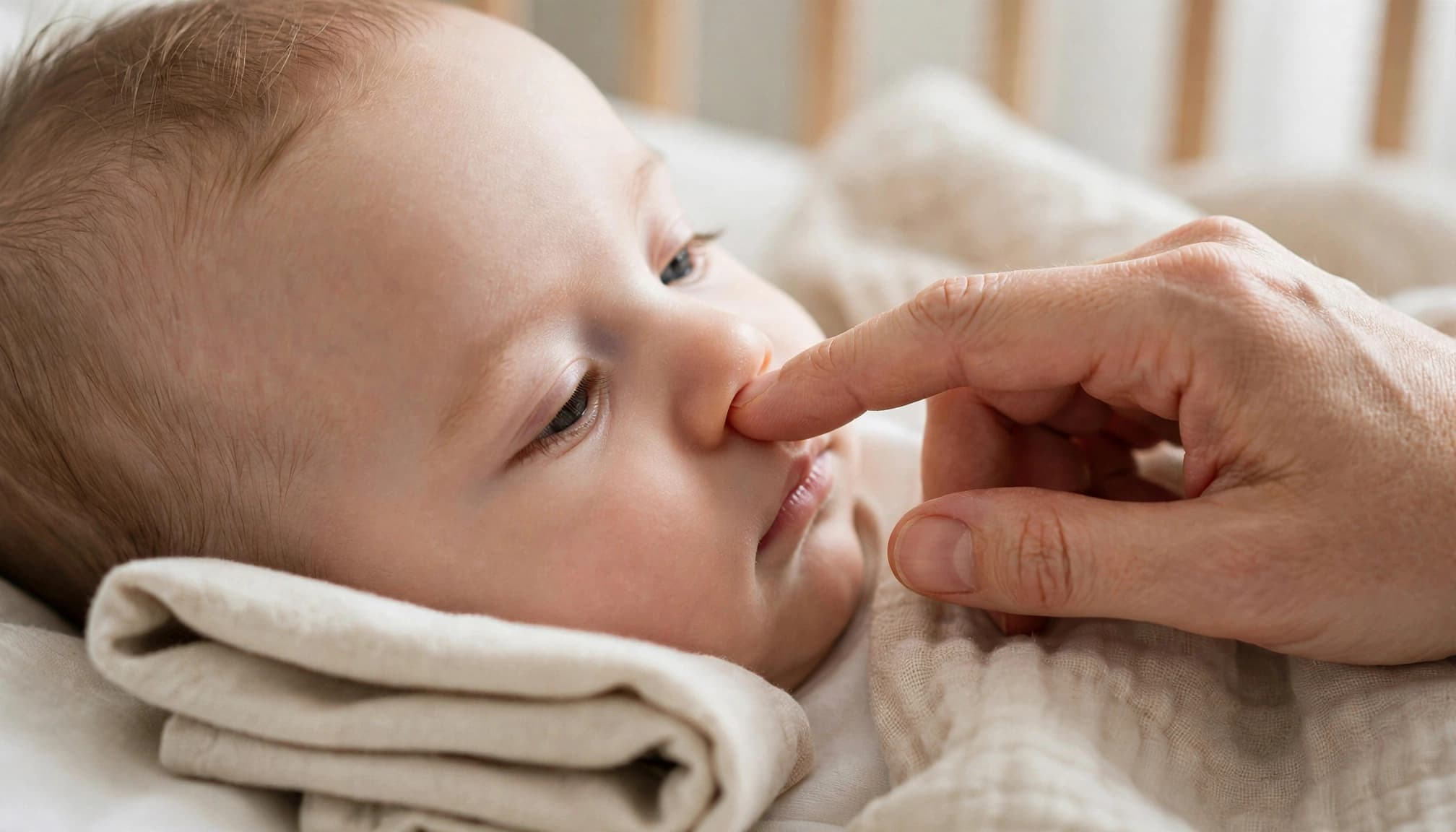
Your baby’s doctor or health visitor can show you the correct position and explain how often to massage. Advice varies, so follow the instructions given for your child rather than increasing the pressure or frequency yourself. The Nationwide Children’s Hospital tear duct massage guide also demonstrates the technique.
Stop if your baby seems in pain, the area becomes more swollen, or the eye looks increasingly red. Massage can help drainage from a blocked tear duct, but it doesn’t treat bacterial conjunctivitis. Significant discharge, redness, swelling, or worsening symptoms require an examination instead of continued home massage.
When do sticky eyes need antibiotic drops or medical treatment?
Antibiotics aren’t usually needed for a simple blocked tear duct. Even yellow discharge can come from trapped tears and mucus when the eye itself remains white, comfortable, and free from swelling. Antibiotics don’t open the tear duct, so they won’t fix the underlying drainage problem.
Why newborn eye discharge deserves extra care
Eye discharge during the first few weeks after birth deserves closer attention than occasional crusting in an older baby. Some infections can pass to a baby around delivery and may become serious without prompt treatment. Medical care may involve more than routine eye drops, depending on the baby’s age, symptoms, and examination findings.
Contact your doctor promptly if your newborn has:
- A red or inflamed eye.
- Marked eyelid swelling.
- Thick, pus-like discharge or eyelids stuck together.
- Trouble opening the eye.
- A fever, poor feeding, unusual sleepiness, or other signs of illness.
The younger your baby is and the more severe the symptoms look, the sooner you should seek advice. If your baby is under 30 days old and develops a red eye or heavy discharge, call the pediatrician promptly rather than waiting to see whether cleaning helps. You can also review these newborn symptoms that need medical attention.

When antibiotic drops may be considered
A clinician may prescribe antibiotic drops or ointment when the eye is red and has thick discharge, bacterial conjunctivitis appears likely, symptoms are worsening, or a very young newborn may have an infection acquired around birth. Significant crusting can also suggest that a blocked duct has developed a secondary infection.
During the visit, the clinician may examine the eye, ask when the discharge began, check for swelling or redness, and decide whether testing or treatment is needed. Don’t use leftover medicine or share another person’s prescription. The wrong product may delay proper care, irritate the eye, or fail to treat the infection.
For mild discharge with no redness, swelling, pain, fever, or illness, continue gentle cleaning and follow your pediatrician’s advice. If the eye changes, arrange another assessment rather than starting medication yourself.
How to tell a blocked tear duct from an eye infection
A blocked tear duct usually causes a watery or mildly sticky eye while the white part stays clear. An infection is more likely when the eye looks red, swollen, irritated, or painful. Still, these signs can overlap, so use them as clues rather than a diagnosis.
Blocked tear duct or eye infection?
A blocked tear duct often follows a steady, mild pattern. Your baby may have:
- Tears running down the cheek when they aren’t crying.
- Clear, watery, white, or pale yellow discharge.
- Lashes that stick together after sleep.
- Symptoms that come and go, especially in one eye.
- A white part of the eye that usually isn’t red.
- Little or no eyelid swelling.
Your baby may otherwise seem comfortable, feed normally, and open the eye without trouble. Gentle cleaning can remove the buildup, but contact your pediatrician if you’re unsure, especially when your baby is under 3 months old.
Conjunctivitis or another eye problem becomes more likely when you notice:
- A very red or bloodshot white part of the eye.
- Puffy, swollen, or tender eyelids.
- Thick yellow or green discharge that returns quickly.
- Increasing irritation, discomfort, or trouble settling.
- Strong sensitivity to light.
- Symptoms that are getting worse instead of coming and going.
A baby can have a blocked tear duct and then develop a separate infection, so the symptoms may change. Redness, swelling, pain, or pus should not be dismissed as a simple blocked duct. The American Academy of Pediatrics guidance on pink eye explains why inflammation and discharge need medical assessment in children.

Symptoms that should be checked urgently
Call your pediatrician or another qualified health professional the same day if your baby has:
- A very red eye or significant eyelid swelling.
- Deep yellow or green pus.
- Severe pain, persistent crying, or clear discomfort.
- Strong sensitivity to light or trouble opening the eye.
- A cloudy-looking cornea.
- Fever, poor feeding, unusual sleepiness, or a baby who seems generally ill.
- Symptoms that are rapidly worsening.
- Swelling around the eye, eye socket, or bridge of the nose.
Seek emergency help for severe symptoms, breathing concerns, major swelling, an eye injury, or chemical exposure. Follow your local emergency guidance, and don’t delay to clean away discharge or try leftover eye medicine. Newborns with eye redness or discharge need prompt medical advice because some infections can become serious quickly, as the CDC explains about newborn pink eye.
How long do sticky eyes last, and when is further care needed?
A blocked tear duct often improves gradually rather than disappearing overnight. Many babies have less watering and discharge during the first several months as the drainage channel develops and opens.
The usual timeline for a blocked tear duct
Most blocked tear ducts resolve without a procedure by about 1 year of age. Some sources note that a small number can take longer, especially when symptoms are mild and come and go. During this period, continue gentle cleaning and follow any massage instructions from your pediatrician.

Arrange a medical review if symptoms continue around 10 to 12 months, become severe, keep returning, or interfere with your baby’s comfort. Make an appointment sooner for redness, swelling, pain, heavy discharge, fever, or trouble opening the eye. These signs can point to infection or another eye problem rather than an uncomplicated blocked duct.
The usual blocked tear duct timeline can help you understand when doctors may consider further treatment. However, your baby’s age, symptoms, and examination findings matter more than a strict deadline.
When a tear duct procedure may be discussed
If the duct remains blocked, an eye specialist may discuss a procedure called probing. During probing, the specialist gently passes a small instrument through the tear drainage opening to help clear the blockage. This is different from treating conjunctivitis, which may require prescription antibiotic drops or ointment when a clinician confirms an infection.
Probing isn’t automatically necessary, and doctors may recommend continued observation when symptoms are mild. Referral becomes more likely when discharge persists after the first year, infections recur, or the blockage causes ongoing discomfort. Boston Children’s Hospital explains that persistent tear duct blockage treatment depends on the child’s symptoms and age.
Keep routine pediatric visits, even when the eye seems comfortable. Between appointments, record whether discharge is increasing, whether redness or swelling appears, and whether one or both eyes are affected. These details help your clinician see whether the problem is improving or needs closer assessment.
Simple mistakes to avoid when treating a baby’s sticky eye
Most mild sticky eyes need gentle cleaning, not aggressive treatment. Small mistakes can irritate the eye, spread discharge, or delay care when an infection is developing.

Avoid rubbing, scrubbing, and shared cloths
Rubbing can make irritation worse and move discharge from one eye to the other. Don’t let your baby rub the eye if you can gently distract them, and never scrub the eyelids to remove crusting.
Instead, soften dried discharge with a clean, damp cotton pad. Wipe outward once, then discard the pad. Picking crusts from the lashes can scratch delicate skin and cause more soreness.
Wash your hands before and after eye care. Clean hands reduce the chance of transferring germs to the eye, your baby’s face, or another family member. These newborn handwashing and hygiene tips can help make clean-hand habits part of everyday care.
Use a fresh pad for every wipe and a separate one for each eye. Don’t share washcloths, towels, or pillowcases with your baby, especially when infection is possible.
Don’t use the wrong medicine or massage too hard
Never put breast milk, saliva, herbal mixtures, homemade solutions, adult eye drops, redness-relief drops, or someone else’s prescription into your baby’s eye. Leftover medicine may be unsuitable, contaminated, or unable to treat the actual cause.
If a clinician prescribes drops or ointment, follow the instructions and finish the treatment unless the prescriber tells you to stop. Contact the office if your baby reacts badly or you aren’t sure how to apply it.
When your clinician recommends tear duct massage, use a clean finger and gentle pressure beside the inner corner of the eye. Don’t press on the eyeball, force the eyelids open, or massage harder to clear discharge.
A simple action plan
Clean gently, observe the eye’s color and the discharge, and contact a healthcare professional when symptoms are unclear. Seek urgent help for redness, swelling, pain, heavy pus-like discharge, fever, light sensitivity, trouble opening the eye, or a baby who seems unwell.
Conclusion
A sticky eye in a baby is often caused by a blocked tear duct, especially when the eye is watery or mildly crusted but the white part stays clear. Gentle cleaning with clean hands, fresh cotton, and time often helps while the tear duct develops and opens. Follow your pediatrician’s instructions if they recommend tear duct massage, and keep the area clean without rubbing or scrubbing.
Redness, swelling, thick discharge, pain, light sensitivity, fever, or a baby who seems unwell can point to an infection or another eye problem. Contact a healthcare professional promptly if these symptoms appear, particularly in a newborn. Antibiotic drops or ointment should only be used when a healthcare professional prescribes or recommends them.
Arrange a checkup if the discharge persists, worsens, keeps returning, or continues near your baby’s first birthday. If you’re unsure whether the symptoms are simple blockage or something more serious, seek advice rather than relying on home treatment alone.
Save pin for later


- Baby Massage for Gas Pain: Step-by-Step Instructions - September 20, 2026
- Newborn Skin Peeling: Common Causes and Warning Signs - September 20, 2026
- Sticky Eyes in Babies: Causes, Treatment, and Warning Signs - September 20, 2026