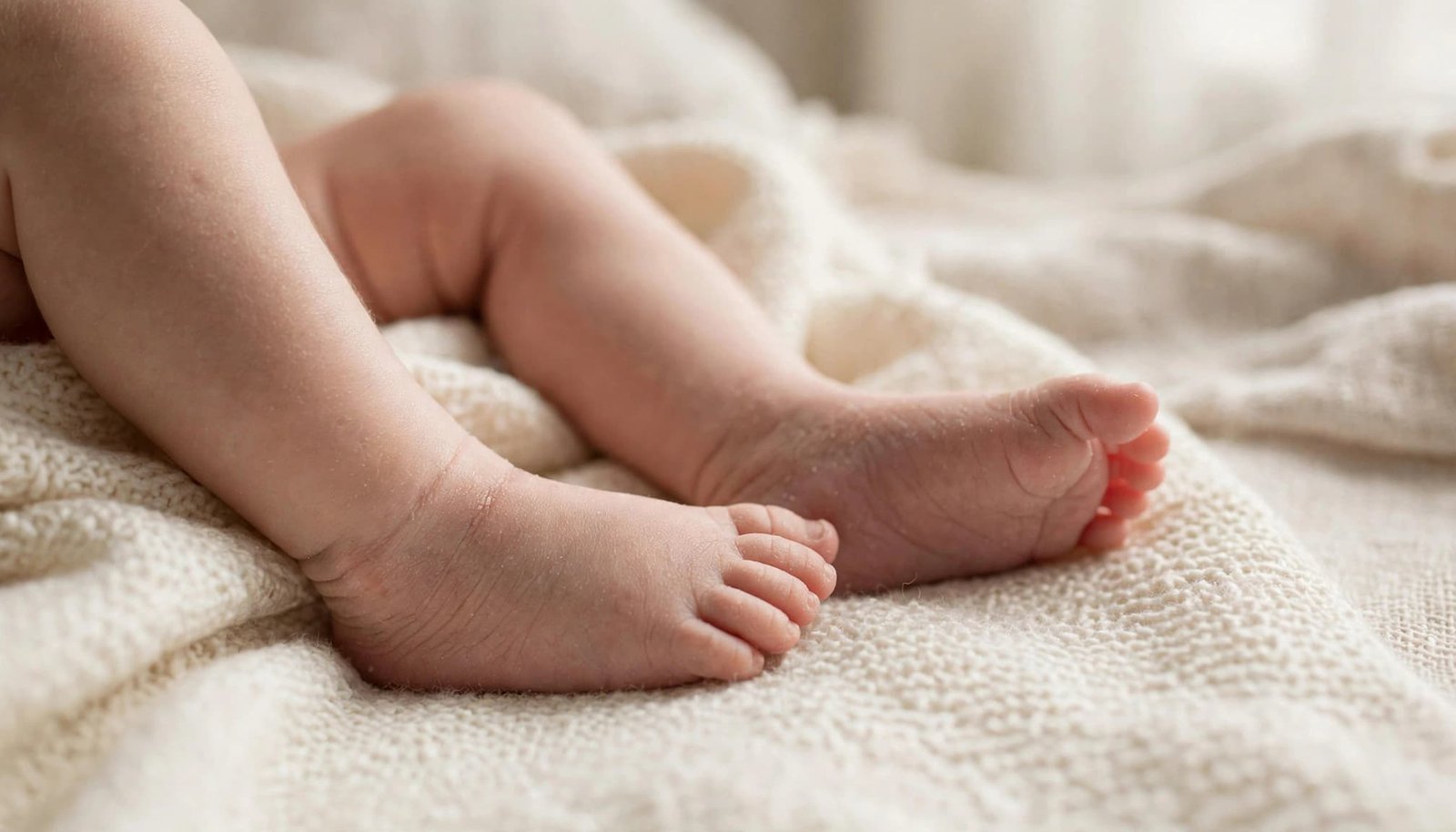
Peeling skin is common during the first days or weeks after birth, and it’s often part of your newborn’s normal adjustment to life outside the womb. Mild flakes alone usually aren’t a sign of illness, especially when your baby is feeding well and the skin isn’t red, swollen, blistered, or painful.
Several factors may cause newborn skin to peel, including the loss of vernix caseosa, dry air, frequent baths, and irritating soaps or fragrances. You’ll also learn how to care for flaky skin gently, which products to avoid, and when warning signs call for medical advice. For more context, see these newborn skin peeling causes and treatments and watch this helpful overview:
What May Cause Newborn Skin to Peel?
Newborn skin is still adjusting after birth. The outer layer may shed as it adapts to air, clothing, bathing, and changes in moisture. Mild peeling is usually harmless when your baby is comfortable and the skin has no redness, swelling, blisters, or sores.
Normal shedding after birth
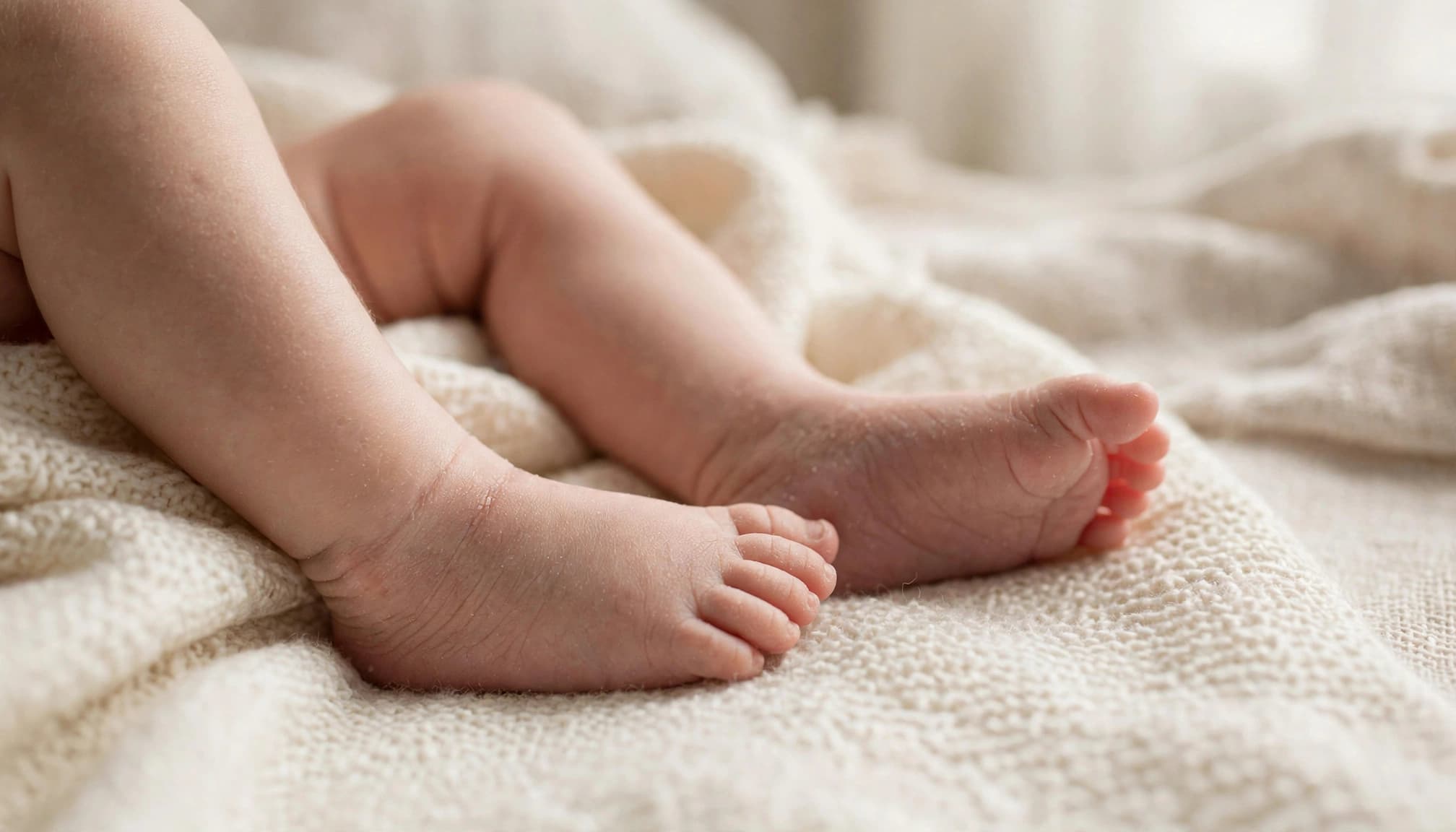
Many newborns develop fine flakes during the first one to three weeks. The peeling often appears on the hands, feet, ankles, or wrists, where skin may rub against clothing and blankets. You may notice small dry patches after a bath or when changing your baby’s clothes.
This shedding happens because the skin is moving from the moist environment of the womb into drier outside air. As the outer layer adjusts, it can loosen and come away in thin flakes. In most cases, the skin improves on its own without special treatment.
Mild peeling alone usually doesn’t mean your baby has a skin condition. Avoid pulling at loose skin, and keep baths short and gentle while the skin settles.
Vernix drying and coming off
Vernix caseosa is the white, waxy coating that may cover a baby at birth. It develops before birth and helps protect the skin from moisture loss and irritation. Research published in the peer-reviewed vernix caseosa review describes its role as a natural protective barrier.
After delivery, vernix may dry, shed, or mix with normal flakes from the outer skin. As a result, peeling can look more noticeable during the first days or weeks. You don’t need to scrub vernix or peeling skin away. Rubbing can irritate delicate skin and make dryness worse, so allow loose flakes to come off naturally.
Being born after the due date
Babies born at or after 40 weeks may have more noticeable peeling. Their skin has had more time to mature and may lose some of its protective vernix before birth. The result can be dry-looking or flaky skin soon after delivery.
This pattern alone usually doesn’t mean your baby has a skin problem. If your baby feeds well and the peeling isn’t painful or inflamed, it often fades as the skin adjusts.
Dry air, frequent baths, or irritating products
Cold, dry air can remove moisture from newborn skin, especially after the protective vernix has worn away. Long baths, hot water, frequent washing, and rough towels can also strip away natural oils. Overbathing may make peeling more noticeable instead of improving it.
Soap, bubble bath, scented lotions, dyes, and fragranced laundry products can irritate sensitive skin. Use lukewarm water, pat your baby dry, and choose fragrance-free products when needed. For more guidance, review these gentle bathing practices for delicate baby skin.
How to Tell Normal Newborn Peeling From a Skin Problem
The most helpful clues are how the skin looks, how your baby feels, and whether the area is improving. Ordinary peeling is usually mild and temporary, while eczema, irritation, or infection tends to cause inflammation, discomfort, or worsening changes.
Signs that usually point to simple dryness
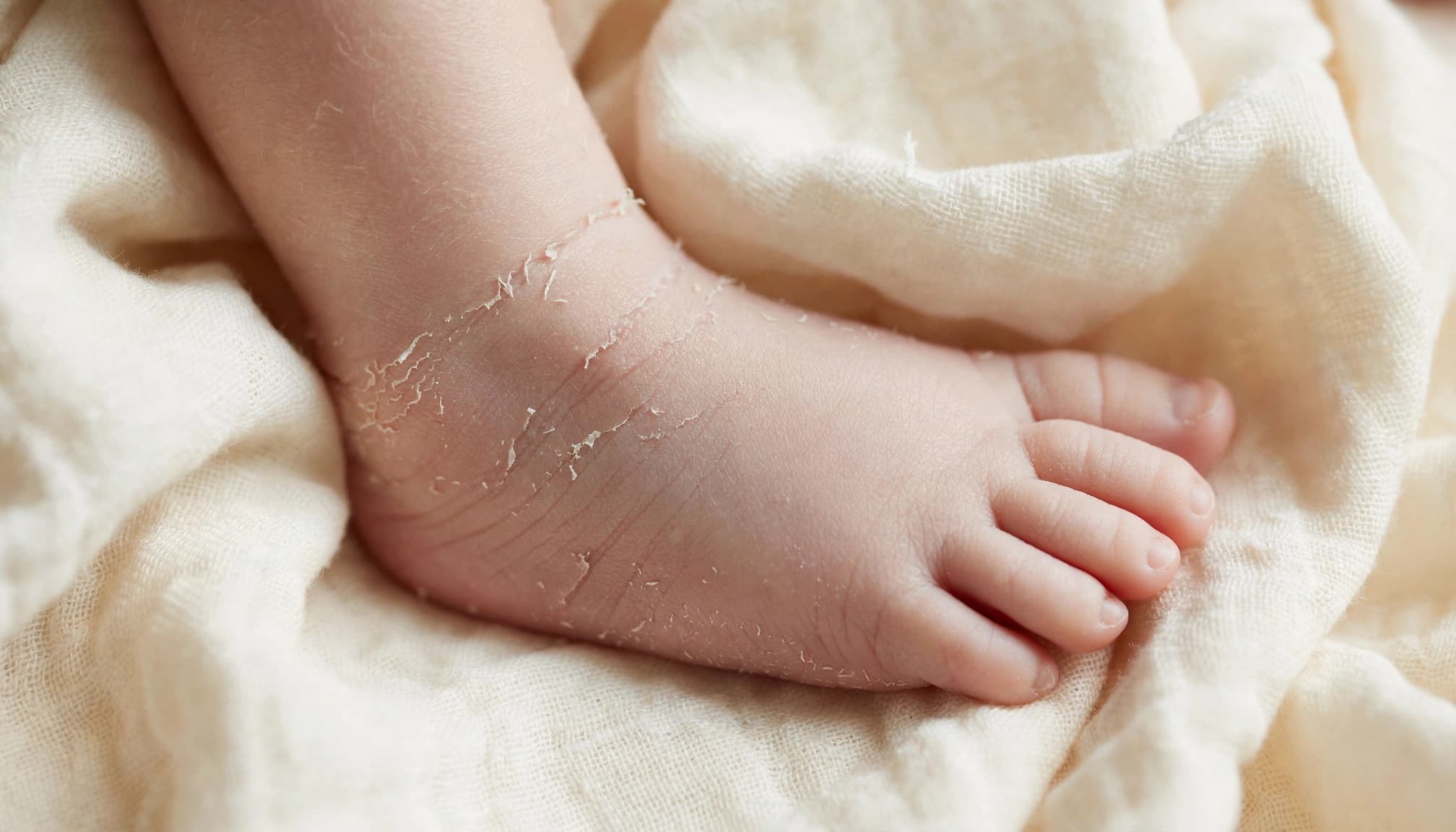
Normal newborn peeling often looks like fine flakes or thin, dry skin. It may appear unevenly on the hands, feet, ankles, wrists, or other areas without forming a sharply defined rash. The skin underneath should look generally healthy rather than raw or swollen.
Peeling can look more noticeable after a bath because water and drying make loose flakes stand out. Your baby may still feed normally, sleep normally, and remain comfortable when you touch the area. In many cases, the skin gradually improves during the first few weeks.
Use lukewarm water, keep baths brief, and pat the skin dry instead of rubbing it. Avoid pulling at loose flakes or scrubbing them away. Improvement with gentle care is reassuring, while peeling that continues beyond about three weeks deserves a pediatrician’s advice. You can also review this guide to common infant skin problems for help comparing ordinary dryness with other rashes.
When peeling may be eczema or irritation
Eczema or contact irritation usually causes more than surface flaking. Look for patches that stay red, rough, itchy, cracked, or inflamed, especially if they return in the same area. Your baby may rub against clothing, fuss during touch, or seem uncomfortable after bathing.
Fragranced lotions, soaps, laundry detergents, fabric dyes, saliva, and rough fabrics can irritate delicate skin. Frequent bathing may also worsen an existing dry patch. The American Academy of Pediatrics eczema guidance explains why persistent dry, red, itchy skin needs proper care rather than guesswork.
Stop newly introduced products and choose fragrance-free options, but contact your baby’s pediatrician if the skin stays inflamed, keeps returning, or doesn’t improve. A clinician can tell whether the problem is eczema, irritation, or another condition.
Skin changes that may signal infection
Infection is more concerning when peeling occurs with changes that look angry or painful. Seek prompt medical advice for spreading redness, warmth, swelling, pus, a bad smell, yellow or honey-colored crusting, painful cracks, or blisters. Red streaks, open sores, or skin that weeps fluid also need attention.
A red area isn’t automatically an infection. However, redness that expands, becomes tender, or appears with fever or unusual fussiness is different from mild dryness. Very young babies can become ill quickly, so don’t wait if your newborn seems weak, feeds poorly, has a fever, or is difficult to wake. When the appearance is unclear, send a photo to the pediatrician or arrange an examination rather than trying to diagnose the cause at home.
Gentle Newborn Skin Care That Can Reduce Peeling
The goal of newborn skin care is to protect the skin barrier, not remove every flake. A simple routine usually works best: limit bathing, use gentle products only when needed, and let loose skin shed naturally. If your baby was premature, has a diagnosed skin condition, or has special medical needs, follow your pediatrician’s instructions instead.
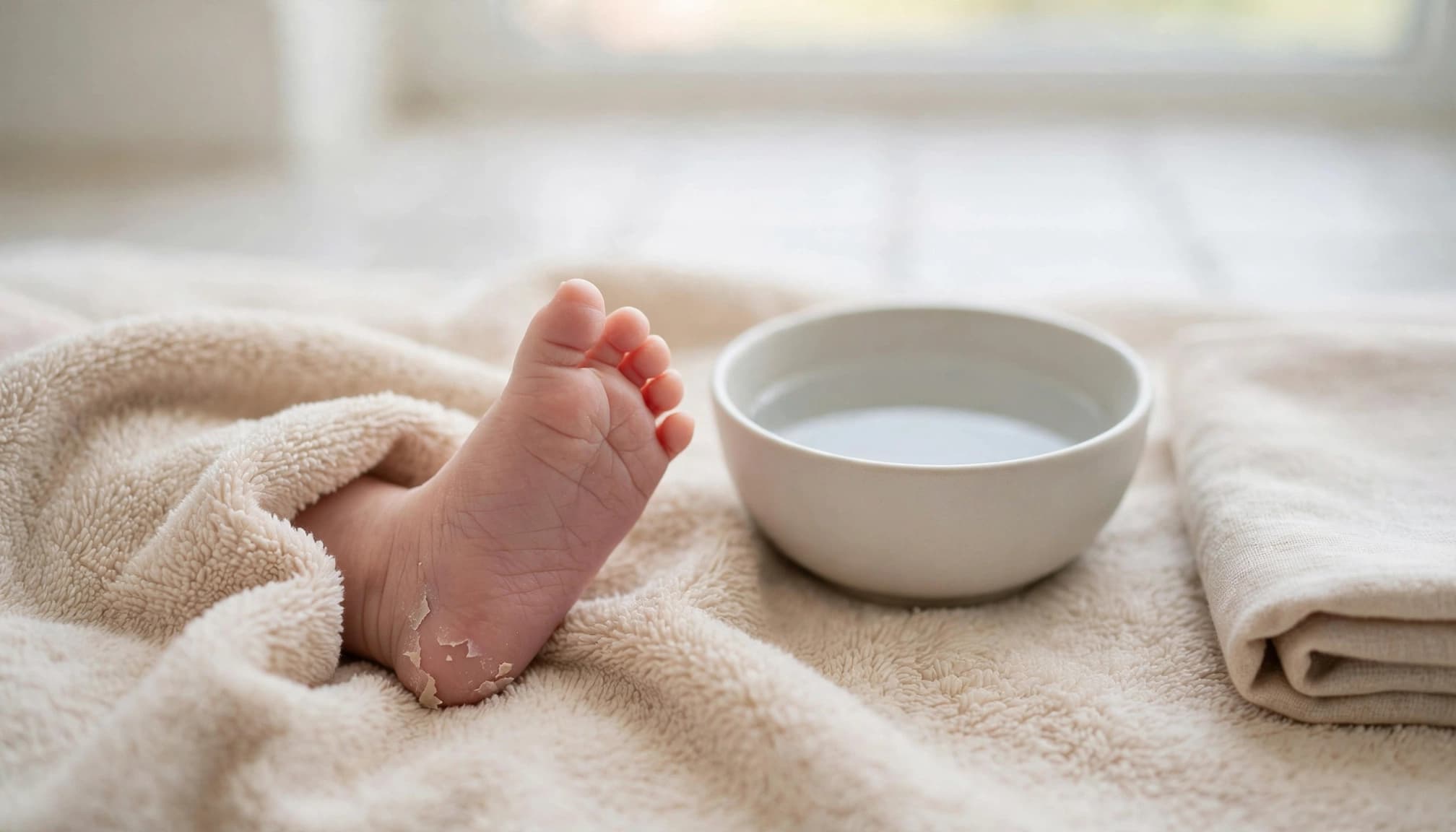
Use short baths with lukewarm water
Keep baths brief and use lukewarm water rather than hot water. Hot or lengthy baths can remove the natural oils that help protect delicate newborn skin. Plain water is often enough for early cleansing, especially when your baby has only mild peeling.
When a cleanser is needed, choose a mild, fragrance-free product and use a small amount. You don’t need to wash every part of your baby’s body with soap at every bath. Focus on areas that need cleaning, such as skin folds, the diaper area, and places with visible dirt.
Until the umbilical cord stump falls off and the area heals, give your baby sponge baths unless your medical team gives different instructions. If your baby was circumcised, continue sponge baths until the circumcision site has healed according to your healthcare provider’s guidance. Keep one hand on your baby during bathing, and never leave a newborn alone near water, even for a moment.
For more detailed steps, see this guide to safe sponge bathing for newborns.
Moisturize only when the skin needs it
Healthy newborn skin doesn’t always need lotion. If a small area looks dry or rough, apply a thin layer of plain, fragrance-free moisturizer after gently patting the skin dry. A bland ointment can help hold moisture in, especially on very dry patches.
Petroleum-based options such as Vaseline or Aquaphor are common examples, but no particular brand is required. Choose a simple product without fragrance, essential oils, dyes, or added botanical ingredients. Avoid applying moisturizer to the umbilical cord stump unless your pediatrician tells you to do so.
Before using a new product, test a small amount on one area. Stop using it if you notice redness, bumps, swelling, worsening dryness, or other irritation. Seek medical advice if the skin becomes raw, painful, cracked, blistered, or increasingly inflamed.
Handle flakes gently during diaper and clothing changes
Loose flakes may look tempting to remove, but don’t pull, peel, scrub, brush, or rub them away. These actions can create tiny breaks in the skin and increase irritation. Instead, pat your baby’s skin dry and allow flakes to come away naturally as the skin heals.
Use soft, breathable clothing, such as loose cotton layers. Check for scratchy seams, tight waistbands, rough tags, or fabric that traps heat. During diaper changes, clean gently with lukewarm water and a soft cloth or use fragrance-free wipes when needed. Pat the area dry before putting on a fresh diaper.
Protect the skin from household irritants
Choose fragrance-free, dye-free laundry detergent, and skip fabric softeners and dryer sheets. Perfumes, scented wipes, alcohol-based products, bubble baths, and strongly fragranced lotions can worsen dryness or irritation. Tight clothing and overheating may also make sensitive skin more uncomfortable.
Keep indoor air comfortably humid if your home feels very dry, but place a humidifier where your baby cannot reach it or pull on its cord. Clean the device as directed to prevent buildup. A calm routine with fewer products usually gives peeling skin the best chance to recover.
What to Avoid When Your Newborn’s Skin Is Peeling
Peeling skin can make you want to fix the flakes quickly. However, newborn skin usually heals best with less handling and fewer products. Attempts to smooth, scrub, or treat the area may weaken the skin barrier and create new irritation.
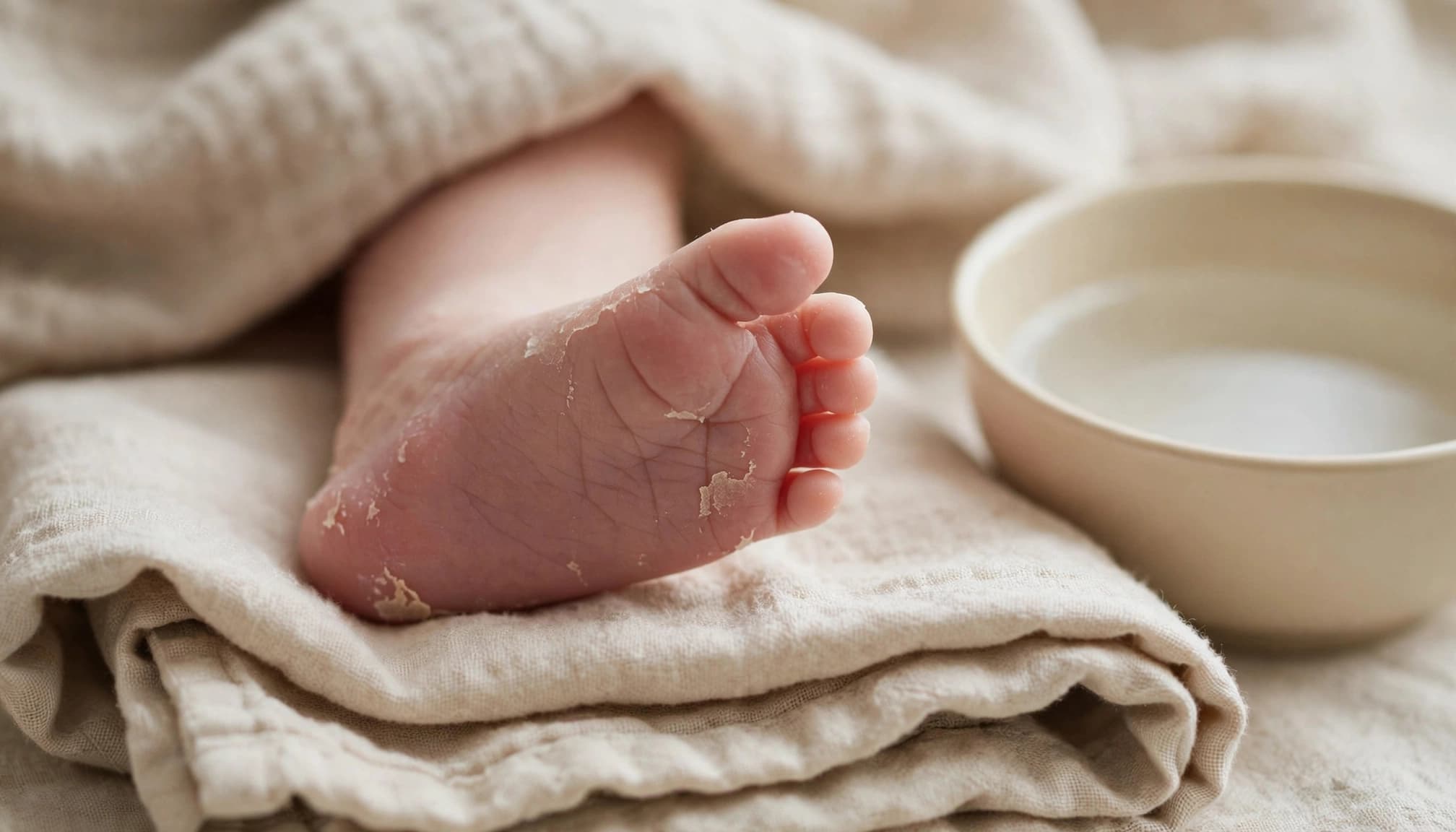
Do not scrub, exfoliate, or pull away peeling skin
Never use a washcloth, brush, scrub, or exfoliating product to remove flakes. Scrubbing can create tiny breaks in the skin, even when the pressure feels gentle. Pulling at loose pieces can also cause soreness, bleeding, and a greater risk of infection.
Newborn skin doesn’t need exfoliation, even when the flakes look thick or noticeable. Let the skin shed at its own pace. During changes, pat the area dry and leave attached or partially attached skin alone. If a loose piece catches on clothing, avoid tugging it. Choose soft, breathable fabrics instead.
Skip harsh soaps and heavily scented baby products
A baby’s skin can react to ingredients that seem mild on adult skin. Avoid adult soaps, fragranced lotions, essential oils, bubble baths, strong detergents, alcohol-containing products, and scented wipes. Also skip medicated creams unless your pediatrician recommends one for a specific condition.
The word “natural” doesn’t always mean gentle. Essential oils and botanical ingredients can irritate newborn skin, especially when applied to areas that are already dry or peeling. Choose simple, fragrance-free products when cleansing or moisturizing is necessary. These newborn hygiene tips for preventing rashes can help you reduce unnecessary exposure to irritants.
Do not overbathe or use hot water
Frequent or long baths can strip away protective oils and leave peeling more visible. Hot water has the same drying effect, so keep full baths brief and use lukewarm water. Clean the diaper area well during changes, then give full baths only as often as your healthcare provider recommends. Many babies need just a few baths each week.
Check the water temperature with a reliable method, such as a bath thermometer, before placing your baby in the water. Your elbow can provide a quick check, but it isn’t as precise. Most importantly, keep one hand on your baby and never leave a newborn alone near water, even for a few seconds.
When Should a Doctor Check Peeling Newborn Skin?
Mild peeling often improves with gentle care, but some changes need medical attention. Pay attention to your baby’s overall behavior, feeding, breathing, temperature, and the condition of the skin. If your newborn seems unwell or you’re unsure what you’re seeing, call for advice rather than waiting for the peeling to resolve.
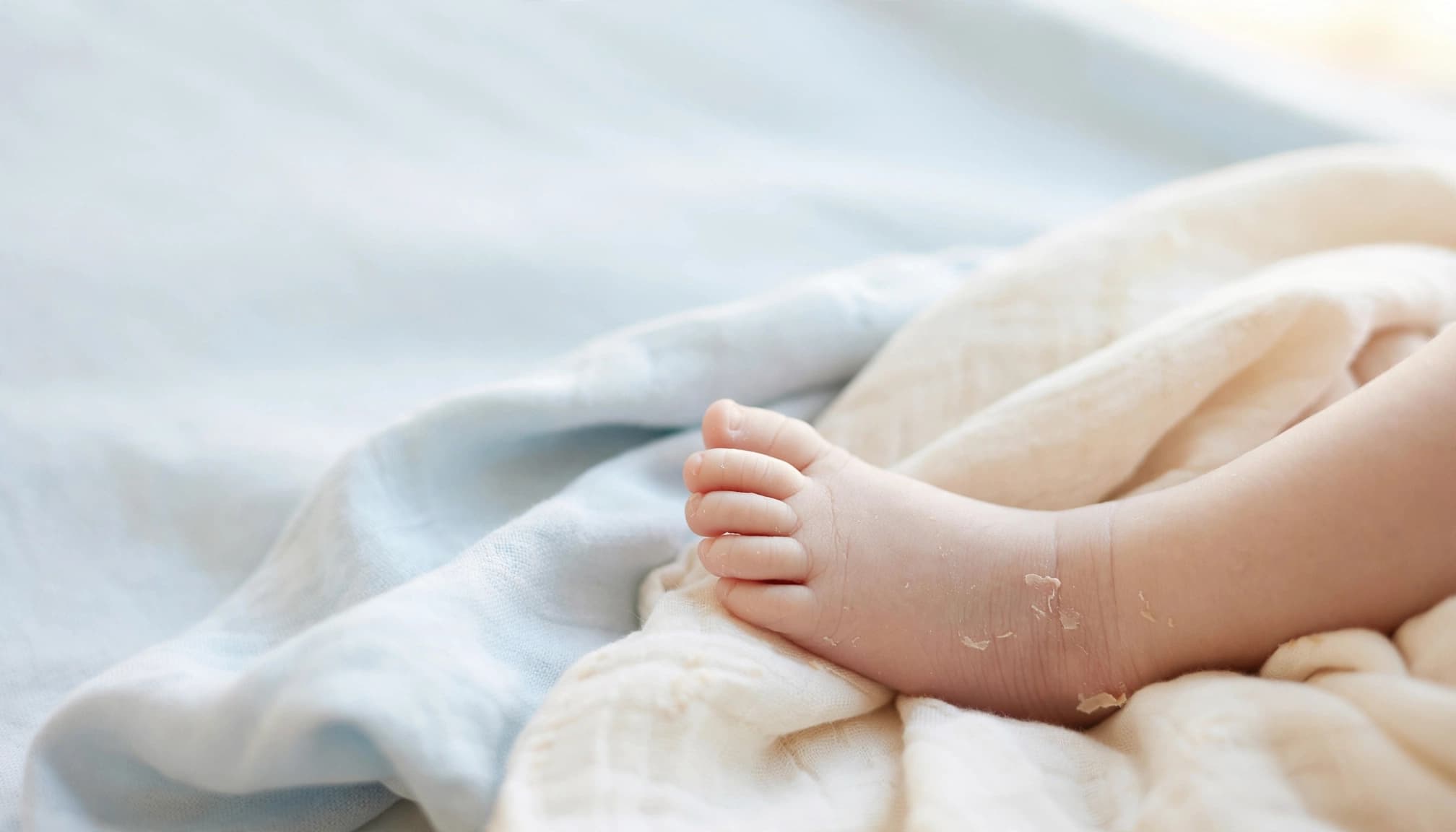
Get prompt help for fever or a baby who seems sick
A fever in a newborn requires urgent medical guidance. Contact your pediatrician or an urgent care service right away and follow local instructions about where your baby should be evaluated. If your baby has severe breathing trouble, blue or gray skin, is difficult to wake, or seems dangerously ill, call emergency services.
Fever becomes more concerning when it appears with poor feeding, unusual sleepiness, trouble waking, repeated vomiting, breathing changes, or inconsolable crying. Don’t give fever medicine unless a healthcare professional tells you to do so. The American Academy of Pediatrics guidance on infant fever explains why very young infants need prompt assessment.
A newborn who misses feeds, has fewer wet diapers, or acts different from usual also deserves a call, even if the skin changes seem minor. You can review these newborn fever and illness warning signs while arranging professional advice.
Call about spreading redness, blisters, swelling, or drainage
Contact your baby’s healthcare provider promptly if peeling occurs with any of these changes:
- Redness that spreads or skin that feels warm and swollen.
- Pus, fluid, yellow crusting, or a bad smell.
- Blisters, open sores, bleeding, or painful cracks.
- Skin that becomes increasingly tender or raw.
- A rash that worsens quickly or appears with fever.
Infection can worsen quickly in newborns because their immune systems are still developing. Don’t wait for moisturizer, reduced bathing, or another home measure to work when the skin looks infected. If your baby also has trouble breathing, seems limp, or is hard to wake, seek emergency help.
Arrange a checkup for peeling that will not improve
Schedule a routine pediatric visit when peeling continues despite gentle care, keeps returning, or clearly bothers your baby. Persistent redness, itching, rough patches, or inflammation may point to eczema, contact irritation, or another skin condition that needs a tailored plan.
Before the appointment, take a clear photo when the skin changes. Note when the peeling began, how it has changed, which products you use, how often you bathe your baby, and whether feeding or sleep has changed. That information helps the pediatrician connect the pattern with a likely cause.
When the cause is uncertain, calling is reasonable. A quick assessment can prevent you from treating an infection or irritated skin with products that make the problem worse.
Conclusion
Mild newborn skin peeling is usually part of normal adjustment after birth. Normal shedding, dried vernix caseosa, being born after the due date, and dryness from baths or irritating products can all make flakes more noticeable.
Keep care simple with lukewarm water, brief baths, fragrance-free products, and no scrubbing or pulling. Apply a plain moisturizer only when needed, then let loose flakes come off on their own. These gentle newborn skin care tips can help protect your baby’s skin barrier.
Contact a pediatric professional if peeling comes with fever, spreading redness, blisters, drainage, severe discomfort, or other infection-like changes. Peeling that doesn’t improve also deserves a medical check.
Save pin for later

- What Causes a Flat Head Shape in Babies? - September 20, 2026
- Baby Massage for Gas Pain: Step-by-Step Instructions - September 20, 2026
- Newborn Skin Peeling: Common Causes and Warning Signs - September 20, 2026