

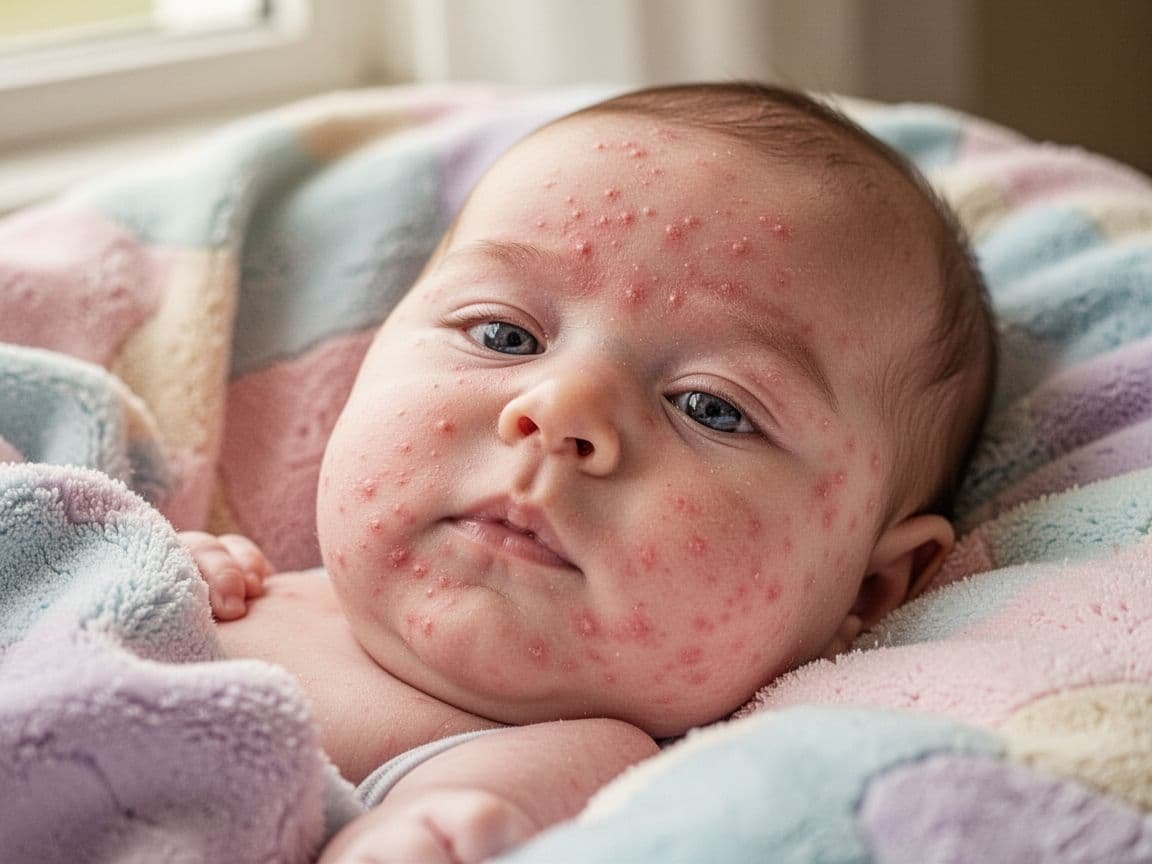
Baby skin can look alarming fast, even when the problem is small and common. A patch of red, a cluster of bumps, or a crusty scalp can send any parent into worry mode, especially when the skin is so soft and thin.
This guide walks through 7 common infant skin problems, what they usually look like, what often causes them, and when it’s time to call the doctor. If you want a simple place to start with gentle care, safe skincare for newborns can help you choose products that are kinder to delicate skin. The next section breaks down the first condition so you can spot it with more confidence.
YouTube:
Why infant skin gets irritated so easily
Baby skin reacts fast because it is still developing its own defenses. It loses moisture more quickly, absorbs irritants more easily, and gets upset by small changes that adult skin usually handles without trouble.
That is why a tiny bit of sweat, a damp diaper, or a new lotion can lead to redness, dryness, or small bumps. Many of these rashes fade on their own, but some need closer attention if they spread, last longer, or seem painful.
How baby skin is different from adult skin
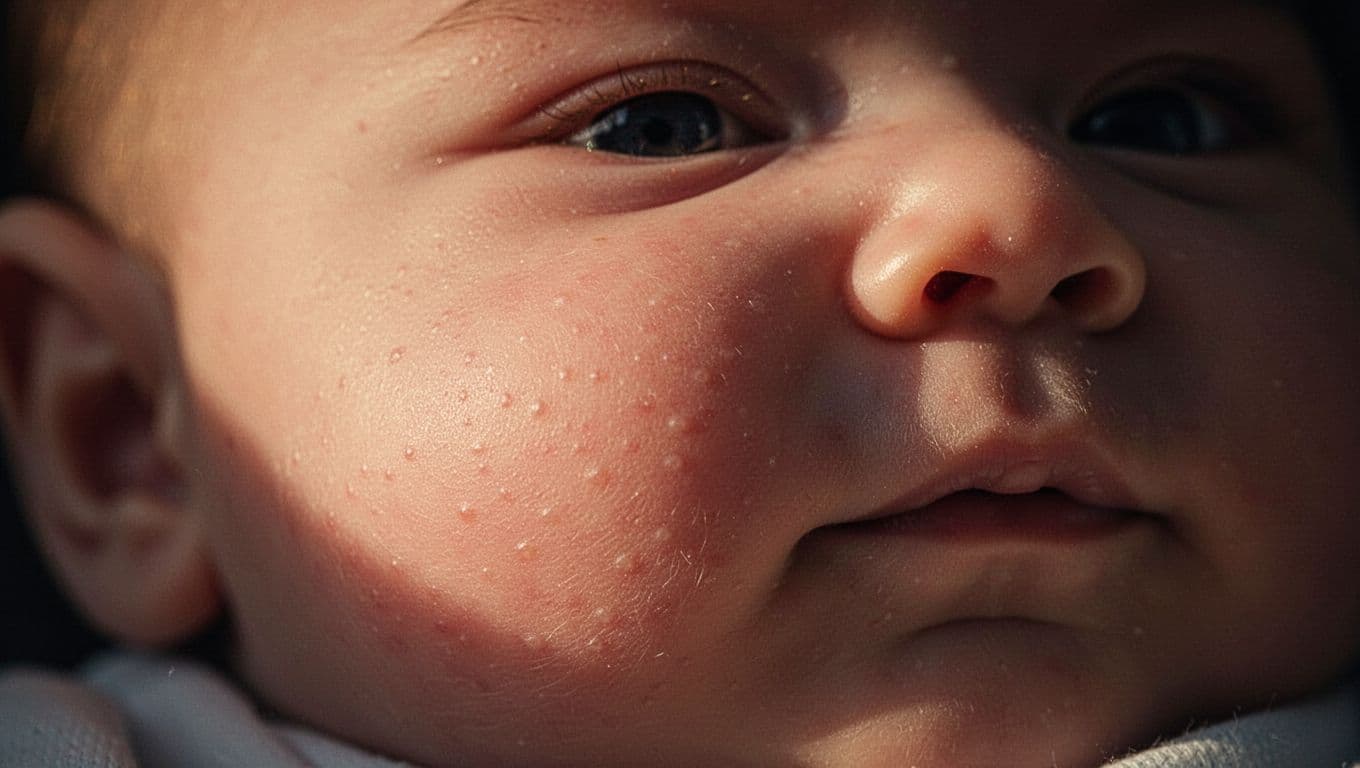
Infant skin is thinner than adult skin, so it has less protection between the outside world and the layers underneath. That means heat, friction, and moisture can reach the surface faster and cause irritation before you even notice a problem.
A baby’s skin barrier is also still adjusting after birth. For the first months, it can act a bit like a new house with loose windows and a weak front door, more open to dryness, redness, and tiny bumps.
That is why babies often get patchy cheeks, flaky legs, or little rashes in skin folds. Their skin can dry out after a short bath, flush after a warm nap, or react to products that seem gentle enough for adults.
If a rash shows up after a bath, a warm day, or a product change, the timing is often the biggest clue.
For more tips on keeping bath time gentle, see common baby bath mistakes. Simple changes often help more than strong products.
Everyday triggers that can spark a rash
A lot of baby rashes come from ordinary things, not anything serious. The skin gets exposed, stays wet, or rubs against something rough, and irritation follows.
Some of the most common triggers are easy to spot:
- Diapers: A wet or soiled diaper traps heat and moisture, which can irritate the diaper area fast.
- Drool: Saliva collects on the chin, cheeks, and neck, then dries and wets the skin again.
- Sweat: Hot rooms, heavy blankets, and too many layers can trap sweat and clog pores.
- Laundry detergent: Strong scents and leftover detergent on clothes or bedding can bother sensitive skin.
- Wipes: Fragrance, alcohol, or frequent wiping can leave skin raw.
- Fabrics: Rough seams, wool, or scratchy material can rub against delicate areas.
- Over-bathing: Too many baths, hot water, or harsh soap can strip away natural moisture.
Drool and sweat are especially common in younger babies. Moisture sits on the skin, breaks down the barrier, and friction makes the rash worse, especially around the mouth, neck, chest, and folds of the skin. For a helpful overview of infant skin care basics, this skin barrier guide for newborns explains why that barrier is so easy to disturb.
A simple pattern check helps a lot. If the rash appears after feeding, nap time, a sweaty walk, or a new detergent, you can usually narrow the cause quickly.
Many of these rashes are temporary and harmless, but anything that looks infected, keeps spreading, or makes your baby very uncomfortable needs medical advice.
Diaper rash, the most common red flag in the diaper area
Diaper rash is one of the first skin problems many parents notice, because it shows up where skin gets trapped, rubbed, and damp all day. It can look mild at first, then turn sore fast if the skin stays wet or irritated.
Most diaper rash happens because moisture, friction, and dirty diapers work together. Urine and stool sit against the skin, the diaper rubs while the baby moves, and the skin barrier starts to break down. Babies with diarrhea, infrequent diaper changes, or sensitive skin often get it more often.
What diaper rash usually looks and feels like
Diaper rash usually shows up as red, irritated skin around the diaper line, buttocks, groin, or upper thighs. The skin may feel warm, tender, or sore when you touch it, and your baby may fuss during changes.
In mild cases, the area looks flushed and shiny. In more irritated cases, you may see small bumps, peeling skin, or patches that seem raw near the folds and edges of the diaper. The rash often matches the areas where the diaper touches most.
A parent often notices it first during a change. The skin may look angry in one spot and calmer in another, like a red outline left behind by the diaper itself.
If the skin looks bright red, warm, and sore in the diaper zone, diaper rash is often the first thing to suspect.
For a closer look at the skin signs that can appear with a rash, Mayo Clinic’s diaper rash guide gives a clear symptom overview.
Simple care steps that often help
Gentle care can calm many mild diaper rashes. Start with soft cleaning, then keep the skin drier between changes.
A few simple habits can make a real difference:
- Change diapers often so urine and stool do not stay on the skin.
- Clean gently with warm water or fragrance-free wipes.
- Pat the skin dry instead of rubbing.
- Give diaper-free air time when you can.
- Use a barrier cream to protect the skin from moisture.
- Skip scented products like perfumed wipes, lotions, and soaps.
If you want a simple diaper routine that supports sensitive skin, how to properly change a baby diaper offers a practical place to start. Small changes help more than harsh products.
When diaper rash may need a doctor’s visit
Some diaper rashes need medical care, especially if the skin starts to break down or the rash keeps spreading. Watch for open sores, pus, fever, or redness that moves beyond the diaper area.
A rash that does not improve after home care also deserves attention. Sometimes yeast or another infection is part of the problem, and that kind of rash can look brighter, bumpy, or stubborn in the skin folds.
Call the doctor if your baby seems in pain, the rash bleeds, or the skin looks much worse after a few days of gentle care. In some cases, a rash that looks like simple irritation needs a different treatment plan, especially if yeast is involved. For more details on that type of rash, treating yeast diaper rash in newborns can help explain the signs.
Cradle cap and flaky scalp patches that worry new parents
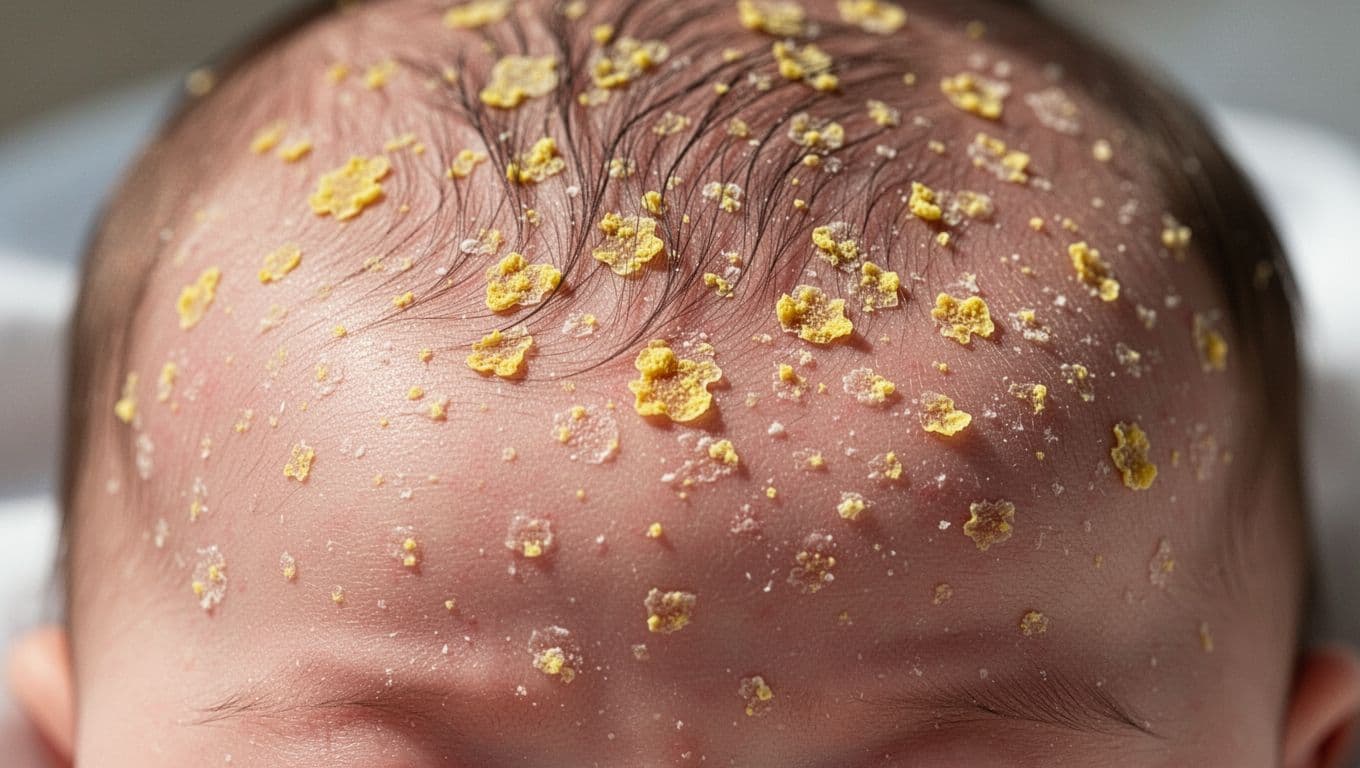
A flaky scalp can look worse than it is, especially in the first few months of life. Cradle cap is a common infant scalp condition, and it usually appears as greasy scales, yellow flakes, or patchy buildup on the head.
It can be unsettling to see, but cradle cap is usually harmless. The skin often looks messy before it looks unhealthy.
How to tell cradle cap apart from dry skin
Cradle cap and dry skin can both leave flakes behind, but they do not look the same. Cradle cap usually has thicker, stuck-on scales that look oily, yellow, or crusty. Dry skin is more likely to peel in fine, powdery flakes that brush away more easily.
Another clue is how your baby acts. Cradle cap is usually not very itchy or painful, so babies often seem comfortable. Dry skin can feel a little tighter or itchier, especially if the scalp is exposed to cold air or too much washing.
If the flakes look greasy and cling to the scalp, cradle cap is the better match. If the skin looks dry, light, and dusty, it may just need gentler moisture and less frequent washing.
Gentle ways to ease scalp buildup
A soft touch works best here. You can loosen some of the buildup with a soft baby brush or a fine comb after a bath, when the scales are softer.
Mild baby shampoo also helps keep the scalp clean without stripping it. Wash gently, rinse well, and keep the routine simple. For a practical look at skin-friendly care, safe skincare for newborns can help you choose products that stay gentle on delicate skin.
A few habits can keep things calm:
- Brush softly to lift loose scales.
- Use mild shampoo a few times a week.
- Avoid picking at the flakes, even if they look tempting to remove.
Picking can irritate the skin and make the patches look redder. A little patience goes a long way.
Signs it may be more than cradle cap
Cradle cap stays mostly on the scalp and usually looks oily or flaky. If you see redness, swelling, oozing, or a rash spreading beyond the scalp, it may be something else.
Watch for patches behind the ears, on the face, or in other skin folds if they look inflamed rather than flaky. A rash that seems painful, infected, or keeps getting worse needs a doctor’s look.
A simple rule helps here, too: cradle cap looks scaly, but it should not look angry. When the skin starts to swell or leak, it needs more attention.
Baby acne, milia, and other harmless newborn bumps
A newborn’s face can change overnight. One day the skin looks smooth, and the next it shows tiny bumps that seem to pop up out of nowhere. Most of these little spots are common, short-lived, and far less serious than they look.
If you’re staring at your baby’s cheeks under bright light, the bumps can be easy to overread. In many cases, you’re seeing a normal stage of newborn skin, not a problem that needs treatment.
What baby acne usually looks like
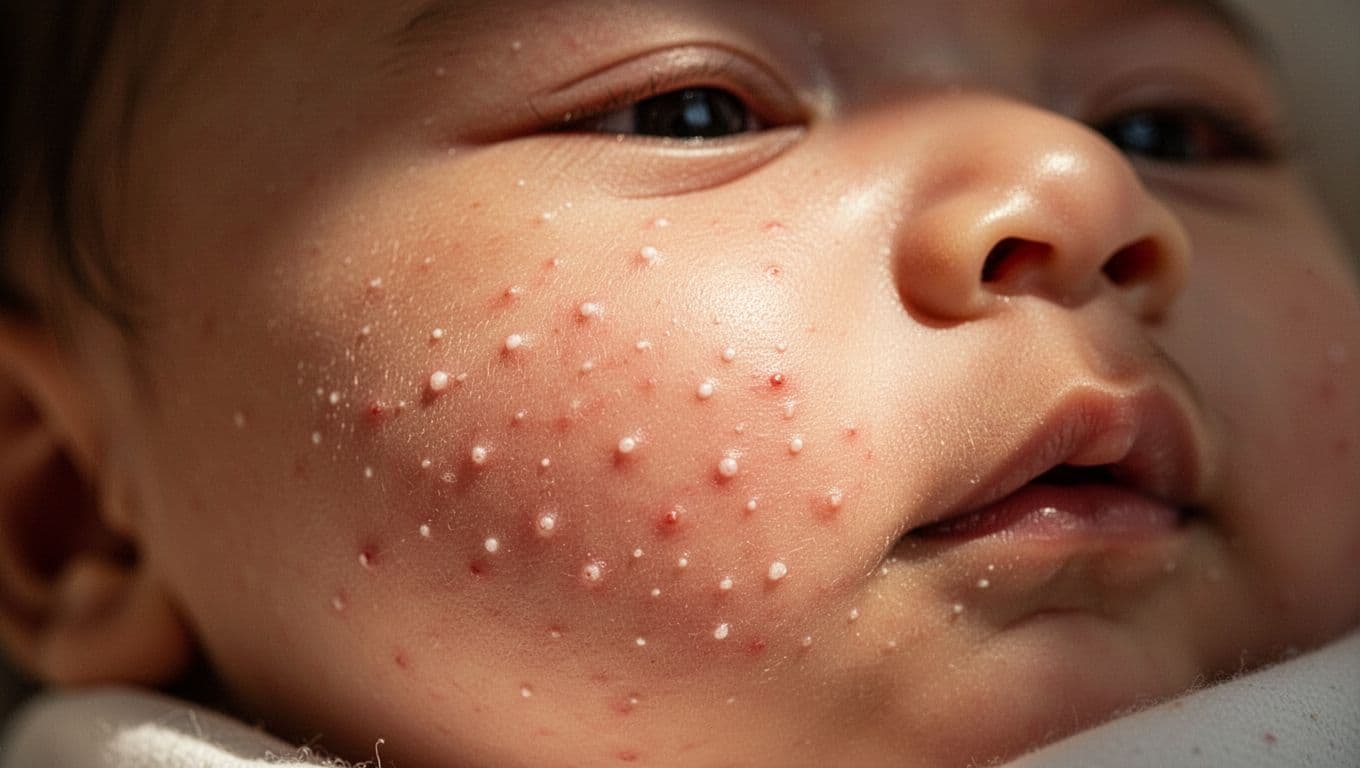
Baby acne often shows up as tiny red bumps or small pimples on the face. You may notice them on the cheeks, forehead, or upper chest, and sometimes they look a little like the acne older kids get.
The bumps can come and go in clusters. They may stand out more after feeding, warmth, or crying, when the skin flushes a bit. A good way to think about it is simple: the skin looks busy, but not necessarily sick.
Most baby acne clears on its own. In many babies, it fades within a few weeks without any special treatment. For a simple visual overview, common newborn skin issues explained breaks down the look of these early skin changes.
If the bumps stay small and your baby seems comfortable, baby acne is usually just a passing phase.
Why milia are so common in newborns
Milia are tiny white bumps that often appear on the nose, cheeks, or chin. They can look like little pearl dots trapped under the skin, which is why they worry parents at first glance.
These bumps happen because skin cells get trapped near the surface. Newborn skin is still settling in, so this happens often and usually clears without any help. In other words, milia are common, harmless, and temporary.
A baby can have milia for a few weeks, sometimes a little longer. The spots usually fade on their own as the skin matures. Cleveland Clinic’s milia guide explains that these bumps are harmless and commonly go away without treatment.
What not to do when these bumps appear
The safest move is to leave the bumps alone. Scrubbing, squeezing, or popping them can irritate delicate baby skin and make the area red or sore.
It’s also smart to avoid acne creams, harsh cleansers, and strong exfoliating products. Baby skin doesn’t need adult acne care, and over-washing can strip away moisture faster than you expect.
A few simple no-gos help protect the skin:
- Don’t scrub the bumps with a washcloth or brush.
- Don’t squeeze white spots or red pimples.
- Don’t use acne creams made for teens or adults.
- Don’t wash too often, especially with scented soap.
- Don’t layer on extra products unless your pediatrician recommends them.
Gentle care is usually enough. A soft wash with water and mild baby cleanser is plenty for most newborns. If the bumps look unusual, spread fast, or seem painful, it’s worth checking with your baby’s doctor.
Eczema, dry skin, and the itch cycle that keeps coming back
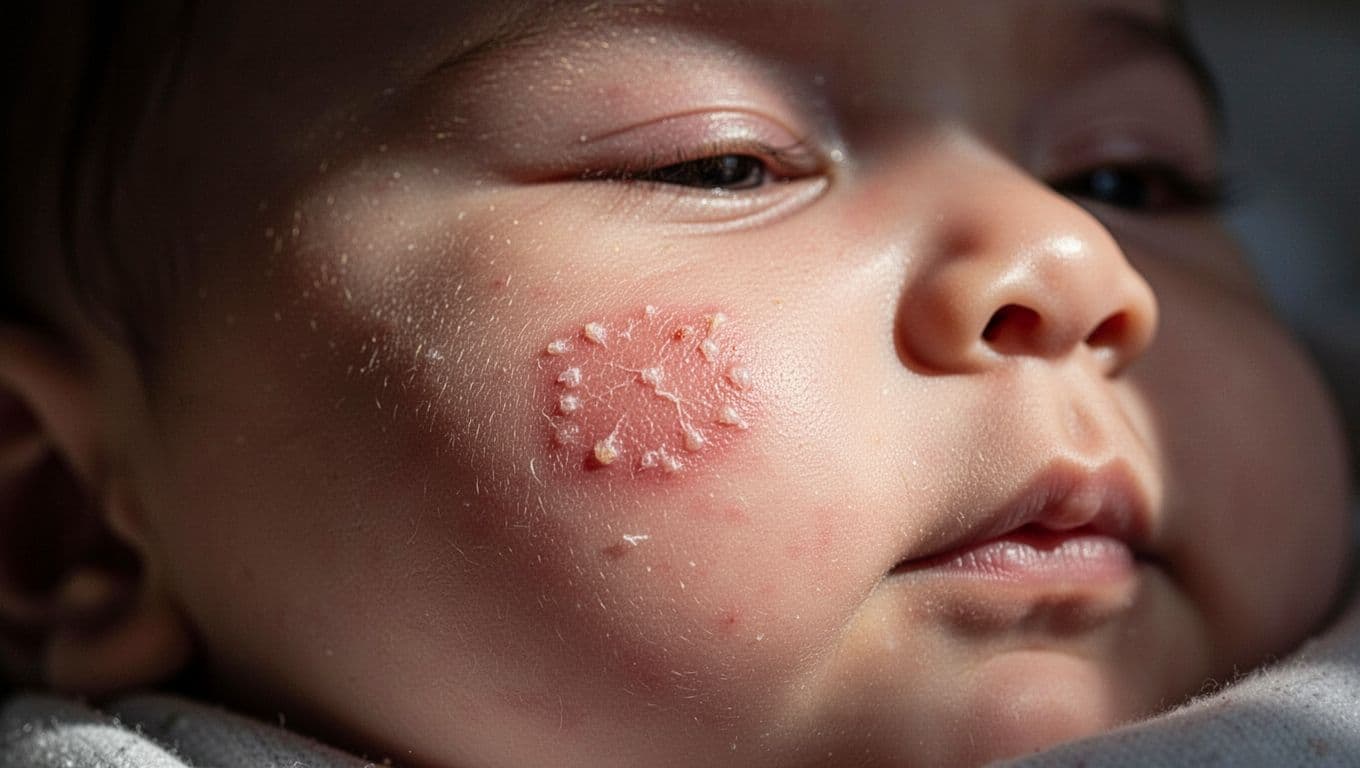
Eczema in babies often starts with simple dryness, then turns into a loop that feels hard to break. The skin gets rough, red, and irritated, the itching starts, and scratching makes the skin even more inflamed.
That cycle can show up on the cheeks, arms, legs, or skin folds. For many parents, the biggest clue is repetition, because the rash calms down, then flares again after a bath, a cold day, or a change in products.
Common eczema signs in babies
Baby eczema often looks like dry, rough, red, or scaly skin. The patch may feel a little bumpy or sandpapery, and the skin can look extra irritated after it gets wet and dries again.
Babies with eczema often scratch, rub, or press at the same spot. Since they cannot explain what hurts, fussiness becomes another clue, especially after baths or on dry, cold days. The skin may also look worse in places that bend and rub, like the elbows, knees, neck, or diaper line.
A baby who keeps rubbing the same cheek against a blanket or mattress may be trying to soothe the itch. That repeated friction can make the area look pinker and more raw by bedtime.
For a clearer look at baby eczema patterns, Cleveland Clinic’s baby eczema guide explains common signs and symptoms in plain language.
When dry skin keeps returning in the same spots, eczema is often part of the picture.
What can make eczema flare up
Eczema flares often begin with things that seem harmless at first. Soaps, scented lotions, wool, heat, sweat, and harsh weather can all irritate sensitive baby skin and strip away moisture.
Common triggers include:
- Fragranced bath products that leave the skin dry and tight
- Scented lotions or wipes that sting or leave residue behind
- Wool or rough fabrics that scratch and rub the skin
- Hot rooms, blankets, and sweat that make itching worse
- Cold, windy weather that dries out the skin fast
- Long baths or hot water that wash away natural oils
The National Eczema Association has a helpful baby eczema symptoms guide if you want to compare triggers with what you see at home. In many homes, the pattern becomes clear once you notice what happens before each flare.
How parents can soothe eczema-prone skin
Simple care often helps more than fancy products. Choose fragrance-free soap, lotion, and laundry detergent, then keep baths short and lukewarm so the skin does not dry out further.
After the bath, pat the skin dry and apply a thick moisturizer right away. Ointments and creams usually work better than thin lotions because they seal in water longer. Soft fabrics also help, since cotton is gentler than scratchy material.
A few steady habits can calm the skin:
- Moisturize often, especially after bathing
- Dress baby in soft, breathable fabrics
- Keep nails short to reduce damage from scratching
- Avoid heavily scented products
- Watch for patterns after baths, heat, or weather changes
If the rash keeps returning, looks painful, or starts to ooze, it may need a doctor’s care. For many babies, though, gentle skin care and steady moisture are the first real steps toward breaking the itch cycle.
Heat rash, hives, and other sudden skin changes that can appear fast
Some baby rashes show up with no warning at all. One moment the skin looks clear, and the next it has bumps, welts, or blotches that seem to bloom across the body.
That speed can make the rash feel more serious than it is, but the pattern matters. Heat rash usually follows sweat and trapped warmth, while hives often point to an allergy or irritation. Both can look sudden, yet they usually have different clues.
Heat rash from sweat and warm weather
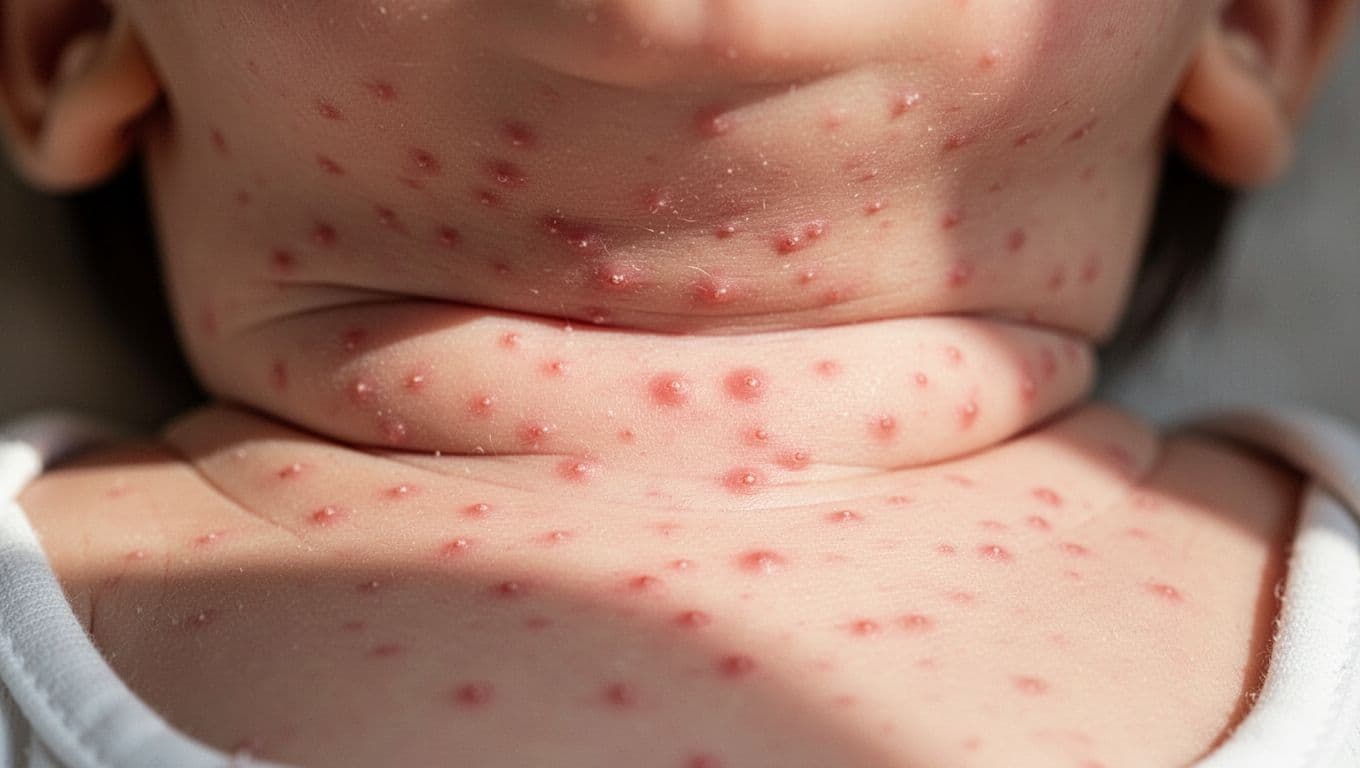
Heat rash shows up as tiny red bumps or small blisters in places that trap heat and moisture. The neck, chest, back, and diaper area are common spots, especially after a hot nap, a stroller walk, or time in a warm room.
Overheating can make it worse. Heavy clothing, extra blankets, and tight layers hold sweat against the skin, which can clog the tiny sweat ducts and leave the skin prickly and irritated. The rash often looks worse where fabric rubs the most.
The good news is that heat rash usually improves once your baby cools down. Loose clothes, a cooler room, and dry skin often help the bumps fade. For parents who want a simple symptom guide, the NHS rash advice for babies and children can help you compare common signs.
Hives and what an allergic reaction can look like
Hives usually look different from heat rash. They are raised, itchy welts that can pop up fast, shift around, and even fade in one spot while appearing in another.
These welts can come from food, medicine, insect bites, or skin contact with an irritant. A new formula, a bite, or even a lotion can set off the skin like a flare in dry grass. The rash may look puffy, pale in the center, or red around the edges.
Hives that move around the body are a strong clue that something triggered the immune system.
If the rash comes after a new food, medicine, or bite, keep that detail in mind. The cause may not be obvious at first, but timing often tells the story. For a closer look at serious rash signs, Johns Hopkins Medicine’s rash guidance gives a clear overview of when to worry.
When sudden rashes need urgent attention
Some rashes need fast medical help, not a wait-and-see approach. Take sudden skin changes seriously if they come with trouble breathing, swelling of the lips or face, vomiting, or a very sick baby.
Call emergency services right away if your baby has:
- Trouble breathing
- Swelling of the lips, tongue, mouth, or face
- Wheezing or a tight throat
- Vomiting or diarrhea with hives
- Blue, pale, or gray skin
- Unusual sleepiness, fainting, or poor response
A rash that comes with fever, fast spreading spots, or a baby who seems weak or unwell also needs prompt care. For heat rash, call the doctor if it gets worse after a day or does not improve within a few days. For hives, the concern is bigger when breathing, swelling, or vomiting join in, because that can point to a serious allergic reaction.
Peeling skin, erythema toxicum, and when a newborn rash is actually normal
Newborn skin can look a little dramatic in the first days of life. One patch may peel like sun-kissed paper, while another may sprout red spots that fade before you can even settle into a worry.
That doesn’t always mean something is wrong. In fact, many early skin changes are part of the adjustment period after birth, when a baby moves from the warm, watery comfort of the womb into open air. If you want a wider picture of these early changes, understanding newborn skin changes can help put the more surprising ones in context.
Why many newborns peel after birth
Peeling skin is common in the first days after birth, especially if a baby arrives after 40 weeks. By then, the skin has often lost more of the soft protective coating called vernix, so dry patches and flakes show up more easily.
The peeling usually appears on the hands, feet, wrists, or ankles, then fades on its own. It can look a little like dry snowfall on the skin, but it often clears as the baby adjusts. According to newborn skin peeling guidance, this dryness is usually normal in the first couple of weeks.
A gentle bath and plain moisturizer are usually enough if the skin seems dry. Heavy scrubbing or strong lotions can make the skin more irritated.
What erythema toxicum looks like
Erythema toxicum sounds serious, but it is one of the most common harmless newborn rashes. It usually shows up as small red spots or blotches, sometimes with a tiny white or yellow bump in the center.
You may notice it on the chest, back, face, or arms. The rash often appears, fades, then shows up again in a different spot, almost like it changes its mind. That up-and-down pattern is normal, and it usually clears without treatment.
Erythema toxicum looks dramatic, but it usually does not bother the baby.
For a clear visual description, the Canadian Paediatric Society notes that this rash is common and self-limited in newborns in its baby skin guide.
How to tell normal newborn changes from concerning symptoms
Normal peeling or a harmless rash should not make your baby feel sick. If your newborn seems well, feeds normally, and the skin change stays mild, it often just needs time.
Call your baby’s doctor if you notice any of these signs:
- Fever
- Poor feeding
- Unusual sleepiness
- Blisters
- Spreading redness
Skin that looks cracked, swollen, oozing, or very painful also deserves medical advice. The same goes for a rash that keeps growing instead of fading. A newborn’s skin can look busy and uneven, but the bigger clue is how your baby acts. If the skin change comes with illness, treat it as more than a normal newborn phase.
Conclusion
Baby skin can look fragile one day and startling the next, but most of the common changes covered here are mild and short-lived. Diaper rash, cradle cap, baby acne, milia, eczema, heat rash, and erythema toxicum often calm down with gentle care and a little time.
The clearest takeaway is simple: watch the pattern, not just the patch. If a rash looks painful, spreads fast, oozes, or comes with fever, swelling, or a baby who seems unwell, trust that instinct and call the doctor.
For everyday care, keep things soft, dry, and fragrance-free, then keep an eye on what changes after baths, weather shifts, or product swaps. When something feels off, it usually deserves a closer look.
Save pin for later


- Dry Cough in Kids: 5 Causes and Safe Solutions - September 23, 2026
- How to Help a Child Deal With Anxiety at Home - September 12, 2026
- How to Prepare Your Child for the First Day of School - September 12, 2026