

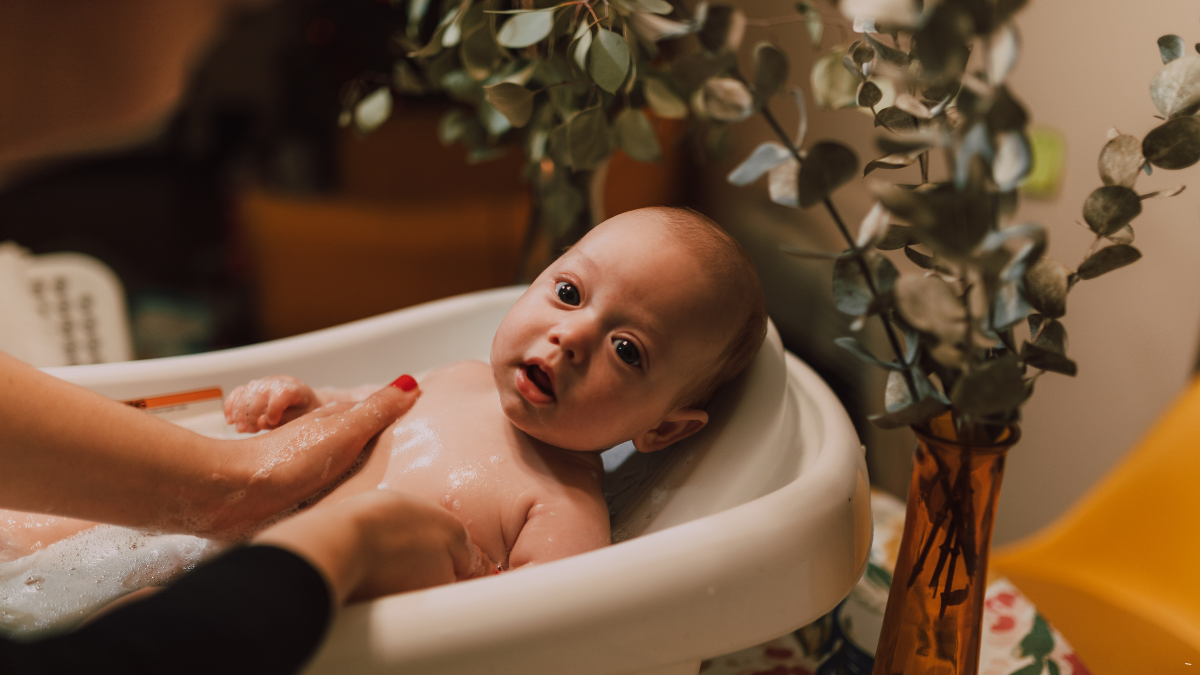
Most parents want bath time to be calm, clean, and gentle, but a few small habits can leave baby skin dry, itchy, or irritated. With baby bath mistakes, the problem is often less about what you mean to do and more about the little choices that seem harmless in the moment.
Too-frequent baths, water that’s too hot, harsh soap, rough towels, rubbing instead of patting, skipping moisturizer, and weak support during the bath can all make things worse. Small swaps can make a big difference, especially when your baby’s skin is already sensitive. If you also want help choosing products that are gentle enough for daily use, these gentle baby skin care picks are a smart place to start.
The good news is that bath time doesn’t need to be stressful. A few simple changes can make cleaning easier and help your baby’s skin stay soft and comfortable, so let’s look at the habits worth fixing first.
You may be bathing your baby more often than they need
Many parents assume more baths mean better hygiene, but baby skin does not work that way. Newborn skin is thin, delicate, and quick to dry out, so frequent washing can strip away the natural oils that help protect it.
For many babies, 2 to 3 short baths a week is enough unless your pediatrician recommends a different schedule. The American Academy of Pediatrics also notes that newborns do not need a daily bath, and sources like HealthyChildren.org and Mayo Clinic give the same basic advice. If your baby’s skin seems dry, flaky, or irritated, the bath routine may be part of the problem.
How often babies really need a bath
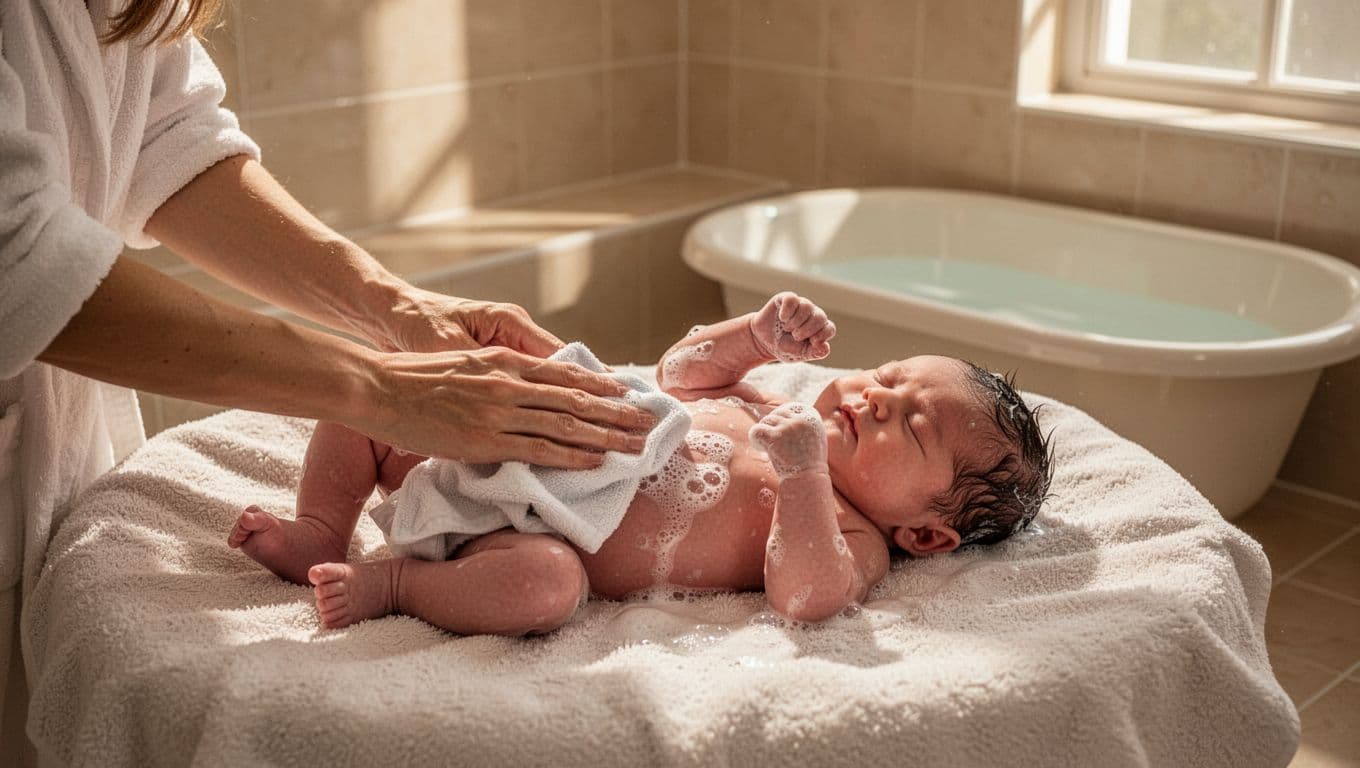
Newborns usually do not need a full bath every day. In the first weeks, sponge baths are often enough, especially until the umbilical cord stump falls off. That keeps the skin clean without soaking or scrubbing areas that are still healing.
As babies get older, you can usually still keep baths brief and simple. A few baths each week works well for many infants, because they are not crawling through dirt or sweating like older kids. If your baby has dry skin, eczema, or a doctor’s concern, follow the guidance you were given and keep the routine even gentler.
If your baby looks clean and their skin is happy, a full bath is not always necessary.
Simple cleanup between baths that still works
Between full baths, spot-cleaning does most of the work. A damp washcloth can handle the places that need the most attention, without drying out the rest of the skin.
Focus on these areas:
- The face after feeds or spit-up
- Neck folds where milk and moisture collect
- Hands that end up in the mouth all day
- The diaper area after changes
- Any small skin folds that trap sweat or residue
This is where gentle diaper care matters too, because a messy diaper or a big spit-up does not call for a full bath every time. A quick wipe-down is usually enough, and it is often kinder to sensitive skin. Save the full bath for when your baby is truly dirty, sticky, or due for their regular bath day.
A full bath can wait when:
- Your baby had a small spit-up.
- The diaper area needs a quick clean.
- Milk or drool collected in the neck folds.
- Your baby only needs freshening up before a nap or outing.
That lighter approach keeps your baby clean without turning bath time into a skin-drying routine.
Wrong water temperature can make bath time uncomfortable or unsafe
Bath water matters more than many parents expect. If it’s too hot, sensitive skin can turn red and feel irritated fast. If it’s too cool, your baby may tense up, fuss, or get chilled before the bath is over.
The safest choice is warm water, not hot water. A quick check before your baby goes in matters more than guessing by touch after the tub is full. Room temperature matters too, because a damp baby can get uncomfortable fast in a chilly bathroom.
How to test bath water the right way
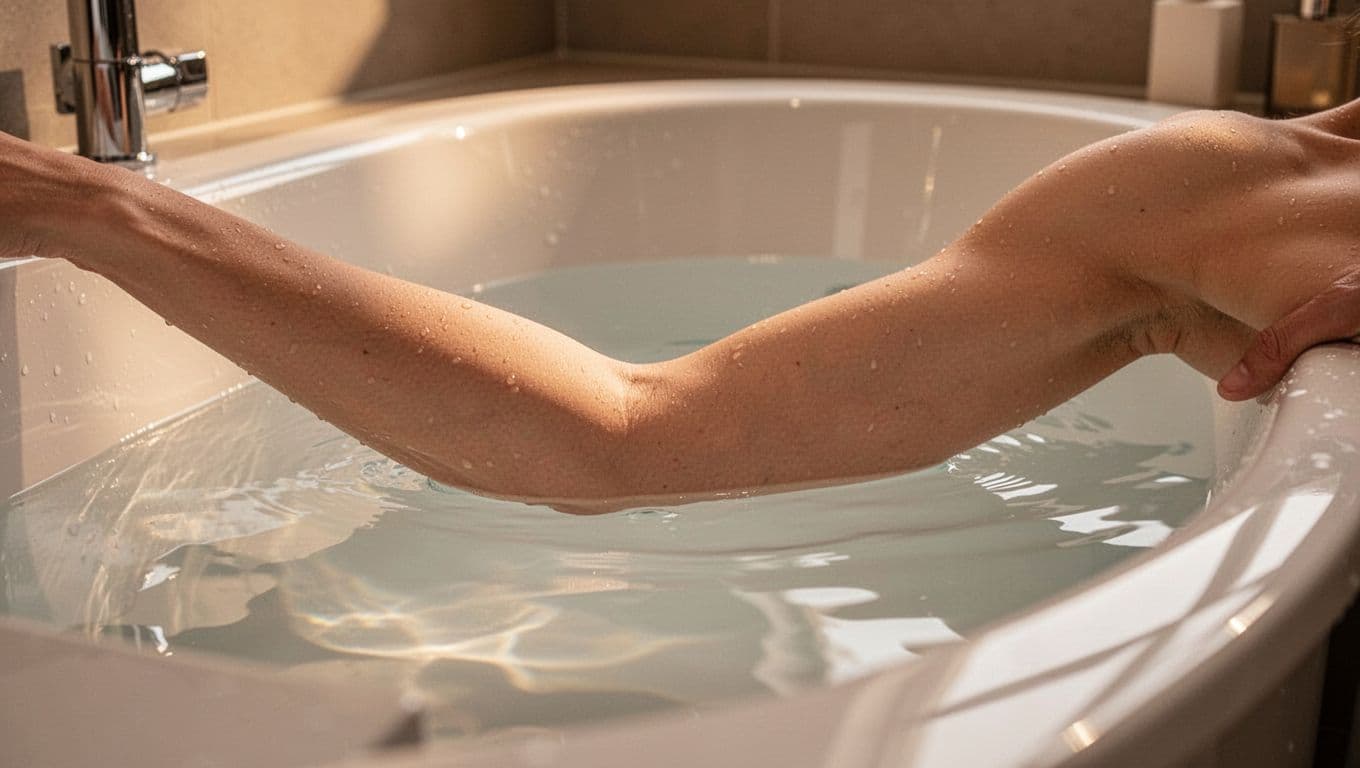
A simple wrist or elbow test works well. Dip the inside of your wrist or elbow into the water and check that it feels warm, not hot. Your fingers can miss the mark, but the wrist and elbow give you a better sense of what baby skin will feel.
If you want extra peace of mind, use a baby bath thermometer. Many parents like the added accuracy, especially in the newborn stage. Health guidance from the Mayo Clinic also points parents toward water around 100°F, or 37 to 38°C.
A good target is water that feels close to body temperature. It should feel pleasant, almost barely warm, when you test it. If you also want more help with comfort after bath time, a gentle lotion rub after bath can help keep skin soft.
Signs the bath is too hot or too chilly
Babies give clear signals when the water feels wrong. You may see flushed skin, quick fussing, or a baby who seems tense as soon as they touch the water. Hot water can also make skin look shiny or extra pink.
Cool water usually brings a different reaction. Your baby may pull away, cry sooner, shiver, or curl up tightly. In a cool room, even a well-set bath can feel unpleasant once the baby is wet.
Watch for these cues and adjust right away:
- Flushed cheeks or red skin can mean the water is too warm.
- Shivering or trembling points to a bath that feels too cool.
- Fussing right after entry often means the temperature needs a reset.
- Pulling arms or legs in can mean your baby feels uncomfortable.
- Tight, restless movements can be a sign to stop and check the water again.
The room should feel warm, too, so your baby does not get chilled when lifted out. A cozy bathroom and a properly warmed tub work together, which is why bath safety matters just as much as skin care. The AAP bathing guidance also stresses keeping water safely warm and avoiding scalding temperatures at the tap.
If your baby seems uneasy, pause and adjust before continuing. A better bath temperature can turn bath time from a fussy struggle into a calm routine.
Harsh soaps and scented products can irritate baby skin
Baby skin reacts fast to what goes on it. Strong scents, bright dyes, and heavy cleansers can dry it out or leave it red and itchy.
That’s why simple products usually work best. In many cases, plain water handles most of the body, while a mild wash is saved for the spots that need it most.
What ingredients to avoid in baby wash
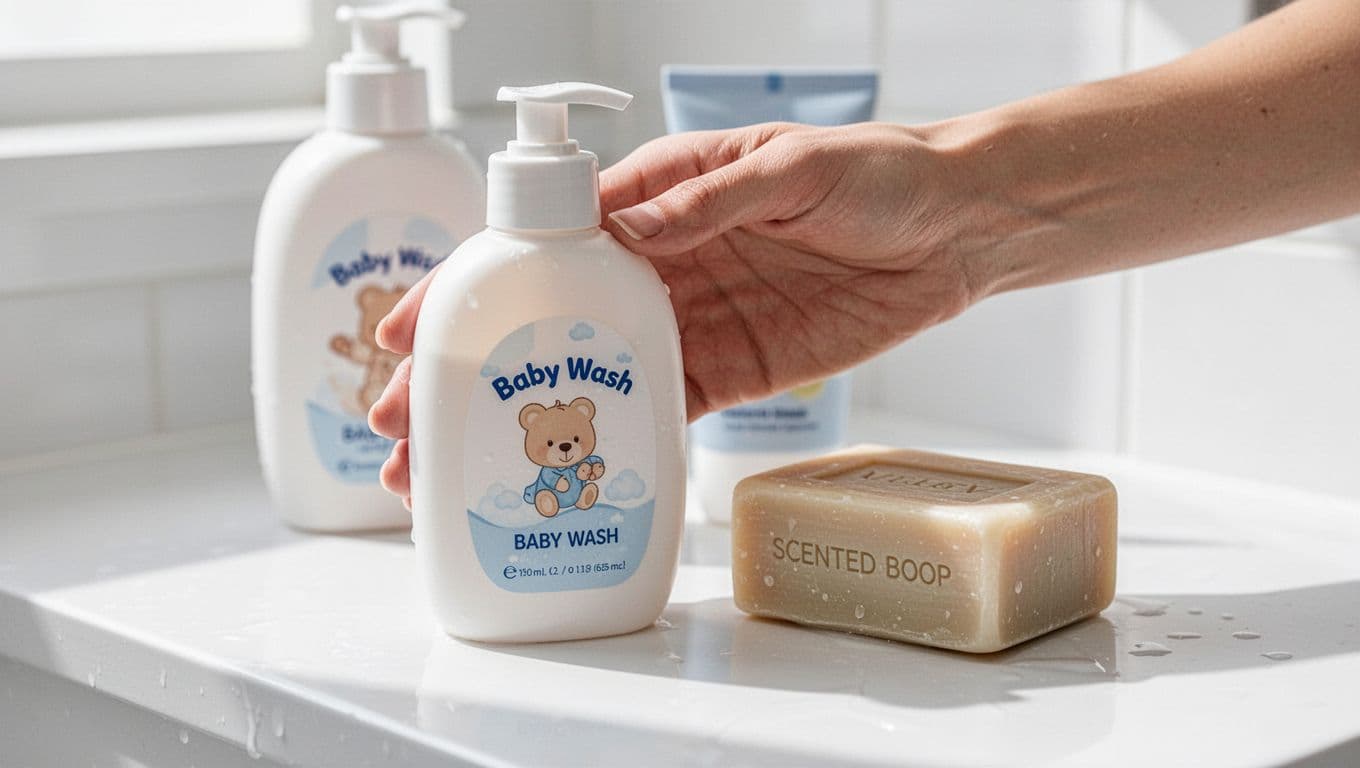
Baby wash should be gentle, but many products are loaded with extras that can bother sensitive skin. Strong fragrance is one of the biggest triggers, since scented formulas often contain hidden chemicals that can irritate or dry out skin. Dyes can also cause trouble, especially for babies who already get red patches or rashy spots.
Watch out for cleansers that feel too strong, too. Ingredients like sulfates and harsh surfactants can strip away natural oils fast. That leaves baby skin more exposed and more likely to feel tight after bath time. A good rule is simple, shorter ingredient lists are usually easier on delicate skin.
Bubble baths and adult body wash are usually too harsh for babies as well. They may smell nice or feel extra foamy, but that foam often comes from stronger cleaners than a baby needs. Johns Hopkins Medicine notes that baby skin is highly absorbent and that fragrance-free, dye-free products are a safer choice for newborns.
What to use instead for gentle cleaning
A better choice is a tear-free, pH-balanced, fragrance-free baby wash. Use it only where soap really helps, like the diaper area, neck folds, hands, and feet. For the rest of the body, warm water is often enough.
That approach keeps bath time simple and lower-risk. Less soap usually means less dryness, less rubbing, and less chance of irritation.
A few easy habits help a lot:
- Use a small amount of wash, not a full handful.
- Clean only the areas that need it.
- Rinse well so no residue stays behind.
- Skip added scent, color, and extra bubbles.
- Choose products made for sensitive baby skin.
If your baby’s skin gets dry after every bath, the wash may be too strong, or you may be using too much of it.
If you want a basic check before buying, look for words like fragrance-free, hypoallergenic, and pH-balanced on the label. WebMD also recommends keeping baby skin care simple and using baby soaps sparingly, since even mild cleansers can dry skin when overused.
Leaving skin folds damp can lead to rashes and irritation
After bath time, the tricky spots are usually the ones you can’t see at first glance. Baby skin folds hold onto water like tiny pockets, and that trapped moisture can turn into redness, chafing, or a yeast-like rash fast.
The neck, behind the ears, underarms, groin, and behind the knees need extra attention. These areas stay warm and closed in, so even a small amount of moisture can linger. If your baby also deals with drool or spit-up, the risk goes up because wet skin rubs more easily and gets irritated sooner.
The spots parents often miss after a bath
Some of the wettest places on a baby are also the easiest to forget. Under the chin, in neck rolls, and behind the ears, moisture can hide after every bath, feed, or diaper change.
Those folds often collect more than water, too. Spit-up, milk, and drool can sit there and irritate the skin if they are not cleaned and dried well. A soft cloth and gentle wipe are enough, as long as you follow with a careful dry.
Pay extra attention to these hidden areas:
- Under the chin, where drool pools
- In neck folds, where milk and sweat collect
- Behind the ears, where water often gets missed
- Underarms, where skin rubs together
- Groin folds, where moisture can linger after a bath
- Behind the knees, especially on active babies
A quick clean matters, but a quick dry matters just as much. If moisture stays trapped, skin starts to stay warm and irritated, which can set off a rash. For more help with drool-heavy stages, managing drool irritation during teething can also keep those folds calmer between baths.
Why patting dry beats rubbing
Gentle patting protects delicate skin better than rubbing. Rubbing with a towel can act like sandpaper on baby skin, especially when it is already soft from bath water.
The best method is simple. Press the towel against the skin, lift it, then repeat until the area feels dry. Open each fold gently with your fingers so you can check that the skin underneath is dry too.
If a fold still feels cool or damp, it needs one more gentle pass before dressing.
This step matters most before you put on clothes or a diaper. Once skin folds are dry, they have less chance to trap heat and moisture. The Royal Children’s Hospital skin care guidance also advises drying folds like the neck, groin, armpits, and behind the ears well after bathing.
Scrubbing too hard can do more harm than good
Baby skin is thin, soft, and easy to mark. A rough washcloth, a loofah, or hard rubbing can leave it scratched or red before you even notice. Clean skin does not need to be polished like a countertop, and the goal is simple, lift away dirt without irritating the surface.
A gentle bath routine keeps the skin barrier intact, which matters even more for sensitive babies. The American Academy of Dermatology recommends soft cleaning tools and mild products for newborns, and that advice fits most babies with delicate skin.
Safer tools to use instead of rough scrubbing
A soft washcloth is usually all you need. Dip it in warm water, wring it out well, and use light circular motions on the skin. That approach loosens milk, drool, and everyday grime without dragging across the surface.
Your clean hands also work well, especially for tiny babies. Fingers can be gentler than cloth when you need to clean folds, creases, or a small spot that needs extra care. For many families, that makes bath time simpler and easier to control.
Skip loofahs, textured sponges, and anything that feels scratchy against your own skin. Those tools create friction, and friction is exactly what sensitive baby skin does not need.
A better mental picture is this: you are wiping away mess, not scrubbing the skin clean like adult skin. Baby skin does not have the same thickness or oil protection, so less pressure is usually better.
For a simple routine, keep these basics in mind:
- Use a soft, damp washcloth for most of the body.
- Clean with your hand when a cloth feels too rough.
- Move in gentle circles, not back-and-forth scrubbing.
- Rinse the cloth often so trapped debris does not rub back onto the skin.
How to keep bath time gentle from start to finish
Gentle bath time starts before the water goes in the tub. Keep your pressure light from the first wipe to the final rinse, and avoid going over the same area again and again. Repeated passes can turn a normal clean into a sore patch.
Watch your baby’s skin as you wash. If it starts to look pink, feel warm, or seem irritated, stop and switch to a lighter touch. That small pause can prevent a bigger flare-up later.
A calm routine often looks like this:
- Wet the cloth or your hands with warm water.
- Clean one area once, then move on.
- Rinse and lift away soap right away.
- Pat the skin dry instead of rubbing.
- Stop if the skin looks red or feels rough.
If bath time leaves your baby’s skin looking worse, the routine is too harsh for that baby.
Keep in mind that sensitive skin often needs less contact, not more. Mayo Clinic also advises using a mild washcloth and gentle washing for newborn baths, which is a good standard to follow for delicate skin. A soft touch gets the job done and helps bath time stay comfortable.
Using the wrong towels and bath linens can bother sensitive skin
After the bath, what you dry your baby with matters almost as much as the bath itself. A towel can feel soft to adult hands and still be rough on a baby’s skin, especially if it holds leftover detergent, fabric softener, or a strong laundry scent.
The other problem is moisture. Some fabrics stay damp too long, which leaves skin warm and vulnerable to redness, chafing, and irritation. For sensitive skin, comfort and hygiene should work together.

What makes a baby towel a better choice
A good baby towel feels soft, absorbent, and light on delicate skin. Cotton is a strong choice because it tends to be gentle, breathable, and easy to wash. Many parents also like organic cotton, bamboo, or muslin for the same reason, since these fabrics are often softer and kinder to sensitive skin.
Size matters too. A baby-sized towel wraps better, dries faster, and makes it easier to keep your little one warm after the bath. Hooded towels can help cover the head, which is useful because babies lose heat quickly.
Laundry residue is another big factor. Adult towels may carry strong detergent scents or fabric softener buildup, and that can linger even after washing. If your baby has sensitive skin, keep baby towels separate from household towels when you can, and wash them with a gentle, baby-safe detergent. Stanford Children’s Health also notes that laundry detergent can irritate delicate baby skin, so an extra rinse can help remove leftover residue.
A simple towel checklist helps:
- Choose soft, absorbent fabric
- Avoid strong perfume or scent
- Skip fabric softener residue
- Pick a size made for babies
- Keep baby towels separate when possible
A towel should dry the skin without scratching it or leaving it coated in residue.
How to dry and dress baby without causing irritation
Use the towel to pat dry, not rub. Press gently against the skin, then lift and move to the next spot. That method protects the skin barrier and helps avoid the tiny friction marks that rough towels can leave behind.
Pay special attention to folds, like the neck, underarms, groin, and behind the ears. Those spots stay damp longer and can turn rashy if you rush. Once the skin feels dry, dress your baby soon after in breathable clothes that won’t trap heat.
Warmth still matters after a bath, but overdressing can backfire. Too many layers can trap moisture against the skin and make irritation worse. A soft towel, a dry body, and a light outfit are usually enough to keep baby comfortable.
If you want a quick rule, follow this order:
- Pat the skin dry with a soft towel.
- Check skin folds for leftover dampness.
- Dress baby in clean, breathable clothes.
- Add only the warmth your baby actually needs.
UCSF Benioff Children’s Hospitals also advises patting dry instead of rubbing and then dressing baby right away to help them stay warm. That balance keeps bath time gentle, clean, and much easier on sensitive skin.
The biggest safety mistake is not holding your baby securely
This is the most serious bath-time mistake on the list, and it should be treated as non-negotiable. A baby can slip in a very small amount of water, and a fall can happen fast, even when you are standing right there. Bath time only stays safe when your hands stay on your baby.
How to set up bath time before you start
Gather everything first so you never need to step away. Have a towel, clean diaper, clothes, wipes, and soap within arm’s reach before the water goes in the tub.
That small habit matters because bath time should never turn into a quick search through drawers or a hallway run. Keep the water shallow in a baby tub or sink, then stay focused on the baby, not on the setup. The HealthyChildren.org bath safety guidance also says to keep supplies close so your attention stays on your child.
Smart bath-time habits that reduce risk
Keep one hand on your baby at all times. That single rule does a lot of work, because it helps steady slippery skin, support the head, and stop sudden slips before they start.
A few other habits make bath time safer right away:
- Never answer the door or phone mid-bath.
- Use a stable bathing setup that won’t tip or slide.
- Keep the tub shallow, even if your baby seems calm.
- Stay within arm’s reach the whole time.
- End the bath if you need to leave the room for any reason.
Never leave a baby alone in the bath, even for a second. Water accidents are silent and fast.
The AAP’s water safety guidance is clear about close, constant supervision around water. That means no multitasking, no quick detours, and no assuming a bath seat or infant tub can do the watching for you.
Conclusion
Most baby cleaning mistakes come from doing too much, using products that are too harsh, or rushing through the routine. When you keep bath time simple, your baby’s skin has a better chance to stay calm, soft, and protected.
The biggest wins are small ones, like using warm water, mild cleanser, a gentle touch, and a soft towel. If you need a fuller list of habits to avoid, 10 things not to do with babies can help you spot other common slip-ups.
A few careful changes can make a real difference for sensitive skin. That usually means less irritation for baby and a calmer bath time for everyone.
Save in for later

- Helicopter Parenting: 10 Signs You’re Doing It and How It Affects Your Kid - September 22, 2026
- 10 Things You Shouldn’t Do in Front of Your Baby (and What to Do Instead) - September 22, 2026
- 15 Effective Ways to Deal With Stubborn Children (Without Yelling) - September 22, 2026