

A food that seems harmless with one baby can back up another in no time. That difference is normal. Babies do not all start solids at the same pace, and their bodies do not handle every bite the same way.
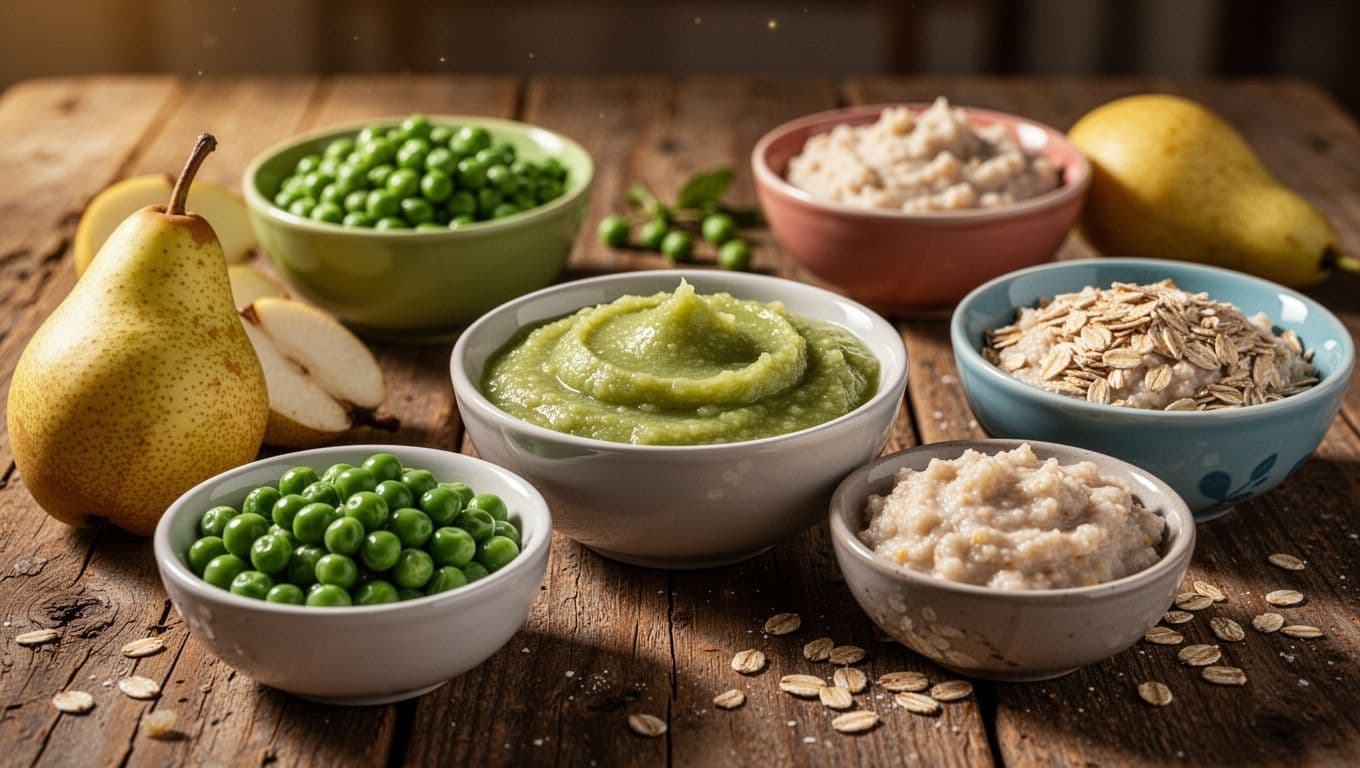
Low fiber can make stools harder to pass
Fiber helps stool stay soft and move through the body. When a baby eats mostly low-fiber foods, poop can become dry, dense, and hard to pass.
That is why rice cereal, bananas, applesauce, and other binding foods do not bother every baby, but they can trouble some. If the rest of the day is short on fruits, vegetables, or whole grains, the gut has less help moving things along. For a simple look at how poop patterns change in infancy, normal bowel movement patterns for infants can help you compare what you’re seeing.
A low-fiber day here and there usually isn’t a problem. Repeated low-fiber meals can make stools firmer fast.
Hydration matters too. When babies drink less breast milk or formula after solids begin, stools can dry out even more. That’s why the same food may seem fine one week and constipating the next.
Too much of one food can throw off balance
Even a healthy food can cause trouble when it shows up at almost every meal. A baby who eats bananas all morning, applesauce at lunch, and rice cereal at dinner may simply be getting too much of one type of food and not enough variety.
Think balance, not perfection. One food rarely causes the whole problem on its own. More often, constipation comes from a mix of low fiber, less fluid, and a new eating routine that moved too fast.
A baby’s age also matters. Some little ones are ready for solids but still need time to adjust. Others handle the same foods without a hitch because their digestion, hydration, and overall menu are a better fit. The MedlinePlus guide to constipation in infants also points to fiber, fluids, and the shift to solids as common reasons stools get harder.
In short, constipation is often about the full plate, not one ingredient.
What to offer instead when your baby seems backed up
When stools get hard, the next move is usually simple: shift the menu toward foods that bring more moisture and fiber. Small swaps can make a real difference, especially when you catch the pattern early.
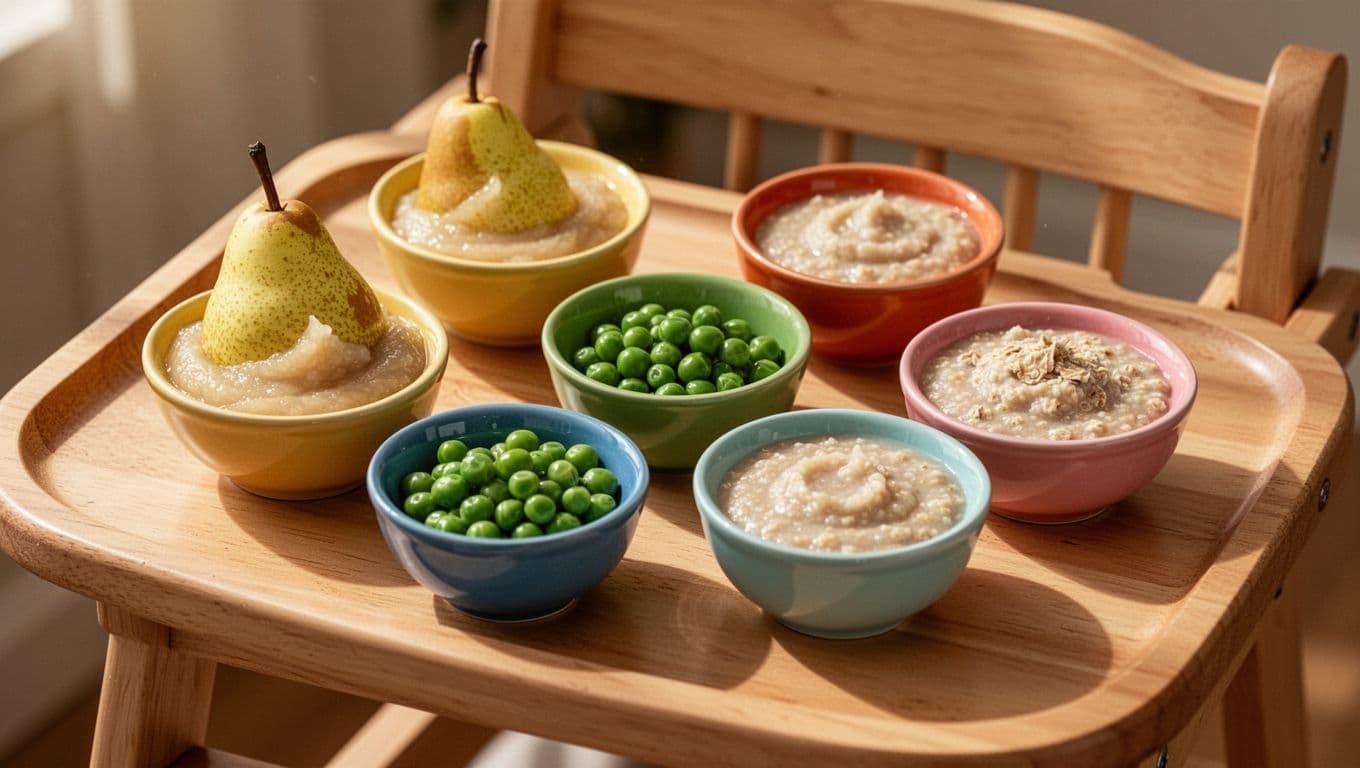
Foods that may help soften stool
Some of the gentlest choices are also the simplest. Pears, prunes, peaches, plums, peas, oatmeal, and barley often work well because they bring fiber and a softer texture that is easier for baby tummies to handle.
Prunes are a classic choice when poop seems stuck. Pears and peaches are mild, juicy, and easy to puree, while plums can add the same kind of gentle push. For many babies, oatmeal works better than rice cereal, and barley gives another soft grain option that is less likely to bind stools. For a helpful reference on fiber-rich options, Huckleberry’s constipation guide lists several baby-friendly foods that support easier bowel movements.
You can keep the portions small and simple. A spoonful of pear puree at breakfast, peas at lunch, and oatmeal at dinner can steady things without overwhelming your baby.
If one food seems to slow things down, pair it with a softer, more water-rich choice the same day.
A few other baby-friendly options include:
- Prunes or prune puree, which often help move things along.
- Pears and peaches, which are soft, mild, and easy to serve.
- Plums, especially when cooked or pureed.
- Peas, which add fiber without a heavy feel.
- Oatmeal or barley, which are usually easier on the gut than refined grains.
Small feeding changes that can make a big difference
A backed-up baby often needs balance more than a full menu overhaul. If your baby is old enough for water with meals, offer a few sips alongside solids. That extra fluid can help soften stools and keep dry foods from sitting too heavy.
It also helps to balance binding foods with produce. If breakfast includes banana or rice cereal, add pears, peaches, or prunes later in the day. If lunch has cheese or crackers, build dinner around peas, oatmeal, or another fiber-rich food. The goal is to keep one dry food from running the whole day.
Try not to serve the same constipating food again and again. Babies do better with variety, because repeated low-fiber meals can make the stool firmer over time. In short, rotate the menu, keep portions modest, and watch how your baby responds over a few days.
A steady reset can look like this:
- Swap rice cereal for oatmeal.
- Offer pear or prune puree once a day.
- Add peas, peaches, or plums to another meal.
- Keep water in the routine if your baby already drinks it with solids.
- Pull back on the same binding foods until stools soften again.
If the poop stays hard or your baby seems uncomfortable after several days, the pattern needs a closer look. A few gentle changes often bring things back on track.
Conclusion
Constipation after starting solids is common, and it usually settles once you adjust the menu. The biggest troublemakers are often rice cereal, bananas, applesauce, dairy, refined grains, and processed snacks, especially when they show up too often and crowd out softer, fiber-rich foods.
A few small changes can help the gut get moving again. Swap in more pears, prunes, peas, and oatmeal, then watch how your baby responds over the next few days. If you want another gentle option to think about, benefits of lemon for infant digestion may also be worth a look.
Most of all, don’t panic. Watch the pattern, adjust meals, and call your baby’s doctor if the constipation is severe, painful, or won’t let up.
Save pin for later

- Dry Cough in Kids: 5 Causes and Safe Solutions - September 23, 2026
- How to Help a Child Deal With Anxiety at Home - September 12, 2026
- How to Prepare Your Child for the First Day of School - September 12, 2026