


Most babies start rolling over around 4 to 6 months, but that window isn’t the same for every child. One day your baby may seem content to lie still, and the next they’re twisting, rocking, and trying out new moves with surprising speed.
That kind of change can feel exciting, and a little nerve-wracking too. If you’ve been watching for early signs, it helps to know what usually comes first, what falls within the normal range, and when a slower pace may need a closer look. You can also keep an eye on other developmental milestones so the bigger picture makes more sense.
If you’re wondering whether your baby is on track, the timing, the early clues, and the red flags all matter. Let’s look at what rolling over usually looks like, and when it’s smart to check in with your pediatrician.
The usual age range for babies rolling over
Rolling over usually happens in two stages, and the timing is often different for each direction. Many babies start with tummy-to-back rolling first, then work up to back-to-tummy as they get stronger and more coordinated.
A few weeks early or late still fits inside the normal range. What matters most is steady progress, not a perfect date on the calendar. If your baby is gaining head control, moving more freely, and trying to twist during play, those are all good signs.

A quick reference can help you spot the usual pattern:
| Roll direction | Common age range | What parents often notice |
|---|---|---|
| Tummy to back | 4 to 6 months | Baby lifts the head, shifts weight, then tips over |
| Back to tummy | 5 to 7 months | Baby rocks, twists, and needs more push to finish |
If you want a broader view of how this fits with other growth steps, the baby development milestones timeline can help put it in context.
A baby who rolls one way first is still on track. The second roll usually comes later.
Why tummy-to-back usually comes first
Tummy-to-back rolling is often the easier move because gravity does some of the work. When a baby lifts the head, shifts weight to one side, and lets the body tip, the roll can happen almost by accident at first.
That first flip often starts during tummy time. One arm pushes, the head turns, the hips follow, and suddenly your baby is on the back with a surprised look on the face.
Why back-to-tummy takes a little more strength
Back-to-tummy rolling usually asks for more core control, arm strength, and body coordination. Your baby has to lift, twist, and push through the movement instead of simply tipping over.
That takes practice. Many babies rock side to side, grab their feet, or arch their bodies before they can finish the roll. If your little one keeps trying, that effort is part of the process.
For a deeper look at the rolling timeline, Cleveland Clinic’s guide to baby rolling gives a helpful breakdown of what often comes first and what comes later.
Signs your baby is getting ready to roll
Before a full roll happens, babies often show small bursts of movement that look almost accidental. These little efforts are the body’s rehearsal, one try at a time. You may see stronger neck control, more chest lift, or a sudden twist that seems to come out of nowhere.
The changes can be easy to miss at first. Still, once you know what to watch for, the pattern starts to stand out.
What tummy time teaches before the first roll
Tummy time gives your baby the practice needed for rolling. Short, regular sessions help build the muscles in the neck, shoulders, back, and core. Those muscles work together when your baby starts to turn.
As your baby spends more time on the belly, you may notice better head control and less wobbling. Then the chest lifts a little higher, the arms press more firmly into the mat, and weight shifting starts to feel smoother.
That matters because rolling is not one big move. It’s a chain of small skills. The head turns first, the shoulders follow, and the hips finish the job.
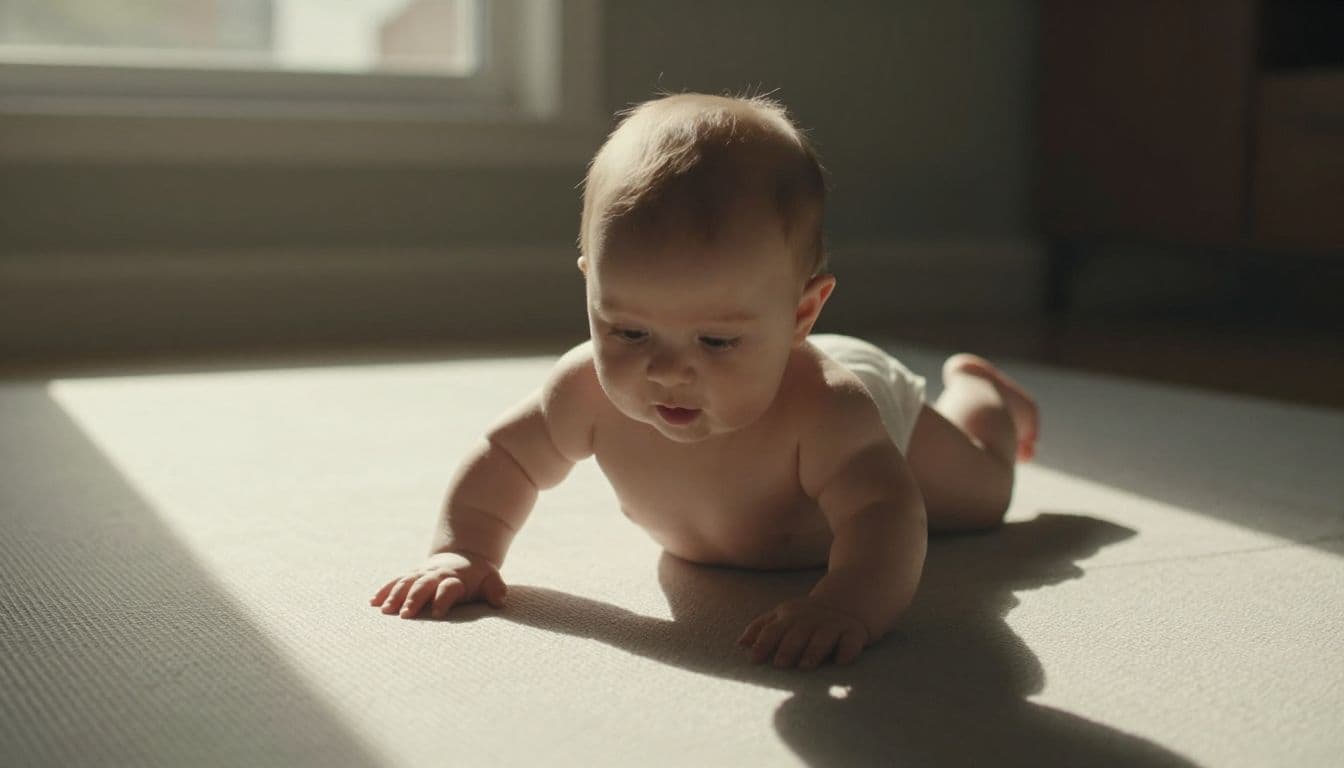
You can also see tummy time showing up in tiny improvements, such as:
- Holding the head up longer without sagging
- Pushing through the arms with more strength
- Looking side to side with more ease
- Settling on the belly without getting upset as quickly
According to Cleveland Clinic, rocking and weight shifting during tummy time are common early signs that a roll may be close.
Small movements that often come right before rolling
The first clues are often subtle. Your baby may pivot in a small circle during play, scoot a little, or twist the hips while reaching for a toy. These motions look messy, but they show growing control.
Rocking is another big sign. Some babies sway back and forth on their belly like a little seesaw, then tip onto one side before settling back down. Others kick their legs with more force, as if testing how much push they need.
You may also notice your baby rolling onto one side without finishing the move. That half-turn is important. It shows the body is learning how to gather itself and transfer weight.
A baby ready to roll often starts to reach across the body, too. One hand stretches toward a toy while the head turns in the same direction. The shoulders follow next, and the hips usually try to catch up.
Side-to-side rocking, hip twisting, and one-sided tipping are all part of the practice run.
These small actions may look like restlessness, but they are really progress. Your baby is building balance, strength, and timing, one wiggly try at a time.
How to help your baby practice rolling safely
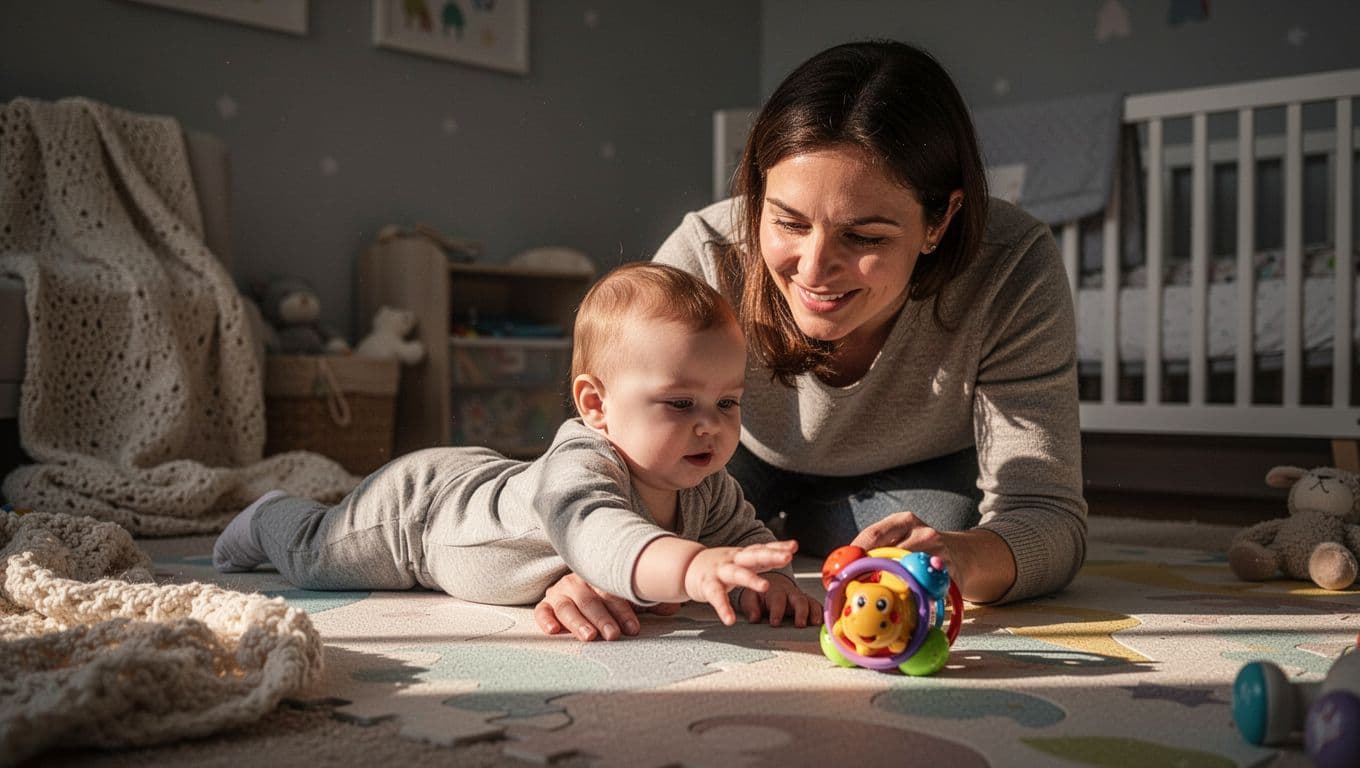
Rolling practice works best when it feels like play, not pressure. A baby learns through repetition, little shifts in weight, and a lot of floor time on a safe surface. Keep the space simple, stay close, and let your baby explore at their own pace.
Simple play ideas that encourage movement
A few small changes during play can make a big difference. Place a toy just out of reach so your baby has a reason to turn, stretch, and shift weight. That little reach can spark the first half-roll, then the next one comes a bit easier.
Try changing your baby’s position during floor time, too. If your baby spends too long in the same spot, movement stays limited. Move a toy to the side, place your baby on their tummy for a short stretch, then switch to side-lying with support under the back or chest.
Short sessions work well when you’re tired. Ten minutes of supervised floor time can be enough to build strength if you repeat it during the day. If your baby gets fussy, stop and try again later. For more ideas that fit different stages, age-appropriate tummy time activities can give you a simple place to start.
A few easy options fit right into daily routines:
- Put a bright toy to one side during tummy time so your baby turns to look.
- Gently shift your baby’s legs or arms during play to encourage a new position.
- Lay your baby on a firm floor mat for supervised play instead of a soft couch or bed.
- Offer face-to-face smiles and a voice cue, then wait for your baby to reach or pivot.
The goal is to invite motion, not force it. Babies usually respond best when the setup feels calm, familiar, and low-pressure.
Safe sleep and safe play matter here
Rolling practice belongs on the floor while your baby is awake and supervised. Sleep is different. Even if your baby rolls during play, always place them on their back for sleep.
Keep the sleep space bare, firm, and flat. A tight fitted sheet on a safety-approved mattress is enough. Leave out pillows, blankets, stuffed toys, bumpers, and anything soft that could block your baby’s face or trap the body.
Back to sleep still applies, even after rolling starts.
If your baby starts rolling on their own, the sleep setup matters even more. A safe crib or bassinet with clear space gives your baby room to move without extra risk. For a clear breakdown of safe sleep basics, the American Academy of Pediatrics’ safe sleep guide is a solid reference.
During the day, keep the play area firm, open, and easy to move in. That balance helps your baby practice rolling in a space made for learning, then rest in a space made for sleep.
When to talk to your pediatrician about rolling
Most babies roll in their own time, and a small delay by itself is often not a problem. What matters more is the pattern you see across the whole body, because rolling sits beside other skills like head control, reaching, and balance. If something feels off, bring it up. Even a small concern is worth mentioning at a visit.

What doctors look for during motor milestone checks
Pediatricians look at the whole picture, not just one milestone on a chart. They check whether your baby has good head control, how tummy time is going, whether your baby reaches for toys, and how much strength shows up in the arms, back, and core.
They also watch for symmetry of movement. If your baby always turns one way, uses one side more, or seems very stiff or very floppy, that gives useful clues. The same is true if progress has stalled and your baby is not building new skills over time. For a broader look at how rolling fits with other skills, when babies learn to sit up can help you see the next step in motor growth.
A later roll can still be normal, but uneven movement deserves a closer look.
Doctors often ask about daily patterns, too. How long does your baby tolerate tummy time? Does your baby lift the chest and head? Does your baby reach across the body or only with one hand? These small details help show whether your baby is moving with strength and control, or working much harder than expected. If your baby is not rolling by 6 to 7 months and also has poor head control, very little movement, or a strong side preference, it is time to ask about it.
How to share your concerns without feeling overdramatic
You do not need the perfect wording. Simple, calm observations work best, because they give the doctor clear facts to follow. You might say, “I’ve noticed my baby isn’t rolling yet, and I want to check whether that timing seems typical.”
Other parent-friendly ways to bring it up include:
- “My baby seems a little stiff/floppy, and I wanted to ask about it.”
- “Tummy time is still really hard, and my baby isn’t reaching much.”
- “My baby rolls only one way, and I was wondering if that’s okay.”
- “I know babies develop at different speeds, but this has been on my mind.”
If you want extra perspective before the visit, a brief read on baby not rolling over at 6 months explains which signs matter most alongside a delayed roll. The main goal is simple, bring up what you see, ask whether the timing looks typical, and trust that your instincts count.
Conclusion
Most babies roll over sometime between 4 and 6 months, though some do it earlier and some need a little more time. That wide window is normal, because babies develop in their own rhythm.
What matters most is steady progress. If your baby is lifting the head, shifting weight, and trying new moves during tummy time, the first roll is probably getting close.
Keep enjoying the small wins along the way. Baby milestones often arrive in a blink, and that first roll usually happens when you least expect it.
Save pin for later


- Dry Cough in Kids: 5 Causes and Safe Solutions - September 23, 2026
- How to Help a Child Deal With Anxiety at Home - September 12, 2026
- How to Prepare Your Child for the First Day of School - September 12, 2026