If you’ve been watching your baby closely and wondering whether they’re on track, take a breath. Baby development isn’t a race, and small changes often matter more than big leaps.
Developmental milestones are the little clues that show progress in movement, language, social skills, and thinking. Some babies smile early, some roll over later, and some focus on one skill before moving on to the next.
This post will help you spot 10 clear signs your baby is hitting milestones from birth to 12 months, so you can feel more confident about what you’re seeing. It’ll also show you when it makes sense to check in with your pediatrician, especially if something feels off or your baby seems to be missing more than one expected step.
What developmental milestones really mean in the first year
Developmental milestones are the everyday skills most babies reach by a certain age. They help you spot progress, but they do not turn baby development into a pass-or-fail test.
The CDC’s milestone checklists are built around skills that most babies, about 75% or more, can do by a certain age, which makes them a useful guide for parents and doctors alike. For a quick reference, the CDC milestone checklists are a helpful place to compare what is typical at each age.
Milestones are a guide, not a scorecard.
The four areas milestones cover
Baby development in the first year usually falls into four main areas. Each one gives a different clue about how your baby is growing.
- Movement: This includes head control, rolling, sitting, crawling, pulling up, and early steps. It shows how your baby’s muscles and balance are coming along.
- Language: This includes cooing, babbling, turning toward sounds, and early words. It shows how your baby listens, communicates, and starts to copy sounds.
- Social-emotional: This includes smiling, eye contact, laughing, and reacting to familiar people. It shows how your baby connects with you and the people around them.
- Cognitive: This includes watching objects, looking for hidden toys, and learning cause and effect. It shows how your baby thinks, remembers, and solves simple problems.
These areas work together. A baby who shakes a rattle is using movement, attention, and early problem-solving at the same time.
Why timing can look different from baby to baby
Every baby reaches milestones at a different pace. Some roll early and talk later. Others babble nonstop but take more time to sit or crawl. That range is normal, and it is one reason milestone charts use age windows instead of exact dates.
Preemies need one more layer of context. If your baby was born early, doctors often use corrected age for milestone tracking, which means they compare your baby to their due date instead of their birthday. This matters because a baby born several weeks early may hit some skills later, even when development is on track.
A single delayed skill does not always mean there is a problem. Still, if your baby seems to miss several milestones or loses a skill they already had, it is time to bring it up at the next visit.
The earliest signs start showing up in the first two months
In the first two months, your baby may not do anything flashy. Still, the earliest signs of development are often already there. They show up in small moments, like a face that lights up, a head that lifts a little higher, or a baby who settles when they hear your voice.
These early behaviors matter because they show your baby is starting to connect, focus, and build strength. The CDC’s 2-month milestone checklist is a helpful age guide, but real babies do not all move at the same pace.
Small changes in the first weeks can tell you a lot about how your baby is growing.
Your baby smiles, coos, and reacts to your voice
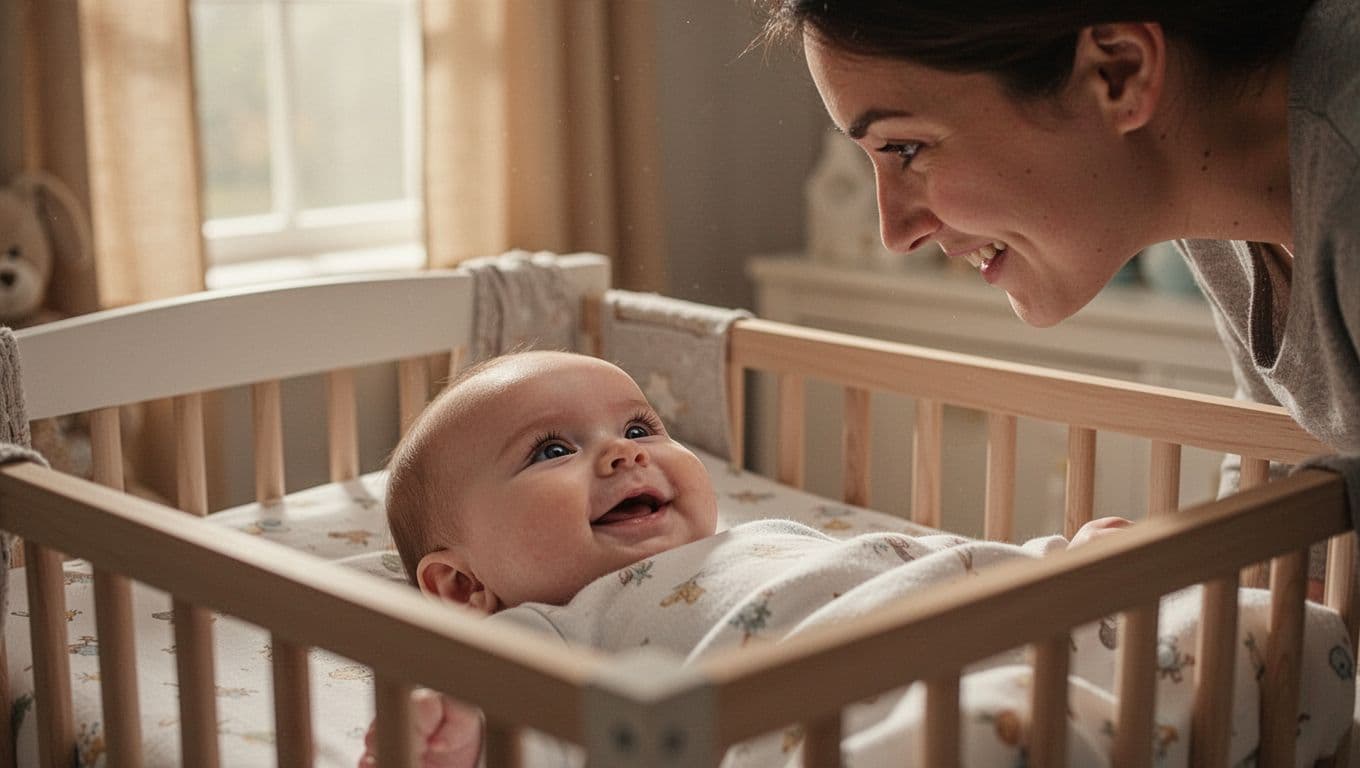
A social smile is one of the first signs that your baby is starting to connect with people. Around 2 months, many babies also begin cooing, making soft gurgling sounds, and calming when they hear a familiar voice.
These are more than cute moments. They show early social and language development, plus a growing sense of comfort with you. When your baby looks at your face, smiles back, or settles as soon as you speak, that is a good sign their brain is starting to link sound, emotion, and connection.
You might notice it during diaper changes, feeding, or when you lean in and talk softly. Some babies respond more strongly at one time of day than another, so keep watching over several days instead of one single moment.
Head control and tummy time progress are getting stronger
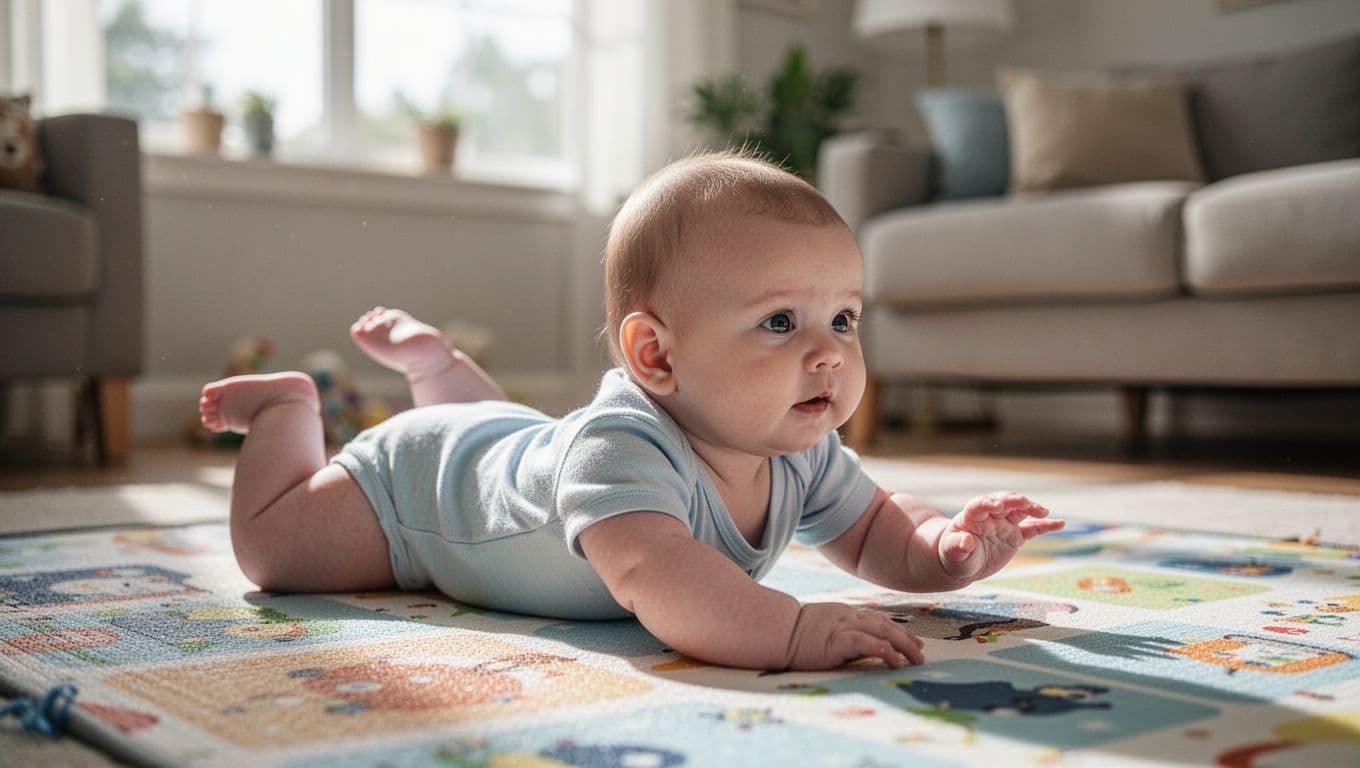
When your baby starts lifting their head during tummy time, even for a few seconds, that is a real step forward. You may also notice smoother arm and leg movements, brief hand opening, and less jerky motion overall.
These changes show early muscle strength and better control. Tummy time helps a lot here because it gives your baby a chance to practice pushing up, holding their head, and building the muscles they will need later for rolling and sitting.
A little progress counts. A baby who only lifts their head briefly is still practicing the same skill as a baby who holds it up longer. What matters most is that you see steady effort over time, along with more control in everyday movement.
Around four months, movement and babbling become easier to spot
By around 4 months, many babies start showing clearer control over their bodies and voices. The changes can feel sudden because the movements get smoother, the sounds get louder, and your baby seems more aware of what is around them.
This is a busy stage. Your baby may roll, grab, laugh, and babble more often, all in the same day. The CDC’s 4-month milestone checklist is a helpful way to compare what most babies can do at this age.
Rolling, reaching, and grabbing show better body control
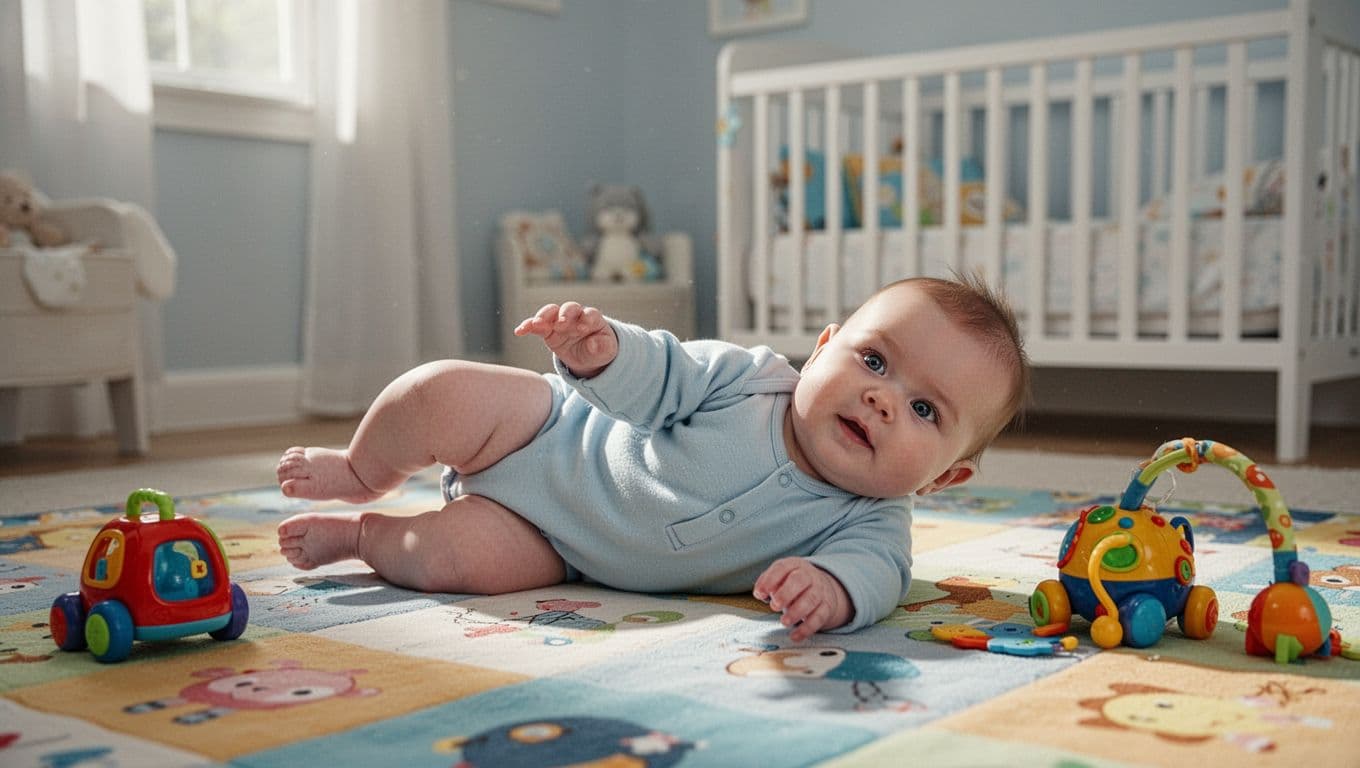
At around 4 months, many babies can hold their heads steadier and use their arms with more purpose. You may notice your baby rolling from tummy to back, reaching for a toy with one hand, or holding onto something once it is placed in their palm.
These moves show better balance and muscle control. They also show that your baby is starting to connect what they see with how they move. A toy is no longer just something bright in the distance, it becomes something worth aiming for.
You might also see your baby swing at toys during playtime or bring their hands to their mouth more often. Those little actions matter because they show growing coordination and stronger body awareness.
Laughing and babbling show early communication skills
Around this age, sounds often become more lively. Your baby may laugh when you make a silly face, coo when you talk back, or repeat simple sounds like “ba-ba” or “ah-ah” during play.

These sounds are not just cute. They are early building blocks for speech. Babbling does not need to sound like real words yet, because your baby is still practicing the rhythm, tone, and back-and-forth pattern of communication.
If your baby laughs, squeals, or answers your voice with their own sounds, that is a strong sign they are tuning in. They are not only hearing you, they are trying out their own voice too.
By six months, your baby may be sitting, exploring, and responding more
Around 6 months, many babies start to seem more steady, more curious, and more tuned in. You may notice your baby holding the body up better, reaching for toys with purpose, or reacting more clearly to sounds and faces.
These changes often show up together. Movement, thinking, and communication are all working at once, so a new skill in one area often comes with progress in another. The CDC’s 6-month milestone checklist is a helpful reference if you want a quick age guide.
Sitting up and rolling both ways point to growing strength
By this age, your baby may sit briefly with less support, especially when placed in a stable position. Some babies still lean forward or use their hands for balance, and that is normal. What matters is that the body is getting steadier and the core muscles are doing more work.
Rolling both ways is another useful sign. When a baby can roll from tummy to back and then back to tummy, it shows better body control, balance, and coordination. Those moves also help your baby explore the room on their own terms.
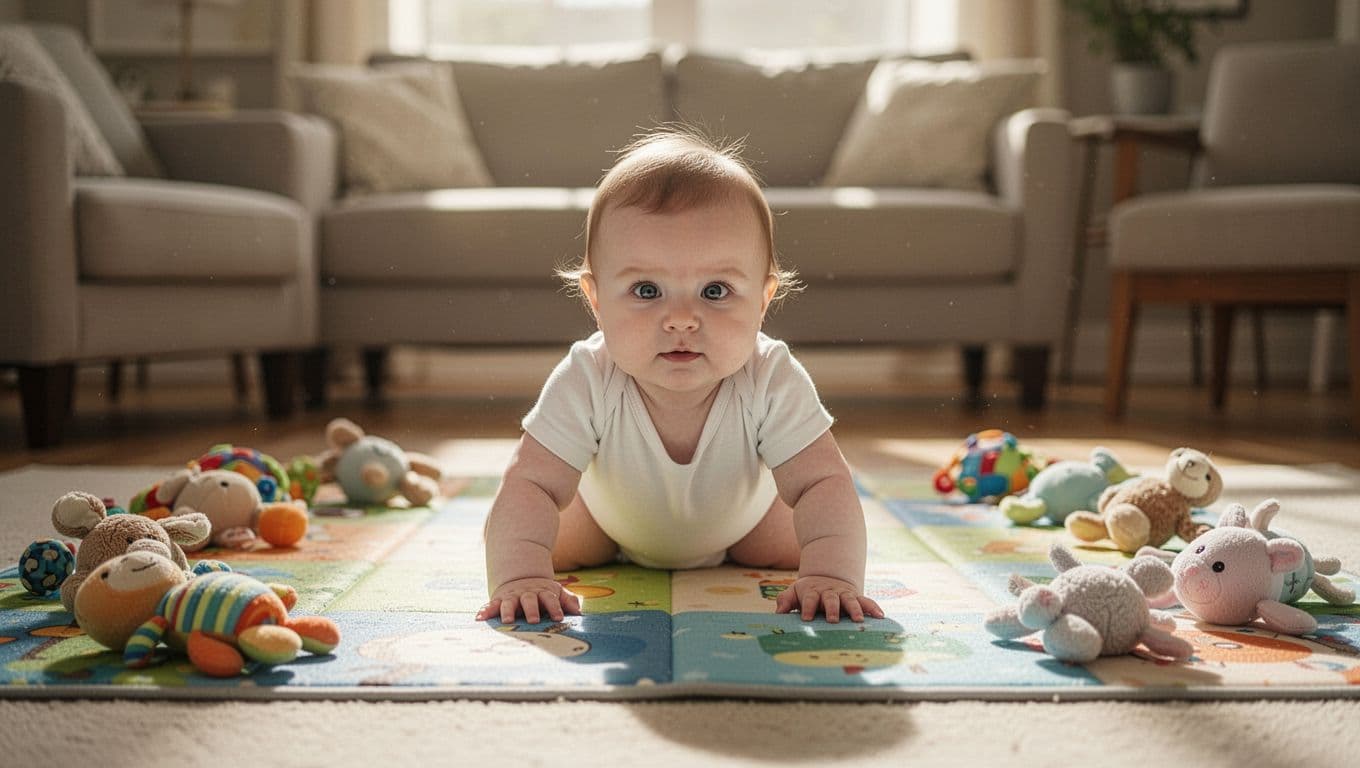
You may see a few small signs before full sitting comes together:
- Less wobbling when your baby sits with support
- Stronger head control during play
- Smoother rolling during tummy time
- Better balance when reaching for nearby toys
A baby who sits for a few seconds without toppling is building strength, not racing toward the next stage.
Passing toys and looking for hidden things shows brain development
Babies around 6 months often start moving toys from one hand to the other. That simple hand-to-hand transfer takes timing, grip, and attention. It also shows that your baby is beginning to plan small actions instead of just reacting.
You may also notice your baby looking around when a toy drops or turning toward a favorite object after it slips out of sight. That search behavior is a big deal. It shows memory, curiosity, and an early sense that objects still exist even when they are not in view.
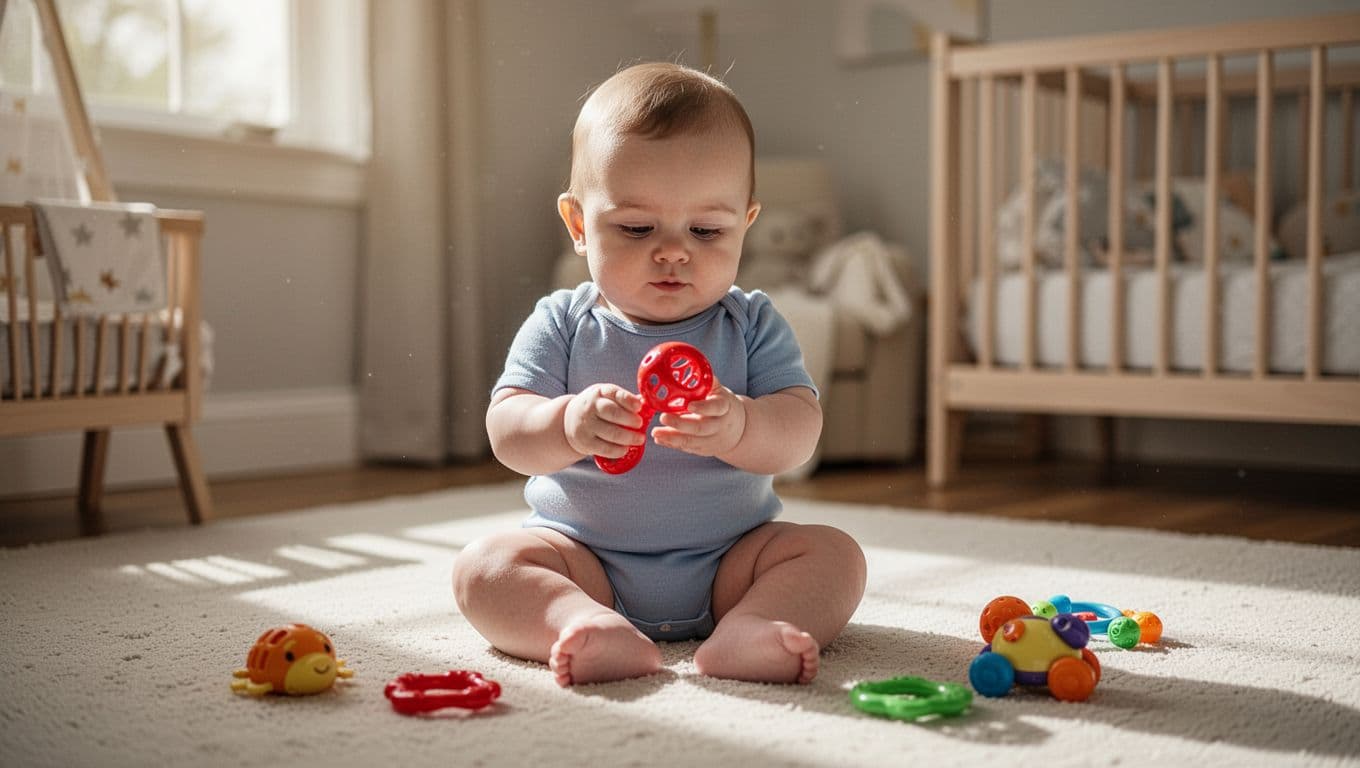
Repeated sounds matter too. If your baby keeps making the same squeal, raspberries, or babble sounds, that is part of early communication. It also shows your baby is listening, copying, and trying things again to see what happens.
These moments may look small, but they point to real progress:
- Hand control is improving
- Attention is getting sharper
- Memory is starting to guide play
- Early problem-solving is showing up in simple ways
When your baby reaches, searches, babbles, and swaps toys, you are seeing more than cute play. You are seeing a little brain and body work together with more confidence each week.
Between nine and twelve months, more complex skills start to appear
This is the stage when baby development can feel more obvious day by day. Your baby may move with a purpose now, reach out to connect, and start using simple actions to get needs met.
These changes often show up together. A baby who moves more may also start searching for hidden objects, copying sounds, or using gestures with more intent. If you want a quick age-based reference, the CDC milestone checklists by age are a helpful place to compare what most babies do near 9 and 12 months.
Crawling, pulling up, and cruising show growing independence
By the late first year, many babies start getting around in more purposeful ways. Some crawl on hands and knees, while others creep on their bellies, scoot, or move in another style that works for them. Any of these paths can be normal.
What matters is the intent behind the movement. Your baby may use hands to push up, knees to drive forward, and furniture to practice standing. That extra effort shows stronger muscles, better balance, and more confidence with the space around them.
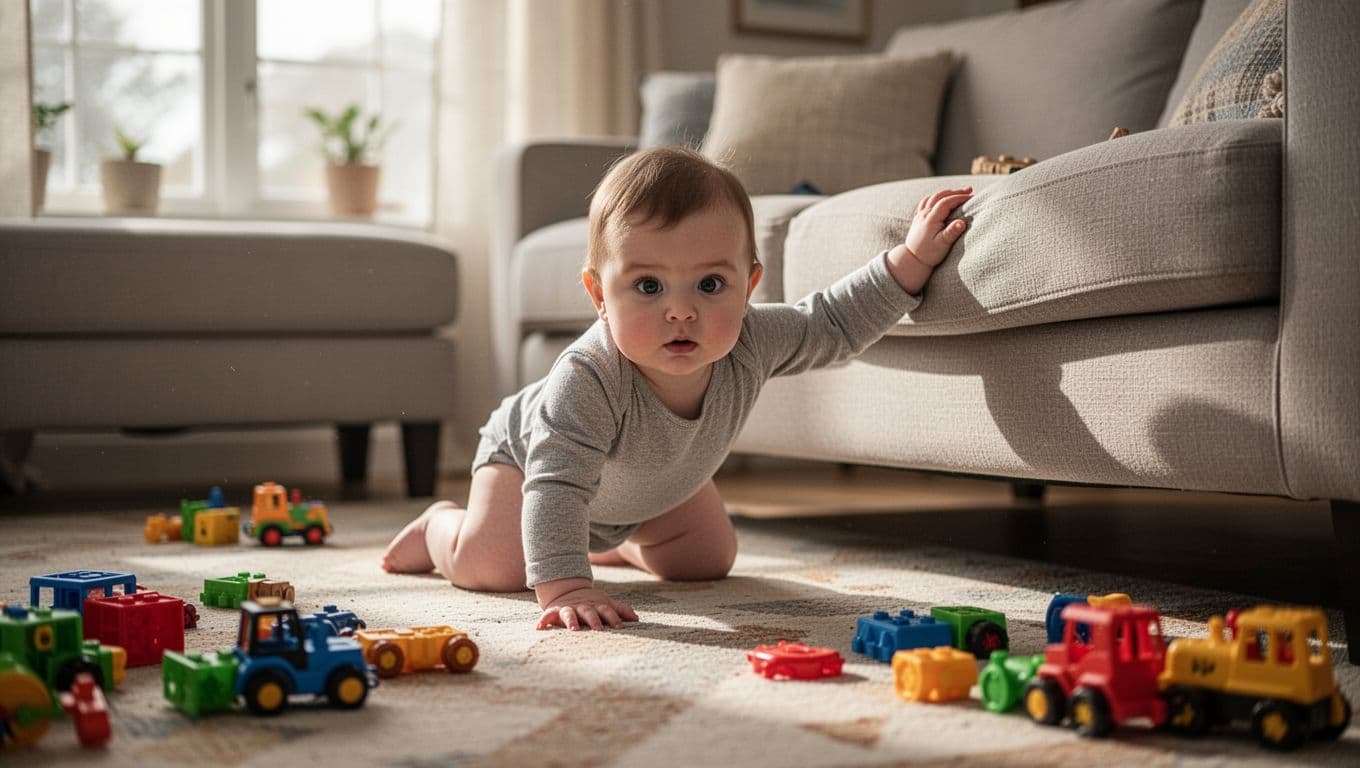
You may notice your baby:
- Crawls toward a toy instead of just reaching for it
- Pulls up on a couch, crib rail, or coffee table
- Stands while holding on with both hands
- Cruises sideways along furniture to get somewhere
That last step is a big one. Cruising shows your baby is using balance and planning, not just instinct. It also sets up later walking, even if those first steps are still weeks away.
Some babies never crawl in the classic way. They may scoot, roll, or go straight to pulling up. That can still be part of normal development.
Pointing, waving, and peek-a-boo show social and language growth
Gestures tell you a lot at this age. When your baby points, waves, or lifts arms to be picked up, they are doing more than making a cute move. They are using simple communication on purpose.
Peek-a-boo is another strong clue. If your baby smiles, laughs, or waits for you to come back, they are starting to understand that people and objects still exist even when hidden. That idea is called object permanence, and it is a big brain skill for this stage.
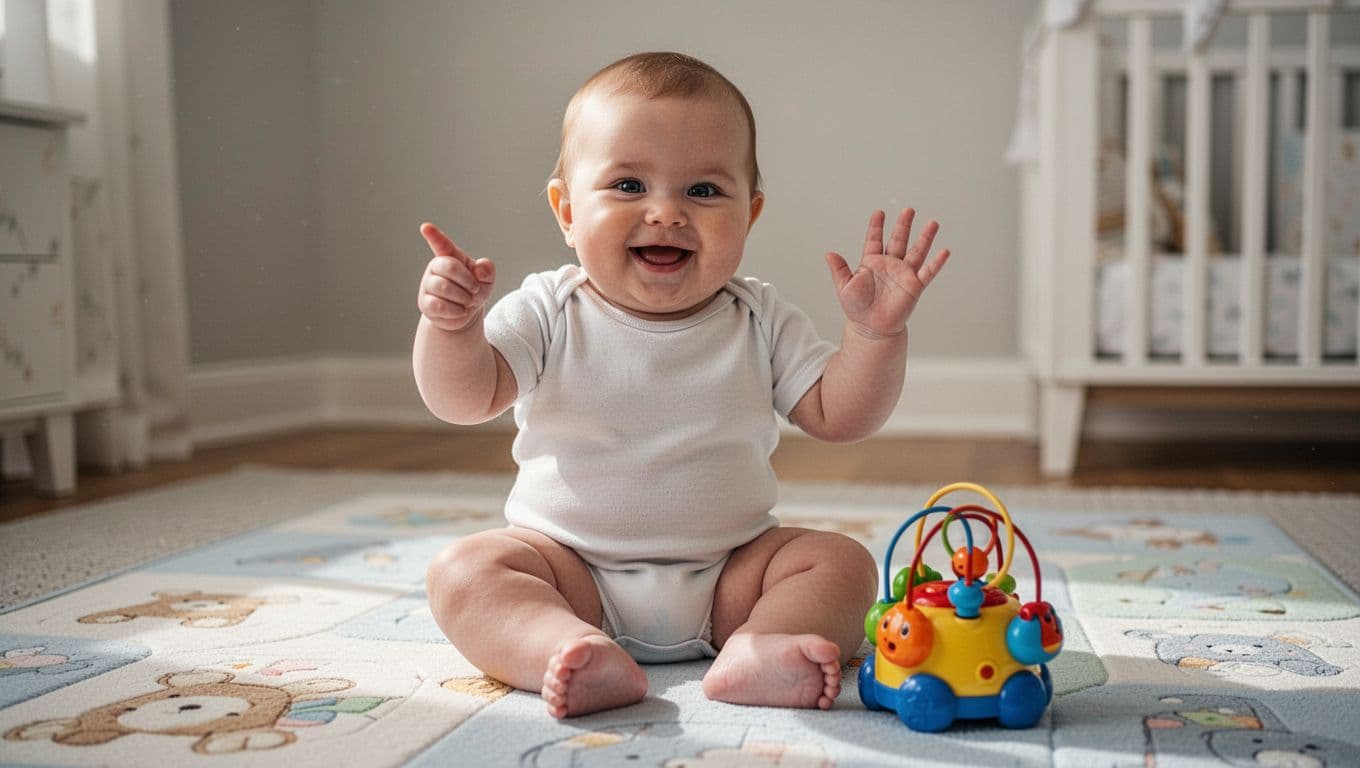
These gestures also show back-and-forth interaction. Your baby points, you name the object. Your baby waves, you wave back. That simple exchange teaches your baby that communication works.
Look for these signs:
- Pointing to something they want
- Waving “bye-bye” when someone leaves
- Smiling or laughing during peek-a-boo
- Repeating actions to keep the game going
The CDC’s 1-year milestone checklist includes these social and language skills because they matter so much at this age. They show your baby is not just reacting, but taking part in the moment.
First words and pincer grasp are big signs your baby is getting ready for toddlerhood
Around 9 to 12 months, you may hear clearer word-like sounds and see better hand control. Some babies say “mama” or “dada” specifically, not just as random babble. That difference matters because it shows your baby connects a sound with a person.
You may also notice your baby following simple directions, like “give me the ball” or “come here.” At first, they may respond with a look, a reach, or a small action instead of a perfect answer. That still counts. It shows they understand more than they can say.
Another late-first-year milestone is the pincer grasp, which uses the thumb and index finger to pick up small items. Your baby might grab tiny pieces of food, a crumb, or a small toy with much more control than before. This skill helps with self-feeding and later writing and buttoning.
A few practical signs to watch for are:
- Saying “mama,” “dada,” or another word with meaning
- Turning when you call their name
- Following a simple request
- Picking up small pieces of food with thumb and finger
These skills point to memory, language, and hand control working together. They also show your baby is moving into toddler territory, one small action at a time.
When to trust your instincts and call the pediatrician
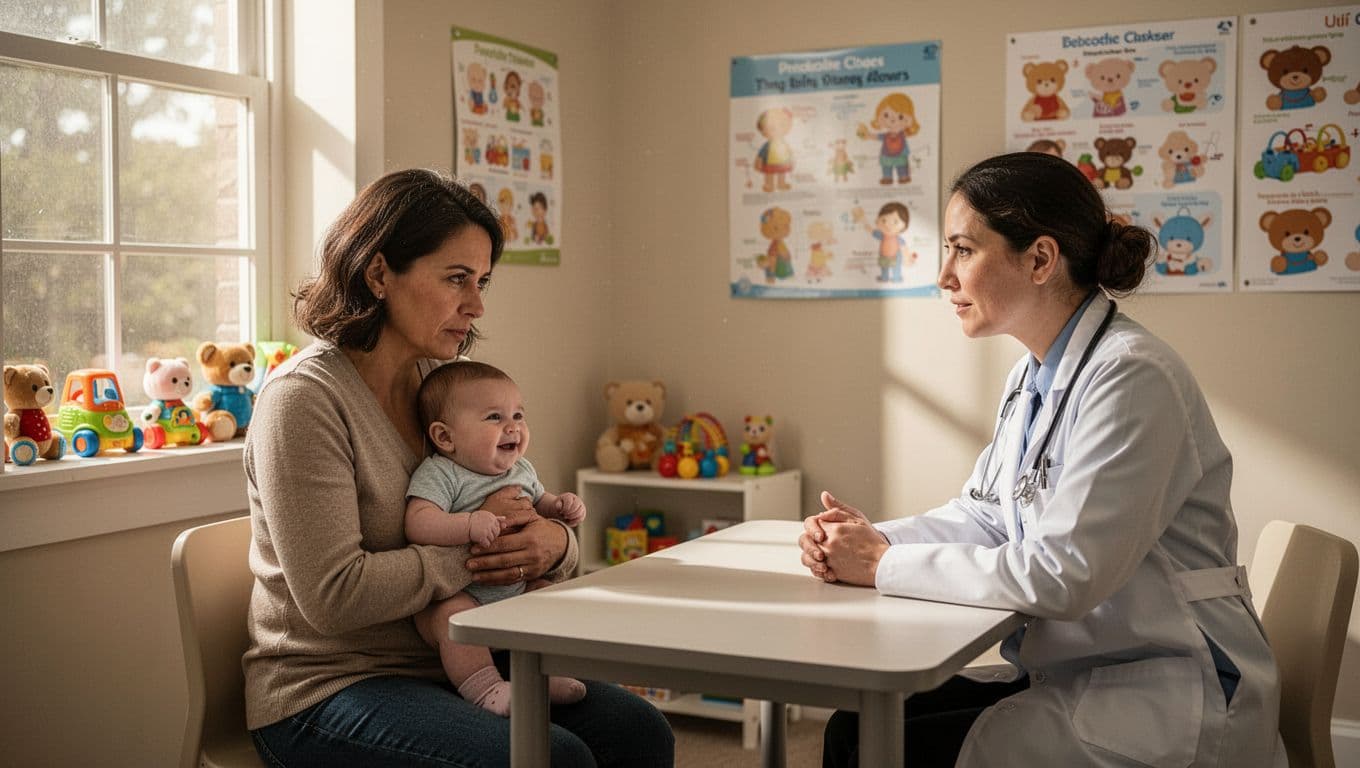
If something feels off, call. You know your baby best, and pediatricians would rather hear about a concern early than after weeks of waiting. A single late milestone is often nothing to panic about, but a pattern of delays, a loss of skills, or a strong gut feeling deserves a closer look.
The CDC says to act early when a baby misses milestones or loses skills, and the American Academy of Pediatrics recommends routine developmental screening at key visits, including 9 months. If you want a quick reference while you watch for concerns, the CDC’s guidance for worried parents is a solid place to start.
Early support matters. Most concerns are worth checking sooner rather than later.
Call if your baby is missing several expected skills
One missed milestone can happen for lots of harmless reasons. Missing more than one, or falling behind in more than one area, is a different story. If your baby is not smiling by 2 months, not babbling by 6 months, or not responding to name by 9 months, bring it up.
Other red flags include:
- Loss of skills your baby already had
- Very stiff or very floppy muscles
- No interest in faces or voices
- No babbling by 6 months
- No response to name by 9 months
The CDC’s milestone tools and the HealthyChildren baby development guide both stress that your observations matter. If your baby seems off in more than one area, that is enough reason to call.
Pay attention to how your baby responds, not just what they does
Sometimes the earliest concern is subtle. Your baby may eat and sleep well, but seem hard to wake with voices, avoid eye contact, or ignore familiar sounds. Those quiet signs can point to hearing, vision, motor, or social concerns.
A baby who does not smile back, track a face, turn toward a voice, or reach for toys may need a checkup sooner. So may a baby who seems unusually rigid, limp, or hard to soothe in a new way.
When you call, describe what you see in plain language. “My baby doesn’t babble yet” helps more than “I’m worried.” Give examples, mention when the behavior started, and say whether it happens every day or only sometimes.
Bring your concern in early, even if you are unsure
You do not need to wait for a perfect list of symptoms. If your baby just feels different, trust that feeling enough to ask. Pediatricians can check hearing, vision, muscle tone, and development, then decide whether more screening is needed.
The best next step is simple:
- Make a note of what worries you.
- Bring it to the next visit, or call sooner if it feels urgent.
- Ask whether your baby needs developmental screening or a referral.
Early help can make a real difference, especially when support starts before delays grow into bigger gaps. A quick call can bring peace of mind, or it can get your baby the support they need right away.
Simple ways to track milestones without overthinking every day
Milestones are easier to spot when you step back. You do not need to judge every nap, every wiggle, or every sound. A better approach is to watch for steady progress over time and keep a simple record you can trust.
That can be as basic as one checklist, a few notes before well-baby visits, and a quick look at how your baby changes over a couple of weeks. The goal is confidence, not a perfect score.
Use one checklist and keep it simple
A milestone checklist gives you a clear snapshot of what to watch for, without turning your day into a test. The CDC’s Milestone Tracker app and 1-year online checklist are helpful because they focus on age-based skills you can review in minutes.
Pick one place to track notes, then stick with it. You can use a paper page on the fridge, a notes app on your phone, or the CDC checklist. When you notice something new, write one short line, such as “rolled both ways,” “babbling more,” or “reaches for spoon.”
A simple system keeps you from second-guessing yourself. It also makes it easier to remember what changed since last week, which matters far more than one random day.
One good note every week is more useful than ten stressed-out checks in one afternoon.
Watch for patterns across weeks, not one-off moments
Babies have off days. They get sleepy, cranky, distracted, or too busy staring at a ceiling fan. That is why a single missed moment does not mean much on its own.
Instead, look for patterns. Did your baby start turning to your voice more often this month? Are they reaching for toys with more purpose? Are they babbling in new ways during playtime? Those repeat signs tell you more than one quiet afternoon ever will.
This is also a good time to bring your notes to well-baby visits. If you notice a skill showing up less often, or not at all, you can give your pediatrician a clear picture instead of trying to remember everything on the spot. A few examples are enough:
- “She smiles back every day now.”
- “He stopped rolling the way he did two weeks ago.”
- “She turns when I sing, but not when I call her name.”
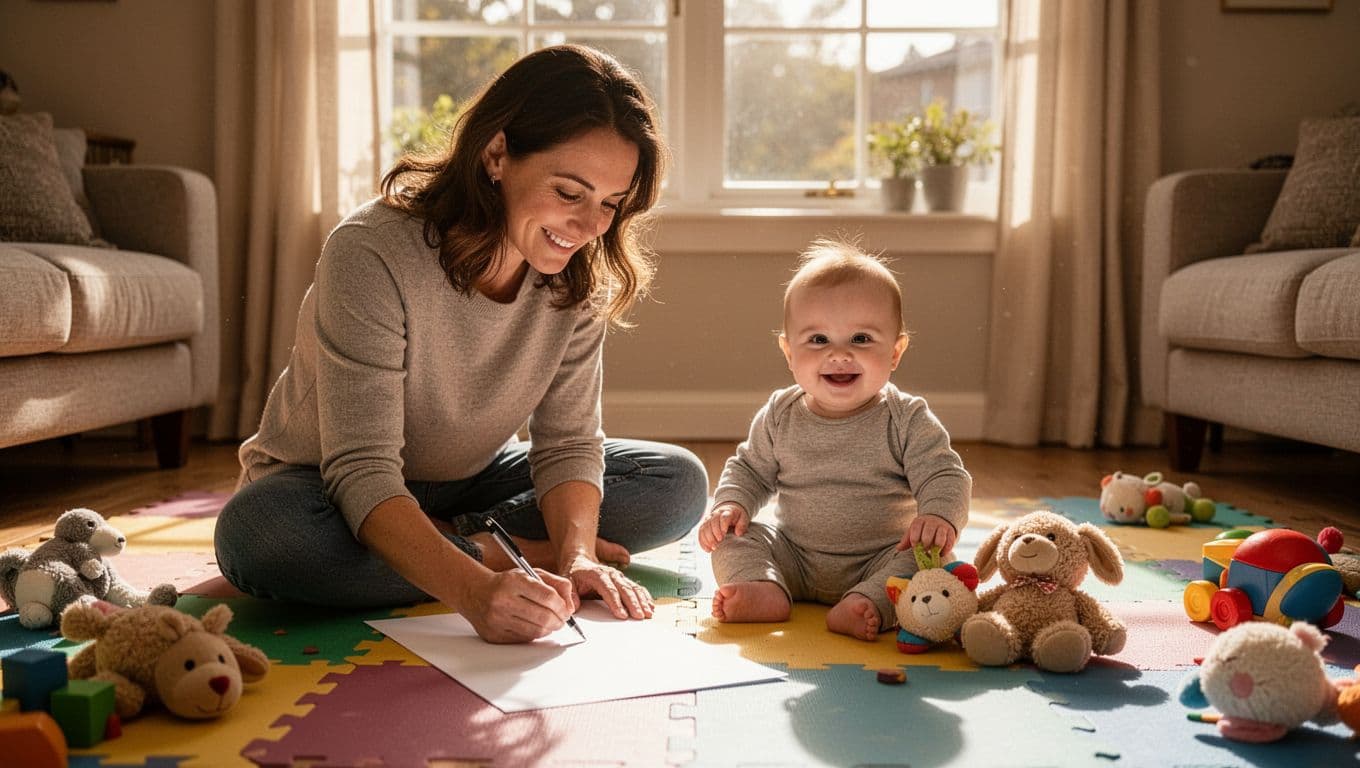
When you track patterns, you start seeing the bigger picture. That makes milestone watching feel calmer and far more useful.
Build development into everyday play
You do not need special activities to support baby development. Small, repeated moments during normal routines do the job well.
Try these simple habits:
- Tummy time: A few minutes at a time helps your baby build neck, shoulder, and core strength.
- Reading aloud: Even a short board book gives your baby language, rhythm, and eye contact practice.
- Singing and talking: Your voice gives your baby sound, pacing, and back-and-forth interaction.
- Naming objects: Say “cup,” “ball,” or “dog” while you point. Repetition helps early learning.
- Limited screen use: For infants, real face-to-face time matters more than screens. Keep screens off during play when you can.
These habits fit into feeding, changing, and play without adding pressure. A baby who hears your voice, sees your face, and gets floor time each day has plenty of chances to practice.
The main idea is simple. Track milestones in small pieces, notice what repeats over time, and use everyday play to support the next step. That way, you stay informed without spending every day on edge.
Conclusion
The biggest sign your baby is on track is steady progress. Smiles, sounds, movement, and curious looks all matter, even when they show up at different times.
Babies grow in their own rhythm. So instead of chasing perfect timing, look for patterns of connection, curiosity, and new skills building over time.
If something feels off, trust that feeling and ask your pediatrician. A quick check can bring peace of mind, and it is always okay to speak up early.

- Can I Give A Half-boiled Egg To My Baby? - September 25, 2026
- What Are The Nutritional Benefits Of Eggs For Babies - September 25, 2026
- When Should I Avoid Giving Eggs To My Baby? - September 25, 2026