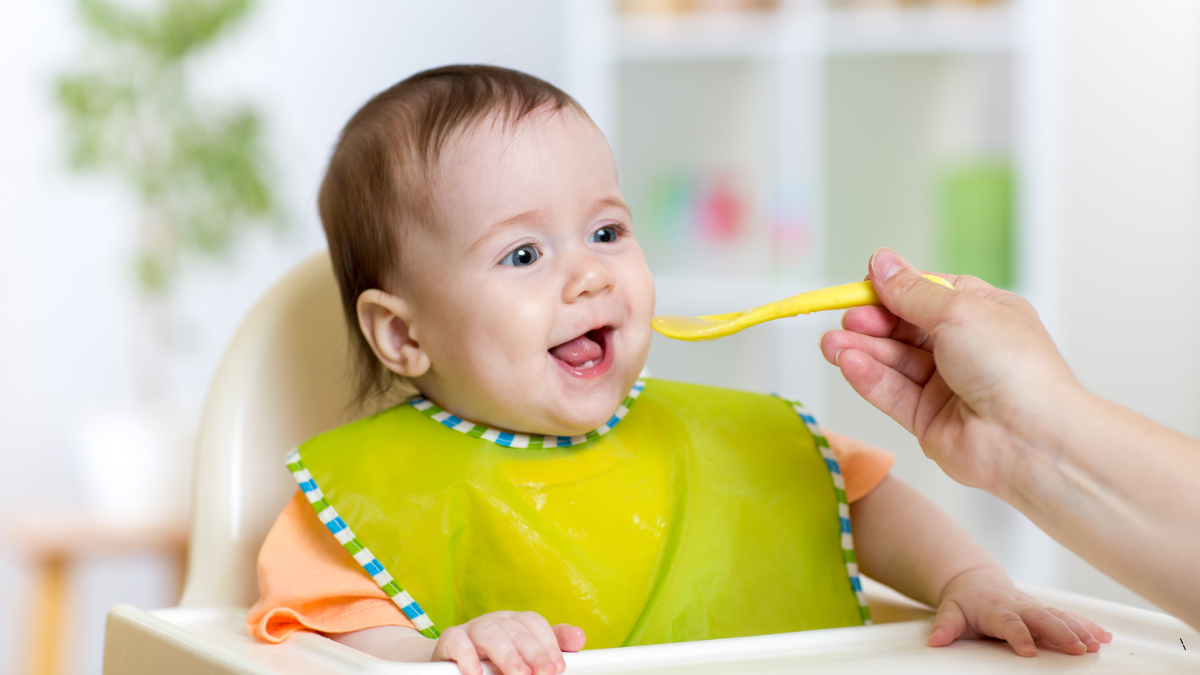
Breakfast can be one of the easiest ways to support your baby’s growth, energy, and early eating habits. Around 6 months, babies can start solids when they show readiness, but breast milk or formula still stays the main food through 12 months. You don’t need a big menu or fancy prep, because a few soft, nourishing options can make mornings simpler and less stressful.
The best baby breakfasts are gentle, age-appropriate, and easy to adjust as your little one moves from purees to finger foods. If your baby is closer to 9 months, healthy meal ideas for 9-month-old babies can help you keep things on track, and this video guide is a helpful visual companion. They’ll also help you pair breakfast with iron, healthy fats, and familiar flavors, which matters as babies learn to accept new foods. In the next section, you’ll find easy breakfast ideas that fit different stages and keep nutrition front and center.
What babies need at breakfast, based on age and readiness
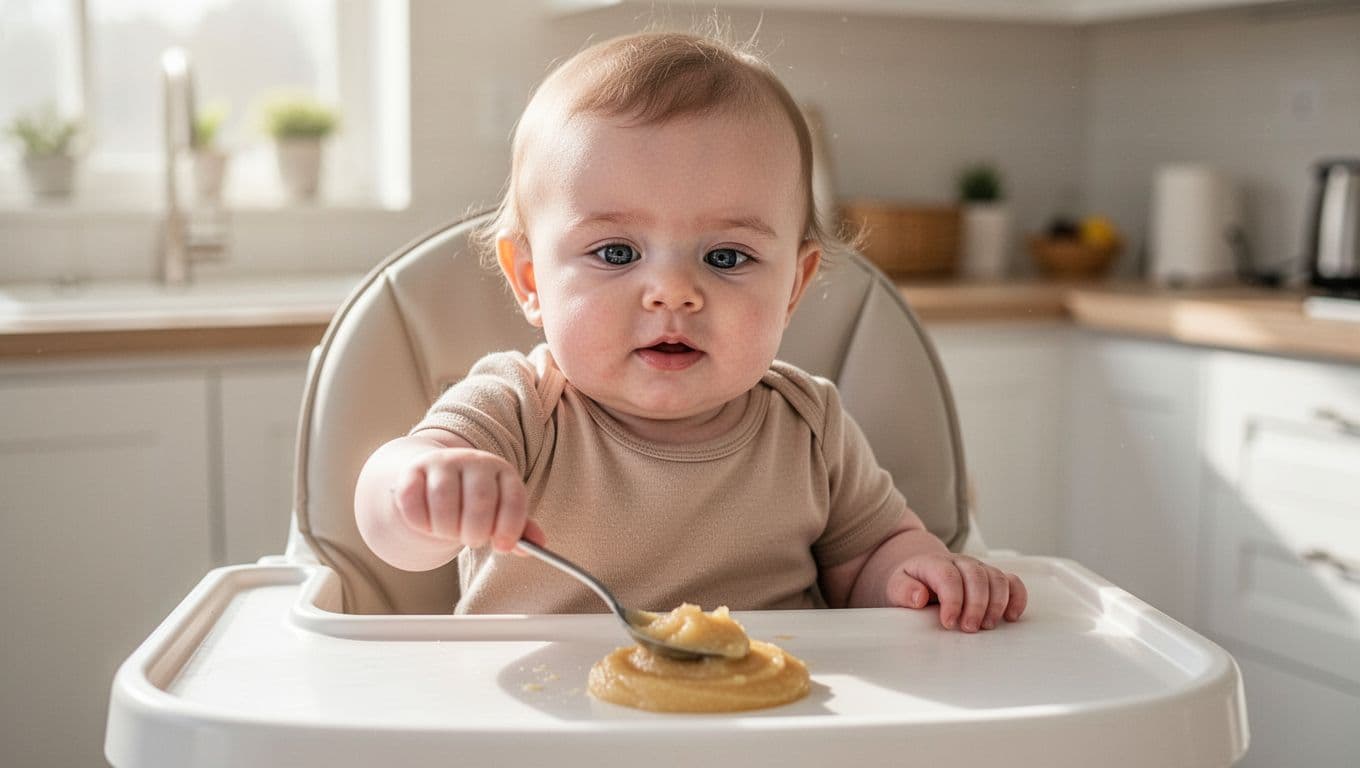
Breakfast for a baby is not one-size-fits-all. What works at 6 months looks very different from what works at 11 months, and readiness matters more than age alone. The CDC says babies can start solids around 6 months when they can sit with support, hold their head steady, and show interest in food.
That means breakfast should match both your baby’s stage and their skills. Start soft, keep portions small, and let appetite guide the pace.
Signs your baby is ready to start solids
The best time to begin breakfast solids is when your baby shows a few clear signs of readiness. Age gives you a rough guide, but those cues tell you much more.
Look for these signs first:
- Your baby can sit up with support and keep the head steady.
- Your baby opens the mouth when food comes near.
- Your baby reaches for food or watches you eat with real interest.
- Your baby moves food to the back of the tongue and swallows it.
- Your baby seems ready to explore, not just taste.
If those signs are not there yet, wait a little longer. A baby who cannot control the head well or still pushes food out with the tongue usually needs more time.
Readiness matters more than the calendar. A few good skills matter more than hitting a certain month.
How breakfast changes from 6 to 12 months
Breakfast grows with your baby. At first, it may be a spoonful or two of smooth puree or thin oatmeal. By 7 to 8 months, many babies do better with thicker mashes and soft lumps. Later, they can handle soft finger foods and small chopped pieces.
Here’s a simple way to picture the shift:
| Age range | Best breakfast texture | Easy examples |
|---|---|---|
| Around 6 months | Smooth purees and thin cereals | Oatmeal, mashed banana, pear puree |
| 7 to 8 months | Thicker mashes and soft lumps | Yogurt, avocado mash, soft scrambled egg |
| 9 to 12 months | Soft finger foods and chopped foods | Toast strips, banana pieces, egg bits |
Portions stay small in the beginning. A few bites are enough. As your baby gets older and eats more, breakfast can grow with their appetite.
If you want a simple bridge between stages, introducing purees and finger foods can help you see how texture changes support self-feeding.
Safety rules to keep in mind before serving food
Safety comes first, even with simple breakfast foods. Babies can gag while learning, but true choking risks need extra care. The CDC choking hazards guide is a helpful reference for foods that need to be cut, softened, or skipped.
Keep these rules in mind:
- Stay close every time your baby eats.
- Serve foods that are soft enough to mash between your fingers.
- Cut round foods like grapes and cherry tomatoes into very small pieces, or avoid them for now.
- Skip hard, sticky, or crunchy foods that can break into unsafe chunks.
- Do not give honey before 12 months.
- Do not use cow’s milk as a drink before 12 months.
- Offer yogurt or cheese only in age-appropriate amounts if your baby is already eating dairy.
Cook apples, carrots, and other firm foods until very soft. Nut butters should be thinned and spread thinly, not served in thick globs. If a food feels hard to chew or slippery to manage, it needs to be changed before it reaches the tray.
Once you have readiness, texture, and safety lined up, breakfast gets much easier. Then you can focus on the fun part, choosing foods your baby can actually enjoy.
The easiest breakfast foods that pack the most nutrition
A strong baby breakfast does not need a long ingredient list. The easiest options are often the best ones, because they are soft, simple, and packed with the nutrients babies need most. When you build breakfast around iron, healthy fats, gentle carbs, and easy-to-eat fruits or vegetables, you get meals that support growth without making mornings harder.
The best baby breakfast is one your child can eat safely, enjoy, and tolerate well.
Iron-rich foods that help support growth
Iron matters a lot at this stage. Babies 6 to 12 months need more iron than breast milk alone can provide, and the CDC recommends iron-rich foods regularly after about 6 months. Iron supports brain development, healthy blood, and steady growth, which is why it belongs at breakfast often. For more detail, the CDC’s iron guidance for infants is a helpful reference.
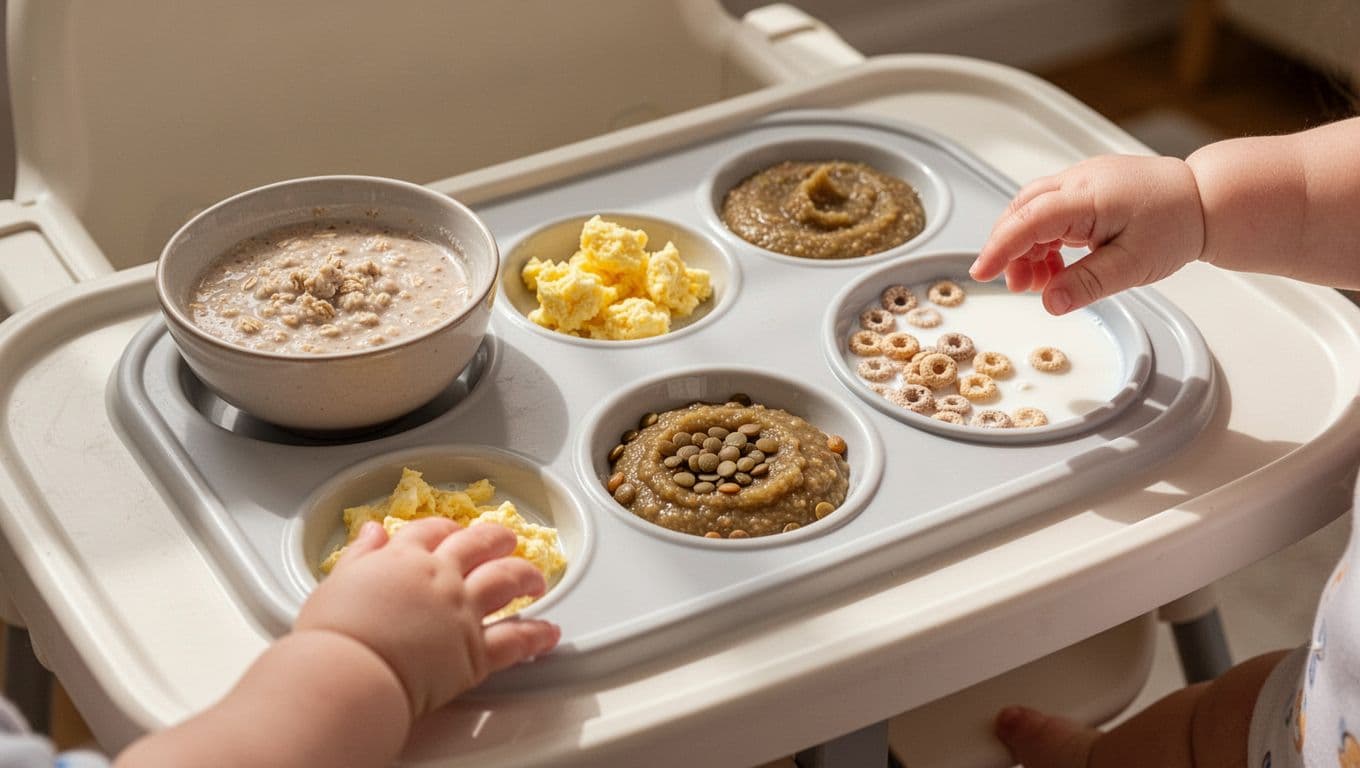
The easiest iron-rich breakfasts are the ones that also stay soft and simple. Think fortified infant cereal, plain oatmeal, eggs, lentils, and meat-based purees like chicken or beef. These foods fit neatly into spoon-feeding, and many of them can later be shaped into thicker textures or soft finger foods.
A few easy breakfast ideas include:
- Fortified cereal mixed with breast milk or formula for a smooth start
- Oatmeal with mashed berries or pear for extra vitamin C
- Scrambled egg chopped small or mashed for older babies
- Lentil puree blended with sweet potato for a gentle, filling bowl
- Meat puree stirred into soft vegetables for a more savory option
Vitamin C helps the body absorb non-heme iron better, so pairing cereal or lentils with fruit is a smart move. Try berries, pear, apple, or a little mashed kiwi if your baby handles it well.
Gentle carbs and fruits that make meals easy to eat
Carbs give babies quick, steady energy, and the gentle ones are easy on the stomach. Oats, banana, apple, pear, sweet potato, and soft berries all work well because they mash smoothly and blend into many textures. They also make breakfast taste mild and familiar, which helps when babies are still learning to accept new foods.
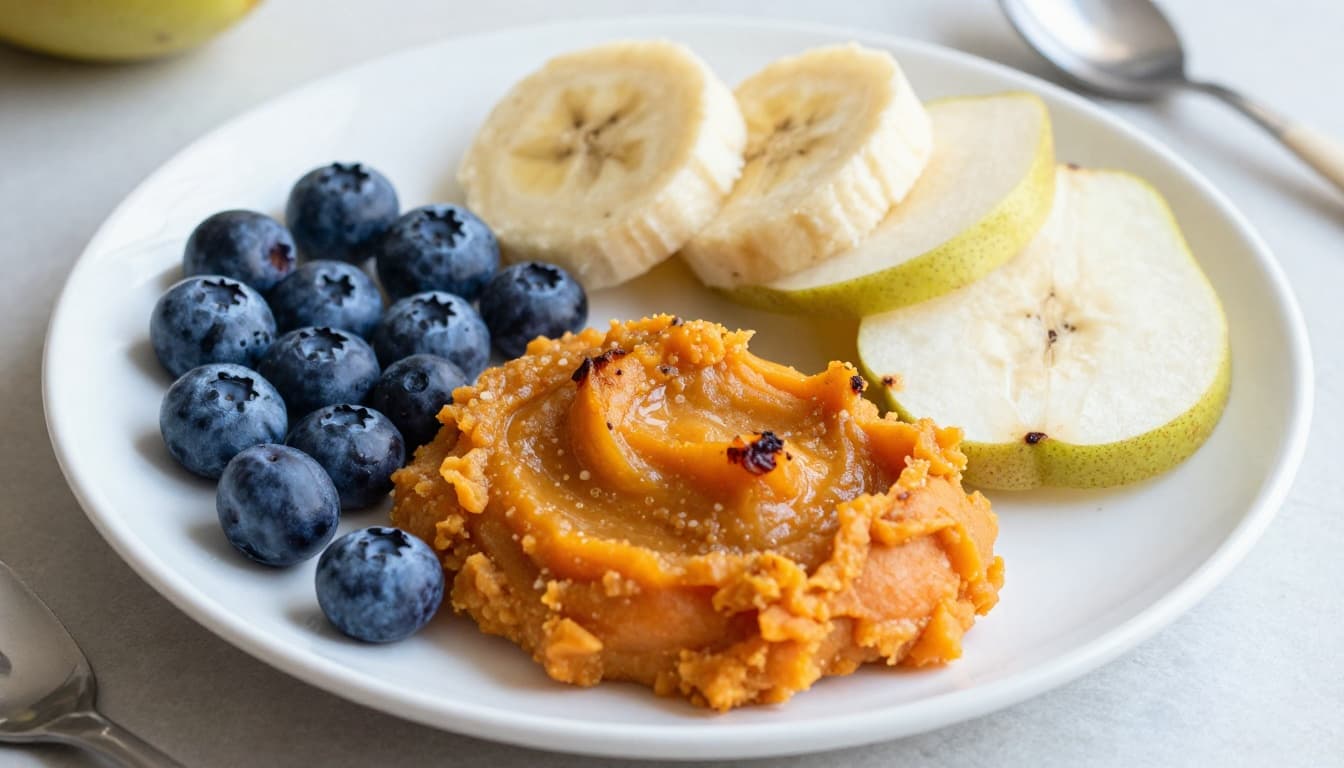
These foods are especially useful because they work in more than one form. You can serve them as smooth purees, fork-mashes, or soft finger foods, depending on your baby’s stage. That means one ingredient can grow with your baby instead of getting replaced every few weeks.
Here are a few easy ways to use them:
- Banana mashed on its own or stirred into oats
- Apple cooked until soft, then pureed or mashed
- Pear steamed and served as a puree or soft slice
- Sweet potato mashed with a little breast milk or formula
- Soft berries like blueberries or strawberries, lightly smashed for older babies
Oatmeal also deserves a spot here because it acts like a blank canvas. It softens quickly, mixes well with fruit, and gives breakfast more body without making it heavy.
Healthy fats and protein for fuller mornings
Healthy fats and protein help breakfast last longer. They can keep babies satisfied between milk feeds, which is useful when their appetite changes from day to day. Plain yogurt, eggs, avocado, thinned nut butter, and tofu are all baby-friendly choices when served in the right texture.
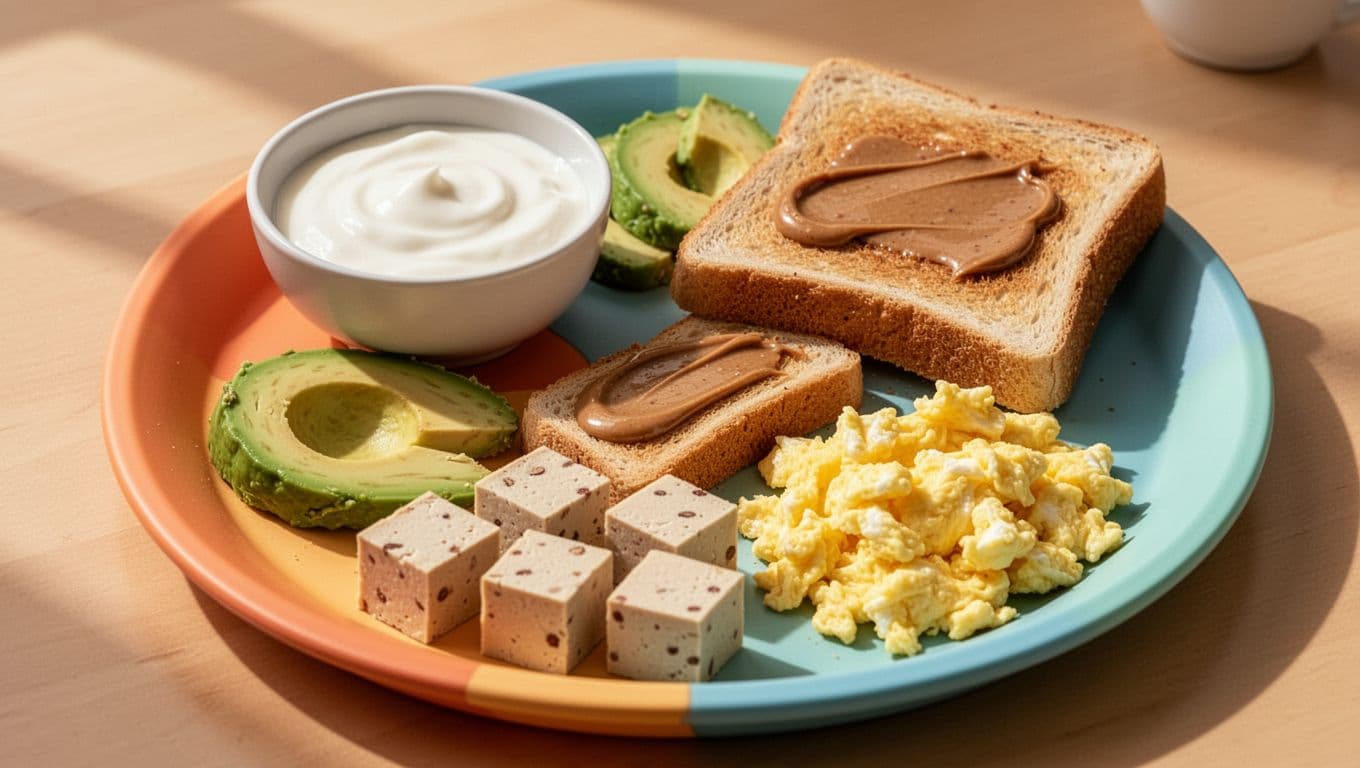
These foods do more than fill a small belly. Fat supports brain growth, protein helps build tissue, and both make breakfast feel more balanced. That matters when you want a meal that holds your baby over until the next milk feeding.
A few easy, baby-safe choices are especially practical:
- Plain whole-milk yogurt for a creamy, spoonable base
- Eggs scrambled soft or mashed for easy eating
- Avocado mashed smooth or served in soft strips for older babies
- Nut butter thinned with water, breast milk, formula, or stirred into oats
- Tofu cut soft or mashed into a gentle breakfast bowl
If you want more ideas for calorie-dense baby foods, foods to boost baby’s weight gain can help you expand the menu. You can also look at an AAP-style sample menu for older babies for more texture ideas once your baby is ready for thicker foods.
The best breakfast builds itself around these basics, then shifts with your baby’s age and skills. Start with one iron food, add one gentle carb, and finish with a fruit, veggie, or fat source. That simple formula gives you meals that are easy to make and genuinely nourishing.
15 Easy and Nutritious Baby Breakfasts for 6 to 12 Months
Breakfast gets easier when you match the food to your baby’s stage. Start with smooth spoon-feeding for early eaters, move into thicker mashes as chewing skills grow, then add soft finger foods and make-ahead options for busy mornings. The best baby breakfast is soft, simple, and packed with the right nutrients for growth.
Soft purees and spoon-fed breakfasts for early eaters
For babies just starting solids, smooth textures are the safest place to begin. Keep breakfast thin, creamy, and easy to swallow, almost like warm pudding. The baby food basics guide is a helpful reference if you want a simple texture check.
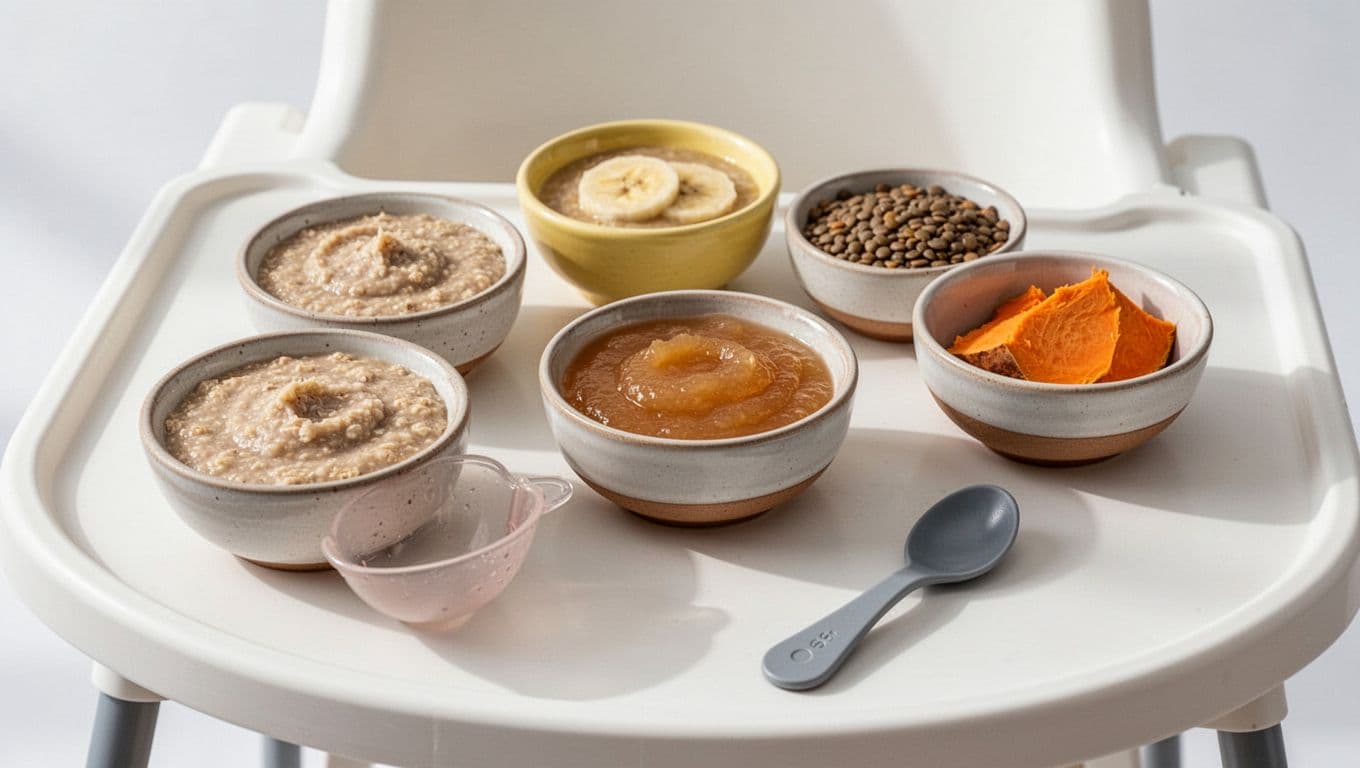
- Iron-fortified oatmeal works best when it is very smooth and loose enough to slide off a spoon. It gives iron, gentle carbs, and a filling base that pairs well with fruit.
- Banana oatmeal mash should be mashed until nearly creamy, with only tiny soft bits if your baby is ready for them. Banana adds potassium and natural sweetness, while oats add fiber and iron.
- Applesauce with oatmeal makes a mild breakfast that is easy to swallow. Use unsweetened applesauce, and let the oats bring more iron and staying power.
- Lentil puree should be blended very smooth, almost like a thick soup. Lentils add iron, protein, and fiber, which makes this a strong savory option.
- Sweet potato puree is best silky and loose enough to spoon. It gives beta carotene, which the body turns into vitamin A, plus a soft texture most babies accept well.
These early breakfasts do not need to be big. A few spoonfuls give your baby practice with taste, texture, and spoon feeding.
Thicker meals and mash-ups for babies building chewing skills
Once your baby starts handling thicker foods, you can leave a little texture in the bowl. Fork-mashed meals help babies move food around their mouths, and they often feel more filling than very smooth purees. This is a good stage for eggs, yogurt, avocado, and soft fruit.
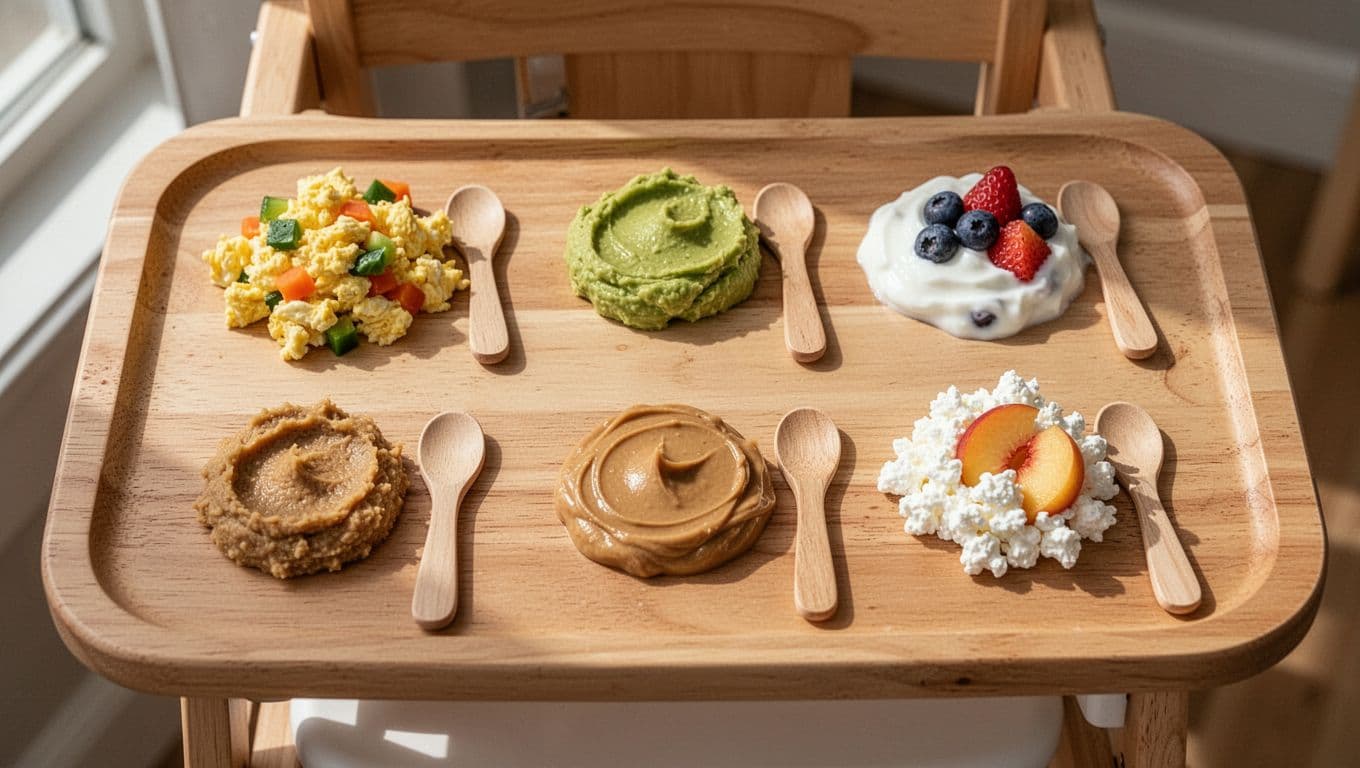
- Scrambled egg with soft vegetables works well when the egg is fully cooked and the vegetables are very tender. Egg adds protein and choline, while soft vegetables bring vitamins and a little color.
- Avocado banana mash is smooth, thick, and easy to scoop. Avocado adds healthy fats, and banana adds energy plus a naturally sweet taste.
- Yogurt with mashed fruit stays gentle when you stir in softened berries, pear, or peach. Plain whole-milk yogurt adds calcium and protein, while fruit brings flavor and vitamin C.
- Peanut butter banana mash should be thinned with breast milk, formula, water, or extra banana so it is not sticky. That gives healthy fats, a little protein, and a texture that is easier to manage.
- Cottage cheese with soft peach or pear works best when the fruit is mashed well or cooked until very soft. Cottage cheese adds protein and calcium, and the fruit keeps the mix mild and spoonable.
If a mash feels too thick, add a small splash of liquid and stir again. Small changes like that make breakfast safer and much easier to eat.
Soft finger foods for older babies
By 9 to 12 months, many babies want to hold food themselves. Keep pieces soft, short, and easy to flatten between your fingers. Shape matters here, because tiny hands need food that is easy to grab.
- Mini egg muffins are handy because they bake in a small, soft shape. Mix eggs with tender vegetables like spinach or zucchini, then bake in a mini muffin tin until just set.
- Banana pancakes should be soft enough to tear easily with your fingers. Use ripe banana and a simple batter, then serve them in strips or small squares.
- Oatmeal pancakes are another good option because they are tender and easy to hold. They also bring fiber and iron, which makes them more filling than plain pancakes.
- Toast strips with smashed avocado give babies a simple grip-and-bite breakfast. Lightly toast the bread so it holds its shape, then spread the avocado thinly.
- Soft veggie fritters work well with grated zucchini, carrot, or sweet potato. Cook them until soft inside, and keep the pieces small enough to fit in a baby fist.
- Chia-free fruit yogurt bites are best as soft dollops of yogurt and mashed fruit chilled until just set. Keep them tender, not frozen solid, so they melt or mash easily in the mouth.
For more grab-and-go ideas as your baby gets older, 10 easy finger foods for toddlers can give you a few next-step options.
Simple make-ahead breakfasts for busy mornings
A little prep at night can take the pressure off breakfast time. Batch-cooked foods are useful because you can cool, store, and reheat them without much work. The Feed Me! 6-12 Months guide also gives a quick look at baby-sized portions and textures for this age.
If your mornings feel packed, family morning routines can help you build a calmer start.
- Baked oatmeal cups are easy to make in a batch with oats, mashed banana, egg, and soft fruit. They stay tender, reheat well, and work nicely for babies who are ready for more texture.
- Egg muffins save time when you make several at once. Add chopped soft vegetables, bake until just set, then warm one up and cut it into baby-safe pieces.
- Freezer pancakes are useful for rushed mornings because they thaw fast and stay soft. Make small banana or oatmeal pancakes, freeze them in a single layer, and reheat until warm.
- Blended overnight oats are a simple option for babies who handle thicker spoon foods. Soak oats with breast milk, formula, yogurt, or water, then blend or mash before serving.
With a few of these breakfasts on repeat, you can match your baby’s stage without starting from scratch every morning. That makes the first meal of the day feel a lot more manageable.
How to serve breakfast safely and keep mealtimes stress-free
Breakfast goes better when you keep it simple and calm. Babies do not need large servings, strict rules, or a perfect menu. They need soft food, close supervision, and a chance to lead the pace.
The CDC recommends starting with small portions and watching your baby while they eat. That fits breakfast well, because the first meal of the day should feel steady, not rushed. A few spoonfuls or small soft pieces are enough at the start.
Start with small portions and follow your baby’s cues
Begin with less than you think your baby will eat. A couple of spoonfuls, a small scoop of oatmeal, or two soft finger pieces is plenty for many babies. You can always offer more if your baby still wants it.
Watch for hunger and fullness cues instead of pushing a set amount. Leaning forward, opening the mouth, and reaching for food usually mean your baby wants another bite. Turning away, closing the lips, or losing interest means it’s time to stop.
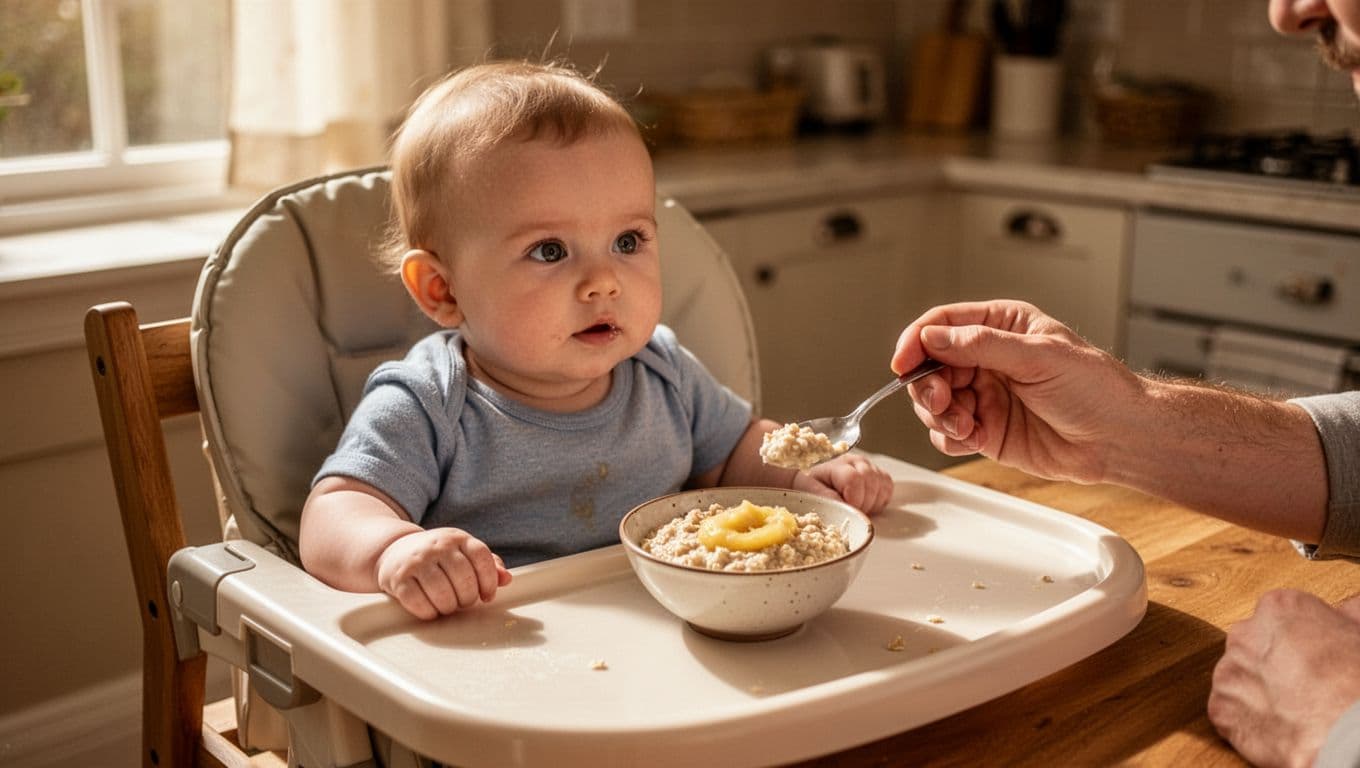
If you want a simple guide for what to watch, baby fullness cues to watch can help you read the signs more easily. Responsive feeding keeps breakfast calmer because your baby decides when to take more and when to stop.
A baby who turns away is telling you breakfast is done for now.
Introduce new foods one at a time when possible
New foods feel easier when you do not pile them on all at once. Offer one new food by itself, then keep the rest familiar. That makes it simpler to spot a reaction and keeps the meal from feeling overwhelming.
The CDC says you can wait about 3 to 5 days before adding another new food. That gives you time to notice changes such as a rash, vomiting, diarrhea, or unusual fussiness. It also helps you keep track when mornings are busy and memory is short.
A practical approach looks like this:
- Serve one new food with one or two familiar foods.
- Keep the amount small the first few times.
- Watch your baby for skin changes, swelling, or stomach upset.
- If all goes well, offer the food again a few days later.
This does not mean every breakfast has to be a test. Once a food is tolerated, keep it in the rotation. The AAP notes that repeated exposure helps babies accept new foods more easily, and that can make breakfast feel less like a struggle.
Make breakfast work with your family routine
A good routine beats a perfect one. Some babies eat best after a milk feed, while others do better when breakfast comes first. Pay attention to your baby’s mood, nap timing, and hunger pattern, then build around that.
If mornings are chaotic, aim for the same rough order each day:
- Wake up and offer milk if your baby still needs it.
- Give a short reset, like a diaper change or a few minutes of play.
- Serve breakfast when your baby is alert and calm.
- End the meal when interest drops, even if the plate is not empty.
That rhythm helps more than timing breakfast to the minute. Babies do better when they are not over-tired or over-hungry, so try not to wait until cries turn into a meltdown. A calm baby is usually a more willing eater.
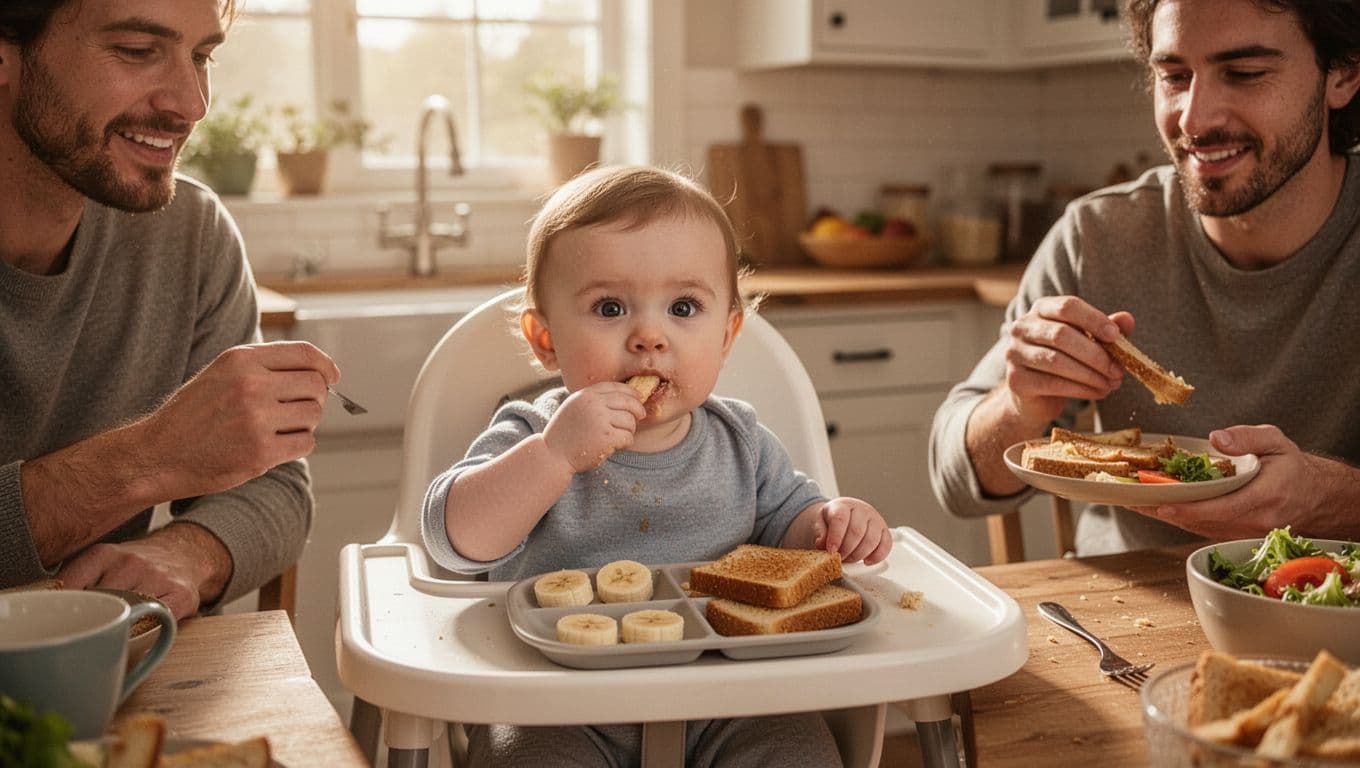
If your morning routine needs a little structure, simple family morning routines can help you build a smoother start. Keep breakfast relaxed, and let the plan bend around naps, milk feeds, and real life. That is what makes it sustainable.
Conclusion
Baby breakfast does not need to be fancy to be nutritious. A few soft, simple foods, chosen for your baby’s age and skills, can give them iron, healthy fats, and steady energy for the morning.
Keep the textures matched to where your baby is now, from smooth purees to thicker mashes and soft finger foods. Stay with the basics too, soft food, close supervision, and small portions that fit your baby’s pace.
Over time, variety matters more than perfection. Start with one easy breakfast, repeat what works, and build confidence one meal at a time.

- Can I Give A Half-boiled Egg To My Baby? - September 25, 2026
- What Are The Nutritional Benefits Of Eggs For Babies - September 25, 2026
- When Should I Avoid Giving Eggs To My Baby? - September 25, 2026