
Elegant baby pictures don’t require expensive props, a professional studio, or complicated poses. With soft window light, simple colors, and a calm space at home, you can capture timeless images that feel personal and natural.
The best photos often come from ordinary family moments, such as a swaddled baby resting near a window, your little one lying on a neutral blanket, or a parent gently cradling them. You can also create a warm full-family portrait or focus on a tiny detail, such as your baby’s fingers, eyelashes, or toes, while learning more about how newborn babies see.
Keep your baby’s comfort and safety ahead of getting the perfect picture: use a low, stable surface, keep the airway clear, supervise every pose, and stop if your baby seems upset or uncomfortable. A setup that looks beautiful can stay simple, especially when you follow safe sleep tips for babies and avoid loose items near your baby’s face. Start with these five gentle photo ideas that make everyday moments look polished without taking away from the joy of being together.
5 Elegant Baby Pictures to Take at Home
The most beautiful baby pictures often use simple surroundings, natural light, and one meaningful subject: your baby. Keep the background calm, choose soft neutral colors, and let your child’s natural expressions guide the session. Posed newborn photography requires special training, so use low, supported positions at home and stop whenever your baby seems uncomfortable.
A Swaddled Baby Resting Beside a Bright Window
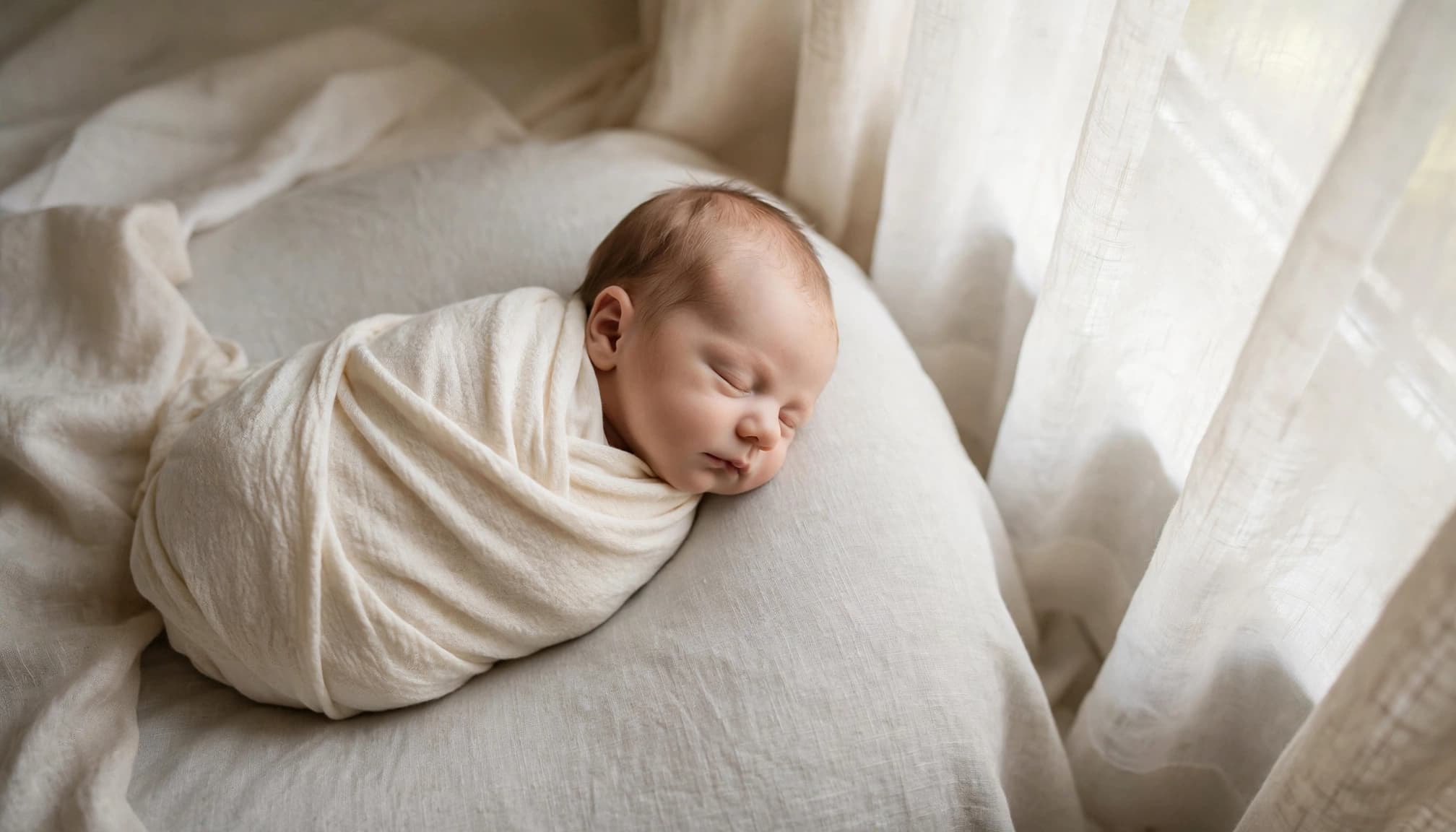
Wrap your baby in a soft cream, white, beige, pale gray, or muted pastel swaddle. Then place the baby on a firm, low surface near, but not directly against, a bright window. Turn the baby’s face slightly toward the light so soft shadows add gentle shape without creating harsh contrast.
Sheer curtains can soften strong sunlight and create an even, flattering glow. Avoid direct flash, busy backgrounds, and loose fabric near the baby’s face. Keep one hand close and never leave your baby alone, even for a quick photo.
Try several simple compositions:
- Take a full-body image that shows the swaddle and the light-filled setting.
- Shoot from above while keeping your baby securely supported and supervised.
- Move closer for a quiet crop of the face, eyelashes, and relaxed expression.
A 45-degree angle to the window usually gives the face enough dimension while keeping the shadows gentle.
Your Baby on a Neutral Blanket or Bed
A clean bed or neutral blanket gives you an elegant background without distracting props. Place your baby on their back in a comfortable, supported position, then photograph from slightly above or at the baby’s eye level.
Before you start, smooth wrinkles, remove clutter, and leave open space around your baby. Cream, oatmeal, soft gray, and warm white bedding keep the image timeless. If you add something personal, choose one meaningful item, such as a small knitted blanket or family heirloom.
Keep the composition loose rather than filling every corner. That extra space draws attention to your baby’s face and gives the photo a calm, polished feel.
A Close Parent-and-Baby Cradle Portrait
Connection matters more than a formal pose in parent-and-baby portraits. Hold your baby against your chest, cradle them in both arms, or sit in a comfortable chair and touch foreheads. These natural moments often create more warmth than a carefully arranged pose.
Ask the parent to wear a plain shirt in a soft color, such as cream, taupe, pale blue, or muted green. The simple clothing keeps attention on the relationship. Take one wider portrait, then move closer for details like intertwined hands, eyelashes, a sleepy expression, or a baby’s cheek against a parent’s chest.
The parent must support the baby’s head and neck at all times. For more guidance on safe newborn posing, review these newborn photography safety rules.
A Simple Family Portrait With the Baby at the Center
Parents, siblings, and grandparents can create a balanced family photo without a complicated setup. Sit together on a bed, couch, or rug near soft window light, and keep the baby safely held rather than placing them in an unsupported position.
Coordinate clothing without dressing everyone alike. Calm colors and simple patterns usually look more refined than bold logos or busy prints. Take a short series while family members look at the baby, glance at one another, and face the camera. Small changes in expression can make each image feel different.
Keep the session brief, especially if siblings are young or the baby is tired. A few relaxed frames can become meaningful newborn memory ideas without turning the moment into a long photo shoot.
A Tiny Detail Shot of Hands, Feet, or a Sweet Face
Detail photos are elegant additions to a larger set of baby pictures. Photograph curled fingers, tiny feet, soft hair, closed eyes, lips, or a parent’s hand holding the baby’s hand. These close views show how small your baby was without requiring a complex pose.
Use window light and tap your phone screen to focus on the feature you want to highlight. Since babies move often, take several images instead of waiting for one perfect frame. Include a familiar object only when it adds meaning, such as a wedding ring on the parent’s hand or a handmade blanket.
Keep the baby’s airway clear and avoid pressing the face into fabric. A relaxed hand, tiny yawn, or sleepy mouth can tell the story better than any elaborate prop.
How to Create an Elegant Baby Photo Setup at Home
An elegant baby photo setup can come together with a clean corner, one comfortable surface, and light from a nearby window. You don’t need a studio or expensive props. Clear the area, keep your baby comfortable, and let the room’s soft colors support the photograph instead of competing with it.
Choose a bedroom or living room with enough space to move a chair, side table, or basket out of the frame. A plain wall, made bed, or uncluttered rug can become your background. Remove bright toys, cords, laundry, framed signs, and other objects that pull attention away from your baby’s face.
Soft morning light and late-afternoon light often look gentle, but your baby’s mood matters more than the clock. Take photos when your baby is calm, alert, or naturally sleepy. A north-facing window can provide steady light throughout the day when one is available. For brighter windows, sheer curtains can soften the sun before it reaches your baby.
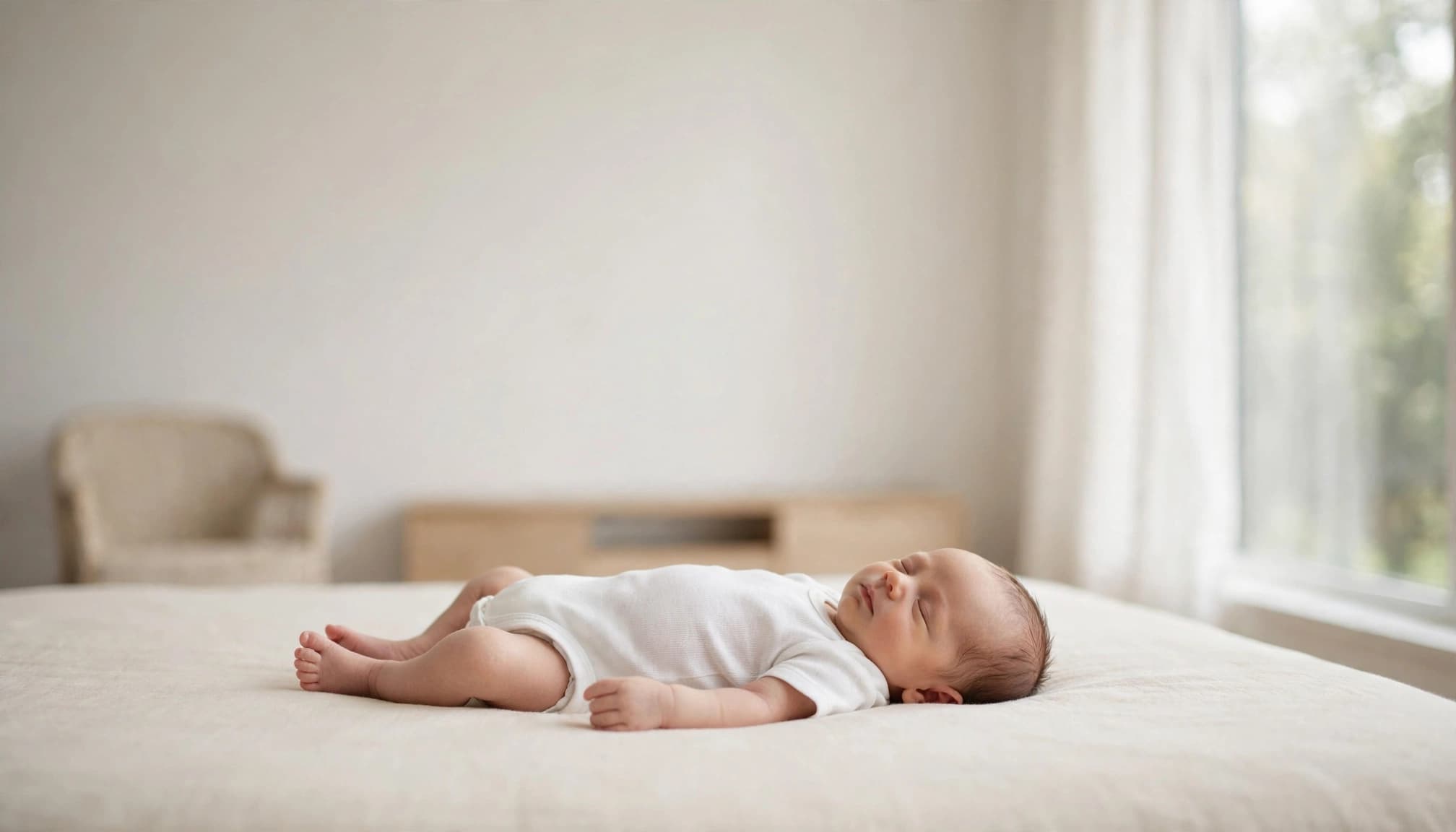
Choose Soft Colors and One Meaningful Prop
Neutral colors and natural textures usually look timeless because they don’t tie the photo to a particular trend or holiday. Cotton, linen, knit, and muslin fabrics in cream, oatmeal, beige, soft gray, or muted pastels create gentle contrast with a baby’s skin.
Use one or two small props at most. A handmade knit, family blanket, or tiny heirloom can add meaning, but the baby’s face should remain the main focus. Large signs, bold patterns, themed decorations, and piles of accessories make the frame feel busy.
Before setting up, wash fabrics with fragrance-free detergent and check every edge for loose threads, buttons, ties, or rough seams. Keep fabric away from your baby’s nose and mouth, and never leave your baby unattended on a soft surface. For a swaddled photo, follow these safe swaddling tips for baby photos, and remove the wrap when your baby shows signs of rolling.
Use a firm, flat, approved surface for any moment when your baby may fall asleep. Loose blankets, pillows, toys, and stuffed animals should stay out of a sleep space. Keep the scene simple enough that you can see your baby clearly at all times.
Use Window Light Instead of Harsh Flash
Place your baby at roughly a 45-degree angle to the window, with the face turned slightly toward the light. This position adds soft shape to the cheeks while avoiding deep shadows. Direct sunlight can create bright patches, so close sheer curtains or move the setup a few feet away from the glass.
A white wall, white sheet held safely outside the baby’s reach, or plain reflector opposite the window can bounce light back onto the shadowed side of the face. You don’t need special equipment. Even a light-colored wall can make a noticeable difference.
Avoid strong overhead lights and bright flash, which can create hard shadows and distract from natural expressions. With a phone, tap your baby’s face to focus, then lower the exposure slightly if a white blanket looks washed out. Try both vertical and horizontal framing, and take a wide photo before moving closer for details.
Photograph from your baby’s eye level for connection, then raise the phone slightly for a clean view of the setup. Leave some negative space around your baby, especially when the background is plain. That open area gives the image a calm, polished appearance without adding more decorations.
Baby Photography Safety Comes Before the Perfect Pose
A beautiful baby photo is never worth risking your baby’s comfort or safety. Keep every setup simple, low, stable, and fully supervised. Your baby should always be within an adult’s arm’s reach, even when you plan to take only one quick picture.
Use Stable, Low Positions
Never leave your baby unattended on a bed, chair, table, beanbag, couch, or posing surface. These areas can look harmless, but babies can shift, roll, or slide without warning. A parent or spotter should stay close enough to provide immediate support.
Support your baby’s head, neck, and body whenever you hold or reposition them. For casual home photography, choose a low, reclined position over an unsupported tummy pose or a position with the head propped up. A firm, flat, approved sleep surface is safer than a soft bed or cushion when your baby falls asleep. Review these bassinet sleep safety guidelines before photographing your baby in or near a bassinet.
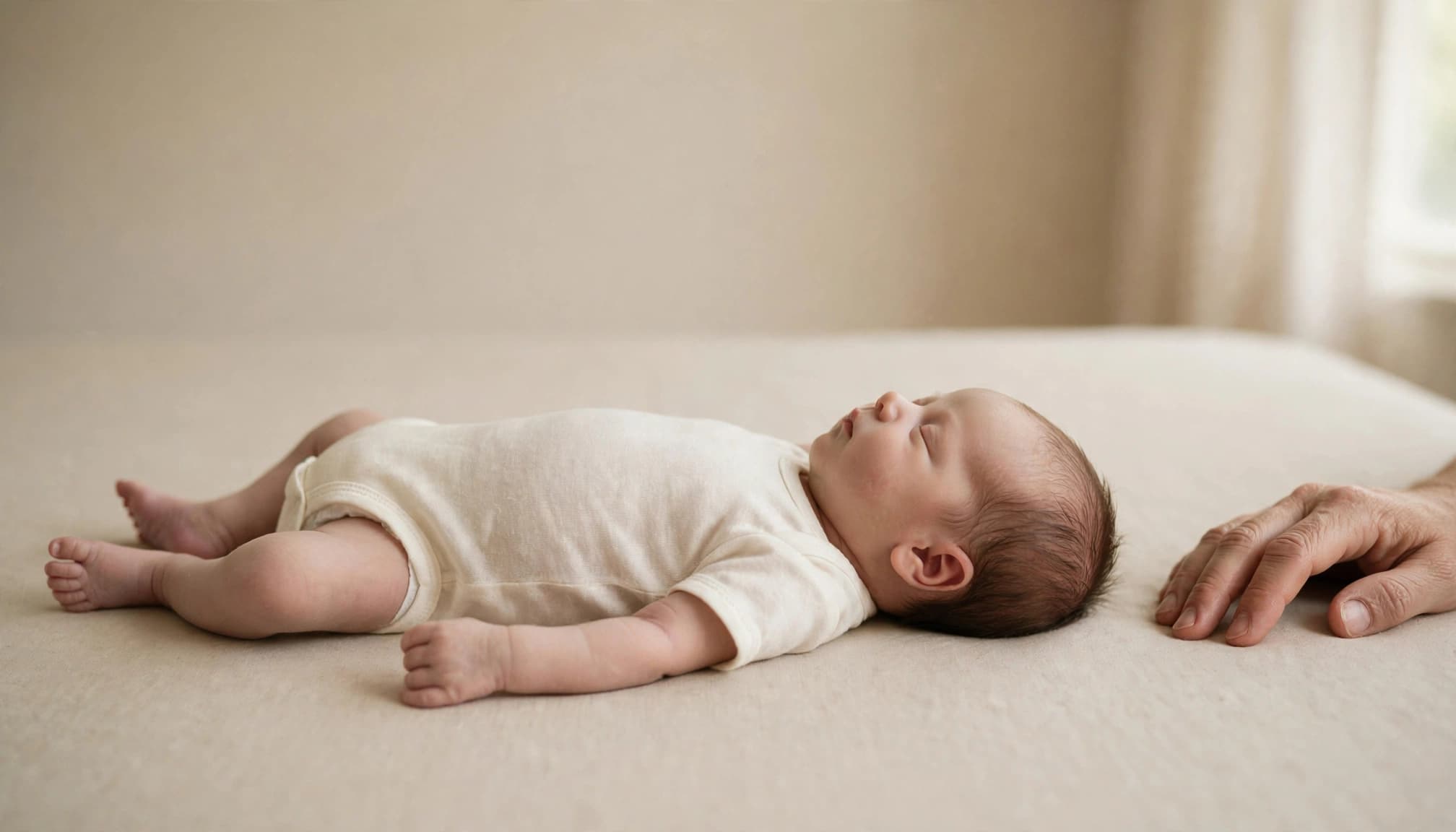
Don’t force a pose because it looks graceful in a reference photo. Never bend your baby’s limbs into position, cover the face, or use wedges and positioners to hold the body still. Heavy, sharp, breakable, or loose props also have no place near a baby. Even lightweight objects can become dangerous if they fall, shift, or cover the nose and mouth.
A safe photo setup should still be safe if you stop taking pictures and look away for a moment.
Keep Your Baby Comfortable
Warm the room before starting, but keep your baby away from heaters, radiators, fireplaces, and hot lamps. Direct airflow from fans, vents, and air conditioners can also make a lightly dressed baby cold. Check your baby’s chest or back, and adjust clothing if they feel cold or sweaty.
Plan for breaks instead of trying to finish a full photo session at once. Pause for feeding, burping, diaper changes, and cuddling. Stop immediately if your baby cries, stiffens, turns away, feels cold, or seems stressed. A calm expression is never more important than your baby’s comfort.
Professional photographers sometimes create composite images by combining multiple photographs. Those pictures can show a supported pose without placing a baby in danger. Never attempt a composite pose at home by putting your baby in an unsafe position, balancing them on props, or stepping away while someone edits the final image. Use natural moments and supported positions instead.
Simple Shooting and Editing Tips for Polished Baby Pictures
A short, calm session can produce beautiful baby pictures without overwhelming your little one. Photograph after a feeding when your baby feels settled, keep your phone ready, and stop when they show signs of tiredness or discomfort.
Capture Natural Expressions Instead of Chasing a Perfect Smile
Yawns, stretches, sleepy faces, tiny smiles, and quiet eye contact often feel more genuine than a forced grin. Elegant baby pictures don’t require your child to perform. A relaxed expression can tell a fuller story than a carefully arranged pose.
Use a familiar voice, gentle touch, or favorite song to encourage calm reactions. Speak softly from just beside the camera, stroke your baby’s hand, or pause while they look toward you. Avoid loud sounds, sudden movements, and repeated attempts to get attention. Those distractions can make your baby fussy and can produce tense expressions.
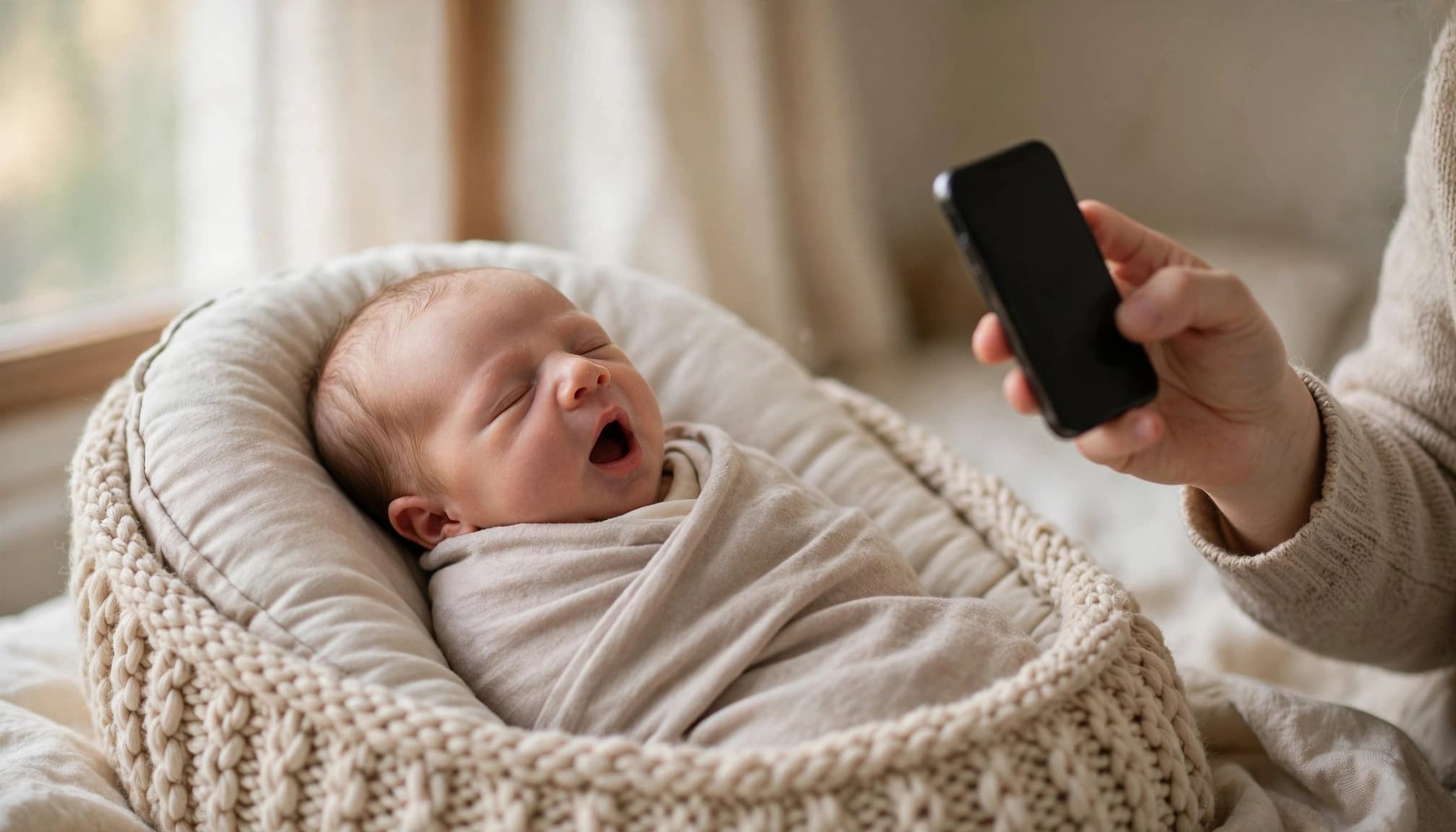
Keep the camera ready during small movements. Take several frames as your baby stretches, turns their head, opens their eyes, or relaxes again. The pause between poses may give you the most meaningful photograph. You can also learn more about capturing your baby’s early smiles without making the session center on one expression.
For phone photography, clean the lens with a soft cloth before you begin. Tap your baby’s eyes to focus, especially when the face fills the frame. Portrait mode can create attractive background blur, but check the edges around hair, fingers, and blankets because the effect may blur parts of the subject. Apple’s iPhone portrait mode guidance explains how the feature separates a subject from the background.
Move closer instead of relying on heavy digital zoom. Try a wide scene, then step in for the face and small details. A simple shot list can keep you focused:
- Take one wide image showing your baby and the surrounding light.
- Photograph a parent holding or gently touching the baby.
- Capture one relaxed family portrait with the baby safely supported.
- Take two or three details, such as fingers, toes, eyelashes, or a sleepy mouth.
Edit With a Light Touch and Keep the Original Files
Start by saving the original images before you edit. Keep copies in your phone’s photo library and back them up to cloud storage or another secure location. Original files give you room to try new edits later without losing the untouched photograph.
Make small adjustments to brightness, shadows, warmth, and cropping. If window light makes the face too dark, raise exposure slightly. When a white blanket looks gray, adjust warmth or white balance with care. Use the same general edit across the set so the photos feel cohesive.
Natural skin tones should guide every decision. Avoid heavy smoothing, strong filters, and overexposure, which can remove the wrinkles, fine lines, and expressions that make your baby recognizable. A polished edit should support the moment, not replace it.
Conclusion
The most elegant baby pictures come from simple surroundings, gentle window light, and meaningful contact. A swaddled portrait, neutral blanket setup, parent-and-baby cradle, family photo, and close-up detail shot can all feel polished when your baby stays comfortable and the background remains uncluttered. A calm nursery can also provide a beautiful setting, especially when you use a few ideas from these calm and timeless nursery ideas.
Keep safety ahead of styling by choosing low, stable positions, supervising every image, and taking breaks for feeding, changing, or cuddling. You don’t need perfect equipment or a perfect pose to preserve this short stage of life. The small details, such as tiny fingers, sleepy expressions, and the way your baby rests against you, may become the memories you value most later.
Save pin for later


- Newborn Skin Peeling: Common Causes and Warning Signs - September 20, 2026
- Sticky Eyes in Babies: Causes, Treatment, and Warning Signs - September 20, 2026
- Baby Development Stages: Milestones From Birth to 12 Months - September 20, 2026