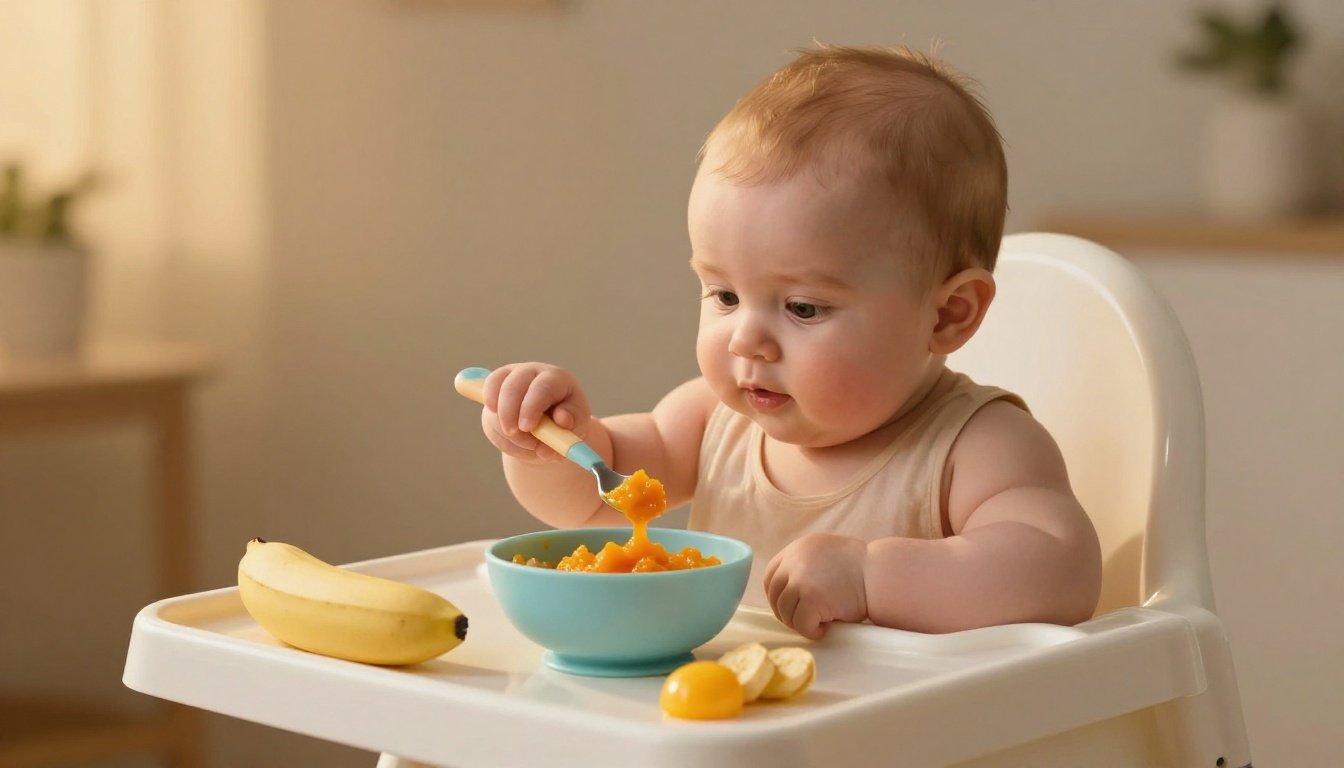
Watching your 6-month-old reach toward your spoon, open their mouth, and lean closer to the table can make starting solids feel exciting. The best foods for a 6-month-old baby are soft, nourishing options such as iron-fortified infant cereal, smooth meats, mashed vegetables, ripe fruits, and well-cooked egg.
Breast milk or infant formula still provides most of your baby’s nutrition, so early solids are meant for learning new tastes and textures rather than replacing milk. Before offering food, look for readiness signs such as steady head control, sitting with support, opening their mouth for food, and swallowing instead of pushing it back out. You can also review signs your baby is ready for solid foods and ask your pediatrician about safe textures, allergies, and any medical concerns.
Next, let’s look at five nourishing first foods and how to serve each one safely.
Is Your 6-Month-Old Ready to Start Solid Foods?
Most babies begin trying solid foods at about 6 months, but age alone doesn’t decide whether your baby is ready. Development matters more than the calendar. Before offering a spoonful, look for several readiness signs that appear together.
Signs Your Baby May Be Ready
Your baby may be ready for solids when they can:
- Sit upright with support and keep their head and neck steady.
- Open their mouth when you bring a spoon near.
- Show interest in food by watching you eat, reaching toward your plate, or leaning forward.
- Move food toward the back of the mouth and swallow instead of pushing it back out with the tongue.
That last sign can take a little practice. At first, your baby may push food out because the movement is new, not because they dislike it. You can learn more about signs your baby is ready for solid foods before deciding when to begin.

Readiness is a combination of physical control and feeding skills, not simply reaching a certain age.
Milk Still Comes First
Breast milk or iron-fortified infant formula should remain your baby’s main source of nutrition during the first year. Solid foods add new tastes, textures, and practice, but they shouldn’t replace regular milk feeds yet. Current infant-feeding guidance also supports continuing breast milk while introducing complementary foods. The CDC infant feeding toolkit includes guidance on maintaining milk feeding alongside age-appropriate solids.
Don’t introduce solid foods before 4 months. If your baby was born prematurely, has growth concerns, struggles with swallowing, or has another medical need, ask your pediatrician about timing and texture before starting. Your doctor can help you separate normal learning from signs that your baby needs extra support.
Once these readiness signs are present, begin slowly and follow your baby’s cues. A relaxed first taste is enough for one meal.
5 Best Foods for a 6-Month-Old Baby to Try First
These nutrient-dense starter foods are a practical list, not a strict ranking. Begin with one food at a time, offer a tiny amount, and slowly build variety as your baby learns new flavors and textures. Around 6 months, iron and zinc deserve extra attention because a baby’s stored iron begins to decline. The CDC’s solid food guidance also recommends offering iron-rich foods as complementary feeding begins.

Iron-Fortified Infant Cereal Gives Baby a Gentle, Iron-Rich Start
Iron-fortified infant cereal is a common first food because it is soft, simple to prepare, and provides iron in a baby-friendly serving. Mix a small amount with breast milk, formula, or water until it becomes smooth and thin.
Offer cereal from a spoon rather than adding it to a bottle. Oat, barley, and multigrain cereals can add variety, so rice cereal doesn’t need to be the only choice. Watch your baby’s face, swallowing, and comfort, then pause if they turn away or seem overwhelmed.
Pureed Beef or Lamb Supplies Iron and Zinc in a Small Serving
Tender, fully cooked beef or lamb provides iron, zinc, and protein in a small serving. Blend the meat with breast milk, formula, water, or a smooth vegetable puree until it has a loose, lump-free texture.
A spoonful of beef mixed with sweet potato can taste gentler than plain meat. Since meat may taste very different from fruit, your baby might need several calm, pressure-free tries. Cook it fully, remove bones and tough pieces, and never offer hard chunks that your baby cannot safely manage.
Well-Cooked Egg Adds Protein and Can Introduce an Allergen Early
Fully cooked egg can be introduced when your baby begins other solids. Mash hard-boiled egg with a familiar puree until smooth, then offer a small amount when your baby is healthy and easy to observe.
Egg is a common allergen, so watch for a reaction after feeding. Seek urgent help for trouble breathing, facial swelling, repeated vomiting, or widespread hives. If your baby has severe eczema or a known food allergy, ask a clinician for a safer introduction plan. You can also review egg allergy precautions for infants.
Plain Whole-Milk Yogurt Offers Protein and a Smooth Texture
Choose pasteurized, plain, unsweetened whole-milk yogurt. Its smooth texture makes it easy to serve by spoon while your baby practices moving food around their mouth. Yogurt also provides protein and other nutrients.
After your baby accepts the plain flavor, stir in mashed banana, pear, or another soft fruit. Avoid added sugar, honey, and sweetened products. Yogurt can be offered as a food before 12 months, but cow’s milk should not replace breast milk or formula as a drink.
Mashed Beans, Peas, or Lentils Bring Plant-Based Iron and Fiber
Soft, fully cooked beans, peas, and lentils are affordable sources of plant-based iron and fiber. Mash or blend them with water, breast milk, formula, or a smooth vegetable puree. Strain bean skins or blend longer if the texture feels thick or rough.
Try smooth mashed lentils or plain beans without heavy salt, spicy seasoning, or rich family sauces. Offer these foods alongside iron-fortified cereal, egg, meat, or another age-appropriate option. Introduce small amounts and watch for gagging, discomfort, or changes in the baby’s skin and digestion.
How to Serve First Foods Safely, From Smooth Purees to Soft Bites
Safe first foods depend as much on texture and supervision as nutrition. At 6 months, your baby is learning how to move food around their mouth, swallow, and recognize new sensations. Start with foods that are smooth, thin, and easy to swallow, then adjust the texture as your baby gains control.

Start Smooth, Then Build Texture Slowly
Thin purees are a useful starting point because they require little chewing. Mix foods with breast milk, formula, or water until they slide easily from a spoon. As your baby handles smooth foods well, make each serving slightly thicker and introduce soft, tiny lumps.
Your baby may gag, cough, or make a messy face while learning. Gagging is often noisy, while choking can be silent and prevent normal breathing. Stay within arm’s reach during every bite, and learn how to start baby-led weaning safely before offering finger foods.
Good texture examples include:
- Mashed avocado with a soft, creamy consistency.
- Very soft cooked vegetables that squish easily between your fingers.
- Finely shredded tender meat mixed with puree.
- Soft ripe fruit mashed with a fork.
- Thinly spread nut butter stirred into yogurt, cereal, or fruit puree.
Avoid rushing toward chunky food. Your baby needs time to develop the mouth and tongue skills that make thicker textures manageable.
Feed Upright and Stay Close
Place your baby in a secure high chair with their body upright and their head steady. Don’t feed while your baby is lying down, walking around, or sitting in a stroller. Keep the meal calm, remove distractions, and watch closely rather than stepping away for a moment.
Responsive feeding also matters. Offer a small bite, wait, and watch your baby’s cues. Turning away, closing the mouth, pushing food away, or becoming fussy can mean your baby needs a pause. Let your baby decide how much to eat, and never force another bite.
Introduce Allergens in Safe Forms
You can introduce common allergens when your baby begins solids. These include egg, peanut, wheat, fish, soy, dairy, and sesame. Offer one new allergen at a time when practical, using a baby-safe texture, so you can identify a reaction more easily. If your baby tolerates it, keep that food in the regular diet as advised by your pediatrician.
Never offer a spoonful of peanut butter. Mix a small amount into puree or thin it with warm water. Use fully cooked egg, smooth yogurt, finely flaked boneless fish, soft tofu, or wheat cereal. Babies with severe eczema, an existing food allergy, or another medical concern should have an individualized plan from a clinician.
Keep Common Choking Hazards Off the Tray
Avoid whole grapes, nuts, popcorn, hard raw vegetables, hard fruit pieces, thick nut butter, tough meat chunks, candy, and large pieces of cheese. Whole beans, sticky foods, and firm raw apple or carrot pieces also need special care. A practical infant feeding reference can help you review age-appropriate serving choices.
Cut, mash, cook, or thin foods before serving. As your baby becomes more skilled, continue changing textures gradually while keeping every meal supervised.
How Much Should a 6-Month-Old Eat Each Day?
At 6 months, your baby may eat only a teaspoon or two at first. That small taste can gradually grow into a few tablespoons as swallowing skills improve. Breast milk or infant formula still provides most of your baby’s nutrition, so solids should complement milk feeds rather than replace them.
The CDC’s feeding guidance recommends starting with small portions and watching your baby’s response. There is no perfect serving size for every 6-month-old. Some babies show interest right away, while others need several relaxed attempts.

Start With Small Portions and Build Slowly
Begin with one small serving once a day, often after a milk feed when your baby is calm but not overly full. Offer about a teaspoon or two of smooth cereal, mashed food, or puree. If your baby wants more, add small spoonfuls gradually.
As eating becomes easier, offer solids twice daily, then three times daily when your baby shows readiness. Many babies still take several breast milk or formula feeds throughout the day. Your baby’s appetite may change from one meal to the next, so avoid measuring success by an empty bowl.
A few swallowed bites count as a successful meal when your baby is still learning how to eat.
Follow Hunger and Fullness Cues
Your baby may be hungry when they open their mouth for the spoon, reach toward food, lean forward, or become excited when food appears. Pause between bites so you can notice these signals instead of feeding on autopilot.
Fullness cues often appear quickly. Your baby may:
- Turn their head away from the spoon.
- Close their mouth or push food away.
- Lose interest, fuss, or stop reaching.
- Slow down after showing excitement at the beginning.
When these signs appear, end the meal without pressure. You can offer the food again another day. If you need a refresher on timing, review these signs your baby is ready for solids.
A Simple Example of a 6-Month-Old Feeding Schedule
The following is an example, not a rule. Adjust the timing and portions around your baby’s usual sleep and milk routine.
- Morning: Breast milk or formula, followed later by a teaspoon or two of iron-fortified infant cereal.
- Midday: Breast milk or formula, then a small serving of smooth beef, lentils, beans, or well-cooked egg.
- Afternoon: Breast milk or formula, followed by mashed banana, avocado, pear, or a soft cooked vegetable.
- Evening: Breast milk or formula as your baby normally takes it.
Once solids begin, you may offer a few sips of water with meals in an open cup or training cup. Water should stay a small addition and never replace breast milk or infant formula. The CDC’s guidance on infant drinks can help you choose suitable drinks as feeding changes.
Foods and Drinks to Keep Off the Menu Before 12 Months
Most babies can enjoy many soft, nourishing foods during the first year, but some items should stay off the menu. Use this quick safety checklist when planning meals, snacks, and drinks for your 6-month-old.

Foods and Drinks to Avoid
- Honey must wait until after 12 months. Raw and cooked honey can contain Clostridium botulinum spores, which may cause infant botulism, a serious form of food poisoning. Don’t add honey to baby food, water, formula, or a pacifier. The CDC’s guidance on foods to avoid explains this risk clearly.
- Cow’s milk shouldn’t replace breast milk or infant formula before 12 months. It doesn’t provide the right balance of nutrients for infants and may place extra strain on their kidneys. Pasteurized, plain yogurt and soft pasteurized cheese can fit into an age-appropriate diet, though cow’s milk should remain a food rather than your baby’s main drink. You can also review cow’s milk guidance for babies.
- Skip unpasteurized foods and drinks. Raw milk, unpasteurized juice, yogurt, and cheese may carry harmful bacteria. Check labels for the word “pasteurized” before serving dairy products.
- Avoid juice, even 100% juice, before 12 months. Babies get the fluids and nutrients they need from breast milk or formula, with small amounts of water offered with meals when appropriate.
- Leave added sugar, syrup, extra salt, fried foods, and caffeinated drinks off the tray. These items add little nutrition and can shape strong preferences for sweet or salty flavors. Don’t add salt, sugar, syrup, or honey to homemade baby food.
Prepare Homemade Baby Food Safely
Wash your hands, use clean utensils, cook foods thoroughly, and refrigerate leftovers promptly. Keep prepared food cold, follow safe storage times, and discard anything that sat out too long. If your baby has feeding difficulties, suspected allergy symptoms, poor weight gain, or repeated coughing during meals, contact your pediatrician.
Conclusion
There is no single perfect first meal for a 6-month-old. Iron-fortified infant cereal, pureed beef or lamb, well-cooked egg, plain whole-milk yogurt, and mashed beans, peas, or lentils each offer useful nutrients while your baby learns to eat. Give extra attention to iron-rich choices, since iron supports your baby’s growth as solids become part of the daily routine.
Keep every serving smooth or very soft, and introduce new foods in small amounts. Offer common allergens, such as egg, in safe textures while watching for reactions. If your baby enjoys egg, you can review this guide to safe egg feeding for infants. Breast milk or infant formula should continue to provide most of your baby’s nutrition.
Follow your baby’s appetite and development instead of pressuring them to finish. Your pediatrician can personalize feeding advice for allergies, prematurity, swallowing concerns, poor weight gain, or other medical conditions. With calm practice and a little patience, you and your baby can make these first tastes feel safe, simple, and joyful.

- Dry Cough in Kids: 5 Causes and Safe Solutions - September 23, 2026
- How to Help a Child Deal With Anxiety at Home - September 12, 2026
- How to Prepare Your Child for the First Day of School - September 12, 2026