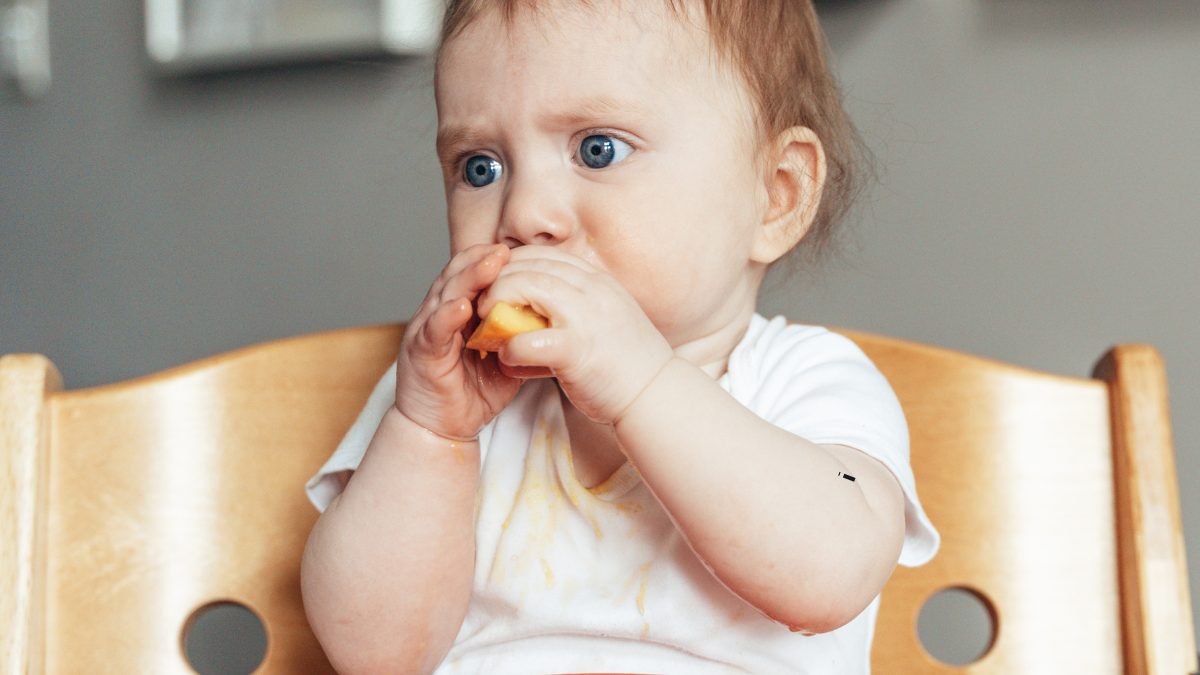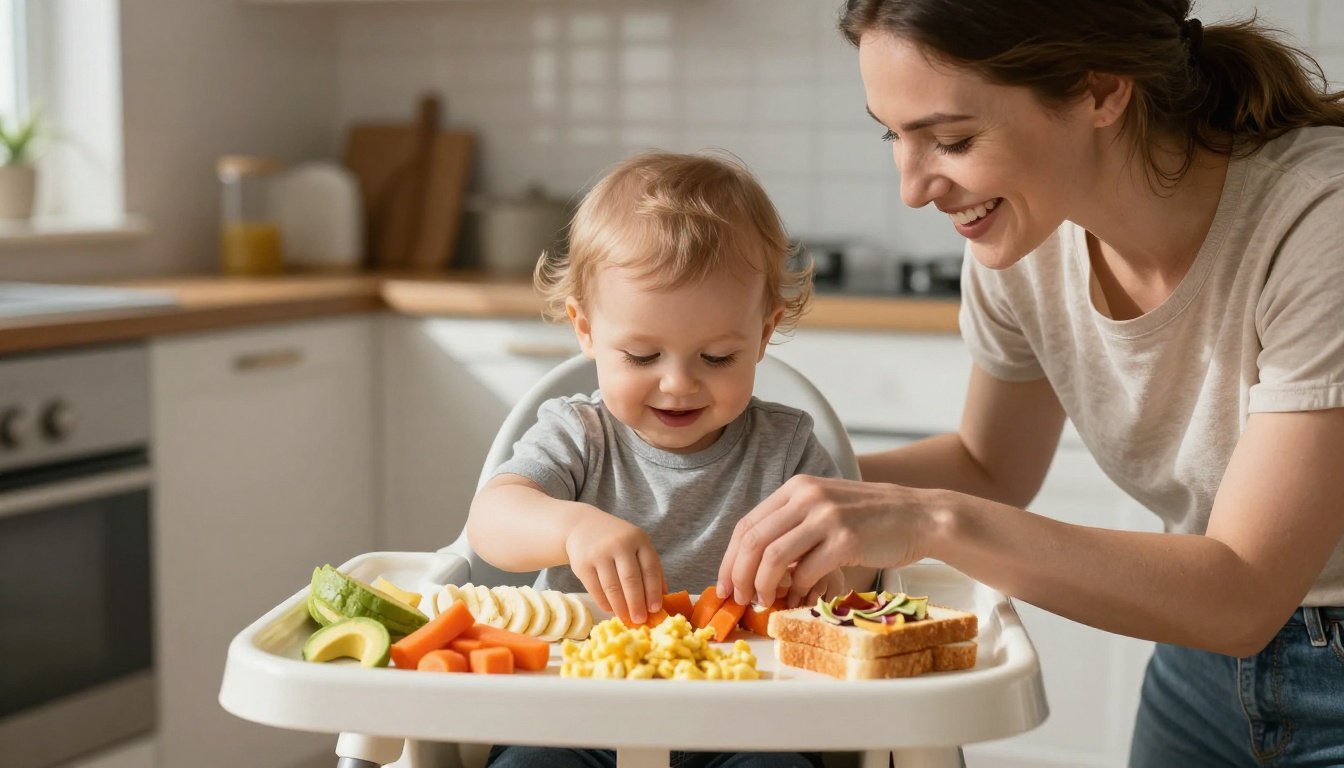
Sticky fingers, squished peas, and a smear of avocado across the high-chair tray can make toddler mealtimes look chaotic, but that exploration matters. Finger foods for toddlers help children practice grasping, chewing, self-feeding, and accepting new flavors while they build confidence at the table.
The safest choices are soft and easy to manage, with a size and texture that match your child’s developmental skills. In this guide, you’ll find five practical options: soft-cooked vegetables, ripe fruit, egg, tender protein, and soft toast with a thin spread. Cut foods into small, manageable pieces, and remember that a thick spoonful of nut butter, whole grapes, hard raw vegetables, and other firm or sticky foods can create choking risks.
Keep your toddler sitting upright in a high chair or safe seat, and stay close while they eat. For more self-feeding ideas, explore these safe finger foods for young children, then start with the first soft, toddler-friendly choice.
5 Finger Foods for Toddlers That Make Mealtimes Easier
These five food ideas are flexible starting points, not a strict meal plan. Each option should be soft enough to squish between your thumb and finger, easy for your toddler to hold, and prepared without hard, round, sticky, or tough pieces.
Your child’s age, chewing ability, pincer grasp, and feeding skills should guide the portion size and shape. Vegetables and fruit provide fiber and vitamins, while eggs, tofu, fish, and meat add protein and iron. Avocado, olive oil, and thin spreads can also provide healthy fats. Stay close during meals, and review the choking-safe finger foods for toddlers for more preparation ideas.

Soft-Cooked Vegetables That Little Hands Can Hold
Steamed carrot sticks, broccoli florets with a soft stem, sweet potato wedges, and tender zucchini pieces give toddlers different colors, textures, and flavors to explore. Gently flatten peas before serving so they don’t roll away or stay round in your child’s mouth.
Cook vegetables until they are tender enough to mash easily, rather than leaving them raw or crunchy. Cut them into thick sticks, short strips, or small pieces that match your toddler’s grasp. Remove tough skins, strings, woody stems, and hard ends when needed.
Serve vegetables plain, or add a small amount of olive oil. If your child has already tried them safely, you can spread hummus thinly over a soft vegetable or offer a mild yogurt dip.
Whole corn kernels and raw carrots can create choking risks. The CDC also lists hard pieces of raw vegetables among foods that need modification before serving, so soften them first and stay within arm’s reach during meals.
Ripe and Soft Fruit Without the Choking Risk
Soft pear slices, ripe banana pieces, steamed apple slices, and very soft peach or mango strips are easy choices for small hands. Steam or poach firmer fruit until it yields easily when pressed between your fingers.
Grapes, cherry tomatoes, cherries, and berries should never be served whole or round. Quarter grapes lengthwise, remove pits and stems, and cut other round foods into small, manageable pieces that suit your toddler’s feeding skills. Avoid raisins and other dried fruit for young toddlers because they are chewy and sticky.
Plain yogurt makes a soft dip for fruit, while oatmeal can hold small pieces of banana or pear in place. You can also spread a very thin layer of smooth nut butter on soft toast and top it with banana, provided your child has already been introduced to those ingredients safely.
Egg and Other Soft Foods That Add Protein
Soft scrambled egg and fully cooked omelet strips are simple protein-rich finger foods. Cut egg into strips or small pieces your toddler can grasp without needing to bite through a rubbery portion.
Tender, flaky fish can work well too, but check it carefully and remove every bone. Soft tofu, finely shredded chicken, ground turkey, and very tender ground meat are easier to manage than tough meat chunks. These foods can add iron, which supports a growing toddler’s blood and brain health.
Introduce common allergens in an age-appropriate way, one food at a time when practical, and watch for a reaction. Ask your pediatrician for guidance if your child has an allergy history, feeding difficulty, frequent coughing during meals, or trouble swallowing.
Soft Toast, Bread, and Thin Spreads
Soft toast fingers, small pieces of pita, and tender bread are easy for toddlers to pick up. Spread peanut butter, sunflower seed butter, avocado, cream cheese, or mashed beans in a very thin layer.
Thick globs or spoonfuls of nut butter can stick to the roof of the mouth and create a choking hazard. Avoid hard crusts, seeded crackers, popcorn, chips, and dense sticky snack bars.
Try avocado toast strips, toast topped with mashed egg, or soft bread with a thin layer of nut butter and banana. Check labels for added sugar and sodium, especially when choosing packaged bread, spreads, or crackers.
How to Prepare Toddler Finger Foods Safely
Safe toddler finger foods should be soft, moist, easy to swallow, and shaped for your child’s current abilities. The CDC recommends adapting food to a child’s developmental size, shape, and texture needs, while the American Academy of Pediatrics stresses close supervision during every meal. Before serving, have your toddler sit upright in a high chair or safe seat, and stay within arm’s reach.
Cut Food for Your Toddler’s Current Skills
Younger toddlers who are still developing a pincer grasp may manage soft, narrow strips they can hold in a fist. Soft-cooked sweet potato wedges, toast fingers, ripe pear slices, and tender vegetable strips give little hands something sturdy to grasp.
As your toddler becomes more skilled, offer small, soft pieces they can pick up with their fingers. Watch how your child grabs food, brings it to the mouth, chews, and moves it around before changing the size. One shape isn’t safe for every child, so follow your toddler’s skills rather than copying another child’s portion.
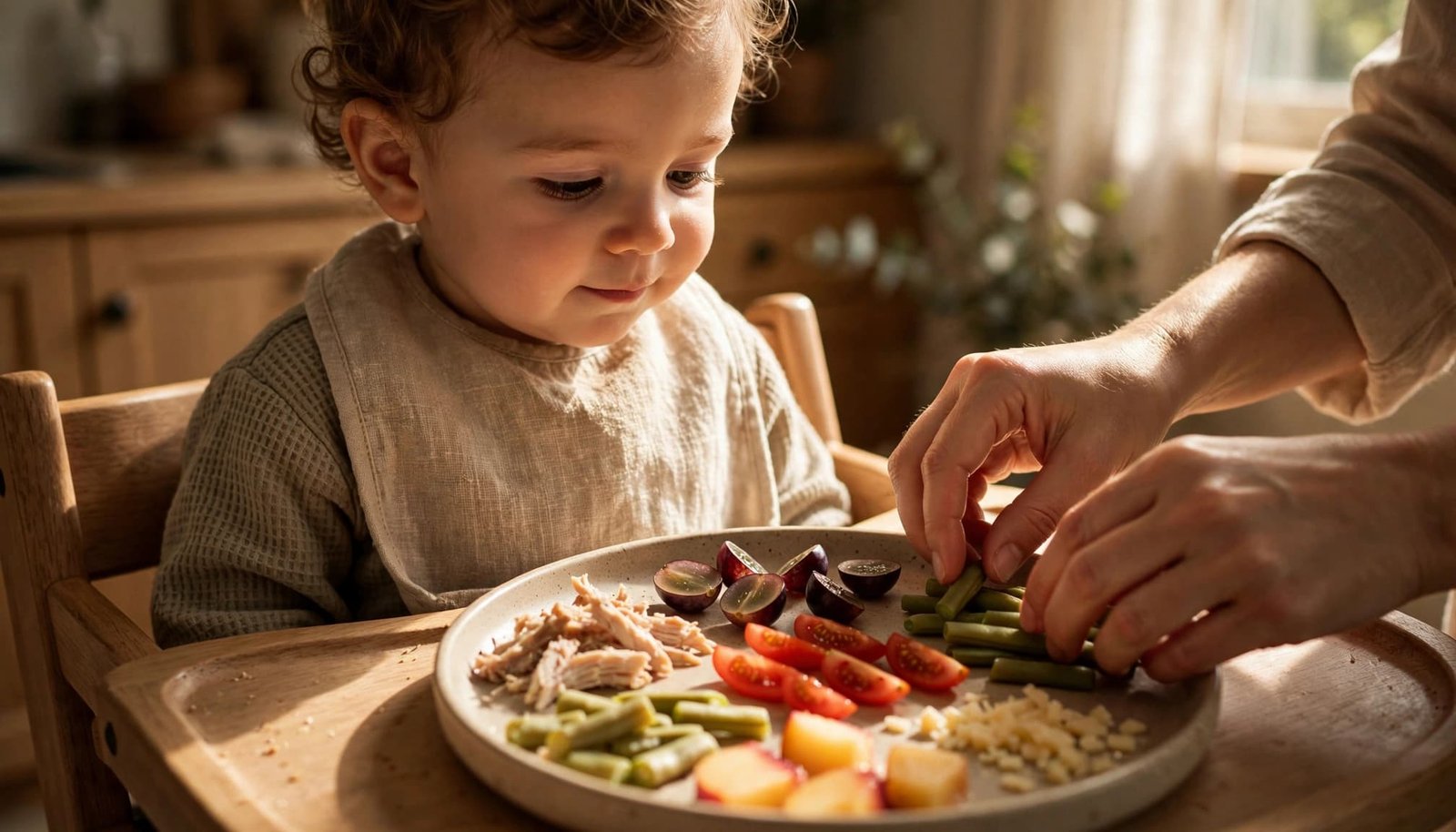
Use the two-finger test before serving. Press the food between your thumb and forefinger. It should squish easily without much pressure. If it stays firm, cook it longer, grate it, mash it, or choose a softer alternative. Moist foods are often easier to manage than dry, brittle pieces.
Round foods need extra care because they can form a plug in the airway. Quarter grapes and cherry tomatoes lengthwise, then adjust the pieces to your toddler’s chewing skills. Shred meat into fine, tender strands, finely chop cheese, flatten beans, and cut soft fruit into manageable pieces. Remove pits, bones, tough skins, stems, seeds, and stringy parts before the food reaches the tray.
The CDC’s choking hazards guidance lists several foods that need special preparation or should be avoided for young children. Never serve whole grapes, raw apples, raw carrots, hot dogs, whole nuts, popcorn, hard candy, whole beans, large cheese chunks, or sticky spoonfuls of nut butter. Instead, cook firm produce until soft, cut hot dogs lengthwise and into small pieces, finely chop or shred cheese, mash beans, and spread nut butter in a very thin layer.
Packaged foods marketed for babies aren’t automatically safe. A pouch, teething snack, or toddler cracker can still be too hard, sticky, round, or large for your child. Inspect the food yourself, test its texture, and consider how easily it breaks apart before serving.
Stay calm and avoid distractions during meals. Your toddler shouldn’t eat while walking, lying down, riding in a car, or playing. For more ideas about choosing graspable, soft foods, see this baby-led weaning food preparation guide, then make each serving fit the child sitting in front of you.
Build Balanced Toddler Snacks and Mini Meals
Toddler snacks become more satisfying when you combine foods from different groups instead of serving one item alone. A simple plate pattern works well: choose one energy food, one protein food, and one fruit or vegetable.
Energy foods include soft toast, rice, pasta, potatoes, oatmeal, and tender bread. Protein foods include egg, tofu, beans, shredded chicken, flaky fish, and finely ground meat. Fruits and vegetables add color, fiber, and new flavors. This pattern gives your toddler variety without requiring a complicated recipe.
Use Mealtime to Practice Independence Without Pressure
Self-feeding takes practice, so expect some food to land on the tray, bib, or floor. Place a washable mat under the high chair, then offer two or three choices rather than presenting an overflowing plate. Small portions feel more manageable, and you can add more when your toddler shows interest.
Give your child time to touch, smell, squish, and move food around. Mess is part of learning, not a sign that the meal failed. A toddler may need many relaxed exposures before accepting a new taste, so keep offering unfamiliar foods beside something they already enjoy.
You decide what food to offer and when meals happen. Your toddler can decide how much to eat. Keep the routine calm, with your child seated upright and free from pressure to clean the plate. Turning away, pushing food away, closing the mouth, or becoming upset can mean your toddler needs a break or has finished.
For more ideas about regular meals and snacks during this stage, try these toddler meals and snack routines.
Combine Finger Foods Into Easy Mini Meals
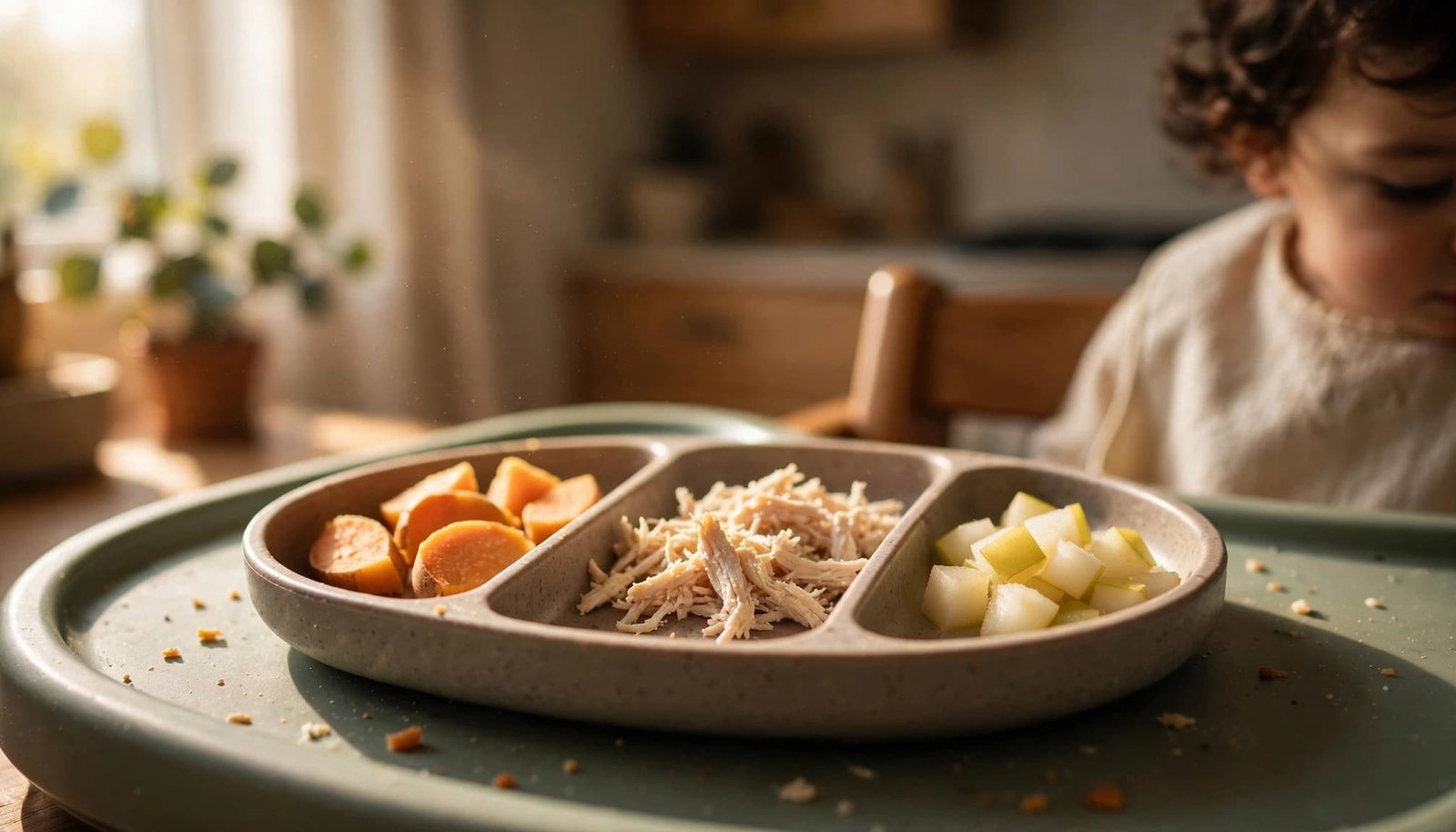
Use the same five finger-food groups in simple combinations that fit your family’s schedule. For example, serve soft sweet potato wedges with finely shredded chicken and tender pear pieces. The sweet potato provides energy, chicken adds protein, and pear brings a soft fruit option.
Scrambled egg pairs well with avocado toast and soft berries. Prepare the toast with a thin spread, quarter berries lengthwise when needed, and check every piece for a soft texture. Another easy plate includes steamed broccoli, soft tofu, and tender rice. Flatten beans, shred meat, and cut foods according to your toddler’s current skills.
At snack time, pair a fruit or vegetable with another food, such as banana with plain yogurt, soft pear with toast, or steamed zucchini with mashed beans. Offer water in an open cup, straw cup, or familiar training cup with meals. Water should be the everyday drink, while foods and drinks with added sugar should not become regular staples. The CDC recommends serving fruits and vegetables with meals and snacks, and its added sugar guidance explains why young children benefit from nutrient-dense choices instead.
Some days, your toddler may eat several pieces. On other days, a few bites may be enough. Continue offering balanced choices at predictable meals and snacks, but let your child leave food unfinished. A calm routine teaches trust better than pressure ever could.
Prevent Choking During Every Finger-Food Meal
Safe finger foods still require safe mealtime habits. Your toddler should eat while seated upright in a high chair or at a table, with an attentive adult close enough to respond immediately.
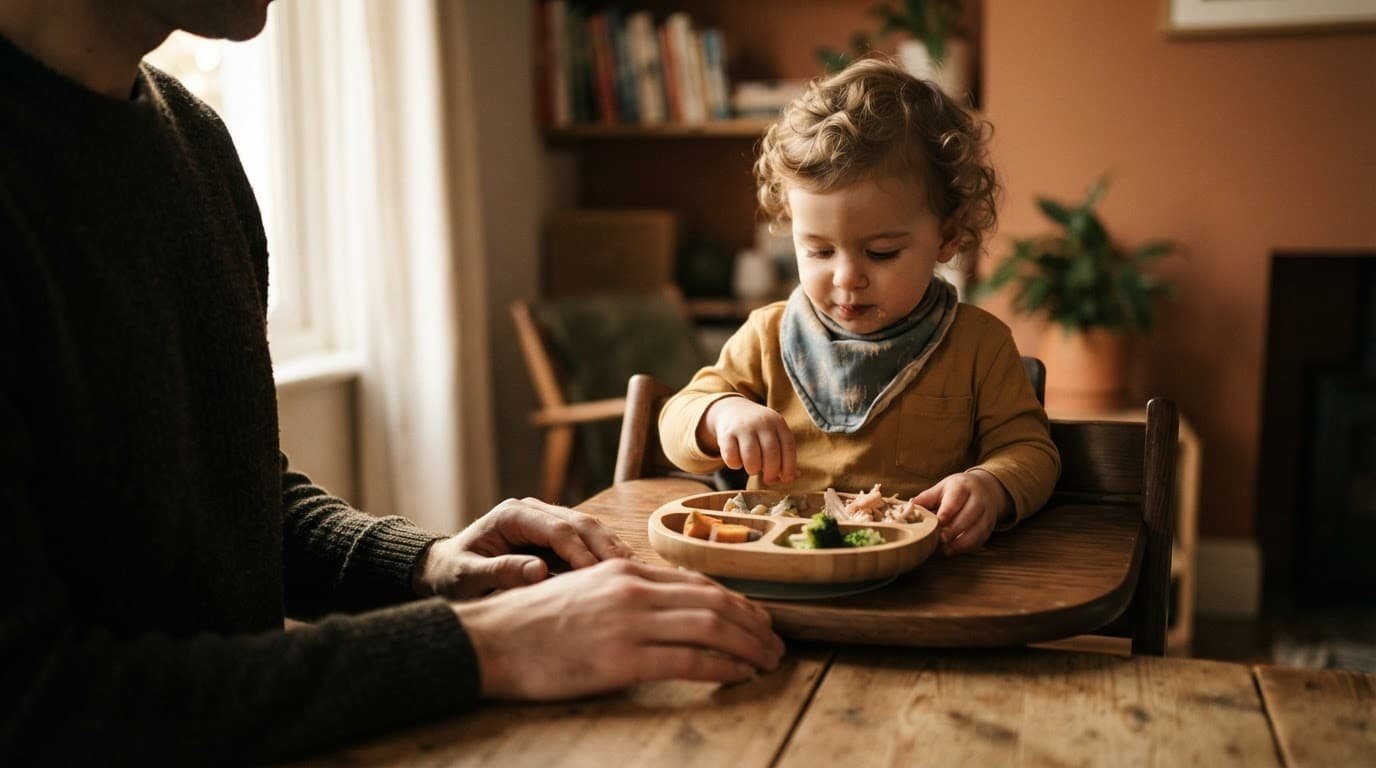
Use This Mealtime Safety Checklist
Before offering food, check each part of the setup:
- Seat your toddler upright with their hips supported and their feet stable when possible.
- Stay within arm’s reach and watch what your child puts into their mouth.
- Keep meals calm and free from screens, toys, books, and other distractions.
- Never allow eating while walking, playing, lying down, riding in a car, or sitting in a stroller.
- Test each piece for softness, then remove bones, pits, tough skins, stems, and hard pieces.
- Cut round foods lengthwise and adjust the size to your toddler’s chewing and grasping skills.
- Keep older siblings from sharing food, toys, coins, batteries, or other small objects during meals.
- Share the same food and supervision rules with grandparents, babysitters, and every other caregiver.
The American Academy of Pediatrics recommends seated eating, close supervision, and certified CPR and first-aid training for caregivers. A class from a qualified provider gives you practice with age-appropriate choking response instead of relying on memory during a frightening moment.
Know the Difference Between Gagging and Choking
Gagging can sound loud. Your toddler may cough, sputter, make retching sounds, or bring food forward while still breathing. This reflex often appears as children learn to manage new textures. Stay close, remain calm, and let your child clear the food if they can breathe and cough.
Choking is usually quiet because food blocks the airway. A child may be unable to breathe, cry, speak, or cough effectively. Treat those signs as an emergency and follow the response taught in your CPR and choking first-aid class.
If your toddler regularly coughs, gags forcefully, chokes, turns blue or pale, or struggles to swallow, stop and contact the pediatrician.
Children with swallowing problems, developmental delays, or frequent coughing during meals may need an evaluation before you change food textures. You can also review these signs of swallowing problems during feeds with your child’s doctor.
Conclusion
Toddlers don’t need elaborate recipes to learn healthy eating. Tender vegetables, soft fruit, fully cooked egg or tender protein, and soft bread with a thin spread give your child simple ways to practice self-feeding while exploring different tastes and textures. These same ideas can also inspire soft breakfast foods for babies as your family builds easy meals around familiar ingredients.
Keep each bite soft enough to mash, cut food carefully for your toddler’s current skills, and seat your child upright in a safe place. Most importantly, supervise every bite without rushing or adding pressure. A few bites may disappear while the rest ends up on the tray, and that still counts as practice.
Small tastes, sticky fingers, and gradual progress all help your toddler grow more comfortable at the table. With patient support and safe preparation, everyday finger foods can build the confidence your child needs for independent eating.

- Dry Cough in Kids: 5 Causes and Safe Solutions - September 23, 2026
- How to Help a Child Deal With Anxiety at Home - September 12, 2026
- How to Prepare Your Child for the First Day of School - September 12, 2026