
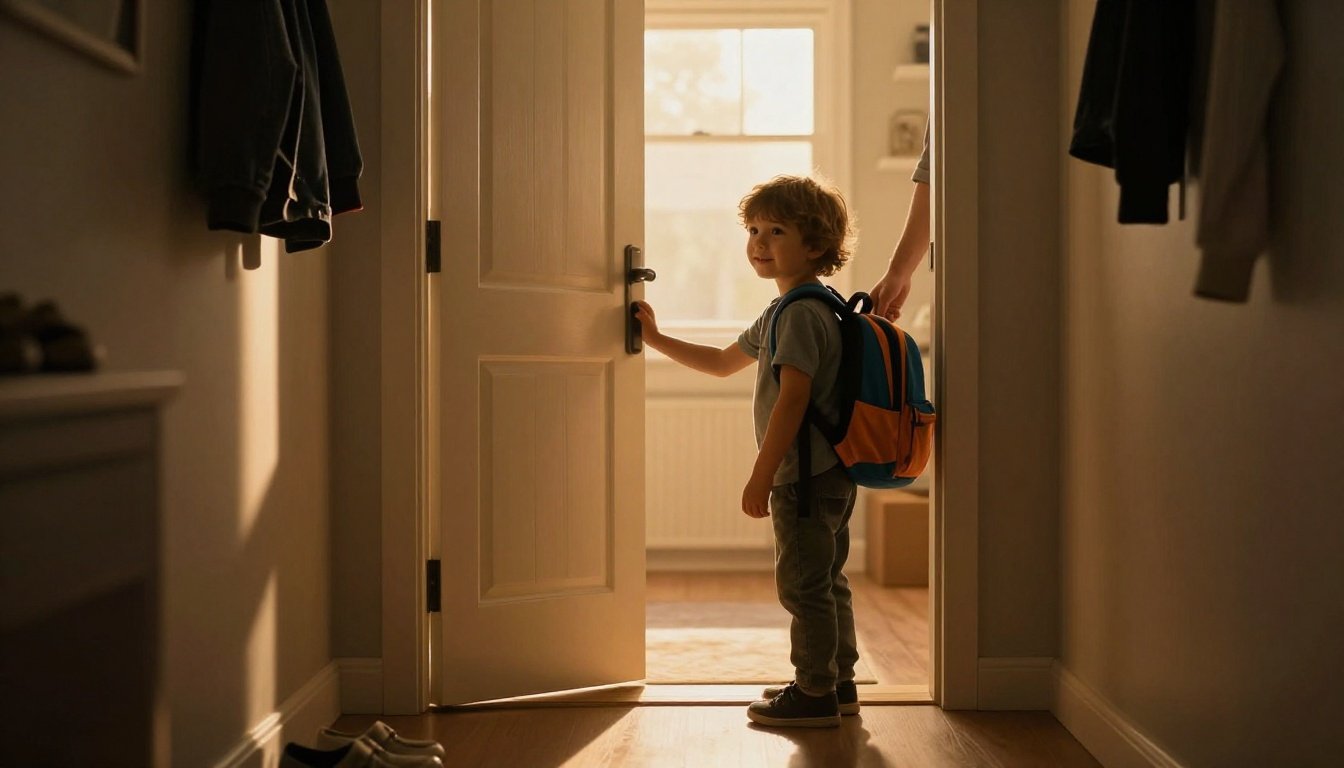
Your child stands at the door with a new backpack, bright-eyed and unsure, while you wonder whether the first-day nerves will show once the classroom door opens. That mix of excitement and worry is normal, and a calm first day usually grows from small preparations made over time, not from creating a perfect morning.
Over the next few weeks, you can help your child practice a familiar bedtime and morning routine, learn what to expect at school, and build confidence with simple tasks such as dressing, packing, and asking for help. Talking openly about feelings, using helping children understand their emotions, and explaining first-day logistics in simple language can make the transition feel more manageable. Preparation should give your child confidence rather than pressure, so leave room for excitement, hesitation, and a few imperfect moments.
Start with the routines and school-familiarity steps that make the new day feel easier to picture. For additional support with childhood worries, you can also watch this parent-centered approach to managing children’s anxiety.
How To Prepare Your Child For Their First Day Of School
Begin preparing one to three weeks before school starts. This gives you time to replace uncertainty with familiar steps, without turning the countdown into a daily source of pressure. First, check the school handbook, family portal, or office email for the start time, transportation plan, dress code, lunch and snack rules, supply list, health forms, medication process, pickup procedures, and emergency contacts.
Use a simple timeline that matches your child’s age and personality:
- One to three weeks before: Confirm arrival and dismissal details, complete required forms, and choose a backpack with your child.
- One week before: Visit the school if possible, practice the route, organize supplies, and adjust bedtime gradually.
- A few days before: Rehearse the morning routine, pack the bag, label belongings, and review who will pick up your child.
- The night before: Set out clothes, prepare lunch if needed, and keep the evening calm rather than packing in more instructions.
A short checklist can keep preparation focused:
- Confirm the first-day time and transportation plan.
- Complete health, emergency contact, and medication forms.
- Add approved pickup adults and backup phone numbers.
- Check clothing, lunch, snack, and supply requirements.
- Label your child’s backpack, coat, lunch container, and water bottle.
- Practice the route, drop-off, pickup, and goodbye routine.
Visit the School So the New Place Feels Familiar
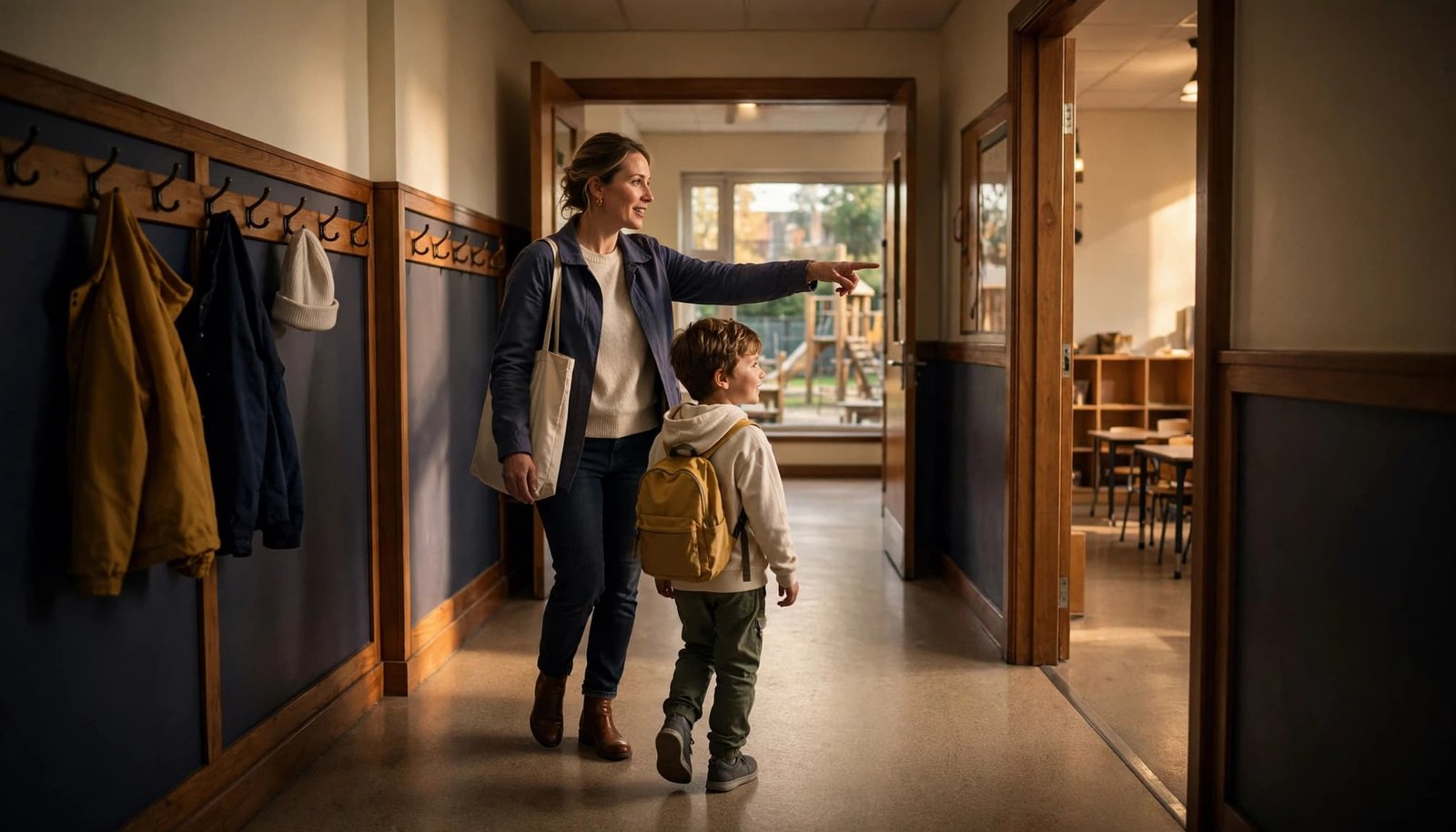
Attend orientation or ask whether you can visit the classroom before school begins. Walk with your child to the room, bathroom, office, cafeteria, playground, bus area, coat hooks, and pickup spot. Practice the route from the entrance to the classroom, then talk through what happens at dismissal.
Seeing the building turns a large, unfamiliar place into a series of recognizable stops. If an in-person visit isn’t available, look at school photos, study a map, or take a virtual tour together. Introduce your child to the teacher when possible, and arrange a short connection with a future classmate if the school offers one.
Practice the Small Skills That Build Independence
Use play to practice opening lunch containers, washing hands, using the bathroom, putting on a coat, managing a backpack, and recognizing personal belongings. Let your child pretend to ask, “Can you help me?” or “Where should I go?” Small mistakes are useful practice, so resist correcting every movement.
Younger children may need hands-on help with zippers, packaging, or remembering where items belong. Older children can manage a simple checklist and pack their own belongings while you supervise. A school morning routine that builds independence can make these skills easier to repeat.
If your child needs mobility, communication, sensory, learning, or medical accommodations, speak with the school before the first day. Ask who will provide support, what forms are required, and how staff will respond to health needs. Families can also review IEP rights and services when special education support may be appropriate.
Create a School Routine Before the First Morning
A predictable school routine can prevent the first morning from feeling like a race against the clock. Begin at least one week before school, or earlier if summer bedtimes, meals, and wake-up times are far from the school schedule. Small changes give your child’s body and mind time to adjust without adding shame or pressure.

Reset Bedtime, Wake-Up Time, and Screen Habits
Move bedtime and wake-up time earlier by 10 to 15 minutes at a time every few days. A sudden change can leave your child tired, irritable, and rushed, while gradual adjustments feel easier to accept. Keep the new times consistent, including most weekends, so your child’s internal clock receives the same signal each day.
Avoid choosing one bedtime for every child. Sleep needs vary by age, so use age-appropriate guidance from the American Academy of Sleep Medicine, then adjust for your child’s actual wake-up time and individual needs. If your child regularly struggles to sleep, snores, or seems exhausted despite enough time in bed, speak with a pediatrician.
Create a calm routine that lowers the volume of the evening. Bathing, pajamas, a short book, and quiet conversation can help your child shift away from daytime activity. Turn off tablets, phones, televisions, and gaming devices at least an hour before bed, and keep them out of the bedroom when possible. The American Academy of Pediatrics’ sleep guidance also recommends protecting the bedroom as a place for rest.
In the morning, open the curtains soon after waking and add gentle movement, such as stretching, walking, or helping prepare breakfast. Morning light and activity can help the body adjust, while a steady breakfast time gives the day another familiar anchor. Keep meals simple during the first week, especially if your child eats slowly.
Rehearse the Morning Without the Pressure
Several days before school starts, practice the complete morning. Let your child wake up, get dressed, eat breakfast, brush their teeth, pack the backpack, and leave at the planned time. Treat the rehearsal as a test run, not a performance.
Use it to spot practical problems, such as a stubborn zipper, missing supplies, a slow breakfast, or confusion about the bus stop. Then solve one issue at a time. Prepare clothes, lunch, water bottle, and backpack the night before so the morning has fewer decisions.
A simple sequence might look like this:
- Wake up, open the curtains, and use the bathroom.
- Get dressed and place pajamas in the hamper.
- Eat breakfast and drink water.
- Brush teeth, put on shoes, and grab the backpack.
- Check the departure time, then leave with a few minutes to spare.
Adjust the order to fit your family. The goal is a repeatable rhythm, not a flawless morning. For more ideas, see these back-to-school tips for kids and praise your child’s effort as the routine becomes familiar.
Help Your Child Feel Ready for Separation and New Emotions
Emotional preparation matters as much as packing the backpack. Your child may feel excited about recess and worried about leaving home at the same time. Both feelings can exist together, so give your child space to name them without treating normal nerves as a problem.
Talk About Worries With Honesty and Reassurance
Choose a calm moment and ask open-ended questions instead of giving quick reassurance. Try:
- “Which part of school sounds exciting?”
- “What part feels confusing?”
- “Is there anything that feels scary?”
- “What do you think will happen after we say goodbye?”
- “What could you do if you miss me?”
Listen before offering solutions. Saying, “You do not need to worry,” may leave your child feeling misunderstood. Instead, try, “It makes sense to feel nervous, and we can make a plan.” You can also say, “I hear that you are worried about not knowing anyone. We can practice how you might say hello.”
Talk through the ordinary parts of the day in simple language. Explain when your child will meet classmates, ask to use the bathroom, eat lunch, play at recess, and wait for pickup. Be honest about uncertainty: “Your teacher may show you where to sit, and you can raise your hand if you need help. I don’t know every detail yet, but the adults at school can help you.”
Avoid promising that everything will be perfect. A more useful message is, “Some parts may feel easy, and some may feel strange. You won’t have to solve every problem alone.” For more support, review these preschool separation anxiety tips and adapt them to your child’s age.
Use Stories, Role-Play, and a Goodbye Plan
Read age-appropriate stories about starting school, then pause to ask what the characters might be feeling. During play, use stuffed animals or family members to act out saying hello to the teacher, joining an activity, asking for help, and missing home. You can say, “Let’s practice what Teddy might do if he feels lonely.”
Short separations also build familiarity. Arrange a playdate, leave your child with a trusted relative, or plan a brief activity away from home. Keep the practice low-pressure, then return when you said you would. This teaches your child that separation ends and you keep your promises.
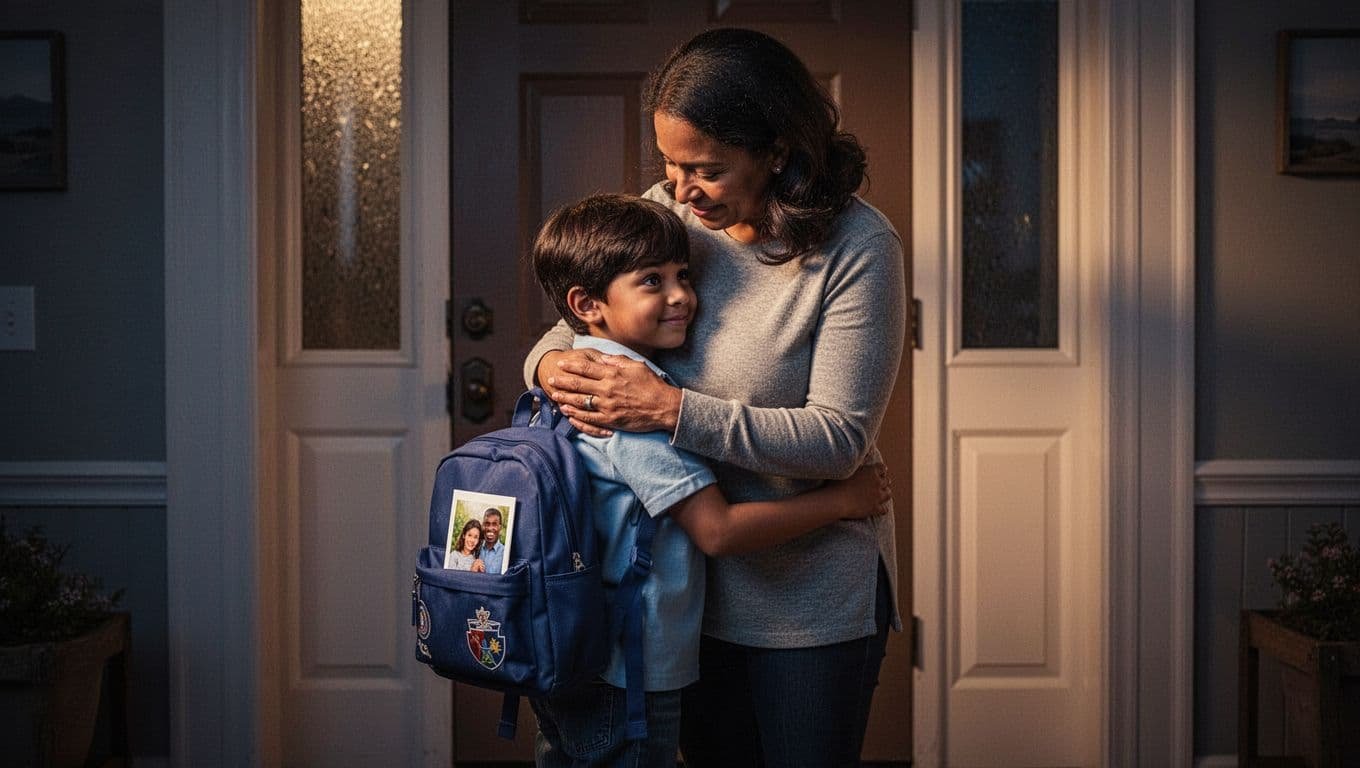
If the school allows it, pack a small comfort item, family photo, or short note. A photo tucked into a backpack pocket can provide connection without interrupting the school day.
Create a goodbye ritual with three predictable steps, such as a hug, the phrase “I love you, and I’ll see you after school,” and a wave. Keep it warm and brief because long goodbyes can increase distress. However, never sneak away. If separation feels intense, ask the teacher or school staff about a gradual transition plan, such as shorter visits, a consistent staff greeter, or a step-by-step drop-off routine.
Make the First Day Easier With Practical Planning
Small details can shape the first morning. Before school begins, confirm the transportation plan, arrival time, parking or drop-off rules, lunch requirements, medication instructions, and pickup arrangements. Write the key information somewhere easy to find, because a tired parent should not have to search through emails at 7:30 a.m.
Pack for Comfort, Not Just Appearance
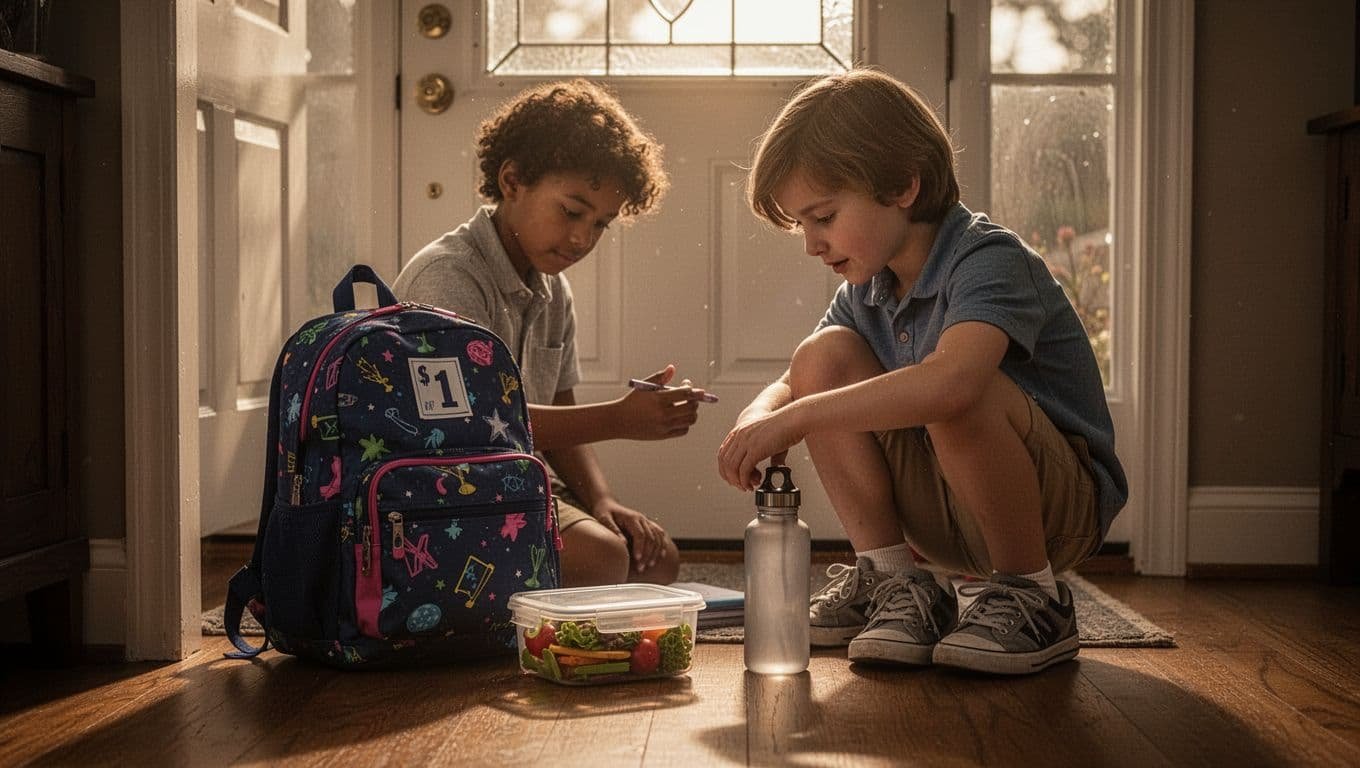
The best first-day outfit is comfortable, weather-appropriate, and easy for your child to manage. Choose soft clothes, familiar shoes, and layers that work for the forecast. Avoid stiff collars, complicated buttons, brand-new shoes, or anything that might distract your child with rubbing, pinching, or difficult fasteners.
Pack only what the school requests. An overloaded backpack can make your child feel unsteady and leave less room for lunch or a folder. If the school allows them, add an approved snack, tissues, or a small comfort item. Check the rules first, especially if the item could distract your child or create an allergy concern.
Label clothing, supplies, lunch containers, and water bottles with your child’s name. A clear label can help staff return a missing sweatshirt, while a familiar bottle makes it easier for your child to recognize personal belongings. Parents preparing older students can also review this back-to-school shopping list for 8th graders for practical supply ideas.
Health information deserves more attention than backpack organization. Give the school current allergy details, medical forms, medication instructions, emergency contacts, and any doctor-signed action plans before the first day. Don’t rely on your child to explain every need, particularly if they are young, anxious, or still learning how to describe symptoms. Families managing food allergies can review school allergy planning guidance and discuss the school’s procedures with the nurse or office.
Keep Breakfast, Drop-Off, and Pickup Calm
Serve a familiar breakfast on the first morning. A protein-rich option, such as eggs, yogurt, nut-free sunflower butter toast, or beans, may help your child stay satisfied, but avoid introducing brand-new foods that could upset their stomach. Follow the school’s allergy rules, pack a labeled water bottle if permitted, and leave enough time for your child to eat without rushing.
Arrive early enough to handle traffic, parking, a long line, or a last-minute bathroom visit. Keep your tone calm and explain exactly who will pick up your child and when. If plans change, follow the school’s communication process rather than asking your child to solve the problem.
At drop-off, offer a warm, confident, brief goodbye. Follow the teacher’s direction and avoid lingering if your child has trouble separating, because a long goodbye can make leaving harder. At pickup, give your child water, a snack, and quiet time before asking many questions. After processing a new place, new rules, and new faces all day, they may need connection before conversation.
What to Do When the First Day Does Not Go as Planned
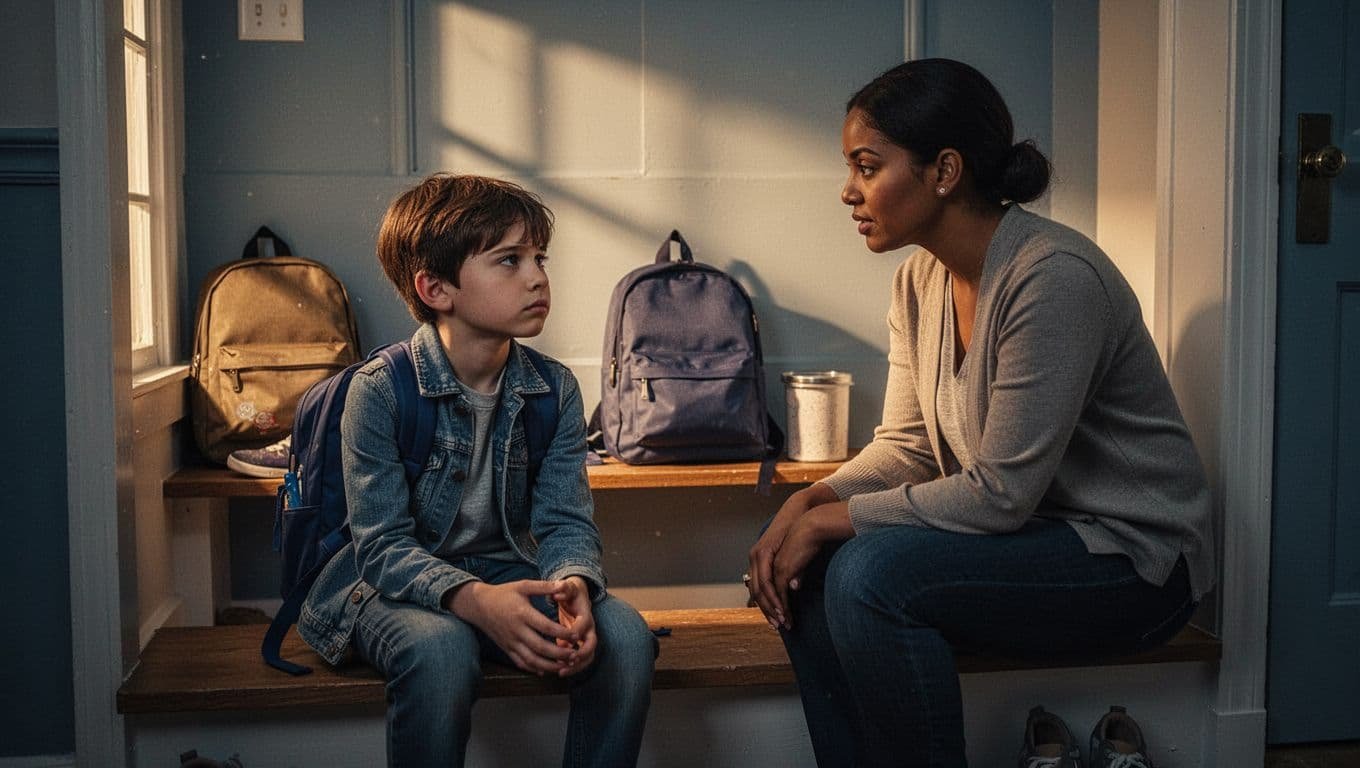
Even a well-prepared child may cry at drop-off, forget a lunch container, refuse to eat, or come home saying school was terrible. These moments can feel alarming, but one difficult day does not predict the whole school year. Your child is learning how to manage a new place, new expectations, and many feelings at once.
Build Confidence Through the Next Few Days
Keep the morning and bedtime routines steady after a rough first day. Familiar meals, a predictable departure time, and the same short goodbye can help your child feel anchored. Make small adjustments based on what happened, such as choosing easier-to-manage clothing, packing a different lunch, or arriving a few minutes earlier.
When your child shares a problem, listen before offering advice. Instead of asking, “Why did you do that?” try, “What felt easy today?” “What felt hard?” and “What might help tomorrow?” One or two specific questions are usually more helpful than asking your child to describe the entire day.
Praise effort, flexibility, kindness, and problem-solving, rather than insisting that your child be brave. You might say, “You felt worried, but you still walked into the classroom,” or, “You found a way to ask for help when you couldn’t find your supplies.” Tears, silence, bathroom accidents, forgotten items, and a small appetite deserve patience, not shame.
Help your child identify one small success before the evening ends. It could be finding the bathroom, speaking to the teacher, sitting near a classmate, opening a lunch container, or staying through one challenging activity. Small successes give tomorrow a starting point.
Contact the teacher instead of guessing about classroom challenges. Ask what staff noticed during arrival, meals, bathroom breaks, recess, and dismissal. If distress continues or affects attendance, include the school counselor and your child’s pediatrician. Headaches, stomachaches, nausea, dizziness, panic, or repeated requests to go home can be real signs of anxiety, even when your child has no obvious illness. The CDC’s guidance on anxiety in children recommends speaking with a health care provider when concerns arise.
A qualified mental health professional can help when intense distress persists, prevents regular attendance, or worsens despite support. Seek prompt help for bullying, threats, trauma, self-harm statements, or any concern about your child’s safety. With home and school working together, a hard beginning can become useful information rather than a prediction of what comes next.
Conclusion
Preparing your child for the first day of school means making the unfamiliar feel more predictable. Visit the school, practice the morning routine, prepare supplies, name mixed feelings, and plan a brief goodbye you can repeat. These small steps help your child know what to expect without creating pressure to feel confident right away.
Children take emotional cues from trusted adults, so your confidence can be quiet and honest. Say that school may feel exciting, strange, or difficult at first, and remind your child that teachers are there to help. Every child adjusts at a different pace, and asking the school for support is a strength. If worry continues beyond the first few days or affects attendance, review these ways to help your child manage anxiety and speak with the appropriate school or health professional.
Stay flexible when the plan changes. The first day doesn’t need to be perfect; it is only the beginning of many moments when your child will grow more capable, comfortable, and secure.
Save pin for later


- How to Help a Child Deal With Anxiety at Home - September 12, 2026
- How to Prepare Your Child for the First Day of School - September 12, 2026
- Age-Appropriate Chores for Kids by Age Group - September 12, 2026