Your child says their stomach hurts every morning before school, worries about making one small mistake, or begs to skip a sleepover. Childhood fears are common, but anxiety that keeps returning can affect sleep, school, friendships, and family life.
You can help without trying to erase every worry. A calm response, patient listening, predictable routines, and small steps toward feared situations can help your child feel supported while building confidence in their ability to cope. These school anxiety strategies can also make difficult transitions feel more manageable.
Pay attention when anxiety grows stronger, lasts for weeks, causes frequent physical complaints, or stops your child from taking part in everyday activities. A pediatrician, school counselor, or mental health professional can help you decide what support fits your child, and you don’t need to wait for a crisis to ask for guidance.
Start with these practical, reassuring ways to help your child deal with anxiety at home, including what to say, what to avoid, and when professional support is the right next step.
For additional parent-focused guidance, watch How to Help a Child With Anxiety.
How To Help A Child Deal With Anxiety At Home
Small, consistent responses can make home feel safer when anxiety takes over. Start by listening, then add routines and coping tools that your child can practice before a difficult moment arrives.
Listen First, Then Help Your Child Name the Worry
When your child feels anxious, rushing to say “Everything will be fine” may seem helpful. However, quick reassurance can end the conversation before your child explains what feels frightening. Sit nearby, soften your voice, and give them time to speak.
You might say, “That sounds scary,” or “I can see why this feels hard right now.” Then ask gentle questions such as:
- “What do you think might happen?”
- “When did this worry first show up?”
- “Where do you feel it in your body?”
- “What part of tomorrow feels hardest?”
Validation means recognizing the feeling, not agreeing that the feared event will happen. For example, “You feel worried about reading aloud in class, and I understand that feels uncomfortable. We can think about one small step together.” This response respects the fear without telling your child that embarrassment or danger is certain.
Avoid teasing, blame, or phrases such as “Stop worrying” and “There is nothing to be afraid of.” Anxiety already makes a child feel out of control, so criticism can add shame to the original fear. Calm listening also helps you notice patterns, such as worries that appear before school, at bedtime, or during family changes.

For more ideas about helping children identify feelings, try these emotional awareness activities for kids.
Build Calm Through Routines and Everyday Coping Skills
Predictability lowers the number of surprises your child must manage. Keep mornings, school drop-offs, meals, bedtime, and transitions as consistent as possible. A picture schedule or short spoken preview can help: “First we get dressed, then we eat, and after that we leave for school.”
Protect sleep, regular meals, outdoor play, and daily movement. The American Academy of Pediatrics recommends 9 to 12 hours of sleep for school-age children and at least one hour of physical activity each day. Limiting scary media, especially near bedtime, can also reduce anxious thoughts.
Practice coping tools when your child is calm. During a quiet moment, try three slow breaths, with a gentle count of three while breathing in and out. Your child might also draw the worry, write in a journal, picture a safe place, repeat “I can try one step,” or place worries in a small box until a planned five-minute worry time.
Choose only two or three tools for your child’s personal coping plan. They might remember slow breathing, positive self-talk, and asking for a short break. Keep the plan simple enough to use at school, in the car, or before sleep. Regular practice turns these skills into familiar pathways instead of emergency instructions.
Help Children Face Fears Without Making Anxiety Bigger
Avoiding every feared situation can calm a child for the moment, but it can teach their brain that avoidance is the only safe choice. When you answer every question, cancel every activity, or rescue your child as soon as discomfort appears, anxiety may grow stronger the next time.
The goal is not to force your child into fear. It is to help them discover, step by step, that uncomfortable feelings can rise and fall while they keep going. These small steps for childhood fears work best when they match your child’s age, needs, and safety.
Use Brave Steps Instead of Avoidance
Create a simple fear ladder with your child. Write the feared situation at the top, then list easier steps below it. Start with a challenge that feels possible, not the hardest step.
For a child afraid of school, the ladder might look like this:
- Pack the backpack and talk about the morning routine.
- Visit the school building when the halls are quiet.
- Meet the teacher and stay for a few minutes.
- Attend part of the school day.
- Build toward a full day.
You can use the same approach for other worries. A child with separation anxiety might begin with a parent leaving the room for two minutes. A child who fears talking to peers could practice saying hello to a sibling, then greet one familiar child. For a doctor visit, start by looking at pictures of the office, then visit without an appointment before attending a checkup.
Sleeping alone may begin with sitting beside the bed, followed by brief check-ins. Trying a new activity could start with watching one practice before joining for ten minutes. Stay nearby, help your child use slow breathing or a brave statement, and allow them to take part in the step.
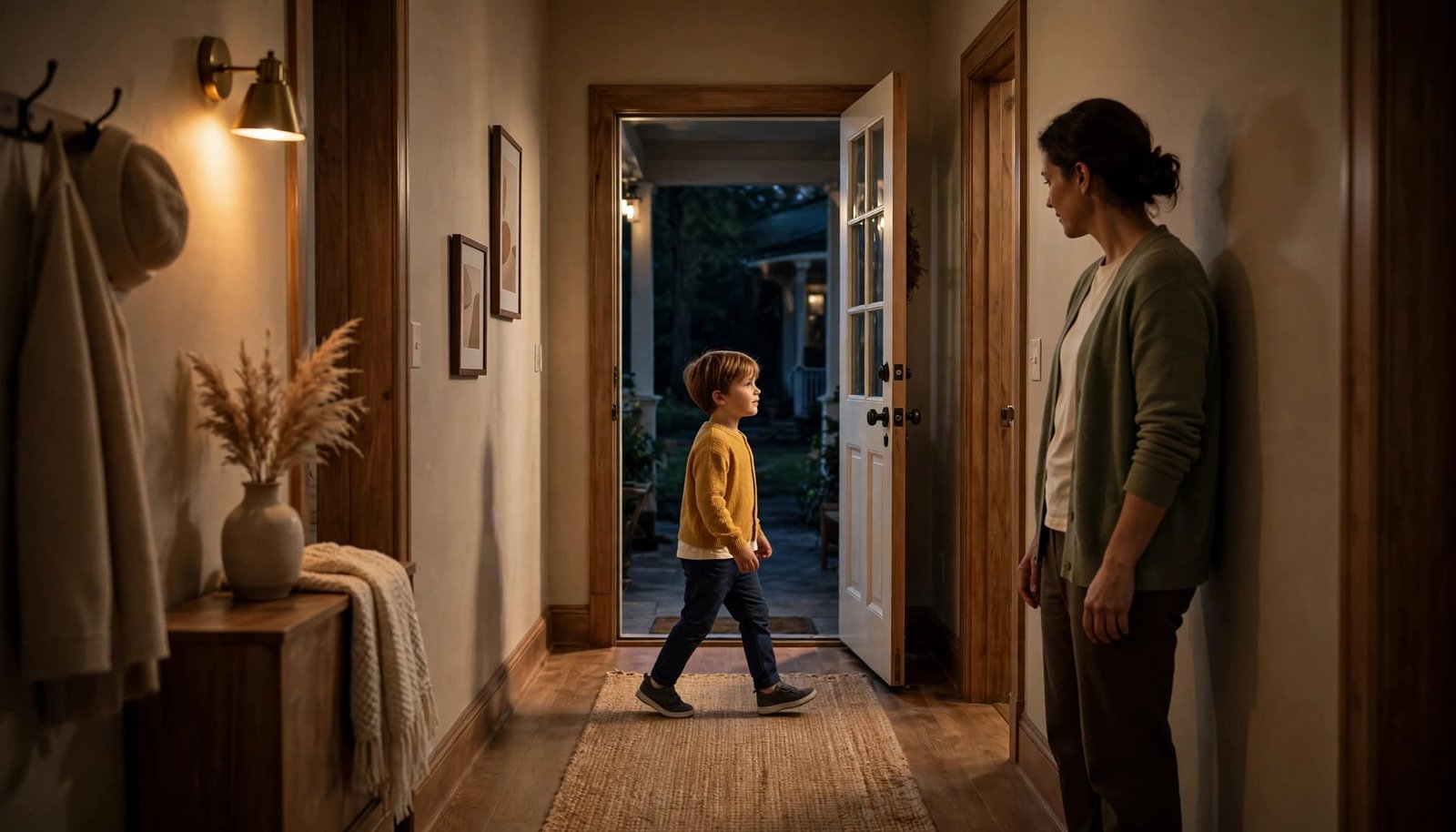
Avoid promises such as, “Nothing uncomfortable will happen.” Your child may feel nervous, and that doesn’t mean the plan has failed. Say, “You might feel worried, and I will help you handle it.” Guidance from the National Library of Medicine’s child anxiety resource also emphasizes reducing avoidance while supporting gradual progress.
Praise Effort, Practice, and Recovery
Notice the exact behavior you want to strengthen. You might say, “You walked into the classroom even though your stomach felt tight,” or, “You used your breathing when you wanted to leave.” Praise asking for help, staying in the situation, and trying again after a setback.
Rewards can support brave practice, but they shouldn’t become a bargain for every tiny task. Offer a sticker, extra story, or special time when your child follows the plan and makes an effort. Afterward, ask what helped and what felt difficult. A hard day gives you useful information, not proof that your child failed.
Work With Your Child’s School to Ease Anxiety
School anxiety can hide behind stomachaches, frequent nurse visits, tears, irritability, perfectionism, trouble focusing, or unfinished work. Some children avoid certain classes, resist transitions, or refuse school altogether. These behaviors often communicate distress rather than laziness or defiance. The American Academy of Pediatrics’ school anxiety guidance recommends working with school staff when anxiety affects attendance or daily functioning.
Arrange a calm conversation with your child’s teacher, school counselor, nurse, or special educational needs coordinator when appropriate. Share what you notice at home, including physical complaints, morning struggles, known triggers, and coping tools that already help. Ask what staff observe during arrival, classwork, lunch, recess, and transitions.
Create a Simple School Support Plan
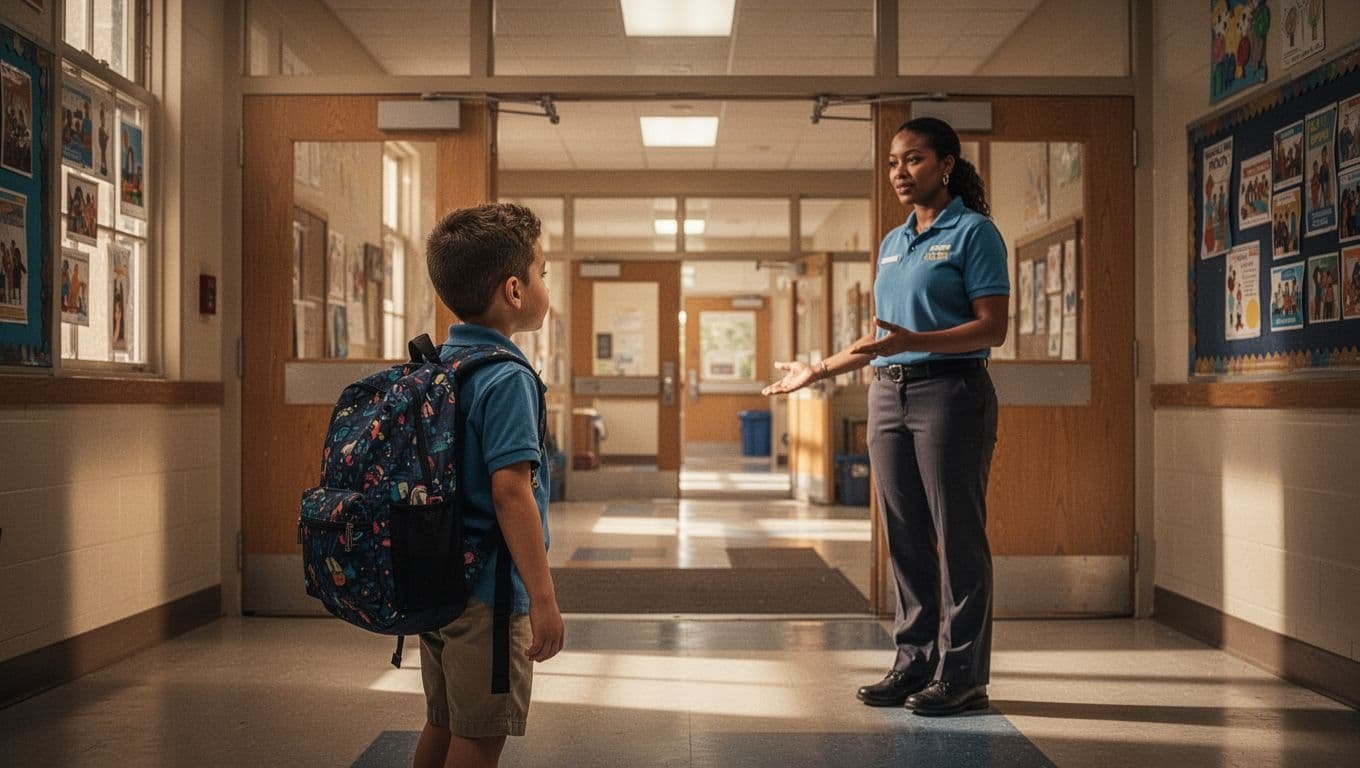
A written or shared plan can turn a frightening morning into a series of familiar steps. Agree on realistic goals, such as entering the building, staying through one class, or asking for help before leaving. A predictable arrival routine might include greeting one trusted staff member, putting belongings away, and walking directly to class.
Decide together what your child can do when anxiety rises, who they can contact, and how adults will respond. The plan might include:
- Greeting a counselor, teacher, or other trusted staff member at arrival.
- Showing a breathing card or using three slow breaths.
- Taking a brief, planned break in a quiet space.
- Using a private signal to tell the teacher that anxiety is building.
- Returning to class after calming down, with support if needed.
School changes deserve extra preparation. Moving classrooms, starting a new school, changing teachers, or returning after an absence can make anxiety surge. Ask staff to preview the building, explain the schedule, provide advance notice of changes, or allow a short visit before the transition.
Keep support private whenever possible. A discreet card, signal, or quiet check-in helps your child receive assistance without feeling singled out. School accommodations should feel like tools, not punishment or public proof that your child is struggling. If anxiety causes repeated absences, a formal 504 Plan or IEP evaluation may be appropriate.
Repeatedly sending a child home can bring immediate relief, but it may strengthen avoidance over time. The school and family should agree on a supportive return whenever it is safe, perhaps beginning with lunch, one preferred class, or a shorter day. A consistent plan helps your child remain connected to school while building the confidence to stay.
Know When Childhood Anxiety Needs Professional Help
Occasional worries are part of growing up, especially during school changes, family transitions, or new experiences. Anxiety deserves professional attention when it lasts for months, keeps getting worse, doesn’t improve with basic support, or interferes with your child’s everyday life.
Signs It Is Time to Call the Pediatrician
Watch for patterns that affect your child’s body, behavior, or routine. A single nervous morning usually doesn’t tell the whole story, but repeated distress deserves a closer look. Consider contacting your child’s pediatrician if your child has:
- Frequent stomachaches, headaches, nausea, or other physical complaints with no clear cause.
- Repeatedly asks for reassurance, even after you’ve answered the same question.
- Panic-like episodes with intense fear, shaking, rapid breathing, or a feeling of losing control.
- Major sleep problems, such as refusing bedtime, waking often, or struggling to sleep because of worry.
- School refusal, repeated nurse visits, or difficulty separating from you at drop-off.
- Less interest in friends, hobbies, play, meals, or family activities.
- Intense distress during separation that doesn’t ease with calm, consistent support.
- Worsening irritability, anger, crying, clinginess, or other behavior changes.
- Anxiety that limits normal tasks, such as trying new foods, joining activities, speaking to others, or leaving home.
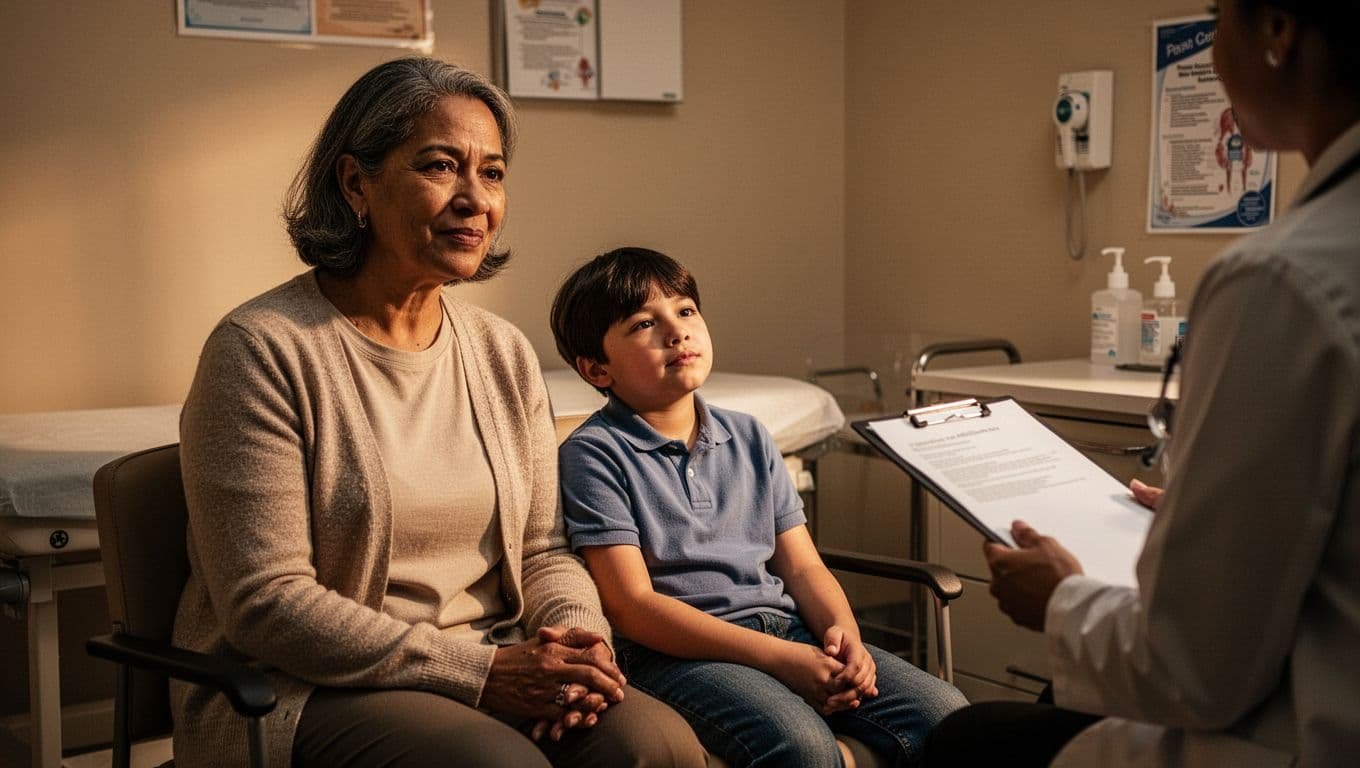
A pediatrician can check for physical concerns and help you find a qualified child therapist. The CDC recommends starting with your child’s primary care provider when anxiety raises concern.
Before the appointment, keep a simple record. Note when symptoms happen, what seems to trigger them, how long they last, what your child says or does, and what helps. Include changes in sleep, eating, attendance, friendships, and family routines. These details give the clinician a clearer picture than a general statement that your child is “always anxious.”
What Evidence-Based Support May Look Like
Cognitive behavioral therapy, often called CBT, is an established treatment for childhood anxiety. In plain language, CBT helps children notice anxious thoughts, learn calming strategies, and test whether those thoughts match what is happening. A therapist may help your child replace “I can’t do this” with a more workable thought, then practice a small step toward the feared situation.
That gradual practice matters because avoiding every trigger can make anxiety stronger. Treatment may include breathing skills, problem-solving, identifying body signals, and gradual exposure to situations your child has been avoiding. The American Academy of Child and Adolescent Psychiatry’s anxiety guidance can help parents understand what to look for in a qualified provider.
Parents are often involved in treatment. You may learn how to respond to reassurance seeking, support practice at home, and reduce accommodations that keep avoidance going. Improvement usually takes repeated practice over time, and treatment plans vary by your child’s age, symptoms, diagnosis, and response.
Medication decisions belong with a qualified medical professional. A clinician may discuss medication when anxiety is severe, limits daily life, or doesn’t improve enough with therapy, but no single treatment works for every child.
Respond Safely When Anxiety Becomes Severe
When anxiety overwhelms your child, lower the pressure before trying to solve the problem. Stay nearby, use a calm voice, and move away from debates about whether the worry is realistic. Your first job is to help your child feel safe enough to take the next step.
What Parents Should Avoid When a Child Is Anxious
Dismissing feelings with phrases such as “There is nothing to worry about” can make your child feel alone. Demanding instant bravery, punishing avoidance, or exposing your child to a feared situation too quickly can also intensify fear. Repeatedly answering the same reassurance question may bring short-term relief, but it can keep the anxiety cycle going.
You don’t need to cancel every family plan to prevent discomfort. Instead, offer compassion while keeping safe, reasonable expectations. You might say, “I know this feels scary, and we are going to handle one small part together.” If your child becomes overwhelmed, reduce immediate demands, offer water or a quiet space, and pause nonessential tasks until they regain control.
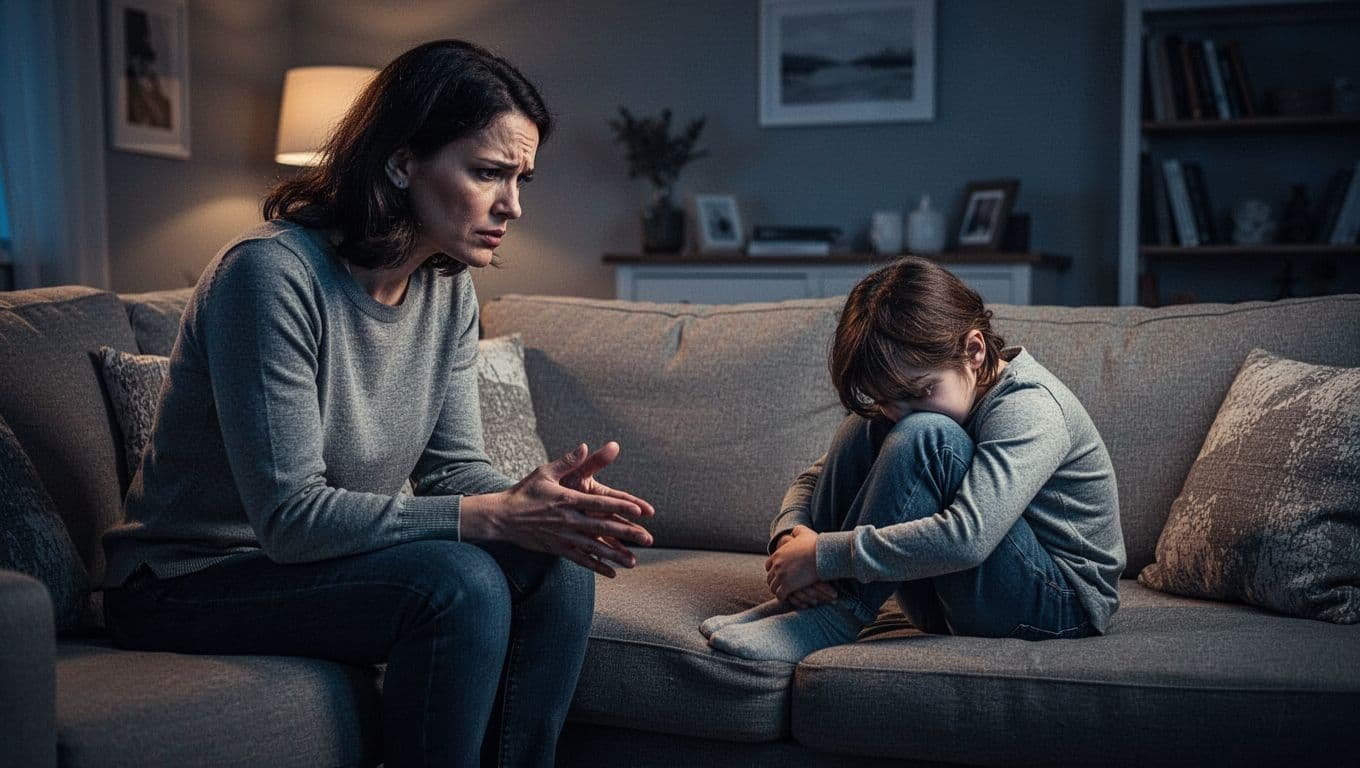
Know When Anxiety Requires Urgent Help
Take any statement about self-harm, suicide, wanting to die, or feeling unsafe seriously. Stay with your child and remove immediate access to dangerous items if you can do so safely. In the United States, call or text the 988 Suicide & Crisis Lifeline for free, confidential crisis support. Call 911 or go to the nearest emergency room if your child has already acted, has a serious injury, has taken an overdose, or faces immediate danger. SAMHSA’s 988 guidance explains how families can use the service.
Contact a mental health professional promptly when symptoms worsen quickly, cause school refusal, lead to isolation, or disrupt family life. Your child may need more support than home strategies can provide. Also seek support for yourself if fear is affecting your responses, because children often read emotional cues from the adults closest to them.
Conclusion
Helping a child deal with anxiety starts with listening without judgment and validating the fear without treating it as a prediction. Steady routines, simple coping skills, and calm support can make difficult moments feel more manageable. You can also find more ideas for calming strategies for children as your child learns to recognize and express big feelings.
Progress may look like trying again after a hard morning, staying at school a little longer, joining part of an activity, or asking for help before anxiety takes over. Your child doesn’t need to feel calm all the time to build confidence. Small brave steps still count.
When anxiety persists, worsens, or disrupts sleep, school, friendships, or family life, seeking professional guidance is a sign of care, not failure. With patience and consistent support, your child can learn that worry is something they can face, one supported step at a time.
Save in for later


- How to Help a Child Deal With Anxiety at Home - September 12, 2026
- How to Prepare Your Child for the First Day of School - September 12, 2026
- Age-Appropriate Chores for Kids by Age Group - September 12, 2026