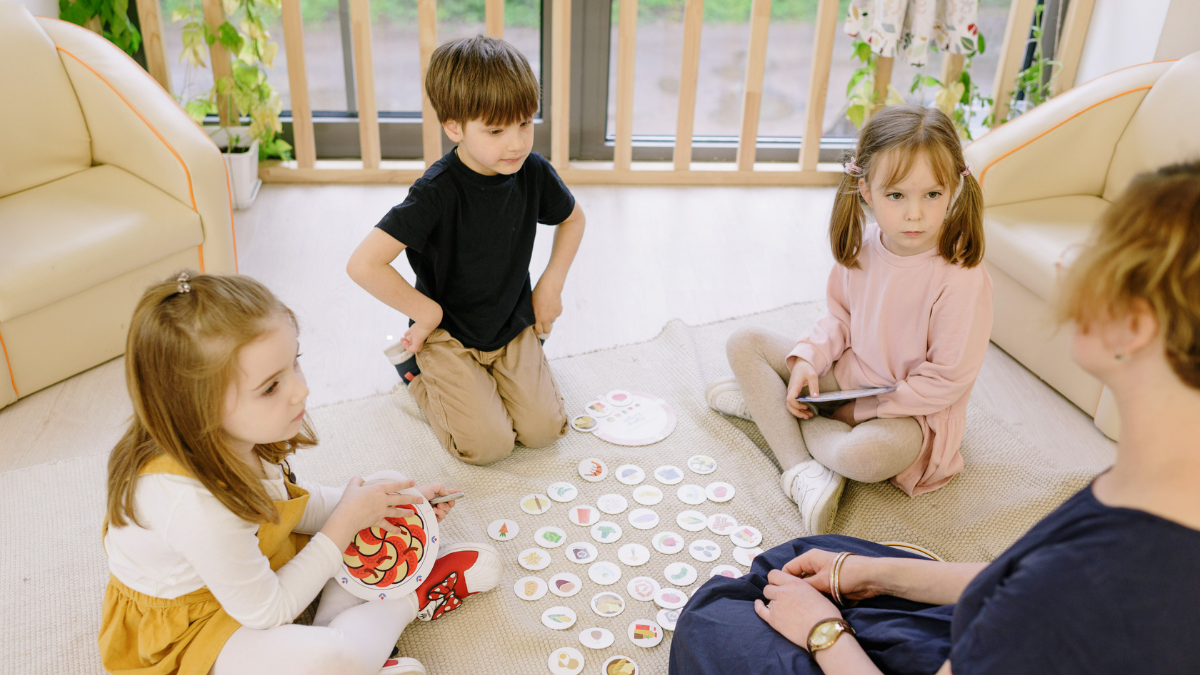


Your child melts down over the wrong cup, or a sibling fight turns into hurt feelings before breakfast is even over. In those moments, emotional intelligence means helping kids notice what they feel, name it, understand it, and respond in healthy ways.
Kids don’t need to stay calm all the time, because big feelings are part of growing up. What helps is support from you, since children learn how to talk, listen, and recover from stress by watching the adults closest to them, and quality time for stronger parent-child bonds can make those lessons stick.
This guide shares simple, at-home activities you can use together, so building emotional skills feels natural in daily family life.
What emotional intelligence looks like in kids at different ages
Emotional intelligence in kids does not look polished or perfect. It looks like growth in motion. One child blurts out, “I’m mad,” instead of throwing a toy, while another still cries first and finds words later.
That range is normal. Kids build emotional skills in layers, and those layers show up differently as they grow. If you keep your focus on small signs of progress, it’s much easier to support your child without comparing them to everyone else.
The four emotional skills parents can practice every day
Emotional intelligence is easier to spot when you break it into a few daily habits. These four skills show up in ordinary family moments, not just in calm, picture-perfect ones.
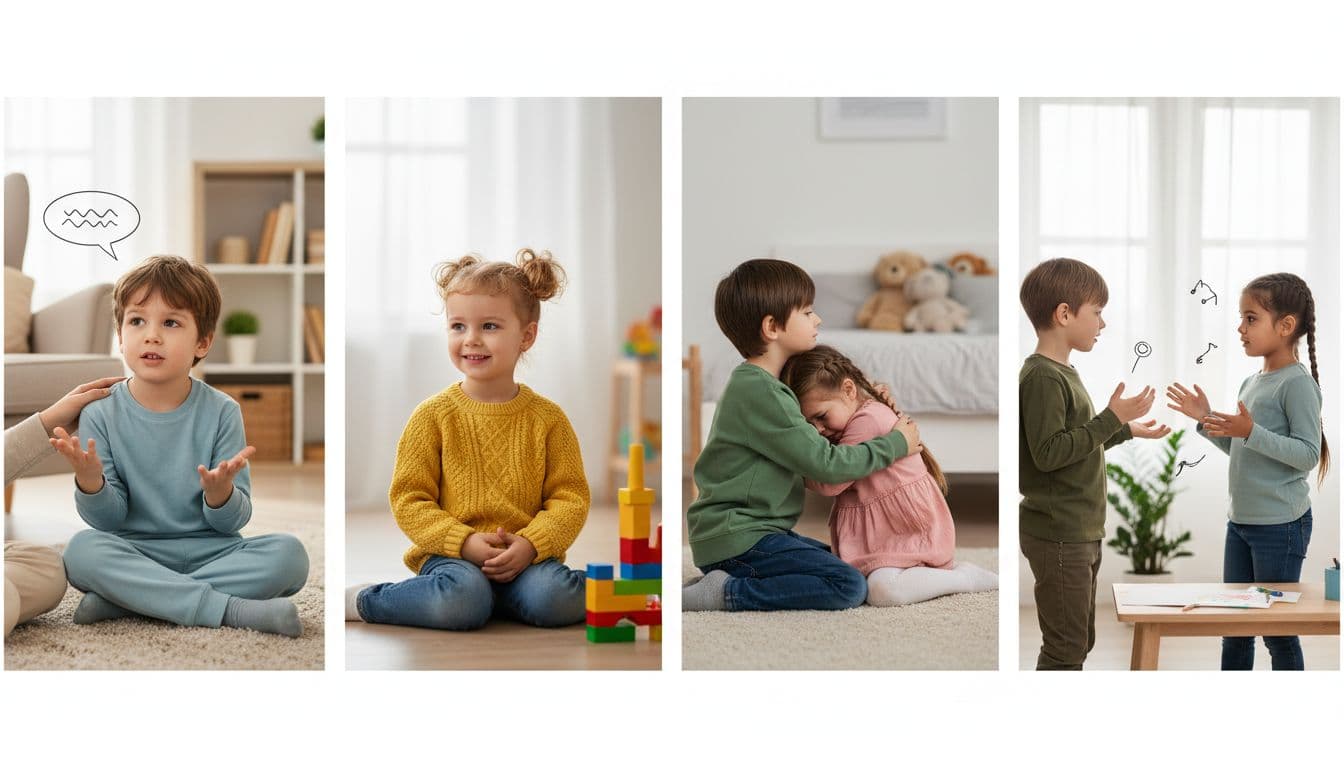
- Naming feelings helps kids put words to what is happening inside. For example, a child who says, “I feel frustrated,” is learning far more than a child who only yells when a block tower falls.
- Managing impulses means pausing before acting on a big feeling. Waiting for a turn during a board game, even with a grumble, is real progress.
- Noticing other people’s feelings builds empathy. When your child sees a friend’s sad face and asks, “Are you okay?” they’re learning to look beyond themselves.
- Working through conflict teaches kids how to stay connected during hard moments. A simple exchange like, “I didn’t like that, can we do it differently?” is a strong step forward.
Parents can practice these skills out loud, too. When you say, “I’m frustrated, so I’m taking a breath,” you give your child a script they can borrow later. If your child is younger and still needs hands-on calming support, simple sensory activities can help bridge that gap, especially soothing sensory bottles to calm little ones.
Kids learn emotional skills the same way they learn most things, through repetition, modeling, and lots of imperfect practice.
How to keep expectations realistic by age
Age matters, because emotional intelligence grows with brain development, language, and life experience. A preschooler will not handle disappointment like a tween, and a tween may still struggle in ways that surprise you. That does not mean something is wrong.
A good rule is to look for steady progress, not flawless behavior. Development guides, such as social and emotional skills at different ages, can help you see what is generally typical without treating kids like machines.
For a quick view, this age-by-age snapshot helps:
| Age group | What emotional intelligence often looks like |
|---|---|
| Preschoolers, ages 3 to 5 | They name basic feelings, need lots of help calming down, and may comfort a crying friend one minute but melt down over the wrong snack the next. |
| Elementary-age kids, ages 6 to 10 | They read facial expressions better, care more about fairness, and can usually talk through feelings after they settle, even if they still get stuck in the moment. |
| Tweens, ages 11 to 13 | They understand more complex feelings, notice social dynamics, and can reflect on conflicts, but peer pressure and fast mood shifts can still throw them off. |
The takeaway is simple: skills build over time, and uneven growth is part of the process.
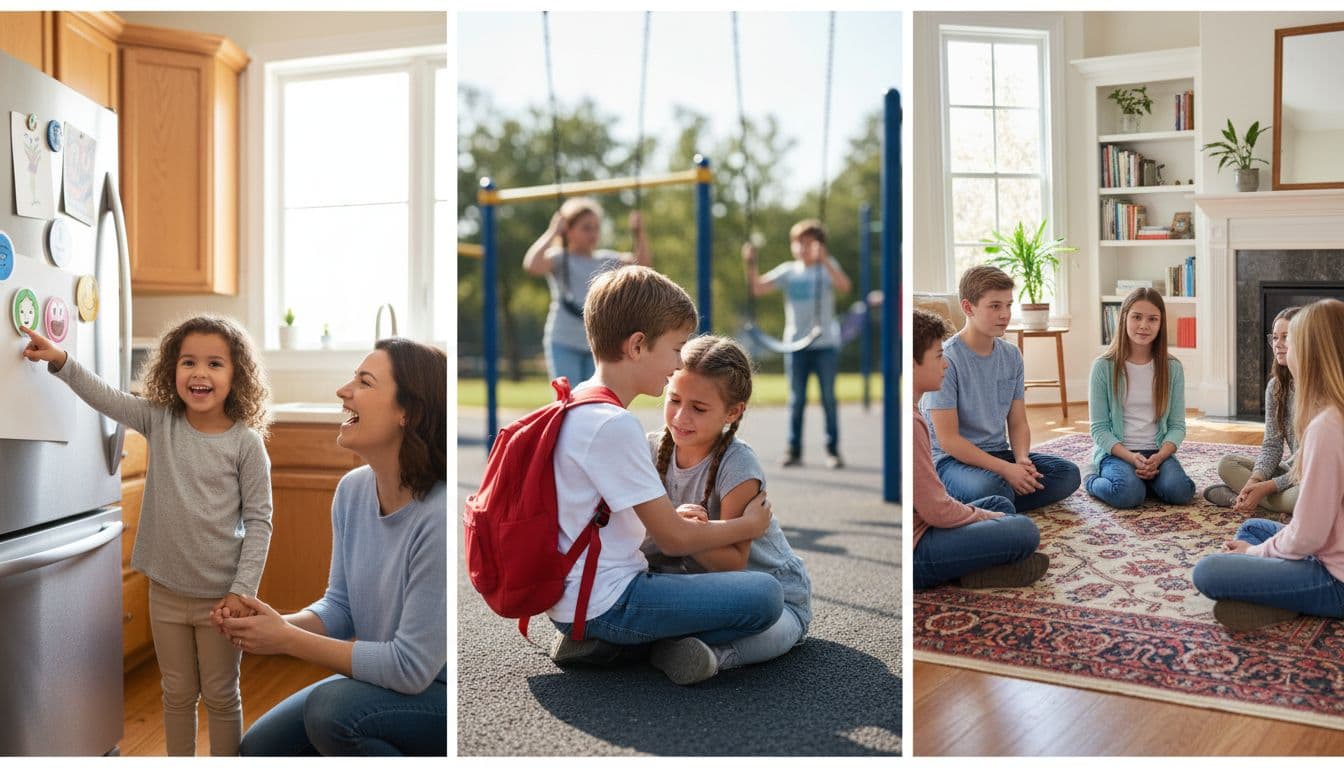
Preschoolers are just starting to connect feelings with words. They may say “mad” or “sad,” but they still need your help to recover when emotions hit hard. A child this age can show empathy, share in short bursts, and wait briefly, but don’t expect steady self-control.
Elementary-age kids often make a big jump. They begin to understand embarrassment, guilt, fairness, and friendship issues more clearly. Still, a rough day at school, hunger, or feeling left out can bring out behavior that looks much younger, and that is common.
Tweens can talk about emotions with more depth, especially after a conflict passes. At the same time, friendships carry more weight, and social stress can make reactions seem bigger than expected. Current guidance on children’s social-emotional milestones points to the same pattern, growth is real, but it is rarely smooth.
Try to compare your child to who they were six months ago, not to a sibling, classmate, or cousin. If they recover faster, use more words, or show more empathy than before, that counts. Those small gains are the clearest signs that emotional intelligence is taking root.
Start with simple daily habits that make feelings easier to talk about
Emotional intelligence grows best in small, repeatable moments. You do not need a long lesson or the perfect script. What helps most is a family rhythm where feelings come up often, in calm moments, and without shame.
That steady practice gives kids something solid to stand on. Over time, they learn that emotions are not secrets or problems to hide. They are signals to notice, name, and work through together.
Use daily check-ins to help kids name what they feel
A quick check-in can turn emotional skills into part of everyday life. Dinner, bedtime, and after school all work well because the routine is already there. When the timing stays familiar, kids are less likely to feel examined.

Try simple formats that do not require long answers:
- At dinner, share one high and one low from the day.
- At bedtime, ask for one feeling word that fits the day.
- After school, use colors like red, yellow, green, or blue for mood check-ins.
The key is to go first. Say, “My low was feeling rushed this morning,” or, “I’m proud that I finished a hard task today.” That takes the spotlight off your child and shows them what honest sharing sounds like. It also teaches that adults have feelings, too.
If your child shrugs or says, “I don’t know,” keep it light. Offer choices like tired, disappointed, calm, excited, or nervous. According to Children’s Mercy on emotional vocabulary, kids build this skill faster when adults name emotions often in daily life, not only during meltdowns.
When parents model first, kids feel invited instead of tested.
Build a bigger feelings vocabulary through books, shows, and real moments
Many kids start with three emotional words, happy, sad, and mad. That is a beginning, but it is not enough for real life. A child who can say “I’m disappointed” or “I feel left out” has a much better chance of being understood.
Books and shows make this easier because the emotion belongs to someone else first. Pause and say, “He looks nervous,” or, “She seems proud of herself.” Then keep moving. The goal is natural repetition, not turning story time into a quiz.
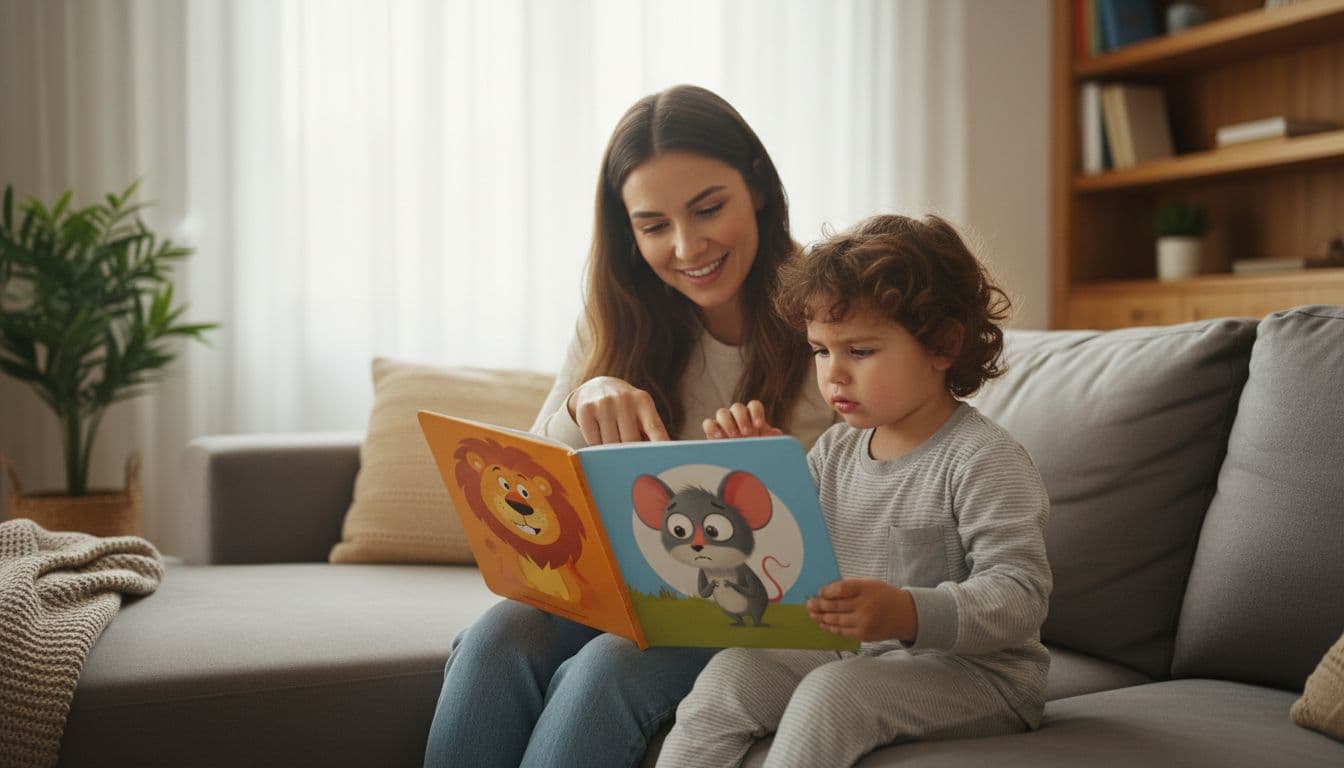
Real life gives you even better chances. If a sibling gets picked first, you might say, “You look left out.” If your child finishes a tough puzzle, try, “You seem proud.” On a busy day, you can even model your own state by saying, “I’m feeling overwhelmed, so I need a minute.”
Useful words to work in often include:
- disappointed
- nervous
- proud
- left out
- calm
- overwhelmed
These words help kids get more exact, and exact words lower frustration. If you want more ideas for everyday connection, improving family communication skills can support this habit at home.
Teach kids that all feelings are okay, but not all behaviors are okay
This lesson changes the tone of discipline. Kids need to hear that anger, jealousy, sadness, and frustration are allowed. At the same time, they also need clear limits. Feeling angry is okay. Hitting, yelling in someone’s face, or using mean words is not.
That balance helps children feel safe and guided. If you skip the feeling, they may feel rejected. If you skip the limit, they do not learn what to do with the feeling.

A simple formula works well:
- Name the feeling.
- Set the limit.
- Offer the next safe action.
For example:
- “It is okay to feel angry, it is not okay to hit.”
- “It is okay to feel frustrated, it is not okay to throw toys.”
- “It is okay to feel upset, it is not okay to call your brother names.”
Then follow with a clear option: “You can stomp your feet, squeeze a pillow, or tell me what happened.” This is where kids learn that feelings can move through the body without taking over the room.
Research-backed parenting advice often centers on this same pattern, validating emotions first helps kids calm down enough to learn, as explained in The Watson Institute’s guide to helping children name and recognize feelings.
Keep your tone steady and brief. Long lectures rarely work in the heat of the moment. A calm voice, a clear boundary, and one next step are usually enough to start building real emotional control.
Try these emotional intelligence activities for kids and parents
Once kids can name feelings, they need chances to use those skills in real life. That is where simple activities help. A short game in the living room can teach more than a long lecture, because kids learn best when their bodies, faces, and words all work together.
The goal is not perfect behavior. It is practice. These ideas help children notice emotions sooner, recover faster, and respond with more care, especially when you join in right beside them.
Play emotion charades and mirror games to spot feelings faster
Emotion charades and mirror games work well together because both teach kids to notice clues. In charades, one person acts out a feeling without words, and the other guesses. In a mirror game, your child copies your face and body language, then you switch roles. That slow, playful copying helps emotions feel easier to read.

Keep the feelings simple at first, such as happy, sad, mad, scared, and proud. Then add more complex ones like frustrated, worried, or embarrassed. After each turn, talk about the clues you saw. Was it the eyebrows, the shoulders, the crossed arms, or the quiet voice?
That quick discussion matters most. It teaches kids that feelings show up in the face, the body, and the tone, not only in words. Over time, children get better at spotting emotions in themselves and in other people, which helps with friendships, sibling fights, and everyday misunderstandings.
Use breathing, movement, and muscle relaxation to calm big feelings
Some kids cannot talk through a feeling until their body settles first. Breathing and movement help with that. They give children a clear way to slow down when emotions feel loud and messy.

Start with easy options your child can remember:
- Pretend to blow out a candle with one slow breath out.
- Try balloon belly breaths, with hands on the stomach as it rises and falls.
- Squeeze fists tight for a few seconds, then relax them.
- Stand up and shake out stress from arms, legs, and shoulders.
Join your child instead of coaching from the sidelines. When you breathe, stretch, or relax your muscles too, your child feels guided, not corrected. That shared calm makes a big difference, especially during tense moments.
These tools fit naturally into family routines. Use them after school, before bed, or right when a meltdown starts to build. According to Parents’ advice on raising an emotionally intelligent child, coping skills work best when adults model them often, not only in hard moments.
Kids borrow calm from adults before they can create it on their own.
Practice empathy with role-play, puppets, and what-would-you-do talks
Empathy grows when kids get to step into someone else’s shoes for a minute. Role-play makes that easier because it turns a hard lesson into a small, safe story. You can use puppets, stuffed animals, or just act it out yourselves.
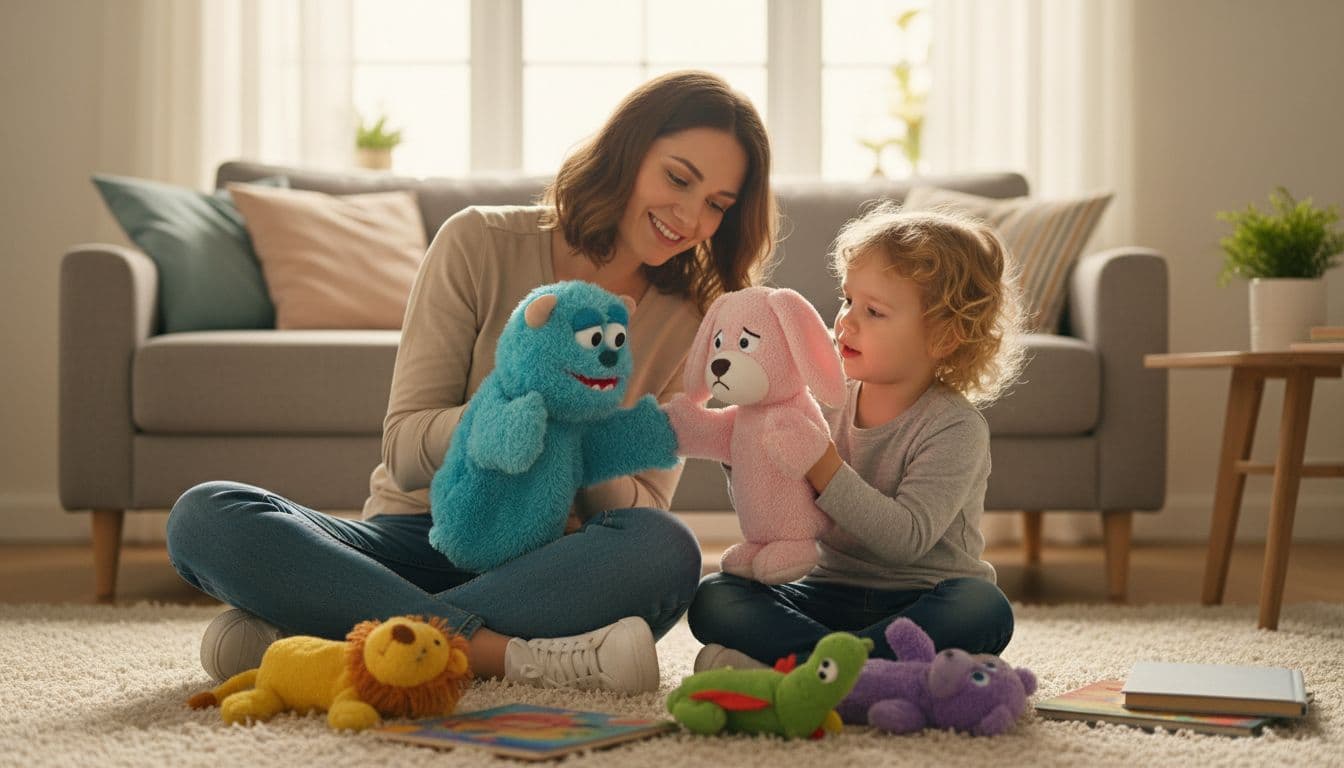
Pick scenes kids know well. One child gets left out. A toy breaks. A sibling grabs a turn. Then pause and ask a few simple questions: “How does each person feel?” “Why might they feel that way?” “What would be a kind thing to do next?”
Keep the tone light and practical. You are not trying to pull out the perfect answer. You are helping your child notice that every conflict has more than one point of view. Resources like emotional intelligence activity ideas for kids often use role-play for the same reason, it helps children practice social situations before they happen in real life.
If your child gets stuck, offer two choices instead of a lecture. For example, “Do you think she felt sad or angry?” That small prompt can open a much better conversation.
Try circle of control and calm-down plans for worry and frustration
Worry gets smaller when kids can sort what is in their hands and what is not. The circle of control is a simple way to do that. Draw a circle on paper and put your child’s words, choices, actions, and effort inside it. Outside the circle, write things like the weather, other kids’ behavior, losing a game, or schedule changes.
This activity helps children stop wrestling with things they cannot fix. It shifts their focus toward the next helpful step. If a friend says something mean, they cannot control the friend’s choice, but they can control what they say back, whether they ask for help, and how they calm down.
It also helps to make a short calm-down plan your child can use when frustration spikes. Keep it very simple and let them choose from two or three tools, such as:
- Take five balloon breaths.
- Squeeze a pillow or relax fists.
- Sit in a quiet spot and ask for help.
Write the plan down and practice it during calm moments first. Then, when feelings run high, the plan feels familiar instead of forced. Kids do better when they have a small menu of choices, because choice builds confidence and lowers power struggles.
How parents can model emotional intelligence without being perfect
Kids do not need a calm, polished parent every minute of the day. They need a real one who shows what healthy emotional skills look like in everyday life. That means naming feelings, slowing down when needed, and repairing mistakes instead of pretending they never happened.
Perfection can actually get in the way. If your child only sees you “fine,” they do not learn what to do with stress, anger, or regret. When they hear you handle those moments out loud, emotional intelligence stops being a lesson and starts becoming family culture.
Let your child hear you name feelings and cope in healthy ways
Children learn emotional awareness best in real time. When you put your feelings into words, you show them that emotions are normal, manageable, and safe to talk about. That matters because many kids act out what they cannot yet explain.
Simple language works best. You do not need a speech. A short sentence gives your child a script they can borrow later:
- “I feel stressed, so I am taking three deep breaths.”
- “I was upset, and now I am ready to talk.”
- “I feel frustrated, so I need a short break.”
- “I am disappointed, but I can handle it.”

These moments teach more than feeling words. They teach pause, self-control, and recovery. Your child starts to connect the dots: feelings show up, but they do not have to run the whole house.
Keep it brief and natural. You are not asking your child to take care of your feelings. You are showing them what healthy coping sounds like. Current research also points in this direction, with mindful parent responses linked to stronger social-emotional skills in children, as noted in this 2026 Frontiers in Psychology study.
A good rule is to model during small, manageable moments first. Traffic, a spilled drink, or a long day are all chances to show calm coping without turning your child into your audience.
Your child does not need proof that you never struggle. They need proof that struggle can be handled well.
Use repair after conflict to build trust and resilience
Even emotionally aware parents lose their cool sometimes. You may snap, raise your voice, or shut down in a hard moment. What happens next shapes your child’s emotional learning just as much as the conflict itself.
Repair teaches your child that relationships can bend without breaking. When you apologize, reconnect, and talk about a better plan, you show them how trust gets rebuilt. That lesson stays with them in friendships, sibling fights, and later romantic relationships.

A simple repair process can look like this:
- Calm yourself first. Take a minute if needed.
- Own your part clearly. “I yelled, and that was not okay.”
- Name the impact. “That probably felt scary and hurtful.”
- Reconnect. Offer a hug, sit close, or speak gently.
- Plan for next time. “Next time I feel that mad, I will step away before I talk.”
Notice what is missing: excuses. “I yelled because you never listen” is not repair. It puts the weight back on the child. A real apology is simple and steady.
This kind of honesty helps kids feel secure, not shaken. In fact, many parenting experts now stress that children benefit more from authentic repair than from a parent trying to look flawless all the time, as explained in The Artful Parent’s piece on apologizing without defensiveness.
If your child also needs to make repair, keep the focus shared. You can say, “We both had a hard moment. Let’s figure out how to do it better next time.” That turns conflict into practice, not shame.
Notice effort, not just good behavior
Children grow faster when you notice the emotional skill behind the behavior. “Good job” is kind, but it is vague. Specific praise tells your child exactly what worked, so they are more likely to do it again.
Try to catch the small wins:
- “You were angry, and you used words.”
- “You calmed your body before talking.”
- “I noticed you waited, even though it was hard.”
- “You saw your sister was sad and checked on her.”
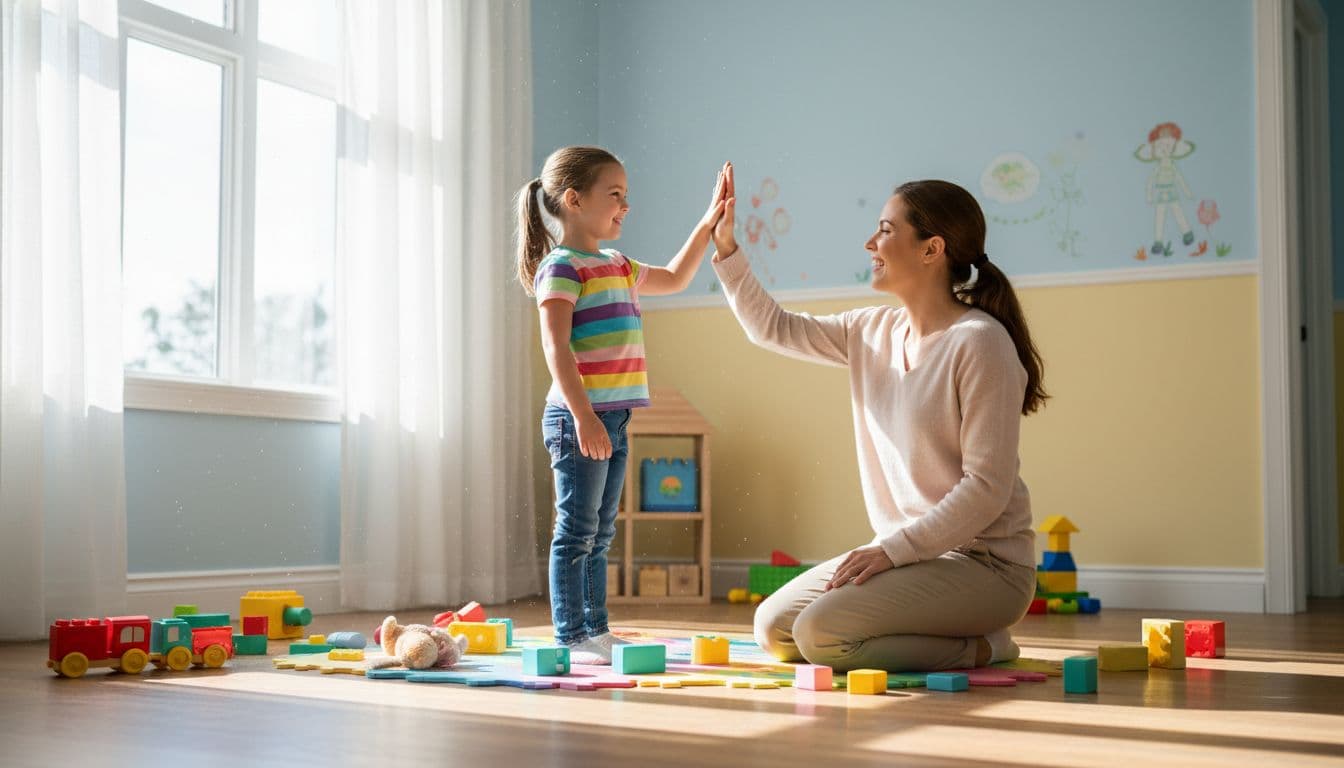
This kind of praise supports a growth mindset around emotional intelligence. Your child starts to see self-control, empathy, and communication as skills they can build, not traits they either have or do not have. That shift is huge.
It also helps during messy moments. Maybe your child still cried, complained, or needed help, but they recovered faster than last week. That counts. You can say, “You were really upset, but you took a breath and stayed with me.” Progress is the point.
Try to praise the process more than the result. A child who hears “You worked hard to calm down” learns to value effort. A child who only hears “You were so good” may start chasing approval instead of building real emotional tools.
Over time, those specific comments become a mirror. Your child begins to see themselves as someone who can pause, name feelings, and try again. That belief is one of the strongest gifts a parent can model.
Make emotional intelligence practice stick in real family life
Emotional intelligence grows through repetition, not one big talk. Kids learn best when the practice feels normal, brief, and easy to repeat. A few steady moments each week can do more than a long lesson that never happens again.
If your family is busy, keep the bar low. Many families can build real progress with 5 to 10 minutes at a time, especially when the routine stays simple and predictable.
Create a simple weekly rhythm your family can keep
A good rhythm should fit into real life, not a perfect week. That usually means one short daily habit, one playful activity, and one calming practice your child knows by heart.

A simple plan might look like this:
- One daily check-in: At dinner, in the car, or at bedtime, each person shares one feeling from the day.
- One game-night activity: Pick emotion charades, role-play, or a “what happened and how did it feel?” story game.
- One calm-down practice: Use the same tool all week, such as balloon breaths, squeezing a pillow, or a quiet reset spot.
That is enough. In fact, shorter routines are often easier to keep. Recent family guidance on raising emotionally intelligent children points to the same idea, kids learn emotional skills through small, repeated moments with calm adult support.
It also helps to tie these habits to routines you already have. Bedtime check-ins stick better than random check-ins. A Sunday family meeting can work well too, especially if you already use practical routines to streamline family life. When the timing is built in, the habit has somewhere to live.
Keep the routine simple enough that you can still do it on a hard week.
Adjust activities for shy kids, strong-willed kids, and siblings
The same activity will not fit every child in the same way. A small tweak can make emotional practice feel safer, calmer, and more useful.
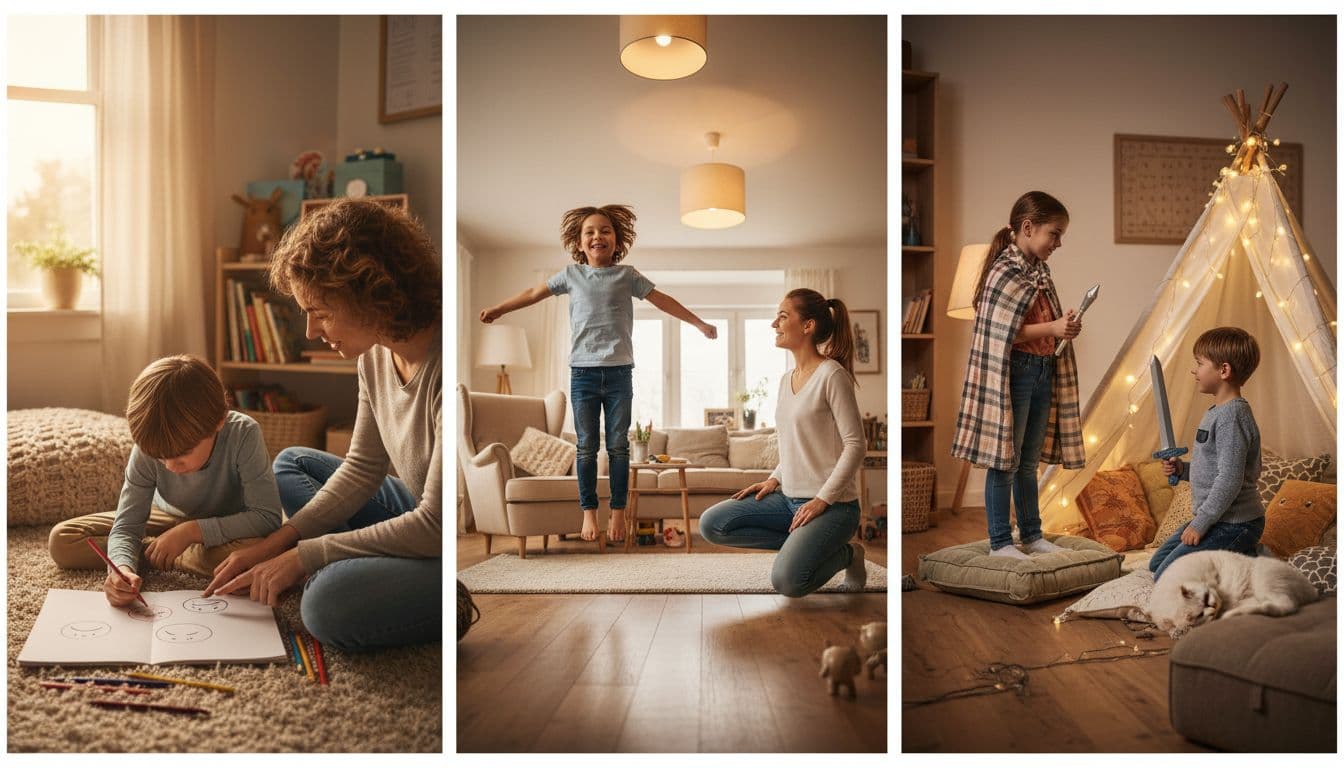
For shy kids, lower the pressure. They may open up more through drawing, puppets, or pointing to feeling faces instead of speaking first. You can also let them answer after you go first, because that gives them time to warm up.
For strong-willed or highly active kids, keep activities hands-on and give choices. Movement-based calming often works better than “sit still and talk.” Try wall pushes, animal walks, or a quick lap around the yard before a feelings talk. Collaborative routines can also reduce battles, and collaborative routines for strong-willed kids offer helpful examples.
For siblings, structure matters. Turn-taking keeps one child from taking over, and joint role-play helps both kids practice empathy. You might say, “First you be the upset brother, then switch.” That small switch helps each child see the same conflict from both sides.
Know when extra support may help
Most kids have rough phases, big feelings, and messy weeks. Still, some signs suggest it may help to talk with a professional. Support can be a relief, not a label.
Consider reaching out to a pediatrician, school counselor, or child therapist if your child has frequent intense outbursts, ongoing anxiety, aggression, or a hard time functioning at home and school. The same is true if emotional struggles last for weeks, affect sleep, friendships, learning, or family life, or do not improve with consistent support at home.
Start with curiosity, not fear. You are not failing if you ask for help. You are getting more tools for your child. If you want a simple next step, jot down patterns for a week or two, such as when meltdowns happen, how long they last, and what seems to help. That makes the conversation with a professional much more useful.
Conclusion
Emotional intelligence grows in the small moments, the ones that happen at breakfast, after school, and after a hard day. Most importantly, kids build these skills when families use shared language, practice calm together, and come back to repair when things go off track.
You do not need to do every activity in this post. Start with one simple habit, stay consistent, and let progress look real instead of perfect.
Today, choose one activity to try with your child, and pick one short routine to repeat this week. Those small steps add up, and over time they help your child feel safer, more understood, and more able to handle big feelings.
Save the pin for later


- Organized Family Morning Routines That Kids Actually Love - April 15, 2026
- Emotional Intelligence Activities for Kids and Their Parents - April 15, 2026
- 19 Christmas Crafts Ideas for Kids - November 30, 2025