The first days of preschool can feel tiny and huge at the same time, with little backpacks, fresh crayons, and a child who needs a calm, familiar start. That’s why simple back to school ideas for preschool matter so much, because young children do best when they have routines, comfort, play, and chances to feel known.
A few thoughtful activities can ease nerves, build fine motor skills, and help preschoolers recognize names, faces, and classroom rhythms. They also give you an easy way to connect at home, which helps the school day feel less like a leap and more like a gentle step.
For extra support with the new school year, practical ways to be involved in your child’s education can make the transition feel smoother. And if your child needs help with feelings and friendship, emotional intelligence activities for kids fit beautifully with preschool prep.
Why back to school ideas for preschool help children settle in
The first weeks of preschool can feel like a big room full of new sounds, faces, and rules. Good back to school ideas for preschool children lower that pressure and give them something solid to hold onto.
When a child knows what comes next, has a familiar object nearby, and gets a chance to move and talk, the day feels less scary. That mix of comfort and play helps preschoolers settle faster, trust the room, and join in without feeling pushed.
What preschoolers need most in the first weeks
Preschoolers settle best when their day feels predictable. A steady drop-off routine, the same goodbye phrase, and a simple order to the morning all help the new setting feel safer.
Familiar objects matter too. A small family photo, a favorite stuffed animal, or the same lunchbox can act like a bridge between home and school. Small comforts often calm separation worries before they grow.
Movement also helps. Young children do not sit still for long stretches, and they should not have to. Short games, stretching, marching, and hands-on play give them a way to release nervous energy and focus their attention.
They also need simple choices. Picking between two crayons or two books gives a child a bit of control in a new place. That small control can make a big difference when everything else feels new.
Most of all, preschoolers need chances to talk about themselves. When they share their name, family, favorite color, or a pet’s name, they start to feel seen. That builds trust, and trust helps them settle in.
The best preschool ideas feel like a warm hand on the shoulder, not a test.
These needs shape the strongest back to school ideas because they keep the focus on comfort first. Activities that feel playful and personal help children enter the room with less fear and more curiosity.
For more support at home, creating calm family morning routines can make school mornings feel easier before the first bell even rings.
How to keep activities simple enough for little learners
Preschool activities work best when they are quick to set up and easy to understand. A child should not need a long explanation before starting. If the task is clear in a few words, it fits a preschooler’s attention span better.
Minimal supplies help too. Paper, crayons, stickers, blocks, or picture cards often do more than fancy materials. Simple tools keep the activity light and playful, which is exactly what young children need during a big transition.
Clear directions matter just as much. One step at a time works better than a long list. For example, “draw your face,” or “choose a color for your backpack” is easier than a full lesson about school readiness.
The best preschool activities stay flexible. If a child wants to talk more, that is fine. If another child wants to move faster, that works too. Preschool should feel like a soft landing, not a perfect performance.
A short, hands-on activity can support language, social skills, and classroom routines at the same time. Children practice naming colors, taking turns, cleaning up, and following simple steps without feeling like they are doing schoolwork.
For more ideas that keep learning gentle at home, Montessori-inspired activities for preschool comfort fit this same low-pressure approach.
Back to school ideas for preschool that help children learn names and make friends
The first days of preschool go better when children feel noticed, included, and safe. Simple social games can take the edge off a new room, especially for shy children and new classmates who need time to warm up.
A few name-based activities also help children spot common ground. When they hear, “I like blue too,” or “My favorite animal is a dog,” the classroom starts to feel less like a crowd and more like a circle of possible friends.
Name toss game
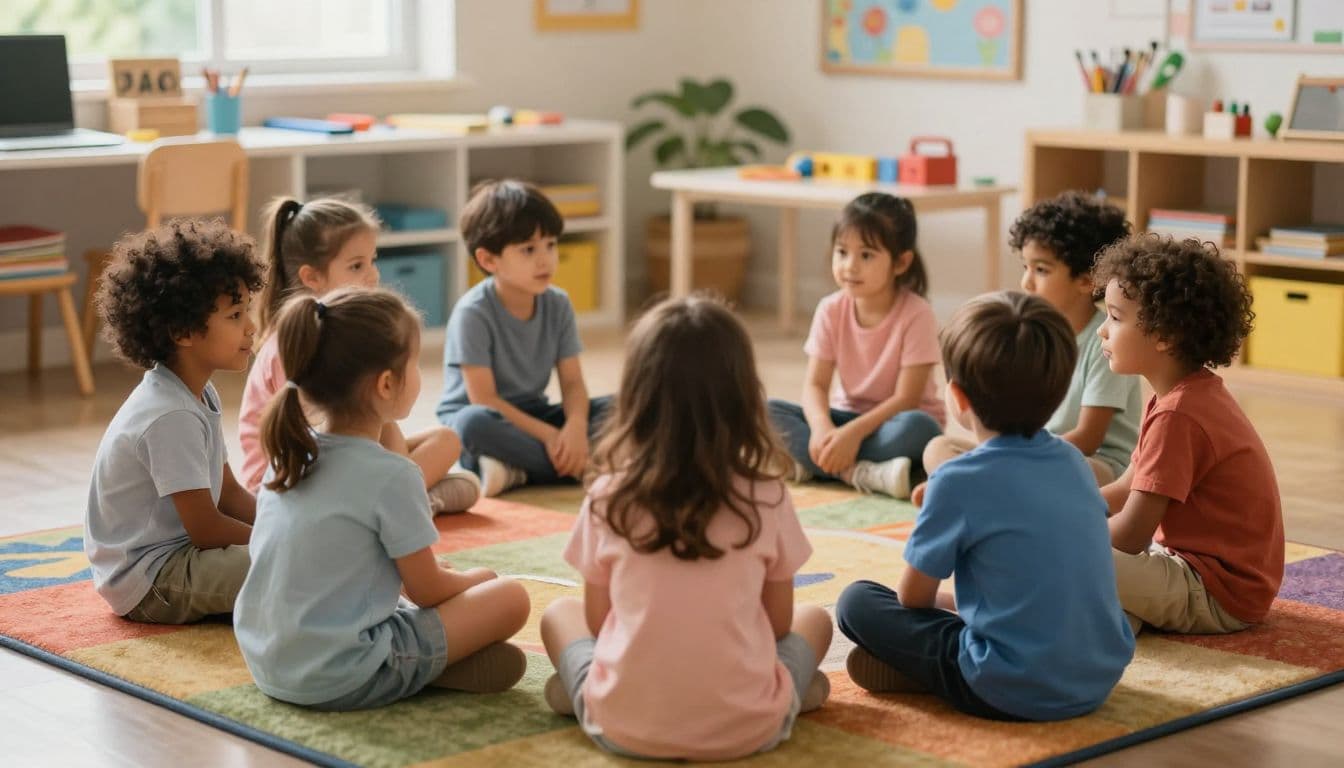
This easy circle game gives every child a turn to speak and listen. Pass a soft ball or beanbag around the group, and each child says their name before sharing one simple detail, like a favorite color, animal, or snack.
The rhythm matters. Children begin to hear names again and again, which helps them remember classmates without pressure. They also practice waiting, watching, and taking turns, all while staying part of the group.
For shy preschoolers, the game feels safer than a big conversation. They only need one short sentence, and that small success can build real confidence. A child who hears the class repeat their name often starts to feel like they belong there. For more playful group ideas, age-appropriate activity ideas for kids can give you even more options.
Short, repeated name games work better than long introductions for young children.
Friendship chain with paper strips
This activity turns names into something children can see. Give each child one paper strip to decorate with their name, a drawing, or a sticker, then help the class link the strips into one long chain.
As the chain grows, children see a clear picture of connection. Their individual strips matter on their own, yet they also become part of something shared. That visual message is powerful in preschool, where belonging often needs to be seen before it can be felt.
You can hang the chain on a wall or across a bulletin board. Each new link reminds children that the class is stronger when everyone is included, which is especially comforting for children who feel unsure on the first day.
Classroom tour scavenger hunt
Turn the room into a gentle treasure hunt. Ask children to find the sink, cubbies, art area, bathroom, and reading corner, then celebrate each discovery with a smile or high-five.
This playful tour helps the classroom feel familiar fast. When children know where things are, they relax more and start looking around with curiosity instead of worry. It also gives them easy shared experiences, so they have something to talk about with new friends.
A few simple phrases help the hunt flow well, such as “Let’s find the reading corner” or “Who can spot the cubbies?” According to Raising Children Network, young children build friendship skills through listening, taking turns, and cooperating, so activities like this support both comfort and social growth.
Creative preschool back to school crafts that make the first days memorable
A few simple art projects can turn those first preschool days into something a child remembers with pride. When little hands get busy with crayons, glue, stickers, and paper, the focus shifts from nerves to color, texture, and fun.
These crafts also give preschoolers a chance to talk about themselves in easy, natural ways. That matters, because children often settle faster when they can show who they are before they can say it in a long sentence.
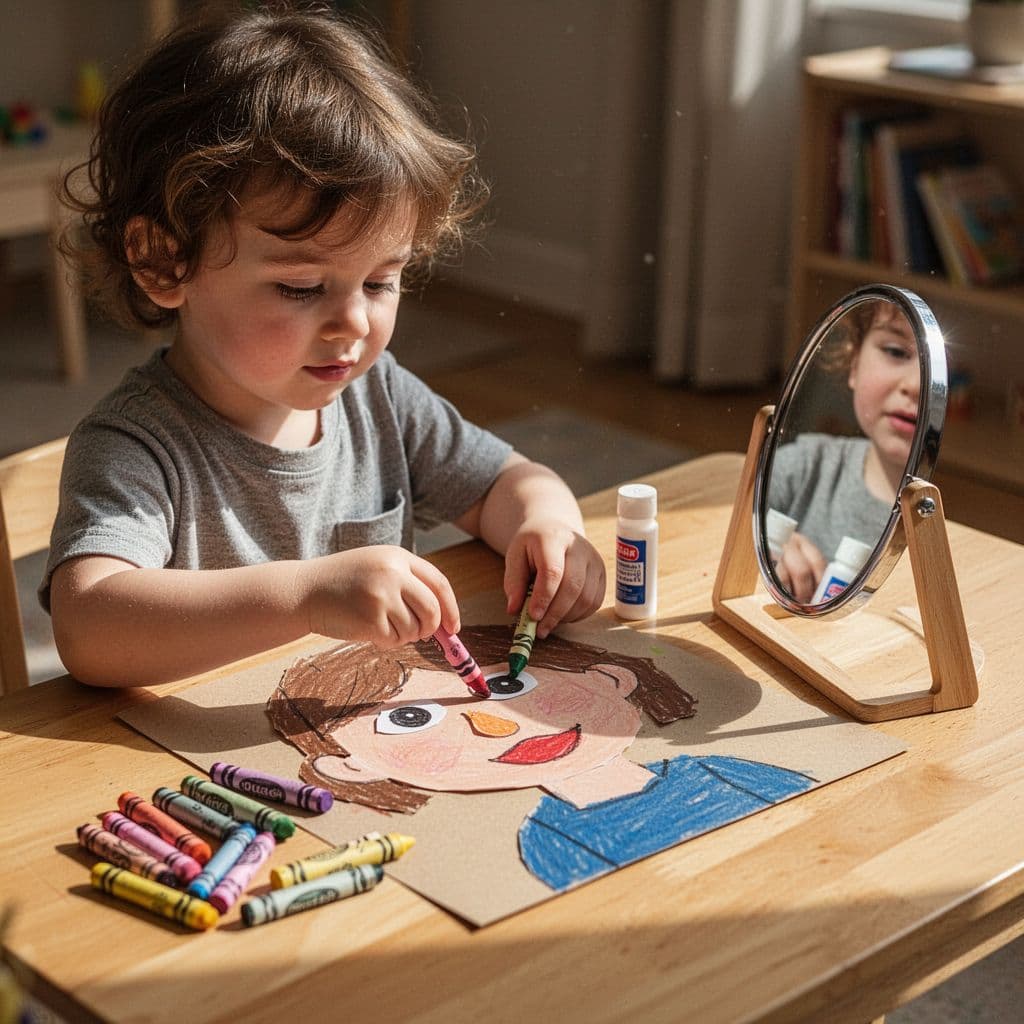
Self-portrait craft
Set out a small mirror, paper, crayons, and glue, then invite your child to draw their face or make a collage version of themselves. They can color hair, eyes, shirt, and smile, or glue on paper shapes and cutouts if that feels easier.
Keep it loose and playful. A self-portrait does not need to look perfect to work well. The real goal is to help children notice their own features and feel proud of what they made.
This kind of craft also builds self-awareness and fine motor control. Children watch closely, hold crayons with more care, and make small hand movements that strengthen pencil skills.
For more ideas that keep learning gentle at home, screen-free learning activities for kids pair well with this kind of hands-on play.
Name art with stickers and crayons
Write your child’s first letter or full name on a page, then let them decorate it with bright crayons, stickers, dots, stars, or tiny pasted-on shapes. If they are ready, they can trace over the letters too.
This works well because children see their name as something special. They also start to notice the shapes of letters, which supports letter recognition in a simple, low-pressure way.
When a child decorates their own name, the page feels personal fast.
You can make it extra fun by using one favorite color for each letter or by adding a sticker for every sound in the name. That little burst of color helps the art feel like theirs.
Handprint flower project
Trace your child’s hand on colored paper, cut it out, and turn the fingers into flower petals. Add a stem, leaves, and a circle in the center, then write the date on the back if you want a keepsake.
This is a sweet first-day memory project because it captures how small their hand was right then. Years later, you will still have that tiny print and the story that goes with it.
It also gives preschoolers a chance to see their hand as part of something beautiful. That mix of art and memory makes the craft feel special without making it hard.
First-day book made by the child
Staple a few blank pages together and let your child create a simple book about themselves. They can draw their family, favorite food, pets, toys, or a place they like to go.
Then ask short prompts as they work, such as “Who lives in your house?” or “What does your dog look like?” Those questions encourage speaking, drawing, and sharing in one easy activity.
Because the pages belong to them, children often open up more. A handmade book gives them a small stage to show what matters most, and that kind of sharing helps the first days feel warmer and more personal.
Easy learning games that sneak in early skills
The best preschool games feel light and playful, yet they do real work in the background. A child thinks they are hunting, matching, sorting, or mixing, while their brain is busy building early reading, math, and thinking skills.
These games fit busy mornings, after-school quiet time, or a rainy afternoon at home. They also help children practice focus without sitting down for a worksheet.
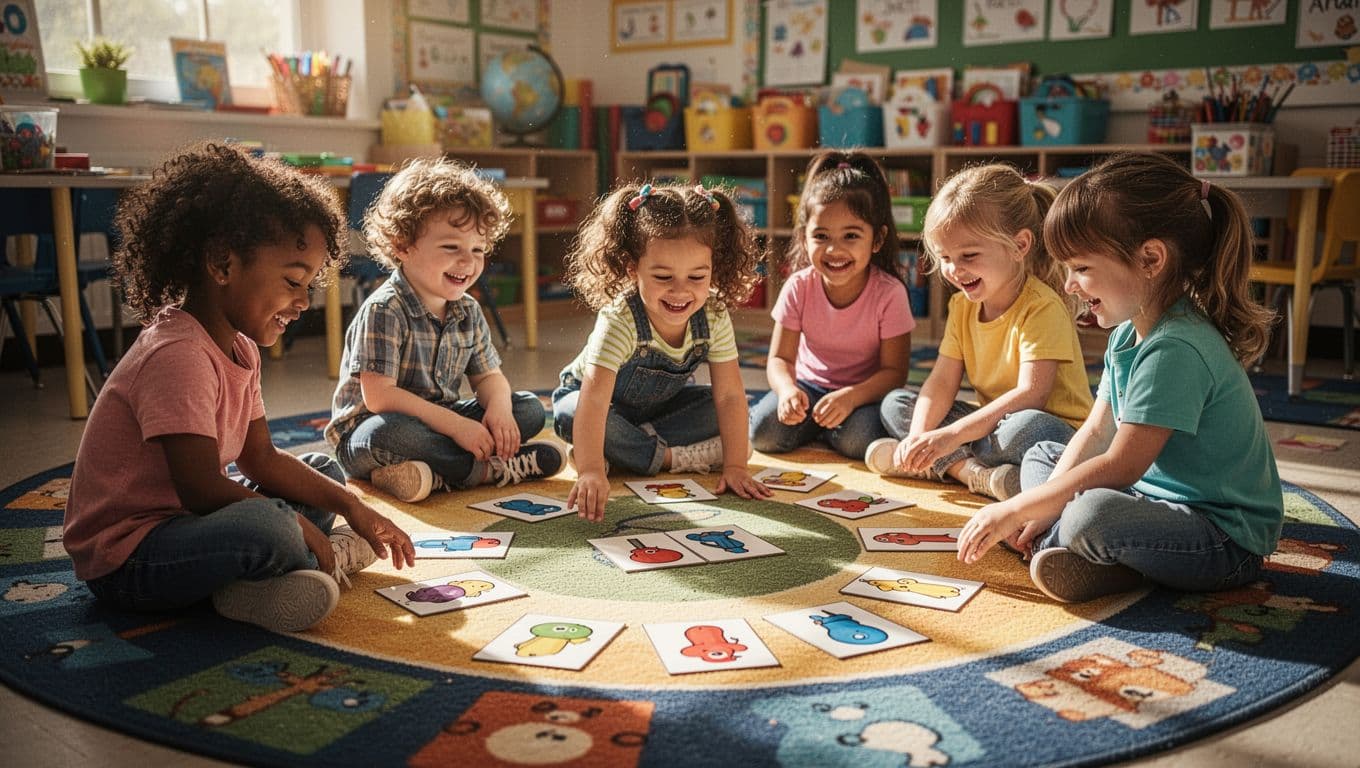
Letter hunt around the room or home
Hide letters in plain sight by asking children to look on labels, book covers, greeting cards, pantry boxes, or classroom signs. Start with a few easy targets, like the first letter of their name, then add more letters as they get comfortable.
This kind of search builds letter recognition and sharpens observation skills. Children learn to slow down, look closely, and notice shapes they may have missed before. It also feels exciting because the room turns into a quiet treasure hunt.
You can say, “Find the letter S on a cereal box,” or “Can you spot an A in that book title?” Small wins matter here, and each found letter gives children another reason to keep looking.
Shape hunt and sorting play
Ask your child to spot circles, squares, and triangles in the room, then point to toys, lids, books, or blocks that match each shape. You can also lay out shape cards and let children sort toys into the right pile.
This is an easy way to practice math readiness without making it feel formal. Children begin to compare sizes, notice edges, and match objects by their features, which is the same kind of thinking they use later in counting and grouping.
For more hands-on early learning ideas, STEM activities for kids aged 5 to 7 show how simple play can build problem-solving too.
Simple color mixing activity
Pour a little water into clear cups, add primary colors, and let children mix two colors together to see what appears. Paint works too, if you want a messier, more hands-on version.
This activity feeds curiosity fast. Children make guesses, watch results, and compare what changed after each mix, which builds prediction skills and visual learning.
Color mixing works best when you let children guess first, then test their idea with the next cup.
You can ask, “What do you think red and yellow will make?” That one question keeps their mind active before the color even changes. For a simple outside comparison, Education.com’s preschool games also show how colors and shapes can be turned into play.
Backpack scavenger hunt for school supplies
Slip crayons, glue, pencils, folders, and a lunch note into a backpack, then ask your child to find each item one by one. If they are not sure what something is, name it together and talk about what it does.
This game helps children learn school supplies by name, so the tools feel familiar instead of strange. It also builds excitement, because each item found is a small sign that they are ready for the day.
Try saying, “Can you find the glue stick?” or “Which pocket has the pencils?” That simple search adds early problem-solving while giving preschoolers a proud feeling about their own things.
Calming back to school routines that make mornings easier
A calm school morning starts long before the backpack is zipped. Preschoolers do best when the day feels familiar, because familiar steps lower stress and leave less room for tears, delays, and power struggles. A few steady routines can turn the rush into something softer and more manageable.
Small habits matter most here. When your child knows what happens first, next, and last, the morning feels less like a scramble and more like a path they already know how to walk. That kind of structure helps both of you breathe easier, especially during the first weeks of school.
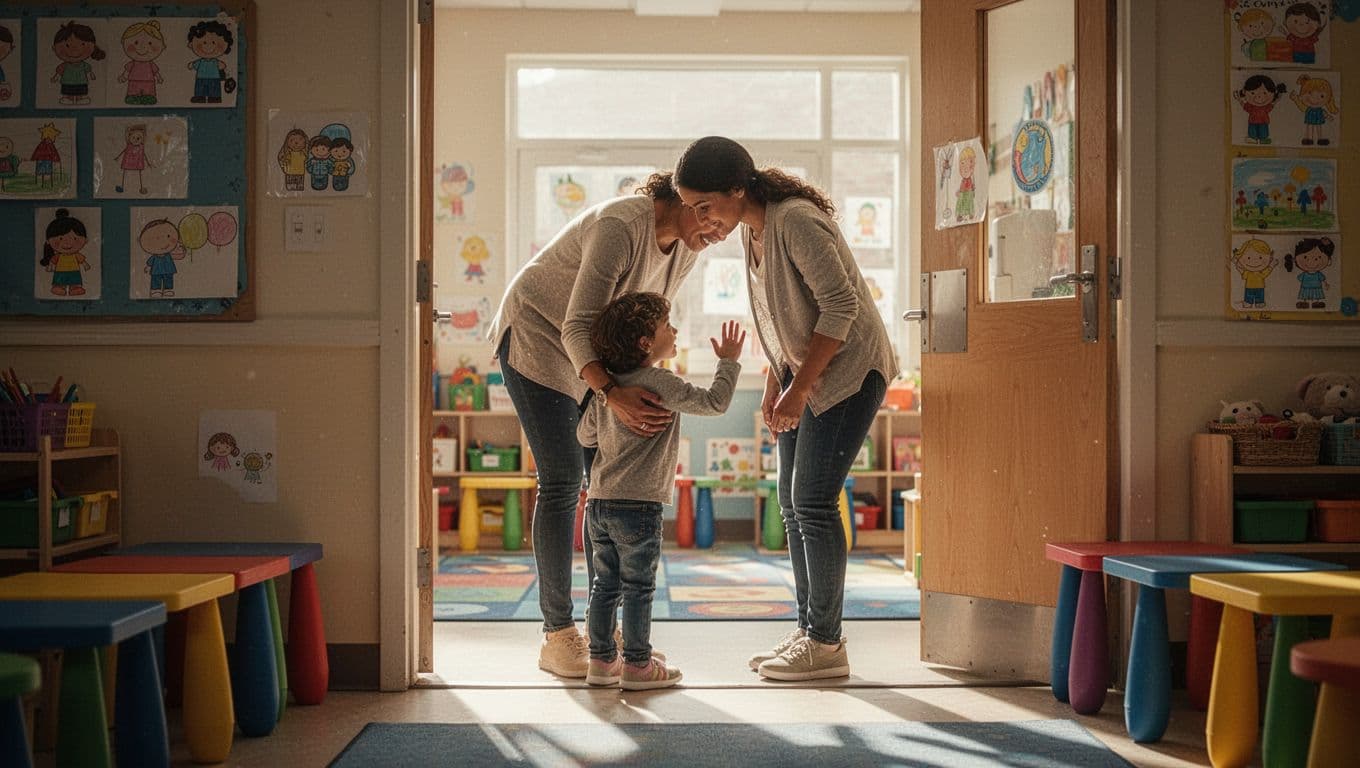
A simple goodbye ritual
Pick one goodbye routine and keep it the same each day. It can be a special wave, a quick hug, a hand squeeze, or one short phrase like “See you after snack time.”
That small repeat gives your child a clear ending. It also keeps goodbye from turning into a long, uncertain moment, which often leads to more tears. A predictable farewell tells preschoolers that school is safe and that you will come back.
For children who struggle with separation, a steady ritual can help them settle faster. NAEYC’s advice on helping children say goodbye supports the same idea, since children relax when they know what to expect.
Picture schedule for the day
Use simple pictures to show the flow of the day, such as arrival, snack, play, rest, and pickup. You can draw the images, print them, or use photos from home if that feels easier.
Visual routines help preschoolers understand time and transitions because they can see what comes next. That cuts down on worry, especially when the day includes changes they can’t yet track on their own. A quick glance at the schedule can calm a child better than a long explanation.
If you want more support with the parent side of the morning, simple morning systems for mothers can help you keep your own routine steady too. When the morning feels calmer for you, it usually feels calmer for your child as well.
How parents can make the first week smoother at home
The first week feels easier when home life already has a soft rhythm. Small steps, repeated calmly, help preschoolers know what to expect, and that sense of predictability lowers stress for everyone.
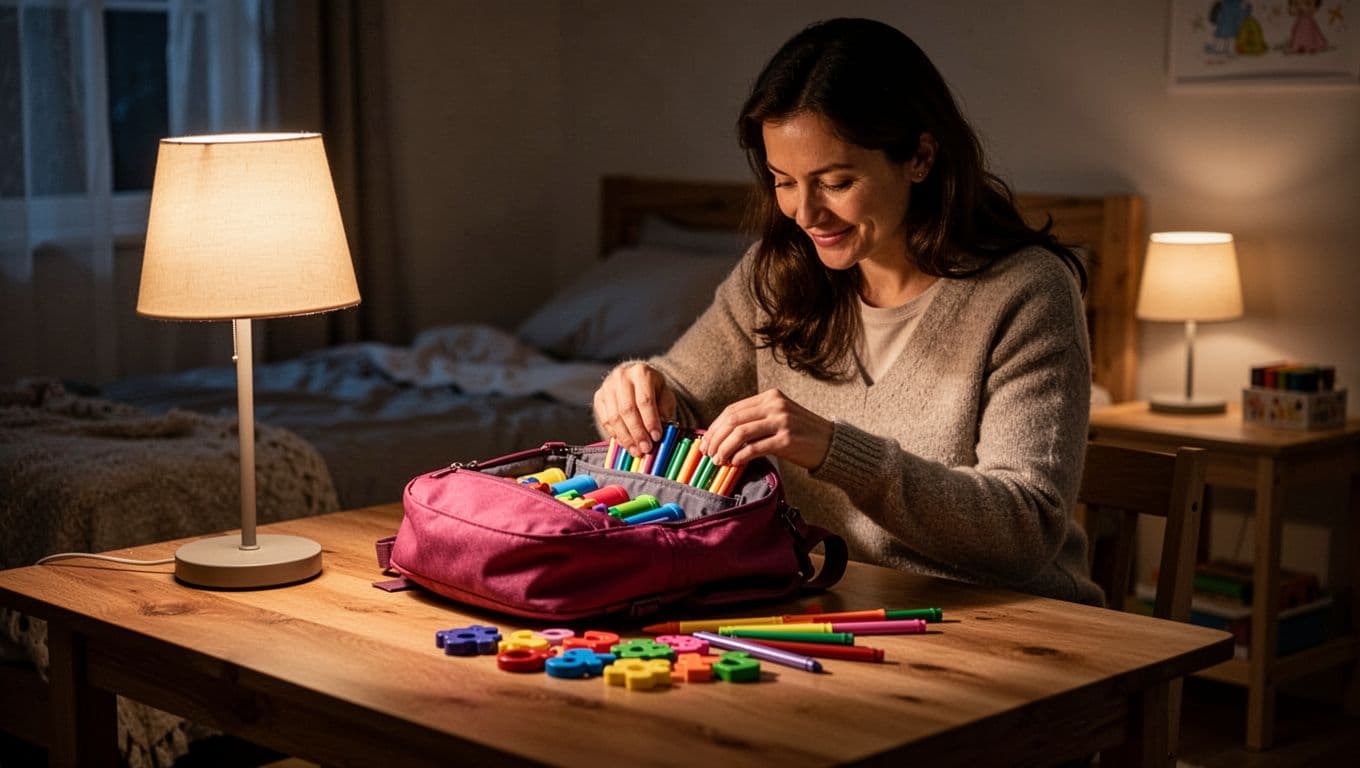
Prep the night before so mornings feel calmer
Lay out clothes before bed, even if it’s just a simple shirt, pants, and socks. Pack the backpack too, so crayons, folders, and any notes are ready to go.
Place shoes by the door and keep the lunch spot in one clear place. These little moves cut out morning searching, which usually turns into rushing.
A quiet evening routine helps just as much. When the same prep happens each night, the next morning feels less like a scramble and more like a routine your child can trust.
A few easy habits make this simple:
- Pick tomorrow’s clothes after dinner.
- Pack the backpack once the homework or school papers are done.
- Set shoes, water bottles, and outerwear by the door.
Talk about school in a positive, steady way
Keep your tone cheerful and calm when school comes up. Preschoolers notice your voice, and they often mirror the emotion they hear. If you sound relaxed, school feels more manageable.
Ask open questions that invite small stories, like “What was the best part of your day?” or “Who did you play with?” Celebrate tiny wins too, such as putting on a backpack alone or waving goodbye without tears.
If your child feels unsure, keep your words simple and steady. Short reassurances work better than long explanations, and NAEYC’s family tips for starting preschool also encourage calm, familiar routines during this stage.
Children do better when school is talked about like a normal part of the day, not a big event to fear.
A warm, repeatable tone at home gives your child a safe place to land after school, and that makes the whole week feel lighter.
Conclusion
The best back to school ideas for preschool are the ones that help little children feel safe, seen, and ready to play. Simple games, gentle crafts, and steady routines turn first-day nerves into moments of comfort and curiosity, which is exactly what young learners need.
When mornings feel calm and the day feels familiar, preschool starts to look less like a hard change and more like a small adventure. A few thoughtful steps at home, plus playful routines at school, can make a big difference for your child and for you.
Save pin for pin

- Asperger’s Syndrome in Babies: Early Signs and Next Steps - October 7, 2026
- 12 Beautiful Baby Names That Mean Forest, Plus Woodland Picks - September 27, 2026
- 15 Fantastic Baby Nicknames for Boys, From Sweet to Playful - September 27, 2026