
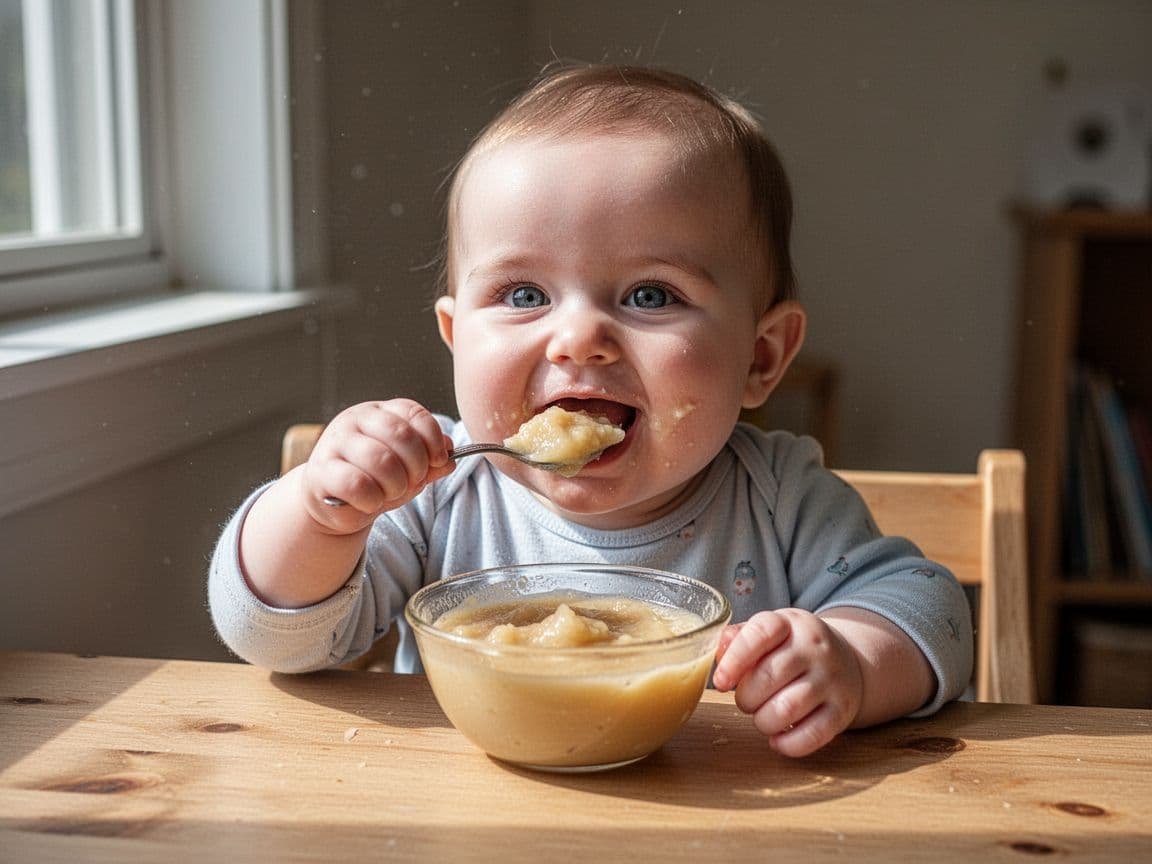
Your baby’s first spoonfuls don’t have to start with guesswork. Readiness for solids is less about a birthday and more about clear signs like steady head control, sitting up well, and showing real interest in food.
Most babies are ready around 6 months, though some need a little more time. If your little one still pushes food back out, can’t sit upright, or seems more curious about the spoon than the meal, the timing may not be right yet. A calm start makes the whole transition easier for both of you.
Keep reading for the simple signs that show your baby may be ready, plus what to avoid if they’re not there yet. If you’re planning those first meals, these baby breakfast ideas can help once solids are underway.
The age window gives a clue, but it is not the whole story
Age gives you a starting point, not a green light all by itself. Around 6 months, many babies are developmentally ready for solids, but some need a little more time, and that’s normal.
What matters most is whether your baby can handle food safely and comfortably. If the body is not ready yet, rushing only makes feeding harder for everyone.
Why about 6 months is the usual starting point
By about 6 months, a baby’s body has usually matured enough for the first small tastes. Digestion is more ready, the head and neck are steadier, and hand-to-mouth control is better. These small changes matter because solids are not just about tasting food, they also ask the body to move and swallow it well.
At this age, many babies can sit with support in a high chair and bring food or a spoon toward their mouth. They also start to move food around better instead of pushing it straight back out with the tongue. That is one reason the tongue-thrust reflex fades around this time.
The American Academy of Pediatrics gives similar guidance, and the CDC says babies can begin solids at about 6 months, while foods before 4 months are not recommended. You can read the CDC’s guidance on when to introduce solid foods.
Age helps you guess timing, but readiness signs tell you what your baby can actually handle.
A baby who is around 6 months old may still not be ready, and another baby a little younger may still need more time. That is why age works best as a clue, not a rule carved in stone. For a closer look at the kinds of meals that fit later stages, see healthy meal ideas for 9-month-old babies.
Why starting too early can be a problem
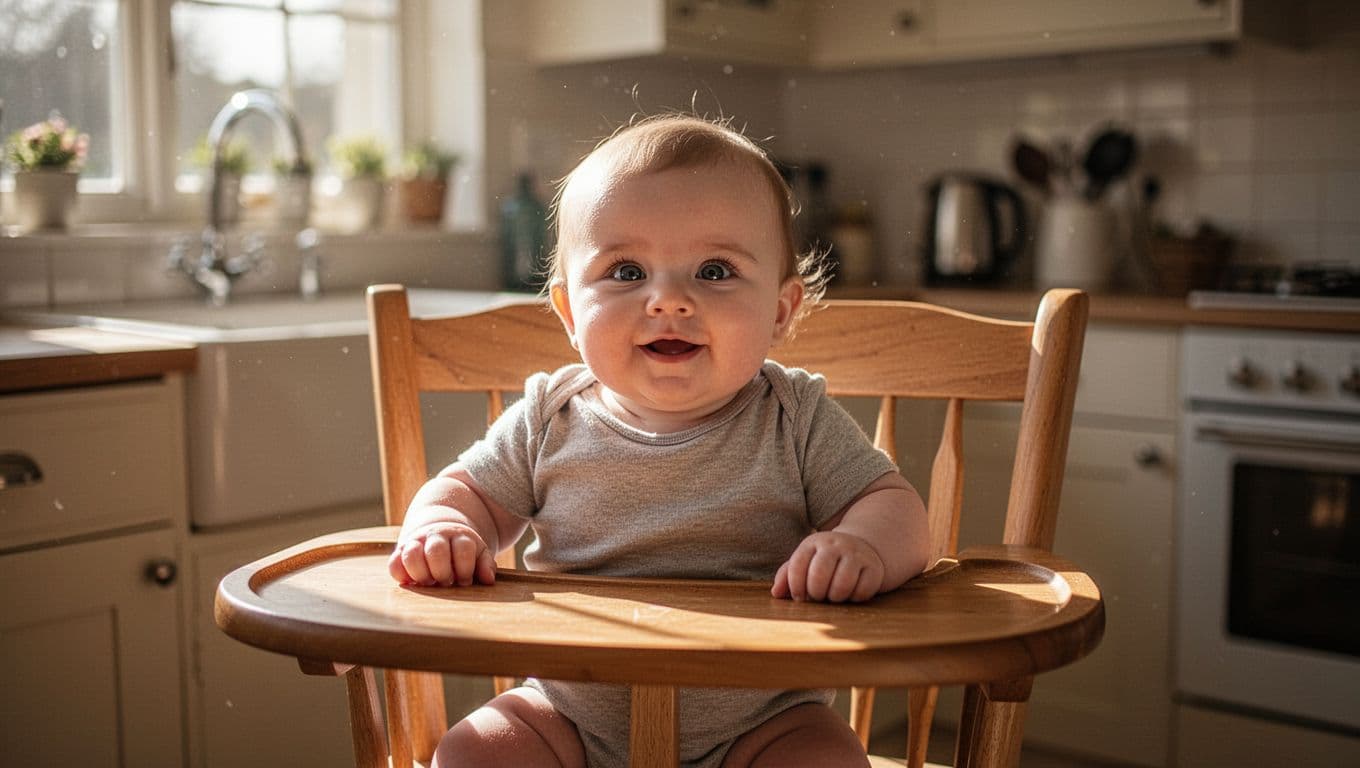
Starting solids too soon can make feeding feel awkward or stressful. A baby who cannot sit well, hold the head steady, or swallow safely may push food out, gag more often, or struggle to manage textures.
It can also crowd out breast milk or formula before those feeds are no longer needed. That matters because milk still gives most babies the nutrition they depend on in the first months.
There is also a simple comfort issue. When a baby is not ready, spoon-feeding can feel like a tug-of-war, and that can set up mealtime resistance before it even begins.
A few common signs can point to “wait a little longer”:
- The head still wobbles or tips forward easily.
- The baby cannot stay upright with support.
- Food is pushed back out with the tongue.
- Reaching for food looks more like grabbing than real interest.
Pressure from family, friends, or milestone charts can make early feeding seem urgent. Still, babies do not all follow the same schedule, and solids should wait until the baby shows the physical signs that food is safe to try.
Read the physical signs your baby can handle solids
The best clues are in your baby’s body, not on a calendar. When a baby is ready for solids, the whole posture changes, the mouth works with more control, and food starts to feel less like a foreign object and more like something they can manage.
Look for steady movement, upright support, and real interest at mealtimes. These signs matter because solids need more than curiosity. They need coordination.
Strong head and neck control
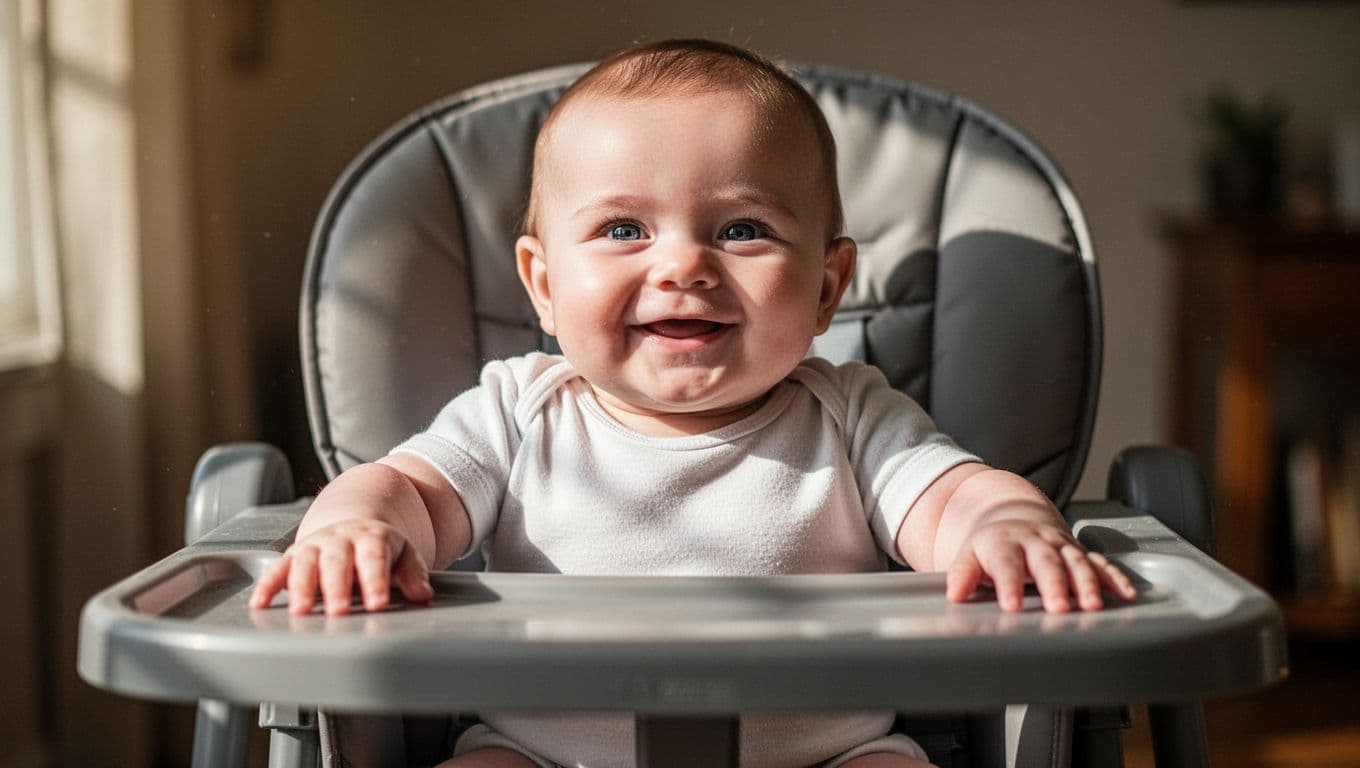
A baby ready for solids can hold the head steady without wobbling, drooping, or flopping forward. That kind of control matters because swallowing is much safer when the head stays in one stable position.
Watch your baby during cuddles, floor play, and feeding time. If the head stays lifted and aligned with the body, that is a good sign. If it still slumps or bounces around, the muscles may need more time.
Good head control also helps your baby coordinate breathing and swallowing. That makes the first spoonfuls feel smoother and less stressful.
If you want a simple test, notice whether your baby can keep the head upright while sitting with support. A steady head is one of the clearest signs that solids may be possible soon. Solid Starts explains readiness signs in a clear way, including the need for stable posture before feeding begins.
Sitting upright with little help
Babies who are ready for solids can sit with support and stay fairly upright in a high chair or feeding seat. They do not need to sit perfectly alone, but they should not fold backward like a soft pillow.
That upright posture helps food stay where it belongs. It also gives your baby better control over the mouth, tongue, and swallowing muscles. When the body is lined up well, feeding becomes much easier.
If your baby still leans back a lot, that is a sign to wait. The same is true if your baby slides to one side or seems to sink into the seat. The feeding position should look stable, not tilted or loose.
A good feeding setup should look calm and balanced:
- The back stays against the seat with little help.
- The hips and shoulders stay fairly square.
- The head stays above the chest, not bent forward.
- The baby does not seem to collapse after a few seconds.
A baby who can stay upright for a short meal is showing real physical readiness. A reclined baby is not there yet.
Opening their mouth and leaning toward food
Interest matters, but it should show up in the body too. A ready baby may open the mouth when a spoon comes near, watch you closely at the table, or lean forward as if trying to meet the food halfway.
You may see little signs like these:
- The baby opens wide when the spoon approaches.
- The baby stares at your plate or tracks each bite.
- Tiny hands reach toward the spoon or bowl.
- The body tips forward with focus, not away from the food.
That kind of curiosity is helpful because it shows your baby is paying attention. Still, curiosity alone is not enough. A baby can be fascinated by food and still not have the control needed to swallow it safely.
The most useful sign is when interest and body control show up together. If your baby watches meals closely and stays steady in the seat, that is much more promising than grabbing at food while the body is still wobbly.
Curiosity is a good sign, but it works best when the body is ready too.
Moving food back instead of pushing it out
At first, many babies still have the tongue-thrust reflex, which means the tongue pushes food back out of the mouth. This reflex is normal early on, but it should fade as solids become a better fit.
You may notice this if your baby keeps pushing puree or cereal out with the tongue. The spoon goes in, the tongue comes forward, and the food ends up on the chin, bib, or tray. That usually means more time is needed.
A baby who is ready to move forward can usually accept the spoon and move food toward the back of the mouth instead of forcing it out. The lips may close around the spoon, and the baby may seem able to keep food inside long enough to swallow.
If you keep seeing food pushed right back out, do not rush. That sign often means the mouth is not ready yet, even if the baby looks eager. For a deeper look at this reflex, the Cleveland Clinic explains tongue thrust in babies.
When these signs line up, your baby is likely much closer to handling solids well. Steady head control, upright sitting, mouth opening, and less tongue pushing all point in the same direction, and they give you a much clearer picture than age alone.
Look for everyday behavior that shows curiosity about eating
Some of the clearest readiness signs show up at the table long before the first bite. Your baby may not say a word, but the eyes, hands, and little body movements often say enough.
These softer clues matter because they show interest and imitation. Still, curiosity alone does not mean your baby is fully ready. Look for it alongside the physical signs of readiness, like good head control and the ability to sit upright.
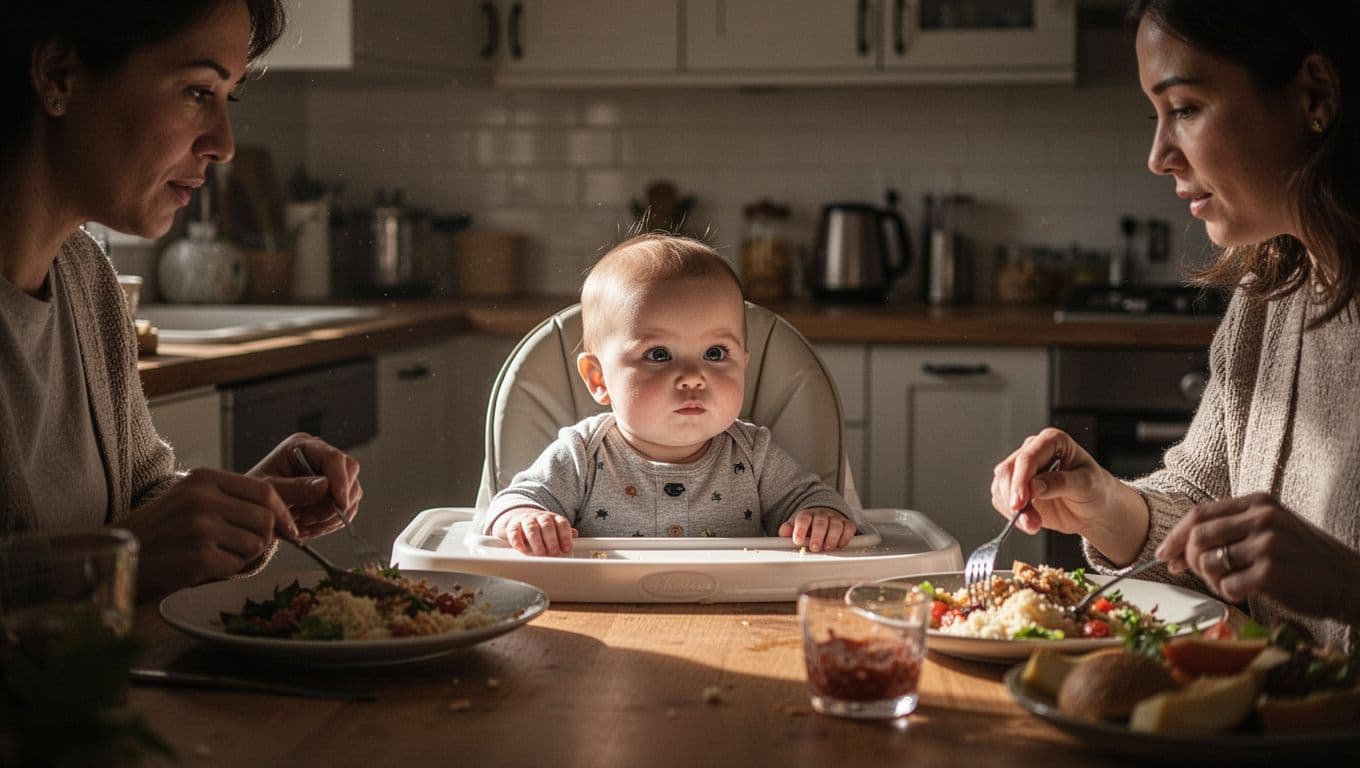
Watching others eat with focus
A baby who is ready to start solids often watches meals like a little audience member at center stage. They may stare at your fork, track each bite from plate to mouth, or pause their own play to look at food across the table.
That kind of focus matters because it shows your baby is noticing mealtime, not just passing by it. You may even see them lean toward the plate or follow your hand as you bring food up to your mouth. For a parent, it can feel like tiny, silent participation.
A few common signs include:
- Staring at food while others eat
- Following bites with their eyes
- Reaching toward plates or spoons
- Watching chewing with bright attention
This is interest, not proof of readiness by itself. A baby can be fascinated by food and still need more time before solids fit well. The CDC’s guidance on starting solids makes the same point, age and behavior both matter.
Bringing hands or toys to the mouth
When your baby keeps putting hands, teethers, or toys in the mouth, that often shows oral exploration. It’s a simple sign of development, and it also hints at self-feeding curiosity.
Babies use their mouths to learn about shape, texture, and movement. A soft toy feels different from a firm teether, and a tiny fist feels different from a spoon. That practice helps them prepare for the feel of food on the lips and tongue.
You might notice this during playtime, while waiting for a bottle, or right before a meal. If your baby wants to mouth everything in sight, that’s often a normal part of learning, and it can fit with early readiness for solids.
This behavior does not mean your baby can eat safely yet. However, it does show the mouth is busy learning, which is a helpful piece of the bigger picture.
Mouthing is a sign of exploration, but feeding readiness still depends on body control too.
Acting hungry even after milk feeds
Sometimes a baby finishes breast milk or formula and still seems unsettled. They may root, fuss, reach for food, or act like they want more than milk alone. That can point to a readiness pattern, especially when it happens often during family meals.
Still, hunger alone should not push the decision. A baby can want more milk for many reasons, including growth spurts, comfort, or simply a rough day. What matters is the full pattern, not one hungry moment.
When this happens, look at the rest of the picture too. Does your baby sit upright with support? Is the head steady? Do they open for food or keep pushing it back out?
The best next step is to watch for interest plus coordination. If your baby seems hungry after usual feeds and also shows the physical signs of readiness, solids may be close. If you need ideas for what comes next, these baby-friendly feeding tips can help you think through meals for little eaters.
How to tell readiness from normal baby behavior that can be misleading
Some baby behaviors look like a clear yes, but they can point to normal growth instead. A hand in the mouth, a loud cry, or a hungry face at dinner can feel convincing in the moment. Still, readiness for solids depends on body control, not just strong feelings or busy little habits.
That difference matters because babies are little explorers. They chew hands, stare at plates, and wake at night for many reasons. The trick is to separate true readiness from behaviors that only look that way on the surface.
Mouthing everything is not the same as being ready to eat
Babies put almost anything in their mouths. Fingers, blankets, toys, and even their own feet can end up there. This is part of normal development, and it often starts long before solids are a good fit.
Mouthing usually means your baby is learning about shape, texture, and comfort. It can also show teething or simple curiosity. However, it does not mean your baby can move food around the mouth or swallow it safely.
Look for the bigger picture instead. A baby ready for solids usually shows steady head control, upright sitting, and better tongue control along with mouthing. Without those pieces, hand-to-mouth play is just practice, not proof.
A big appetite does not replace developmental readiness
A baby who cries for more milk, wakes often, or seems hungry can tug hard at your instincts. It is easy to think, “Maybe solids will fix this.” But hunger cues can have many causes, including a growth spurt, a short feed, discomfort, or a rough night.
Night waking, frequent rooting, and extra fussing are not reliable signs that solids should start. Even a baby who empties bottles or finishes nursing quickly may still need time before solids make sense.
If you are unsure, talk with your baby’s pediatrician before starting. That is especially helpful if feeding patterns change suddenly or your baby seems hard to settle. The Mayo Clinic’s baby feeding guide also makes it clear that milk stays the main source of nutrition in the first year.
Reclining in a seat is a red flag
A baby who still needs to be reclined for support is not ready for solids yet. That position may look comfortable, but it works against safe swallowing. When the body leans back too far, food is harder to control and more likely to slip the wrong way.
Upright posture gives the mouth and throat a better chance to work together. It also helps your baby stay balanced while learning how to handle a spoon or soft pieces of food. If the seat has to do too much of the work, the baby is not ready.
A safer setup looks like this:
- The baby stays upright with only light support.
- The head stays above the chest.
- The body does not slump to one side.
- The baby can stay stable for the full feeding.
If your baby cannot hold that position yet, wait a bit longer. Readiness grows in the body first, then shows up at the table.
Getting ready for the first spoonfuls at home
Once your baby shows the signs of readiness, the first meals should feel calm, simple, and unhurried. This stage is less about serving a full meal and more about giving your baby a safe, low-pressure chance to explore food.
A gentle start works best when the timing feels right, the food is easy to manage, and you stay relaxed. Babies notice your mood, so a steady pace at the table often matters just as much as the food itself.
Choose a calm time of day
Start when your baby is alert, rested, and in a decent mood. A baby who is overtired or upset is far more likely to reject the spoon, and a parent who feels rushed can make the whole moment tense.
Mid-morning or early afternoon often works well, especially after a nap and before hunger turns into full-blown fussing. Many babies do better when they are a little hungry, but not desperate, so the first taste feels like a small introduction instead of a battle.
Keep the setting simple. Silence the TV, settle into the high chair, and give yourself a few extra minutes so you do not feel pressured to hurry.
Start with simple textures
Begin with smooth purees, mashed foods, or other soft textures that match your baby’s current skills. At the start, food should be easy to swallow and gentle on an untrained mouth, which is why many families choose single-ingredient foods first.
Good first options often include:
- Smooth vegetable or fruit puree
- Iron-fortified infant cereal
- Soft mashed avocado or banana
- Very tender cooked vegetables, mashed until soft
The CDC recommends foods that dissolve easily and do not need chewing at first, which helps lower the risk of choking and keeps the experience manageable. You can see that guidance in the CDC’s solid food introduction advice.
Keep portions tiny. A spoonful or two is enough for practice, and early feeding works best when you treat each bite as a learning step, not a performance.
Expect a few messy tries before real eating begins
The first spoonfuls are often clumsy, and that is normal. Your baby may push the food out, wrinkle the face, or spit it onto the bib before any real swallowing happens.
That does not mean the start failed. It means your baby is learning how food feels, how to move it around the mouth, and how to handle a new texture. In other words, mealtime at this stage is more about repetition than success.
Stay patient and keep your response light. If your baby turns away, cries, or clamps the lips shut, pause and try again later. The American Academy of Pediatrics shares similar advice on starting solids, including starting small and keeping expectations realistic.
A calm first experience sets a better tone for the meals that follow. Let the spoon come, let the baby explore, and let the mess happen without making it a big event.
When to wait and ask the pediatrician for guidance
Sometimes the safest move is to pause. If your baby is not showing clear readiness signs, or if feeding looks messy in a worrying way, a quick call to the pediatrician can save you a lot of stress. Solid foods should feel like a small next step, not a guessing game.
Babies born early may need adjusted timing
Premature babies often need a different timeline than full-term babies. Their readiness should be based on development, not just the date on the calendar, so your pediatrician may talk about adjusted age before giving the green light.
That matters because a baby born early may look “old enough” on paper but still need more time to build head control, body strength, and swallow coordination. The goal is simple, wait until your baby shows the same steady readiness signs that other babies show, then follow your doctor’s advice.

For babies born early, timing often needs a closer look, and Children’s Health explains feeding premature babies in a way that matches what many parents hear in the clinic. If your baby was premature, ask before starting solids instead of trying to guess.
Feeding issues that deserve medical advice
Some feeding problems deserve a doctor’s input before you offer solids. Poor weight gain, frequent choking, trouble swallowing, and extreme gagging are not signs to brush off. They can point to a feeding issue that needs a closer look.
You should also pause if your baby coughs hard during feeds, seems to work too hard to breathe, or turns pale while eating. Those signs mean the feeding setup may not be safe yet. If you’re also worried about breathing during meals, these signs of breathing trouble in babies can help you spot when to act fast.
If feeding feels stressful instead of smooth, get medical guidance before moving ahead.
A baby who cannot stay upright with support, keeps pushing food out, or struggles to swallow should not be rushed into solids. The CDC also notes that solids usually begin around 6 months and should not start before 4 months, which leaves room for development to catch up first.
Trust your instincts if something feels off
If your baby seems behind on sitting, head control, or swallowing, speak up. You know your baby’s usual rhythm better than anyone else, so if something feels off, that feeling matters.
Maybe your baby seems floppy in the high chair. Maybe the tongue keeps forcing food back out. Maybe swallowing looks uneven or uncomfortable. Those are good reasons to ask questions, even if nobody else is worried.
When in doubt, talk it through with the pediatrician and wait for a clearer yes. A short check-in can turn a shaky start into a safer one, and it gives you a plan you can trust.
Conclusion
The clearest sign that your baby is ready for solid foods is a full mix of readiness, not just age. Look for steady head control, an upright seat, a mouth that opens for food, and a tongue that no longer pushes every bite back out.
If those signs are not there yet, waiting is wise. Babies do not need to rush into solids, and there is nothing strange about giving the body a little more time to catch up.
Every baby starts in their own time. Watching your baby is more useful than watching the calendar, and that calm patience makes those first spoonfuls easier for everyone.
Save pin for later

- Asperger’s Syndrome in Babies: Early Signs and Next Steps - October 7, 2026
- 12 Beautiful Baby Names That Mean Forest, Plus Woodland Picks - September 27, 2026
- 15 Fantastic Baby Nicknames for Boys, From Sweet to Playful - September 27, 2026