
Many people hope to welcome twins, but no sex position can reliably cause a twin pregnancy. Positions such as missionary, spooning, or those believed to allow deeper penetration haven’t been shown to increase the chance of conceiving twins, so it’s best to approach these claims with realistic expectations.
This guide shares seven evidence-based tips and explains the difference between fraternal twins, who develop when two eggs are fertilized, and identical twins, who develop when one fertilized egg splits. It also looks at factors linked with fraternal twinning, including family history, age, previous pregnancies, and fertility treatment, while explaining why identical twinning usually happens randomly.
Because a twin pregnancy can bring additional health considerations, talk with your doctor before using fertility medications or changing your conception plan. Start with the facts, then explore which steps may support your goals and which popular claims belong in the myth column.
Watch a fertility expert explain how twins are conceived
Understand What Really Causes Fraternal and Identical Twins
Twin pregnancies begin in two different ways. Fraternal twins develop when two eggs are released and fertilized by two sperm cells during the same cycle. Identical twins begin with one fertilized egg that later divides into two embryos. That difference matters because fraternal twinning is linked with ovulation, while identical twinning is usually unpredictable.
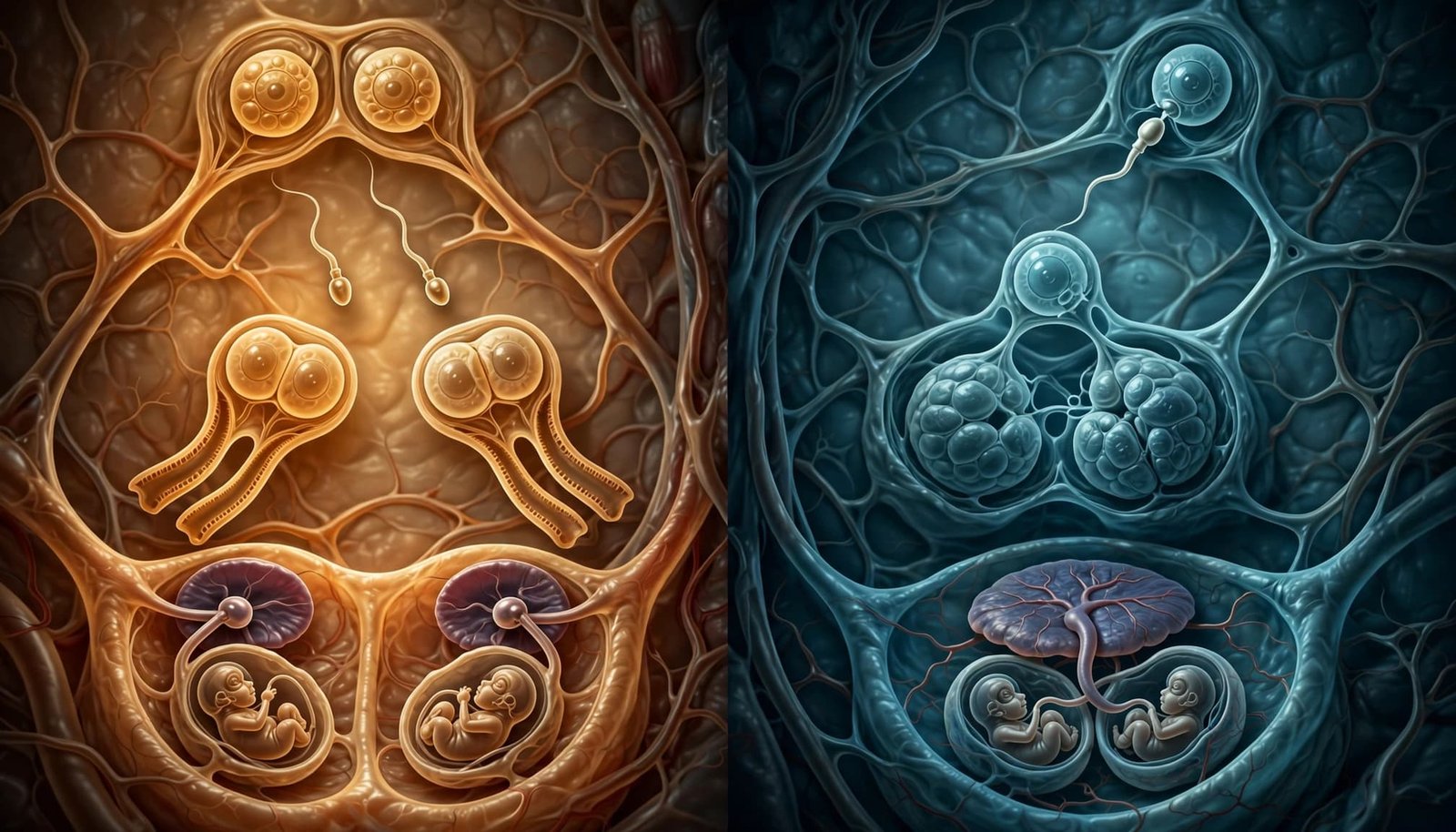
Why identical twins cannot be planned
Identical twins, also called monozygotic twins, form when one embryo splits. Researchers know what happens, but they still don’t know why one embryo divides in some pregnancies and remains whole in others. The split appears to happen spontaneously rather than because of a specific food, sexual position, supplement, or timing strategy.
As a result, you can’t reliably increase your chance of identical twins through diet, intercourse frequency, or ovulation tracking. The natural rate is about 3 to 4 identical twin births per 1,000 births, although individual chances vary. Unlike fraternal twinning, identical twinning stays relatively consistent across age, ethnicity, and the number of previous pregnancies.
The University of Texas Southwestern Medical Center’s explanation of twin genetics also distinguishes spontaneous embryo splitting from inherited fraternal twinning. That distinction can help you sort medical information from hopeful but unsupported claims.
Why fraternal twins are more connected to ovulation
Fraternal twins, or dizygotic twins, result from hyperovulation, which means releasing more than one egg during a menstrual cycle. If sperm fertilizes both eggs, two genetically different embryos develop. They share about as much genetic material as ordinary siblings.
Several factors are associated with a higher chance of hyperovulation:
- A maternal family history of fraternal twins may point to an inherited tendency to release multiple eggs.
- Fraternal twinning becomes more common with maternal age, including after age 35, although age isn’t a reason to delay or pursue pregnancy.
- Previous pregnancies and births are associated with higher fraternal twinning rates.
- Twinning rates vary among ethnic and ancestral groups, with some populations showing higher natural rates than others.
- Fertility medications, ovarian stimulation, and transferring more than one embryo can raise the chance of twins.
These are associations, not guaranteed methods. For practical preconception guidance, review these steps to take before getting pregnant and discuss fertility treatment with a qualified clinician.
Seven Safer, Evidence-Based Tips That May Affect Twin Conception
No natural method guarantees twins. The safest approach is to support conception, understand your personal factors, and discuss medical options before trying to influence ovulation or embryo transfer.

1. Learn your family history
Ask relatives whether fraternal twins occur on your mother’s side of the family. A tendency to release more than one egg may run through the maternal line, which can affect fraternal twinning. Family history doesn’t predict identical twins or guarantee a twin pregnancy.
Your practical step is simple: write down known twin pregnancies and share that information during a preconception visit.
2. Understand age-related fertility changes
Fraternal twinning becomes more common with maternal age, partly because hormonal changes may encourage multiple ovulation. However, fertility also declines with age, and age alone isn’t a safe reason to delay pregnancy or pursue twins.
Discuss your timeline, ovarian reserve, and pregnancy goals with a clinician rather than trying to use age as a strategy.
3. Track ovulation to improve your chance of conception, not to guarantee twins
Ovulation predictor kits detect the hormone surge before ovulation. Cervical mucus often becomes clearer and stretchier, while cycle tracking can help estimate fertile days. Sex during this window may improve the chance of pregnancy, but it hasn’t been shown to increase the chance of twins. ACOG explains that the fertile window is roughly six days, not one fixed calendar date.
For additional planning ideas, review these natural fertility and ovulation tips. If your cycles are very irregular, medical guidance is more useful than guesswork.
4. Schedule preconception care
A preconception visit gives you time to review medications, health conditions, vaccinations, nutrition, and prenatal vitamins. It also helps your clinician identify concerns that could affect pregnancy before you start trying.
Bring your cycle notes and family history to the appointment. Diet changes, supplements, and online twin-conception tricks don’t have strong proof for increasing twin pregnancies.
5. Ask about fertility treatment risks before trying to raise twin odds
Ovulation-induction medicines can cause more than one egg to mature. That may increase the chance of twins, triplets, or higher-order multiples, along with pregnancy complications.
Never take these medicines without a prescription, ultrasound monitoring, and a clear treatment plan. ACOG’s infertility treatment guidance can help you prepare questions. The goal should be a healthy pregnancy, not simply more than one baby.
6. Discuss embryo-transfer plans carefully if IVF is involved
Transferring more than one embryo can raise the chance of twins, but it also raises the risks linked with multiple pregnancy. For many patients with a strong prognosis, professional guidance favors elective single-embryo transfer.
Ask how your age, embryo quality, medical history, and the clinic’s multiple-birth rate affect the recommendation. ASRM identifies single-embryo transfer guidance as a key part of safer assisted reproduction.
7. Prepare for extra monitoring in a twin pregnancy
Twin pregnancies often require additional appointments, ultrasounds, and screening because complications such as preterm birth, high blood pressure, and gestational diabetes are more common. Ask what care your insurance covers and which maternal-fetal medicine specialists are available.
Planning for closer monitoring keeps the focus where it belongs: protecting your health and supporting both babies.
Do Positions to Get Pregnant With Twins Actually Work?
No credible medical evidence shows that a sexual position can cause twins. Twin conception depends on whether the ovaries release one egg or more than one, and whether a fertilized embryo later splits. The angle, depth, or position of penetration doesn’t control either event.
Sex during the fertile window can support conception generally, so timing still matters for becoming pregnant. However, medical guidance doesn’t identify intercourse timing as a way to increase the chance of twins.

Why sex position and intercourse timing do not control twin conception
Fraternal twins form when two eggs are released and fertilized during the same cycle. Identical twins begin when one fertilized egg divides into two embryos. Sperm can fertilize an egg, but it doesn’t decide how many eggs the ovaries release or whether an embryo will split.
Online claims often connect twins with deep penetration, missionary position, rear-entry sex, or keeping the hips raised afterward. Some posts also suggest that orgasm, repeated intercourse, or lying still for a certain amount of time changes the odds. These ideas remain unproven.
Sperm move through the reproductive tract after ejaculation, and pregnancy can occur in several comfortable positions. Raising your hips or staying in bed afterward has not been shown to increase twin conception. You also don’t need to force a painful angle or continue sexual activity when you’re uncomfortable.
For the best chance of pregnancy, focus on regular sex during the fertile window. Ovulation predictor kits, cervical mucus changes, and cycle tracking can help you identify that window. If you’re unsure when ovulation occurs, these questions to ask about conception can help you prepare for a medical appointment.
What to avoid when trying online twin-conception methods
Fertility medications can increase the chance of releasing several eggs, but they require a prescription, monitoring, and careful dosing. Clomiphene and injectable gonadotropins can raise the chance of twins, triplets, or more. Injectable medicines can also increase the risk of ovarian hyperstimulation syndrome, a condition that may cause severe abdominal swelling, pain, vomiting, breathing problems, or blood clots.
A twin pregnancy also carries higher risks, including premature birth, preeclampsia, and fetal growth problems. The American Society for Reproductive Medicine’s clinical guidance explains why treatment plans must balance pregnancy chances with multiple-birth risks.
Avoid unprescribed fertility drugs, high-dose supplements, extreme diets, and advice that encourages unsafe sex. Don’t delay prenatal care to follow an online method. A licensed obstetrician-gynecologist or reproductive endocrinologist can review your health, fertility history, and goals before recommending any treatment.
Prepare for the Health Needs of a Twin Pregnancy
Wanting twins should include an honest look at what carrying two babies can require. Twin pregnancies often have positive outcomes, but they usually involve earlier appointments, closer ultrasound monitoring, and more frequent checks than singleton pregnancies.

Know the main risks without letting fear take over
About six in ten twin pregnancies result in birth before 37 weeks, according to the NHS guidance on antenatal care with twins. That statistic doesn’t predict what will happen in your pregnancy, but it explains why your care team watches twins carefully.
Preterm babies may need extra help with breathing, feeding, temperature control, or weight gain. Twins born early or at a low birth weight may spend time in a special care nursery or neonatal intensive care unit. The babies can also grow at different rates, so repeated ultrasounds help clinicians check each baby’s size, fluid levels, and well-being.
Twin pregnancy also raises the chance of anemia, high blood pressure, preeclampsia, and placental complications. Your provider may check your blood pressure and urine more often, order blood tests for anemia, and discuss symptoms that need immediate attention, such as severe headache, vision changes, sudden swelling, or upper abdominal pain.
Closer monitoring does not mean a problem is expected. It gives your care team more chances to spot changes while there is still time to respond.
Start preconception care before a positive test
A preconception visit can help you enter pregnancy with a clear health plan. Review chronic conditions, medications, vaccines, previous pregnancies, fertility concerns, blood pressure, diabetes risk, weight, anemia, and mental health with your clinician. You can also discuss a prenatal vitamin that contains folic acid and ask whether your diet or medical history creates extra iron needs.
Use this prenatal care checklist to organize questions before your appointment. Good nutrition supports your health, but don’t start high-dose iron or fertility medication without medical advice.
Prenatal care cannot create twins. It can help you manage existing health concerns, identify risks early, and prepare for the added nutritional and medical demands of carrying more than one baby.
Ask about chorionicity, which describes whether the twins share a placenta. Dichorionic twins have separate placentas, while monochorionic twins share one. Shared placentas can require more frequent scans because complications such as twin-to-twin transfusion syndrome can develop. Early ultrasound usually identifies this detail, and it helps determine the safest monitoring schedule.
When to Talk With a Fertility Specialist About Your Twin Goals
A fertility specialist can help you understand your options, but no treatment can promise twins. Consider an appointment sooner if you have irregular or absent ovulation, endometriosis, repeated pregnancy loss, or a known fertility concern. You should also seek help after 12 months of trying if you’re under 35, after six months if you’re 35 or older, or right away after age 40.
Age-related concerns deserve a personal conversation, not a strict rule. Read about fertility and pregnancy after 30 and bring your questions to an OB-GYN or reproductive endocrinologist.

Questions to bring to your appointment
Write your questions down before the visit. Clear answers can help you weigh your twin goals against the health risks of multiple pregnancy.
- What factors affect my chance of fraternal twins, including my family history, age, previous pregnancies, and ovulation pattern?
- Do I need ovulation testing, bloodwork, or an ultrasound to understand when and whether I ovulate?
- Could any prescription, over-the-counter medicine, or supplement I take affect ovulation?
- What are the risks of twins for my health, including preterm birth, high blood pressure, preeclampsia, anemia, or gestational diabetes?
- If I use IVF, would single-embryo transfer be safest for me?
If you use ovulation medication, ask how often the clinic will monitor your follicles and hormones. Also ask, “What happens if several follicles develop?” Find out whether the clinic cancels timed intercourse or IUI when the multiple-pregnancy risk becomes too high, and ask about any cancellation fees or policies.
For IVF, ask about the clinic’s twin and preterm-birth rates, not only its overall pregnancy rate. ASRM identifies single-embryo transfer guidance as an important way to reduce multiple pregnancy. ACOG also reports higher risks of preterm birth and low birth weight with IVF twins.
Your next step may look different depending on your situation:
| Your situation | A reasonable first appointment |
|---|---|
| Regular cycles and no fertility concerns | Keep trying naturally and schedule routine preconception care. |
| Irregular cycles, medication questions, or pregnancy loss | Start with your OB-GYN, or ask for an earlier referral. If you’ve experienced loss, review trying to conceive after miscarriage. |
| Interest in ovulation medication or IVF | See a reproductive endocrinologist for treatment options and safety limits. |
The ethical goal of fertility care is a healthy parent and baby. Increasing the number of fetuses should never outweigh that goal.
Conclusion
No sex position, intercourse timing trick, food, or supplement can reliably produce twins. Fraternal twin chances are shaped by biology, including maternal family history and hyperovulation, while identical twins usually occur unpredictably. Fertility medications and embryo-transfer choices can raise the chance of twins, but they also increase the risks of multiple pregnancy and require medical supervision.
Use these seven tips to plan thoughtfully, track your fertility for conception rather than twin prediction, and arrange preconception care. Before taking fertility medication or pursuing treatment, speak with an OB-GYN or fertility specialist about the safest options for your health. If twins occur, expect closer monitoring for growth, preterm birth, blood pressure concerns, and other complications.
A healthy pregnancy is the best goal, whether it brings one baby or two.
Save pin for later


- Dry Cough in Kids: 5 Causes and Safe Solutions - September 23, 2026
- How to Help a Child Deal With Anxiety at Home - September 12, 2026
- How to Prepare Your Child for the First Day of School - September 12, 2026