

If you’re trying again after a loss, it’s normal to want clear answers and feel frustrated by how mixed the advice can be. The TTC After Miscarriage Timeline and Fertility Facts can feel hard to sort through, especially when you’re grieving and also hoping.
In many early, uncomplicated miscarriages, ovulation can return as soon as 2 weeks later, and your period often comes back within 4 to 6 weeks. That means some people can safely try again sooner than older advice once suggested, although the right timing still depends on your body, your recovery, and your emotional readiness.
If you conceive again soon, it also helps to brush up on foods harmful during pregnancy, since early pregnancy habits matter from the start. Ahead, you’ll get a clear look at when fertility returns, what can change the timeline, when it makes sense to wait longer, and when it’s time to call your doctor.
How soon can you try to conceive after a miscarriage?
The short answer is that it depends on what kind of loss you had, how your body is healing, and whether your follow-up care is complete. In many cases, the TTC After Miscarriage Timeline and Fertility Facts are more flexible than older advice made them seem.
For an uncomplicated early miscarriage, some people can ovulate again within a couple of weeks. Still, “can” and “should” are not always the same. Your next step should match your recovery, not just the calendar.
For an early miscarriage, trying again may be possible after your next period
After an early miscarriage, many doctors suggest waiting until after your next normal period before trying again. That advice is often practical, not punitive. It helps confirm that the miscarriage bleeding has stopped, gives the uterus time to settle, and makes it easier to date a new pregnancy.
If you conceive before that first period, a healthy pregnancy is still possible. The main issue is that it can be harder to know how far along you are. That can make early ultrasounds and due date estimates more confusing.

More recent evidence has shifted this conversation. Large reviews and clinical guidance suggest that for most people with an early, uncomplicated loss, trying again within 3 months does not appear to raise miscarriage risk. Some studies have even found good pregnancy outcomes in people who conceive sooner rather than later. The Mayo Clinic’s guidance on pregnancy after miscarriage reflects this more current view.
If your bleeding has stopped, you feel physically well, and your doctor has not told you to wait, trying after the next period is often reasonable after an early loss.
That said, there is no prize for starting quickly. Some people want to try again right away, while others need more time. Both responses are normal. Physical readiness and emotional readiness do not always happen at the same pace.
A few practical signs that your body may be ready include:
- Bleeding has fully stopped.
- Cramping is mild or gone.
- You do not have fever, foul-smelling discharge, or worsening pain.
- A clinician has not raised concerns at follow-up.
If you do get pregnant again soon, early prenatal habits matter from day one. It can help to review foods that cause miscarriage in early pregnancy so you can make safer choices right away.
After a D and C, medication treatment, or heavy bleeding, recovery may take longer
The timeline can change when the miscarriage was not simple or quick. A D and C, miscarriage medication, prolonged bleeding, or a rough recovery can all mean your body needs more time before trying again.
After a D and C, some people bounce back fast. Others need longer because the lining of the uterus needs to heal, bleeding may linger, or hormone levels take time to fall. The same goes for medication treatment. Cramping and bleeding can continue for days or even a few weeks, and follow-up may be needed to confirm that the pregnancy tissue has passed completely.
Heavy bleeding matters for another reason too. If you’ve lost a lot of blood, you may be left feeling wiped out, dizzy, or short of breath. That can point to anemia, which may need treatment before pregnancy is a good idea again. Starting another pregnancy while depleted can feel like trying to run on an empty tank.
Doctors may suggest waiting 1 to 2 cycles in these cases, depending on your symptoms and what follow-up shows. That does not mean there is a universal rule. It means your body may need a little more runway.
Call your doctor sooner if you have any of these signs during recovery:
- Bleeding that stays heavy or suddenly gets worse
- Fever or chills
- Strong pelvic pain
- Foul-smelling discharge
- Ongoing positive pregnancy tests without a clear plan
These can point to retained tissue, infection, or hormone levels that have not returned to baseline. Once those issues are sorted out, the plan for trying again becomes much clearer.
Some situations need a longer pause before trying again
Some losses need a different plan, and that is because the medical picture is different, not because your fertility is gone. In these cases, waiting longer can protect your health and support a safer next pregnancy.
An ectopic pregnancy is one of the clearest examples. Because the pregnancy grows outside the uterus, follow-up is very important. If treatment involved surgery, your doctor may advise waiting until you have had a couple of periods. If you were treated with methotrexate, the wait is usually longer because that medication can affect folate levels and may not be safe for a new pregnancy right away.
A second-trimester loss often calls for more recovery time as well. Your cervix, uterus, iron levels, and hormone levels may all need closer review. In some cases, your doctor may want testing before you try again, especially if there were signs of infection, cervical issues, or labor-like symptoms.
Other reasons for a longer pause include:
- Molar pregnancy, because hCG levels need close follow-up until they return to normal
- Ongoing hCG monitoring, when pregnancy hormone levels have not dropped as expected
- Repeated miscarriages, which may lead to blood work, imaging, or genetic testing before TTC again
The Miscarriage Association’s advice on trying again explains this well. The goal is not to delay you for no reason. The goal is to make sure the next attempt starts on the best footing possible.
If your situation falls into one of these groups, ask your doctor three clear questions at follow-up:
- Has my body recovered enough to try again?
- Do I need more testing or repeat labs first?
- Is there a recommended wait based on my treatment?
Those answers are usually more helpful than general internet timelines. When the loss was early and uncomplicated, the wait may be short. When the loss involved surgery, medication, or ongoing follow-up, a longer pause often makes sense.
Your body’s timeline after miscarriage, ovulation, bleeding, and your first period
The physical timeline after a miscarriage often moves in a clear order, even if the exact dates vary. First, bleeding settles down and pregnancy hormone levels drop. After that, ovulation can return, and then your first true period usually follows. That sequence matters because it shapes the TTC After Miscarriage Timeline and Fertility Facts more than many people realize.
What makes this tricky is that your body may restart fertility before your cycle looks “normal” again. So while the calendar can give you a rough guide, your body may not read from a script.
Bleeding and hCG levels usually come down first
After a miscarriage, bleeding is usually the first part of recovery you notice. How long it lasts depends on how far along the pregnancy was and how the miscarriage was managed. An early miscarriage may cause bleeding for about a week, with spotting that can continue longer. If you used medication or had a D and C, the pattern can look different, and some people bleed more or for longer.
At the same time, your hCG levels, the pregnancy hormone, need to fall before ovulation can restart. In many early losses, hCG drops over days to weeks and may take 2 to 6 weeks to become undetectable. Because of that, a home pregnancy test can stay positive for a while, even when the miscarriage is over. That can feel confusing, especially if you’re watching closely for signs your cycle is coming back.
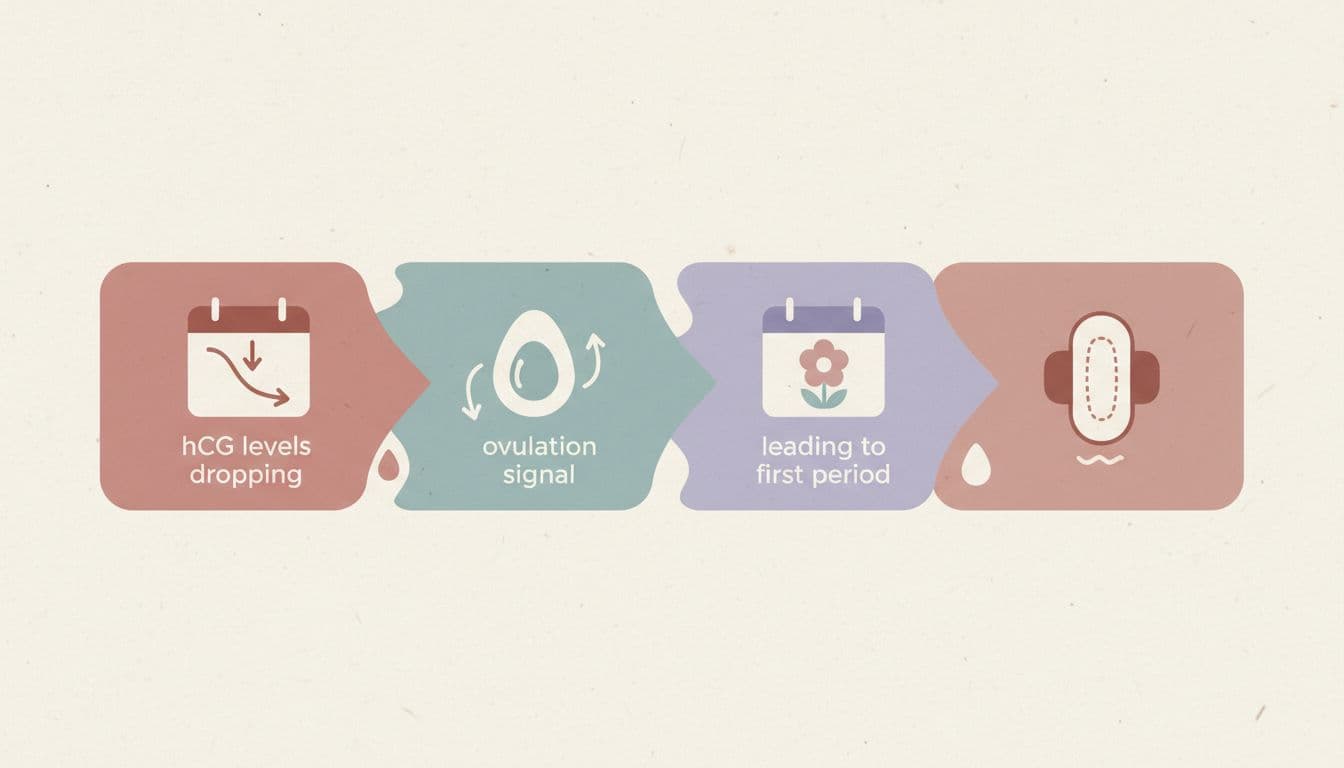
If your test lines are fading, that often means hCG is coming down. Still, if tests stay strongly positive or symptoms seem off, it’s smart to check in with your doctor. Healthline’s overview of hCG after pregnancy loss explains why this drop can take time.
Some symptoms need prompt medical care, not watch-and-wait. Call your doctor right away if you have:
- Very heavy bleeding, such as soaking pads quickly for hours
- Severe pain that is getting worse
- Fever
- Foul-smelling discharge
Those signs can point to infection, retained tissue, or another problem that needs treatment.
Ovulation can happen before your next period
This is one of the biggest fertility facts after miscarriage: you can ovulate before your first period returns. For some people, ovulation comes back as early as about 2 weeks after miscarriage. That means pregnancy can happen before you ever see another period.
If you’re having sex and not using birth control, pregnancy is possible before the first post-miscarriage period.
That timing surprises a lot of people. Many assume the first period is the body’s signal that fertility is back, but ovulation comes first. The period only happens if that egg is not fertilized.
Tracking ovulation can help, but early tracking has limits. Because hCG may still be in your system, ovulation test strips can be misleading at first. They may pick up hormone changes that do not mean true ovulation yet. Cervical mucus, temperature shifts, and test strips can all be harder to read during this transition.

For that reason, use tracking as a clue, not a promise, during the first cycle or two. If you want a simple overview of what that early return can look like, this ovulation-after-miscarriage guide from Healthline offers a helpful summary.
Your first period may not look normal right away
For many people, the first true period comes back in about 4 to 6 weeks, though it can take a little longer. In some cases, it may take up to 8 weeks. Even then, that first period may not look like your usual one.
The flow might be heavier. It may last longer, come with more cramping, or start and stop. Some people also notice spotting before or after. That does not always mean something is wrong. Often, your body is still settling into its old rhythm, and cycle length, bleeding pattern, and timing can be off for a cycle or two.
A quick reference can make this easier to sort out:
| What can be common | When to check in |
|---|---|
| A heavier or lighter first period | Bleeding that stays irregular for weeks |
| Extra cramping or small clots | No period after several weeks, especially by 6 to 8 weeks |
| Spotting before the period starts | Ongoing positive pregnancy tests |
| A cycle that is shorter or longer than usual | Worsening pain, fever, or foul-smelling discharge |
For many women, cycles smooth out within a few months. WebMD’s guide to the first period after miscarriage notes that some variation early on is common. Still, if bleeding keeps acting strange or your period does not return after several weeks, it’s worth asking your doctor whether more follow-up is needed.
Fertility facts that matter most when TTC after miscarriage
When you’re trying again after a loss, the facts can feel tangled up with fear. This part of the TTC After Miscarriage Timeline and Fertility Facts matters most: one miscarriage usually does not mean your body can’t carry a future pregnancy. In many cases, fertility returns quickly, but your next steps still depend on your age, cycle patterns, and the details of the loss.
One miscarriage usually does not mean you are infertile
A single miscarriage is sadly common, and it usually does not lower your future fertility. For many people, the loss happened because of a random chromosomal issue in the embryo. That kind of problem can happen by chance, even when you did everything “right.”
So while a miscarriage can shake your confidence, it usually doesn’t mean anything is broken. Most people who have one loss go on to have a healthy pregnancy later. That is one of the most reassuring parts of the TTC After Miscarriage Timeline and Fertility Facts.

The emotional hit can make it feel as if your odds changed overnight. Usually, they didn’t. If you had one early miscarriage and no known fertility issues, your chances of conceiving again are often still very good.
One loss can change how you feel about trying again, but it usually does not change your basic ability to get pregnant.
Trying sooner does not appear to raise the risk in most early, uncomplicated cases
Newer research has shifted this conversation. In many early, uncomplicated miscarriages, conceiving within the first few months does not seem to raise the risk of another loss or poor pregnancy outcome. Some studies even found lower repeat miscarriage rates in people who tried again sooner.
That doesn’t mean everyone should rush. It simply means there often isn’t a medical reason to wait a long time after an early loss if bleeding has stopped, recovery is complete, and your doctor has not told you otherwise.
Your timeline still gets to be your timeline. Some people feel ready quickly. Others need space to recover, track a cycle, or catch their breath. Both are reasonable. A shorter wait can be safe, but it is not a deadline.
Age, cycle history, and the reason for the loss can affect your next steps
General advice works best when your cycles are regular and the loss was straightforward. If you’re 35 or older, have irregular periods, or already know ovulation is hit-or-miss, it may make sense to ask for help sooner.
The same goes if you have:
- PCOS
- endometriosis
- thyroid disease
- low ovarian reserve
- known sperm or semen concerns
- a history of infertility before the miscarriage
These factors don’t mean pregnancy won’t happen. They just change how long it makes sense to wait before checking in with a doctor. For example, someone with predictable cycles after one early loss may try for a while on their own, while someone with PCOS or male factor concerns may benefit from earlier testing.
The reason for the loss matters too. An early miscarriage caused by a chance chromosomal issue points to a different path than a loss tied to hormone problems, uterine issues, or repeated miscarriages. If your history is more complex, getting a clear plan early can save time and stress.
How to get ready to try again, physically and emotionally
Once your doctor says it’s medically okay to move forward, the next step is getting your body and mind in a better place for pregnancy. In the middle of the TTC After Miscarriage Timeline and Fertility Facts, this part can feel less clear because readiness is not just about a date on the calendar. It’s also about whether you feel steady enough to try again without ignoring your own needs.
Simple preconception steps that can support a healthy pregnancy
A few basic habits can give you a stronger starting point before you try again. They do not promise a certain outcome, but they can support your overall health, which matters in early pregnancy.
Start with a prenatal vitamin or folic acid. In the US, standard preconception guidance is 400 to 800 mcg of folic acid daily, ideally starting at least a month before conception. That helps lower the risk of some neural tube defects, and it’s one of the simplest steps you can take.

It also helps to clean up the basics:
- Limit or avoid alcohol while trying to conceive.
- Stop smoking and avoid nicotine products if you can.
- Ask your doctor to review prescriptions, supplements, and over-the-counter meds.
- Keep chronic conditions like thyroid disease, diabetes, or high blood pressure under good control.
- Aim for decent sleep, regular meals, protein, iron-rich foods, and hydration.
None of this needs to look perfect. You are not building a flawless body. You are giving yourself a better foundation. If your routines feel off right now, habits to break for preconception wellness can help you spot a few easy places to start.
These steps support health before pregnancy, but they do not guarantee pregnancy or prevent every loss.
Tracking your cycle after loss without adding extra stress
Cycle tracking can help, but it should support you, not run your life. After a miscarriage, the first cycle can be strange because hormones are still resetting. Ovulation may come earlier or later than usual, and signs can be harder to read.
A simple approach often works best. You can watch for cervical mucus, use ovulation predictor kits, or track basal body temperature if that feels manageable. Cervical mucus often becomes clear and slippery near ovulation. OPKs can help spot an LH surge. Basal body temperature can confirm that ovulation likely happened after the fact.
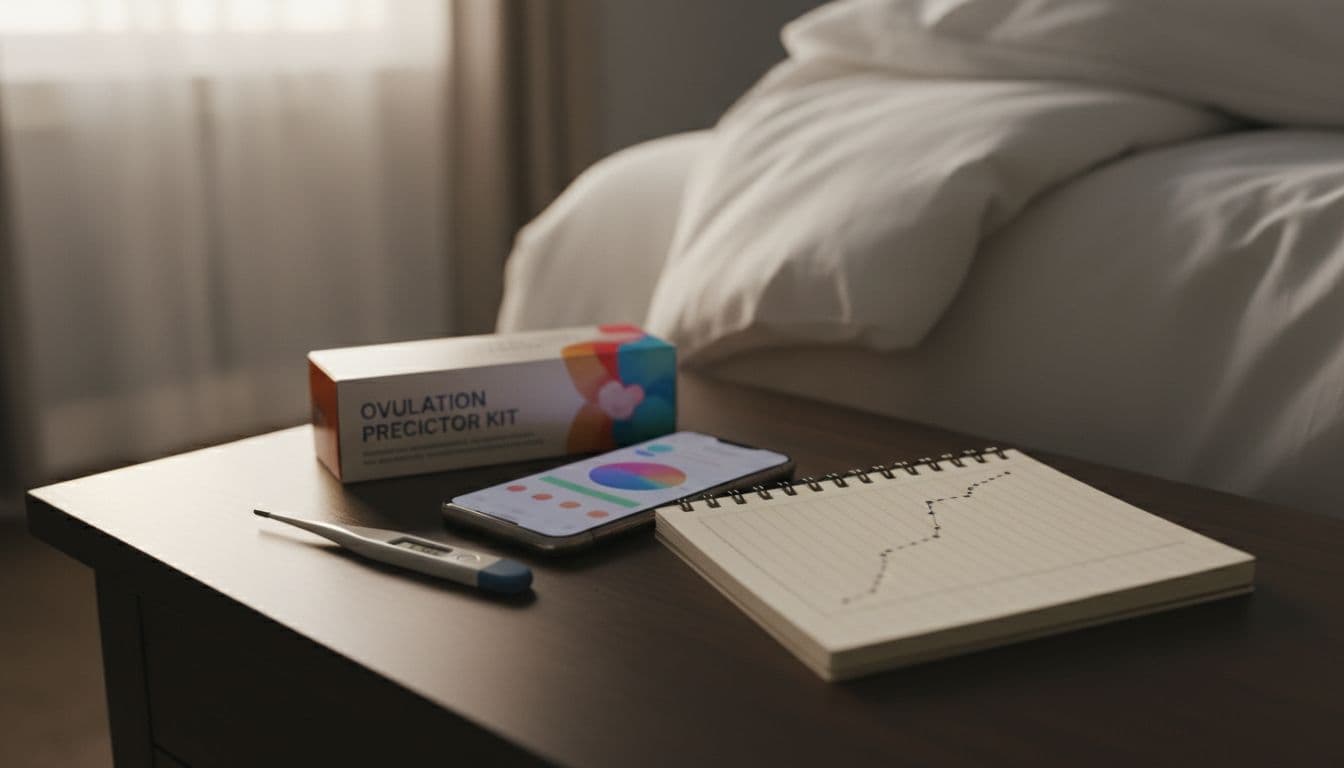
Still, there is a catch. If hCG has not fully dropped yet, ovulation tests can be confusing. That is why the first cycle after loss may not follow your usual pattern.
If tracking starts to feel like a second job, pull back. You do not need to use every tool. Many couples do fine with a flexible plan, such as having sex every few days during the middle of the cycle, then adjusting once things look more normal again. A gentle approach often protects your peace better than trying to control every sign.
Emotional readiness matters just as much as physical healing
Physical recovery can move faster than emotional recovery. Grief does not always follow the same timeline as bleeding, hormones, or your next period. Some people feel ready to try again quickly. Others feel scared, numb, hopeful, or all three in the same week.
That mix is normal. A new pregnancy after loss can bring joy, but also anxiety, especially around testing, ultrasounds, or symptoms that feel too familiar. Even if you want another baby right away, you may still feel uneasy. Wanting to try again and fearing it at the same time can both be true.
Partners may not be in the same place, either. One person may want to start immediately, while the other needs time to grieve. That difference does not mean your relationship is broken. It usually means you are processing the same loss in different ways.
A few signs you may need more support include:
- constant fear that takes over daily life
- sadness that is not easing at all
- panic around sex, ovulation, or pregnancy tests
- repeated conflict with your partner about timing
- trouble sleeping, eating, or functioning day to day
If that sounds familiar, talk to your doctor, a therapist, or a pregnancy-loss support group. Moving at your own pace is not giving up. Sometimes it is the healthiest choice you can make before trying again.
When to call your doctor or see a fertility specialist
This part of the TTC After Miscarriage Timeline and Fertility Facts is easy to overlook when you’re focused on bleeding, ovulation, or your next period. Still, follow-up matters just as much as timing. Most recoveries are straightforward, but some symptoms point to infection, retained tissue, hormone issues, or a cycle that is not getting back on track.
General timelines can help, but your body gets the final vote. If something feels off, don’t wait for the internet to reassure you.
Signs you should not ignore while your body is recovering
Some symptoms need medical attention because they can point to a problem that should not be watched at home. This is general information, not an emergency diagnosis, so if you feel very unwell or unsafe, get urgent care right away.

Call your doctor if you have:
- Fever or chills, especially a temperature over 100.4 F.
- Very heavy bleeding, such as soaking a pad in an hour for several hours.
- Severe pelvic or belly pain that is strong, sharp, or getting worse.
- Foul-smelling discharge, which can be a sign of infection.
- Dizziness, faintness, or lightheadedness, especially with heavy bleeding.
- Large clots or bleeding that suddenly ramps up after easing off.
- A pregnancy test that stays clearly positive, if your doctor told you to monitor hCG and it is not fading as expected.
These signs do not always mean something serious is happening, but they are not symptoms to brush off. A recovery that seems to stall can sometimes mean tissue is still in the uterus, hormones have not dropped as expected, or an infection is starting. The ACOG overview of what happens after a miscarriage explains why follow-up can include blood work, an exam, or an ultrasound when symptoms do not line up with a normal recovery.
A simple rule helps here: if bleeding, pain, discharge, or pregnancy test results are moving in the wrong direction instead of improving, it’s time to check in.
Recovery usually gets lighter, calmer, and clearer over time. If your symptoms are getting heavier, stronger, or stranger, call.
When repeat loss or delayed cycles call for more testing
One miscarriage is common and often random. Repeated losses are different, and they deserve a closer look. Many doctors suggest asking about a workup after two or more miscarriages, especially if the losses were confirmed by tests, labs, or ultrasound.
You should also ask about testing if:
- Your period has not returned after a longer-than-expected recovery.
- You already have PCOS, thyroid disease, high prolactin, or other hormone issues.
- Your cycles stay very irregular after the loss.
- You’re trying again but not conceiving after several months, based on your age and history.
Age matters here. If you’re under 35, many clinicians suggest an infertility visit after about 12 months of trying. If you’re 35 or older, it often makes sense to ask sooner, around 6 months. After a miscarriage, those timelines can shorten if your cycles are not returning normally or you have known fertility concerns.
Testing sounds intimidating, but the basics are usually pretty simple. Your doctor may talk with you about:
- Hormone tests, to check ovulation and cycle function
- Thyroid labs, because thyroid problems can affect both miscarriage risk and cycle recovery
- Uterus checks, often with ultrasound or another scan to look for polyps, fibroids, scar tissue, or a uterine shape issue
- Genetic testing, sometimes for pregnancy tissue or for both partners after repeat losses
For a plain-language overview of recurrent pregnancy loss, Yale Medicine’s recurrent pregnancy loss guide covers the kinds of issues doctors may evaluate. The point of testing is not to label you. It is to find treatable problems and make the next plan more specific.
Questions to ask at your follow-up visit
A short list of questions can save you from leaving the appointment with more confusion than answers. You do not need to ask everything at once, but a few clear questions can make the next steps feel less foggy.
Consider bringing these with you:
- Is it medically safe for me to try again now, or should I wait?
- Do I need another hCG blood test or ultrasound before trying?
- When should I expect my next period, and when should I call if it doesn’t come?
- Should I change any medications, supplements, or prenatal vitamins?
- Do you want me to avoid sex, tampons, or exercise for any longer?
- Based on my age and history, when should I seek fertility help if pregnancy doesn’t happen?
- Do I need testing for hormones, thyroid issues, or uterine problems?
- If I get pregnant again quickly, should I come in earlier for labs or an ultrasound?
If appointments make your mind go blank, write your symptoms down ahead of time. Note when bleeding started, whether your tests are fading, and when pain or discharge changed. That small prep can turn a rushed visit into a useful one.
Conclusion
The biggest takeaway from these TTC After Miscarriage Timeline and Fertility Facts is simple: fertility can return fast. Ovulation may happen within about 2 weeks, and many people do not need to wait months after an early, uncomplicated miscarriage before trying again.
At the same time, one loss usually does not mean future infertility. For most people, it does not change their basic ability to get pregnant, even if it changes how trying again feels. Still, some situations, such as ectopic pregnancy, molar pregnancy, repeat miscarriage, or ongoing treatment, do call for a longer timeline and closer medical guidance.
What matters most is a plan that fits your body, your recovery, and your peace of mind. There is no perfect timeline after loss, only the one that feels medically safe and emotionally right for you.
Frequently asked questions about TTC after miscarriage
Even when you know the general timeline, the small details can still feel confusing. These are the questions many people ask when they want a clearer picture of TTC After Miscarriage Timeline and Fertility Facts, especially during the first few weeks after a loss.

Can you ovulate before your first period after a miscarriage?
Yes, you can. Ovulation happens before a period, so your body can release an egg before you ever see that first post-miscarriage bleed.
For some people, this can happen as early as about 2 weeks after the loss, especially after an early miscarriage. That timing surprises many women because it feels natural to wait for a period as the sign that fertility is back. In reality, the body often restarts ovulation first.
This matters for two reasons. First, pregnancy is possible before your period returns. Second, it can make cycle tracking feel messy at the start. Ovulation strips, cervical mucus, and temperature shifts may not be easy to read right away if your hormones are still settling.
If you are having sex and do not want to conceive yet, use birth control. If you do want to try again, it helps to know that fertility may return sooner than expected. The Mayo Clinic’s pregnancy after miscarriage guidance also notes that ovulation can happen within a couple of weeks.
Is it safe to get pregnant right after a miscarriage?
For many people, yes, it can be safe after an early, uncomplicated miscarriage. Still, the real answer depends on how your recovery is going, what treatment you needed, and your health history.
If bleeding has stopped, pain is improving, and your doctor has not found a problem that needs follow-up, trying again soon may be fine. Current guidance does not require everyone to wait months. In some cases, conceiving within the first few months is linked with good outcomes.
That said, timing is not one-size-fits-all. You may need more time if you had:
- heavy bleeding
- a D and C
- medication treatment
- infection concerns
- an ectopic pregnancy
- a second-trimester loss
Your emotional readiness counts too. A body can be ready before your heart feels steady, and that matters. If you are unsure, ask your doctor one direct question: “Is it medically safe for me to try now?” That usually gets a clearer answer than general internet advice.
After an early miscarriage, many people can try again soon, but the safest timeline is the one that fits your recovery.
How long does it take for fertility to return after a miscarriage?
Fertility can return quickly, sometimes before your first period. Many women ovulate again within 2 to 4 weeks, and a period often comes back around 4 to 6 weeks later.
Even so, your cycles may not feel normal right away. It is common for the first one or two periods to be heavier, lighter, earlier, later, or more crampy than usual. For many people, things start to even out within 1 to 3 months.
That gap between “fertility is back” and “my cycle feels normal again” is where a lot of confusion happens. You may be fertile, but your body may still be finding its old rhythm. That does not always mean something is wrong.
A simple way to look at it is this:
| What may return quickly | What may take longer |
|---|---|
| Ovulation | A predictable cycle |
| Ability to conceive | Usual flow and cramping |
| Hormone drop after early loss | Feeling “back to normal” |
So if your period looks different at first, do not panic. Watch for improvement over time, and keep an eye on symptoms that seem to move in the wrong direction.
When should I worry if my period has not come back?
A little delay can be normal, but there is a point when it is smart to check in. If your period has not returned within about 6 to 8 weeks, call your doctor, especially if you are not pregnant again.
You should also reach out sooner if you have unusual symptoms, such as:
- strong or worsening pain
- fever or chills
- very heavy bleeding
- foul-smelling discharge
- pregnancy tests that stay clearly positive
Those signs can point to retained tissue, infection, or hormones that have not dropped as expected. Sometimes the issue is simple and easy to treat. Other times, your doctor may want blood work or an ultrasound to see why your cycle has not restarted.
If your period is late but you have had sex, take a pregnancy test too. Because ovulation can happen before the first period, a missed period may mean a new pregnancy rather than a delayed cycle.
Save the pin for later

- 12 Things Pregnant Women Do When They’re Alone - June 7, 2026
- 25 Healthy Pregnancy Snacks You Should Try - June 7, 2026
- 100 Funny Baby Jokes That Will Make You Laugh - May 15, 2026