


When a favorite toy breaks, your child may shout, throw the pieces, or stomp away from the dinner table. Those reactions can feel overwhelming, but anger is a normal feeling that children are still learning to understand and express safely.
Your goal isn’t to stop anger completely or punish your child for having big emotions. Instead, you can help them notice the warning signs, calm their body, name what they feel, and choose a safer action, such as taking slow breaths, drawing, moving, or asking for space. Playful practice works best when your child is already calm, so these skills feel familiar when frustration rises. You can also try these anger management activities for kids to make emotional learning feel less like a correction and more like time spent together.
With warmth, clear limits, and patience, everyday games can help your child build emotional control without shame. Start with simple activities that teach your child how to recognize anger before it takes over.
Watch: Helping your Child Regulate Emotions
Super Fun Ways to Tame Your Child With Anger Issues
Playful practice works best when your child is calm, not during an outburst. Your role is to stay steady, move close when it is safe, protect everyone from harm, and model the skills your child is learning. Name the feeling before setting the limit: “You are really angry, and I will not let you hit.” Connection comes first, then calming, and problem-solving can wait.
Build a Calm-Down Corner That Feels Safe, Not Like Punishment
Create the space together so your child feels ownership. Let them choose a quiet corner and help name it the Cozy Cove, Reset Spot, or another friendly name. Add pillows, stuffed animals, drawing supplies, books about feelings, soft sensory items, and a visual breathing card.

Practice visiting the space during peaceful moments. Your child might look at a book, squeeze a soft toy, or trace the breathing card with you. The area is for calming the body, not for isolation, shame, or forced silence. A parent can sit nearby, speak softly, and offer comfort while the child settles.
Turn Breathing, Movement, and Sensory Breaks Into Games
Give calming skills playful names and connect them to body clues. When your child notices hot cheeks, tight fists, a fast heart, or a loud voice, invite them to choose a favorite game:
- Pretend to blow out birthday candles, then smell an imaginary flower and blow a pinwheel.
- Stomp like a dinosaur, push firmly against a wall, or take a short walk together.
- Squeeze play dough, clench and release fists, or shake out tense arms and legs.
Practice two or three favorite tools when your child feels peaceful. You can say, “Your hands are tight. Should we try wall pushes or play dough?” A shared activity often works better than instructions shouted across the room. The American Academy of Pediatrics also recommends simple calming options such as belly breaths, books, stuffed animals, and a safe calm-down space in its guidance on handling big emotions.
Use Storytelling, Puppets, and Role-Play to Practice Better Choices
Let a puppet or favorite toy face familiar frustrations, such as losing a game, waiting for a turn, getting dressed, or hearing no. Ask your child to help the character notice the feeling, name a body clue, and choose a safer response.
The character might say, “I need help,” “I need space,” “Can I try again?” or “I am too mad to talk.” Praise effort and problem-solving, even when your child still needs help. Role-play gives them a low-pressure rehearsal before real frustration arrives.
Make a Feelings Detective Game Out of Everyday Moments
While reading picture books, pause and ask what a character might feel. Make matching facial expressions in a mirror, then create a feelings thermometer or color chart for calm, worried, frustrated, and furious.
During a daily check-in, invite your child to point to one feeling and name one body clue. Keep it light rather than turning it into a test. These small conversations build on other emotional intelligence activities for kids and help children notice anger before it takes over.
Help Your Child Understand What Sparks Their Anger
Repeated anger often follows a pattern. When you notice what happens before, during, and after an outburst, you can prevent some blowups instead of reacting only after they begin. Keep a simple note on your phone or use a small notebook, and look for patterns without labeling your child as “angry” or “difficult.”

Look for Triggers Before the Explosion Starts
Early warning signs may appear in your child’s body, voice, or behavior. You might notice pacing, clenched hands, a tense face, whining, arguing, hiding, rapid speech, or sudden silence. Some children become louder, while others pull away and stop answering. Physical clues can include tight shoulders, flushed cheeks, faster breathing, or a stomachache.
When you spot a signal, respond before your child reaches a crisis point. Offer a short break, a snack, a quiet space, or a hug if your child welcomes touch. You can also give two simple choices that restore a little control: “Do you want to sit with me or take space in the Cozy Cove?”
Transitions deserve extra care. Give a five-minute warning before leaving the park, then follow it with a clear reminder: “Five more minutes, then we go.” At bedtime, offer a choice between putting on pajamas before brushing teeth or brushing teeth first. Small choices won’t remove every protest, but they can lower the pressure of an abrupt demand.
Track the Pattern Without Blaming Your Child
After the moment passes, record three brief details:
- What happened before the outburst?
- What did your child say or do?
- What helped afterward?
Common triggers include hunger, poor sleep, transitions, sensory overload, sibling conflict, frustration, screen changes, school stress, and difficulty explaining a need. A child who explodes when the tablet turns off may need a warning and a predictable next activity. Another child may argue at dinner because exhaustion and hunger have already drained their ability to cope.
Tracking is for understanding, not blame. Look for conditions that make anger harder, then adjust what you can. A regular snack, earlier bedtime, quieter transition, or visual reminder may prevent the same conflict tomorrow. If outbursts become dangerous, happen across settings, or seriously disrupt home and school, share your notes with a pediatrician. You can also build on these emotional intelligence skills for children by helping your child connect feelings, body clues, and needs. Research on emotional dysregulation also describes strong emotions as a form of communication, not simply bad behavior, as discussed in this clinical research review.
Set Firm, Kind Limits When Anger Becomes Unsafe
Anger is allowed, but unsafe behavior needs an immediate limit. Hitting, biting, kicking, threats, breaking objects, and putting anyone in danger are not acceptable ways to express it. During an outburst, use fewer words, a steady voice, and simple actions. Long explanations can wait because an overwhelmed child usually can’t reason, answer repeated questions, or absorb a lecture.

Use a Simple Three-Step Response During a Meltdown
1. Keep everyone safe. Move lamps, toys, dishes, and other breakable or dangerous objects out of reach. Separate siblings and pets, then give your child room if space helps them settle. If your child swings or kicks, stand to the side and use an open hand or forearm as a gentle barrier. Don’t grab, yank, pin, or hurt your child.
Say, “I won’t let you hit. I’m moving back to keep us safe.” If there is a weapon, serious injury risk, self-harm, or immediate danger, get emergency help. The American Academy of Pediatrics guidance on big emotions also recommends creating a safe place for calming.
2. Stay calm and name the feeling. Lower your voice and keep your face and posture relaxed. Use one short sentence at a time: “You are furious that playtime ended. I won’t let you throw the blocks.” Avoid debating, demanding eye contact, or asking, “Why did you do that?” repeatedly. Your child may not be able to explain anything until their body settles.
If another safe caregiver can supervise, take a brief pause to breathe in another room. You can say, “I need one minute to calm my body. Grandma is staying with you.” For more support with handling parental anger, practice your own calming plan before the next difficult moment.
3. Reconnect and coach later. When your child is calm, offer closeness if they want it. Then discuss what happened in a few sentences: “You were angry when the game ended. You threw the controller, and it could have hurt someone. Next time, say, ‘I need a break.'”
Wait before discussing consequences, expectations, or repair. Calm conversations teach more than threats, spanking, insults, humiliation, or long lectures ever can.
Teach Repair After the Storm Has Passed
Repair is different from forcing an apology while your child is still upset. Once calm, help them identify what happened, who was affected, and one helpful next step.
Your child might rebuild a knocked-down tower, check on a sibling, pick up scattered toys, or practice the words they could use next time. Keep the conversation brief and focused on learning rather than guilt. Say, “You helped clean up and checked on your brother. That was an honest effort to repair.” Then return to connection, so accountability doesn’t become shame.
Make Anger Skills Easier to Use at Home, School, and in Public
Children use calming skills more easily when adults practice them consistently. Choose two or three tools, use the same simple words across caregivers, and rehearse them during calm routines. The goal is to make the plan familiar before grocery-store noise, homework frustration, bedtime fatigue, or a screen transition pushes your child toward an outburst.
Create a Small Calm Kit for Outings and Transitions
Pack a small pouch with tools your child already enjoys, such as a stuffed animal, child-safe headphones, a fidget, drawing pad, water bottle, breathing picture, and card showing their calming choices.
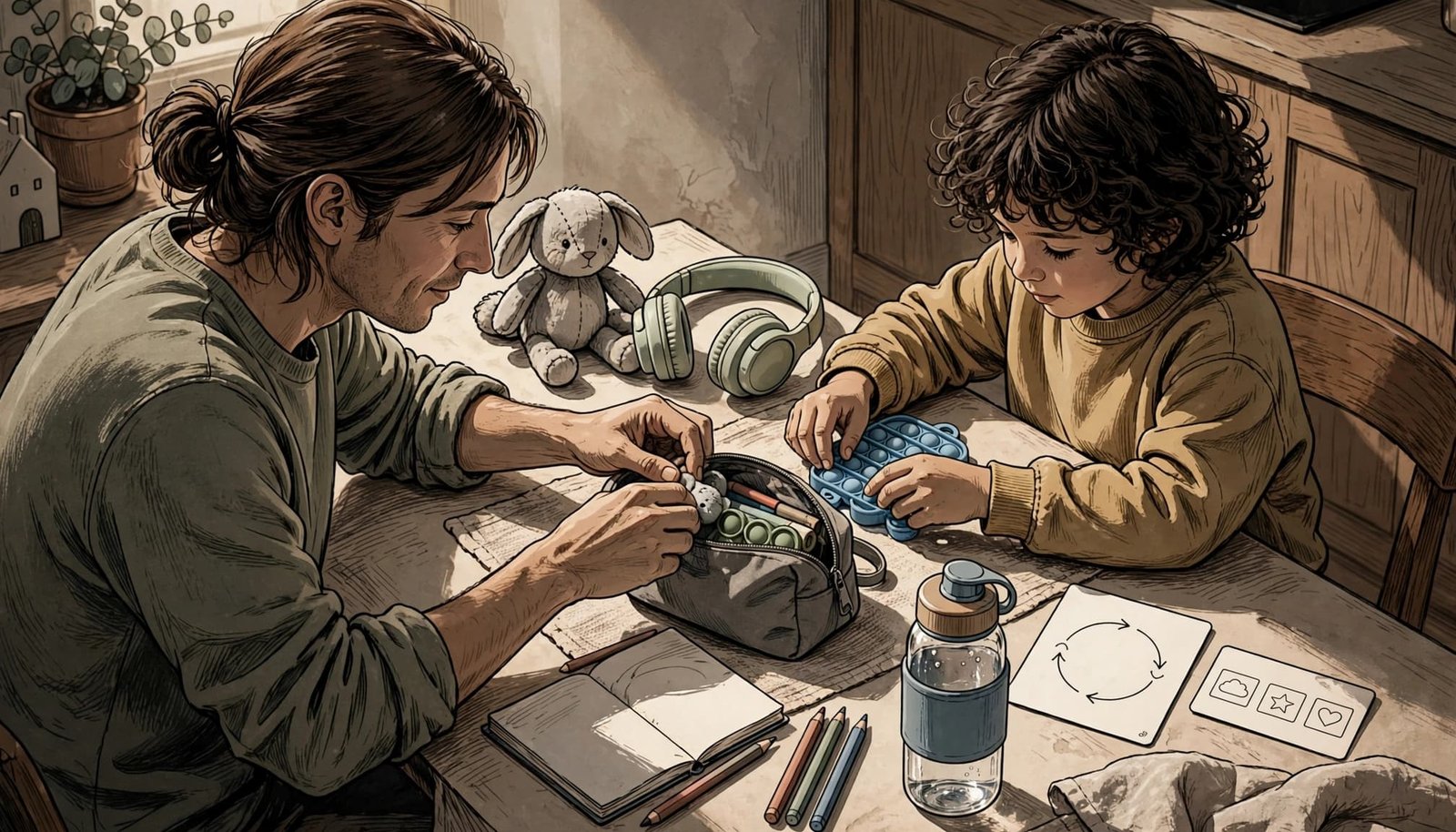
Introduce the kit at home when your child feels calm. Let them test each item and help choose what belongs inside. Then explain that the kit is a source of support, not a punishment or a public sign that they did something wrong.
Before entering a difficult setting, preview the plan in a few words:
- “If the store feels too loud, we can step outside, squeeze the ball, or ask for help.”
- “When the tablet turns off, you can take three breaths or sit beside me.”
- “If homework feels too hard, say, ‘I need a short break.'”
For younger children, use pictures and gestures. Older children may help write their own choices. A quiet space, such as the car or a restroom, can also help a child settle during an outing. Parents can find more ideas for using transition warnings before a change in activities.
Praise the Moments Your Child Handles Anger Well
Give specific praise as soon as your child uses a safer response. Broad comments such as “Good job” are kind, but detailed words show your child which action to repeat.
Try saying:
- “You put the toy down instead of throwing it.”
- “You told me you needed space.”
- “You took a breath before answering.”
- “You asked for help when the puzzle felt frustrating.”
Positive attention helps the new behavior grow because your child notices that calm communication gets a response. The AAP also recommends praise and positive reinforcement when children identify feelings or use words instead of aggression, while its guidance on effective discipline rejects shaming and physical punishment.
Set aside daily one-on-one time without screens, even for 10 minutes. Read, draw, walk, or play beside each other. Regular connection gives your child attention outside conflict, which makes cooperation easier when limits become necessary.
Adjust the Games for Toddlers, Big Kids, and Teens
The best anger tool depends on your child’s age, temperament, and interests.
- Toddlers often need movement, pictures, simple words, and close adult support. Try stomping, pushing a wall, blowing pretend candles, or pointing to a feelings card.
- School-age children may enjoy emotion charts, puppets, role-play, journaling, cooperative games, and two-choice problem-solving.
- Teens may prefer privacy, music, walking, writing, breathing apps, or a planned pause before talking.
Respect growing independence while keeping firm safety rules. A teenager can choose whether to walk or listen to music, but they still cannot threaten, hit, or destroy property. Share a short plan with teachers and caregivers: list early warning signs, preferred calming tools, helpful phrases, and the safety boundary everyone will follow. Consistent responses help the skill travel with your child wherever the next challenge appears.
Know When Anger Needs More Than Home Strategies
Occasional anger is common, especially when a child is tired, hungry, disappointed, or still learning to handle frustration. However, frequent, intense, prolonged, or dangerous outbursts deserve more attention than home strategies alone can provide. A pediatrician or qualified child mental health professional can help you understand what may be driving the behavior and choose the right support.
Bring Useful Notes to the Pediatrician or Therapist
Before the appointment, keep brief notes about what you observe. You don’t need perfect records. A few clear examples can help a professional see patterns that are difficult to spot during a stressful week.
Write down:
- Your child’s age and the situations that commonly trigger anger.
- How often outbursts happen and how long they usually last.
- Early warning signs, such as clenched fists, pacing, yelling, hiding, or rapid breathing.
- Sleep and eating patterns, including recent changes.
- Effects on schoolwork, friendships, family routines, or activities.
- Any injuries, threats, property damage, or unsafe behavior.
- Strategies you tried and whether they helped your child calm down.
Share changes at home or school, even if they seem unrelated. A new sleep problem, falling grades, school refusal, frequent stomachaches, or conflict with friends can add important context. Ask whether anxiety, ADHD, learning challenges, sensory needs, trauma, sleep problems, medication effects, or another health concern could be contributing. You are gathering information, not diagnosing your child.

Contact a professional when anger happens most days, keeps getting worse, lasts a long time, disrupts school or friendships, or doesn’t improve with consistent support. Guidance on supporting children with emotional outbursts can help while you arrange an evaluation, but it shouldn’t replace personalized care.
Know When Safety Makes It Urgent
Seek immediate help if your child self-harms, threatens to hurt themselves or someone else, uses a weapon, causes serious aggression, or destroys property in a way that creates danger. If you cannot keep your child or another person safe, call 911 or go to the nearest emergency department. For additional guidance, review these signs of child self-harm and mental health emergencies.
Asking for help is an act of care, not a parenting failure. You are giving your child another layer of support when the problem has grown beyond what your family can safely manage alone.
Conclusion
Helping a child with anger issues takes patience, practice, and a steady response from the adults around them. Connect before correcting, name the feeling without excusing unsafe behavior, and protect everyone when anger turns into hitting, kicking, threats, or destruction. A calm voice and clear boundary can give your child enough safety to begin settling.
When the storm passes, return to playful practice. Use breathing games, movement, drawing, role-play, or a calm-down corner when your child is already calm. Praise small wins, such as asking for help, choosing space, or putting down an object instead of throwing it. These steps can support calming techniques for toddler anger while helping your child build skills that fit their age and personality.
Progress rarely arrives in one dramatic moment. It grows through repeated, safe practice and steady adult support, one breath, one helpful word, or one chosen break at a time. If anger remains frequent, dangerous, or disruptive despite consistent support, seeking professional guidance is a caring next step. Each small success gives your child another path through the next wave of frustration.
save pin for later


- Dry Cough in Kids: 5 Causes and Safe Solutions - September 23, 2026
- How to Help a Child Deal With Anxiety at Home - September 12, 2026
- How to Prepare Your Child for the First Day of School - September 12, 2026