

Feeling your baby kick is usually a reassuring sign, because those little movements often mean your baby is growing and developing well. During pregnancy, kicks can start as soft flutters and later turn into stronger jabs, rolls, or stretches. If you want another reassuring read, these signs can also help show your baby is doing fine.
After birth, kicking usually means something different, often a normal reflex or a burst of movement as your newborn reacts to sound, touch, or sleep cycles. The meaning of baby kicks changes with each stage, so it helps to know what’s normal, what can shift over time, and when a call to your doctor makes sense. Next, we’ll look at the most common patterns and the signs that deserve attention.
Why babies kick in the womb
Baby kicks are part of normal development, not random movement. Long before you feel them, your baby is already moving inside the uterus. Those motions help the body grow, the brain organize movement, and the lungs practice for life after birth.
How movement helps baby grow
Kicking, stretching, rolling, and hiccups all point to an active nervous system. As nerves and muscles connect, your baby starts to move with more control, and that movement helps build strength in the legs, arms, and core. It also keeps joints flexible and gives the brain steady feedback about where the body is in space.
NCBI’s fetal movement overview explains that these movements are a normal part of development and a useful sign of neurologic health. In plain terms, your baby is practicing before the big debut.

Movement is practice for life outside the womb.
That practice includes breathing motions, body awareness, and simple reflexes that become more coordinated over time. In other words, each kick helps your baby get ready for the outside world.
What a first kick usually feels like
The first movement you notice is called quickening. At first, it can feel like bubbles, tiny taps, swishes, or a flutter low in your belly. Some people mistake it for gas, and that is normal.
Most parents notice quickening between 16 and 25 weeks, and first-time moms often feel it later than people who have been pregnant before. The RCOG guide on baby movements in pregnancy says early movement can feel like a kick, flutter, swish, or roll, which matches what many parents describe.
If you want a rough sense of when it often starts, the second trimester checklist can help you line up those early flutters with the weeks of pregnancy. Every pregnancy feels a little different, so your timing may not match someone else’s exactly.
When most parents start feeling kicks
Baby movement usually follows a loose pattern, but it does not arrive on the same day for everyone. Some people notice soft flutters early, while others need a few more weeks before the movements feel clear enough to call kicks.
The biggest thing to remember is this, early movement is easy to miss. It can feel faint at first, then it becomes easier to spot as the weeks pass and your baby gets stronger. The NHS guide to baby movements notes that many parents feel movement between 16 and 24 weeks, with first pregnancies often noticing it later.
Typical kick timeline by trimester
A simple timeline can help you know what to expect. The sensations usually build in stages, starting with light flutters and ending with stronger kicks and rolls.
| Pregnancy stage | Common timing | What it often feels like |
|---|---|---|
| Early second trimester | 16 to 22 weeks | Fluttery, bubble-like, or like tiny taps |
| Mid-second trimester | 20 to 24 weeks | Clearer kicks, swishes, and little nudges |
| Late second trimester | 24 to 28 weeks | Stronger movement, more noticeable jabs and rolls |
| Third trimester | 28 weeks and up | Strong kicks, stretches, and bigger rolls, but sometimes less frequent-feeling because space is tighter |
By the third trimester, many babies still move a lot, but the sensation can change. You may feel fewer sharp jabs and more rolls, stretches, and pushes. That happens because the uterus is more crowded, not because your baby has gone quiet.
A strong kick is only one kind of movement. Rolls, nudges, and stretches count too.
If you want a way to picture the change over time, this is a simple visual:
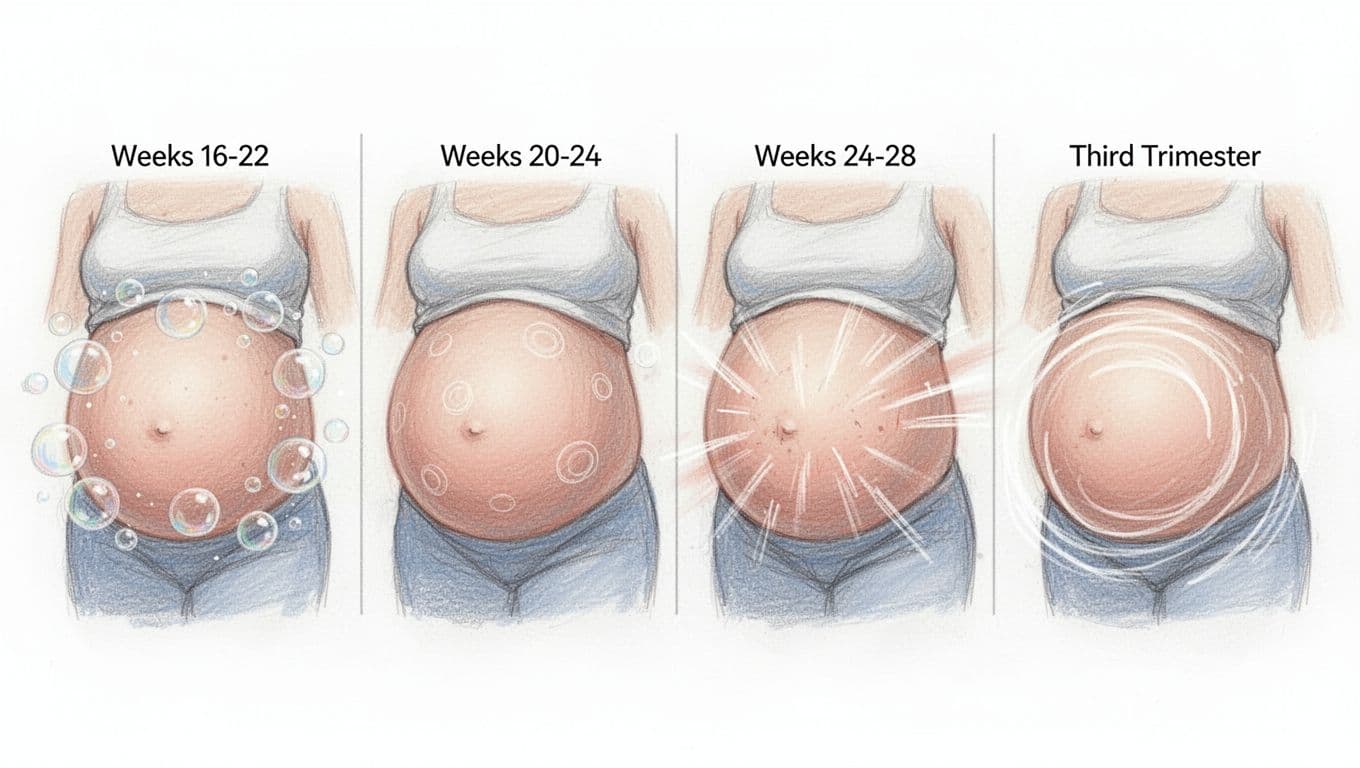
The main takeaway is that movement usually becomes easier to recognize as pregnancy goes on. Early on, you may wonder if it was gas. Later, there is no mistaking that solid little thump.
Why some people feel kicks later or less strongly
Not everyone feels movement at the same time, and that does not automatically mean something is wrong. A few common factors can change when and how strongly you notice kicks.
- Anterior placenta: If the placenta sits at the front of the uterus, it can cushion movement and make kicks feel softer.
- Body size and belly shape: A thicker layer of tissue can make early movement harder to feel.
- Baby’s position: When your baby faces inward or kicks toward your spine, the movement may be harder to notice.
- Daily activity level: Busy days can distract you from subtle flutters, while quiet moments make movement easier to pick up.
Some people also notice movement later in a first pregnancy because they do not yet know the feeling. In later pregnancies, those same light flutters stand out faster. If you’re trying to notice movement, resting on your side or taking a calm moment can help, and safe ways to encourage baby kicks can also be useful when you want to check in.
Later or softer movement does not always mean a problem. What matters most is learning your baby’s usual pattern. If movement changes suddenly or stops feeling normal for you, that is the time to call your doctor or midwife.
What different kinds of kicks and movements can mean
Baby movement changes as pregnancy goes on, and that change is usually a good sign. Early motions are soft and easy to miss, while later ones can feel sharper, broader, and much more obvious. The NHS guide to your baby’s movements explains that many parents first notice fluttering, then feel kicks and jerky movements later on.
Flutters, rolls, jabs, and stretches
These are the movement patterns most parents talk about first. They sound different, but they all usually mean your baby is active and growing stronger.
- Flutters feel like tiny bubbles, light taps, or a soft swish low in your belly. They often show up first, before the movements feel strong enough to call kicks.
- Rolls feel wider and smoother, almost like your baby is turning over or shifting position.
- Jabs are quick little pokes in one spot. They often feel sharper than flutters, but they are still normal.
- Stretches feel long and slow, like a push or slide across your belly.
As your baby gets bigger, these movements usually become easier to feel. That is especially true for rolls and stretches later in pregnancy, when there is less room to move around. In other words, a stronger sensation does not mean a new problem. It often just means a stronger baby.
Hiccups and rhythmic twitches
Hiccups often feel like steady little pulses in the same place. They can go on for a few minutes, then stop on their own. That is usually harmless, and it often happens as part of your baby practicing swallowing and breathing movements.
The NCT guide to baby movements before birth notes that baby movement can include swishes, flutters, and rolls, and hiccups can fit in with that normal pattern too. Repeated small jerks are usually fine when they fade on their own.
A good rule is simple, if the movement feels rhythmic but brief, it is usually normal. If the pattern is new for your baby, lasts a long time, or comes with a clear drop in usual movement, it makes sense to check in with your doctor or midwife.
What strong or frequent kicking usually means
Strong kicks often happen when your baby is awake and active. Many parents notice more movement after meals, in the evening, or when they finally sit down and relax. That does not happen by accident, because quiet moments make it easier to notice what baby is already doing.
Common busy times for movement include:
- After meals, when you are more likely to notice a burst of activity.
- In the evening, when many babies seem more awake.
- When you rest, because you can feel movements more clearly.

Strong movement usually means your baby is alert, not distressed. It can feel intense, especially near the ribs or bladder, but it still fits within normal pregnancy patterns. If the kicks suddenly feel much weaker, much less frequent, or just different from your baby’s usual pattern, what to do if baby stops kicking can help you decide on the next step.
The main thing to watch is change. A baby who moves in strong bursts one day and then feels much quieter the next deserves attention, especially later in pregnancy. Knowing your baby’s usual rhythm makes those changes easier to spot.
How to track normal movement patterns
Learning your baby’s normal pattern takes the guesswork out of daily movement. One day your baby may be a busy gymnast, and the next day movement may feel softer or spaced out. What matters most is knowing what feels usual for your pregnancy, then noticing when that pattern changes.

A simple routine can help. Many providers use kick counts in the third trimester, especially when they want a clearer picture of baby activity. The goal is not to worry over every flutter, but to spot a real shift from your baby’s normal rhythm.
How to do kick counts the simple way
The easiest method is to choose a calm time when your baby is often active, such as after a meal or in the evening. Sit quietly or lie on your side, then count each movement until you reach 10. Kicks, flutters, rolls, and swishes all count.
Many parents like to keep the process the same each day. That makes it easier to compare one session with the next, which is what matters most. Mayo Clinic notes that a common benchmark is 10 movements within two hours.
A simple routine looks like this:
- Pick a time when your baby is usually active.
- Sit still or lie on your left side.
- Count each movement until you reach 10.
- Note how long it took.
The number matters less than the pattern you see over time.
If 10 movements take much longer than usual, or you don’t reach 10 in two hours, call your doctor or midwife.
What counts as normal variation
Babies do not move at the same pace all day. They have sleep cycles, active bursts, and quieter stretches, just like a stop-and-go traffic pattern. So a calm spell can be normal, as long as movement comes back to your baby’s usual rhythm.
A short quiet stretch often happens when your baby is sleeping, turned inward, or tucked into a position that cushions the kicks. Busy days can also make you notice movement less, even when baby is still active.
What you want to watch is the change. If your baby’s kicks feel weaker, less frequent, or different from the usual pattern for your pregnancy, that deserves a call. A sudden drop in movement is more important than one quiet hour.
If you’re unsure whether a pattern is normal, trust what you know about your own baby. Changes in baby activity can also be linked to overheating in the womb, so it’s smart to mention any big shift when you check in.
When changing kick patterns may be a warning sign
A baby’s movement pattern can shift for harmless reasons, but a sudden change deserves attention. After 28 weeks, many parents start watching movement more closely, and that is a good habit. If you want a simple tracking method, Cleveland Clinic’s kick counts guide gives a clear way to check movement at the same time each day.

Common harmless reasons kicks feel different
Some days, kicks feel softer or harder to notice even when baby is active. A busy day can distract you, and some medications can make movement easier to miss. Baby’s position matters too, because a kick aimed toward your back may feel like a weak nudge.
Late in pregnancy, tight space can change the feel of movement. An anterior placenta can also cushion kicks, so the motion may seem muted even when baby is moving well. That is why one quiet stretch does not always mean trouble.
A few common reasons movement feels different include:
- Baby’s position: A baby facing inward or toward your spine can be harder to feel.
- Tighter space: As baby grows, kicks may feel more like rolls and pushes.
- Anterior placenta: The placenta can soften movement, especially early on.
- A busy day: When you are moving around a lot, subtle flutters are easy to miss.
- Some medications: Certain medicines can make baby’s motion less obvious.
Those changes are often normal. Even so, what matters most is whether the pattern still feels like your baby.
Red flags that need a call right away
When movement drops off, don’t brush it aside. Fewer movements than usual, a sudden drop in activity, or no movement when your baby is normally active should be reported promptly.
Call your maternity team or doctor if:
- Your baby moves less than normal.
- You notice a clear change from the usual pattern.
- Your baby does not move during a time that is normally active.
A major shift is not something to watch overnight and hope it passes. Guidance on decreased fetal movement treats this as a reason for prompt assessment.
When to get help without waiting
After 28 weeks, any major change in movement should be taken seriously. If the kicks feel weaker, far less frequent, or just wrong for your baby, contact your maternity team or doctor right away instead of waiting to see if it improves.
Trust the pattern you know. If your baby is usually active and suddenly goes quiet, make the call. That step is simple, and it gives your care team the chance to check on baby without delay.
Why babies kick after birth too
Once your baby is here, kicking usually means something different than it did in the womb. Newborns and young babies kick for normal reasons, like reflexes, gas, sleep twitches, and early movement practice. In most cases, those little leg thrusts are just part of a healthy nervous system learning how to work.
Parents often worry when they see constant leg motion, but this is usually a good sign. Newborn bodies are busy, even when the baby looks tiny and sleepy.
Normal reflexes that cause kicking
A newborn’s brain and nerves are still wiring themselves together, so some kicks happen automatically. The Moro reflex, also called the startle reflex, can make a baby throw out their arms and legs after a loud sound or a sudden change in position. The stepping reflex can look like a tiny walking motion when you hold baby upright with feet touching a flat surface.
Sleep can add even more movement. Babies often twitch, jerk, or kick during active sleep, and those brief movements are usually normal. MedlinePlus explains that infant reflexes are expected early on, then fade as the nervous system matures.

In the first months, kicking often looks random because your baby is still learning control.
Most of these reflexes fade over the first few months. If you want to see more examples of the odd-but-normal things newborns do, this guide to newborn reflexes and behavior is a helpful read.
Gas, sleep, and motor development
Babies also kick when they are trying to work out gas or get comfortable. A few strong leg pushes can help move the belly a little, and stretching can feel good after being curled up in one position. Some babies kick just because they are awake, alert, and practicing movement.
Sleep plays a big part too. During active sleep, babies may flail, kick, or jerk without fully waking up. That is common and usually not a problem unless it comes with other symptoms.
These movements can also be early motor practice. Little kicks help babies explore their bodies, build muscle tone, and slowly gain control over their arms and legs. It’s a small workout, and babies do it often.
When newborn kicking might need medical advice
Most kicking is harmless, but a few signs deserve a call to your pediatrician. You want to pay closer attention if the kicking comes with pain or other changes in how your baby acts.
Call for medical advice if you notice:
- Crying with kicking or signs that your baby seems uncomfortable
- Poor feeding or trouble staying awake to eat
- Vomiting that keeps happening
- Fever or a baby who seems sick
- Stiffening that looks unusual
- One-sided movement or one leg moving much less than the other
- Leg shaking while awake that looks repetitive, odd, or hard to stop
Leg kicking that only happens during sleep and stops when baby wakes up is usually not worrisome. In contrast, shaking or jerking while awake, especially if it looks rhythmic or happens on one side, needs a closer look. If you ever feel unsure, trust that instinct and call your baby’s doctor.
Conclusion
Baby kicks usually point to growth, strength, and healthy development, whether you feel them during pregnancy or see those little leg pushes after birth. The most important thing is learning your baby’s usual pattern.
When movement feels different, weaker, or absent, call your doctor or midwife right away. That simple step gives you clarity and helps protect your baby.
Most of the time, those kicks are exactly what they should be, a normal sign that your baby is active and developing well. Trust what you know about your baby, and trust yourself when something changes.
Save pin for later


- Can I Give A Half-boiled Egg To My Baby? - September 25, 2026
- What Are The Nutritional Benefits Of Eggs For Babies - September 25, 2026
- When Should I Avoid Giving Eggs To My Baby? - September 25, 2026