


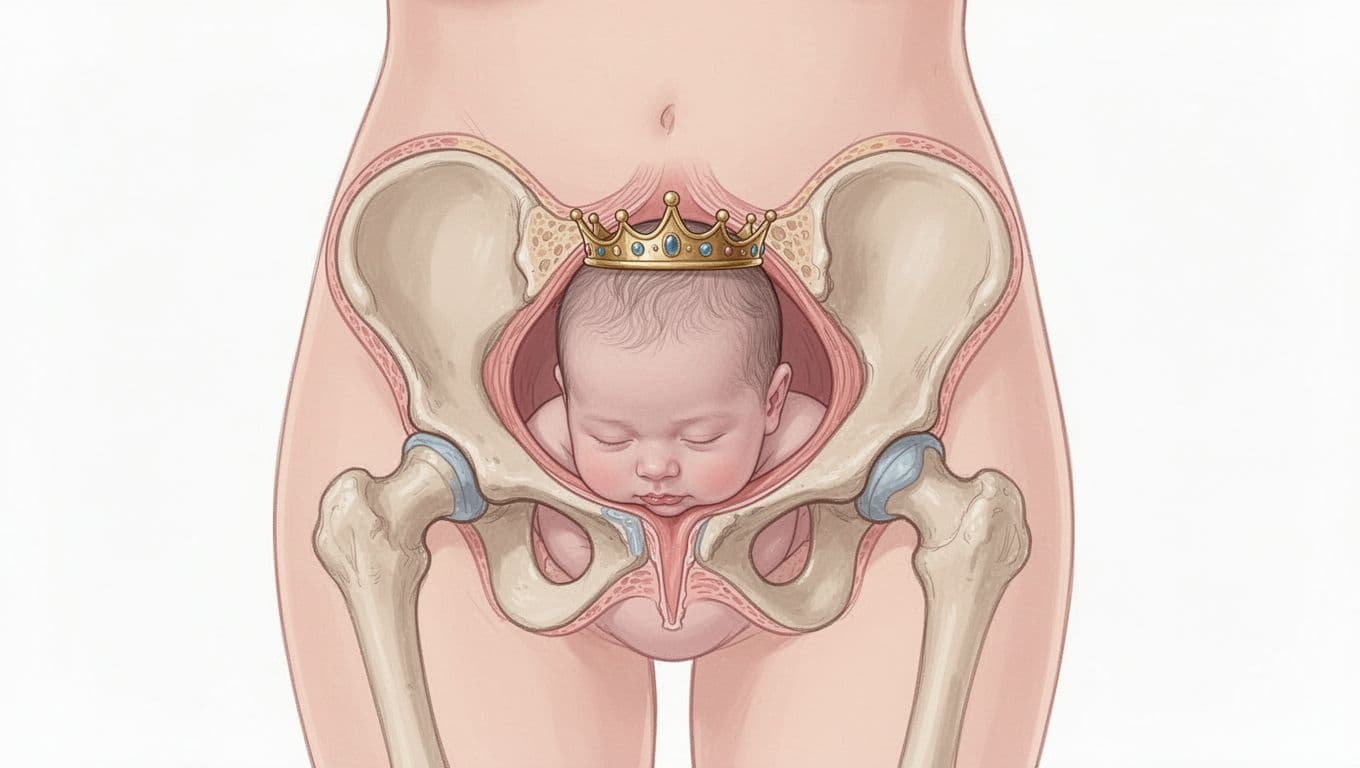
Baby crowning is the moment the baby’s head stays visible at the vaginal opening between contractions, after your cervix is fully dilated in the second stage of labor. It means birth is close, and that can feel intense, but it’s a normal part of labor.
You may feel strong pressure, burning, or a stretching sensation, and it helps to know what comes next so you can stay calm. If you’re also worried about the stretching and pressure, these tips for preventing tearing during childbirth can help you feel more prepared, and this quick video gives a clear visual:
What baby crowning actually looks and feels like
Crowning is the point in labor when your baby’s head starts to show at the vaginal opening and stays there between pushes. The name fits because the visible part of the head sits like a little crown at the opening, and it may stop sliding back in as contractions keep moving labor forward. At this stage, birth is close, so the sensations often feel stronger and more focused than earlier labor pain.
The signs that crowning is happening
The clearest sign is a visible head at the vaginal opening. Your provider may also tell you that you are fully dilated, which means the cervix has opened all the way and it’s time to push.
A lot of people also feel a strong urge to push and a heavy rectal pressure, almost like they need to poop. That feeling is normal, and it often shows up right before crowning or as the head starts to appear. The pressure can feel intense, but it usually means the baby is very low in the birth canal and almost ready to be born.
Other common signs include:
- The head stays visible between contractions instead of slipping back in.
- The urge to poop feels stronger and more sudden than earlier pressure.
- Your care provider confirms full dilation during an exam.
- The perineum feels stretched and full, which can make the area feel tight or hot.
If you want a quick clinical overview of this stage, the NHS explains the second stage of labor in plain language.
Why the ring of fire feeling happens
The ring of fire is the burning or stinging feeling that can happen when the baby’s head stretches the vaginal and perineal tissues. The skin is being pulled thin around the widest part of the head, so the nerves fire hard for a short time.
It can feel sharp, hot, or almost like a sting, but it is usually brief. Some people feel strong pain, while others notice more pressure than burning. Either way, the sensation is intense because the body is making room for birth, and that part passes quickly once the head moves through.
What happens in the minutes after crowning
Once crowning starts, birth usually moves fast. The head is often delivered with one or two more contractions, then the shoulders turn and slip free, and the rest of the body follows right behind. The pace can still vary, though, especially if this is your first baby or you’ve given birth before.
That short stretch of time can feel intense. Clear coaching from your care team, steady breathing, and a slower push can help the tissues stretch in a more controlled way.
How the head, shoulders, and body are born
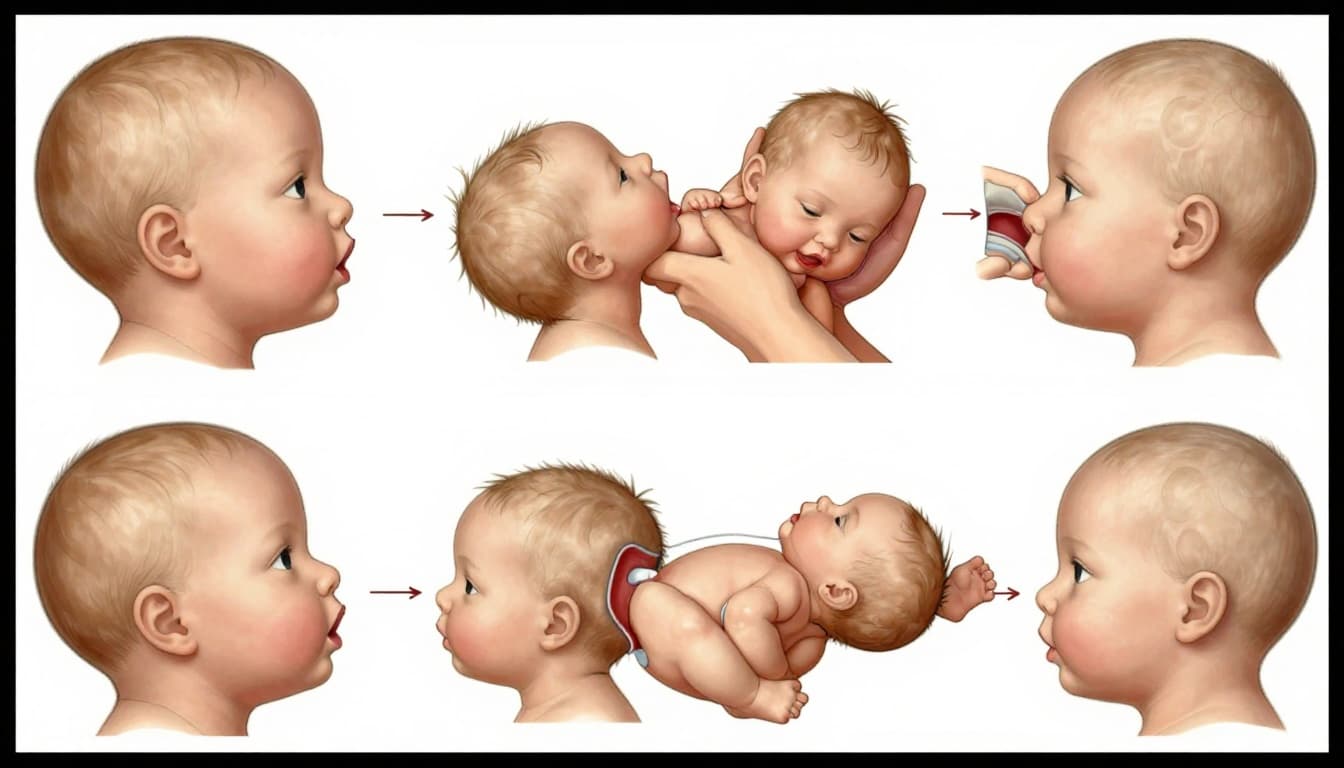
After the head crowns, the next contraction usually helps it slide out completely. Your provider may support the head as it extends under the pubic bone, then check the neck area before the shoulders come through.
Next comes the shoulders. The baby often turns slightly, which helps one shoulder move under the pubic bone first. That small rotation makes room for the second shoulder, and then the rest of the body usually slips out quickly.
The order is simple:
- The head is born.
- The shoulders rotate and deliver.
- The chest, belly, and legs follow.
After the head is out, the body often comes quickly, but the shoulders may need a little rotation first.
If you want a clinical overview of this sequence, MedlinePlus explains vaginal birth step by step.
Why your care team may ask you to stop pushing for a moment
Sometimes your provider will ask you to ease up, pant, or use short breaths instead of a hard push. That slower pace gives the perineum more time to stretch and can lower the chance of a tear.
This is often called controlled delivery, and it works best when you follow the team’s cues. A forceful push can bring the head through too fast, while slower breathing helps the tissues open more gradually. If you’ve been worried about tears, recovering from perineal tears after birth can help set expectations for the hours and days after delivery.
The pace can also differ by birth history. First-time births often take a little longer at this stage, while repeat births may move more quickly because the tissues have stretched before. Either way, the goal is the same, controlled birth, good support, and a calm finish to the second stage.
How long crowning lasts and what changes the timing
Crowning is usually brief, but it can feel longer when you are in the middle of it. For some people, the head appears for just a few pushes, while others spend a bit more time at that point before birth moves on. The exact timing depends on how quickly the tissues stretch, how strong the contractions are, and how the baby is lined up in the pelvis.
Crowning is the last stretch before birth, and the pace can shift a lot from one labor to another.
Why first-time births often take longer
If this is your first vaginal birth, crowning often lasts longer because the tissues have not stretched for a birth before. The perineum, vaginal opening, and surrounding muscles may need more time to loosen and open around the baby’s head.
That slower stretch is usually a normal part of labor, not a sign that something is wrong. Many people also need a little more time to find a pushing rhythm the first time around, which can stretch out the final minutes before birth. The second stage of labor often takes longer in a first pregnancy, which is why crowning can feel more drawn out than expected.
What can make crowning happen faster or slower
Several normal factors can change the pace. Strong, steady contractions can move the baby down faster, while contractions that space out or lose power can slow the process. Your provider’s coaching also matters, since short, well-timed pushes or a brief pause can help the head come out more smoothly.
Baby position plays a big part too. When the baby is lined up well, crowning often goes more smoothly, but a less favorable position can add time as the head rotates. Your own labor position matters as well. Upright positions often help gravity do some of the work, while side-lying or back-lying positions may feel better at times, especially if you need support or have an epidural.
If you want a deeper look at how alignment can affect birth, see baby positions in the womb and delivery.
How to cope with crowning without panic
Crowning can feel overwhelming, but this part of labor is short and focused. The goal is to stay loose, follow the cues you get, and let your body do the work it already knows how to do. Small shifts in breathing, posture, and support can make the moment feel more manageable.
Breathing and body relaxation that can help
Slow exhales can keep your body from tensing up when the burning starts. Some people do best with a long breath in, then a soft, longer breath out. Others like gentle panting, which keeps the push light and helps them avoid forcing too hard.
Relaxing your face, jaw, and shoulders matters more than it sounds. Tension often travels downward, so when your mouth softens and your shoulders drop, your pelvic floor can soften too. That makes each push feel less tight and can help the tissue stretch more smoothly.
If you practiced breathing before labor, use the version that feels natural now. For more prep ideas, labor breathing techniques for relaxation can be useful before the big day, too.
A loose jaw often helps a loose pelvic floor.
Positions that may feel better during crowning
The best position is the one that helps you feel steady, supported, and able to relax. Many people like side-lying because it takes pressure off the perineum and gives the care team room to support the birth. Others feel better on hands-and-knees, which can ease pressure and help them stay calm.
A supported squat can also work if it feels stable and your labor setting allows it. However, the right choice depends on your body, your baby’s position, and where you’re giving birth. Crowning position guidance from Lamaze also notes that side-lying and kneeling positions are common choices.
When a warm compress or hands-on support may be used
Some care teams place a warm compress on the perineum as the head stretches the tissues. Others give gentle hands-on support or steady pressure to help the area open in a controlled way.
These supports are simple, but they can feel comforting. They may help the tissues stretch more gradually, which can also support safety and comfort during the final pushes. The Royal College of Obstetricians and Gynaecologists describes warm compresses and hands-on support as common ways to reduce tearing risk.
Above all, stay with your care team’s cues. If they tell you to slow down, soften your mouth, or use short breaths, that advice is there to help your baby come out with less strain on your body.
Possible complications and when extra help is needed
Crowning is a normal part of birth, and most labors move through it without a major problem. Still, the tissues stretch a lot in a short time, so small tears can happen, and the care team stays alert in case the shoulders need extra help coming out.
Tears, stitches, and recovery basics
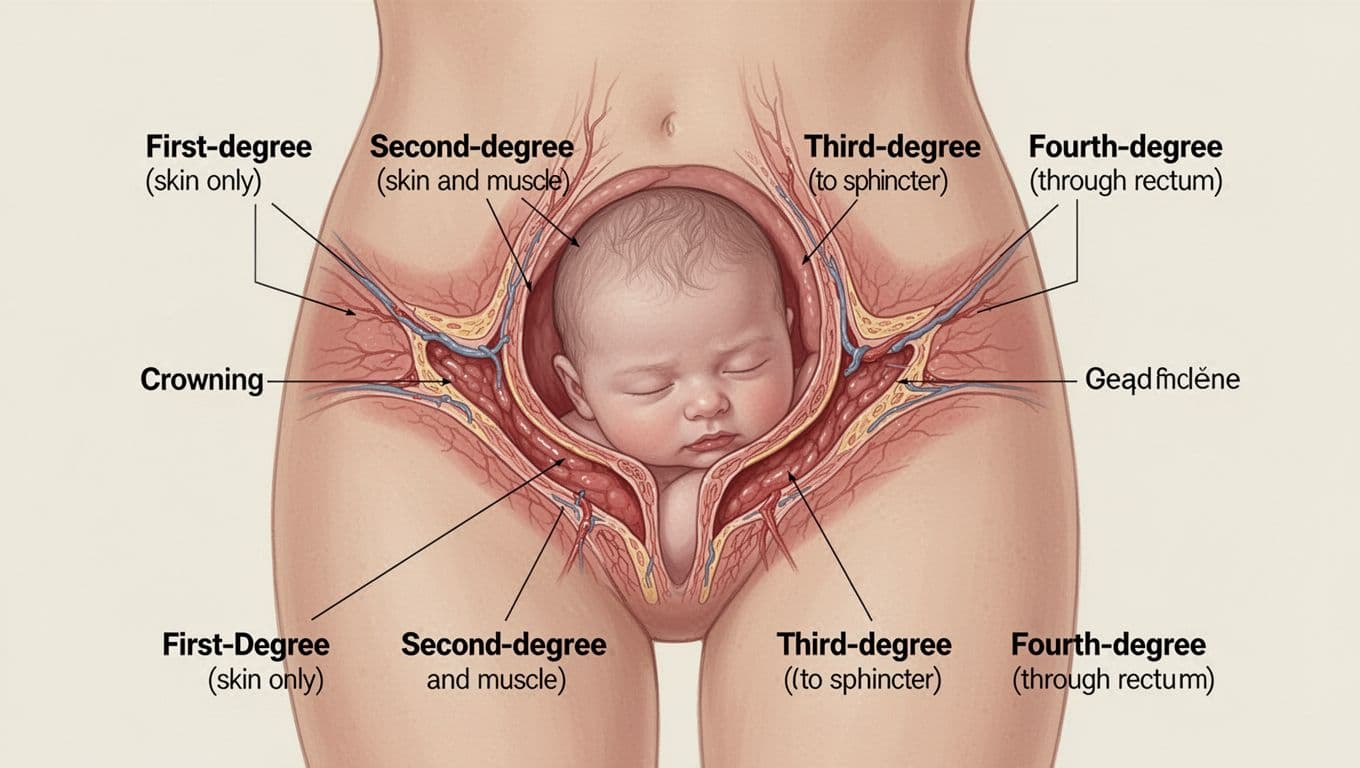
A minor tear usually means the skin at the vaginal opening has split a little. These tears may sting, but they often heal on their own or with a few stitches. A deeper tear reaches into the muscle and needs more repair, which is why your provider checks you carefully after birth.
Most people do not have a severe tear, but if one happens, it can be repaired right away. Afterward, recovery usually includes rest, pain relief, ice packs, and gentle hygiene. If stitches are needed, your provider will explain how to care for them and what to watch for as you heal.
For a simple medical overview of vaginal tearing, the Cleveland Clinic explains childbirth tears.
A small tear is common and manageable, and stitches are part of normal birth care when they’re needed.
Shoulder dystocia and why the team moves fast
Sometimes the head is born, but one shoulder gets stuck behind the pelvic bone. That is called shoulder dystocia, and it needs quick action from trained providers. The team may ask you to pause pushing while they use specific maneuvers to free the shoulder and finish the birth safely.
That fast response is why staying with your care team matters. They are watching the baby’s position, the pace of birth, and your labor closely so they can act right away if needed. The ACOG guidance on shoulder dystocia explains that it is unpredictable, but teams can manage it well when they respond in a set order.
An episiotomy is not routine. It is only used in certain situations, and your provider will decide if it may help with a safe delivery.
Conclusion
Baby crowning means the baby’s head is visible at the vaginal opening, and birth is very near. That final stage can bring strong pressure, burning, or a hot stretching feeling, but it is common and usually brief.
As the head stays visible and the pushes continue, the body is doing exactly what it needs to do. Knowing what crowning means can make labor feel less scary and help parents stay focused on the final pushes.
Save pin for later


- Can I Give A Half-boiled Egg To My Baby? - September 25, 2026
- What Are The Nutritional Benefits Of Eggs For Babies - September 25, 2026
- When Should I Avoid Giving Eggs To My Baby? - September 25, 2026