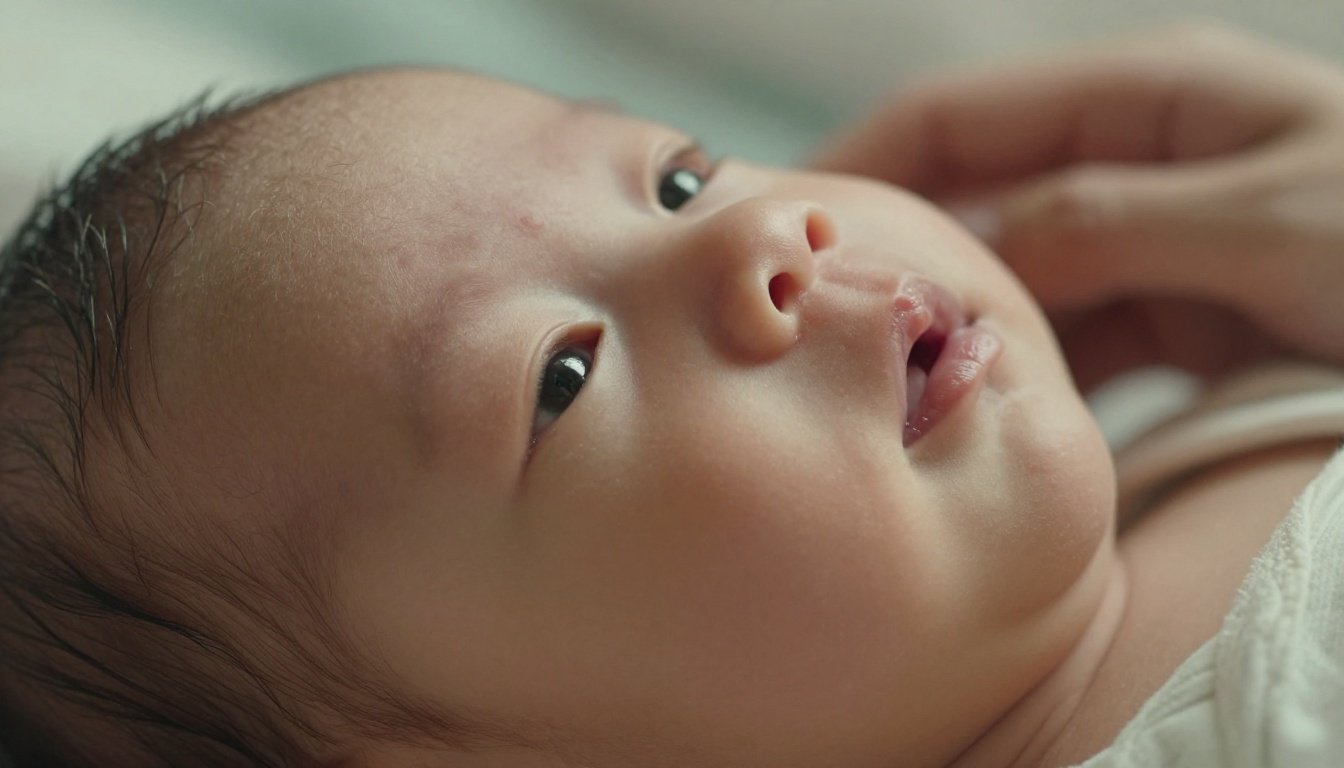
Noticing tiny red bumps across your newborn’s soft cheeks can make your heart drop, especially when their skin seems too delicate for anything unusual. Baby acne is common, usually harmless, and often temporary, with more than 30% of newborns developing it during the first few weeks of life.
Most cases improve without medication, but not every newborn rash is acne. This guide explains what causes baby acne, how to recognize its usual symptoms, which gentle treatments are safe, and why oils and greasy ointments can make it worse. You’ll also learn which prevention advice is a myth, how baby acne differs from look-alike rashes, and when a fever, blisters, pus, spreading redness, or a painful rash means you should call your pediatrician. For a broader reference, see these common newborn skin rashes, then start with the causes and symptoms below.
Baby Acne: Causes, Symptoms, Treatment, and Prevention Guide
Baby acne is a common, temporary rash that appears during the first weeks after birth. Medical sources may call it neonatal acne or neonatal cephalic pustulosis, especially when the bumps affect the face and scalp.
The exact cause isn’t fully settled. Hormones passed to the baby before birth may stimulate oil glands for a short time. Newer guidance also connects the rash with a normal reaction to bacteria and yeast that live on newborn skin. Either way, baby acne isn’t caused by dirty skin, poor hygiene, or anything you did wrong as a parent.
Unlike acne in older children and adults, newborn acne usually isn’t driven by clogged pores, blackheads, or whiteheads. It often clears on its own, so gentle care is usually better than acne medication. The American Academy of Dermatology’s baby acne guide also advises parents to avoid scrubbing or applying adult acne products.
What baby acne looks like and where it appears
Baby acne usually looks like small red bumps scattered across a baby’s cheeks, nose, and forehead. Some bumps may have a white tip or resemble tiny pustules. The rash can also appear on the chin, scalp, neck, upper chest, or back.
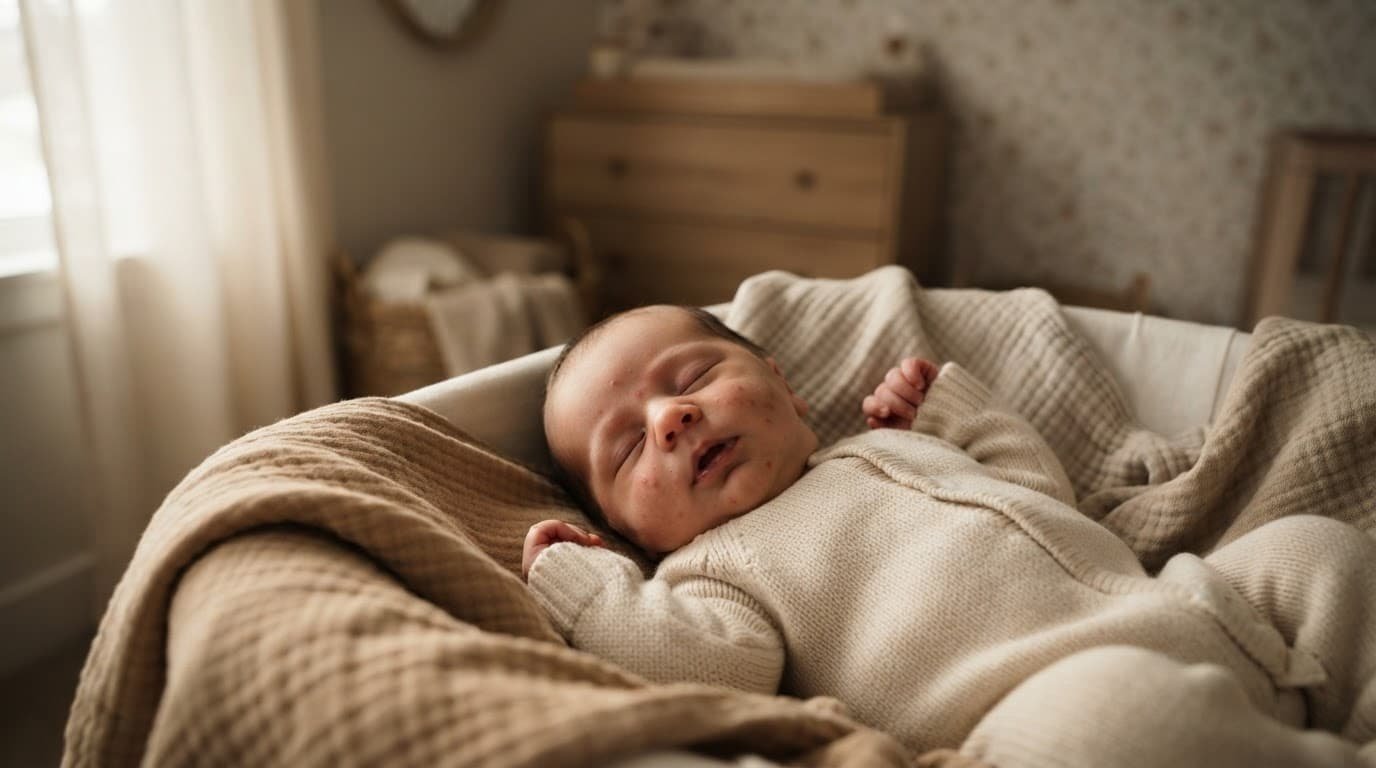
The spots may look brighter or more raised when your baby is warm, crying, or fussy. Heat increases blood flow to the skin, which can make mild redness stand out for a while.
Most babies don’t seem bothered by baby acne. The bumps usually aren’t painful or itchy, and your baby may feed, sleep, and act normally. Still, watch for changes that don’t fit the usual pattern. A baby who seems unwell, develops a fever, or has skin that feels warm, swollen, crusted, oozes, or spreads quickly needs medical advice. Gentle routines, such as those described in these newborn skin care tips, can help prevent extra irritation.
When newborn acne usually starts and how long it lasts
Baby acne often begins around 2 to 4 weeks of age, although it may appear anytime during the first 6 weeks. Some babies have a few bumps at birth, while others develop them gradually during the first month.
In most cases, the rash fades within several weeks to a few months without scarring. Some cases last until about 4 to 6 months, but the spots should slowly become less noticeable. Cleveland Clinic describes baby acne as a self-limited condition that generally improves without treatment. Read its baby acne treatment guidance before trying products at home.
Timing matters. If an acne-like rash first appears at 6 weeks or later, ask your pediatrician or a pediatric dermatologist to examine it. A later rash may be infantile acne or another newborn skin condition, and the treatment can differ.
How to Tell Baby Acne From Other Newborn Rashes
Baby acne can look similar to several normal newborn skin changes, so focus on when the rash appeared, what the bumps look like, where they are located, and how your baby feels. These clues can guide you, but an online article cannot confirm a diagnosis, especially when the rash looks unusual or changes quickly.
Baby acne versus milia, heat rash, and irritation
Milia usually appears at birth or during the first days of life. These tiny, firm white or yellow bumps often sit on a baby’s nose, cheeks, chin, or forehead. They are small keratin-filled cysts, not acne, and usually disappear without treatment. Stanford Medicine notes that milia can affect up to 40% of newborns.
Baby acne more often develops after the first couple of weeks, commonly around 2 to 4 weeks of age. The bumps tend to look red, and some may have a small white or yellow center. They usually appear on the cheeks, forehead, and nose, but can also affect the chin, scalp, neck, chest, or back. The American Academy of Family Physicians’ newborn rash guide provides additional detail about acne, milia, and other common newborn rashes.
Heat rash, also called miliaria, often appears when a baby gets warm or sweaty. Look for tiny red bumps, especially across the neck, upper chest, back, or skin folds. The rash may improve after you remove an extra layer, cool the room, and keep damp folds gently dry.
Irritation usually has an obvious connection. Drooling or spit-up may redden the skin around the mouth and neck. Rough fabric can rub the cheeks, while a new lotion, detergent, wipe, or soap may cause redness where it touched. Eczema can also cause dry, rough, itchy patches rather than the small pustules typical of acne.
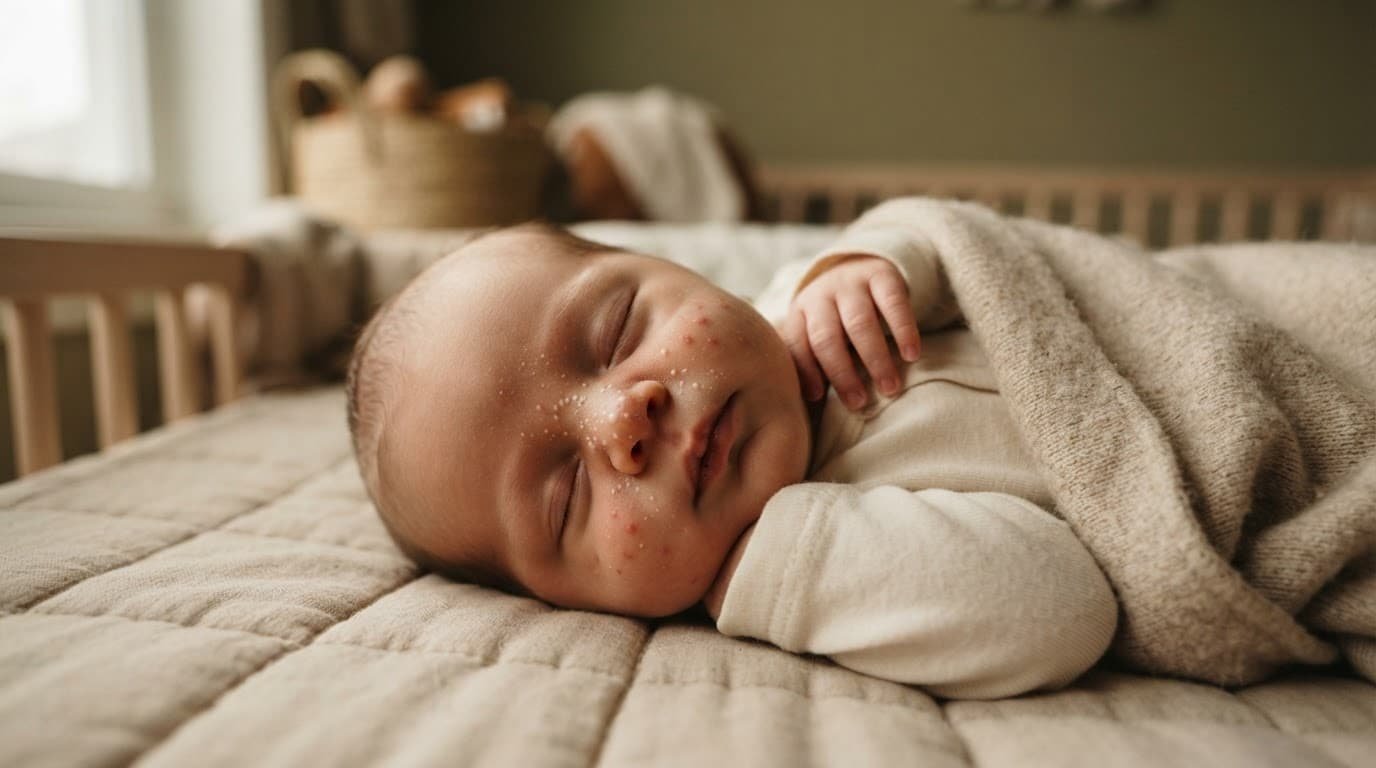
White, firm bumps present at birth are more consistent with milia. Red bumps that begin weeks later fit baby acne more closely.
Why a baby’s overall health matters
Look beyond the spots. A baby with uncomplicated acne usually feeds normally, wakes normally, breathes comfortably, and has no fever or major discomfort.
Call your pediatrician promptly if the rash comes with:
- Fever, poor feeding, or unusual sleepiness.
- Trouble breathing, weakness, or behavior that seems abnormal.
- Blisters, painful skin, swelling, pus, or drainage.
- Redness that feels warm or spreads rapidly.
Those signs may point to an infection or another condition that needs prompt evaluation rather than home care. Review these warning signs your baby may be getting sick if you feel something about your newborn’s behavior or rash isn’t right. Trust that instinct, and don’t squeeze, scrub, or treat suspicious bumps with acne products while waiting for medical advice.
Safe Baby Acne Treatment That Keeps Delicate Skin Calm
Uncomplicated baby acne usually needs no medicine. The bumps often fade on their own over several weeks or months, so a light routine is kinder than aggressive treatment. Your goal is to keep the skin clean, dry, and free from extra friction while you watch for changes.
A gentle daily routine for newborn skin
You don’t need a cabinet full of special products. Follow these simple steps:
- Wash your hands first. Clean hands reduce the chance of bringing dirt or germs to your baby’s face.
- Clean the face once a day. Use lukewarm water and, if needed, a small amount of mild, gentle baby cleanser. Avoid hot water because it can dry and irritate newborn skin.
- Rinse away all cleanser. Leftover soap can leave the face tight, dry, or red.
- Pat the skin dry. Use a soft, clean towel and press gently instead of rubbing over the bumps.
- Dab away milk and spit-up. After feeds, use a soft, clean cloth to remove moisture around the mouth, cheeks, and neck.
- Replace anything that rubs the skin. Change a damp bib or dirty burp cloth, and wash fabrics that touch your baby’s face regularly.
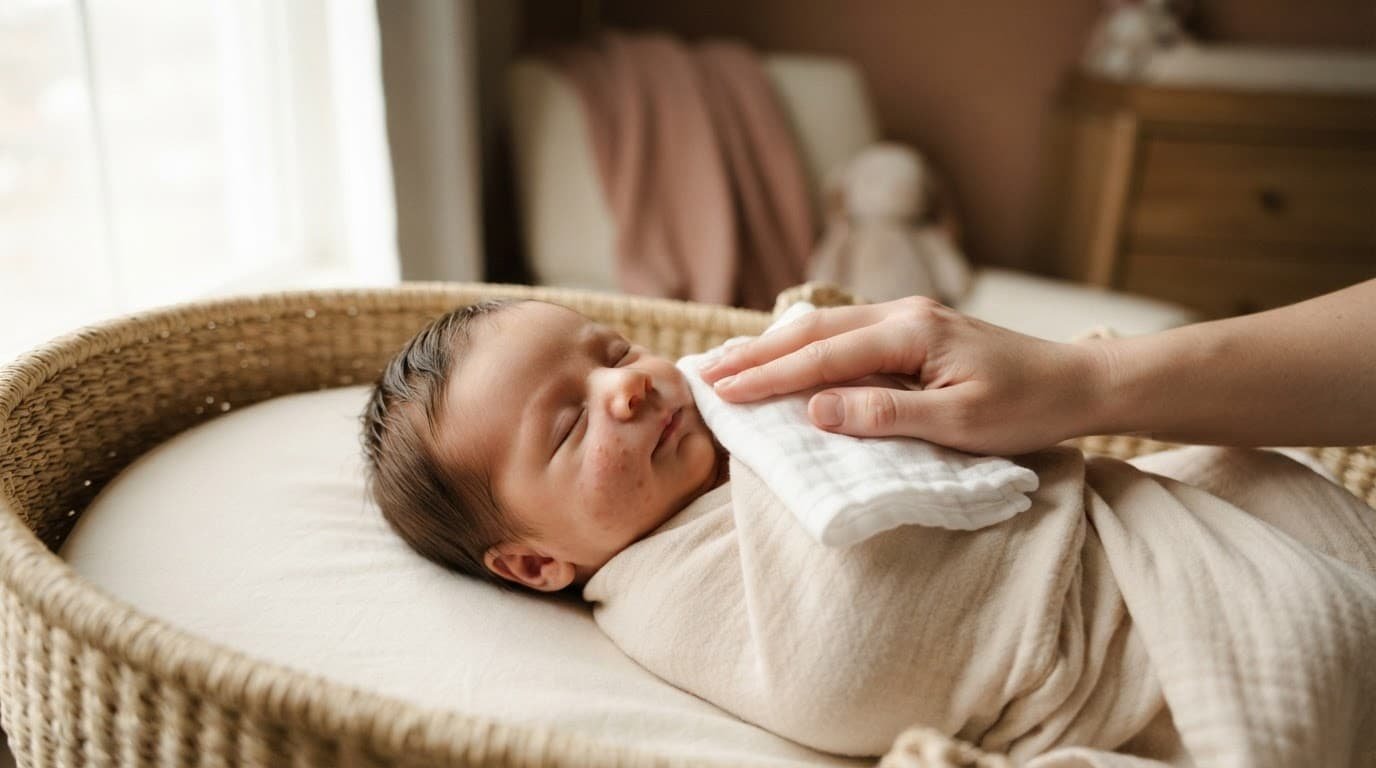
Keep the rest of the routine light. Skip scrubs, toners, exfoliants, rough washcloths, and frequent washing. These steps can strip the skin’s natural protection and make redness more noticeable. The American Academy of Dermatology’s baby skin care advice also recommends gentle handling and lukewarm water.
You can find more practical ideas in these gentle newborn skin care tips, but remember that baby acne doesn’t mean your baby’s face is dirty.
Products and home remedies to skip
Although well-meaning relatives may suggest home remedies, many popular options haven’t been proven safe or helpful for newborn skin. Don’t squeeze, pop, pinch, or scrub the bumps. Those actions can cause irritation, introduce bacteria, and increase the chance of infection or lasting marks.
Avoid applying:
- Baby oil, greasy ointments, or heavy lotions.
- Essential oils or scented products.
- Adult acne medication, acne washes, or exfoliating creams.
- Breast milk, toothpaste, baking soda, or herbal mixtures.
- Over-the-counter acne treatments without medical advice.
The AAD advises against baby acne medicine and acne washes unless a pediatrician or dermatologist recommends them. This isn’t a criticism of parents who heard a trusted suggestion. Newborn skin reacts differently from adult skin, so a remedy that sounds gentle may still cause burning, dryness, or more bumps.
When a pediatrician may recommend medicine
Make an appointment if the rash is severe, cystic, painful, leaves scars, or isn’t slowly improving. A rash that first appears after the usual newborn period, especially after 6 weeks of age, also deserves an examination because it may be infantile acne or another condition.
A pediatrician can usually identify typical baby acne by looking at it. Testing is rarely needed. If the case is severe or persistent, the clinician may prescribe a suitable face cream, but don’t borrow medication, use leftover prescriptions, or choose an acne product on your own. Contact the office sooner if your baby has fever, blisters, oozing, spreading redness, swelling, or seems unwell.
Can Baby Acne Be Prevented? What Parents Can and Cannot Control
There is no reliable way to prevent normal newborn acne. Its timing often relates to early skin development, temporary hormone effects, and the newborn skin environment. These factors are mostly outside your control, so seeing a few red bumps doesn’t mean you missed a step.
Your focus can shift from preventing acne to reducing irritation. Gentle care helps protect the skin barrier while the rash runs its natural course. The American Academy of Dermatology recommends lukewarm water, mild fragrance-free products, and no scrubbing for babies with acne.
Simple habits that protect sensitive baby skin
Keep your baby’s skin cool and comfortable. Dress your newborn in breathable clothing, avoid overdressing, and check for sweating around the neck and face. Heat can make redness look stronger and may irritate existing bumps.
Milk, spit-up, and drool can also sit against the skin. Gently dab those areas with a soft, clean cloth instead of rubbing. Change wet bibs and burp cloths promptly, especially when they touch your baby’s cheeks or chin. Choose soft, washable bibs with no rough seams or tight edges.
Wash your baby’s face once a day with lukewarm water. If the skin needs more cleaning, use a small amount of mild, fragrance-free cleanser, then rinse it away and pat the area dry. More washing won’t prevent baby acne. Frequent cleansing can remove natural oils and leave delicate skin dry, tight, or irritated.
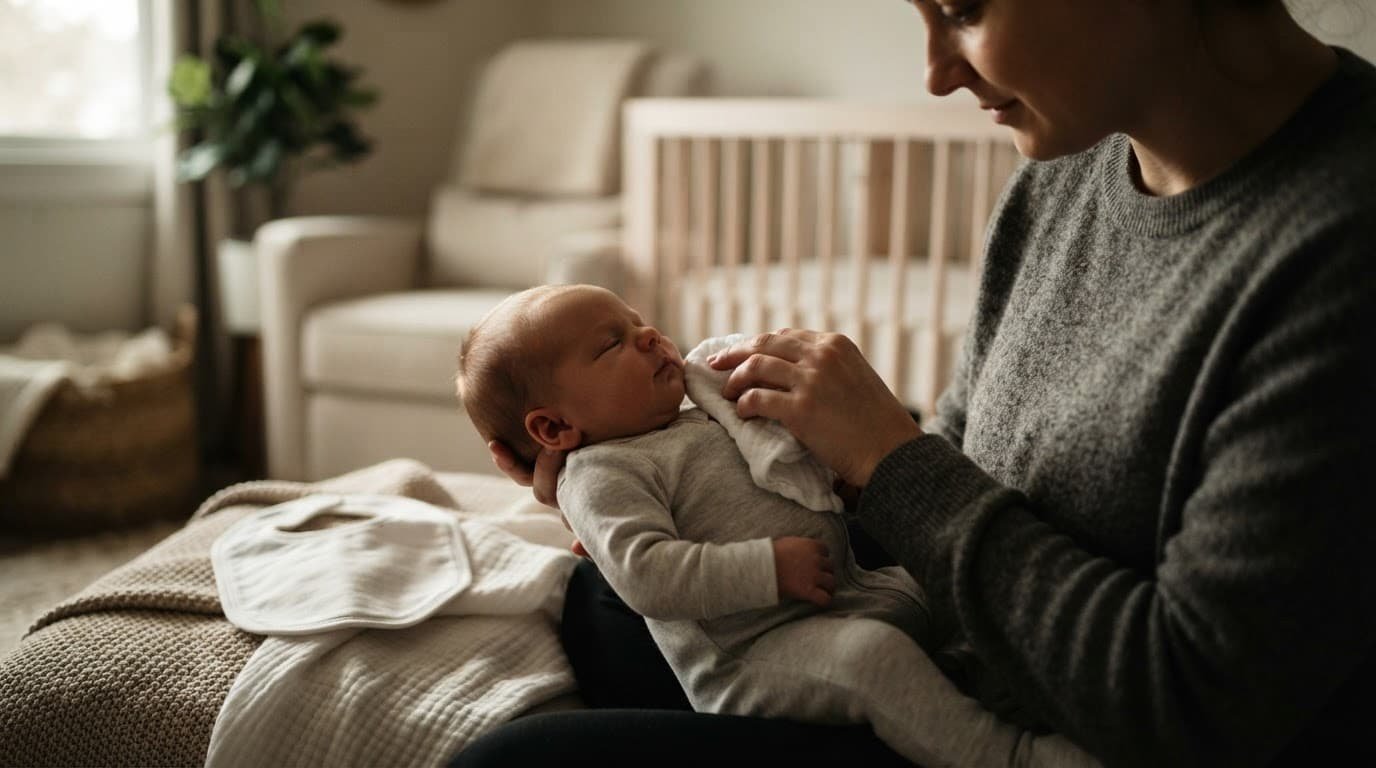
When bathing or cleaning your baby, these gentle baby bathing tips for sensitive skin can help you avoid friction and product buildup. In most cases, newborn skin needs fewer products, not a longer routine.
Common prevention myths that can make acne worse
Baby acne doesn’t mean your baby is dirty. Acne develops because of normal changes in newborn skin, not poor hygiene. Scrubbing harder, washing several times a day, or using a rough washcloth won’t clear the bumps. Those habits can damage the skin barrier and make the redness last longer.
Heavy oils and greasy ointments can also create trouble. Products such as baby oil, thick lotions, and facial oils may trap heat or add buildup around the bumps. Unless your pediatrician recommends one, keep these products away from acne-prone areas.
Avoid adult acne washes, exfoliants, essential oils, and homemade remedies, too. Even products labeled for babies may contain fragrance or ingredients that irritate a newborn’s face. The safest approach is simple: clean gently, keep the skin cool and dry, limit rubbing, and give the acne time to fade.
When baby acne needs a doctor’s attention
Most baby acne can be watched at home while your baby feeds, sleeps, and behaves normally. Still, a rash deserves medical attention when its timing, appearance, or your baby’s behavior falls outside the usual pattern.
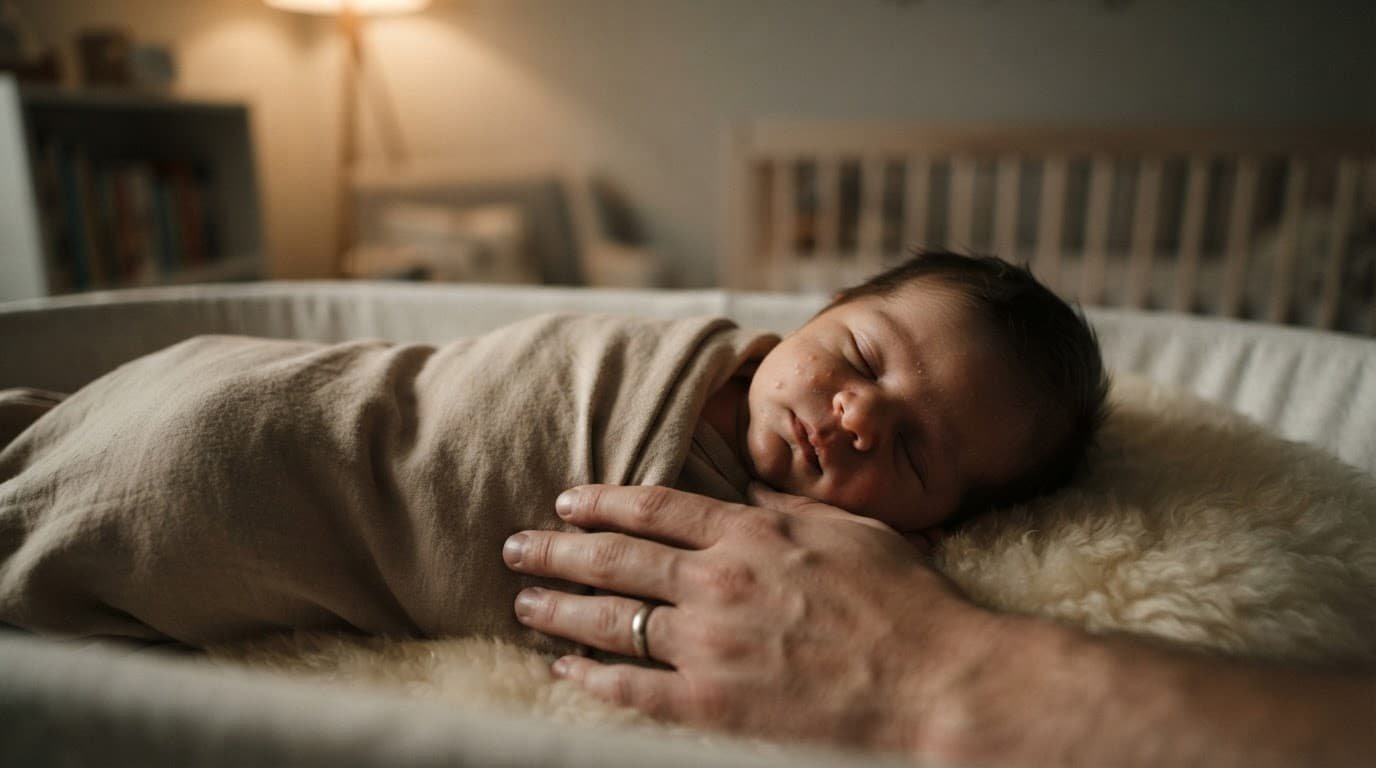
A quick checklist before you call
Before contacting your pediatrician, write down a few details while they are fresh. This information helps the provider decide whether the rash fits typical baby acne or needs an examination.
- Note your baby’s age when the rash began. Acne that starts after 6 weeks of age may be infantile acne or another skin condition.
- Describe where the rash started and whether it has spread to the scalp, neck, chest, back, or elsewhere.
- Look closely at the bumps. Are they mostly red, or do some have white centers, clear fluid, crusting, or pus?
- Record whether your baby has a fever, poor feeding, unusual sleepiness, or behavior changes.
- Write down how long the rash has lasted and whether it is slowly fading, staying the same, or worsening.
- List every soap, lotion, oil, ointment, detergent, wipe, or medicine that touched the skin recently.
Take a dated photo in natural light when the rash changes. Bring the photo and your product list to the appointment, since newborn rashes can look different by the time a clinician sees them. The American Academy of Pediatrics newborn rash guidance can also help you organize what you notice.
When to monitor and when to call
Routine monitoring is reasonable when the bumps began during the first 6 weeks, remain small and mild, and your baby seems comfortable. Keep cleansing gentle, avoid new products, and watch for gradual improvement over the next several weeks.
Schedule a pediatric visit if the rash:
- Isn’t improving after a few months or lasts beyond the expected window.
- First appears after 6 weeks of age.
- Keeps spreading or becomes more inflamed.
- Looks cystic, painful, or begins leaving scars.
Seek same-day medical advice for fever, especially a temperature of 100.4°F (38°C) or higher in a baby younger than 12 weeks. Call promptly if your baby feeds poorly, seems unusually sleepy or difficult to wake, or simply acts unlike themselves.
Blisters, significant swelling, warmth, pus, painful-looking skin, or rapidly worsening redness also need prompt evaluation. Newborns can become ill quickly, so trust your instincts even when the bumps resemble acne. If your baby has breathing changes as well, review these warning signs of breathing trouble in babies and seek urgent help when needed.
Conclusion
Baby acne commonly appears during the first month, often as small red, pink, or white bumps on your baby’s cheeks, nose, forehead, or chin. Although the spots can look alarming against delicate newborn skin, they usually fade within a few weeks to a few months and rarely leave scars.
Keep care simple with gentle, once-daily cleansing, lukewarm water, and careful patting instead of rubbing. Don’t squeeze or scrub the bumps, and avoid oils, greasy ointments, scented products, and acne medicine unless your pediatrician prescribes treatment. You can also review these gentle newborn bathing tips for ways to protect sensitive skin during everyday care.
Most importantly, baby acne isn’t a sign that your baby’s skin is dirty or that you did something wrong. Seek medical advice when the rash begins after the usual newborn period, changes in appearance, spreads quickly, or appears alongside fever, poor feeding, unusual sleepiness, or other changes in your baby’s behavior. Your concern is reason enough to call.

- Dry Cough in Kids: 5 Causes and Safe Solutions - September 23, 2026
- How to Help a Child Deal With Anxiety at Home - September 12, 2026
- How to Prepare Your Child for the First Day of School - September 12, 2026