

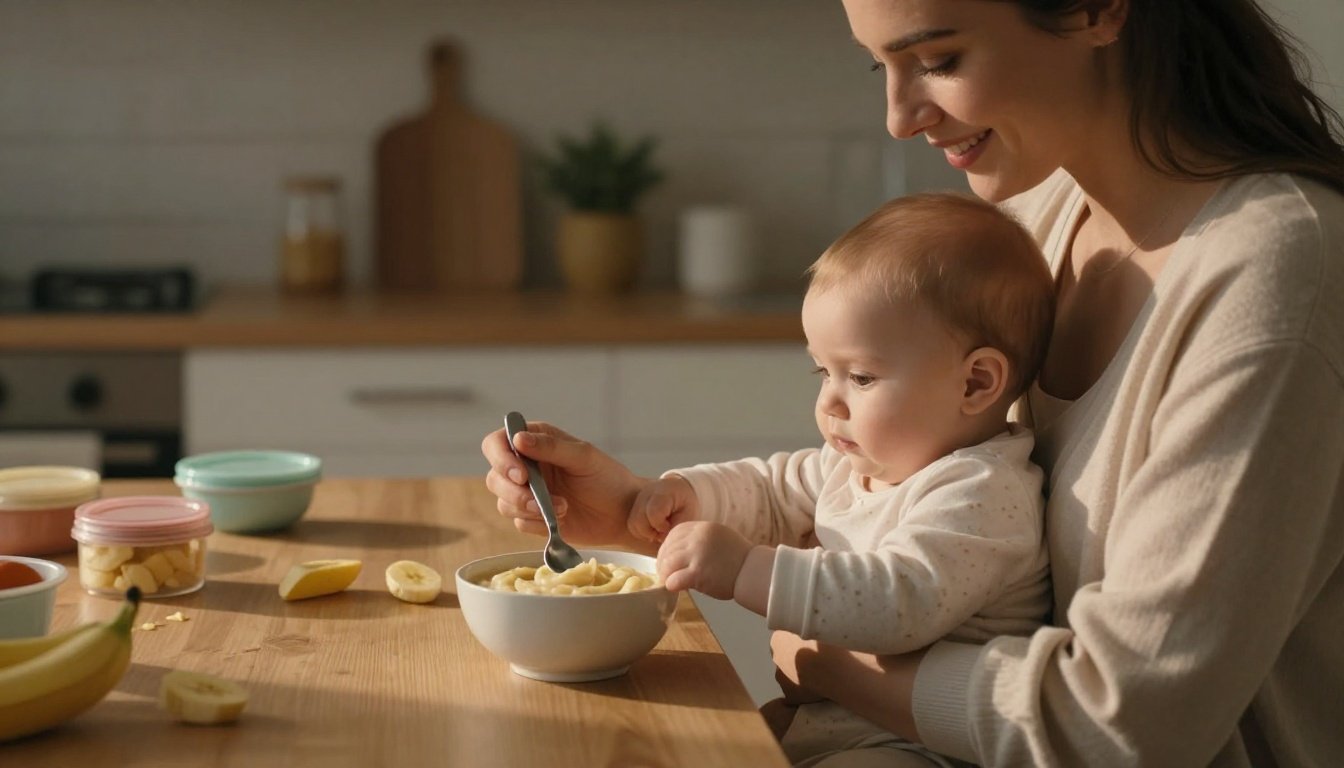
The morning rush can make baby breakfast feel like one more task, but it doesn’t have to be complicated. Healthy breakfast recipes for your baby can be soft, simple, and nourishing, with easy ingredients you may already have in your kitchen.
For babies ready to start solids, these 10 ideas include smooth purees, mashed foods, and gradually thicker textures for different stages from about 6 to 12 months. Breast milk or infant formula remains your baby’s main source of nutrition during this stage, so offer breakfast as a complement while following your baby’s readiness cues for starting solids.
Introduce new foods carefully, and ask your pediatrician about individual feeding needs, allergies, prematurity, or medical concerns. Let’s begin with easy baby-friendly breakfasts you can prepare and serve safely.
Before You Make Breakfast, Check That Your Baby Is Ready for Solids
Most babies begin complementary foods around 6 months, but the calendar is only part of the decision. Readiness signs matter more than reaching a specific date. Your baby should show several developmental cues before breakfast foods become part of the routine.
Look for These Readiness Signs
Your baby may be ready for solids when they can:
- Sit upright with support and keep their head and neck steady.
- Reach toward food or watch closely when others eat.
- Open their mouth when food approaches.
- Close their lips around a spoon.
- Swallow food instead of pushing it back out with their tongue.
These skills work together. A baby who sits well but still pushes every spoonful out may need more time. For a closer look at these cues, review these signs your baby is ready for solids.

Once your baby shows readiness, serve breakfast while they sit fully upright in a secure high chair. Keep the straps fitted correctly, stay within arm’s reach, and give your baby your full attention. Eating should never happen while your baby is reclining, walking around, or sitting alone with food.
Start Small and Follow Your Baby’s Cues
Begin with about 1 to 2 tablespoons of a smooth or soft food. Your baby may take only a few bites at first, and that is perfectly normal. Offer more when they lean toward the spoon, open their mouth, or reach for another bite.
Stop when your baby turns away, closes their mouth, pushes food away, or loses interest. These hunger and fullness cues matter more than finishing a certain portion. Breast milk or infant formula remains your baby’s main source of nutrition from 6 to 12 months, so solids complement milk feeds rather than replace them.
Texture should match your baby’s skills. Try smooth purees, mashed foods, or very soft foods that break apart easily. As your baby gains control, you can gradually offer thicker textures and small, soft pieces.
Keep Breakfast Safe
A few food rules deserve a permanent place in your kitchen:
- Never give honey before 12 months because of the risk of infant botulism.
- Don’t offer cow’s milk as your baby’s main drink before 12 months. Yogurt and cheese may fit earlier, depending on texture and your pediatrician’s guidance.
- Skip added sugar and limit excess salt.
- Introduce common allergens, such as well-cooked egg and thinned peanut butter, in safe forms when your baby is developmentally ready. Offer one new food at a time so you can watch for a reaction. The AAP guidance on introducing allergens can help you discuss timing and preparation with your child’s doctor.
Gagging can be loud, wet, and uncomfortable to watch, but it is often a normal part of learning new textures. Choking is different. A choking baby may be silent, unable to breathe, or unable to cry, which makes it an emergency. Learn the difference before serving finger foods, and take an infant CPR course if you can. The infant feeding safety guidance on gagging offers another helpful reference for parents.
10 Healthy Breakfast Recipes for Your Baby
These baby breakfast recipes use affordable ingredients and flexible textures. Start with tiny portions, offer breast milk or formula as usual, and follow your baby’s hunger and fullness cues.

Smooth and soft breakfasts for babies starting solids
Begin with smooth foods, then leave them slightly thicker as your baby gains control. Add breast milk, infant formula, or a little water when a puree needs thinning.
1. Banana and oat cereal
- Ingredients: Iron-fortified oat cereal, ripe banana, prepared breast milk or formula.
- Preparation: Mix the cereal with breast milk or formula. Stir in mashed banana until smooth.
- Age and texture: Offer a thin puree for early solids, then reduce the liquid for a thicker mash.
- Substitution: Use unsweetened applesauce instead of banana.
The familiar flavor of breast milk or formula can make this first breakfast easier to accept. Iron-rich foods are useful choices as your baby’s diet expands.
2. Warm pear and oatmeal mash
- Ingredients: Ripe pear, plain oats, water.
- Preparation: Peel, core, and cook the pear until soft. Cook the oats, then mash both ingredients together.
- Age and texture: Blend smooth at first, then leave tiny soft lumps for a more experienced eater.
- Substitution: Use cooked apple instead of pear.
3. Creamy avocado and banana mash
- Ingredients: Ripe avocado, ripe banana.
- Preparation: Mash both ingredients until creamy. Add formula, breast milk, or water if needed.
- Age and texture: Serve smooth for beginners, then make it thicker as your baby practices moving food around.
- Substitution: Replace banana with soft, cooked pear.
Avocado adds a creamy texture and healthy fats, while banana brings natural sweetness without added sugar.
Protein-rich breakfast ideas with egg, yogurt, and lentils
Egg, yogurt, and lentils add protein and variety. Introduce a new allergen in a small amount when your baby is ready, and watch for symptoms such as hives, swelling, vomiting, coughing, or breathing trouble.
4. Soft scrambled egg
- Ingredients: One egg, a small splash of water.
- Preparation: Whisk the egg with water and cook over low heat until fully firm and soft. Break it into tiny pieces or mash it.
- Age and texture: Start with a small taste if egg is new. Serve pieces that your baby can gum easily.
- Substitution: Use mashed tofu instead of egg.
Avoid raw or runny egg. These safe egg guidelines for babies offer useful preparation reminders.
5. Full-fat yogurt with fruit
- Ingredients: Plain, unsweetened full-fat yogurt, mashed banana or berries.
- Preparation: Stir in mashed banana. If using berries, wash them, cook or soften firm fruit, remove stems, and mash thoroughly.
- Age and texture: Serve smooth or slightly lumpy when your baby manages thicker foods.
- Substitution: Use mashed ripe peach instead of berries.
Plain yogurt can fit a baby’s diet when the texture is safe. Don’t use cow’s milk as a drink before 12 months.
6. Red lentil and sweet potato mash
- Ingredients: Red lentils, peeled sweet potato, water.
- Preparation: Cook both until very soft. Blend or mash with cooking water until creamy.
- Age and texture: Offer a smooth puree first, then a thicker mash with soft, fine pieces.
- Substitution: Use mashed butternut squash instead of sweet potato.
For babies with severe eczema or an existing food allergy, ask a medical professional about introducing common allergens.
Soft finger-food breakfasts for babies learning to self-feed
7. Soft banana oat pancakes
- Ingredients: Banana, egg, finely ground oats.
- Preparation: Mix, cook small pancakes until fully set, and cool. Cut into wide strips or soft bite-size pieces.
- Age and texture: Use strips for a baby who grasps food, then smaller pieces for a developing pincer grasp.
- Substitution: Use mashed sweet potato instead of banana.
Make them without honey or added sugar. Every piece should squish easily between two fingers.
8. Tender toast fingers
- Ingredients: Soft toast, mashed avocado or smooth nut butter.
- Preparation: Spread a thin layer over toast and cut it into manageable strips. Thin nut butter with warm water if sticky.
- Age and texture: Offer soft strips when your baby self-feeds confidently.
- Substitution: Use plain yogurt instead of avocado or nut butter.
Never serve whole nuts or a thick spoonful of nut butter. Keep your baby seated upright and watched throughout the meal.
Wholesome breakfast bowls for variety and family-style meals
9. Rice, yogurt, and peach bowl
- Ingredients: Very soft cooked rice, plain full-fat yogurt, ripe or cooked peach.
- Preparation: Remove the peach skin and pit, then mash it. Stir with rice and yogurt, or serve each component separately.
- Age and texture: Mash or blend for younger eaters; offer soft grains and small pieces as skills improve.
- Substitution: Use pear instead of peach.
10. Pumpkin quinoa or oatmeal bowl
- Ingredients: Cooked quinoa or oatmeal, mashed pumpkin, finely minced chicken or tofu.
- Preparation: Cook until tender, then combine or serve separately. Add water, breast milk, or formula to soften the mixture.
- Age and texture: Keep it smooth for beginners and thicker for babies managing textured foods.
- Substitution: Use mashed sweet potato instead of pumpkin.
Repeat foods even when your baby rejects them at first. Familiar flavors often need several calm, pressure-free offers before they feel comfortable. If you offer grapes alongside breakfast, quarter them lengthwise and soften them; never serve whole round grapes. For more ideas, browse these safe breakfast foods for infants.
How to Adjust Baby Breakfast Recipes for Texture, Allergies, and Nutrition
The same breakfast can grow with your baby. A bowl of oatmeal, for example, may start as a thin puree, become a thicker mash, and later turn into soft oat strips or small, squishable pieces. Adjust the texture to match your baby’s skills rather than following age alone.

Move gradually from purees to finger foods
For a younger baby starting solids, blend or mash breakfast until it is smooth and easy to swallow. Thin oatmeal, lentils, or mashed fruit with water, breast milk, or prepared infant formula. Breast milk or formula can soften food, but don’t cook them over high heat. Add them after the food cools slightly, and continue regular milk feeds as usual.
As your baby gains control, leave tiny soft lumps in foods such as banana, avocado, oatmeal, and cooked pear. A thicker mash gives your baby practice moving food around the mouth without requiring strong chewing skills.
Older babies may manage soft, moist pieces that flatten easily between your fingers. Cut pancakes, toast, or ripe fruit into pieces your baby can pick up. Babies who self-feed often do better with larger strips at first, then smaller pieces as their pincer grasp improves. Your healthy meal ideas for 9-month-old babies offer more examples of thicker textures and soft finger foods.
Build a balanced baby breakfast
A simple breakfast becomes more nourishing when you combine different food groups. Try to include:
- A soft grain or starch, such as oatmeal, toast, rice, quinoa, or a small pancake.
- A fruit or vegetable, such as banana, pear, avocado, pumpkin, or sweet potato.
- An iron-rich or protein food, such as well-cooked egg, lentils, tofu, plain yogurt, or finely minced meat.
You don’t need every component in equal amounts. Stir mashed pumpkin into oatmeal, serve yogurt with soft fruit, or pair toast with avocado and a small amount of egg. The Arizona WIC infant nutrition guidance also describes complementary foods as foods offered alongside breast milk or infant formula.
Introduce allergens carefully and serve foods safely
Offer one new common allergen at a time in a small amount. Well-cooked egg, smooth peanut butter thinned with water, dairy, wheat, and fish can be introduced in baby-safe forms when your child is ready for solids. Watch for hives, vomiting, coughing, facial swelling, or other unusual symptoms. Seek urgent help for breathing trouble, facial swelling, or a severe reaction. Babies with severe eczema or an existing food allergy need individualized advice from a healthcare professional.
Texture adjustments also reduce choking risks. Avoid whole nuts, raw apple, raw carrot, whole grapes, cherry tomatoes, hard food pieces, bones, popcorn, and thick globs of nut butter. Cut, cook, mash, or thin foods so they become soft and easy to manage. The CDC choking hazard guidance provides a helpful list of foods to avoid or modify.
Make Baby Breakfast Easier With Simple Prep and Feeding Routines
A little preparation can turn a rushed morning into a calmer one. Cook soft fruits, vegetables, grains, or lentils in batches, then store them in small portions so you only need to warm what your baby will eat.

Prepare and store baby food in small portions
Steam or bake pears, apples, peaches, sweet potatoes, pumpkin, and other firm produce until they are soft enough to mash. Let the food cool, then portion it into clean, freezer-safe containers or silicone trays. Label each container with the food and date, and freeze portions you won’t use within a day or two.
Thaw frozen food in the refrigerator or under cold running water, rather than leaving it on the counter. Homemade baby food usually keeps in the refrigerator for one to two days and in the freezer for one to two months, according to USDA baby food storage guidance. Smaller portions reduce waste and make it easier to offer variety throughout the week.
Keep the main batch separate from your baby’s serving bowl. Once a spoon has gone into your baby’s mouth, don’t return the remaining food to the storage container. Discard food left in the feeding bowl because saliva can introduce bacteria.
Reheat safely before serving
Warm only the portion you plan to serve. Stir it well after reheating, let it stand briefly, and check the temperature with a clean spoon before offering it to your baby. The food should feel lukewarm, never hot. Avoid microwaving breast milk or infant formula because uneven heating can create dangerous hot spots.
Follow a flexible morning routine
Breakfast doesn’t need to happen at a fixed time. Offer breast milk or infant formula as usual, then serve a small breakfast when your baby is alert and calm, but not overtired or desperately hungry. If your baby is ready for water, provide a few sips from an open cup or an appropriate training cup.
Watch your baby’s cues during the meal. Leaning forward, opening the mouth, or reaching can show interest, while turning away, closing the mouth, or pushing food away can signal fullness. A few bites still count as practice. For broader support during feeding changes, these feeding transition tips can help without requiring you to change your baby’s routine all at once.
Conclusion
Healthy baby breakfasts can be simple, nourishing, and easy to adapt. Banana oat cereal, pear oatmeal, avocado and banana mash, scrambled egg, yogurt with fruit, lentil and sweet potato mash, oat pancakes, toast fingers, rice and peach, and pumpkin quinoa or oatmeal bowls offer a helpful mix of flavors, nutrients, and textures. You can adjust each recipe as your baby’s eating skills grow, including ideas from this beginner’s guide to baby-led weaning.
Keep your baby upright and closely supervised during every meal. Avoid honey and cow’s milk as a main drink before 12 months, and make sure each food is soft, properly prepared, and suited to your baby’s skills. Breast milk or infant formula should remain central during the first year.
Trust your baby’s hunger and fullness cues, and introduce variety patiently. If you have questions about feeding, allergies, or your baby’s individual needs, contact your pediatrician.

- Dry Cough in Kids: 5 Causes and Safe Solutions - September 23, 2026
- How to Help a Child Deal With Anxiety at Home - September 12, 2026
- How to Prepare Your Child for the First Day of School - September 12, 2026