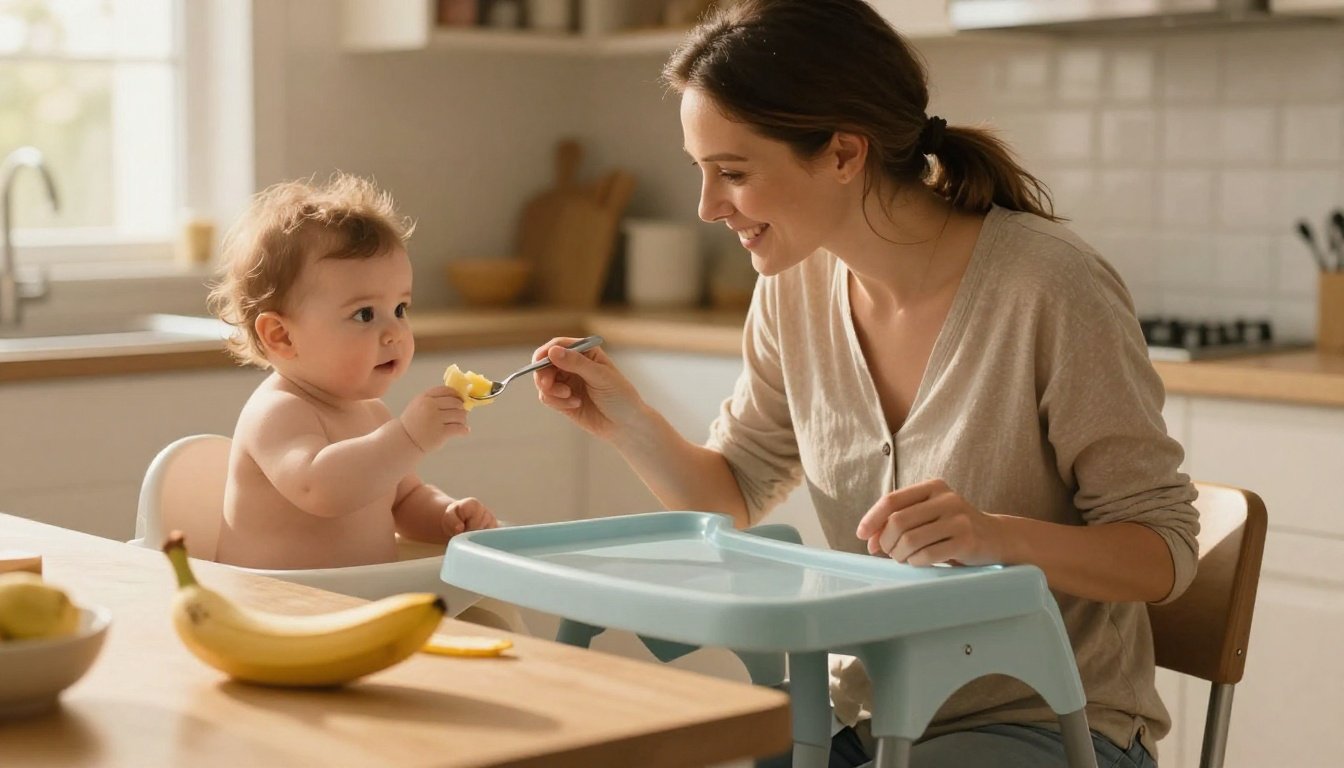
A soft banana on the counter can feel like a small gift on a busy morning. When your baby is ready for solids, banana for babies can be an easy first taste because it is mild, soft, and quick to prepare.
Bananas are not a required first food, and they are not a perfect food. Still, they offer a gentle texture, natural sweetness, fiber, carbohydrates, portability, affordability, and many serving options. Breast milk or formula remains your baby’s main source of nutrition during early solid feeding, so follow readiness cues and ask your pediatrician about personal feeding concerns.
8 Advantages of Banana for Babies: Why This Fruit Fits Early Feeding
Banana works well for many families because it is soft, familiar, and easy to keep on hand. It also has nutrients that fit into a varied infant diet. Every baby responds differently, though, so offer bananas alongside vegetables, iron-rich foods, proteins, and other fruits.
Soft texture makes banana easy to mash
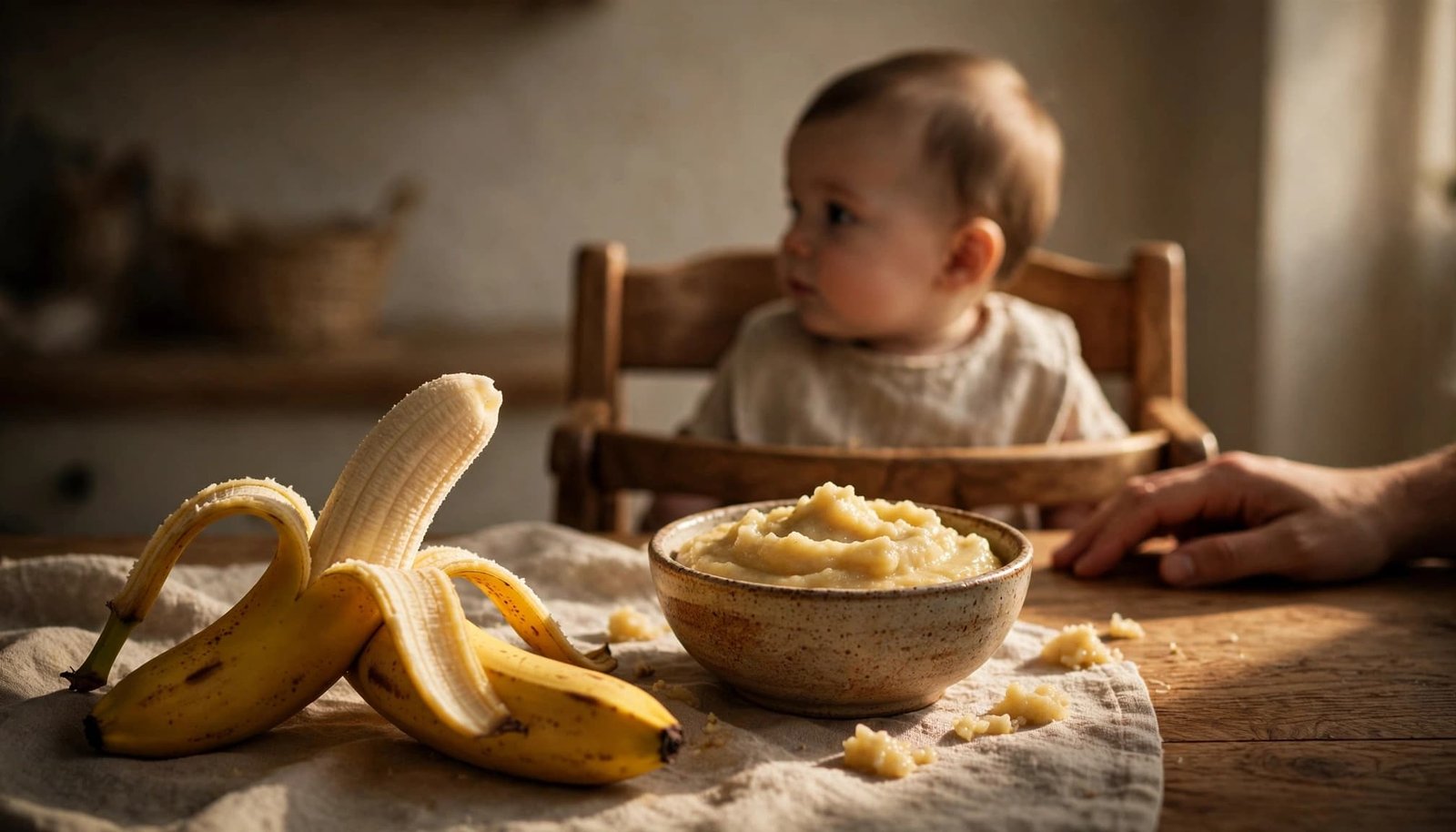
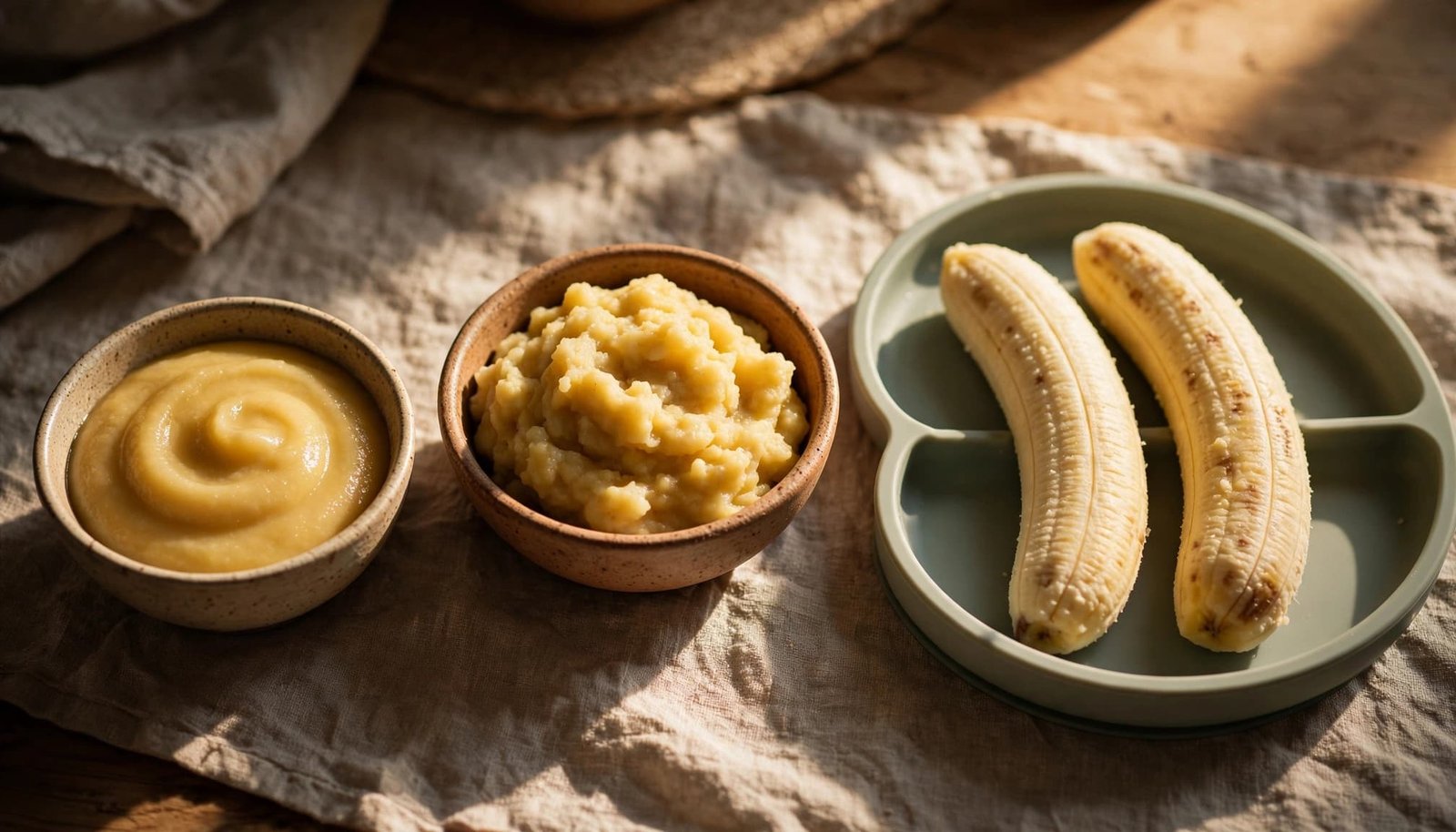
A ripe banana gives under a fork with almost no effort. For a beginner, mash it until smooth and free of firm lumps. That texture can be easier for babies who are learning to move food around their mouths and swallow safely.
As feeding skills grow, a baby may handle a thicker mash or soft pieces. The right texture depends on your child’s skills, not a calendar date. A baby who still pushes food forward with the tongue may need more time before solids.
Bananas also contain fiber, which belongs in a balanced diet. For some babies, it may support softer stools. However, banana does not reliably prevent or fix constipation. Call your pediatrician if stools are hard, painful, bloody, or unusually infrequent.
Australia’s infant feeding guidelines also stress varied foods and textures as babies learn to eat.
A naturally sweet taste can encourage food exploration
The gentle sweetness of ripe banana may make a first fruit feel less startling. It needs no sugar, syrup, honey, or flavoring. Plain fruit lets your baby learn what banana tastes like on its own.
Bananas also provide carbohydrates, which supply energy as babies roll, scoot, crawl, and explore. That does not make a banana a complete meal. Early eating is a wide table, not a one-fruit routine.
Keep offering soft vegetables, tart fruits, beans, meats, eggs, and other age-appropriate family foods. New flavors sometimes take repeated exposure, so a rejected bite today does not mean a permanent dislike.
A baby’s wrinkled nose at a new food often means “this is unfamiliar,” not “I will never eat this.”
Simple preparation saves time during busy baby days
Banana has no pot to boil or blender to wash. First, wash your hands and clean the fork, bowl, or plate. Peel the fruit, cut away bruised or spoiled areas, then mash it shortly before serving.
Its natural peel also makes it portable. You can pack a whole banana for an outing and prepare it when your baby is ready to eat. That convenience can help families skip packaged snacks when time runs short.
Bananas are usually available year-round and often cost less than many pre-packaged baby foods, though grocery prices vary by store and season. A sample milk-and-solids routine can help parents remember that solid foods fit around regular breast milk or formula feeds.
One fruit can grow with a baby’s feeding skills
Banana can change shape as your baby becomes more confident. Start with smooth puree or a well-mashed spoonful. Later, offer a thicker mash with tiny, easy-to-gum pieces. Once your baby can pick up food and bring it to their mouth, large, very soft banana spears may work.
You can also mix mashed banana into a food your baby already tolerates, such as plain full-fat yogurt or oatmeal. Introduce banana alone first, then combine familiar ingredients later. That makes it easier to notice if a food causes trouble.
The eighth advantage is easy pairing, but variety matters more than any favorite mix. Banana can sit beside lentils, yogurt, oatmeal, avocado, or a soft egg preparation, rather than taking over every meal.
Keep Milk at the Center of Early Meals
Solid food begins as practice. A few spoonfuls of mashed banana may look tiny beside a full bottle or nursing session, and that is normal. During the first year, breast milk or infant formula still supplies most of your baby’s nutrition.
A 2025 review of complementary feeding guidance found that recommendations generally support adding foods at about 6 months. Milk feeds do not need to disappear when solids begin. Instead, food gradually becomes a familiar part of the day.
Offer water in small amounts with meals if your pediatrician recommends it, but avoid replacing breast milk or formula with juice, cow’s milk, or plant-based drinks before age 1.
When Can Babies Start Eating Banana Safely?
Most babies can begin solid foods at about 6 months. The Centers for Disease Control and Prevention advises against starting before 4 months. Age matters, but your baby’s physical skills matter more.
Look for a full set of readiness signs. Your baby should sit upright with support, hold their head and neck steady, open their mouth when food approaches, and show interest in what others are eating. They should also swallow food instead of pushing it back out with the tongue.
Premature babies and babies with growth, muscle-tone, swallowing, or medical concerns may need personal guidance. Your pediatrician can help you decide when solids make sense.
For a closer look at the developmental clues, see these signs your baby is ready for solid foods. An Iowa WIC readiness resource also lists sitting up, head control, hand-to-mouth movement, and swallowing as useful signs.
Introduce plain banana as a single-ingredient food. If you want to watch closely for a reaction, wait about 3 to 5 days before adding another new food. Continue to offer common allergens in safe forms when your pediatrician says your baby is ready, rather than delaying them without a medical reason.
How to Serve Banana at Different Stages of Baby-Led Feeding
Texture should follow your baby’s current abilities. For beginners, use a smooth puree or well-mashed banana with no chunks. A shallow spoon can make small tastes easier to manage.
When your baby handles thicker foods, leave the mash a little lumpier, as long as every piece is soft enough to squash easily. Babies who can grasp food and bring it to their mouths may try large, ripe banana strips or spears. They should be easy to squish between your fingers.
Avoid hard, sticky, or round pieces. Large coin-shaped slices can slip backward in the mouth, and a spoonful of nut butter is too sticky for babies. Always place your baby upright in a stable high chair and stay within arm’s reach during meals.
Gagging can happen while babies learn to handle food. It is noisy and often protects the airway. Choking is often silent and urgent. Caregivers should learn infant CPR and choking response from a qualified instructor before finger foods become routine. A baby-led weaning safety overview can also help you compare texture approaches.
Simple Banana Safety Tips, Allergies, and Feeding Mistakes to Avoid
Banana is not usually grouped with the major food allergens, but any food can cause a reaction. Introduce new foods one at a time and pay attention after the meal. Call your pediatrician if you suspect a reaction.
Know when to get urgent help
Hives, swelling of the lips or face, repeated vomiting, coughing, wheezing, or trouble breathing need attention. Seek urgent medical help right away for trouble breathing, severe swelling, faintness, or other severe symptoms.
A cough during eating can also mean food went down the wrong way. Stop the meal, watch your baby closely, and use choking-response steps if the airway is blocked.
Skip additions and unsafe shortcuts
Keep baby banana plain. Avoid these common mistakes:
- Do not add honey before 12 months because of the risk of infant botulism.
- Skip added sugar, salt, syrups, and crunchy toppings.
- Do not offer firm chunks, dried banana chips, or slippery round slices.
- Avoid treating banana as a full meal or a cure for constipation.
- Throw away fruit with mold, a fermented smell, or deeply spoiled areas.
Fresh fruit, clean hands, and clean utensils are a solid start. Serve prepared banana promptly rather than leaving it out for long periods. For more first-meal ideas, a starting-solids checklist may help you organize safe supplies and foods.
If digestive discomfort, poor growth, frequent gagging, or feeding stress continues, contact your pediatrician. Mealtimes should feel supervised and calm, not like a test you have to pass.
A Gentle Start With Banana
The advantages of banana for babies are practical: it is soft, naturally sweet, nutrient-containing, quick to prepare, affordable, portable, flexible in texture, and easy to pair with tolerated foods. Those strengths make it a helpful option when solid feeding begins.
Still, safe serving depends on your baby’s readiness, eating skills, portion size, and close supervision. Banana cannot replace breast milk or formula, and it is not a guaranteed answer to constipation.
Early meals are small moments of practice. Offer variety, watch your baby’s cues, and let your pediatrician guide you when questions arise.

- Dry Cough in Kids: 5 Causes and Safe Solutions - September 23, 2026
- How to Help a Child Deal With Anxiety at Home - September 12, 2026
- How to Prepare Your Child for the First Day of School - September 12, 2026