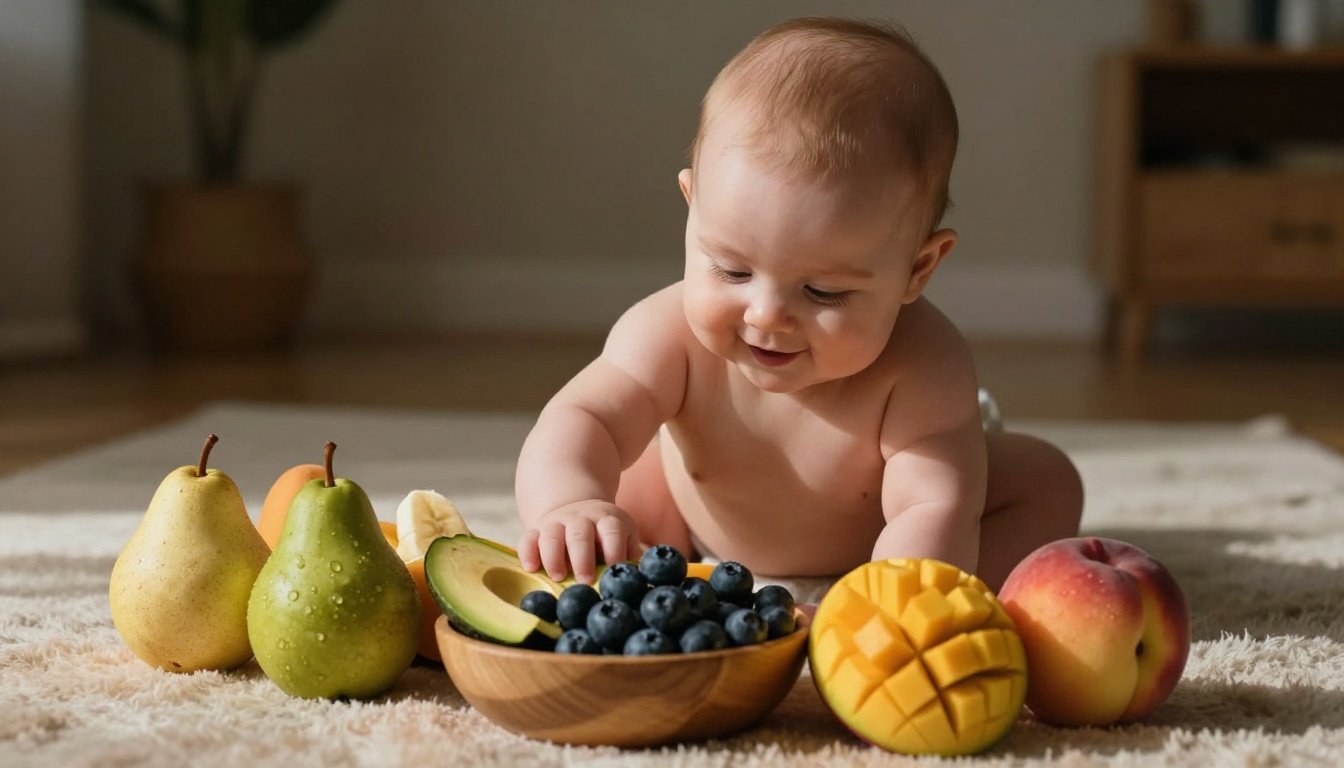
Your baby’s face lights up at a first taste of ripe banana, soft pear, or mashed avocado, while tiny fingers explore each new texture. Those little bites can provide energy, fiber, water, vitamin C, vitamin A, potassium, and other helpful nutrients, but no single fruit makes a baby grow faster.
Healthy growth depends on the whole feeding pattern, including breast milk or infant formula during the first year, complementary foods, sleep, genetics, and regular health care. Solid foods usually begin around 6 months, when your baby shows readiness signs such as steady head control, sitting with support, and an interest in food. Before offering that first spoonful, review how to tell if your baby is ready for solids.
In this guide, you’ll find seven fruits that fit into a balanced baby diet, along with soft preparation methods, nourishing pairings, and choking precautions for safer mealtimes. Start with the fruit choices and simple serving ideas below, then adjust textures as your baby develops.
Watch: Complementary Feeding for Babies
5+ Fruits That Boost Growth on Babies, in a Safe and Balanced Way
Fruit can support healthy growth, but it cannot make a baby grow faster on its own. Breast milk or infant formula remains important, while fruit adds energy, fiber, fluids, and vitamins to a wider feeding pattern. Serve it in a texture your baby can manage, and pair it with iron-rich foods when possible. The Dietary Guidelines for Americans recommends age-appropriate textures, including soft, mashed, and pureed foods.
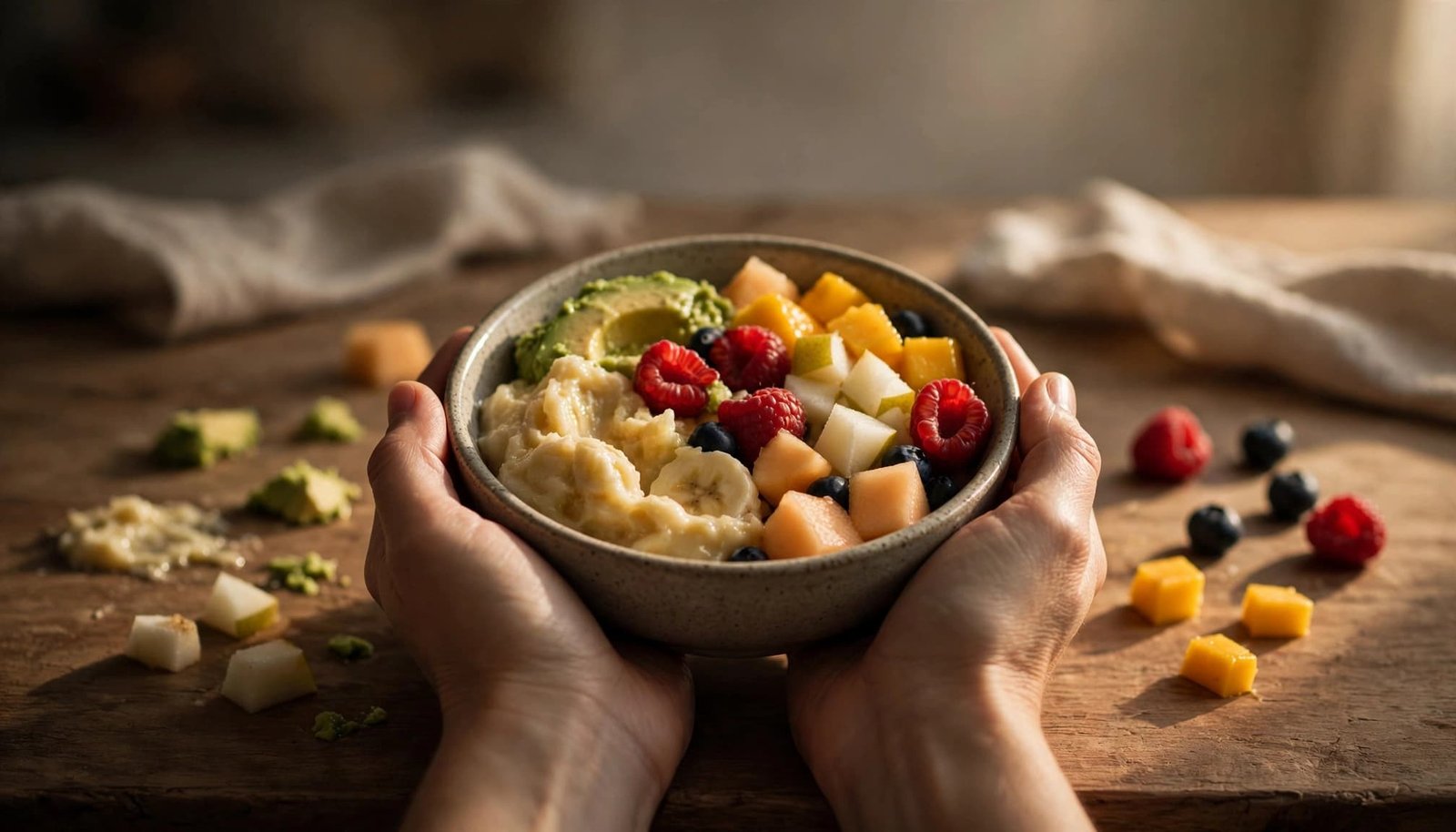
Bananas provide soft energy and important potassium
A ripe banana is naturally soft, easy to mash, and simple to serve during the early stages of solids. Its carbohydrates provide energy, while potassium, vitamin B6, and some fiber support a balanced diet.
Offer mashed banana plain, or mix it with breast milk, formula, plain full-fat yogurt when appropriate, or iron-fortified infant cereal. Banana is still only one part of a meal plan. Rotate it with other fruits and foods because eating large amounts may make some babies’ stools firmer. Breast milk or formula also supplies important fluids.
Avocado adds healthy fats for a growing body
Avocado has a smooth, creamy texture and provides unsaturated fat, folate, potassium, and fiber. Since babies eat small portions, nutrient-dense foods can help them get more nourishment from each bite.
Mash avocado on its own, or combine it with soft beans, lentils, egg, or vegetable puree. These pairings create a more filling meal and introduce different tastes. Avocado is helpful, but offer other fruits too so your baby gets a broader mix of nutrients.
Mango, papaya, and cantaloupe bring color and vitamin A
Ripe mango, papaya, and soft cantaloupe provide natural sweetness, water, vitamin C, and carotenoids. The body converts some carotenoids into vitamin A, which supports normal vision, skin, and immune function.
Peel the fruit, remove seeds, and mash or finely chop the flesh. Cantaloupe should never be served as whole round melon balls, which can block a baby’s airway. The ripeness and softness matter more than choosing one specific variety.
Pears and apples can support fiber when prepared correctly
A ripe pear may be mashed easily, while a firm apple usually needs cooking, grating, or thorough softening. Both fruits provide fiber and vitamin C, but hard raw apple chunks are a choking risk.
Try unsweetened applesauce, steamed pear, or soft grated apple. Remove seeds, stems, cores, and tough skin as needed. As feeding skills improve, gradually offer thicker textures while continuing to watch your baby closely. Parents can also find more age-appropriate combinations in these safe baby-led weaning tips.
Berries and citrus add vitamin C and new flavors
Strawberries, blueberries, raspberries, oranges, and other citrus fruits bring vitamin C, fiber, and new flavors. Vitamin C also helps the body absorb iron from plant foods served in the same meal, such as lentils or beans.
Mash berries first, then finely chop them as your baby develops better control. Remove tough pieces and offer peeled, membrane-free citrus in small, soft pieces. Acidic fruit may cause temporary redness around the mouth. However, breathing trouble, facial swelling, or widespread hives needs immediate medical help.
How Fruit Supports Healthy Baby Growth Without Doing It Alone
Fruit supports nutrition, but it doesn’t directly make a baby grow faster. Bananas, pears, mangoes, berries, and other fruits provide carbohydrates for energy, fiber for digestion, fluids, and vitamins such as vitamin C and vitamin A. However, healthy growth also depends on protein, iron, zinc, calcium, and healthy fats from a wider range of foods.
During the first year, breast milk or iron-fortified infant formula remains a major source of nutrition. Fruit is complementary food, added alongside milk once your baby is ready for solids. A balanced feeding pattern matters more than serving extra fruit.

Pair fruit with iron-rich and protein-rich foods
Fruit becomes more useful when it joins foods with nutrients babies need for growth. For example, you might offer:
- Mashed banana mixed with iron-fortified infant cereal.
- Mango alongside smooth lentils or mashed beans.
- Soft pear mixed with plain, full-fat yogurt when dairy is appropriate.
- Mashed avocado with soft scrambled egg.
- Mashed berries stirred into oatmeal.
Vitamin C-rich fruits, including mango, papaya, berries, and citrus, can help the body absorb iron from plant foods served at the same meal. Good sources of plant-based iron include beans, lentils, tofu, and fortified grains. Meat, poultry, fish, and eggs also provide protein and other nutrients that fruit doesn’t supply. The CDC’s infant iron guidance includes these foods among options for babies beginning complementary foods.
Choose the texture your baby can manage. Mash smooth foods for beginners, soften firm fruits, remove seeds and pits, and finely chop as feeding skills improve. Never use fruit to replace milk feeds or crowd out iron-rich foods.
Follow hunger and fullness cues instead of pushing bites
Responsive feeding lets your baby take part in deciding how much to eat. Hunger may look like reaching toward food, opening the mouth, leaning toward a spoon, or becoming more alert when you bring the bowl closer. Meanwhile, turning away, closing the mouth, pushing food away, or losing interest often means your baby has had enough.
Offer food calmly, then pause. If your baby looks away, don’t chase their mouth with another spoonful. Pressuring bites can make meals stressful and can teach a baby to ignore their own fullness signals. You can find more practical guidance on recognizing baby fullness cues.
A new fruit may need several relaxed introductions before it feels familiar. If your baby rejects pear today, try it again another day or pair it with a food they already enjoy. Appetite changes from one meal to the next, so focus on patterns rather than one small serving.
Contact your pediatrician if your baby has slow weight gain, persistent poor appetite, feeding difficulty, repeated food refusal, or concerns about height or weight. Extra fruit cannot solve an underlying growth or feeding problem.
The Safest Ways to Serve Fruit at Every Feeding Stage
Fruit should change with your baby’s skills, not follow a strict calendar. Early foods need to be soft, easy to mash, and simple to swallow. As your baby gains control, you can gradually offer thicker textures and soft pieces while breast milk or formula remains important.
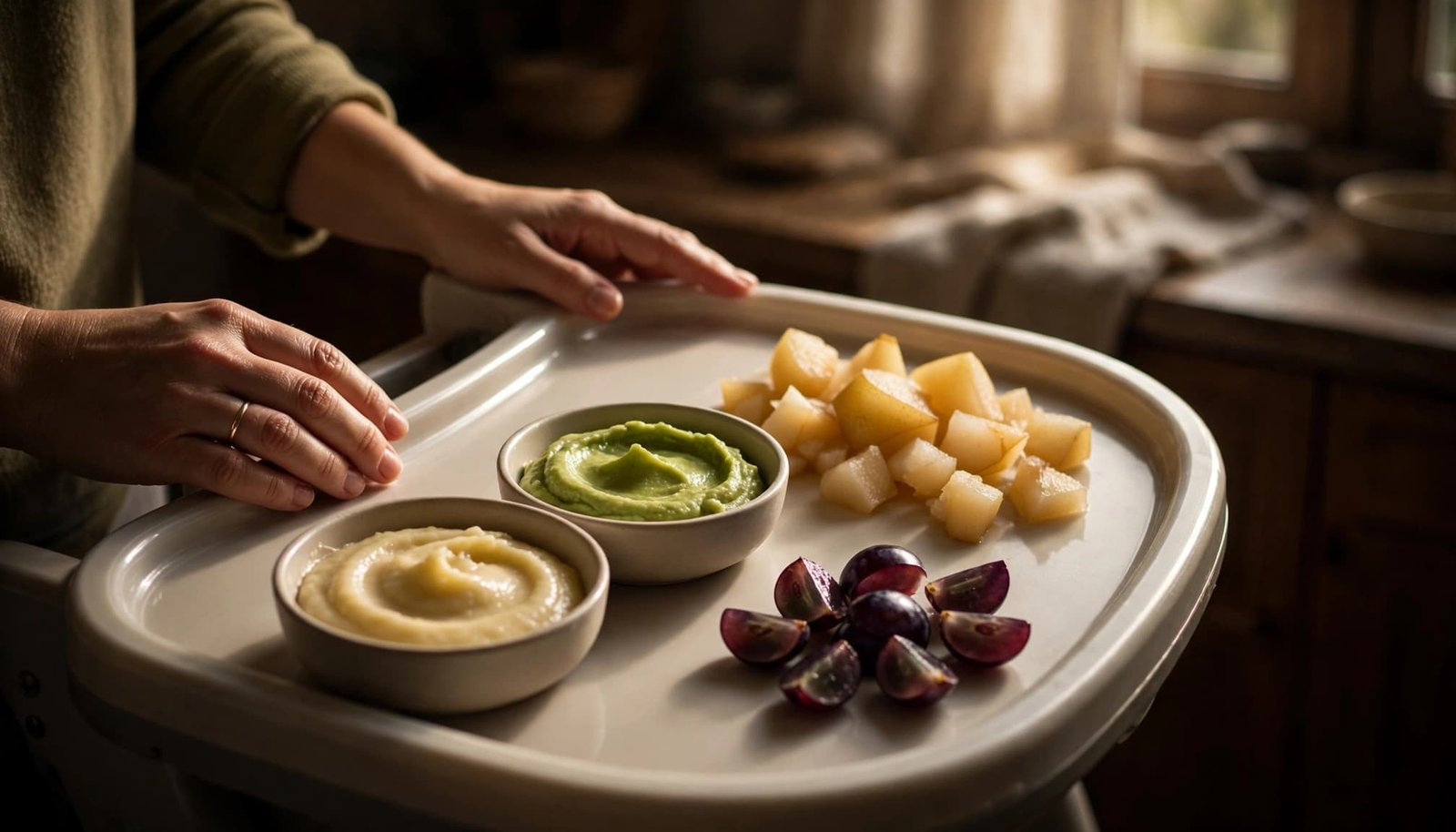
Around 6 months, begin with smooth and soft textures
Many babies begin complementary foods at about 6 months. Readiness matters more than the exact date. Your baby should sit with support, control their head and neck, bring objects toward their mouth, open their mouth for food, and show interest during meals. Review these baby readiness signs for solid foods if you are unsure.
The CDC recommends starting with foods that are soft, mashed, pureed, or strained. Good fruit choices include mashed banana, smooth avocado, pureed mango, cooked pear, and unsweetened applesauce. These foods should be soft enough to swallow without chewing.
Offer a small taste on a spoon when your baby is calm and sitting upright. Never put fruit puree in a bottle. Your baby may accept only a little at first, and that is normal. Early meals are practice, so let your baby’s hunger and fullness cues guide the amount instead of trying to finish a set portion.
As skills improve, move toward soft finger-sized pieces
When your baby handles smooth foods well, make the texture thicker. Move gradually toward mashed foods with soft lumps, then offer pieces that your baby can grasp and manage. A ripe banana, soft avocado, or cooked apple and pear should squish easily between your fingers.
Always keep your baby seated upright and stay close while they eat. Never leave them alone with food, even for a moment. Readiness and chewing skills vary, so ask your pediatrician for guidance if your baby struggles with textures or feeding.
Fruit shape matters, too. Remove pits and stems from cherries and other stone fruits. Quarter grapes lengthwise, and never serve whole grapes. Finely chop or mash round berries when they remain firm or large enough to block the airway.
Keep fruit plain, fresh, and free from added sugar
Choose fresh or frozen fruit prepared without sugar, syrup, honey, or juice. If you use canned fruit, select fruit packed in water or natural juice, drain it, then soften or chop it carefully. Whole fruit is generally more useful than juice because it keeps its fiber and helps your baby learn how different foods feel.
Babies under 12 months should not have juice, including fruit drinks. They also should not have honey mixed into fruit or any other food. The CDC’s guidance on foods to avoid before age one warns that honey can cause infant botulism, a serious form of food poisoning.
Keep offering new textures slowly, follow your baby’s cues, and let safe fruit preparation grow with their developing skills.
Fruit Choking Hazards Parents Need to Know
Fruit is soft in some forms and risky in others. Choking risk depends on a piece’s shape, firmness, size, slipperiness, and your baby’s feeding skills, so preparation matters as much as the fruit itself.
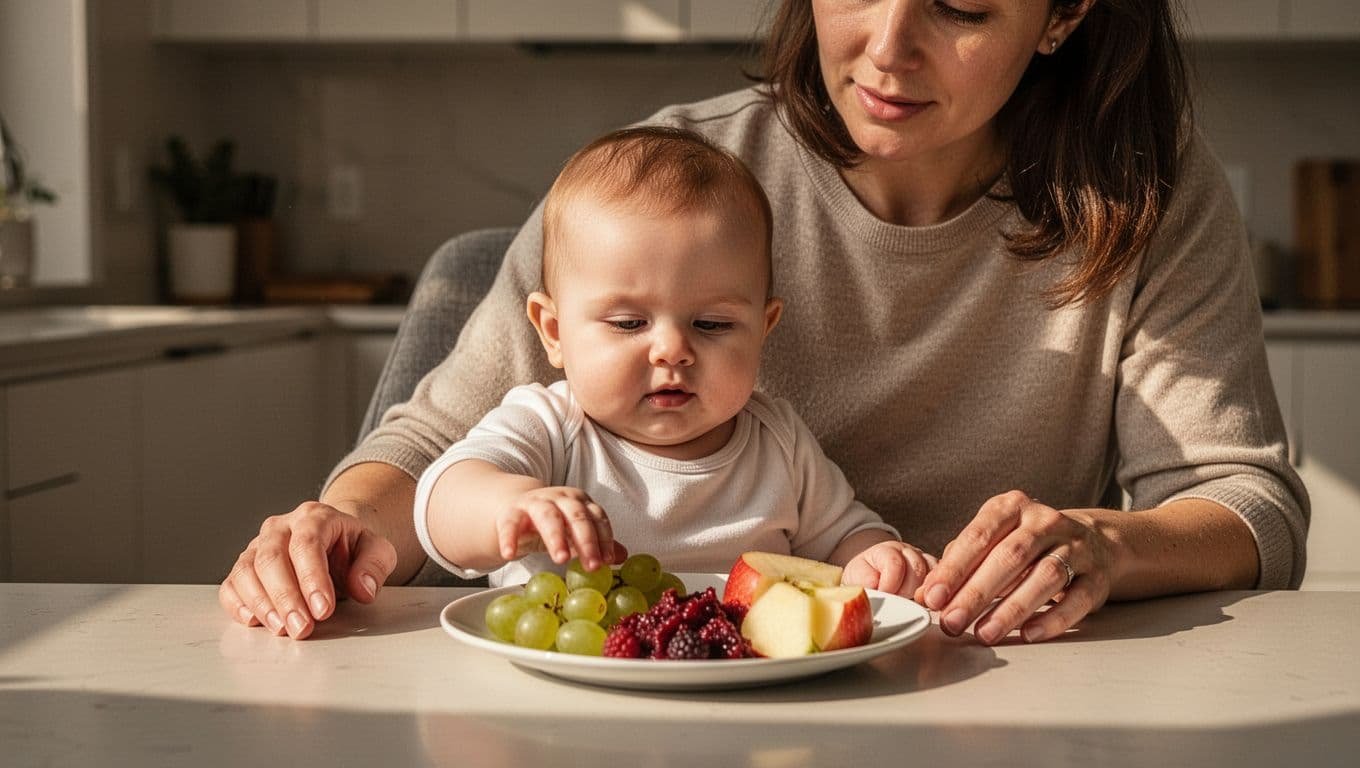
Never serve these fruit forms whole or hard
The CDC lists several fruit preparations that can block an infant’s airway, including common fruit choking hazards. Small, round foods can fit tightly over the airway, while hard pieces may not soften easily as your baby chews.
- Whole grapes can slip into the throat. Quarter them lengthwise, then offer soft pieces with the skin removed if needed.
- Uncut berries, especially firm blueberries, can remain round and difficult to manage. Mash them first, or flatten and finely chop them.
- Cherries with pits create two risks. Remove the pit, stem, and any firm surrounding flesh, then mash or cut the cherry into small, soft pieces.
- Melon balls have a smooth, round shape that can block the airway. Serve ripe melon in thin, soft strips or mash it with a fork.
- Hard raw apple chunks are firm and difficult for new eaters to break down. Cook apple until it is soft, grate it finely, or serve unsweetened applesauce.
- Whole canned fruit pieces may be slippery, large, or firm despite coming from a can. Drain them, then mash or cut them into soft, manageable pieces.
- Uncooked dried fruit, including raisins, stays chewy and sticky. Avoid it for babies who cannot safely manage that texture. Cooked fruit without added sugar is a better choice.
Prepare, supervise, and adjust as your baby grows
Cutting fruit once doesn’t automatically make it safe. If the flesh stays firm or slippery, cook, grate, mash, peel, or remove seeds and tough membranes before serving. A useful test is whether the food squishes easily between your thumb and finger.
Keep your baby seated upright in a high chair, stay within arm’s reach, and remove distractions during meals. Older babies and toddlers still need fruit cut into safe shapes because choking risks don’t disappear after the first birthday. Continue adjusting texture as chewing and hand control improve.
Gagging can be noisy, with coughing, retching, or spluttering as food moves forward. Choking is often quiet, and a baby may be unable to breathe, cry, or cough effectively. If that happens, treat it as an emergency and call 911. Every caregiver should learn infant choking first aid and CPR from a qualified source, then ask your pediatrician or a feeding therapist for help with personalized texture guidance.
Simple Fruit Meals That Fit Into a Balanced Baby Menu
Fruit becomes more satisfying when you pair it with iron, protein, or healthy fat. These combinations are ideas, not a rigid feeding schedule. Follow your baby’s appetite, milk feeds, developmental skills, and guidance from your health professional.
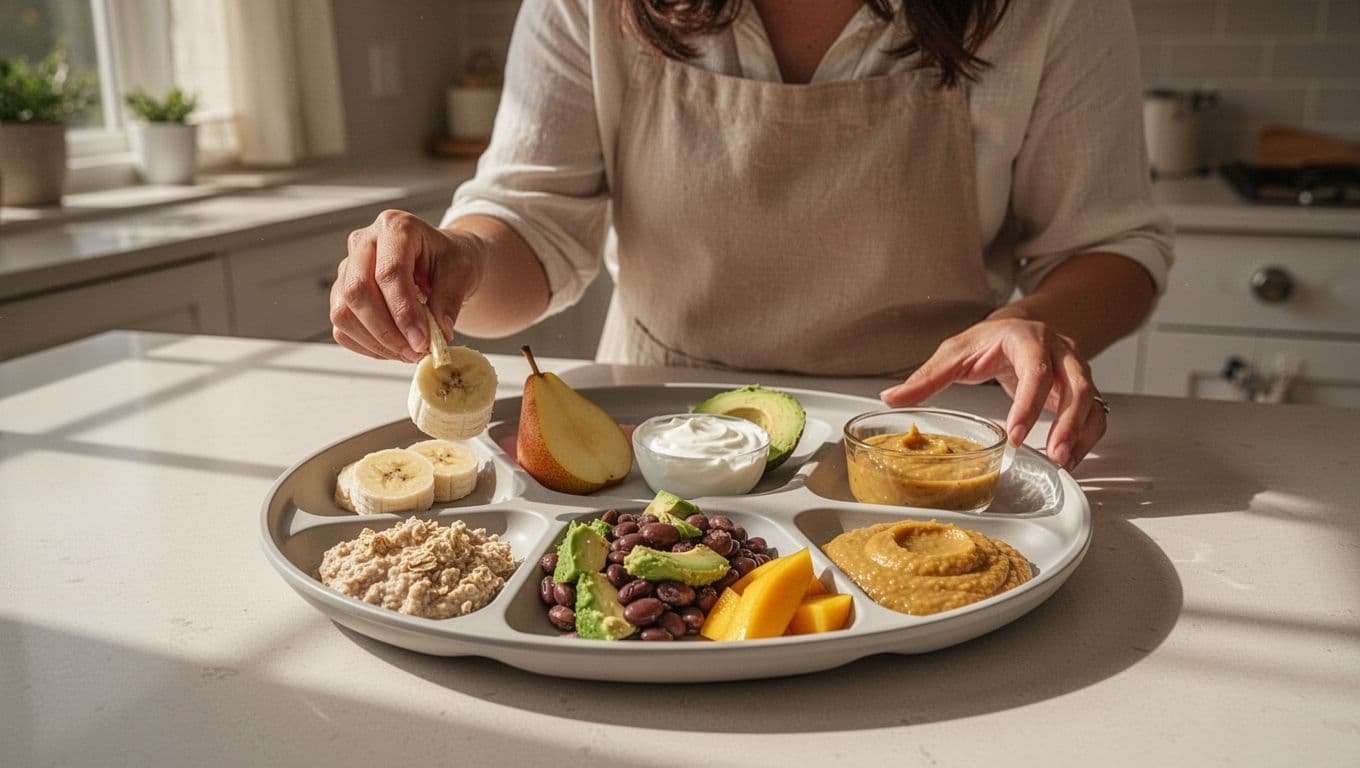
Easy combinations for early complementary foods
For a busy morning, stir mashed banana into iron-fortified oatmeal. You can thin the mixture with breast milk or prepared formula if needed. Another gentle option is ripe pear mixed with plain, unsweetened yogurt. Plain yogurt may fit into a baby’s diet before 12 months when it’s pasteurized, appropriate for your child, and approved by your health professional. However, cow’s milk should not replace breast milk or formula as a drink before age 12 months. The CDC’s guidance on introducing solid foods explains this distinction.
At lunchtime, combine mashed avocado with smooth beans for healthy fat, protein, and iron. Mango mixed with smooth lentil puree adds vitamin C alongside plant-based iron. Begin with a smooth puree, then make it thicker as your baby learns to move food around their mouth. Fork-mash the ingredients next, leaving tiny soft lumps, and later offer soft pieces your baby can grasp.
Use plain foods without added sugar, honey, salt, or juice. For more ideas about adding nourishing fats, explore these healthy high-fat foods for babies.
Portable fruit ideas for babies learning self-feeding
A rushed afternoon can still include a soft, simple meal. Try very soft steamed apple slices, ripe avocado strips, or tender pear pieces that squish easily between your fingers. You can also mash berries and spread them thinly over a soft piece of toast or another food your baby already manages safely.
Quarter a ripe fruit lengthwise when that shape matches your baby’s skills. Remove pits, stems, tough skins, and seeds. Portable does not mean unattended, though. Keep your baby upright and within arm’s reach during every meal.
Avoid whole fruit, fruit snacks, fruit leather, raisins, and hard packaged pieces. These foods can be sticky, chewy, tough, or difficult for a new eater to control. Cut and soften fruit according to your baby’s current abilities, not just their age.
Build variety without turning meals into a battle
Rotate colors, flavors, and textures across the week instead of chasing a perfect menu every day. One day might include banana and oatmeal, while another offers pear with yogurt or avocado with beans. Some days, your baby may eat only a few bites. Breast milk or formula remains important during the first year.
Offer one familiar food beside one less familiar food. Eating together can make the meal feel calm and ordinary, even when your baby’s hands and face become messy. Stop when your baby turns away, closes their mouth, or pushes food aside.
When introducing yogurt, eggs, beans, or other foods that may cause an allergic reaction, introduce new items thoughtfully and watch for symptoms. Ask your pediatrician for a personal plan if your baby has severe eczema, an existing allergy, or a strong family history of food allergies.
Conclusion
Bananas, avocado, mango, papaya, melon, pears, apples, berries, and citrus can bring useful nutrients, natural sweetness, and enjoyable textures to your baby’s diet. They add variety and can support balanced meals, but no fruit is a magic growth food. Healthy growth depends on the full feeding pattern, including milk feeds and a range of nourishing foods.
Begin solids when your baby shows clear developmental readiness, and keep breast milk or infant formula central during the first year. Pair fruit with iron-rich and protein-rich foods, such as fortified cereal, beans, lentils, eggs, or yogurt. For more guidance, review these signs your baby is ready for solid foods.
Safety matters at every stage. Offer soft, age-appropriate textures, and avoid choking hazards such as whole grapes, hard apple pieces, and dried fruit. Prepare fruit carefully, supervise every meal, and adjust pieces as your baby’s feeding skills grow. Babies grow at different rates, so contact your pediatrician if you have concerns about feeding, appetite, weight gain, or growth.

- Dry Cough in Kids: 5 Causes and Safe Solutions - September 23, 2026
- How to Help a Child Deal With Anxiety at Home - September 12, 2026
- How to Prepare Your Child for the First Day of School - September 12, 2026