
Mealtime with an 8-month-old can feel like a tiny adventure: one spoonful gets a curious smile, while the next lands on the tray. At this age, your baby is learning to explore new tastes and textures, but breast milk or infant formula remains the main source of nutrition through the first year.
These 5 food recipes for 8-month-old babies feature soft, nourishing ingredients and simple textures you can adjust as your baby’s eating skills grow. You can start with smooth purees, then offer thicker mashed foods or soft lumps as your baby becomes more comfortable; for more guidance, review these signs your baby is ready for solids.
Every baby develops at a different pace, so ask your pediatrician about feeding concerns, possible allergies, choking risks, or special medical needs before trying new foods. Let’s begin with the first gentle recipe and the preparation tips that make it easier to serve safely.
Food Recipes for 8-Month-Old Babies: Five Easy Meals to Try
These recipes are flexible ideas, not strict meal rules. An 8-month-old may manage smooth purees, thicker mashed foods, soft lumps, or soft finger foods, depending on development. Start with a few spoonfuls, then offer more when your baby shows hunger cues. Always serve food while your baby sits upright and stays closely supervised.
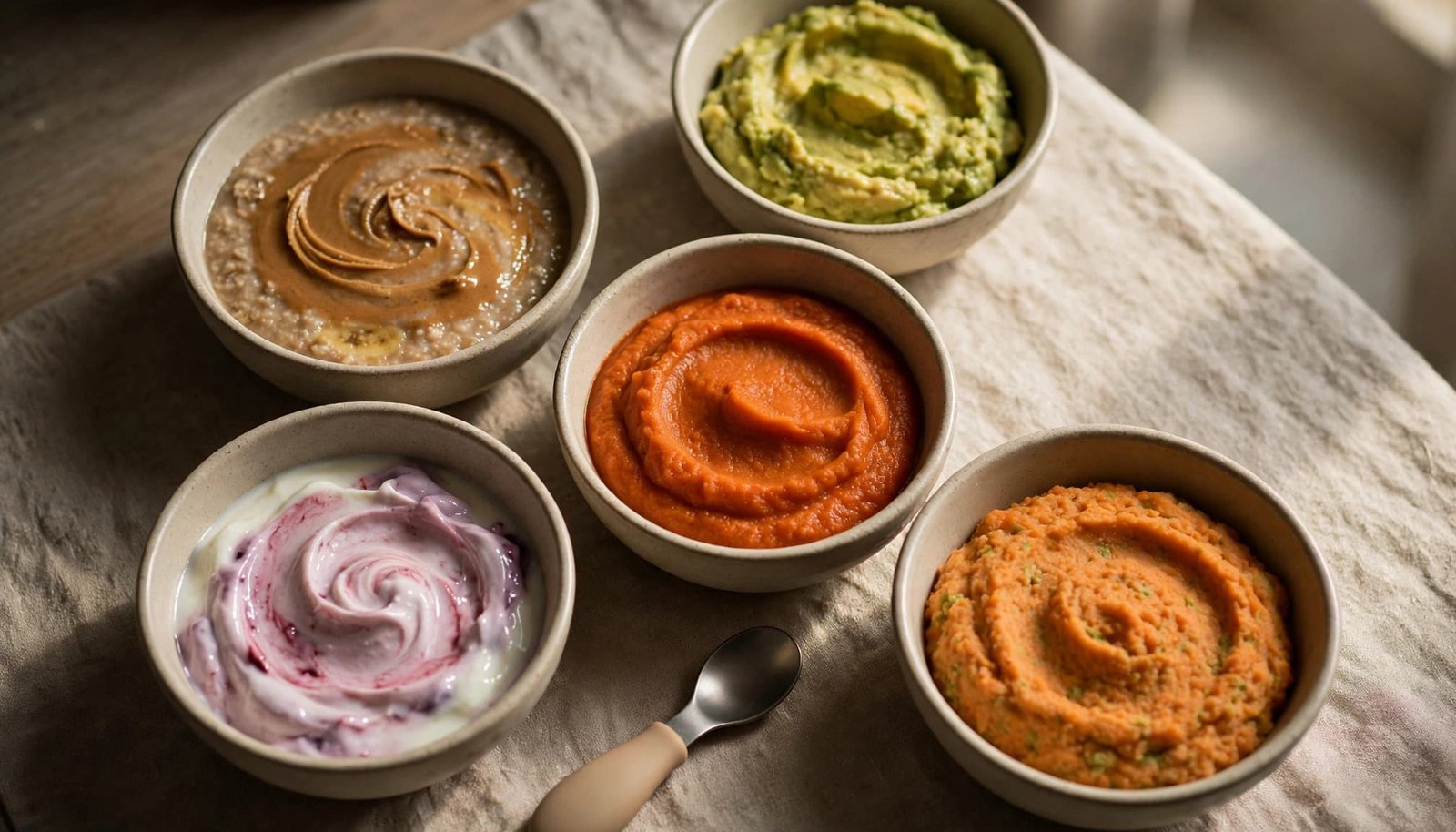
Creamy banana oatmeal with smooth peanut butter
Cook 2 tablespoons of plain oats with water until very soft. Let the oats cool, then stir in 2 tablespoons of mashed ripe banana and enough breast milk or infant formula to create a thick, smooth texture. If peanut has already been introduced safely, mix in a tiny amount of smooth peanut butter until completely blended.
The oatmeal should have no sticky lumps. Never serve peanut butter by the spoonful, because thick nut butter can stick in a baby’s mouth and create a choking hazard. Introduce peanut in a small amount when your baby is healthy, and ask your child’s doctor first if your baby has severe eczema or an existing food allergy. Peanut is a common allergen, so offer it alone or with a familiar food and watch for a reaction.
Refrigerate leftovers promptly and use them within a day. For another morning option, try these easy breakfast recipes for babies.
Avocado and soft scrambled egg mash
Whisk one egg and cook it in a clean pan without salt until fully cooked. Keep the curds soft and moist rather than dry or browned. Mash the egg with a few spoonfuls of ripe avocado, or finely chop it first if your baby is learning to handle tiny soft pieces.
Add a little breast milk, infant formula, or water if the mixture feels dry. The finished mash should be moist enough to press easily between your fingers. Egg is a common allergen, so introduce it by itself or alongside a familiar food, then watch your baby closely for signs of a reaction. A small spoonful of plain, pasteurized yogurt is an optional variation if dairy has already been introduced.
Serve immediately when possible. Refrigerate leftovers and use them within 24 hours.
Sweet potato and red lentil puree
Peel and cube a small sweet potato. Rinse 2 tablespoons of red lentils, then simmer both ingredients in water or a low-sodium homemade cooking liquid until they are very soft. Blend until smooth, adding liquid gradually until the puree reaches your baby’s preferred thickness.
This combination has a gentle texture, fiber, plant protein, and a naturally sweet flavor. Lentils and other legumes can cause allergic reactions in some children, so begin with a small amount and monitor your baby. You can vary the flavor with soft-cooked zucchini instead of some of the sweet potato.
Freeze the puree in small portions, such as silicone freezer trays. Once solid, transfer portions to a labeled freezer container. Thaw in the refrigerator or warm gently, stir well, and check the temperature before serving. Don’t refreeze food that has already thawed.
Chicken, carrot, and pea soft mash
Cook chicken until it reaches 165°F, then shred it very finely and check carefully for bones. Steam or boil peeled carrots and peas until they are soft enough to crush easily. Mash or blend the ingredients with water, breast milk, or infant formula so the chicken doesn’t become dry.
Avoid firm raw carrot pieces and whole peas, which can be choking hazards for a young baby. The finished mixture should be moist, mashable, and easy to gum. Soft zucchini or potato can replace the peas or carrots when you want a different taste.
Offer a small portion right away, then refrigerate leftovers promptly and use them within 24 hours. For more self-feeding ideas, review this beginner’s guide to baby-led weaning.
Plain yogurt with mashed berries and ground oats
Choose full-fat, plain, pasteurized yogurt with no added sugar. Remove berry stems, then mash or cook soft ripe berries until no firm pieces, skins, or whole berries remain. Stir them into the yogurt with a small amount of finely ground oats.
Dairy is a common allergen, so introduce yogurt in a small portion if your baby hasn’t tried it before. Never add honey before 12 months, and skip added sugar. Yogurt can be offered as a food, but cow’s milk should not replace breast milk or infant formula as your baby’s main drink before 12 months, as explained in the CDC’s infant feeding guidance.
If dairy must be avoided, use a dairy-free substitute only when your healthcare professional recommends one. Refrigerate leftovers and use them within a day.
How Much Food Should an 8-Month-Old Eat at Each Meal?
At 8 months, your baby may eat a few bites at one meal and several spoonfuls at the next. Appetite can change with teething, sleep, growth, and mood, so there is no perfect portion every baby must finish. Breast milk or infant formula still provides most of your baby’s nutrition during the first year.

Start with small portions
Begin with a few teaspoons of one soft food, then gradually offer more if your baby remains interested. A practical serving may grow to roughly 1 to 2 ounces of food, but treat that amount as a flexible guide, not a requirement. The CDC also recommends starting with 1 or 2 tablespoons and following your baby’s cues rather than expecting a clean bowl.
Some meals may include only a few bites, especially when your baby is tired or trying a new texture. Other times, your baby may happily eat more. Milk feeds should continue as usual, because solids complement breast milk or formula rather than replace them. The Johns Hopkins feeding guide also recommends watching hunger and fullness cues when deciding how much to offer.
Follow hunger and fullness cues
Your baby’s body gives useful signals throughout the meal. Offer another bite when your baby:
- Reaches for food or the spoon.
- Opens their mouth when food approaches.
- Gets excited when they see the bowl or spoon.
- Leans toward the food or makes sounds to ask for more.
Pause or stop when your baby turns away, closes their mouth, pushes food away, or loses interest. Avoid coaxing your baby to take “just one more bite.” Respecting those signals helps your baby learn to notice hunger and fullness. If feeding feels difficult or your baby regularly refuses food, these infant hunger and fullness cues can provide helpful guidance.
Create a calm mealtime rhythm
Offer food while your baby sits upright in a secure high chair at a calm table or kitchen routine. Remove distractions when possible, and let your baby set the pace. Keep the meal relaxed, even when food lands on the tray more often than it reaches your baby’s mouth.
Stay close and supervise every bite. If your baby seems hungry, add a little more soft food. If they show fullness, end the meal and offer breast milk or formula according to your usual routine.
Make Every Baby Meal Soft, Safe, and Easy to Manage
Food safety matters as much as nutrition when your baby is learning to eat. At 8 months, prepare each meal so your baby can manage it with soft gums, developing hand control, and close adult support.
Start with a safe seat and soft textures
Your baby should sit upright in a secure high chair with good back support. Keep your baby watched closely throughout the meal, and never offer food while they are lying down, walking around, or sitting in a stroller. These starting solids safely tips can help you create a safer mealtime routine.
Cook vegetables, fruit, grains, eggs, meat, and legumes until they are soft enough to mash easily. Depending on your baby’s skills, serve food mashed, grated, finely chopped, or cut into soft baby-safe shapes. Add water, breast milk, or infant formula when a meal feels dry or sticky.

Before serving, test the temperature on the inside of your wrist. Food should feel warm, never hot. Also, remove bones, pits, tough skins, stems, and seeds that could break off during eating.
Avoid common choking hazards
Size, shape, and texture can turn an ordinary food into a choking risk. Avoid serving these foods whole, hard, sticky, or in large chunks:
- Whole grapes, which should be peeled if needed and cut lengthwise into small, soft pieces.
- Nuts, popcorn, hard candy, and raw hard vegetables such as raw carrots.
- Cheese cubes, firm chunks of meat, and other dense pieces that your baby can’t easily mash.
- Spoonfuls of nut butter, which can stick to the roof of the mouth. Thin smooth nut butter with water, yogurt, or fruit puree.
- Any food served on toothpicks, skewers, or other sharp objects.
The CDC’s choking hazard guidance offers additional examples and preparation advice. Gagging can happen as babies learn new textures, but coughing, breathing trouble, or a change in skin color requires immediate attention.
Skip honey, cow’s milk, salt, and sugar
Never give honey before 12 months because it can cause infant botulism, a serious form of food poisoning. The CDC’s list of foods to avoid also explains why cow’s milk shouldn’t replace breast milk or infant formula as your baby’s main drink before 12 months.
Use herbs, fruit, or naturally flavorful vegetables instead of added salt and sugar. Finally, refrigerate leftovers promptly in clean, covered containers. Discard food that has been sitting out too long or that your baby’s spoon has returned to after eating.
Introduce Allergens Calmly and Build a Flexible Feeding Routine
Common allergens usually don’t need to be delayed once your baby is ready for solid foods. Introducing them around this stage can help your baby become familiar with different foods, but each new allergen deserves a careful first taste.
Offer only one new allergen at a time, using a small amount mixed into a food your baby already knows. This makes it easier to identify the cause if a reaction appears. If your baby has severe eczema, an existing food allergy, or another medical concern, ask your pediatrician for an individual plan before introducing peanut or other allergens.
Introduce one allergen at a time
Common allergens include:
- Egg
- Peanut and other nuts, served in a safe, thinned form
- Dairy
- Wheat
- Soy
- Sesame
- Fish
- Shellfish
Offer the new food earlier in the day, when a trusted adult can watch your baby for at least a couple of hours. Start with a small spoonful, then stop and observe. For example, mix a thin layer of smooth peanut butter into oatmeal, or offer a small amount of fully cooked egg alongside mashed avocado. Never give thick peanut butter by itself.
Watch for hives, facial swelling, vomiting, coughing, wheezing, or unusual difficulty swallowing. Stop feeding and contact your child’s healthcare provider if symptoms appear. Trouble breathing, swelling of the tongue or throat, blue or pale skin, severe vomiting, or a floppy or unresponsive appearance requires urgent medical help. The American Academy of Pediatrics guide to introducing allergens offers additional guidance for parents.
If your baby tolerates an allergen, continue serving it regularly, often about once a week, unless your pediatrician gives different advice. You can also review these tips for introducing eggs to your baby.

Keep the daily routine flexible
Offer solids after a breast milk or formula feed, when your baby is calm but still interested in food. Rotate sweet flavors, such as banana or sweet potato, with savory choices, such as lentils, chicken, or egg. This keeps meals varied without turning each feeding into a production.
A simple food record can help. Write down the food, the amount, the time, and any symptoms you notice. Your routine might include one new food on a quiet morning, familiar foods later, and regular milk feeds throughout the day. Follow your baby’s hunger and fullness cues, since some meals will be tiny while others may be surprisingly enthusiastic.
Conclusion
These five food recipes for 8-month-old babies show that meals can stay simple, soft, and nourishing. Offer small portions with safe textures, introduce new flavors patiently, and continue breast milk or infant formula as your baby’s main source of nutrition. As your baby grows, you can find more age-appropriate ideas in these healthy meals for 9-month-olds.
Most importantly, watch your baby’s hunger and fullness cues instead of comparing portions with other babies. Some meals may bring eager bites, while others may end after one taste. Contact your pediatrician about allergic reactions, choking concerns, poor weight gain, or ongoing feeding difficulties.
Your baby’s meals don’t need to be elaborate. Messy hands, funny faces, and tiny tastes are all part of learning to eat.
Save pin for later

- Dry Cough in Kids: 5 Causes and Safe Solutions - September 23, 2026
- How to Help a Child Deal With Anxiety at Home - September 12, 2026
- How to Prepare Your Child for the First Day of School - September 12, 2026