
Your toddler asks for “one more story” just as you’re ready to turn out the light, so you settle in for a final cuddle and open a familiar book. Those few peaceful minutes are more than a way to fill the end of the day, because bedtime stories for toddlers can support early language, listening skills, emotional growth, and a stronger parent-child connection.
Reading can also help your child move toward sleep through a calm, predictable routine, especially when you keep screens off and repeat simple steps each night. You don’t need to finish a long book or create a perfect routine; five to ten relaxed minutes can matter, even when your toddler interrupts, chooses the same story again, or studies only the pictures. These shared moments can support communication, comfort, and a calmer transition to sleep without making medical promises or adding pressure to bedtime.
Next, let’s look at the five benefits and how they can fit naturally into your family’s evening, along with calming bedtime stories for kids to make storytime feel easier.
The Benefits of Bedtime Stories for Toddlers: Five Reasons to Read Together
Bedtime stories support toddler development through repeated language exposure, warm interaction, and a predictable daily ritual. Each reading session gives your child another chance to hear new words, notice feelings, follow a short sequence, and enjoy your focused attention.
The American Academy of Pediatrics recommends shared reading from birth through at least kindergarten because it supports social-emotional, cognitive, language, and literacy development. These benefits grow through ordinary moments, such as naming a picture, pausing for a cuddle, or asking what a character might do next.
Stories Build a Bigger Vocabulary and Stronger Language Skills
Picture books introduce words, sentence patterns, and ideas that may not appear during everyday routines. Your toddler may hear words such as “enormous,” “disappointed,” or “stomp” long before those words come up during meals, bath time, or errands.
Children learn through your voice and responses. Name the pictures, describe actions, and answer your child’s comments. You might pause at a giant animal and say, “Enormous means very, very big.” Then ask, “What is the bear doing?” If the character hides, connect it to your child’s life by saying, “You hid behind the chair yesterday.”
The conversation matters more than testing your child. Instead of demanding that your toddler identify every object, follow their interest and add a few words to the exchange. A child who points at a dog may hear, “Yes, that’s a small brown dog. The dog is running.”
The AAP describes shared reading as part of a language-rich environment, and it encourages families to begin early. Read the AAP’s early literacy guidance for more information about reading from infancy through the early school years.
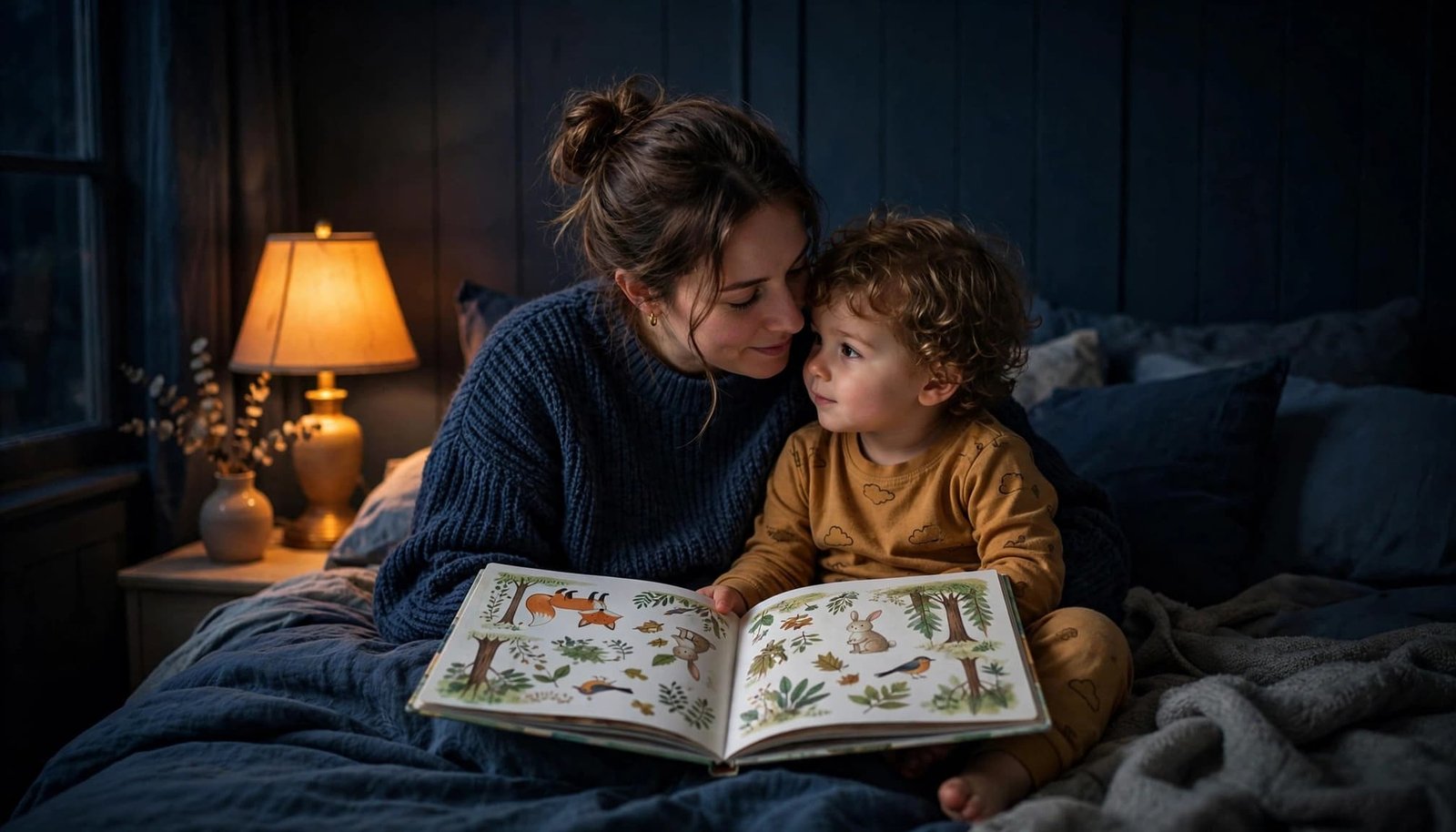
A Bedtime Book Creates Meaningful Parent-Child Connection
Reading together gives you a small pocket of undivided time. Your toddler hears your familiar voice, watches your face, and settles close while you share the same pictures and story. That eye contact and shared attention can make bedtime feel safe and special.
You don’t need expensive books or a perfect reading voice. A well-loved board book read for the twentieth time may bring more comfort than a large collection your child rarely chooses. Repetition also gives toddlers confidence because they know what comes next.
When your day has been crowded with work, chores, and interruptions, even five calm minutes can help you reconnect. Any trusted caregiver can create this experience, including a grandparent, older sibling, foster parent, or babysitter. The bond grows through warm attention, not through a particular book or reading style.
Characters Help Toddlers Notice and Name Big Feelings
Stories give toddlers a gentle way to explore fear, frustration, jealousy, kindness, excitement, and disappointment. A character’s problem creates distance, so your child can discuss a feeling without having to talk about a difficult moment directly.
Use simple language as you read. You might say, “The bear looks worried,” or “Mia feels sad because her toy broke.” Then ask, “What might help the bear?” Your toddler may answer, point, change the subject, or say nothing. Each response is normal, so keep the conversation relaxed rather than turning story time into a lesson.
Naming emotions can support empathy and early social-emotional skills. For additional ideas, explore these strategies for building empathy through shared reading. Books can support emotional learning, but serious concerns about behavior, development, or distress deserve guidance from a pediatrician or child-development professional.
A Predictable Story Signals That Sleep Is Getting Closer
A familiar bedtime order helps toddlers understand what comes next. You might follow the same pattern each night: bath, pajamas, teeth, books, then lights out. When reading appears near the end, it becomes a calm cue that the busy part of the day is ending.
A quiet story may help your child wind down and feel ready for sleep, but it isn’t a cure for sleep problems. Keep the room comfortable, choose gentle books, and turn off television and other screens during reading. If bedtime often becomes a struggle, these toddler bedtime routine tips can help you create a steadier sequence.
Listening to Stories Strengthens Attention and Early Print Awareness
During a short story, toddlers practice listening, noticing pictures, and following what happens next. They also begin learning that printed words carry meaning, even when they cannot read the words themselves.
Point across a line of print, notice the cover, turn pages gently, and repeat a phrase your child enjoys. Rhymes, rhythm, and predictable patterns make these early print concepts easier to notice without formal teaching.
Toddlers won’t sit still like older children. Movement, interruptions, and skipped pages are part of normal reading. Follow your child’s attention instead of insisting on finishing every page. A few engaged minutes can support early literacy more effectively than a long reading session filled with pressure.
How to Make Bedtime Stories Work in a Real Toddler Routine
Bedtime reading works best when it fits your real evening, not an ideal schedule. Some nights allow a cozy chair, two books, and plenty of conversation. Other nights bring a tired parent, a restless toddler, or a bedtime that started twenty minutes late. The goal is a repeatable moment of connection, not a perfect performance.
Keep the routine flexible for different caregivers and schedules. A parent, grandparent, babysitter, or older sibling can share the same book and use a similar goodnight phrase. The American Academy of Pediatrics also recommends regular, interactive reading as part of a predictable bedtime routine. You can find more ideas in this guide to a consistent toddler bedtime routine.

Keep Reading Short, Calm, and Consistent
Start with five to ten minutes or one short book, then adjust for your toddler’s age and attention span. A younger child may turn pages for only a few minutes, while an older toddler may enjoy two familiar stories. Watch your child’s cues rather than forcing a set number of pages.
A short routine repeated most nights is more useful than an ambitious plan that makes everyone tense. If you’re exhausted, read the shortest book on the shelf. If your toddler is overtired, skip extra discussion and move through the familiar pages in a soft voice.
Give story time a clear ending. Read the final page, close the book, and say the same phrase, such as, “The story is finished. Goodnight, I love you.” That predictable ending helps your child understand that reading is over, even when they ask for another book.
Some nights will not work. You may miss reading because of travel, illness, work, or a difficult evening. That isn’t failure. Begin again the next night without turning the missed routine into a source of guilt.
Let Your Toddler Point, Talk, Choose, and Repeat
Offer two books and let your toddler choose one. During the story, invite participation without making the moment feel like a quiz. Your child might point to a familiar animal, make a barking sound, finish a repeated line, or connect a picture to something seen earlier that day.
Try open-ended prompts such as:
- “What do you see?”
- “Where is the dog?”
- “What is the bear doing?”
- “Does this remind you of our walk?”
Wait for your toddler’s response, then follow their lead. If they point to a ball, you might add, “Yes, a red ball. The boy is throwing it.” The American Academy of Pediatrics recommends engaging, interactive read-alouds that include naming pictures and responding to a child’s comments. See the AAP’s early literacy guidance.
Reading the same favorite book repeatedly is helpful, even when you can recite every page. Repetition builds familiarity with words, rhythm, characters, and story structure. Let your toddler turn pages, skip sections, or return to one favorite picture.
Use a Warm Voice Without Making Bedtime Too Exciting
Expression keeps toddlers interested, especially during silly or repetitive parts. Change your voice briefly for a character, make a gentle animal sound, or widen your eyes when the story calls for surprise. Then return to a soft, steady tone instead of keeping the energy high through the final page.
As bedtime gets closer, slow your pace and lower your volume. Pair the story with low lights, a cuddle, and fewer distractions. Turn off screens and put noisy toys out of reach so the book remains the calmest activity in the room.
Some books belong earlier in the day. A loud, scary, action-packed, or highly exciting story may leave your toddler more alert instead of ready for sleep. Save those books for morning or afternoon, then choose a familiar, gentle favorite for the final minutes before lights out.
If bedtime regularly becomes a struggle, review these solutions for a toddler who won’t sleep and keep the reading portion simple.
Choosing Books That Match Your Toddler’s Age and Interests
The best bedtime book isn’t always the newest bestseller or the one with the highest reading-level label. It is the book your toddler enjoys, understands, and wants to hear again. Choose stories that match your child’s attention span, language development, and current interests.
For younger toddlers, look for sturdy board pages, clear pictures, short text, and familiar subjects such as animals, food, toys, and family routines. As your child grows, you can add longer picture books, simple plots, and gentle emotional themes. Libraries are especially useful because you can try different books without buying a stack that never leaves the shelf.
A good book gives you room to pause, point, name pictures, and respond to your child’s comments. These shared moments support language and connection, much like the practices described in this guide to how reading supports baby development.
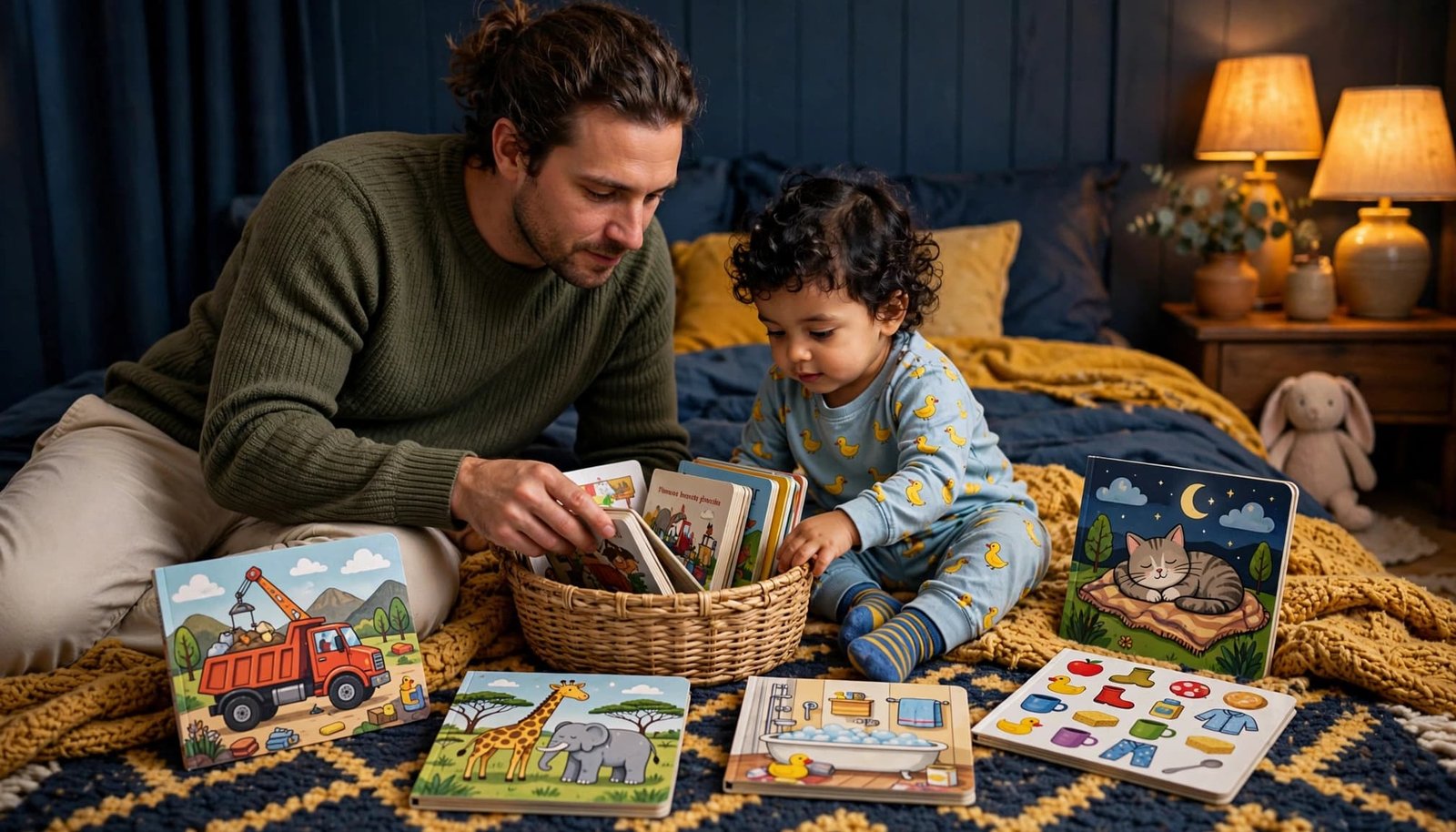
Look for Simple Stories, Strong Pictures, and Repeated Phrases
Choose books with one clear idea per page when your toddler is still building attention and vocabulary. A page might show a child brushing teeth, a dog chasing a ball, or a family getting ready for bed. Familiar objects give your child an easy place to begin.
Toddlers often study picture details before they understand the full plot. They may notice a tiny spoon, a sleeping cat, or a truck in the background and ignore the main character. Follow that interest. Point to the picture, name what your child sees, and add a few words without rushing to the next page.
Expressive illustrations also help children read faces and actions. Look for pictures that clearly show excitement, sadness, surprise, or comfort. Rhyme, rhythm, and repeated phrases make stories easier to remember, so your toddler can join in with a sound or finish a familiar line. ZERO TO THREE recommends simple board books and repeating phrases for young children.
Sturdy board books work well for younger toddlers who turn pages quickly or handle books roughly. As attention grows, introduce longer picture books with more detail. Don’t judge a book by how fast an adult can read it. Pauses, questions, pointing, and cuddles are part of the reading.
Follow Your Child’s Interests, Even When They Seem Narrow
A toddler who wants trucks every night is learning through trucks. The same is true for children who prefer bugs, construction sites, animals, food, or stories about brushing teeth. Strong preferences are normal, and interest helps your child stay with the book long enough to hear new words.
Use that favorite topic to expand vocabulary naturally. A book about garbage trucks might introduce words such as collect, heavy, driver, and empty. A story about animals can lead to sounds, movements, colors, and simple comparisons.
Keep a small basket with familiar favorites, then add one or two new choices. Your child can return to a beloved book while slowly discovering something different. Reading guidance for toddlers also supports letting children choose books that match their interests and attention spans.
Sometimes a story brings up fear or worry. Pause, offer comfort, and name what you notice: “That part felt scary.” You can close the book and choose a gentler one. Your toddler doesn’t need to finish a book that isn’t working tonight. A relaxed reading experience matters more than completing every page.
What to Do When Your Toddler Resists Reading at Night
Some toddlers resist bedtime books because they are tired, overstimulated, or eager to control what happens next. A long story can also feel like too much when your child is already rubbing their eyes or bouncing around the room. Resistance doesn’t mean your toddler dislikes reading.
Make Storytime Flexible and Predictable
Offer two books and let your toddler choose one. This gives them a small amount of control while you keep the bedtime boundary clear. If neither book works, tell the story from the pictures instead. Point to the characters, describe what they are doing, and stop after a few pages.
A stuffed animal can become the listener when your toddler refuses to sit beside you. Invite your child to show the bear a picture or turn one page for the toy. Sometimes removing the pressure to listen helps your toddler return to the story.
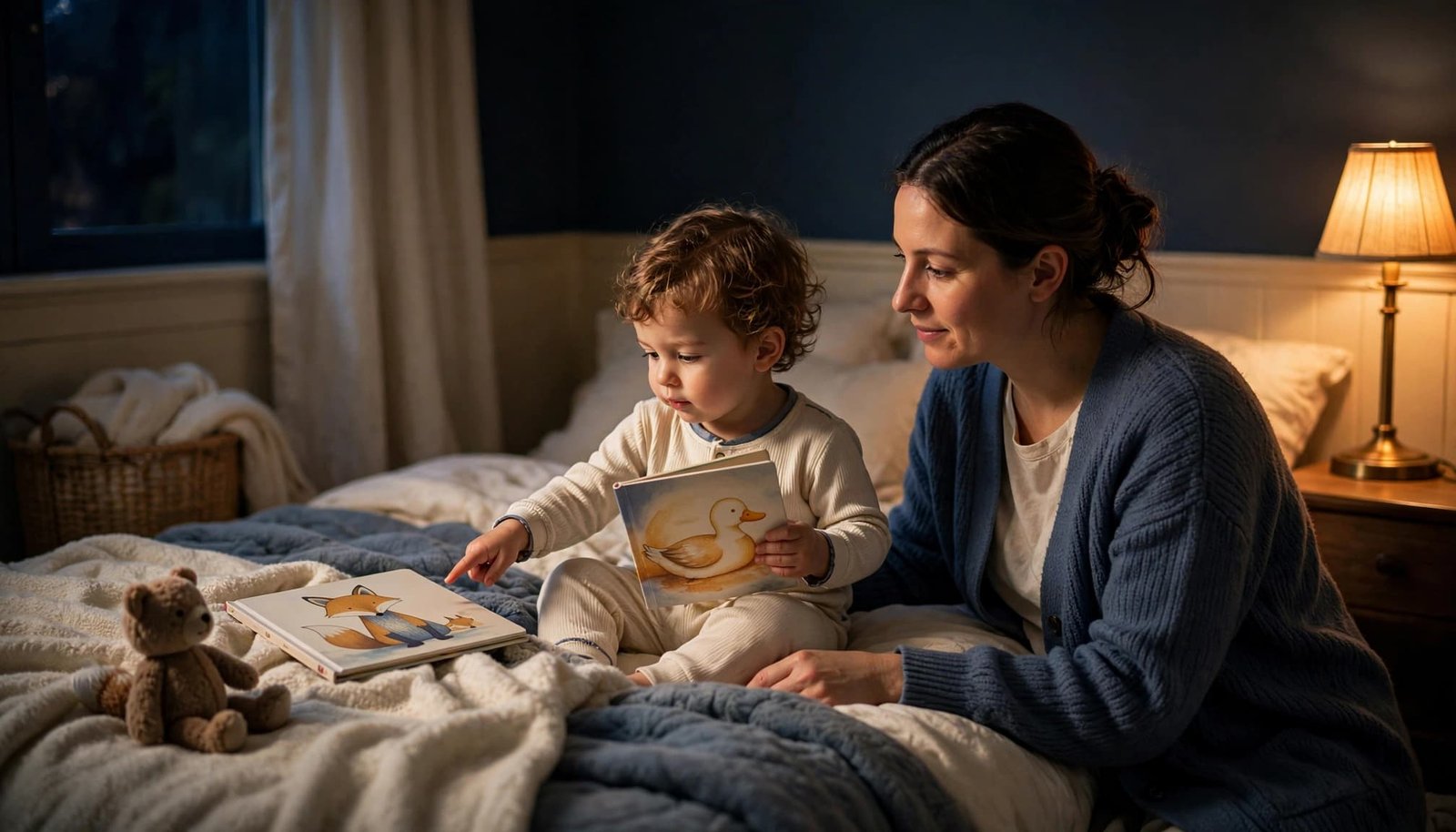
You can also move reading earlier, such as before pajamas or after bath time. The American Academy of Pediatrics describes reading as part of a simple brush, book, bed routine, but the book can happen in a comfortable chair instead of under the covers. A consistent bedtime routine can support sleep and family connection, as described in this review of bedtime routines.
Set Kind Limits Without Turning Books Into a Battle
Give your toddler a clear endpoint: “You may choose one book, then we turn off the light.” After the final page, close the book and repeat the same phrase, such as, “The story is finished. Goodnight, I love you.” Your calm repetition helps the boundary feel familiar.
If bedtime reading stays difficult, read during the day when your child has more energy. A quiet morning, afternoon rest, or post-lunch cuddle still gives your toddler the language and connection that stories provide. Keep bedtime brief, warm, and pressure-free.
Conclusion
Bedtime stories give toddlers more than a pleasant ending to the day. Regular reading builds stronger language, creates closer parent-child connection, and gives children a gentle way to notice and name emotions. A familiar book also supports a calmer transition to sleep while helping toddlers practice attention, listening, and early print awareness.
Your child doesn’t need long readings, advanced books, or a perfect routine to enjoy these benefits. A few quiet minutes, a familiar story, and a caregiver’s warm presence can become a dependable part of childhood.
Begin tonight with one short book. Let your toddler point, talk, choose a favorite page, or ask for the same story again. Follow your child’s interest and adjust the routine to fit your family, because meaningful reading grows through simple moments shared together.
Save pin for later


- Dry Cough in Kids: 5 Causes and Safe Solutions - September 23, 2026
- How to Help a Child Deal With Anxiety at Home - September 12, 2026
- How to Prepare Your Child for the First Day of School - September 12, 2026