
You settle into the driver’s seat, pull out of the driveway, and then the crying starts from the back seat. A baby crying in the car seat can make even a short trip feel endless, and it can leave you feeling stuck and unsure what to do next.
The good news is that this is common, and it often has a fix. Babies may cry because they’re uncomfortable, hungry, too hot or too cold, overstimulated, or frustrated that they can’t see you.
Sometimes the problem is simple, like a strap that feels off or a ride that went on too long. If the crying keeps happening, the next step is to look at the most likely cause and calm the ride before it turns into a bigger battle.
First, figure out why your baby is crying in the car seat
Crying in the car seat usually means something feels off, and the fix often starts with the simplest clue. Before you try every soothing trick, pause and look for the most likely cause. A baby who is fed, dry, rested, and comfortable has a much better chance of settling once the car starts moving.
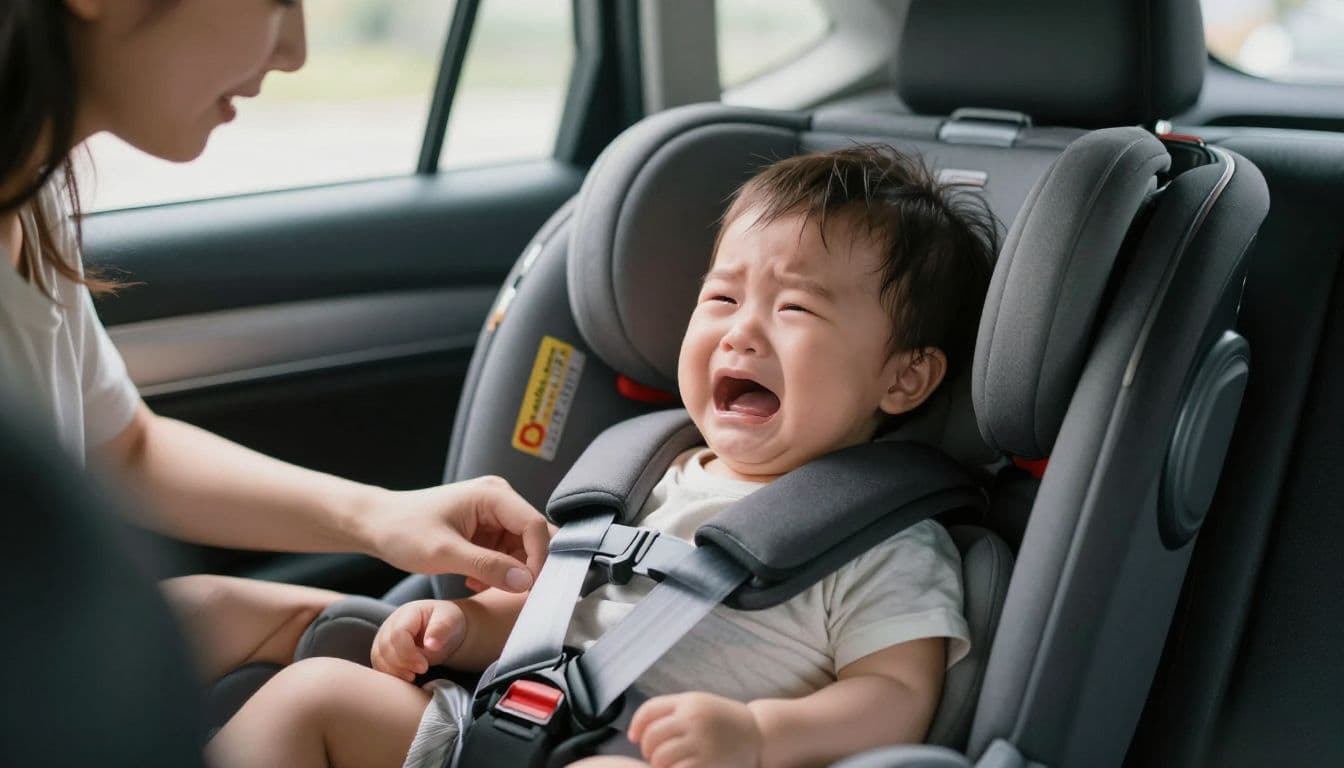
A calm pre-ride routine can help a lot too. When the trip starts with fewer small annoyances, the ride feels less like a battle and more like a smooth reset.
Check for simple needs before the car even moves
Start with the basics. Hunger, a wet diaper, gas, or overtired fussiness can all turn into full crying once the car begins to roll. If your baby just ate, a quick burp may help before buckling in.
A short routine can make a big difference:
- Feed if it’s close to mealtime
- Change the diaper first
- Burp after feeding
- Wait a few minutes if your baby seems sleepy
Babies often cry more when they are tired but cannot settle. Starting the trip with a calm baby gives you a better chance of a quiet ride. For a broader look at crying patterns, common reasons for infant crying can help you sort out what your baby is trying to tell you.
Look for discomfort in the seat itself
Sometimes the seat is the problem. Straps that are too tight, twisted, or pinching skin can make a baby cry fast. Bulky clothes can also bunch up and make the seat feel awkward, even if the fit seems fine at first glance.
Watch for clues like slumping, fussing right after buckling, or crying that starts the second the ride begins. Those are often signs that your baby feels trapped or uncomfortable. The fix should focus on comfort and proper fit, not panic.
Watch for sensory overload, temperature trouble, or motion sickness
Bright sun, loud road noise, hot air, cold air, and the strange sway of movement can all upset a baby. Some babies also hate feeling confined, while others get carsick and cry as the ride goes on. Overstimulation in babies can build fast in a busy, noisy car.
A few small changes can help:
- Use a window shade if sunlight hits your baby’s face
- Keep the car at a steady, comfortable temperature
- Lower loud music and reduce noise when you can
- Take a break if the crying gets stronger over time
If your baby cries only in the car, the trigger is often something in the ride itself, not the whole day.
When you figure out the cause first, the next step gets much easier.
Make the car seat feel safer and more comfortable
Small changes often calm a crying baby faster than a big fix. A seat that feels snug, steady, and familiar can take the edge off the ride. Focus on comfort first, then keep the safety basics in place.
Get the harness fit right without making it too tight
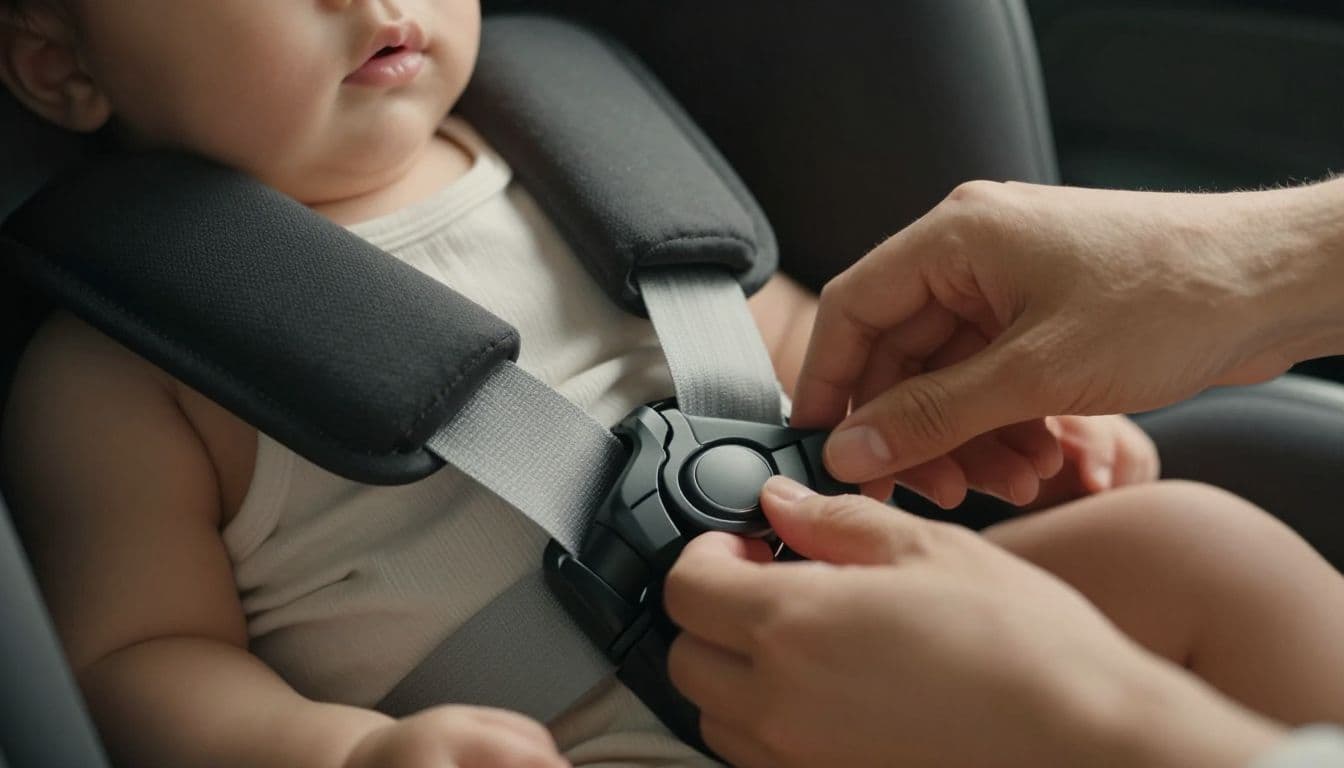
A baby should feel held, not squeezed. The harness needs to lie flat against the body, with no twists, no slack, and no bunching near the shoulders. If the straps press into the neck, ride up on the face, or leave red marks right away, the fit needs a quick reset.
The chest clip should sit at armpit level, where it helps keep the straps in the right place. If it sits too low, the harness can slip out of position. If it sits too high, it can press where it should not.
Clothing matters too. Thick coats, snowsuits, and puffy blankets under the straps can make the harness seem snug when it really is not. A thin onesie or sleeper works better, and you can place a blanket over the harness after buckling if the weather is cold. The American Academy of Pediatrics car seat guidance also explains why bulky layers can get in the way of a safe fit.
If your baby still fusses, check the shoulder straps next to the body. They should feel secure, but your baby should still be able to breathe and move normally.
Help with temperature, sunlight, and noise
Many babies cry because the ride feels off before it feels scary. A hot back seat, a cold draft, or bright sun in the eyes can turn a short drive into a melt-down. Keeping the car at a steady, comfortable temperature often helps more than parents expect.
A few easy fixes can make the cabin feel calmer:
- Set the air or heat before you buckle up.
- Use a sunshade where it is safe and allowed.
- Aim vents away from your baby’s face.
- Lower harsh music or talk radio.
- Keep the ride quiet when possible.
Babies often settle better when they are not sweating, shivering, or staring into bright light. Even a small change, like turning the seat away from direct sun, can soften the whole mood of the ride.
Use calming extras that are safe for the baby’s age
A pacifier can help some younger babies relax, especially when they want to suck for comfort. For older babies, a familiar voice, soft singing, or gentle music can create a steady rhythm that feels reassuring.
Simple comfort works best here. A parent in the back seat, a favorite soft toy for an older baby, or a calm voice can all help the ride feel less strange. Just keep anything extra away from the harness and out of the face.
If you use a toy, make sure it stays light, soft, and easy to handle. The goal is comfort, not clutter. A safe seat with one soothing touch often works better than a pile of distractions.
Ways to soothe a crying baby while you are on the road
Once the crying starts, keep your response calm and simple. Babies pick up on your tone fast, so your goal is to make the ride feel steady, not chaotic. A few small moves can help more than a big reaction.
Try a calm voice and a steady rhythm
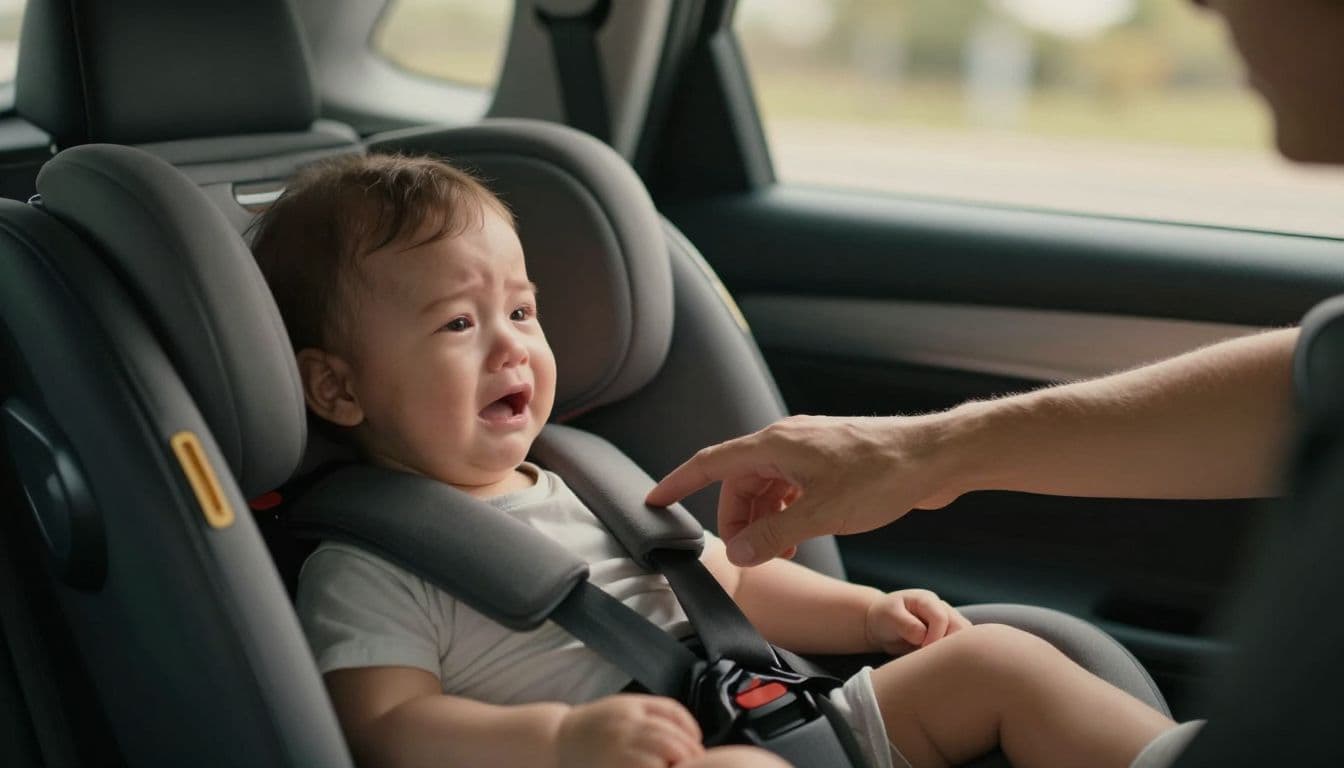
Your voice can feel like a hand on the shoulder. Many babies settle when they hear soft singing, a hush of the same phrase, or a gentle hum that does not change much from second to second.
Keep it simple. Say the same short line, sing one soft song, or repeat a calm sound while you keep your eyes on the road. Predictable noise often feels safer than silence or rushed talking.
If your baby is already upset, avoid rapid-fire chatter. A slow, even tone works better, like a lullaby that keeps time for the whole ride.
Keep the trip smooth and simple
Sharp turns, hard braking, and sudden lane changes can make a baby cry harder. A smoother drive gives their body less reason to tense up, especially if they are tired or already sensitive.
Drive with gentle starts and stops when traffic allows. Slow down before turns, keep the car motion steady, and avoid last-minute swerves that jolt the seat.
A calmer drive can be part of the fix. The seat matters, but so does the way the car moves.
When possible, plan the route with fewer surprises. A quiet road and steady pace often feel easier for a baby than a stop-and-go sprint across town. For longer drives, the American Academy of Pediatrics suggests taking breaks during extended travel so babies can be checked and settled, especially if the ride stretches on too long. HealthyChildren car travel guidance
Pull over when crying does not stop
If the crying keeps rising and nothing is helping, find a safe place to stop. A parking lot, rest area, or quiet side street is better than trying to push through while stressed.
Once parked, check the basics again. Your baby may be hungry, wet, too hot, too cold, or bothered by a strap or toy. If the crying sounds unusual, or you notice fever, vomiting, breathing trouble, or unusual sleepiness, it’s time to get medical help.
Stopping is not failing. It is the safer choice when your baby needs more than the car can offer in that moment. If you want a broader calming checklist, how to soothe a crying newborn can help with the same basic comfort checks.
How to prevent car seat crying before the next trip
A better ride often starts before the engine turns on. Small habits, repeated the same way, can make the back seat feel less strange and more familiar. That kind of predictability helps a baby start the trip in a calmer state.
Plan around naps, feeding, and diaper changes
If you can, leave after a feed or close to nap time. A full belly and a sleepy baby often handle the car better than a hungry, wired one. Even a short drive can go more smoothly when your baby starts out fed, dry, and drowsy.
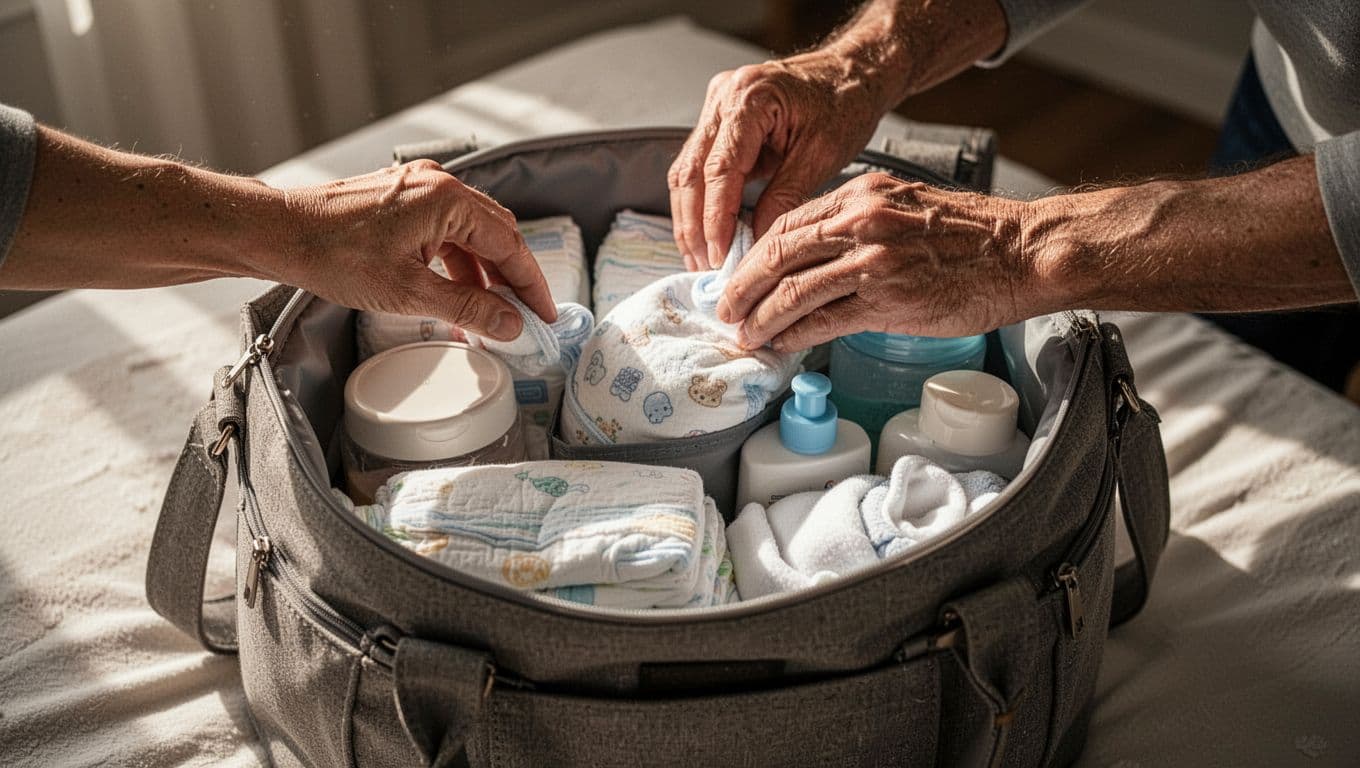
Do a quick diaper check before buckling in, then give a little soothing time if needed. A few calm minutes, a burp, or a gentle cuddle can shift the mood before the ride begins. That small pause may prevent a lot of crying once the car starts moving.
When travel days get unpredictable, keep the plan simple. Babies do not need a perfect schedule, but they do better when the basics are handled first. For more ideas on baby travel timing, traveling with an infant guide can help you shape a calmer routine.
Keep the back seat calm and familiar
Babies often cry less when the car feels familiar. Use the same seat setup when you can, keep the straps and inserts in their usual place, and follow the same buckle-up routine each time. Familiar songs and a quiet voice also help the car feel less like a new place every trip.
For older babies, a mirror or a safe toy can help, as long as it stays simple and does not become a distraction. A soft stuffed toy, a teether, or a mirror they already know may give them something steady to focus on.
Comfort grows from predictability. If the back seat always feels like the same little pocket of routine, your baby has less reason to protest it.
The goal is a ride that feels known, not exciting.
A peaceful routine also helps you stay calm, which matters more than it sounds. Your baby can sense the difference between a rushed buckle-in and a steady one.
Pay attention to patterns in when the crying starts
Patterns can point you toward the real trigger. If your baby cries only on long trips, only after dark, only after feeding, or only in hot weather, that clue is useful. It can point to motion sickness, reflux, overstimulation, or simple tiredness.
Start paying attention to when the crying begins and what changed right before it. A short note in your phone can help you spot the pattern after a few drives. You may notice that one small adjustment, like changing the time of day or cooling the car sooner, makes a real difference.
If the crying happens the same way every time, talk to your pediatrician about it. A repeated pattern is worth mentioning, especially if your baby also spits up a lot, seems uncomfortable after feeds, or turns pale in the car.
The more you observe, the easier it gets to plan ahead. A baby who struggles in one setting may relax in another, and that clue can save the next trip before it starts.
When the crying might point to something bigger
Most car-seat crying is tied to discomfort, hunger, or too much stimulation. Still, a few signs deserve a closer look. When the cry sounds different, lasts longer than usual, or comes with other symptoms, the cause may be pain or illness instead of ordinary fussiness.
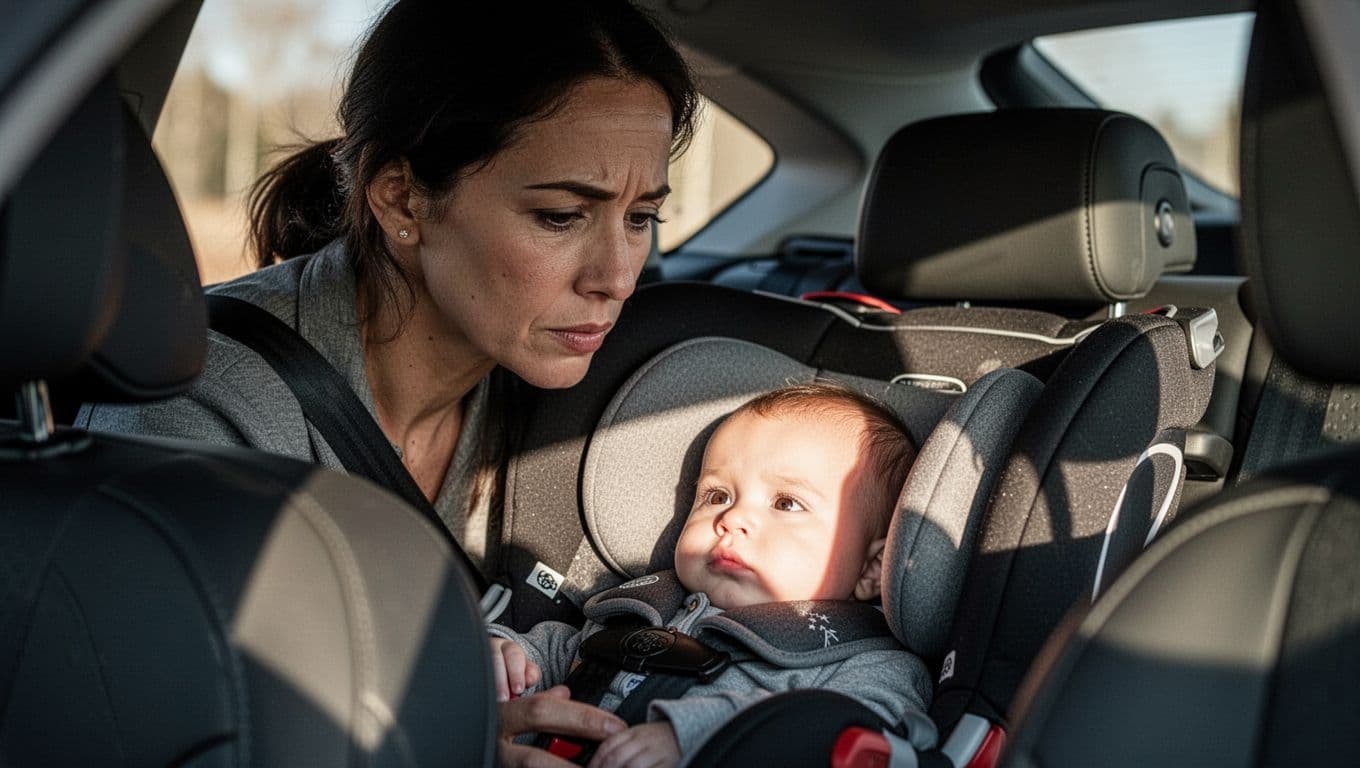
Know the red flags that should not be ignored
A baby who cries in the car seat every so often is usually reacting to the ride. A baby who suddenly cries in a new, intense way may be telling you something else is wrong. Fever, vomiting, unusual stiffness, breathing trouble, or nonstop crying that feels different from the usual pattern should get your attention.
Watch for these warning signs:
- Fever, especially in a young infant
- Vomiting or spit-up that seems out of the ordinary
- Unusual stiffness or a body that feels hard to settle
- Breathing trouble, including fast, noisy, or strained breathing
- Crying that never seems to stop
- Crying every time with no clear reason and no relief from usual comfort
A sudden change matters. A baby who normally settles but now cries sharply in the seat may have ear pain, reflux, gas pain, or another illness that makes the position uncomfortable. If the crying sounds weak, high-pitched, or unlike your baby’s usual voice, take that seriously.
If your baby’s cry changes fast, treat the change as a clue, not just a bad mood.
For breathing concerns, these baby breathing trouble signs can help you spot symptoms that need quick action.
Call your pediatrician if the crying keeps happening
Reach out to your pediatrician if your baby seems to hurt in the car seat, cries much more than before, or keeps crying on rides even after you’ve checked the basics. Reflux, ear pain, and motion sickness can all make the car feel miserable for a baby, and a doctor can help you sort out what fits.
This is also worth a call if the crying follows feeding, if your baby arches, spits up a lot, or seems unsettled in a pattern that keeps repeating. According to KidsHealth’s guide on baby crying, crying is common in early infancy, but persistent changes in behavior still deserve attention.
Trust your read on your baby. If the crying feels different, stronger, or more tied to pain than to frustration, call the doctor and describe what you’re seeing in plain terms.
Conclusion
A baby crying in the car seat is common, and it does not mean you are doing anything wrong. Most of the time, the answer is simple, check the basics, fix what feels off, and soothe your baby with a calm, steady response.
If the crying keeps building, pull over and reset the ride instead of forcing it. Over time, many car trips get easier once you learn your baby’s patterns, triggers, and the small comforts that help them settle.
Save pin for later

- Dry Cough in Kids: 5 Causes and Safe Solutions - September 23, 2026
- How to Help a Child Deal With Anxiety at Home - September 12, 2026
- How to Prepare Your Child for the First Day of School - September 12, 2026