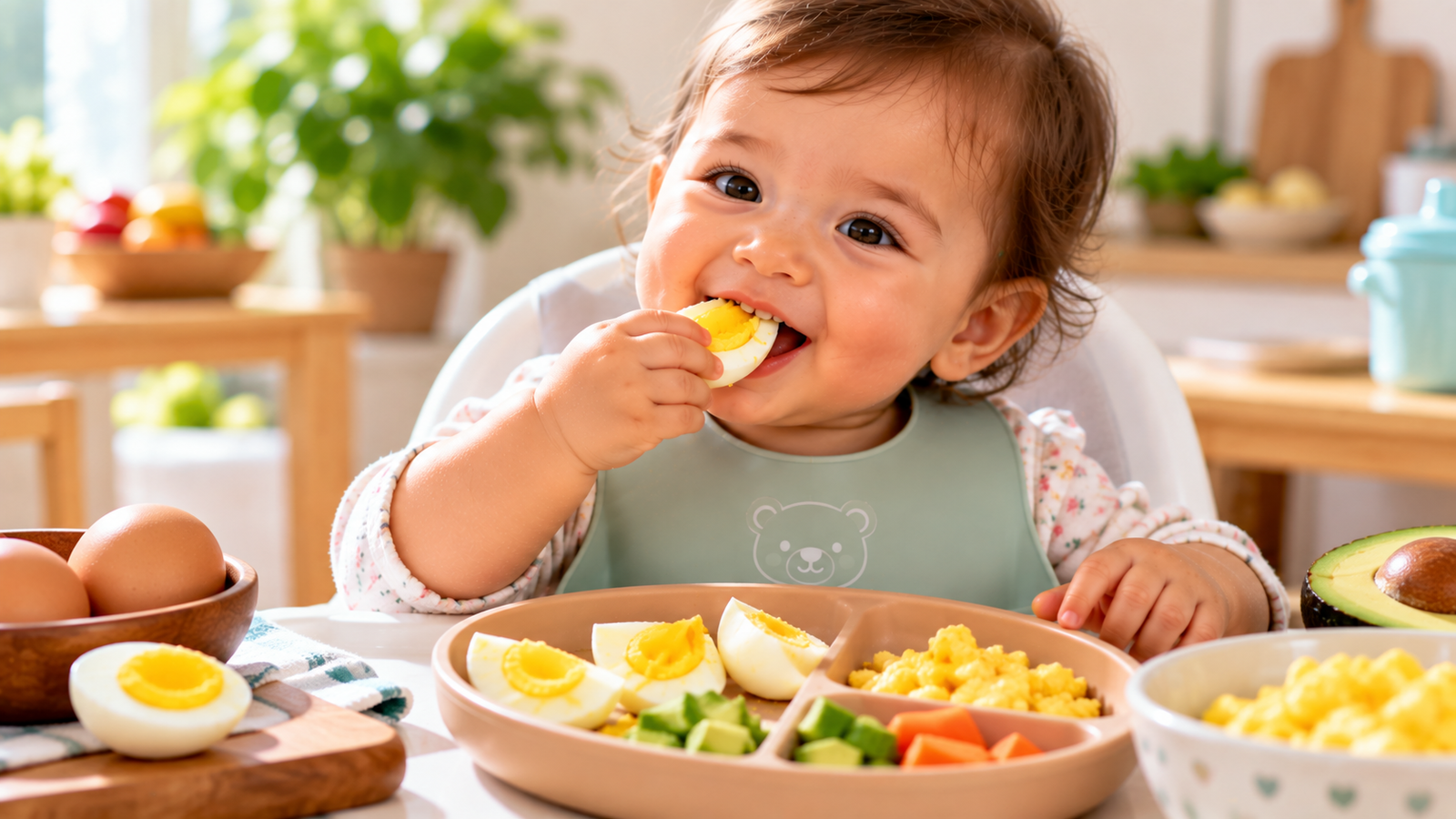
Parents often wonder whether eggs are a nutritious first food and how to serve them safely. Eggs offer protein, choline, vitamin B12, and other nutrients in a small, soft food that can be adapted to a baby’s eating skills.
Once your baby is ready for solids, usually around 6 months, fully cooked egg can add variety to their diet. It complements breast milk or formula, which remain your baby’s main sources of nutrition during the first year. The sections ahead explain what nutrients eggs provide, when to introduce them, and how to serve them safely, including when to seek guidance about allergy risk. For babies with severe eczema or a known food allergy, review when to ask a pediatrician before offering eggs.
Watch how to introduce eggs to babies.
What Are the Nutritional Benefits of Eggs for Babies?
Eggs provide high-quality protein along with choline, vitamin B12, vitamin D, and small amounts of other nutrients. A large egg contains about 6 grams of protein, but babies usually eat less than a whole egg, so the nutrients they get depend on the portion. Serve egg as one part of a varied diet, alongside breast milk or formula and other age-appropriate foods.
Protein helps build and repair growing bodies
Protein supplies building blocks the body uses to grow and maintain muscles, skin, and other tissues. Egg protein is considered high quality because it provides the amino acids the body needs.
Still, babies need a range of foods, not one food to cover every nutritional need. Offer a small, baby-sized amount of fully cooked egg, then let your child’s appetite and feeding skills guide how much they eat. A baby’s serving is much smaller than an adult portion, and breast milk or formula remains an important source of nutrition during the first year.
Choline and B vitamins support important body functions
Eggs contain choline, which the body uses for normal brain and nervous system function. They also provide vitamin B12, a nutrient that helps the body make blood cells and supports nerve function.
These nutrients make egg a useful option in a varied infant diet, but no single food determines a baby’s development. Depending on how much egg your baby eats, the amount of each nutrient will vary. The USDA FoodData Central egg listings provide nutrient information for egg, including protein and vitamins.
Eggs offer vitamin D and other nutrients, but little iron
Eggs provide some vitamin D and small amounts of other nutrients, including iron. However, they aren’t a strong iron source, and iron becomes especially important as babies begin eating complementary foods around 6 months.
Offer other iron-rich foods regularly, such as meat, beans, lentils, or iron-fortified infant cereal. These foods can complement egg in meals and snacks. For more options that fit a baby’s early meals, see these iron-rich breakfast ideas for babies.
In brief, egg can add protein, choline, vitamin B12, and some vitamin D to your baby’s meals. Pair it with a mix of other foods, especially reliable iron sources, rather than treating it as a complete meal on its own.
How egg nutrients fit into a baby’s diet
Eggs can add useful nutrients and new textures to a baby’s meals, but they work best as one part of a varied diet. When your baby starts solids at about 6 months, breast milk or infant formula remains the main source of nutrition through the first year. Solid foods gradually add energy and nutrients while giving your baby chances to practice eating.
The CDC’s guidance on foods for babies recommends introducing foods alongside breast milk or formula at around 6 months. So, there’s no need for egg to carry a meal. Offer it in a texture your baby can manage, and let appetite, feeding skills, and your pediatrician’s advice guide how much and how often.
A small serving can be enough to get started
When egg is new, a few soft bites give your baby a chance to explore its taste and texture. As appetite and eating skills develop, your baby may eat more. There’s no required serving size for every baby, so follow hunger cues, such as leaning toward food or opening the mouth, and fullness cues, such as turning away or closing the mouth.
Some meals may end after a few bites, while others may prompt more interest. Keep offering age-appropriate foods without pressuring your baby to finish a portion. If you have questions about how much to offer or your child’s growth, ask your pediatrician.
Pair eggs with other nourishing foods
Serve soft, fully cooked egg alongside mashed vegetables or avocado for a simple meal with varied flavors and textures. You can also pair it with an iron-rich food, such as iron-fortified infant cereal, mashed beans, or lentils. Since egg is not a strong source of iron, these pairings help bring another useful food into the meal.
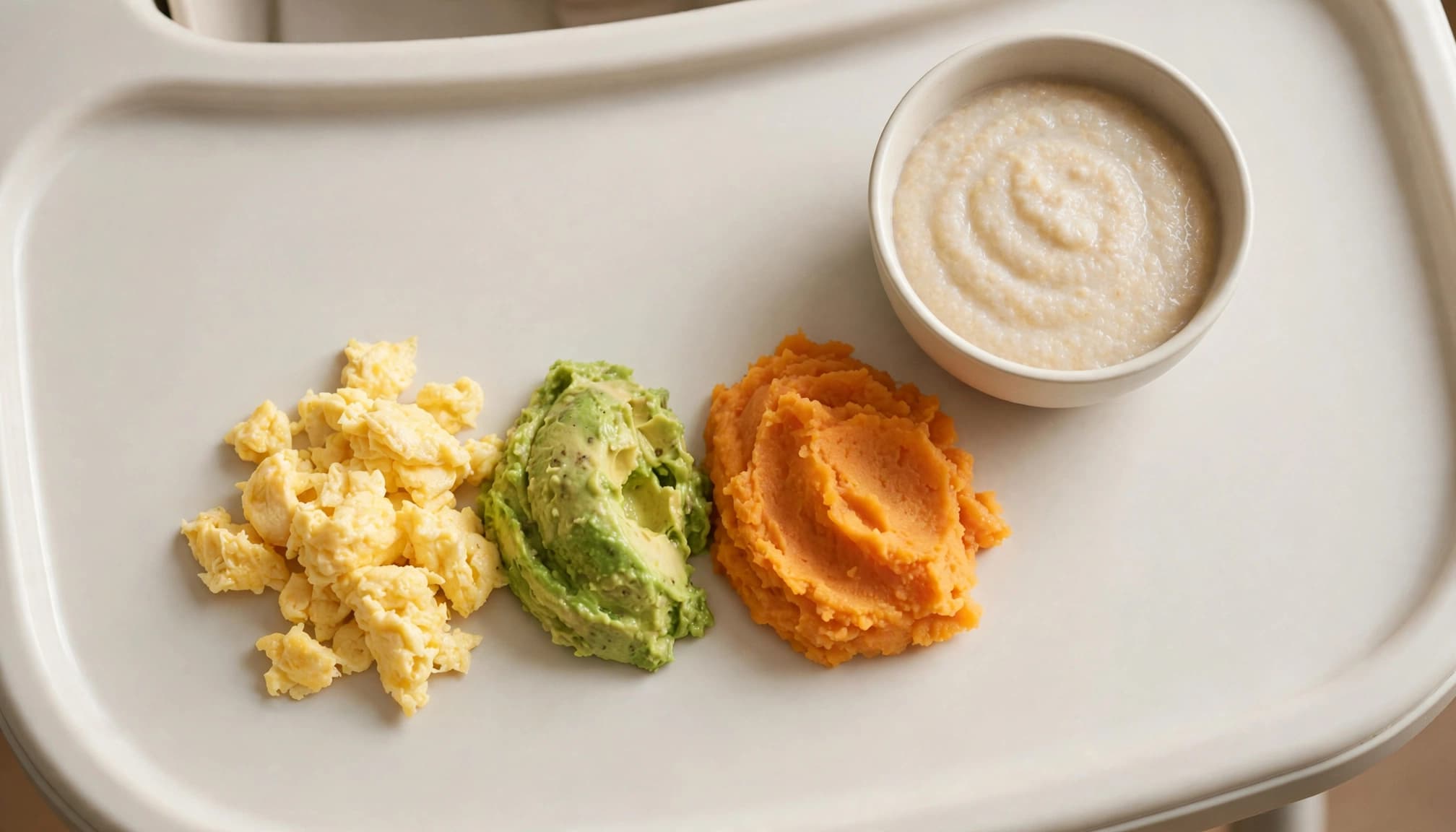
Across the week, rotate egg with other foods rather than serving the same combination every day. For more meal inspiration, browse these healthy meal ideas for 9-month-old babies. Keep preparation simple, and skip added salt and sugary ingredients.
When can babies start eating eggs?
Most babies can try egg when they’re ready for solid foods, usually around 6 months. Don’t start solids before 4 months, and look for developmental signs that your baby can manage food safely.
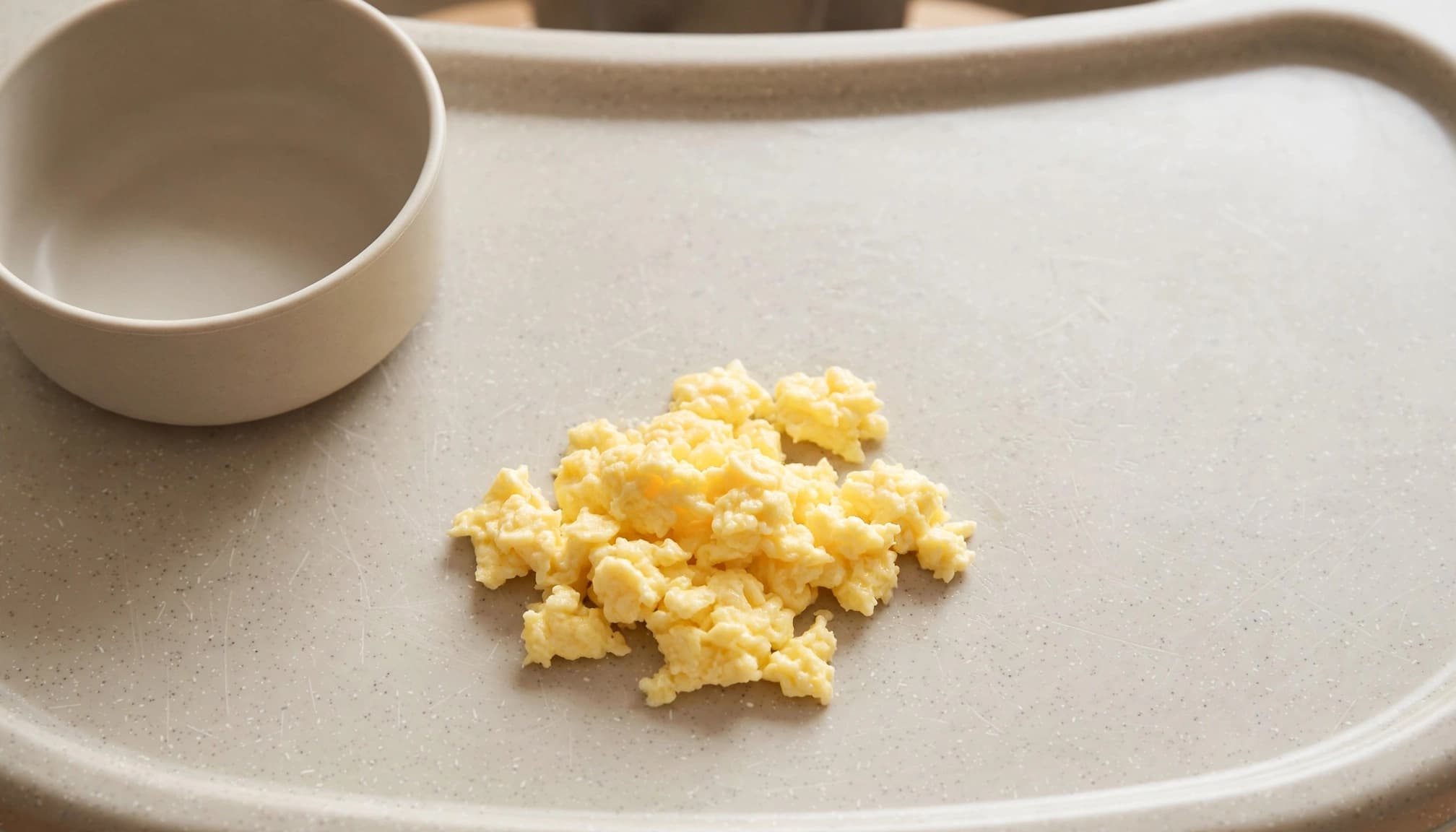
Introduce well-cooked egg in a small amount
Your baby should have good head control, be able to sit upright with support, and swallow food rather than consistently pushing it out with the tongue. These cues matter alongside age. For more signs to watch for, review how to tell when your baby is ready for solids.
Start with a small taste of fully cooked egg, such as soft scrambled egg. If your baby tolerates it, offer a little more at another meal. Avoid raw or undercooked egg, and serve it in a texture and shape your baby can manage.
Current guidance doesn’t recommend delaying common allergenic foods, including egg, for most babies. The American Academy of Pediatrics notes that allergenic foods can be introduced when a baby is ready for solids, typically around 6 months. See the AAP’s guidance on introducing common food allergens.
Introduce one new common allergen at a time so it’s easier to identify which food may have caused a reaction. If your baby has severe eczema, a known food allergy, or another allergy concern, ask your pediatrician about the safest timing and approach before offering egg.
Keep egg in the menu after a baby tolerates it
Once your baby eats egg without a reaction, keep including it in meals from time to time. Regular, ongoing exposure to an allergenic food after introduction is commonly recommended, rather than offering it once and then removing it from the menu. There’s no need to serve egg at every meal; work it into your baby’s varied diet as it suits your routine.
For practical ideas, see how often babies can eat eggs. Follow your pediatrician’s advice if your baby has a medical condition or needs a different feeding plan.
How to serve eggs safely at each stage
The safest way to serve egg depends on your baby’s feeding skills. Keep the texture soft, adjust the shape as your baby learns to pick up food, and stay close throughout every meal.
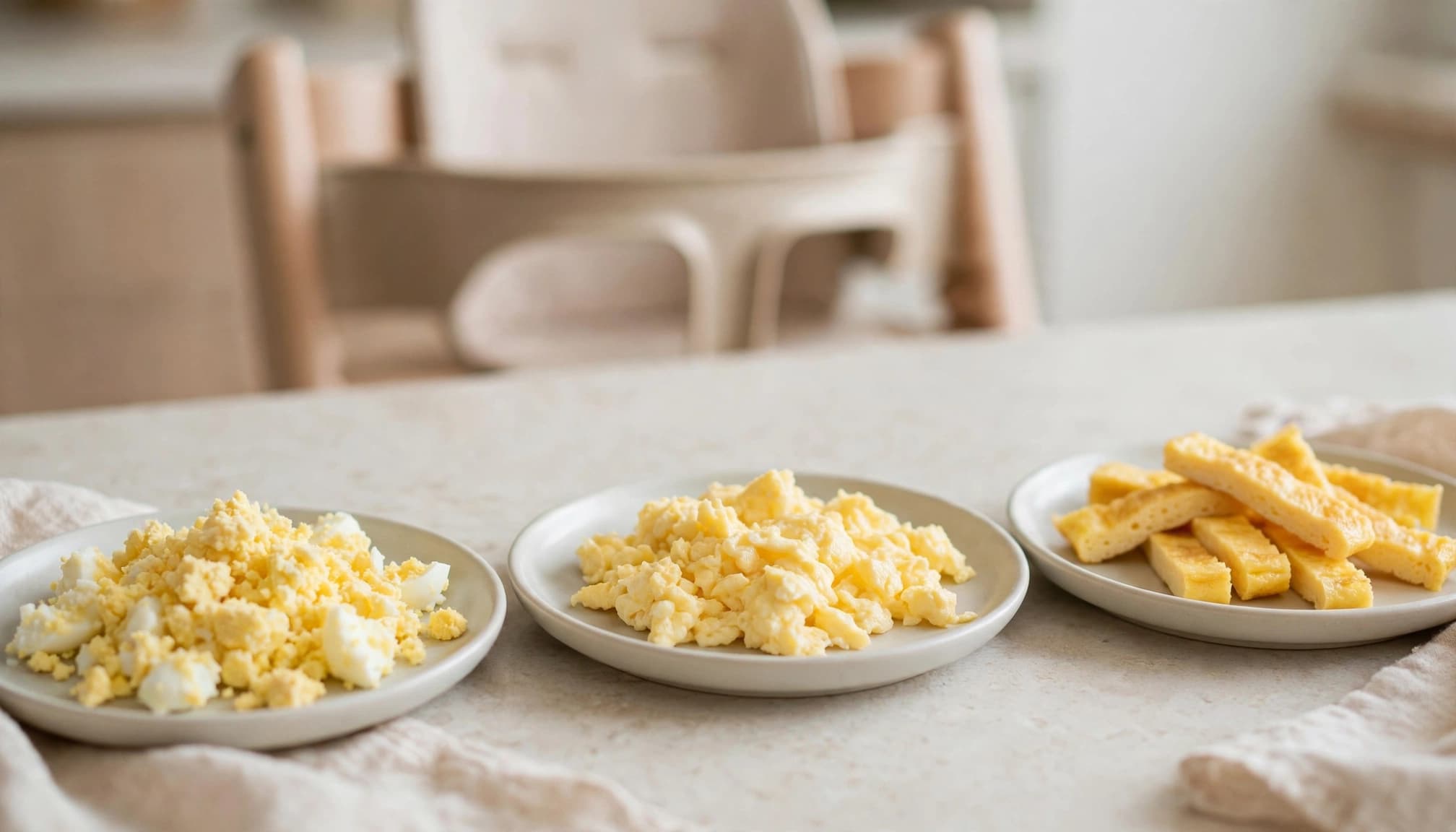
Choose soft textures that are easy to manage
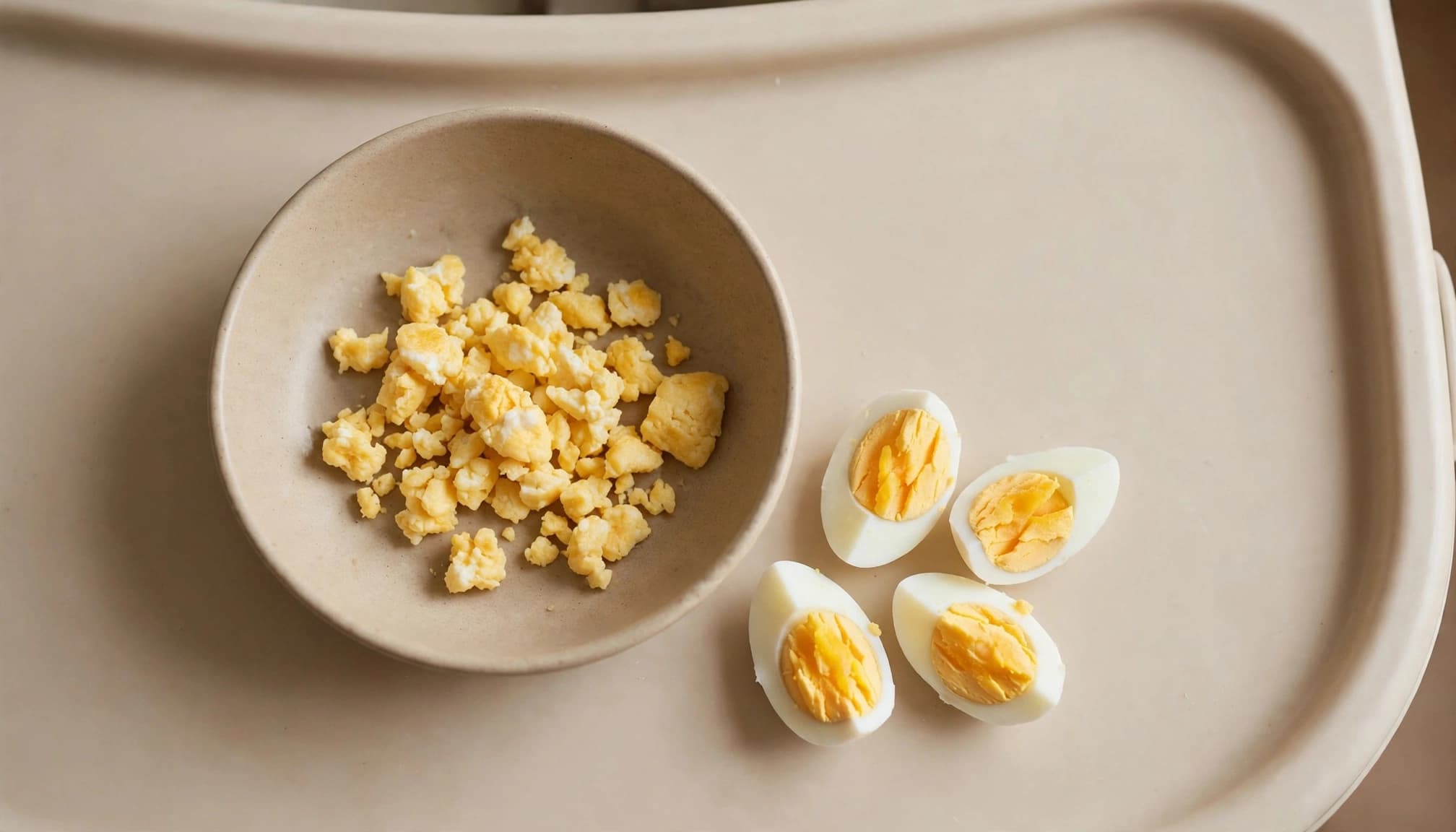
For early eating practice, try mashed hard-boiled egg or soft scrambled egg. Mash the egg until it is moist and easy to swallow, or scramble it until fully set but still tender. Food should mash easily between your fingers. If it feels firm, dry, or rubbery, soften it or prepare it another way.
As your baby develops the ability to grasp food, offer a fully cooked omelet cut into strips they can hold. When they begin picking up smaller pieces, cut the egg into small, manageable bits. Avoid large chunks and firm pieces, which can be difficult to chew, as well as slippery bite-size pieces that may slide toward the back of the mouth. The CDC’s guidance on choking hazards recommends adapting food preparation to reduce choking risk. You can also find practical examples of safe food shapes and textures for baby-led weaning.
Have your baby sit upright, and supervise closely while they eat. Keep meals calm, with your baby seated rather than eating while moving around. Since babies develop feeding skills at different rates, base the shape and texture on what your child can manage now.
Cook eggs fully and avoid raw egg foods
Cook both the white and yolk until firm before serving egg to your baby. Soft scrambled egg can still be tender, but it shouldn’t be runny. Avoid runny eggs, undercooked omelets, and foods made with raw or undercooked egg, including uncooked batter. Raw or undercooked eggs can carry bacteria that cause foodborne illness.
A food thermometer helps confirm that egg dishes reach a safe temperature. The CDC recommends cooking egg dishes to 160°F. After cooking, serve egg promptly or refrigerate it; don’t leave cooked food sitting out for an extended period. Keep raw egg separate from ready-to-eat foods, and wash your hands, utensils, and surfaces after handling it.
With a few basic precautions, egg can be a practical food to prepare in different textures as your baby’s eating skills grow. Start with a soft, fully cooked preparation, cut or mash it to suit your baby’s abilities, and remain within arm’s reach during meals.
Know the signs of an egg allergy and when to get help
Egg is a common food allergen, and even a small taste can trigger a reaction in a baby who is allergic. Most babies tolerate egg, but knowing what to watch for helps you respond promptly.
Watch for a reaction when egg is first offered
Offer egg when your baby is well and an adult can stay nearby and observe. This makes it easier to notice a change and connect it with the new food.

Reactions can affect the skin, stomach, or breathing. Look for hives, swelling around the lips or face, vomiting, or eczema that suddenly worsens. For more examples, see these egg allergy symptoms in babies.
If you notice a possible reaction, stop feeding egg and contact your baby’s clinician for advice. Don’t offer more egg to see whether symptoms happen again, and don’t try to diagnose an allergy at home. A clinician can help determine what happened and advise you on next steps.
Get a personalized plan for higher-risk babies
If your baby has severe eczema, an existing food allergy, or a previous reaction to egg, talk with your pediatrician or an allergist before offering it. They can recommend an introduction plan based on your child’s history and may advise whether the first feeding should happen under medical supervision.
Higher allergy risk doesn’t mean you should delay egg on your own. Instead, get individualized guidance on timing and preparation. An at-home trial or test can’t replace an assessment by a qualified clinician.
Know when symptoms are an emergency
Trouble breathing, swelling of the tongue or throat, or becoming very weak can signal a severe allergic reaction. Call 911 right away if your baby has any of these symptoms. Don’t wait to see whether they improve. The Food Allergy Research & Education guide to anaphylaxis describes other signs of a severe reaction, including breathing problems and faintness.
For symptoms that aren’t severe but may be allergy-related, contact your baby’s clinician promptly. If your child already has an emergency action plan, follow it.
Conclusion
Eggs give babies high-quality protein, choline, and several vitamins, but they’re one part of a balanced diet, not a major iron source. Pair them with reliable iron-rich foods as your baby explores a variety of age-appropriate meals.
When your baby is ready for solids, offer fully cooked egg in a soft texture suited to their feeding skills. If your baby has allergy risk factors or develops possible symptoms, contact a pediatrician for guidance. With safe preparation and a varied menu, egg can be a simple, nourishing addition to your baby’s meals.
Save pin for later

- Can I Give A Half-boiled Egg To My Baby? - September 25, 2026
- What Are The Nutritional Benefits Of Eggs For Babies - September 25, 2026
- When Should I Avoid Giving Eggs To My Baby? - September 25, 2026