

In the United States, choose a fully cooked egg for your baby rather than a half-boiled egg with a runny yolk or white. Advice can vary by country and egg-safety program, so follow your local guidance.
Babies can usually start eating egg at about 6 months, when they’re ready for solid foods. Serve it in a soft, age-appropriate texture, and ask your pediatrician about allergy concerns, especially if your baby has severe eczema or a known food allergy. You can also review when to ask a pediatrician before introducing eggs.
Can I Give a Half-Boiled Egg to My Baby?
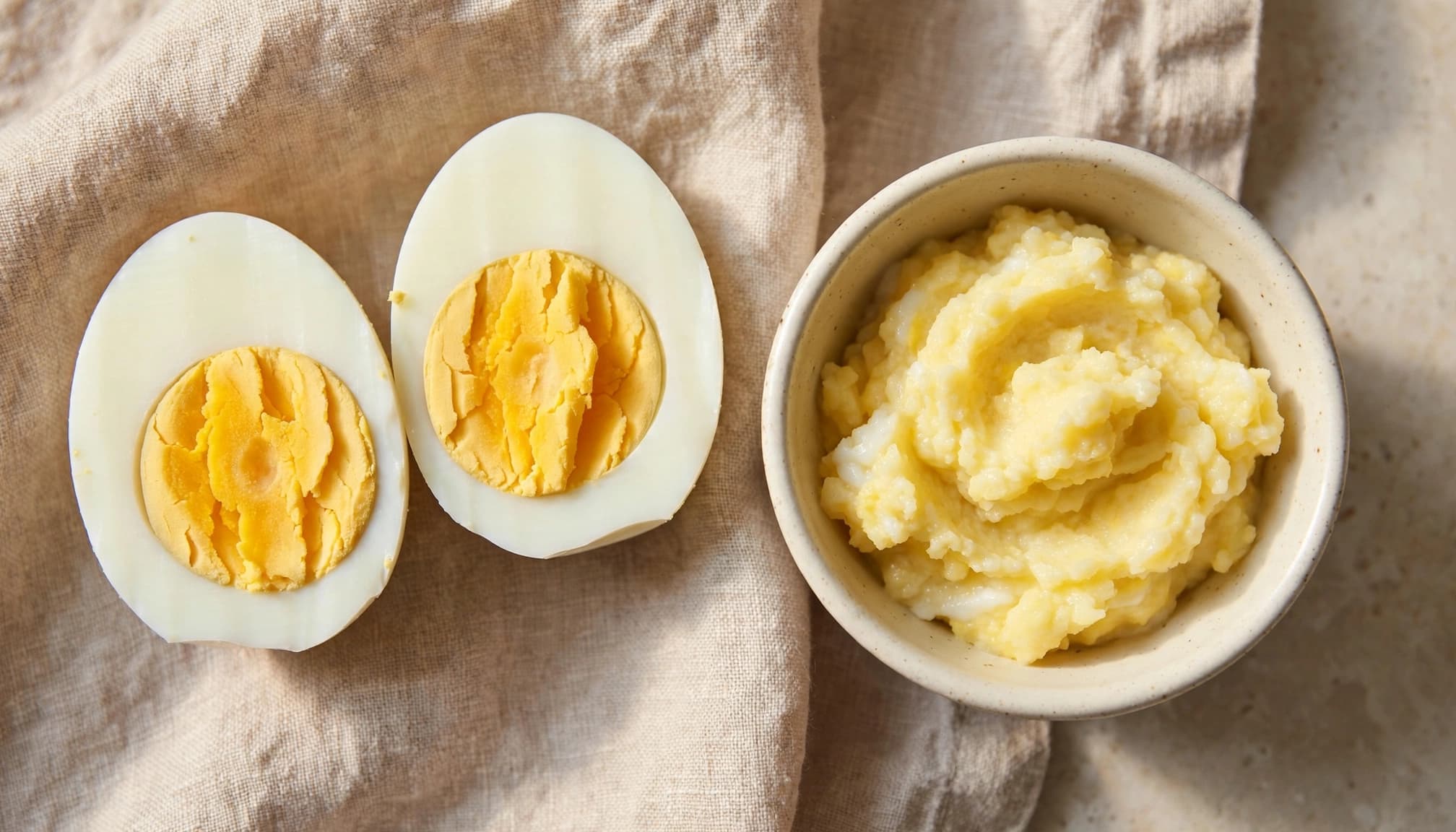
No. In the United States, serve your baby eggs with both the yolk and white fully cooked and firm. The CDC lists runny eggs as a riskier choice for children under 5, while fully cooked eggs are the safer option.
Why runny eggs are a riskier choice
The concern is foodborne illness, including Salmonella, which can be present in eggs even when the shells look clean and uncracked. A half-boiled egg may leave the yolk or white undercooked, so it doesn’t meet the CDC’s safer guidance for young children. The CDC’s food safety advice for children under 5 recommends cooking eggs until both the yolks and whites are firm.
That recommendation doesn’t mean every baby who eats a runny egg will get sick. It means undercooked eggs carry more risk, and young children are more vulnerable to foodborne illness. The half-boiled cooking method isn’t uniquely dangerous; the issue is that it can leave parts of the egg undercooked. The FDA’s egg safety guidance also advises cooking eggs until the yolk and white are firm.
How to serve eggs safely
Once your baby is ready for solids, usually around 6 months, you can offer egg cooked all the way through. Mash it with a little water or breast milk, or serve it in a soft texture your baby can manage. Keep the pieces and consistency appropriate for your baby’s feeding skills, and supervise meals.
You can also offer fully cooked egg regularly as part of a varied diet. For ideas on frequency, see how often babies can eat eggs. If your baby has severe eczema or a known food allergy, ask your pediatrician about introducing egg. After the first serving, watch for symptoms such as hives, swelling, vomiting, or breathing trouble, and seek urgent care for breathing problems or other severe symptoms.
Why Runny Eggs Can Be Risky for Babies
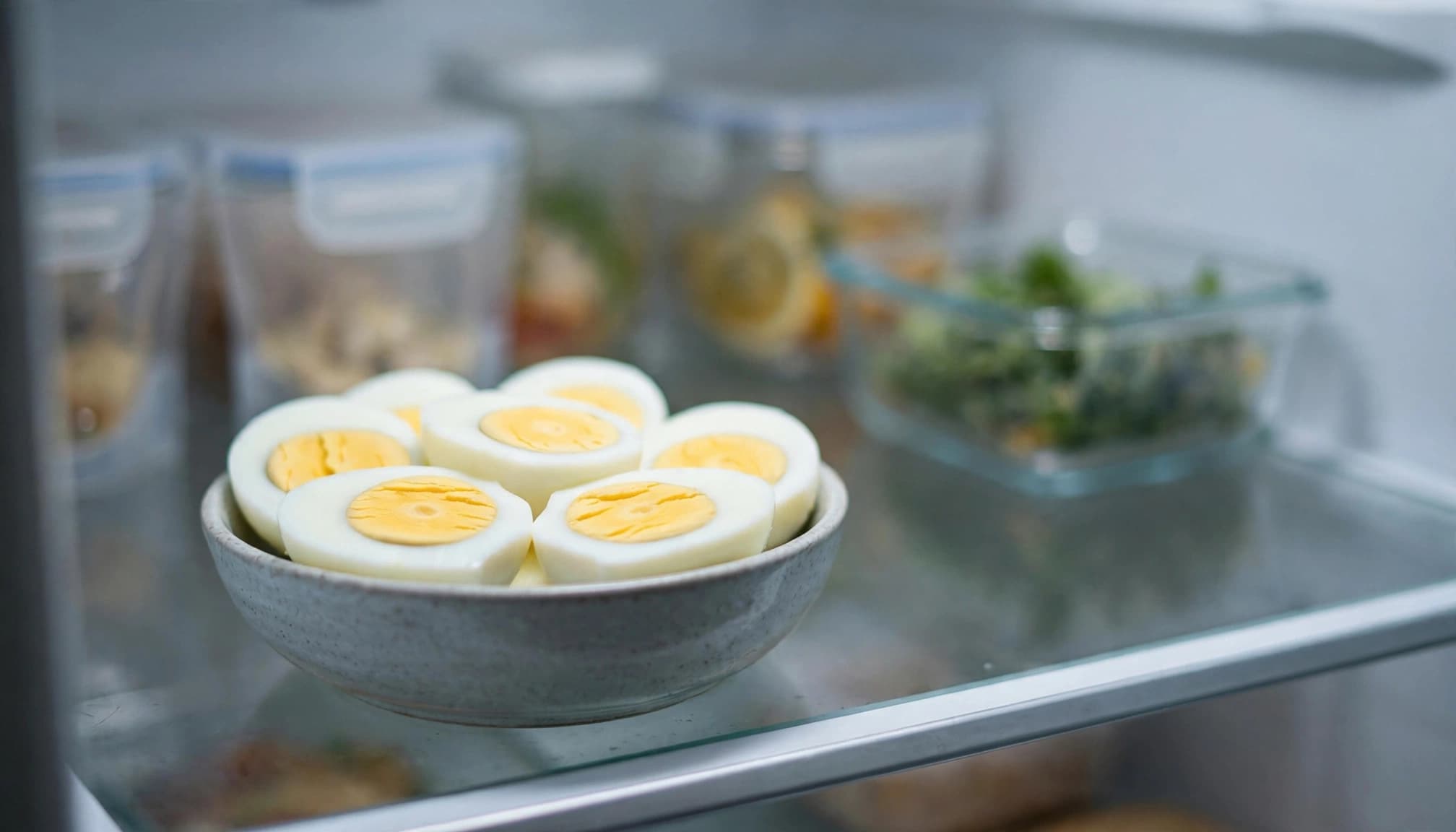
Salmonella can be present inside an egg, even when its shell looks clean and unbroken. A half-boiled egg may leave the yolk or white undercooked, so the safer choice for babies and young children is an egg cooked until both parts are firm.
Why young children need extra care
Salmonella can cause diarrhea, fever, and stomach cramps. For babies and young children, diarrhea can lead to dehydration, which may become serious more quickly than it does for a healthy adult. Children under 5 are also more likely to develop severe illness from Salmonella.
That doesn’t mean a baby will get sick from every bite of undercooked egg. It means the possible consequences deserve extra caution, especially when fully cooking eggs is a simple way to lower risk. If your child develops symptoms after eating egg, contact their pediatrician for advice. Seek urgent care for signs of severe dehydration, such as very little urination, unusual sleepiness, or difficulty keeping fluids down.
Cooking and handling both matter
Cooking eggs until the yolk and white are firm lowers the chance that harmful bacteria will survive. However, safe preparation starts before cooking: keep eggs refrigerated, wash your hands after handling raw eggs, and clean utensils and surfaces that touched them. Keep cooked eggs away from raw egg and its juices.
Washing eggs at home doesn’t make them safe to eat runny. It also doesn’t remove bacteria that may be inside the egg. The FDA’s egg safety guidance recommends refrigeration and thorough cooking to reduce illness risk.
For a baby, serve the egg soon after cooking, in a soft texture and pieces suited to their feeding skills. If you need a practical meal idea, try these fully cooked egg recipes for infants.
When Babies Can Start Eating Egg, and How to Introduce It
Most babies can start eating fully cooked egg when they’re ready for solid foods, usually around 6 months. Signs of readiness include good head control, sitting with support, and being able to swallow food rather than push it back out. Breast milk or formula should remain your baby’s main source of nutrition during this stage.
There’s no need to delay egg once your baby is ready for solids. The American Academy of Pediatrics says common allergens such as egg can be introduced along with other solid foods, as described in its guidance on introducing egg and other food allergens.
How to offer egg for the first time
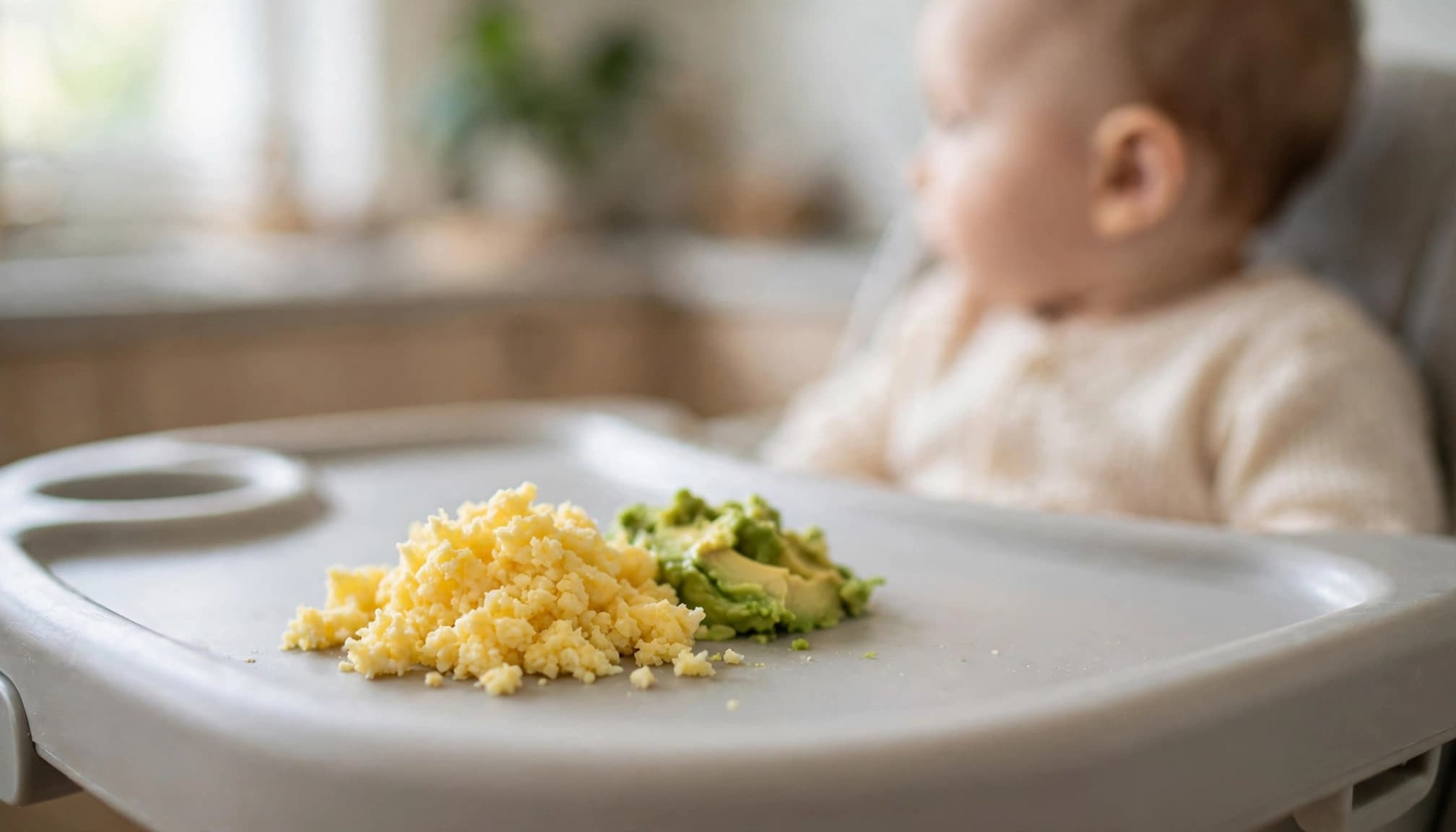
Start with a small amount of egg cooked until both the yolk and white are firm. Mash it into a soft texture, then offer it alone or alongside a familiar food your baby already tolerates. Keep your baby seated upright and supervise the meal.
If there’s no reaction, gradually offer more on later occasions. Egg can remain part of a varied diet after introduction. For serving ideas and texture guidance, see these fully cooked egg recipes for infants.
If your baby has severe eczema or a known food allergy, talk with their pediatrician or allergist before introducing egg. They can help you decide on the timing and a safe plan for your child, rather than relying on an at-home allergy test.
Know the signs of an egg allergy
Allergic symptoms can appear within minutes or a few hours after eating egg. Watch for hives or a rash, swelling of the lips or face, vomiting, coughing, or wheezing. You can review more egg allergy symptoms in babies, but only a health professional can assess what a reaction means.
If you notice a possible reaction, stop feeding egg and contact your baby’s health professional for advice. Don’t offer more egg to test whether the symptoms return. A serious breathing problem, wheezing, or swelling of the mouth or throat needs emergency care. Call 911; if your baby has prescribed epinephrine, use it as directed while emergency help is on the way.
How to Cook and Serve Egg Safely for Your Baby
Cook eggs until both the yolk and white are firm. For scrambled eggs, that means fully set throughout, even when the finished curds are soft and moist. A tender texture is fine; runny or partly cooked egg is not the safe choice for babies.
Wash your hands before preparing food, and clean utensils, cutting boards, and counters that touched raw egg. Keep eggs refrigerated at 40°F (4°C) or colder. For egg dishes, use a food thermometer: cook dishes without meat or poultry to 160°F (71°C), and dishes containing meat or poultry to 165°F (74°C), as shown in FoodSafety.gov’s safe temperature chart.
Easy Fully Cooked Egg Ideas for Early Eaters

For a baby who is learning to eat, offer egg in a texture they can manage. A hard-cooked egg can be finely mashed with a little water, breast milk, or formula to make it moist and easier to swallow. You can also serve soft scrambled egg, cooked through until no liquid egg remains. Low heat helps keep the curds tender without leaving them undercooked.
As your baby gains eating skills, adjust the texture and shape. Mash the egg or cut it into small, manageable pieces; avoid serving a large, firm chunk that may be difficult to handle. If your baby is practicing self-feeding, offer soft pieces suited to their abilities. Baby-led weaning basics can help you think through age-appropriate shapes and textures.
Keep your baby seated upright in a high chair or other secure seat, and stay close while they eat. Don’t let your baby eat while crawling, walking, or lying back. A calm, supervised meal gives you a chance to notice whether the texture is manageable.
Serve freshly cooked egg soon after preparing it. If you save leftovers, refrigerate them promptly in a shallow container, and discard food left at room temperature for more than two hours, or one hour when it’s hotter than 90°F. FDA guidance says cooked egg dishes can be refrigerated for 3 to 4 days, but baby portions are best served fresh when practical. Remove the amount your baby will eat, rather than feeding from the storage container, and discard anything left in the bowl after the meal.
Why Advice About Half-Boiled Eggs Differs by Country
Advice about half-boiled eggs can differ because food safety authorities assess the egg supply and its controls differently. For parents, the key point is that a recommendation from another country may depend on standards that don’t apply to eggs sold where you live.

U.S. guidance favors fully cooked eggs
In the United States, the CDC advises cooking eggs for children under 5 until both the yolk and white are firm. It lists raw or undercooked eggs, including runny eggs, as a riskier choice. This is the guidance to follow for babies in the U.S., even if a family member or online source recommends soft-boiled eggs.
The advice reflects the need to reduce Salmonella risk for young children. A clean-looking shell or a fully cooked white with a runny yolk doesn’t confirm that an egg is safe to serve under this guidance. See the CDC’s egg guidance for children under 5 for its recommendations.
The UK exception depends on the egg’s mark
UK guidance is more permissive for certain eggs. Babies around 6 months and older can have runny or lightly cooked eggs when they carry the British Lion mark, which identifies eggs produced under a specific safety program. The UK Food Standards Agency also recognizes eggs produced under the Laid in Britain assurance scheme in its guidance for young children.
That exception is tied to those programs. It doesn’t mean that any egg sold in the UK, or eggs from another country, can be served runny. The Food Standards Agency notes that eggs cannot be guaranteed free of Salmonella, even under these schemes. Its egg safety guidance for catering explains the conditions behind the UK advice.
Follow the rules where you live
Egg production, testing, and safety programs vary by country, so the same cooking method can receive different advice. When you’re traveling or buying imported eggs, check the local food safety authority and the egg’s safety mark rather than assuming another country’s guidance applies.
If you can’t verify that an egg meets the standard behind a local exception, cook it until both the yolk and white are firm. For U.S. parents, that fully cooked option follows CDC guidance and avoids relying on a foreign certification system.
Conclusion
For babies in the United States, serve eggs fully cooked, with the yolk and white firm. Avoid half-boiled or runny eggs, since CDC guidance recommends that children under 5 avoid undercooked eggs.
Egg can be introduced as a nutritious solid food around 6 months, once your baby is ready for solids. Offer a texture your baby can manage, and watch for possible allergy symptoms. If you live somewhere with different egg safety rules, check your local guidance before serving runny eggs. Learn more about the nutritional benefits of eggs for babies.
Save pin for later


- Can I Give A Half-boiled Egg To My Baby? - September 25, 2026
- What Are The Nutritional Benefits Of Eggs For Babies - September 25, 2026
- When Should I Avoid Giving Eggs To My Baby? - September 25, 2026