


A quiet snack can turn stressful in seconds when a child starts choking, or a quick moment near the pool can become an emergency when little feet slip. Lifesaving parenting tricks aren’t about raising fearful, perfect parents; they’re small habits that lower risk and help you respond with a clearer head when every second matters.
This guide covers practical safety habits for choking prevention, water safety, properly used car seats, poison control, fire planning, infant sleep, and emergency readiness, including how to keep key phone numbers easy to find. Call 911 during an emergency, and take certified CPR and first-aid training so you know how to act while help is coming. Use this article as general US safety guidance, not as a substitute for medical advice or professional instruction, and review newborn sleep safety tips before setting up your baby’s sleep space. Start with the everyday choices that make the biggest difference, then build your family’s emergency plan around them.
10 Lifesaving Parenting Tricks Every Family Should Practice
Safety works best as a habit, not a last-minute reaction. Before an emergency happens, walk through your home, adjust risky routines, and practice simple responses with every caregiver.
1. Make meals safer before the first bite
Young children can choke on food they cannot chew well, especially when they eat while walking, playing, or laughing. Have your child sit at the table, stay nearby, and cut firm foods into small pieces. Slice grapes lengthwise, chop hot dogs and raw vegetables, and avoid popcorn, hard candy, gum, and whole nuts for young children.
Small objects deserve the same attention. Coins, button batteries, broken balloons, pen caps, and tiny toy parts can disappear into a toddler’s mouth quickly. Check the floor after older siblings play, and follow the age range printed on every toy.
Parents and regular caregivers should take certified CPR and choking first-aid training. Store the course information and emergency numbers somewhere easy to reach, but remember that a video cannot replace hands-on instruction.
2. Treat water supervision as an active job
A child can slip beneath the surface without making noise, so stay within arm’s reach of infants and toddlers near pools, bathtubs, lakes, and even buckets. Put your phone away, avoid distracted conversations, and hand supervision to another adult before you step away.
Layers of protection help reduce risk:
- Empty buckets, kiddie pools, and other containers immediately after use.
- Use four-sided fencing and a self-closing, self-latching gate around a home pool.
- Keep pool and spa covers secured when the water is not in use.
- Enroll children in age-appropriate swim lessons, while remembering that lessons don’t replace supervision.
Even ordinary water play needs close attention. These water play safety tips for children can help you plan activities without treating shallow water as harmless.

3. Keep children in the right car seat stage
Use a car seat that matches your child’s current height, weight, and developmental stage. NHTSA guidance recommends keeping children rear-facing as long as possible, up to the seat’s stated height or weight limit. After that, move to a forward-facing seat with a harness and tether, then use a booster until the vehicle belt fits correctly.
Read both the car seat manual and your vehicle manual before installation. Register the seat for recall notices, replace it after a serious crash, and use it on every ride, including short trips. A certified child passenger safety technician can check the installation if you’re unsure.
The American Academy of Pediatrics also recommends reviewing home safety tips for families, since many hazards change as children become more mobile.
4. Save Poison Control before you need it
Store the Poison Control number, 1-800-222-1222, in every caregiver’s phone and post it near the home phone. Keep medicines, cleaning products, vitamins, cosmetics, and laundry packets locked or well out of reach. Never describe medicine as candy, even when encouraging a reluctant child to take it.
If you suspect an exposure, call promptly and keep the container nearby. Be ready to share the product name, amount, and approximate time. If your child collapses, has trouble breathing, has a seizure, or cannot wake up, call 911 immediately. Regularly check purses and visitors’ bags too, because children often find hazards adults forget are accessible.
Simple Home Safety Habits That Prevent Big Emergencies
Most household emergencies begin with an ordinary moment: a hot mug near the edge of a table, a loose cord across the floor, or a toddler climbing toward a window. A few setup changes and routine checks can remove many of these risks before your child notices them.
5. Make fire and burn prevention part of your routine
Place smoke alarms on every level, inside each bedroom, and outside sleeping areas. Test them monthly, replace batteries as needed, and keep a working fire extinguisher where adults can reach it quickly. Make a family escape plan with two ways out of each room, then practice it when everyone is calm.
Heat needs its own safety zone. Keep children at least three feet from space heaters, fireplaces, grills, candles, and wood stoves. Turn pot handles toward the back of the stove, keep hot drinks away from table edges, and check bathwater with your wrist before your child steps in.
A smoke alarm only helps if it works, and a fire plan only helps if your family has practiced it.

6. Lock, anchor, and move household hazards
Look at each room from your child’s height. You may spot coins under a sofa, a dangling charger, or a small battery hidden beside a toy. Keep medicines, cleaning products, laundry packets, cosmetics, matches, and sharp tools in locked cabinets, not simply on a high shelf.
Anchor dressers, bookcases, televisions, and freestanding shelves to the wall. Use safety gates at the top and bottom of stairs, and add window guards or open windows from the top when possible. A screen can keep insects out, but it cannot keep a child from falling.
For more ideas, review these child bedroom safety risks before arranging a nursery or older child’s room. The CPSC home injury prevention research also shows why regular household checks matter, especially as children gain new skills.
7. Remove electrical and battery dangers
Cover unused outlets with large, secure protectors that a child cannot pull out or swallow. Keep power strips, extension cords, and chargers out of reach, and replace frayed cords or loose plugs immediately. In kitchens, bathrooms, garages, and outdoor areas, ask an electrician about ground-fault circuit interrupter protection.
Check every remote control, key fob, toy, watch, camera, and flameless candle for button batteries. Secure battery compartments with screws, and store loose batteries in a locked container. If your child may have swallowed a button battery, seek emergency care right away and call the National Battery Ingestion Hotline at 800-498-8666.
8. Build a five-minute evening safety check
A short check before bedtime can catch hazards created during the day. Walk through the kitchen, bathroom, living room, and nursery, then confirm that:
- Stoves, irons, candles, and space heaters are off and cooling safely.
- Small toys, coins, magnets, and batteries are off the floor.
- Medicines and cleaning products are locked away.
- Windows and stair gates are secure.
- Walkways are clear, and cords are out of reach.
As children grow, repeat the check from their new height and abilities. A safer home is not frozen in place; it changes with your family.
Prepare Your Child for Emergencies Before They Happen
Children respond better when emergency steps feel familiar. A calm practice run turns frightening instructions into actions they recognize, helping your child move instead of freeze when illness, severe weather, evacuation, or separation creates confusion.
Create one simple family emergency plan
Choose one out-of-town contact, two meeting places, and a clear way to communicate. The contact can help reconnect family members if local phone lines are busy. Teach older children to send a text first because texts may work when calls do not.
Post the plan on the refrigerator, save it in every caregiver’s phone, and place a copy in each child’s backpack. Keep the instructions short:
- Call 911 if someone is in immediate danger.
- Meet at a familiar location outside the home.
- Use the same trusted contact when family members become separated.
- Tell a trusted adult before leaving school, daycare, or a friend’s home.
- Share your name, address, and a parent’s phone number when asking for help.
Review general safety rules for children as your child grows. A preschooler may memorize a parent’s name, while an older child may learn how to send a location and describe the family’s meeting point. FEMA’s family emergency plan guidance also recommends planning for alerts, shelter, evacuation routes, communication, and each household member’s needs.
Practice illness and severe weather routines
For illness, keep a written list of medications, allergies, medical conditions, doctors, and emergency contacts. Store several days of needed supplies, including prescriptions, infant feeding items, diapers, water, and comfort objects. If your baby shows emergency symptoms, trust your concern and seek medical help promptly.
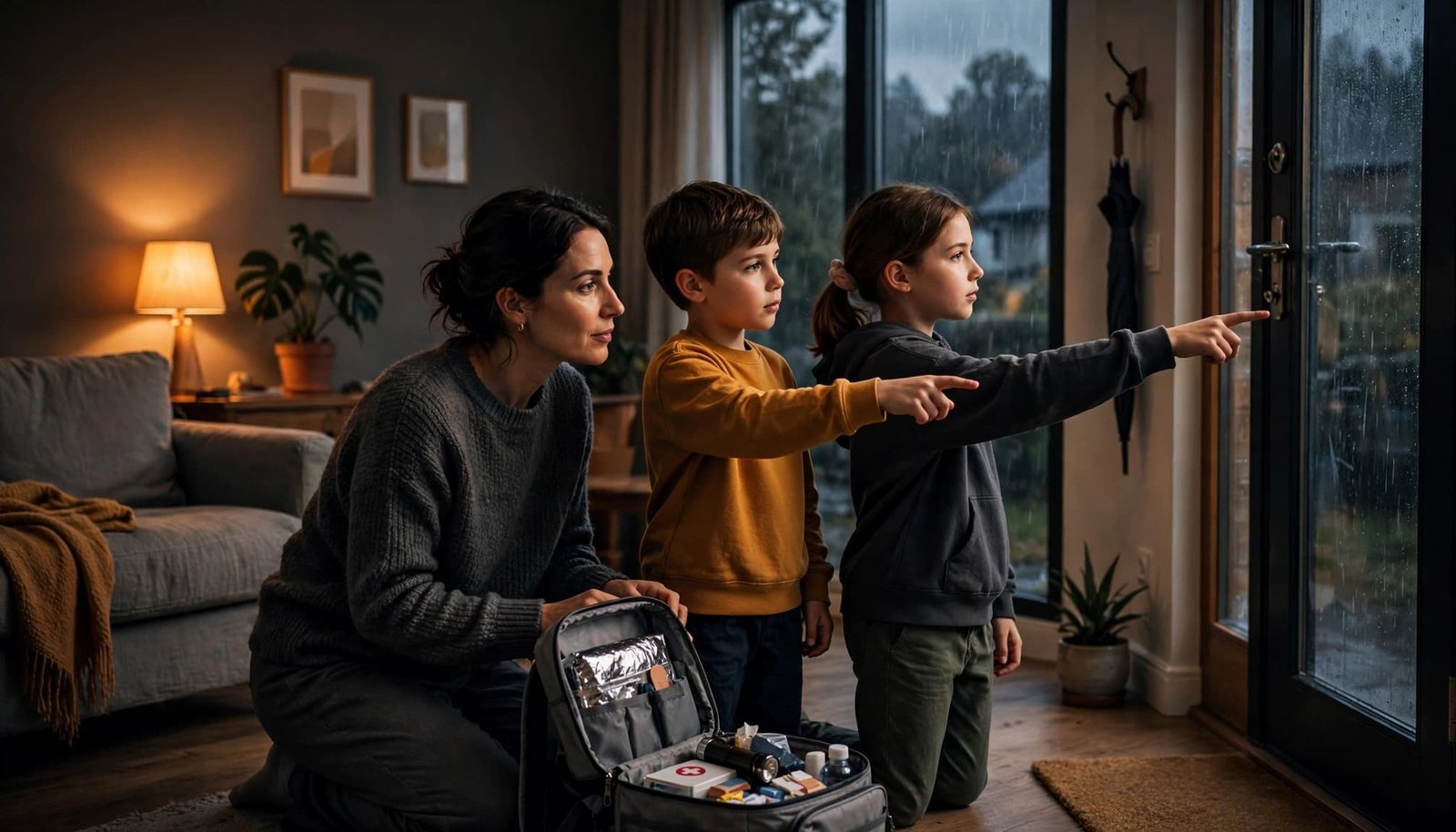
Severe weather requires a different response. Show children where the family will shelter during a tornado, how alerts sound, and which shoes, flashlight, and emergency bag they should bring. During a drill, use calm language such as, “The weather is unsafe, so we are moving to our safe place now.” Repeat the routine until your child knows the next step without guessing.
For evacuation, identify the route, destination, and backup route before warnings arrive. Keep the car fueled when severe weather threatens, and include comfort items in the emergency bag. Children often stay calmer when they have a small job, such as carrying a stuffed animal or checking that everyone has shoes.
Teach a lost-child response
A lost child needs a practiced plan, not a lecture about stranger danger. Teach your child to stay in a safe, visible place if separated from you, approach a uniformed employee or another parent with children, and say, “I am lost. Please call my parent.” Young children should know their full name and a caregiver’s phone number.
If your child goes missing, call local law enforcement immediately. If there is immediate danger, call 911, then contact the National Center for Missing & Exploited Children at 1-800-THE-LOST (1-800-843-5678). Keep a recent photo and basic description available, including clothing, height, birth date, and the last known location. Practice these steps gently, so preparation feels like a safety skill rather than a frightening prediction.
Turn Safety Rules Into Everyday Parenting Routines
Safety habits work best when they fit into the rhythm your family already has. You don’t need a perfect home or a complicated emergency binder. You need clear rules, reliable supervision, and short practice sessions that children can remember when stress takes over.
Attach safety habits to routines you already keep
Use ordinary moments as reminders. Check the smoke alarms on the first day of each month, inspect car seats before a long trip, and restock the first-aid kit when you buy household supplies. Before bath time, place your phone out of reach and confirm that every needed item is beside you.
Busy mornings also offer useful practice. As children put on shoes, ask them to name the family meeting place or point out the safest exit. A simple visual morning routine for kids can include safety steps without making the day feel like a drill.
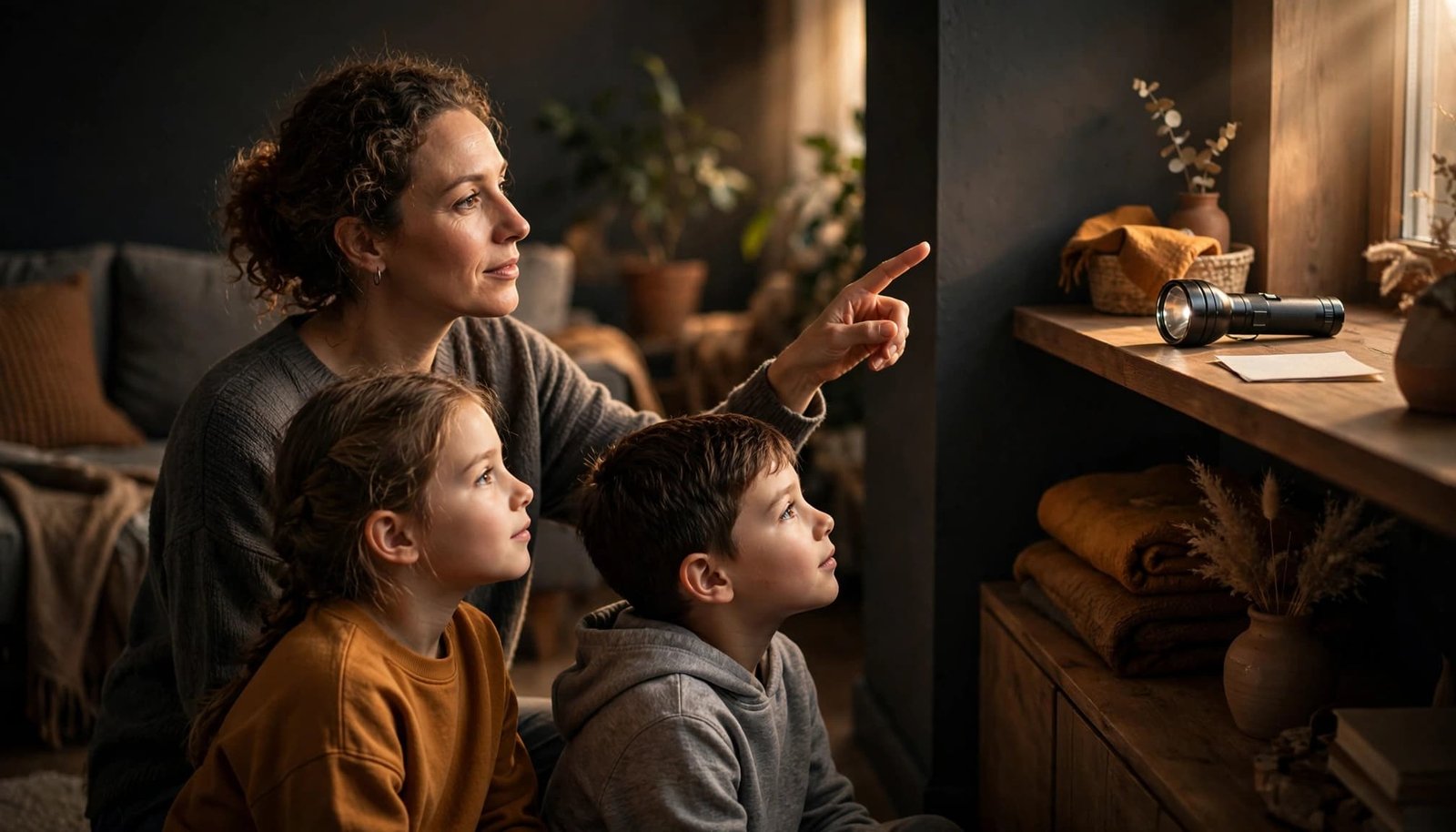
Children can take part in age-appropriate tasks, but adults remain responsible for supervision. An older child may check that backpacks contain contact cards, while a preschooler can help carry a flashlight. Keep matches, medication, tools, and other dangerous items under adult control.
Practice when everyone is calm
A drill should feel familiar, brief, and clear. Once a week, spend five minutes practicing one response rather than reviewing every possible emergency. Walk to the meeting place, show your child how to call 911, or practice what to say if they become separated from you.
FEMA recommends that families make a plan, prepare supplies, and practice the plan together. The American Academy of Pediatrics disaster guidance also emphasizes evacuation and reunification plans, including where family members should meet and how they can contact one another.
During practice, use plain language:
- “If the smoke alarm sounds, leave the house and meet by the mailbox.”
- “If you can’t see me at the store, stay where you are and ask an employee for help.”
- “If someone cannot breathe, get an adult and call 911.”
Afterward, ask your child what felt easy or confusing. Adjust the plan instead of blaming anyone for forgetting. A drill that reveals a missing flashlight or unclear meeting point has done its job.
Choose consistency over perfection
Parents miss steps. Caregivers arrive late, routines change, and children outgrow old instructions. Review the plan after a move, a new sibling, a change in school, or a developmental milestone.
Supervision is the safety net, while preparation gives you something to do when the unexpected happens.
Keep the highest-risk rules firm: an adult watches children near water, children ride in the correct restraint on every trip, and dangerous products stay locked away. Everything else can improve gradually. A family that practices one useful habit repeatedly is safer than a family waiting for the perfect time to prepare.
Conclusion
The most lifesaving parenting tricks are simple actions repeated until they become routine. Start today by saving Poison Control at 1-800-222-1222, checking that your child’s car seat fits their current stage, and practicing your family’s meeting place. These small habits can make the right response easier when stress takes over.
Keep building your confidence with CPR and first-aid training, then review your safety plan as your children grow and their abilities change. Share the plan with every caregiver so grandparents, babysitters, and family members know what to do. If you have concerns about your baby’s health, review these signs of breathing trouble in babies and seek professional help when something feels wrong.
Careful parenting doesn’t mean living in fear. It means creating safer spaces, noticing risks early, and trusting your instincts while getting help when you need it.
Save pin for later


- Dry Cough in Kids: 5 Causes and Safe Solutions - September 23, 2026
- How to Help a Child Deal With Anxiety at Home - September 12, 2026
- How to Prepare Your Child for the First Day of School - September 12, 2026