
A dark diaper during a late-night change can make your heart stop for a second. Black poop in babies can be normal during the first few days after birth because newborns pass sticky, tar-like meconium. However, black stool that appears later, especially if it looks shiny or tarry, can need prompt medical attention.
Timing and texture help tell the difference. Iron supplements or iron-fortified formula may darken stool, while black, tarry poop can sometimes point to digested blood. Watch for other concerns, such as vomiting, poor feeding, unusual sleepiness, weakness, or pale skin, and contact your pediatrician if the cause isn’t clear. You can also review healthy newborn stool and diaper patterns as you track changes.
This guide offers general information, not a diagnosis or a replacement for advice from your baby’s pediatrician. Next, we’ll explain how to distinguish meconium, iron-related stool, and possible bleeding, plus what to do when black poop appears.
Black Poop in Babies: When It Is Normal and When It Is Not
Black poop in babies is often normal during the first days of life, but the timing matters. Newborn stool changes quickly as feeding begins, so color and texture can help you understand what you’re seeing. Most babies pass their first stool within 48 hours after birth. If that does not happen, tell your pediatrician.
Why Newborn Meconium Looks Almost Black
Meconium is your baby’s first stool. It forms before birth and contains mucus, bile, shed intestinal cells, and swallowed amniotic fluid. Because it collects in the intestines before your baby starts feeding, meconium looks thick, sticky, and dark greenish-black, sometimes almost completely black.

Most newborns pass meconium during the first one to three days after birth. The first diaper may look tar-like and difficult to wipe clean. As breast milk or formula moves through your baby’s digestive system, the stool usually becomes softer and changes to green, yellow, or brown.
A common pattern is dark meconium first, greenish transitional stool next, and yellow milk stool after feeding becomes established. Breastfed babies often develop mustard-yellow stools, while formula-fed babies may have tan, brown, or green bowel movements. For more context, see this guide to how often newborns poop.
Why Black Stool After the Newborn Stage Deserves Attention
After the first few days, truly black poop should not automatically be blamed on meconium. Normal dark green stool can look deep in color under dim lighting, but it usually has a green cast. Black stool that looks shiny, sticky, and tar-like is different.
That appearance can indicate melena, which means digested blood in the stool. It does not prove that your baby is bleeding, and parents should not try to diagnose the cause by appearance alone. However, black, tarry stool after the meconium period deserves a prompt call to your pediatrician.
Iron supplements and iron-fortified formula can also make stool dark or black. Tell the pediatrician about any vitamins, supplements, formula changes, or medicines your baby receives. Seek urgent medical guidance if the stool appears black and tarry alongside poor feeding, repeated vomiting, unusual sleepiness, weakness, pale skin, or fewer wet diapers.
What Causes Black Stool in Babies?
Black stool in babies has several possible causes, and color alone cannot identify which one is present. Your baby’s age, feeding method, medicines, stool texture, and overall behavior all matter. A dark green diaper after iron exposure is different from sticky, tar-like stool in a baby who seems unwell.

Meconium, Iron, and Iron-Fortified Formula
During the first few days after birth, black stool is usually meconium, your baby’s first bowel movement. It is thick, sticky, and greenish-black because it contains materials collected in the intestines before birth. As feeding becomes established, stool normally changes to green, yellow, tan, or brown.
Iron can also darken a baby’s poop. Iron drops, iron-containing medicines, and iron-fortified formula may turn stool dark green or greenish-black. This change is often harmless when your baby is feeding well, gaining weight, having wet diapers, and acting normally. Iron-fortified formula guidance can also help you understand how formula changes may affect digestion.
Tell the pediatrician about every supplement, medicine, and formula your baby receives, including the exact dose and how often you give it. Don’t stop prescribed iron or change formula without medical advice. A healthcare professional can decide whether the color fits your baby’s treatment or needs further evaluation.
Swallowed Blood Around Birth or During Breastfeeding
A newborn may swallow a small amount of blood during delivery. Blood can also come from a cracked or bleeding nipple during breastfeeding. After digestion, that blood may make stool look dark, black, or tar-like. A small amount may also appear in spit-up or vomit. Medical literature describes swallowed maternal blood as a recognized cause of black stool in some newborns, but parents should still report suspected blood to a healthcare professional.
Check the diaper and, if possible, take a clear photo before calling. Contact your pediatrician if the bleeding continues, your nipples are badly cracked, or you aren’t sure whether the stool contains blood. Seek prompt medical care if your baby has poor feeding, repeated vomiting, unusual sleepiness, weakness, pale skin, breathing trouble, or fewer wet diapers. These symptoms need more attention than stool color alone.
Melena and Possible Digestive Tract Bleeding
Melena occurs when blood is digested as it travels through the upper digestive tract, including the esophagus, stomach, or small intestine. The stool may look black, shiny, sticky, and tar-like, with an unusually strong or foul smell. Cleveland Clinic describes thick black stool after the early meconium period as a reason to contact a pediatrician. Learn more about baby poop colors.
Possible causes of digestive tract bleeding require medical evaluation. Don’t treat suspected melena with water, dietary changes, or home remedies. If the stool is repeatedly black and tarry, especially without a clear iron-related explanation, call your pediatrician promptly or seek urgent care based on your baby’s symptoms.
How to Tell the Difference Between Normal Dark Stool and a Warning Sign
Color alone cannot tell you whether black poop in a baby is normal. Check your baby’s age, the stool’s texture and smell, recent iron exposure, feeding, behavior, and wet diapers together. A diaper is one clue in a larger picture.
Look at Color, Texture, and Timing Together
Meconium is expected during the first one to three days after birth. It is thick, sticky, and greenish-black, with a tar-like texture that can cling to the diaper. As feeding becomes established, stool usually shifts toward green, yellow, tan, or brown. The American Academy of Pediatrics explains common baby poop colors, including why black stool deserves attention after the newborn period.
Dark green stool can look black under dim nursery lighting. Check the diaper near a window or under bright natural light, then look for a green cast. Iron drops and iron-fortified formula can also make stool dark green or nearly black, especially when your baby feeds well, acts normally, and produces the expected number of wet diapers.
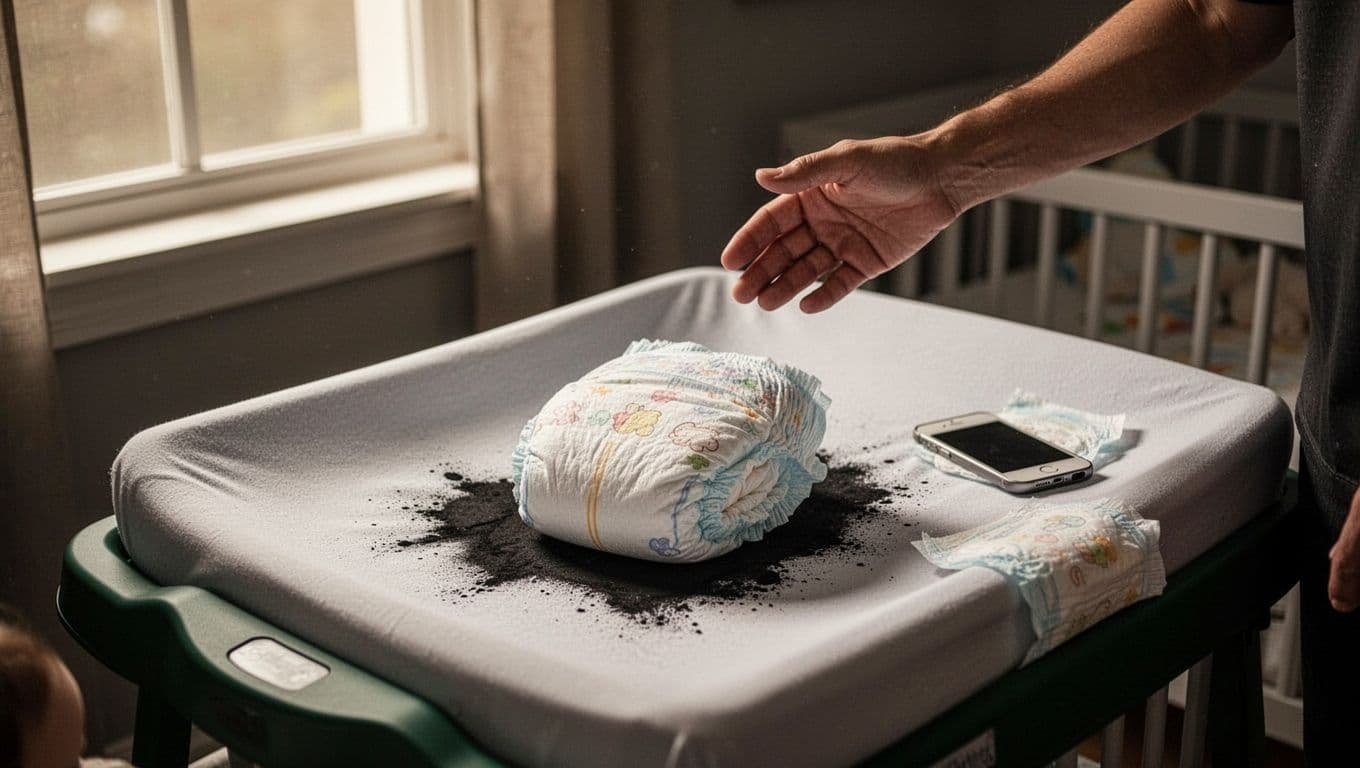
A new, shiny, sticky, foul-smelling black diaper in an older infant is different from first-day meconium. It may indicate digested blood, known as melena, and needs prompt medical advice unless your pediatrician has already explained the change. Save the diaper in a sealed bag or take a clear photo in good light. Tell the provider your baby’s age, feeding pattern, supplements, medicines, stool timing, and recent wet diapers.
Symptoms That Can Point to a More Serious Problem
Black stool becomes more concerning when your baby looks or acts sick. Contact your pediatrician promptly if you notice:
- Vomiting blood or material that looks like coffee grounds.
- Pale or gray skin, unusual sleepiness, weakness, or reduced responsiveness.
- Poor feeding, repeated vomiting, or a swollen or painful belly.
- Fast or difficult breathing, cold hands and feet, or fewer wet diapers.
- Blood from another area, such as the nose, mouth, or a cracked nipple during breastfeeding.
Black stool with these symptoms can require urgent medical care. Call emergency services for difficult breathing, gray or blue coloring, severe weakness, unresponsiveness, heavy bleeding, or repeated vomiting with a swollen abdomen. For additional guidance, review these baby illness warning signs.
Other Stool Colors Parents Should Not Ignore
White, pale gray, or clay-colored stool can point to a different medical problem and deserves prompt advice. Obvious red blood also needs evaluation, even when your baby seems comfortable. Black stool outside the newborn period should receive the same careful attention.
Photos and color charts can help you describe a diaper, but they cannot diagnose its cause. When the color is unusual, send a well-lit photo to your pediatrician and follow the advice you receive.
What to Do When Your Baby Has Black Poop
When you notice black poop, stay calm but check the details before deciding what to do. Your baby’s age, stool texture, iron exposure, and overall behavior help determine whether you should monitor the diaper, call the pediatrician, or seek emergency care.

When to Call the Pediatrician Promptly
First, check whether your baby is still within the first few days of life. Black, sticky meconium is expected during this early period. After stool changes to yellow, green, tan, or brown, new black poop deserves a call to your pediatrician.
Iron drops and iron-fortified formula can darken stool. However, don’t assume iron is the cause when the stool looks shiny, sticky, or tar-like. Melena means black, tarry stool caused by digested blood, as described in this medical explanation of melena.
Call the pediatrician the same day if black stool:
- Appears after the first few days of life.
- Continues in more than one diaper.
- Has no clear connection to iron or iron-fortified formula.
- Contains mucus or visible blood.
- Occurs with poor feeding, vomiting, unusual sleepiness, weakness, or behavior changes.
Before you call, write down when the color started and how many diapers were affected. Note whether the stool was loose, sticky, shiny, or unusually foul-smelling. Record what your baby ate or received, including breast milk, formula, iron drops, vitamins, and medicines. A clear photo in good light or the diaper itself can help the clinician judge the change.
Don’t give antidiarrheal medicine, switch formula, or stop prescribed iron without medical advice. If formula seems connected to digestive symptoms, review these warning signs in a baby’s stool while waiting for professional guidance.
When Black Stool Is an Emergency
Seek emergency care now if black, tarry stool appears with vomiting blood or material that looks like coffee grounds. A baby who looks seriously ill should not wait for a routine appointment.
Get urgent help for black stool with pale or gray skin, extreme sleepiness, trouble breathing, a hard or swollen abdomen, repeated vomiting, or severe weakness. Difficulty waking your baby is also an emergency.
Watch for dehydration, especially after vomiting or diarrhea. Very few wet diapers, a dry mouth, crying without tears, sunken eyes, or unusual limpness need immediate medical attention. If your baby is hard to wake, struggling to breathe, or turning blue or gray, call emergency services.
Can Black Poop in Babies Be Prevented?
You can’t prevent normal meconium or every iron-related color change. Instead, prevention means using medicines safely, supporting comfortable feeding, and noticing changes early. Most importantly, never delay medical care because a possible cause seems preventable.

Use Iron and Medicines Only as Directed
Give iron supplements exactly as your pediatrician prescribes. Use the measuring syringe or dropper that comes with the product, and match the prescribed amount to the label’s instructions. Household teaspoons can vary, while liquid iron products may contain different amounts of elemental iron per milliliter. The CDC’s guidance on infant iron can provide general background, but your baby’s clinician should determine the dose.
Iron may turn stool dark green, grayish-black, or black. That change is often expected when your baby is receiving the correct dose. Still, ask the pediatrician about stool that looks shiny, sticky, and tar-like, especially after the meconium period or when your baby also vomits, feeds poorly, seems unusually sleepy, or has pale skin.
Keep iron, vitamins, and all medicines locked or stored well out of reach. Never give an infant an over-the-counter product, herbal preparation, water, or home remedy for dark stool without medical advice. Don’t stop prescribed iron or change the dose simply because the diaper looks different.
Support Safe Feeding and Breast Health
A comfortable, deep latch can help prevent cracked nipples and reduce the chance that your baby swallows maternal blood during a feed. Pain that continues, bleeding that worsens, or nipples that remain damaged deserves early support from a lactation consultant, pediatrician, or other qualified clinician. These breastfeeding and pumping essentials may also help you review positioning and feeding support.
For formula-fed babies, prepare each bottle exactly as the package directs. Use the recommended water and powder amounts, wash feeding equipment carefully, and avoid sudden formula changes unless a healthcare professional recommends one. Iron-fortified formula can darken stool, so color changes alone don’t always indicate illness.
Keep Track of Diapers and Trust Your Instincts
During the first weeks, notice your baby’s stool color, texture, wet diaper pattern, feeding habits, and behavior. A simple phone note or paper log can help you spot a change and give the pediatrician useful details.
Take a photo in good light if a diaper looks black, sticky, or unusual. Record when it happened, what your baby received, and whether other symptoms appeared. Parents often recognize when their baby seems different before they can explain why. If something feels wrong, call the pediatrician. A preventable explanation never rules out the need for prompt care.
Conclusion
Black poop in babies can be part of a normal beginning. During the first few days after birth, sticky black or greenish-black meconium is expected. Iron supplements and iron-fortified formula can also darken stool, especially when your baby feeds well, has wet diapers, and acts normally.
However, new black poop after the meconium stage deserves attention, particularly when it looks shiny, sticky, and tar-like. Contact your pediatrician promptly if it continues or has no clear connection to iron. Seek urgent care if it appears with vomiting, blood in vomit, pale or gray skin, unusual sleepiness, weakness, poor feeding, trouble breathing, a swollen belly, or difficulty waking your baby.
You don’t have to sort out the cause alone. Take a clear photo or save the diaper, note your baby’s feeds and supplements, and share those details with the pediatrician. With timely guidance, you can protect your baby’s health while avoiding unnecessary worry about normal newborn stool changes.
Save pin for later


- Dry Cough in Kids: 5 Causes and Safe Solutions - September 23, 2026
- How to Help a Child Deal With Anxiety at Home - September 12, 2026
- How to Prepare Your Child for the First Day of School - September 12, 2026