
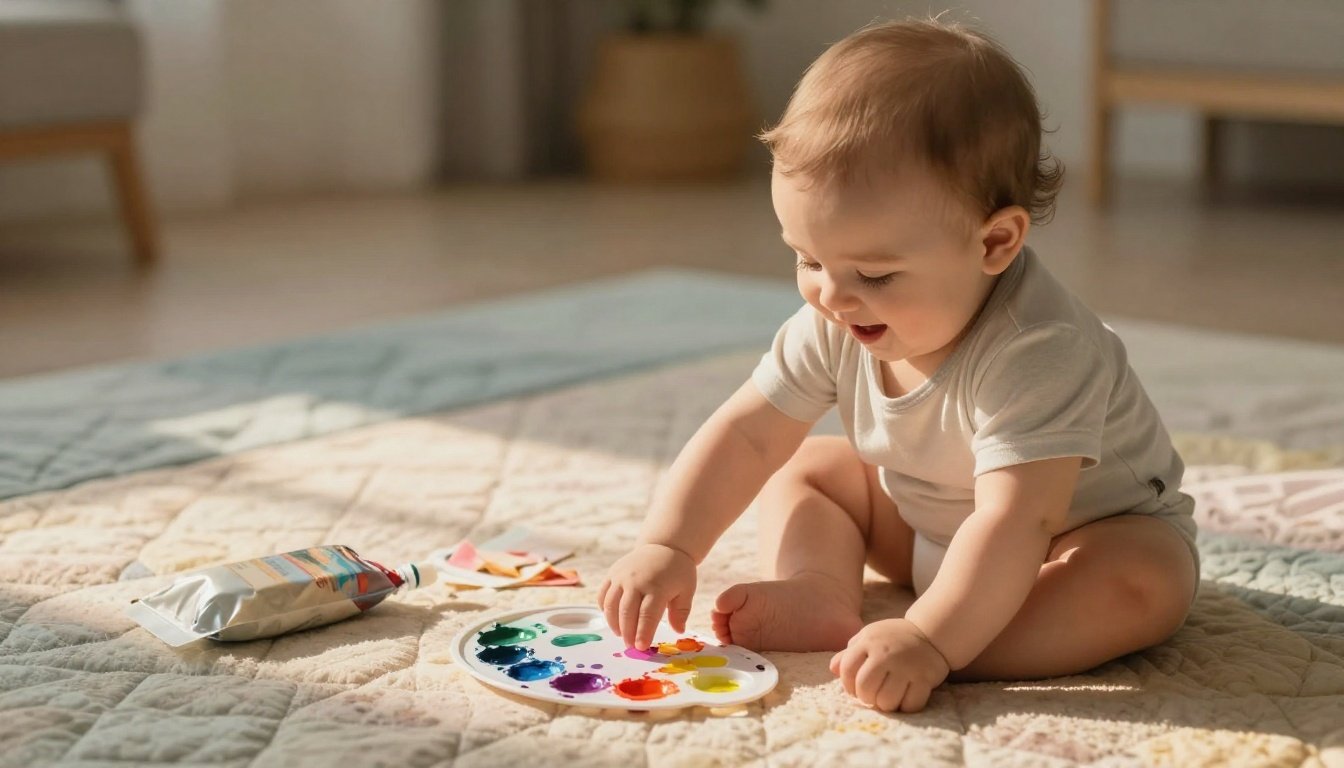
When your baby smears a bright color across the page, squeezes a sealed paint bag, or reaches for a soft scrap of fabric, you’re watching curiosity take shape. These simple art and craft ideas for babies focus less on creating a perfect keepsake and more on sensory exploration, bonding, and early learning through safe, playful moments.
You’ll find eight short activities using common materials, with options that can suit young infants as well as older babies who are ready to grasp, press, or make marks. For more age-appropriate inspiration, explore these play activities for babies, and remember that an adult must stay within arm’s reach throughout every activity, especially when materials are nearby. Start with the first low-mess idea and follow your baby’s cues.
Set Up Safe, Simple Baby Art Before You Begin
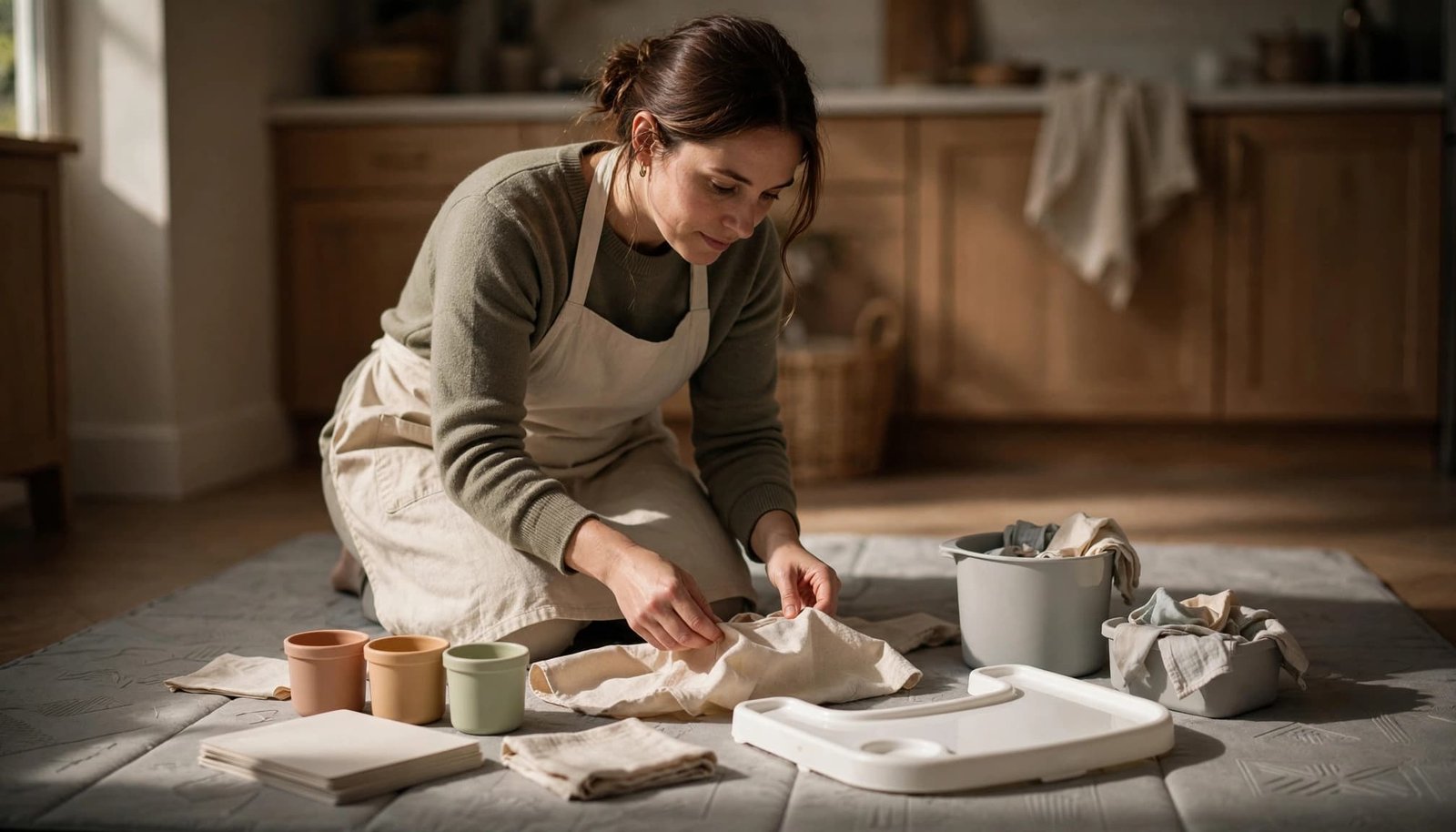
Baby art can happen on a kitchen floor, in a high chair, or at a small table. Choose a calm spot that you can wipe clean, then keep the setup simple enough to supervise without turning away.
Prepare the Space and Materials
Place a washable play mat under your baby, or use a clean high-chair tray for contained activities. Dress your baby in a smock, keep damp cloths within reach, and set a wet bin nearby for used wipes, paper, and messy supplies. Stay close enough to stop your baby from grabbing or mouthing anything unsafe.
Because babies often explore with their mouths, choose large, sturdy, smooth materials that cannot break apart easily. Use taste-safe or edible materials when appropriate, especially for babies under 18 months. “Non-toxic” means a product has passed certain safety standards, but it does not mean the material is safe to eat.
Use the toilet-paper-roll test for loose items. If something fits completely inside a toilet paper roll, treat it as a choking risk and keep it away from your baby. This practical check is also discussed in guidance on creating safe indoor environments.
Choose Baby-Safe Supplies
For commercial paints, crayons, and other art products, select washable, water-based options made for children. Check the packaging for the ACMI AP seal or the wording “conforms to ASTM D4236.” Follow the product’s age recommendations, and skip anything with strong fumes.
Keep these hazards out of baby art activities:
- Water beads, loose beads, small buttons, and loose glitter can cause serious choking or ingestion injuries.
- Magnets and button batteries can cause severe internal harm if swallowed.
- Balloons, including broken pieces and uninflated balloons, can block a baby’s airway.
- Sharp tools, cracked containers, and broken craft items can cut skin or create small pieces.
- Supplies with strong fumes can irritate your baby’s eyes, skin, or breathing.
Watch your baby’s skin and breathing during and after the activity. Stop immediately if you notice redness, swelling, hives, vomiting, breathing trouble, unusual sleepiness, or another reaction. Seek prompt medical advice for concerning symptoms, and call emergency services for breathing difficulty.
Four Low-Prep Art Ideas for Babies
These first four activities suit babies who enjoy watching colors move, touching new textures, patting surfaces, and making simple marks. Keep each session short, stay within arm’s reach, and let your baby observe if touching doesn’t feel right yet. A few minutes of focused curiosity still counts as meaningful play.
Taste-Safe Finger Paint on Paper
Mix a small amount of plain yogurt with one or two drops of food coloring to make a simple taste-safe paint. You can also use clearly labeled food-grade finger paint. Place thick paper inside a shallow tray, or seal the paper and paint inside a securely closed, sturdy plastic pouch for a cleaner setup.
Sit your baby safely on the floor or in a supported seat, then let them pat, swipe, and blend the colors. The movement shows cause and effect: a small hand motion creates a bright mark. Reaching across the page also supports hand strength and visual tracking.
Use only two or three colors so the page stays easy to follow. Don’t force a handprint or guide every movement. If your baby tries to eat a large amount, becomes frustrated, or loses interest, end the activity and wipe their hands clean. For a younger baby, place the paper nearby and let them watch you make marks. An older baby may enjoy using both hands to spread the paint.
For more ideas that use everyday supplies, try these simple art activities for babies.
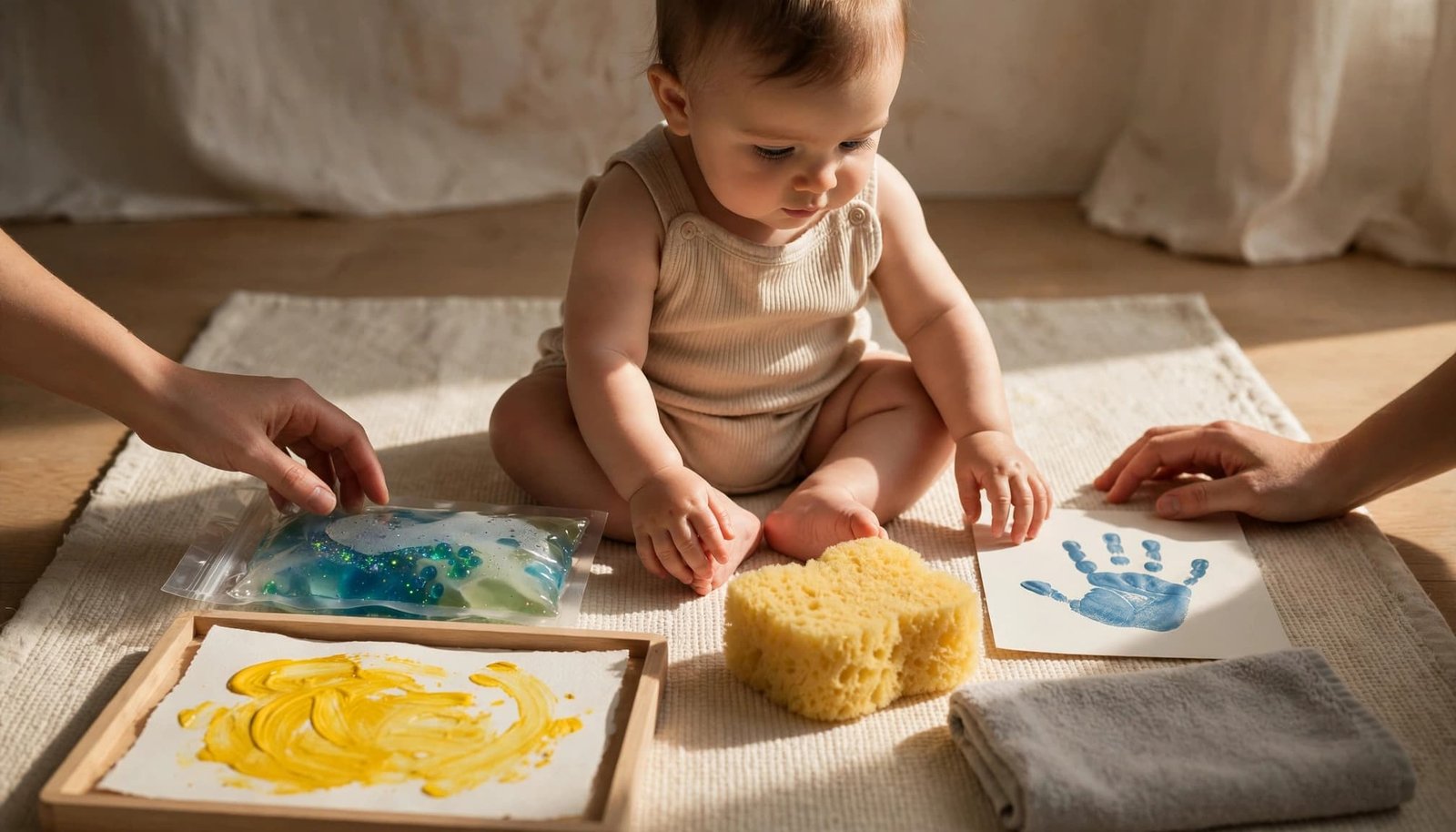
Squish-and-Swipe Sensory Painting
Place a large sheet of paper on the floor or secure it to a tray. Add a few drops of washable paint, then slide everything into a strong sensory pouch with a reliable seal. Press the air out, close it firmly, reinforce the seal with strong tape, and check for leaks before giving it to your baby.
Your baby can press, roll, and swipe across the pouch while the paint shifts beneath their hands. Changing shapes help them notice pressure, movement, and color without getting paint on their skin. Keep the pouch much too large to swallow, supervise continuously, and discard it immediately if it tears or leaks.
If your baby mouths everything, use a taste-safe alternative inside the pouch, such as yogurt tinted with food coloring. A younger baby may watch the colors move while you press the pouch gently. An older baby can explore different pressure with open palms or fingertips.
Big Sponge Stamps and Color Prints
Gather large sponge shapes or one-piece foam stamps with no detachable pieces, washable child-safe paint, and heavy paper. Inspect the foam before each use. If it starts tearing, shedding, or breaking apart, throw it away.
Dip the stamp into a thin layer of paint and guide your baby’s hand toward the paper. Older babies may press the stamp independently while you keep your hand nearby. Repeated prints are the goal, so a page covered with uneven circles or blobs is a successful piece of baby art.
Pressing and lifting the stamp builds grasping and hand-eye coordination. The repeated shapes also introduce early pattern awareness. For a no-mess trial, use a damp sponge on dry paper and let your baby notice the marks left by moisture. Younger babies can watch you stamp slowly, while older babies can choose where to press.
Baby Handprint or Footprint Keepsake
For a keepsake, prepare a small amount of baby-safe, washable paint, thick paper, and a clean towel. Wait until your baby is relaxed, support the hand or foot gently, and make one quick press. Wash the skin right away, especially between the fingers and toes.
A footprint may work better than a handprint because some babies curl their fingers or dislike having their palms touched. You can also make one finger mark or trace an adult-made outline if paint feels upsetting. The keepsake is optional, and your baby’s comfort comes first.
Once the print dries completely away from your baby, write the date and your baby’s age on the back. Younger babies may simply watch the process, while older babies can choose a color or pat the paper before the print is made. If your baby pulls away, stop and try another day. Keep all art materials free from small parts, following CPSC small-parts guidance.
More Easy Baby Crafts for Sensory Play and Early Learning
These baby crafts add texture, color, nature, and family connection without filling your floor with tiny pieces. Keep each activity brief, follow your baby’s mood, and choose one simple goal, such as touching a new surface or watching water marks disappear.
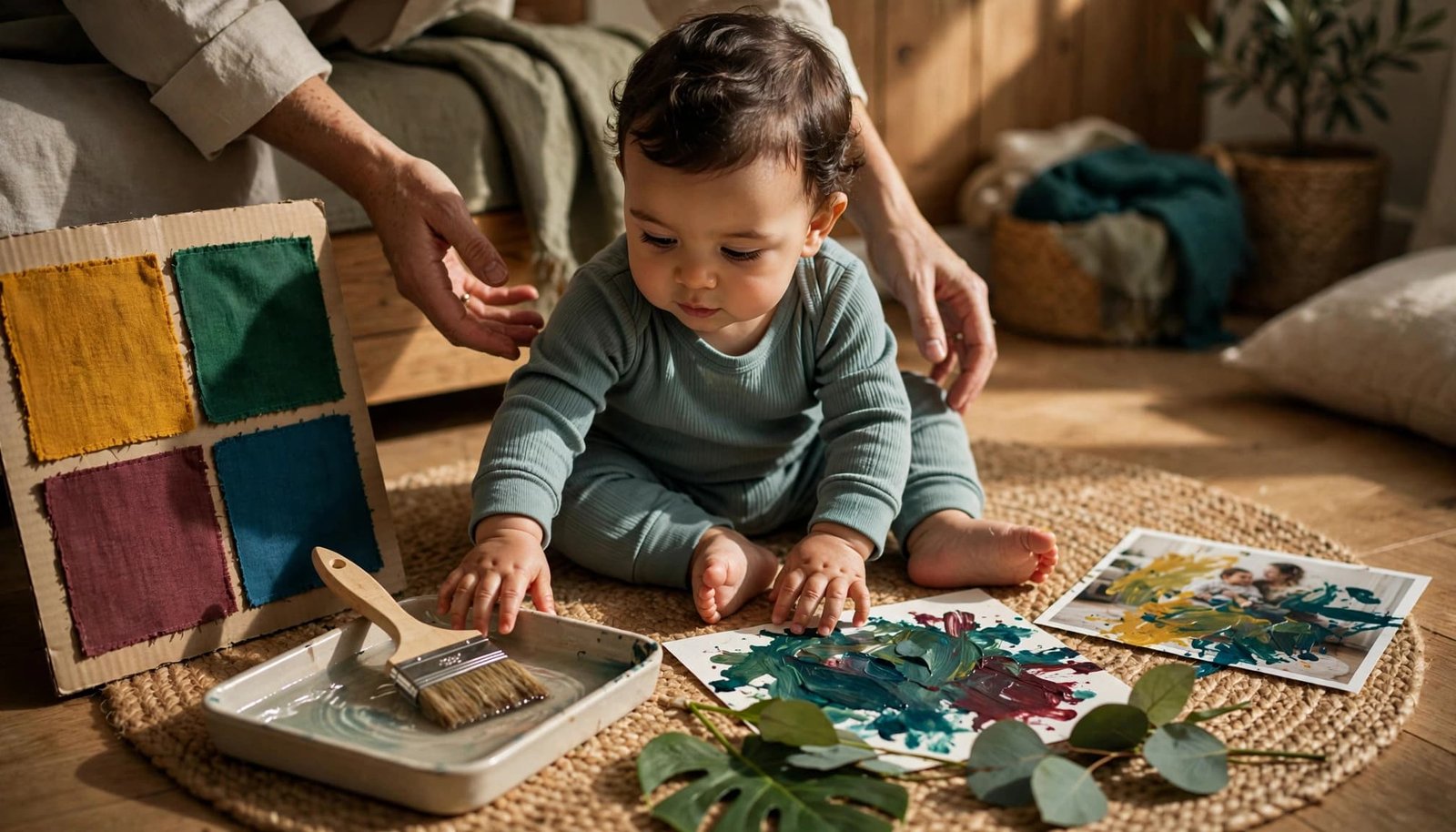
Texture Collage With Large Fabric Squares
Materials: Use sturdy cardboard or thick paper, large washable fabric swatches, and strong adhesive or stitching. Soft cotton, smooth satin, and textured terry cloth give your baby clear differences to feel.
An adult should attach every fabric piece firmly and let the adhesive dry completely before play. Check the collage for loose threads, lifted corners, fraying, or torn sections. Then place it on the floor or hold it near your seated baby while you name each surface: “soft,” “smooth,” or “bumpy.”
Your baby may pat, rub, or pull at the collage. Those movements support tactile exploration and connect new sensations with early language. Loose fabric squares are not safe for unsupervised play, so keep every piece secured and stay within arm’s reach. Wipe washable materials after use, and simplify the activity to one or two swatches if your baby loses interest quickly.
For more ideas that build early learning through touch, explore these hands-on sensory play ideas.
Color Discovery With Water and Ice
Materials: Gather a shallow tray, a large paintbrush, clean water, and dark construction paper or a chalkboard. For an older baby who sits steadily, an adult may also prepare large ice cubes with a little diluted food coloring.
Offer only a small amount of water in the tray. Let your baby watch as you brush wet marks across the dark surface, then point out how the marks fade as they dry. This disappearing artwork teaches cause and effect without creating a large cleanup.
Ice needs close, hands-on supervision. Never leave a loose ice cube with a baby who may put it in their mouth, and keep water away from the nose and mouth. Wipe spills quickly to prevent slippery floors. If attention lasts only a minute, make three broad brushstrokes and stop there. The short experience still gives your baby a chance to notice color, movement, temperature, and change.
Nature Prints With Large, Clean Leaves
Materials: Choose a few large, non-toxic leaves from a known, pesticide-free source. You will also need paper, a brush, washable paint, and a clean cloth.
Wash and dry the leaves first. An adult should brush paint onto one leaf and press it onto the paper while the baby watches or pats the page. Point out the leaf’s outline, veins, and changing colors. This creates a gentle first nature-art experience without handing a loose plant to your baby.
Avoid unknown plants, berries, flowers, thorns, brittle pieces, seeds, and small leaves. For younger babies, press one clean leaf under clear contact paper or place it inside a securely sealed pouch so it cannot be removed. Keep the finished print away until the paint dries, then discard damaged leaves and wipe the surface. If your baby has a short attention span, use one leaf and one color.
Family Photo and Baby-Made Mark Art
Materials: Prepare a printed family photo, thick paper, a chunky crayon or washable paint, and an adult-safe drying area. The baby only needs the large paper and age-appropriate mark-making material.
Let your baby make broad scribbles or hand marks while you stay close. After the artwork dries, an adult can cut around it, attach the photo, and turn the page into a card, keepsake, or nursery display. The photo supports recognition and connection, while your words can build early storytelling: “That is Grandma,” or “You made blue marks beside Dad.”
Keep photos, paper scraps, glue, scissors, laminators, and frames out of reach during play. Add decorations only after the artwork is fully dry. If your baby tires quickly, offer one crayon and make a few marks together. For more gentle ideas for very young infants, try these sensory activities for a 2-month-old. Always remove torn paper, loose adhesive, or dried paint pieces before displaying the keepsake, and follow AAP choking-prevention guidance when choosing materials.
Match Each Activity to Your Baby’s Age, Mood, and Skills
Babies develop at different rates, so the same craft may look different across ages. One baby may watch paint move across a sealed pouch, while another reaches, pats, and spreads it with both hands. Follow your baby’s current abilities rather than a strict schedule, and use these age-appropriate newborn play ideas for extra inspiration.
Start With Observation for Young Infants
Young infants may not be ready to grasp tools or make marks. Instead, place bold colors within their line of sight, speak in a calm voice, and let them feel a texture that you securely hold or attach. You might slowly move a painted page, describe a smooth fabric square, or press a sealed sensory pouch while your baby watches.
Keep the setting quiet and the activity brief. A newborn may enjoy one minute of face-to-face talking, followed by a short look at the artwork. Those small exchanges support connection without overwhelming your baby. Your voice, facial expressions, and gentle pacing matter more than the finished project.
Offer Hands-On Exploration With Support
When your baby can sit with support, offer short chances to pat, swipe, and grasp large tools. A chunky sponge, thick paper, or securely attached fabric collage gives your baby something clear to explore without requiring precise movements.
Place the activity on a stable surface, such as a supported seat tray or washable mat. Keep one item available at a time so your baby can focus on cause and effect. A pat may leave a paint mark, and a swipe may move color across the page. That simple response is enough.
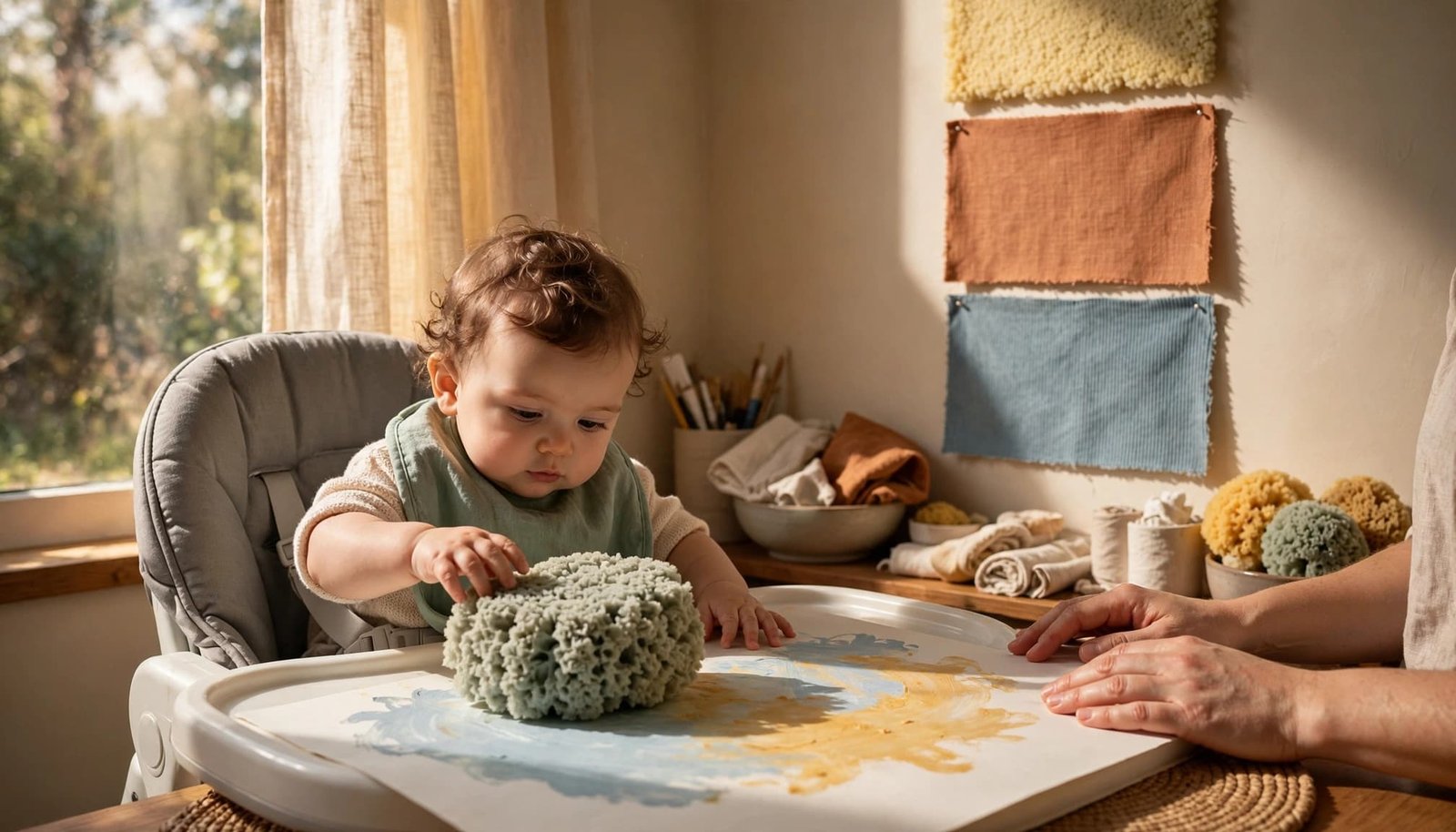
Adjust Activities for Mobile Babies
Crawling, pulling up, and increased mouthing change the safety needs of an art activity. Move messy projects to a high-chair tray when appropriate, or use only large-format materials that are firmly secured. Never leave loose paper scraps, small decorations, caps, beads, or tools within reach.
For mobile babies, a sealed paint pouch, attached texture board, or large sheet of paper taped flat may work better than a basket of supplies. Stay within arm’s reach and inspect materials during play. Follow the Oklahoma early learning guidelines for ideas that support purposeful infant play and relationships.
Let Your Baby’s Mood Set the Pace
Plan for five to fifteen minutes, one activity at a time. Your baby doesn’t need to finish a picture, make a handprint, or use every material. If interest fades after two minutes, the activity has still offered a useful moment of sensory play.
Pause when your baby turns away, fusses, rubs their eyes, stiffens, pushes the materials away, or stops showing interest. Crying is not the only sign that your baby needs a break. Remove the supplies, offer comfort, and try again another day.
Afterward, wash your baby’s hands and skin, wipe the tray and nearby surfaces, and clean reusable tools. Throw away anything that cracks, peels, leaks, frays, or cannot be sanitized. If your baby has allergies, food sensitivities, or developmental concerns, ask your pediatrician which ingredients and activities are appropriate.
Conclusion
Baby art doesn’t need to be neat, expensive, or Pinterest-perfect. Finger painting, sealed sensory pouches, sponge prints, handprint keepsakes, texture collages, water painting, nature prints, and family artwork can all turn a few simple materials into playful moments of connection. For another keepsake idea, try these baby handprint and footprint crafts.
Start with safety, choose sturdy materials, stay within arm’s reach, and follow your baby’s cues. A short session is enough when your baby is curious, alert, and comfortable. Stop when they turn away, fuss, or lose interest, then try again another day.
Save one small mark, finished page, or photo if you’d like, but don’t measure the activity by its appearance. The real benefit is the time you share while your baby watches colors move, feels new textures, and discovers that their actions can make something happen. The best baby craft may be a smudged page, a happy laugh, or a moment of close attention.

- Dry Cough in Kids: 5 Causes and Safe Solutions - September 23, 2026
- How to Help a Child Deal With Anxiety at Home - September 12, 2026
- How to Prepare Your Child for the First Day of School - September 12, 2026