
A white coating on your baby’s tongue can be alarming, especially when you spot it after a feed. In many cases, though, a white tongue is harmless and comes from milk or formula residue that stays on the surface.
The tricky part is knowing when that coating is normal and when it could be oral thrush or another mouth issue. The difference often comes down to where the white patch shows up, whether it wipes off with a soft damp cloth, and whether your baby seems sore, fussy, or uncomfortable while feeding. If you want a deeper look at when a coating needs a closer watch, this guide on when to worry about baby tongue coating is a helpful place to start.
That distinction matters because milk residue usually stays on the tongue and clears easily, while thrush can spread to the cheeks, gums, or lips and often sticks around. Keep reading to learn the simple signs that help you tell them apart at home.
What a normal milk coating on a baby’s tongue usually looks like
It is common to notice a white film on your baby’s tongue. Most of the time, this is simply milk or formula residue left behind after a meal. Newborns often have this because they have less saliva to wash their mouths clean after feeding. You can think of it as a temporary trace of their last meal.

Why milk can leave a white film behind
When your baby drinks breast milk or formula, the liquid naturally coats the inside of their mouth. Because their tongue has tiny bumps that act like a textured surface, small amounts of milk often get trapped there. This buildup creates a temporary white layer that settles once the baby finishes swallowing.
It happens more often when babies feed frequently or take longer to swallow. Since they don’t produce enough saliva yet to rinse their mouth effectively, this residue stays put for a little while. This is a normal part of being a newborn, and it is not an indication of poor hygiene or any health problem. If you are ever unsure about the causes of white buildup, distinguishing formula residue from thrush can help you feel more confident about what you see.
Signs the coating is probably just leftover milk
Distinguishing between normal residue and something else is usually straightforward. If the white layer is just leftover milk, it typically displays a few key characteristics that are easy to spot:
- Location: The coating is generally confined to the top of the tongue.
- Texture: It appears thin and light rather than thick or bumpy.
- Comfort: Your baby acts completely normal and shows no signs of pain or fussiness during feedings.
- Underneath: Once you gently wipe the tongue with a clean, damp cloth, the surface underneath should appear pink and healthy.
If the white spots seem to spread to the inside of the cheeks or the roof of the mouth, that is a different scenario. In those cases, you might want to look into thrush white tongue symptoms in infants to understand the difference. Most of the time, though, a simple swipe with a soft cloth confirms that the white layer is just harmless milk.
Why timing after feeds matters
The timing of when you check your baby’s mouth is a helpful clue. Milk residue is most noticeable immediately after a feeding session. Because it is essentially food particles, it often fades or disappears on its own as the baby’s natural saliva works to clean the mouth later.
If you see a white coating right after a bottle or nursing, wait a little while before checking again. Seeing it right after a feed is a strong indicator that it is just residue, but it is not absolute proof on its own. If the coating remains there hours later, or if you can’t wipe it away at all, keep an eye on your baby for other symptoms like irritability. Most parents find that this white film is a very common, fleeting sight in the early months.
How oral thrush looks different from milk residue
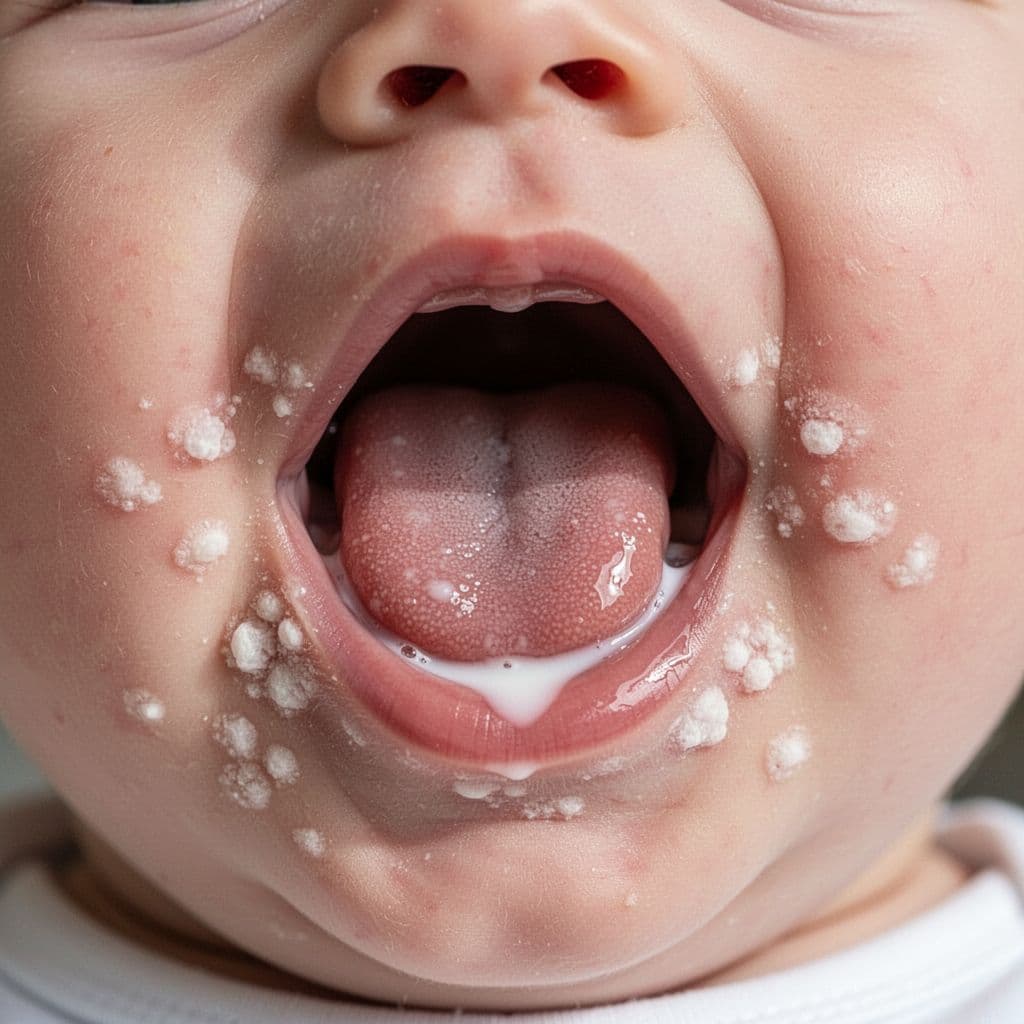
While a light white coating on the tongue is often just a normal byproduct of feeding, oral thrush is a fungal infection that requires more attention. Recognizing the subtle visual differences is the first step toward knowing if your baby needs medical care. Thrush typically appears as creamy, white patches that look similar to milk curds or cottage cheese, yet its behavior in the mouth sets it apart from simple food buildup.
Where thrush tends to show up in the mouth
Milk residue is generally polite, sticking mostly to the center of the tongue where liquid accumulates during a feed. Thrush, however, is much more adventurous. This fungal infection frequently spreads to other areas of the mouth, including the inner cheeks, gums, lips, and even the roof of the mouth. If you notice white spots appearing in these less common places, it is a strong indicator that you are looking at something other than leftover milk.
Pay close attention to the way the white spots grow. Unlike milk film, which stays relatively uniform, thrush patches often appear as distinct, raised spots or plaques. As noted in guidance from HealthyChildren.org on identifying thrush symptoms, the infection can coat several surfaces at once. If you see white patches moving beyond just the tongue, it is wise to monitor the situation closely and contact your pediatrician.
What happens when you try to wipe thrush away
The most reliable test at home involves a gentle cleaning attempt. When you use a soft, damp cloth to wipe your baby’s tongue, milk residue should come away easily, revealing healthy pink tissue underneath. Thrush does not surrender so readily. These fungal patches often cling to the delicate lining of the mouth, feeling firmly attached rather than resting on the surface.
If you do manage to scrape a piece of a thrush patch away, the area underneath often looks raw, bright red, or irritated. In some cases, the sensitive tissue might even bleed slightly. If the area looks inflamed or sore after you attempt to clean it, this confirms the presence of an infection rather than simple food buildup. For parents looking for effective solutions for baby thrush, understanding this reaction helps confirm whether it is time to seek professional treatment.
Baby behavior clues that point to thrush
Physical appearance is not the only sign; your baby’s behavior during and after feedings offers vital clues. While milk residue causes no discomfort, thrush often makes the mouth feel sensitive or sore. If your baby suddenly pulls away from the breast or bottle, cries during feeding, or seems unusually fussy, they may be experiencing pain from the infection.
Keep an eye out for these behavioral shifts:
- Feeding hesitation: Your baby might latch on, only to let go quickly or refuse to eat entirely because of the soreness.
- Increased irritability: Babies with thrush often seem more unsettled than usual, especially when the mouth is active.
- Refusal to soothe: Even after a feeding, your baby might remain inconsolable if the mouth feels raw.
If your baby shows these signs alongside visible white patches, it is a clear signal to check in with a doctor. While thrush is common, managing it early prevents unnecessary discomfort for your little one and helps protect your own comfort if you are nursing. For those dealing with secondary issues, you can also find tips on managing breastfeeding discomfort if the infection is affecting your routine.
A simple at-home check that can help you tell the difference
If you are uncertain whether that white coating on your baby’s tongue is simply leftover milk or something like oral thrush, a quick home check is your best tool. You do not need any special equipment to get a clearer picture of your baby’s oral health. By using a few common household items and a gentle touch, you can often find the answer yourself in seconds.
How to do the gentle wipe test safely
Performing a simple check is straightforward, but it requires patience and a soft approach to avoid upsetting your baby. You only need a clean, soft washcloth or a piece of sterile gauze and a little bit of lukewarm water.

Follow these steps to conduct the test:
- Wrap the soft, damp cloth or gauze around your index finger.
- Carefully open your baby’s mouth and place your finger inside.
- Gently rub the white area on the tongue with a circular motion.
- Keep the pressure very light. You are not trying to scrub the tongue, just see if the surface layer moves.
If your baby seems upset, stops nursing, or shows signs of gagging, stop immediately. You can always try again later when they are calmer or more relaxed. As noted by experts at Cleveland Clinic, the goal is to safely observe the texture and attachment of the white layer without causing discomfort.
What it means if the white coating comes off easily
When you finish your gentle wipe, take a close look at the cloth and your baby’s tongue. If the white material comes off easily and leaves behind a normal, pink surface, you can breathe a sigh of relief. This is a classic sign of milk or formula residue.
Milk naturally builds up on the tongue during feeds, especially in young babies who have limited saliva production to rinse their mouths. Since this residue sits on top of the tongue’s surface, a soft cloth collects it without much effort. The area underneath should look consistent with the rest of the tongue. Once you clear this away, you generally do not need to do anything else. If you are ever curious about the proper steps for keeping your baby’s mouth tidy, these tips on how to clean a baby’s tongue provide practical advice for daily routines.
What it means if the patch stays put or leaves red skin behind
Sometimes, the white patch does not budge despite your gentle efforts. If the coating remains firmly attached or if you notice that the tissue underneath is raw, red, or inflamed, this is a red flag. These signs often point to oral thrush, which is a fungal infection that likes to stick to the delicate lining of the mouth.
You should not ignore a patch that refuses to wipe away. If you find yourself in this situation, contact your pediatrician to confirm if treatment is necessary. As mentioned in the guidance on treating oral thrush in infants, catching an infection early is the best way to prevent discomfort for your baby. While a persistent white patch can be stressful, having a clear answer from your doctor will help you start the right care plan.
When a white tongue is normal, and when it needs a doctor
Identifying whether your baby’s white tongue is harmless residue or a sign of infection often feels like guesswork. Most white coating is just a simple byproduct of milk or formula that collects after a feeding. If your baby is happy, alert, and feeding well, you can usually take a deep breath and monitor the situation at home.

Times when simple milk residue is usually harmless
A white tongue is often completely normal in the early months. Because babies spend so much time drinking milk, it is natural for their mouths to retain a thin layer of liquid. This residue stays on the tongue’s textured surface, especially when your baby has not yet developed enough saliva to rinse it away naturally.
You can feel confident that the situation is normal if:
- Your baby finishes a feed and seems perfectly content.
- The white film is thin and only appears on the top of the tongue.
- You can wipe the coating away with a clean, damp cloth to reveal healthy pink tissue.
- Your baby is gaining weight and shows no signs of frustration while latched on or taking a bottle.
Seeing a happy, healthy baby who feeds with ease is your best indicator that everything is on track. Milk residue is a temporary, harmless part of infancy that clears up on its own.
Warning signs that should not be ignored
While many cases are simple, some situations suggest an infection like oral thrush. Watch closely for white patches that appear in places other than the tongue, such as the inside of the cheeks, the gums, or the lips. Unlike thin milk film, these patches often look thick or creamy and refuse to wipe away.
Pay close attention to these red flags:
- Patches that stay stuck even after you gently rub them with a damp cloth.
- Raw, red, or bleeding spots visible after you attempt to clean the area.
- Your baby acts fussy, pulls away from the breast or bottle, or cries during feedings.
- The infant seems inconsolable or refuses to eat even when they appear hungry.
Feeding trouble is a major signal that your baby might be feeling pain. If you notice these symptoms, it is important to stop trying to wipe the area, as this can irritate the delicate lining of the mouth and increase your baby’s discomfort.
When to call the pediatrician right away
Trust your instincts as a parent. If you are ever unsure about what you see or if your baby’s symptoms worsen, reach out to your pediatrician. They can provide an accurate diagnosis and, if necessary, prescribe a treatment to soothe your baby’s mouth.
Call your doctor if you notice any of the following:
- White patches that persist for several days or appear to be spreading.
- Your baby has a fever or develops a persistent diaper rash along with mouth patches.
- The feeding struggle continues or seems to be getting worse with every meal.
- Your baby is premature or has a weakened immune system, which makes them more prone to infections.
Getting professional advice is a smart way to address unobvious health warning signs in children. Your pediatrician can help distinguish between routine feeding residue and other issues, such as those described in guidance on infant problems of the teeth and mouth. When in doubt, a quick call or visit provides clarity and ensures your baby gets the care they need to stay comfortable.
How to keep your baby’s mouth comfortable and clean
Maintaining a tidy mouth is part of your baby’s daily care, but it is easy to overcomplicate the process. Your little one’s mouth is incredibly sensitive, so the goal is to keep it fresh without causing any irritation. Simple habits, such as wiping the gums and tongue once a day, are usually enough to keep things comfortable. If you notice signs of discomfort or persistent white patches that do not clear away, it is a good time to check with your pediatrician, as these can be signs of infant problems of the teeth and mouth.
Gentle tongue cleaning without overdoing it
When you decide to clean your baby’s tongue, remember that you are not trying to scrub away every trace of color. The tongue has a natural texture that holds onto milk, and that is perfectly normal. Heavy scrubbing or aggressive wiping can damage the delicate lining of their mouth and even lead to soreness.
Use a clean, damp, soft cloth or a piece of sterile gauze wrapped around your finger. Gently sweep over the tongue with light, circular motions. There is no need to push deep into the throat, as this often triggers a strong gag reflex. If your baby seems unhappy or resists the process, just stop and try again later. Keeping the experience calm and brief is much more important than achieving a perfectly pink tongue. For additional perspective on safe methods, you can review this advice on how to clean a baby’s tongue to ensure your technique stays gentle and effective.
Why clean bottles, nipples, and pacifiers matter
Your baby’s mouth is highly susceptible to germs, especially during the early months. Regularly sanitizing anything that goes into their mouth is a practical way to reduce irritation and keep their oral environment healthy. This is particularly relevant if you suspect your baby has thrush. Because yeast can easily live on silicone or rubber surfaces, keeping these items clean prevents reinfection and helps the healing process.
Always follow the manufacturer’s instructions for boiling or using a steam sterilizer for bottles, nipples, and pacifiers. Rinsing these items with hot water immediately after use prevents milk residue from hardening, which makes thorough cleaning much easier later. By staying on top of these small hygiene tasks, you create a cleaner environment that supports your baby’s comfort. If you have concerns about the best way to handle these items, HealthyChildren.org offers guidance on preventing tooth decay that highlights how proper care of feeding tools protects your baby’s overall oral health. If you suspect an active infection like thrush, talk with your pediatrician about medical treatment options to resolve the issue safely.
Conclusion
Knowing the difference between simple milk residue and oral thrush often helps you feel more confident during your daily routines. Milk residue is typically confined to the tongue and wipes away easily with a soft cloth. In contrast, thrush tends to stick, spread to other parts of the mouth, or cause noticeable discomfort for your baby.
Trust your instincts if the situation seems off or if your little one is acting fussy during meals. When in doubt, a pediatrician can provide a clear diagnosis and guide you toward the right care plan for your baby.
Save pin for later

- Asperger’s Syndrome in Babies: Early Signs and Next Steps - October 7, 2026
- 12 Beautiful Baby Names That Mean Forest, Plus Woodland Picks - September 27, 2026
- 15 Fantastic Baby Nicknames for Boys, From Sweet to Playful - September 27, 2026