
A white tongue after feeding is often normal, and it usually comes from milk or formula residue sitting on your baby’s tongue. If the coating shows up right after a feed and wipes away easily, that’s a good sign it’s harmless, not thrush.
Parents usually worry when the white patches stay put, spread beyond the tongue, or leave a red, raw surface behind. The difference matters, because baby oral thrush symptoms and treatment call for a different approach than simple milk buildup.
A few small details, like when it appears and how it wipes off, can tell you a lot. Here’s how to spot the difference and know when it’s time to call your pediatrician.
What a milk-coated tongue looks like in a healthy baby
A milk-coated tongue is one of the most common reasons a baby’s mouth looks white after feeding. It usually looks like a thin, smooth film on the tongue only, not thick patches across the cheeks or gums. In most cases, the baby still feeds normally and seems comfortable.
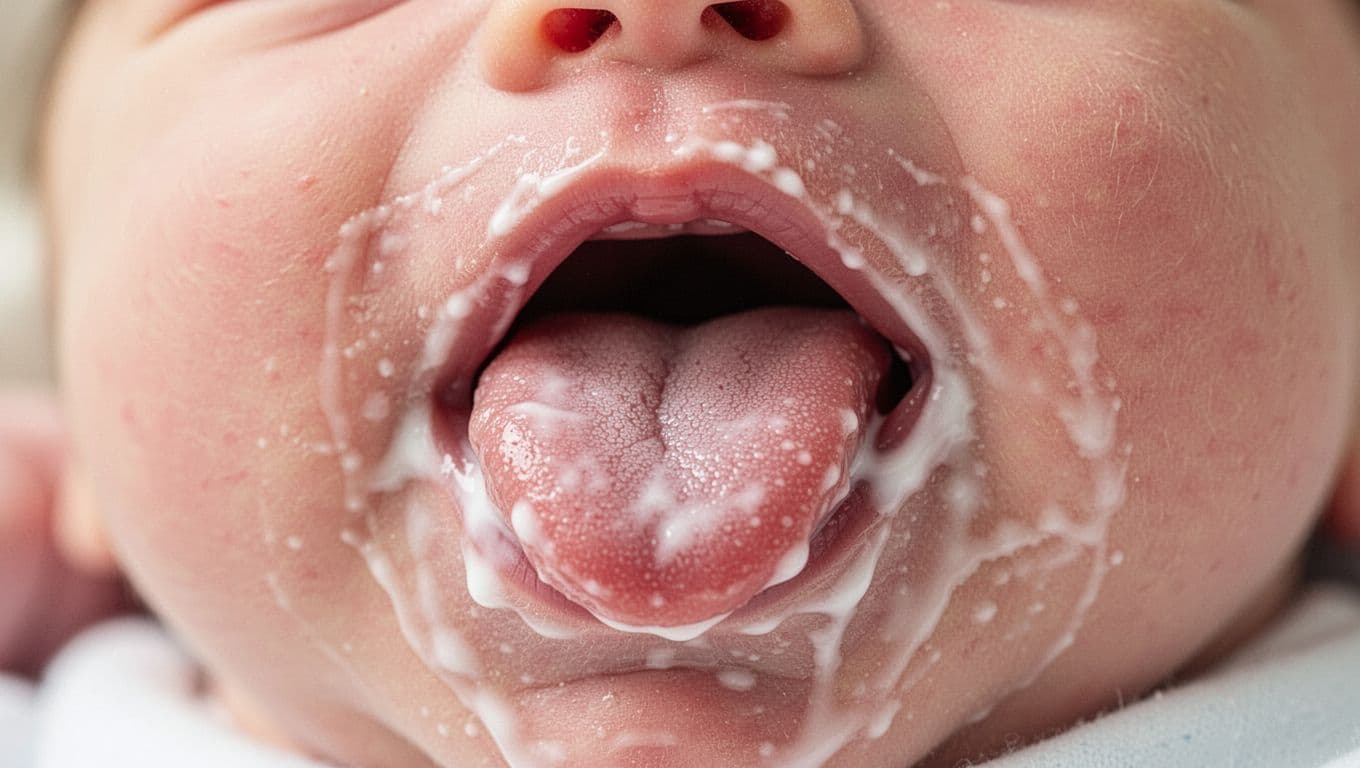
The coating often shows up right after a feed, especially in newborns. Since early babies make less saliva, milk does not wash away as fast. That makes residue easier to see, even when nothing is wrong.
A healthy milk coating usually stays light, even, and limited to the tongue.
Why milk sticks to the tongue so easily
Newborn mouths are small, soft, and still learning how to handle feeds. Their saliva supply is low in the early months, so milk can sit on the tongue instead of clearing quickly. That is why a white tongue may appear after breast milk or formula, then fade later.
Formula can leave a thicker coating than breast milk. It often looks a bit creamier and may cling longer to the tongue. Breast milk residue can still appear, but it is usually lighter and more likely to disappear on its own.
A healthy milk-coated tongue usually has these signs:
- Thin white film that stays on the tongue
- Pink skin underneath when the milk clears
- No pain or fussiness during feeds
- No white patches on the cheeks or gums
For a simple comparison, HealthyChildren.org notes that a white tongue alone is usually milk, not thrush. That fits what most parents see at home after a normal feeding.
The quick wipe test parents can use at home
If you want to check the coating, wait until your baby is calm and the feed is over. Then use a soft, damp cloth or gauze to gently wipe the tongue. Milk residue usually comes away easily and leaves a pink tongue behind.
Keep the touch very light. Do not scrape, scrub, or rub hard, because a newborn mouth is delicate and does not need harsh cleaning.
A good wipe test looks like this:
- Wet a clean cloth with warm water.
- Gently wipe the tongue once or twice.
- Look for a pink surface underneath.
- Stop if your baby gets upset.
If the white film wipes away easily, that points to milk residue. If it stays stuck, spreads beyond the tongue, or leaves red spots behind, the cause may be something else, like thrush.
How to tell milk residue from oral thrush
A white tongue after feeding can look scary, but the pattern usually gives you the answer. Milk residue stays fairly simple and fades with a gentle wipe. Thrush looks messier, sticks harder, and often shows up in more than one spot.
The fastest way to judge it is to look at where it is, when it appears, and how it responds to wiping. Those three clues tell you far more than the color alone.
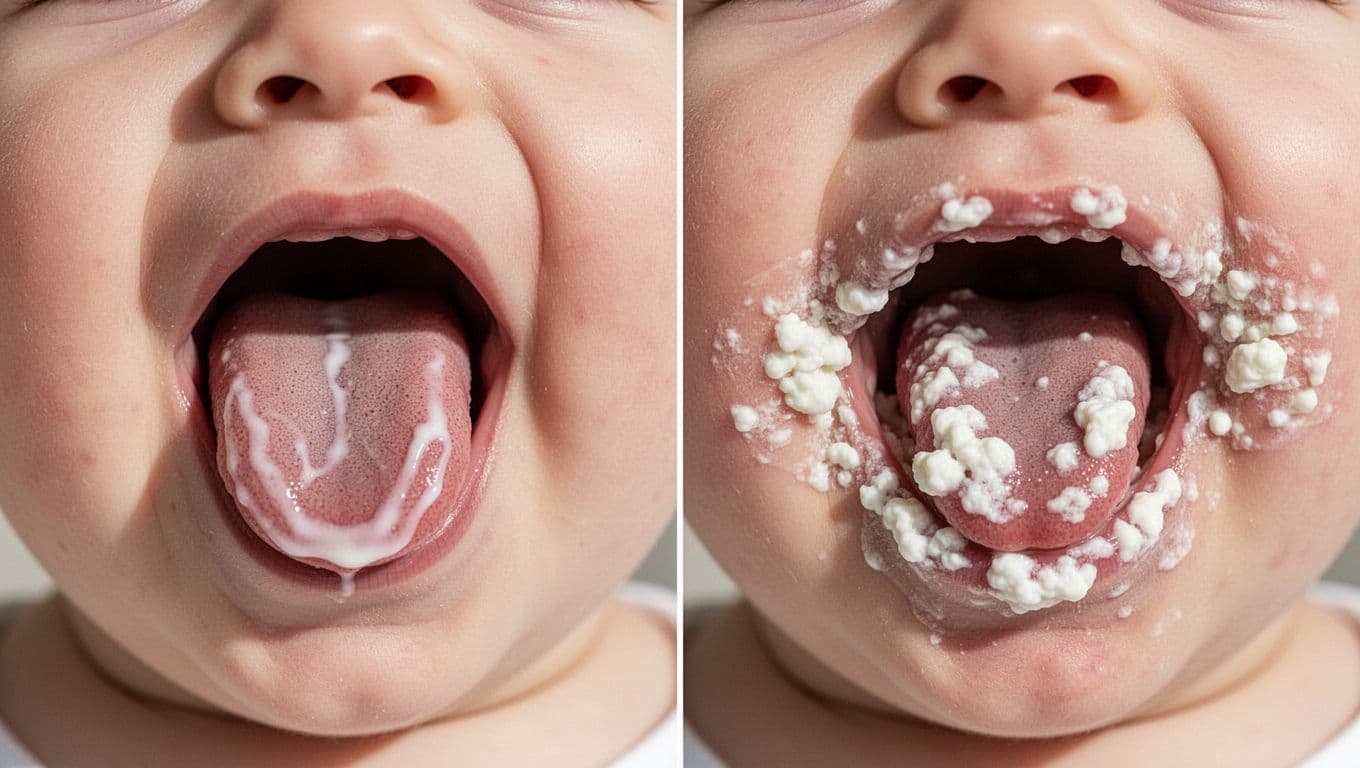
White coating that stays on the tongue versus patches that spread
Milk residue usually stays on the tongue and looks like a thin, even coating. It may be strongest right after a feed, then fade as saliva and time clear it away. The mouth around it often looks normal and pink.
Thrush has a different pattern. It often shows up as patchy, thicker white spots that look a lot like cottage cheese. Those patches can spread to the cheeks, gums, lips, and roof of the mouth, not just the tongue.
A good rule of thumb is this: if the white color is limited to the tongue and looks smooth, milk is more likely. If it spreads or looks clumpy, thrush moves higher on the list. For a more detailed symptom check, HealthyChildren.org’s thrush guide gives a clear comparison parents can use.
What happens when you try to wipe it away
The wipe test is often the clearest clue. Milk residue usually comes off with a soft, damp cloth and does not bother your baby. The tongue underneath looks pink and healthy.
Thrush is much harder to remove. If you try to wipe it away, the patch may stay put or come off only a little. Underneath, the skin can look red, sore, or even slightly bleeding.
Use a gentle touch only. A hard scrub can irritate the mouth and make a normal milk film look worse than it is.
A simple comparison helps:
| Feature | Milk residue | Oral thrush |
|---|---|---|
| Location | Mostly the tongue | Tongue, cheeks, gums, lips, roof of mouth |
| Look | Thin and smooth | Thick, patchy, cottage cheese-like |
| Wipes off? | Yes, usually easily | No, or only partly |
| Skin underneath | Pink and normal | Red, sore, or raw |
If you want a second source that spells out the same pattern, this oral thrush overview from AboutKidsHealth explains why milk wipes away while thrush sticks.
Other signs that point to thrush instead of milk
A white tongue on its own is often harmless. Add other symptoms, though, and thrush becomes more likely.
Watch for signs like:
- Fussiness during feeds, especially if your baby pulls away often
- Pain while nursing or bottle-feeding
- Refusing to feed or taking less than usual
- A diaper rash that shows up at the same time
- Nipple pain in breastfeeding parents, which can happen when the yeast affects both baby and parent
These clues matter because thrush is not just a mouth-color issue. It can make feeding uncomfortable, which is often the first thing parents notice. If your baby has white patches plus feeding trouble, the chance of thrush is much higher than simple milk residue.
When breastfeeding parents also have nipple pain, it can point to the same yeast problem. That’s one reason breastfeeding mistakes that lead to thrush are worth watching for, especially if symptoms seem to pass between baby and parent.
If the white patches spread, stick, or come with feeding pain, treat it as more than milk residue.
What causes thrush and why some babies get it
Thrush happens when Candida, a type of yeast, grows too much in the mouth. Most babies already carry small amounts of this yeast, but their bodies usually keep it under control. When that balance shifts, the yeast can spread and cause those stubborn white patches parents notice.
A baby’s mouth is warm, damp, and often covered by milk after feeds. That gives yeast a place to grow if other factors are present. The good news is that most triggers are common and manageable, not signs that something serious is wrong.

Common triggers parents should know
Some babies are simply more likely to get thrush because their mouths and immune systems are still developing. Prematurity can raise the risk because premature babies often have less mature defenses and may spend more time in medical settings.
Recent antibiotic use is another common trigger. Antibiotics can reduce the helpful bacteria that keep yeast in check, so Candida gets more room to grow. That can happen in the baby, or in a breastfeeding parent, which is why thrush sometimes shows up in both at once.
Pacifiers and bottle nipples can also play a role. They stay moist, get warm, and spend a lot of time in the mouth, so yeast can linger on them if they are not cleaned well. Bottle nipple buildup can do the same thing, especially if milk residue sits there between feeds.
Yeast issues in breastfeeding parents matter too. If a parent has nipple thrush or a yeast imbalance, the baby can pick it up during feeding. A baby may also catch yeast during birth, which is why thrush is more common in the first weeks of life. For a clear medical overview, HealthyChildren.org explains how Candida can pass to newborns.
Why thrush can keep coming back if it is not treated fully
Thrush often sticks around when only one part of the problem gets treated. If the baby gets medicine but the breastfeeding parent still has yeast symptoms, the infection can pass back and forth during feeds. That can turn into a frustrating loop.
Shared items can do the same thing. Pacifiers, bottle nipples, and breast pump parts can carry yeast if they are not cleaned and dried well. Even if symptoms improve for a few days, leftover yeast can bring the problem right back.
A practical approach helps most:
- Treat the baby and breastfeeding parent if both have symptoms.
- Wash pacifiers, nipples, and pump parts well after use.
- Replace items that are hard to clean or already worn.
- Keep following the full treatment plan, even if the mouth looks better.
When thrush keeps returning, the issue is often unfinished treatment or re-exposure, not a new problem each time.
This is why consistency matters. Clearing the yeast in one place helps, but clearing it everywhere keeps it from cycling back.
How to care for a white tongue after feeding at home
If your baby’s white tongue looks like milk residue, simple home care is usually enough. The goal is not to scrub the mouth clean. It is to keep things gentle, comfortable, and low-risk while you watch for signs that point to thrush instead.
Most of the time, you only need a soft wipe after feeding if the coating looks heavy or stays visible. If your baby seems content, feeds well, and the white film clears easily, that is a reassuring sign. A little residue after milk or formula is common.
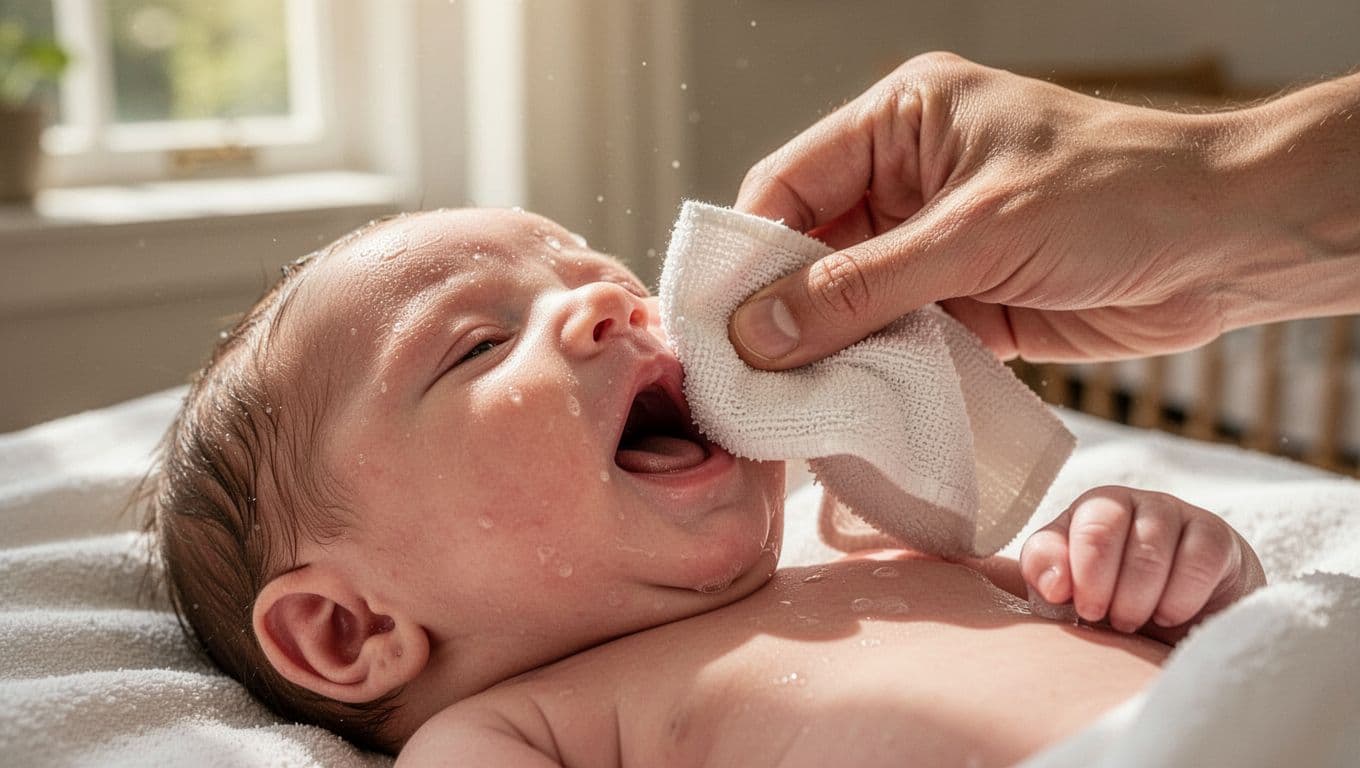
Gentle cleaning habits that are safe for babies
A clean, damp cloth is the safest place to start. Wrap it around a clean finger, then wipe the tongue softly after a feed if the coating looks obvious. One or two light passes are enough.
Keep the touch slow and mild. If your baby turns away or gets fussy, stop and try again later. You can also wait until your baby is calm, since a relaxed mouth is easier to clean.
For older babies who already take small sips of water as part of their normal feeding routine, a tiny sip may help rinse the mouth after meals. Use this only when it already fits your baby’s age and feeding plan. For younger babies, breast milk or formula is still enough, and extra water is not needed.
A good home routine looks simple:
- Wipe the tongue gently after feeds if residue is visible.
- Use warm water and a soft cloth or gauze.
- Stop if the mouth looks irritated.
- Watch whether the white coating fades on its own.
If you want a quick visual guide on safe tongue cleaning, Cleveland Clinic explains how to clean a newborn’s tongue. Their advice matches the same gentle approach parents can use at home.
What not to use on a baby’s mouth
Skip anything that scrapes, burns, or feels harsh. A baby’s mouth is delicate, and rough cleaning can do more harm than the white coating itself.
Do not use:
- Scrapers or hard brushes that can irritate the tongue
- Adult mouthwash, which is not safe for babies
- Baking soda mixtures, which can be too harsh and unnecessary
- Any stiff cleaning tool that feels rough on your skin
If the coating does not wipe away easily, do not keep rubbing. That can turn a mild concern into a sore mouth. Instead, step back and look for other signs, such as patches on the cheeks or feeding pain.
Gentle cleaning is enough for milk residue. Harsh tools are more likely to irritate the mouth than help it.
If your baby is also dealing with drool, gum pressure, or early teething, a soft mouth wipe can still help. You can also read more about baby teething oral hygiene advice if drool and gum discomfort are part of the picture.
A white tongue after feeding often settles on its own. When it wipes off easily and your baby seems comfortable, that is usually all the reassurance you need.
When a white tongue means you should call the pediatrician
A white tongue after feeding is often harmless, but some patterns need medical attention. If the coating changes from a light film to stubborn patches, spreads beyond the tongue, or comes with feeding trouble, it’s time to call your pediatrician. The same goes for mouth pain or any sign that your baby is eating less than usual.
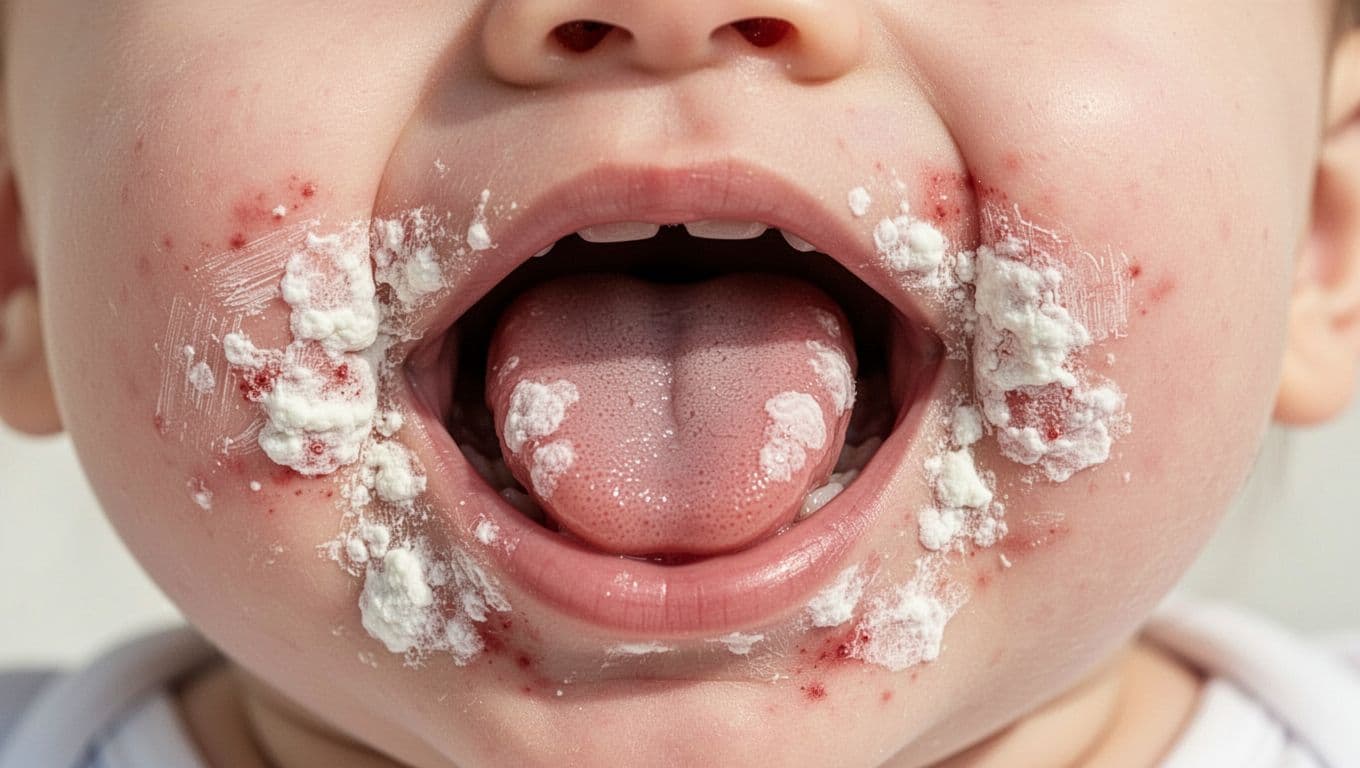
A white tongue that wipes away easily is usually milk. White patches that stay put or spread deserve a call.
Signs the white patches are more than milk
Milk residue usually stays soft, thin, and limited to the tongue. Thrush looks different, and the mouth often looks irritated under the white spots.
Call the pediatrician if you notice:
- White areas that spread beyond the tongue to the cheeks, gums, lips, or roof of the mouth
- Patches that do not wipe off with a gentle, damp cloth
- Red skin underneath when you try to wipe the area
- Soreness or raw-looking spots inside the mouth
- Bleeding or irritated areas after wiping
- Thick, clumpy patches that look more like cottage cheese than milk
These signs fit oral thrush more than simple milk coating. The NHS oral thrush guide also notes that thrush often sticks to the mouth and does not rub off easily.
Feeding problems and behavior changes to watch for
Mouth discomfort often shows up in the feeding routine before it shows anywhere else. If your baby hurts, eats less, or fights feeds, the mouth may be the reason.
Watch closely if your baby:
- Refuses feeds or turns away from the breast or bottle
- Crys during feeding or pulls off again and again
- Takes shorter feeds than usual
- Seems extra fussy without another clear reason
- Has poor weight gain concerns or starts eating less over several feeds
These changes matter because babies often can’t tell you their mouth hurts. They show it by acting upset or stopping early. If feeding becomes a struggle, call the pediatrician, especially when white patches are also present.
Why breastfeeding parents may need care too
Thrush can pass back and forth during breastfeeding, so one-sided treatment often fails. If your baby has thrush, your nipples may need attention too.
Look for:
- Nipple pain during or between feeds
- Redness or burning on the nipple or areola
- Shiny, cracked skin that doesn’t heal well
- Pain that feels worse after feeds
If only the baby gets treated, the yeast can return through feeding. That’s why breastfeeding parents and babies often need care at the same time. The HealthyChildren thrush symptom guide also recommends calling the doctor if white patches appear inside the lips or cheeks, or if drinking drops off.
If the mouth looks painful, the baby feeds poorly, or the white patches won’t wipe away, stop watching and call. Early treatment can ease pain faster and keep the infection from bouncing between baby and parent.
Conclusion
A white tongue after feeding is often just milk residue, especially when it wipes away easily and your baby seems comfortable. That simple pattern is the biggest clue that nothing is wrong.
Thrush usually looks different. The patches stick, spread past the tongue, and may leave the mouth red or sore when you try to wipe them away. If your baby has pain, feeds poorly, or the white areas do not come off, call your pediatrician.
A calm check after feeding is often enough to tell the difference. When in doubt, trust the signs your baby gives you, and get help early if the mouth looks irritated or feeding starts to change.
Save pin for later


- How to Help a Child Deal With Anxiety at Home - September 12, 2026
- How to Prepare Your Child for the First Day of School - September 12, 2026
- Age-Appropriate Chores for Kids by Age Group - September 12, 2026