
A white tongue in a baby is often harmless, and it’s usually just milk residue that wipes away after feeding. But when the white patches stick, spread, or seem to bother your baby, oral thrush could be the reason.
That mix-up worries a lot of parents, especially when feeding changes or your baby seems fussy. This guide will help you tell what’s normal, what to watch for, and when a call to the doctor makes sense, plus you can also read about home remedies for baby’s oral thrush if thrush turns out to be the issue.
Thrush | When to Worry | Parents
What a White Tongue in Babies Usually Means
A white tongue in a baby usually points to one of two things, milk residue or oral thrush. The difference often comes down to how the coating looks, where it shows up, and whether it wipes away.
Age and feeding matter too. A newborn who feeds often and has less saliva may show a white tongue more than an older baby. It also helps to check whether the white coating stays on the tongue only or spreads to the cheeks and gums.
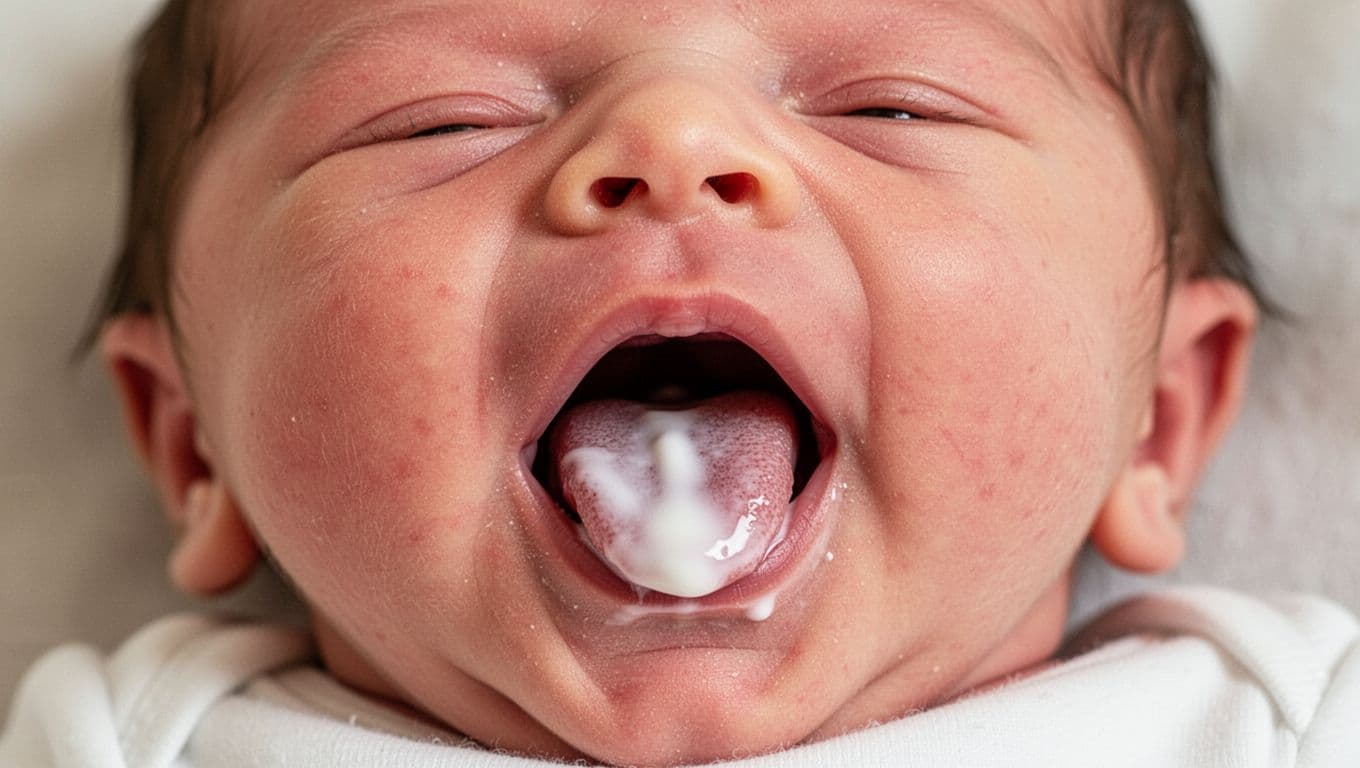
Milk residue after feeding
Milk residue is the most common reason for a white tongue in babies, and it’s usually harmless. It often looks like a thin white film on the tongue, especially right after a feeding.
This coating usually wipes away easily with a damp cloth. It also tends to be more noticeable after breast or bottle feeds, then fade as the tongue clears. Most babies with milk residue act comfortable, feed normally, and do not seem bothered by it.
Because newborns make less saliva, milk can sit on the tongue longer. That’s why a white tongue is so common in the first weeks of life. If the white color stays only on the tongue and disappears with a gentle wipe, milk residue is the likely cause.
Oral thrush and why it looks different
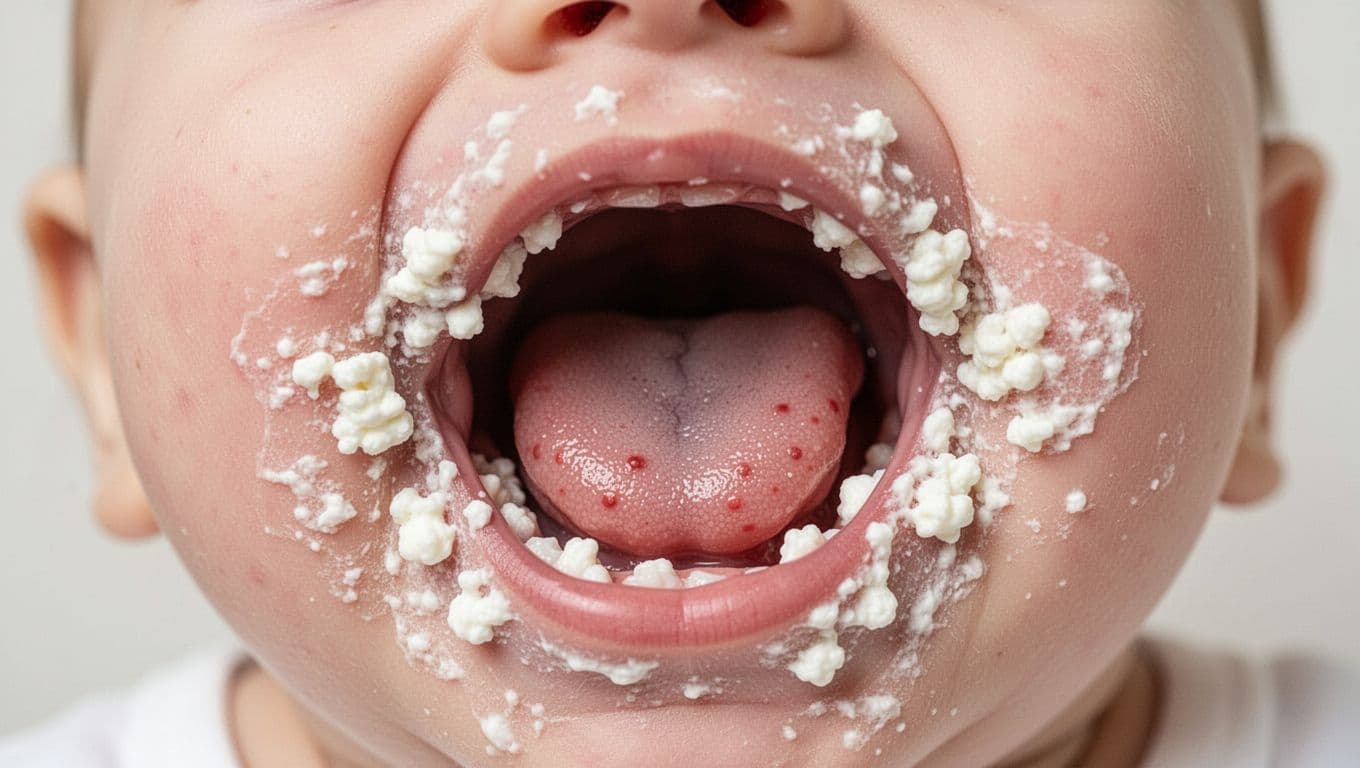
Oral thrush is a yeast infection in the mouth, and it looks different from milk residue. The white patches are often thicker, patchy, and harder to remove. They may also show up on the cheeks, lips, or gums, not just the tongue.
A baby with thrush may seem fussy, uncomfortable, or sore while feeding. Some babies pull away from the breast or bottle, cry during feeds, or eat less because their mouth feels irritated. The white patches often look a bit like cottage cheese and can leave red spots behind if they rub off.
If you’re also dealing with latch pain or feeding trouble, common breastfeeding mistakes that can cause thrush may be part of the picture. For a broader look at the symptoms, the HealthyChildren thrush symptom guide is also helpful.
Other rare causes to keep in mind
Less common causes do exist, but most white tongue cases in babies are not serious. Sometimes the tongue looks white because of irritation, a feeding issue, or another mouth change that doesn’t fit the usual milk residue pattern.
If the patches look unusual, last longer than expected, or come with symptoms that do not fit milk residue or thrush, a pediatrician should check them. That matters most when the coating spreads, changes shape, or keeps coming back.
How to tell milk residue from thrush at home
A white tongue can look the same at first glance, but the clues usually show up fast. Milk residue is usually mild and limited, while thrush tends to spread and hang on.
The easiest way to sort them out is to look at where the white film is, whether it wipes away, and how your baby acts during feeds. Those three checks give parents a clearer picture without guessing.
Where the white coating appears
Milk residue usually stays on the tongue only. It often shows up after feeds and may fade on its own between meals.
Thrush usually reaches beyond the tongue. You may see white patches on the cheeks, gums, inner lips, and sometimes the roof of the mouth. When the white stuff appears in more than one area, thrush becomes more likely.
A quick scan helps. If the white color looks like a thin coating on the tongue alone, that points toward milk residue. If you see patchy spots in several mouth areas, think about thrush instead.
Whether it wipes away easily
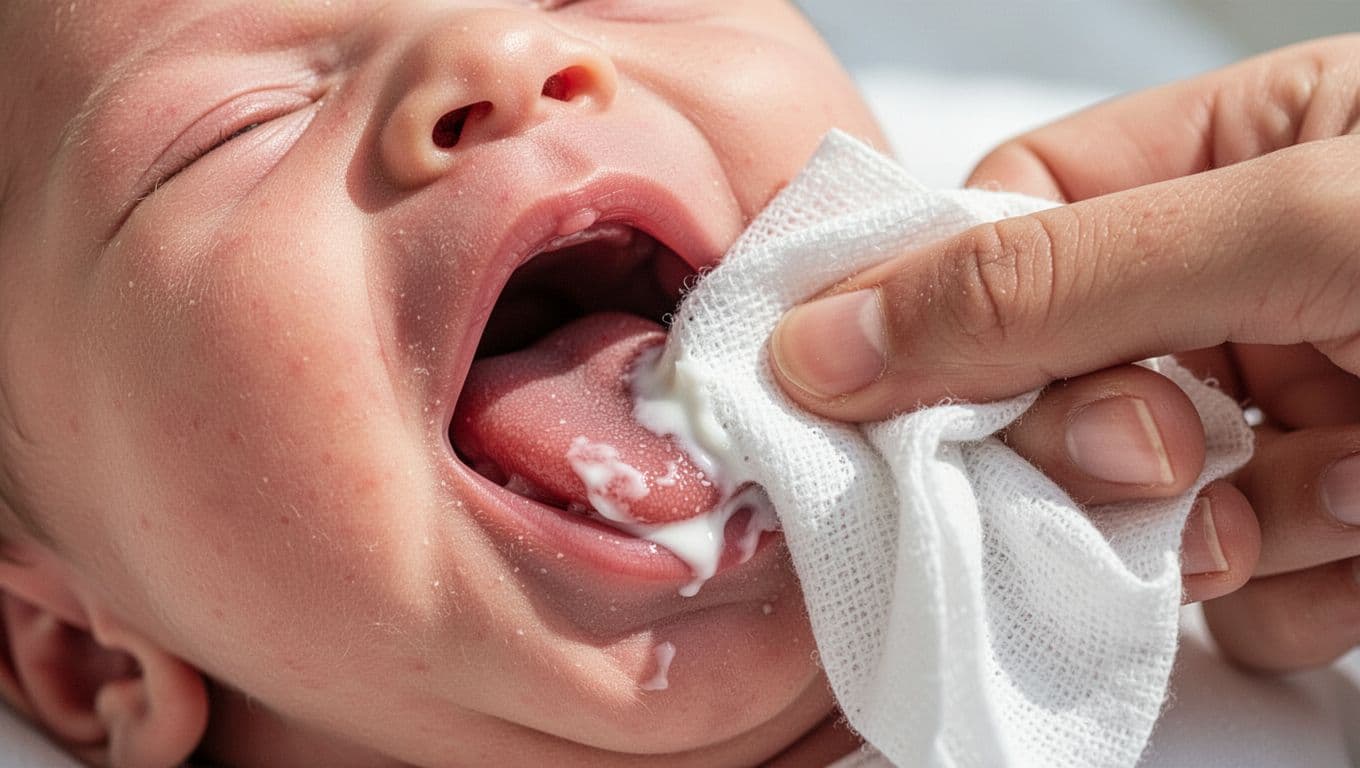
A gentle wipe test can help, and it should stay gentle. Use a soft, damp cloth or gauze, then lightly wipe the tongue once.
If the white film comes off easily and the tongue looks pink underneath, it’s usually milk residue. If it stays put, looks thick, or leaves a red spot, thrush is more likely.
Do not scrape the mouth or rub hard. A baby’s mouth is delicate, and rough wiping can make the area sore.
This test should never hurt. If your baby pulls away or seems upset, stop and check the rest of the signs instead of trying again and again.
What your baby is acting like
A baby who is happy, feeding well, and acting normal is more likely to have milk residue. That matters just as much as what you see in the mouth.
Thrush can make feeding uncomfortable. You might notice fussiness, a poor latch, crying during feeds, or refusal to eat. Some babies pause often or seem to suck less because the mouth feels sore.
Pay attention to patterns, not one single moment. A baby with a white tongue plus feeding trouble needs a closer look than a baby with an otherwise normal day.
If the white coating stays put and your baby seems bothered, call the doctor. That mix of mouth changes and feeding changes is the biggest clue that it’s more than milk residue.
When a white tongue starts to be a reason to worry
A white tongue is common in babies, but some signs mean it needs a closer look. The key is whether the white coating behaves like normal milk residue or acts more like an infection or mouth irritation.
If the white area sticks around, your baby seems uncomfortable, or feeding changes, it’s time to pay attention. Early care can calm your worries and help your baby feel better sooner.
The white patches do not go away
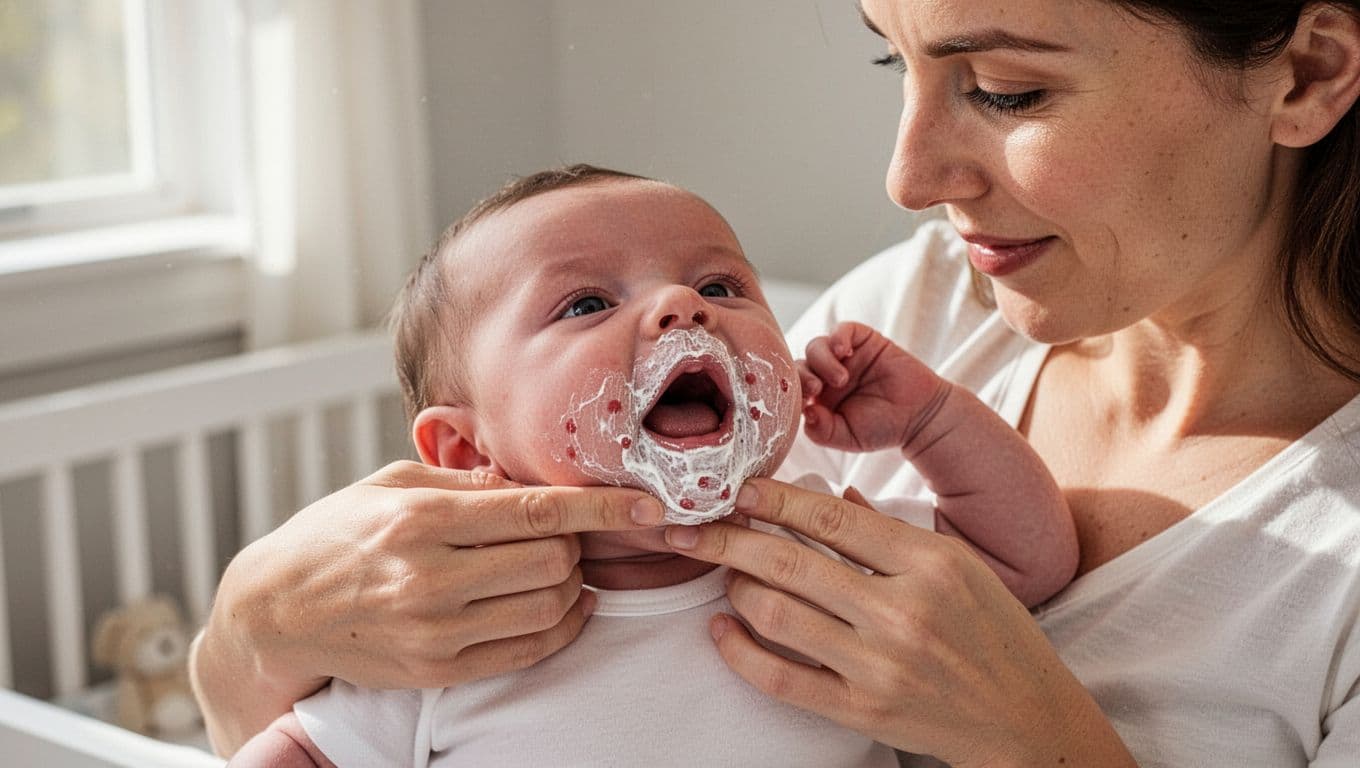
White patches that stay in place, spread, or keep coming back deserve attention. Milk residue usually fades after feeding or wipes away easily, but thrush often lingers and can show up on the cheeks, gums, or lips too.
If the white spots are still there after a few days, or they seem thicker over time, call your pediatrician. Lingering symptoms can point to thrush or another mouth issue that needs treatment. For a quick check on when a call makes sense, regular baby doctor checkups matter more than waiting and hoping it clears on its own.
A white tongue that does not improve over several days should not be brushed off as normal feeding residue.
Your baby seems uncomfortable or feeds poorly
Pain during feeds is a big clue. If your baby cries at the breast or bottle, sucks less, or finishes shorter feeds than usual, the mouth may be sore.
Babies often feed less when their tongue or cheeks hurt. That can lead to a weak latch, slower feeds, or outright refusal to eat. Poor feeding should not be ignored, especially if the white patches are still there.
Watch for small changes that add up, such as:
- Crying or pulling away during feeds
- Less sucking than usual
- Shorter feeds than normal
- Fussiness that happens around feeding time
If feeding trouble is happening along with white patches, consult pediatrician for concerns instead of waiting for it to pass.
There are other symptoms too
Some symptoms mean the white tongue is part of a bigger problem. Call your pediatrician if your baby has fever, unusual sleepiness, trouble swallowing, signs of dehydration, or seems generally unwell.
You should also get help sooner if your baby has fewer wet diapers, a dry mouth, or tears that seem absent when crying. Those signs can point to dehydration, which needs prompt care. The MedlinePlus guide to thrush in newborns lists refusal to eat and mouth soreness as reasons to contact a doctor.
The main goal is simple, catch a problem early if the white tongue is more than milk. If your baby looks off, eats poorly, or the patches don’t improve, it’s better to check in and get clear answers.
How doctors check and treat a baby’s white tongue
When you bring your baby in for a white tongue, the visit is usually simple and focused. Most doctors can tell a lot by looking in the mouth and asking a few direct questions about feeding, timing, and other symptoms.
If the white coating looks like milk residue, the doctor may reassure you and send you home with watchful waiting tips. If it looks more like oral thrush, treatment usually starts right away.

What happens during the visit
The doctor usually starts with a close look at the tongue, cheeks, and gums. That exam helps tell the difference between milk residue and thrush, since thrush often shows up in more than one spot.
You’ll likely be asked how long the white coating has been there, whether it changes after feeds, and if it wipes off with a gentle cloth. The doctor may also ask about feeding changes, fussiness, recent antibiotics, and any other mouth symptoms.
That short conversation matters because the pattern tells the story. A thin coating that clears after feeding is one thing, while thick patches that stick around are another.
Common treatment for oral thrush
If the doctor thinks the white tongue is thrush, treatment usually means an antifungal medicine prescribed for your baby. The medicine is often a liquid or oral suspension that goes inside the mouth for several days.
Your doctor will tell you how often to give it and how long to keep going. Even if your baby looks better fast, finish the full course as directed, because stopping early can let the infection come back.
According to MedlinePlus on thrush in newborns, doctors often diagnose thrush by looking at the mouth, and they may prescribe antifungal medicine to treat it. That matches what many parents hear at the visit, a clear exam, a simple diagnosis, and a treatment plan you can follow at home.
What breastfeeding parents may need to know
If you’re breastfeeding, thrush can pass between you and your baby. That back-and-forth cycle can keep the infection alive if only one person gets treated.
In those cases, the doctor may recommend treatment for both baby and parent. If you have sore, red, or cracked nipples, bring that up during the visit, because treating both sides at the same time often helps stop the infection from bouncing back.

Some parents also need simple hygiene steps at home, like cleaning pacifiers, bottle nipples, and pump parts well. Your doctor may give specific instructions so the treatment has a better chance to work the first time.
If your baby still has white patches after treatment starts, call the doctor back. Thrush can take a few days to improve, but it should move in the right direction.
Safe ways to care for a baby’s mouth at home
Simple mouth care can help you stay ahead of milk residue and keep feeding time more comfortable. The goal is gentle upkeep, not scrubbing or overcleaning. If you suspect thrush, home care can support treatment, but it should not replace care from your doctor.
Use a soft damp cloth after feeds
After feeding, you can gently wipe your baby’s tongue with a soft, damp cloth or piece of gauze. This helps clear away milk residue before it dries and sticks to the tongue.
Keep the touch light and calm. If your baby resists, turns away, or seems uncomfortable, stop and try again later. A baby’s mouth is delicate, so there’s no need to force it.
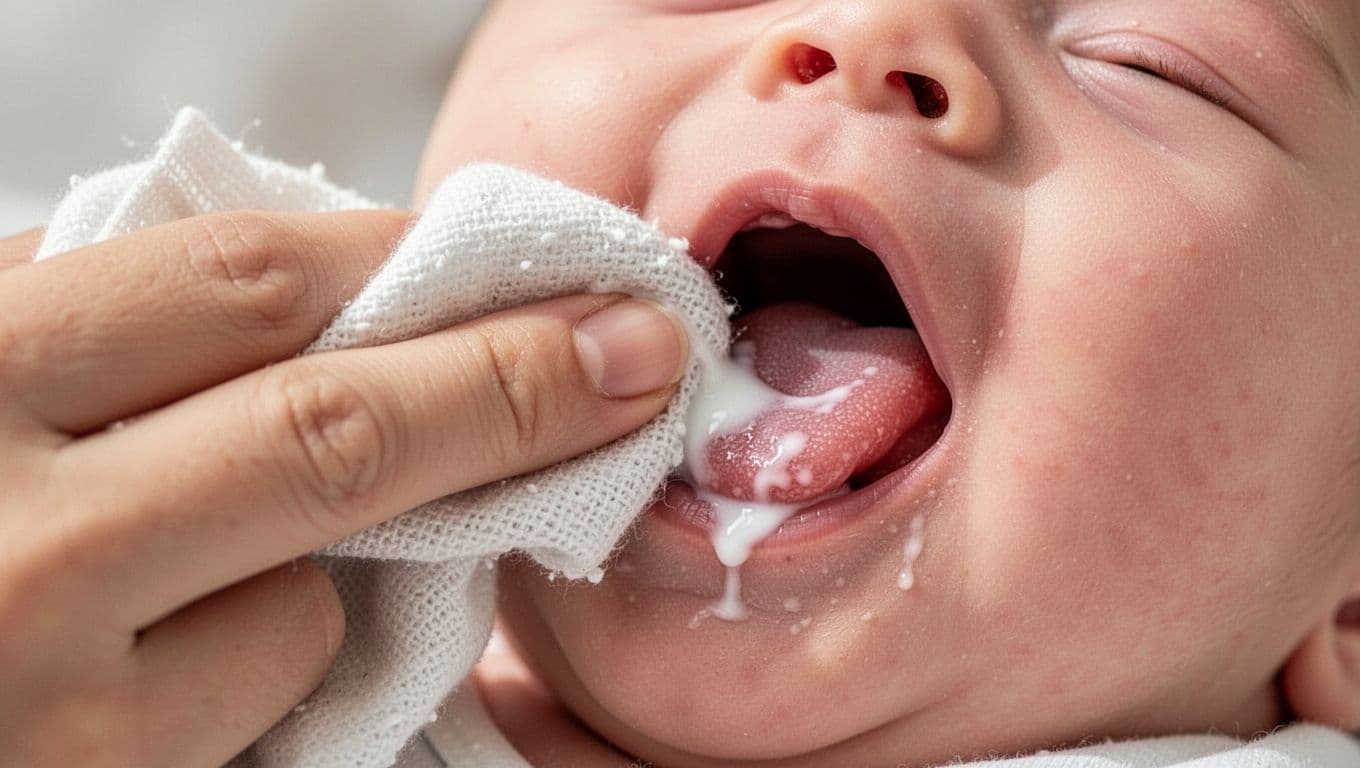
A few parents also find it helpful to wipe the gums during teething, since drool and milk can build up together. If that’s part of your routine, keeping baby’s mouth clean during teething can fit in naturally after feeds.
Keep feeding tools and pacifiers clean
Bottles, nipples, pacifiers, and pump parts should be cleaned regularly. Warm soapy water works for routine care, and many families also use a dishwasher or sterilizing method recommended for baby items.
This matters even more if thrush is in the picture. Clean gear helps cut down on germs, but it doesn’t replace the medicine your doctor prescribed. If your baby has thrush, follow the treatment plan first, then keep up with cleaning so the infection doesn’t keep cycling back.

For a broader look at prevention, Pampers’ thrush guide also notes that pacifiers and bottle nipples should be cleaned regularly.
Watch for changes instead of guessing
A white tongue can change over a day or two, so watch the pattern before you assume the cause. Check after feeds, then again later in the day, and note whether the white film fades, stays put, or spreads.
Pay attention to new symptoms too. Fussiness, crying during feeds, less sucking, or fewer wet diapers are all useful details to share with the doctor.
If the white patches keep lingering or your baby seems off, write down what you see. Clear notes make it easier for the pediatrician to tell whether it looks like milk residue, thrush, or something else.
Conclusion
A white tongue in a baby is often just milk residue, and that usually clears with a gentle wipe after feeds. What matters most is the pattern, if the white patches stay put, spread to the cheeks or gums, or seem to make feeding hard, it needs a closer look.
Call your pediatrician if the coating does not wipe away, your baby seems fussy or sore, or other symptoms show up, like poor feeding, fever, or fewer wet diapers. Most causes are common and treatable, and getting checked early can bring quick relief for both you and your baby.
Save pin for later


- How to Help a Child Deal With Anxiety at Home - September 12, 2026
- How to Prepare Your Child for the First Day of School - September 12, 2026
- Age-Appropriate Chores for Kids by Age Group - September 12, 2026