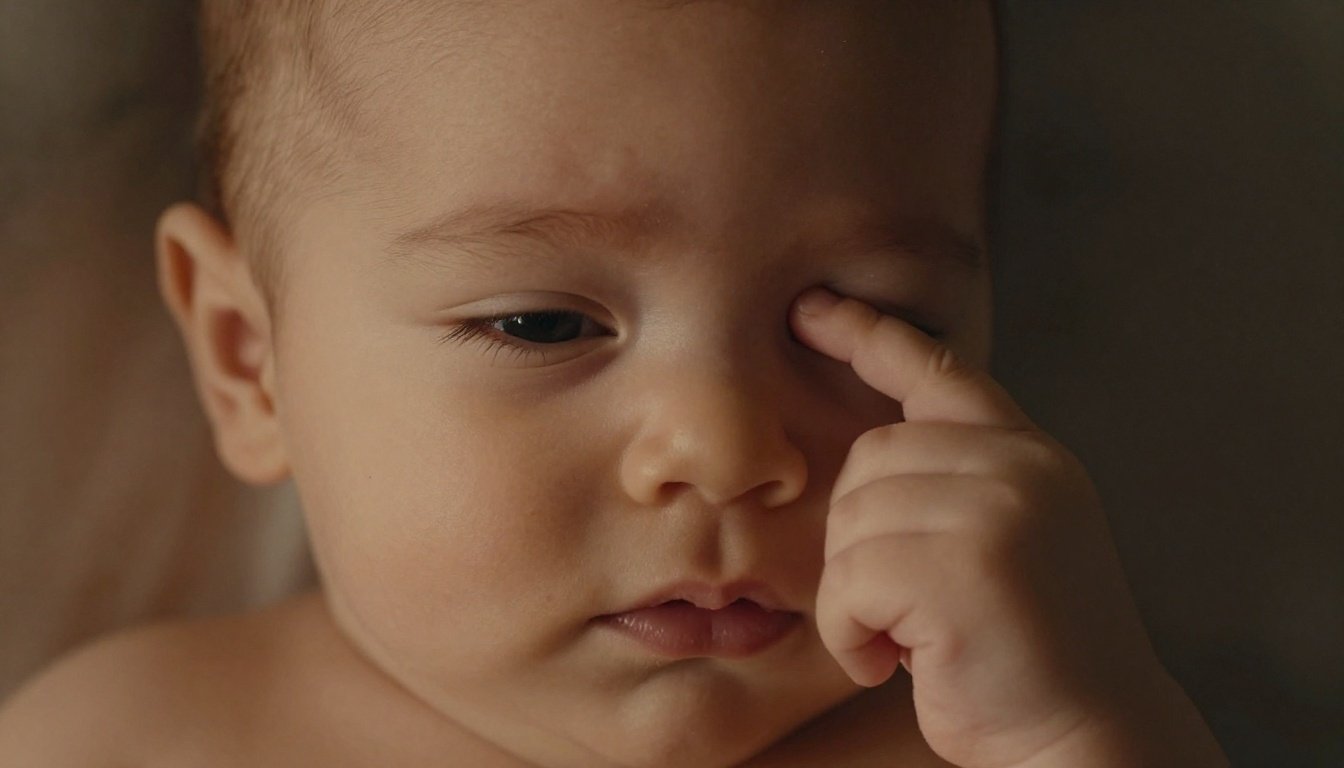
When your baby rubs one or both eyes with tiny, sleepy fists, it can be hard to tell whether they need a nap or something is bothering them. Occasional rubbing often comes with sleepiness, comfort-seeking, overstimulation, or a small irritation, so it isn’t always a reason to worry. You can read more about why babies rub their eyes when overstimulated for helpful context.
The important clue is what happens along with the rubbing. Since babies can’t describe discomfort, watch their behavior and look closely at the eye for redness, swelling, discharge, crusting, extra tearing, pain, light sensitivity, or changes in vision. Notice whether your baby squints, keeps one eye closed, turns away from light, or seems more unsettled than usual.
A gentle check can help you decide what to watch and when to contact your pediatrician. Start with the eye’s appearance, your baby’s comfort, and any changes in how they respond to light or familiar faces.
Watch a video about why babies rub their eyes
Things You Need to Check When Baby Rubs Their Eye
Pause before assuming your baby needs a nap or has an eye problem. Wash your hands, then watch the pattern for a moment. Does the rubbing happen only before naps or bedtime? Does it affect one eye or both? Did it start suddenly, or does it continue throughout the day?
Check the eyelids, lashes, and whites of the eyes in good light. Look for a loose eyelash, dust, dried mucus, soap or shampoo residue, swelling, redness, crusting, unusual tearing, or a visible change in the eye. Also notice whether your baby cries, seems fussy, keeps the eye closed, turns away from light, feeds poorly, or struggles to track your face or a favorite toy.

Is Your Baby Tired, Fussy, or Simply Self-Soothing?
Brief eye rubbing before sleep is often a normal tiredness cue, especially when your baby’s eyes look normal and they settle afterward. Yawning, staring away from toys, slowing down, or following a predictable nap routine makes sleepiness more likely. You can also review these early tired cues in babies to see whether the rubbing fits your baby’s usual pattern.
Younger babies may rub their eyes while self-soothing, teething, feeling hungry, or becoming overstimulated. Some rub their faces when they feel fussy, even when they aren’t ready to sleep. Normal rubbing should fade after rest or comfort and shouldn’t come with ongoing redness, discharge, pain, or trouble opening the eye.
Look for Irritation, Dryness, Allergies, or a Blocked Tear Duct
A speck of dust, wind, dry air, sweat, bath products, or a stray eyelash can irritate the eye for a short time. Allergies may cause itching, watery eyes, sneezing, or a runny nose. A blocked tear duct often causes persistent watering or mild crusting, sometimes in only one eye.
Redness, swelling, and thick yellow or green discharge together need closer attention because they can point to infection. If symptoms continue, contact your pediatrician rather than using leftover eye drops. A pediatric guide to children’s eye symptoms can also help you recognize changes that deserve a call.
Notice Clues That Point to Pain or a Vision Problem
Frequent rubbing during play or while focusing may occur with eye strain, trouble seeing clearly, or eye misalignment. Record whether your baby squints, blinks often, tilts their head, tracks poorly, or has one eye turning in or out. Cloudiness or a sudden difference between the eyes also deserves prompt medical advice.
Sudden tearing, pain, light sensitivity, irritability, or an eye that stays closed may suggest corneal irritation or a foreign body. Since preverbal babies cannot describe pain, their behavior may provide the clearest warning. If the rubbing comes and goes, record a short video for the pediatrician.
What Baby Eye Rubbing May Mean Based on the Symptom Pattern
The combination of symptoms matters more than eye rubbing alone. Bedtime rubbing with normal-looking eyes usually fits tiredness or self-soothing, while rubbing with itching, discharge, pain, or light avoidance needs closer attention.

A Simple Rubbing-Only Pattern Is Often Less Concerning
Occasional rubbing is often reassuring when it happens during a nap or bedtime routine. Your baby’s eyes should look clear, without redness, swelling, crusting, or discharge. They should open normally, respond to your face or a toy, and settle quickly after feeding, cuddling, or sleep.
You can watch this pattern at home while keeping your baby’s nails trimmed and hands clean. If rubbing leaves the skin around the eye dry, gently wipe the area with a clean, damp cloth. Still, don’t assume the behavior is always harmless. Trust your instincts if it suddenly becomes much more frequent, continues during play, or comes with a change in your baby’s mood or eye appearance.
Rubbing With Itching, Tearing, or Sneezing Can Signal Irritation
Itchy, watery eyes may occur with allergies or mild irritation. Sneezing, a clear runny nose, wind exposure, dry indoor air, or recent contact with soap and shampoo can help explain the pattern. Rubbing both eyes while your baby otherwise seems comfortable often fits irritation more than infection.
Clear tears and mild itching look different from thick discharge and marked redness. Reduce obvious triggers by moving your baby away from smoke, dust, strong fragrances, or blowing air. Rinse away bath products with clean water, and avoid using eye drops unless your child’s healthcare provider recommends them. Contact the provider if symptoms persist, disturb sleep, or affect one eye much more than the other.
Redness, Crusting, and Discharge Need Medical Guidance
Persistent redness, swollen eyelids, yellow or green drainage, sticky lashes, and crusting after sleep shouldn’t be dismissed as tiredness. These signs can occur with conjunctivitis, irritation, or a blocked tear duct. Read more about sticky eyes in babies for context, but ask a clinician to assess ongoing or worsening symptoms.
A newborn younger than 28 days with a sticky eye needs urgent same-day clinical advice, especially with redness or pus. The American Academy of Ophthalmology’s infant eye guidance also highlights discharge, swelling, trouble keeping the eye open, and severe light sensitivity as reasons to seek medical care.
A sudden rubbing episode with heavy tearing, light avoidance, pain, or one eye held shut may point to a scratch or foreign body. A red, painful eye, cloudy cornea, reduced vision, or strong light sensitivity needs prompt medical attention. Don’t share towels, and never use another person’s prescription or leftover eye medication.
Safe Things to Do at Home, and What to Avoid
When a baby rubs an eye after dust, an eyelash, or bathwater gets in, calm first aid can help. Start with clean hands and a gentle look, then stop if your baby seems distressed or the eye may be injured.
How to Rinse Away a Possible Speck Without Making It Worse
Wash your hands before touching your baby’s face. In good light, check the eyelids, lashes, and skin around the eye for loose material. Keep your baby calm with a soft voice and gentle support. If a tiny eyelash or speck is moving across the surface, blinking may help shift it naturally.
Use clean, lukewarm water or sterile saline. Let a gentle flow run across the affected eye rather than aiming a forceful stream directly at it. You can also wet a clean, soft cloth and wipe only loose material from the eyelid or surrounding skin. Never scrape or touch the clear front of the eye.
Stop rinsing if your baby has severe pain, cannot open the eye, or becomes increasingly upset. A speck stuck on the cornea, an object that appears embedded, or symptoms that continue after rinsing need medical attention. Ongoing redness, tearing, squinting, or light sensitivity can point to a scratch or another injury. Guidance on emergency eye care also recommends prompt evaluation when an object won’t come out or a chemical has entered the eye.

If shampoo, cleaner, or another chemical splashes into the eye, begin flushing immediately with clean water. Keep the flow gentle and continue for about 10 minutes while contacting a clinician, poison control, or emergency services. Don’t wait to identify the product, and don’t try to cancel its effect with another household substance.
Avoid These Common Home Treatment Mistakes
Tired parents often want to fix the problem quickly, but several common responses can cause more harm:
- Don’t force the eyelids open. Restraint can increase fear and make an injured eye harder to assess.
- Don’t rub the eye or ask your baby to rub it. Rubbing can push a particle across the cornea and cause a scratch.
- Never pick at the cornea with a fingernail, cotton swab, tissue, or tweezers. These can damage the eye or leave fibers behind.
- Avoid eye-whitening drops, household products, breast milk, and other home remedies. They may worsen irritation or introduce germs.
- Don’t use old prescription drops or someone else’s medicine. The treatment may be wrong, contaminated, or unsafe for infants.
- Don’t patch the eye unless a clinician tells you to. A patch can hide worsening symptoms and may add pressure.
- Don’t wait when your baby has severe pain, marked swelling, bleeding, a cloudy-looking eye, strong light sensitivity, or trouble opening the eye.
Seeking help early is a sensible choice, not an overreaction. If your baby’s eye still looks uncomfortable after gentle rinsing, call the pediatrician or seek urgent care.
When to Call the Pediatrician About Persistent Eye Rubbing
Persistent eye rubbing deserves more attention when it continues beyond a brief irritation or keeps returning without a clear tiredness trigger. Contact your pediatrician the same day or at the next available appointment if your baby has redness, swelling, ongoing watering, discharge, squinting, frequent blinking, head tilting, poor tracking, or eyes that do not appear aligned.
Know the Difference Between Prompt Advice and Emergency Care
A routine or prompt visit can help when symptoms are mild but persistent. Call the pediatrician if your baby keeps rubbing one eye, develops sticky discharge, or seems bothered by the eye even without severe pain. You can also review guidance on infant strabismus symptoms if you notice drifting, crossing, or repeated head tilting.
Seek urgent evaluation for a red and painful eye, severe pain, strong light sensitivity, a cloudy-looking cornea, apparent vision loss, or an eye your baby will not or cannot open. An object that appears embedded, or an injury from a poke, fall, toy, or sharp item, also needs immediate medical attention. Persistent discharge with a swollen, tender eyelid deserves prompt assessment, as described in this pediatric eye discharge guidance.
If shampoo, cleaner, or another chemical splashes into the eye, start flushing immediately with clean, lukewarm water. Continue irrigation for at least 10 to 15 minutes, then seek emergency medical advice. Don’t wait for redness or pain to appear.
Severe headache, repeated vomiting, unusual drowsiness, or extreme irritability alongside an eye complaint also needs urgent assessment.

Use Age and Development to Interpret the Signs
Newborns from birth through 28 days need urgent medical advice for a sticky eye, especially when discharge comes with redness, swelling, or discomfort. For a newborn with cold symptoms, contacting the pediatrician about symptoms is also a sensible step.
Preverbal babies may show an eye problem by keeping one eye closed, crying, feeding less, avoiding light, tearing, or developing symptoms on only one side. Older infants and toddlers may say their eye feels itchy or painful. Squinting, frequent blinking, head tilting, and trouble with near tasks can also point to a vision concern.
Trust your instincts when your baby’s behavior feels unusual. Note when the rubbing began, which eye is affected, possible exposures, and any fever or cold symptoms. A photo or short video can help the clinician understand symptoms that come and go.
A Calm Plan for Monitoring Your Baby’s Eyes
A short, focused check can turn worry into useful information. Before you call, observe the pattern without forcing your baby’s eyelids open or delaying care.
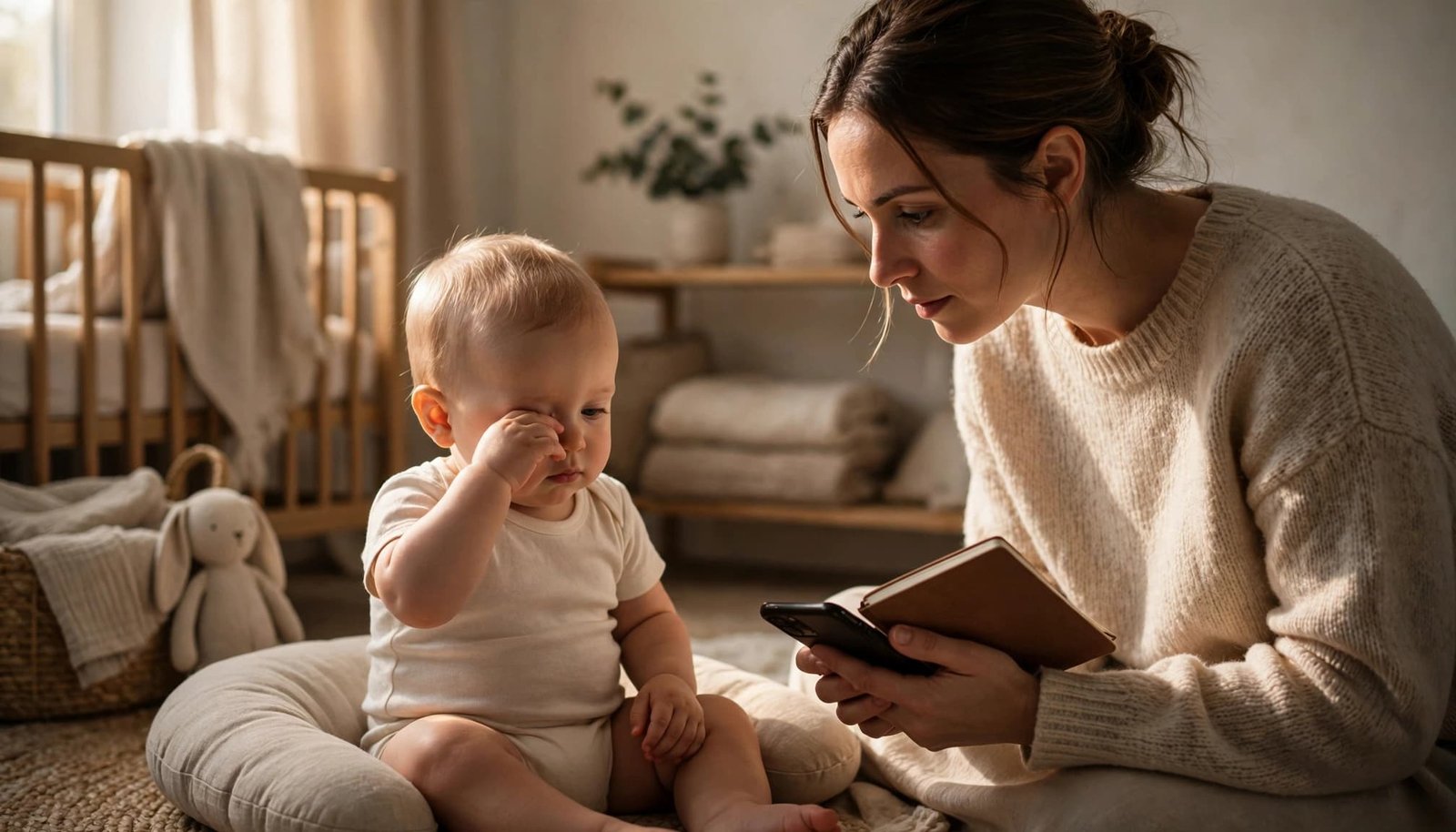
What to Write Down Before You Call
Record these details in your phone or on paper:
- Your baby’s age and the time the rubbing began.
- Whether it affects one eye or both, and how often it happens.
- Whether rubbing appears after waking, before sleep, during feeding, or throughout the day.
- Redness, swelling, discharge, crusting, unusual tearing, or a cloudy-looking eye.
- Signs of pain, squinting, light sensitivity, keeping the eye closed, or increased fussiness.
- Changes in sleep, feeding, mood, or the ability to follow your face or a toy.
- Fever, a recent cold, or possible allergy symptoms. These can occur alongside other signs of illness, so review warning signs your baby is sick when several symptoms appear together.
- Possible exposure to soap, shampoo, cleaner, smoke, dust, perfume, or another foreign object.
- Any poke, fall, scratch, or other injury. Eye injuries can include scratches, chemical burns, and damage from foreign objects, as explained in this eye injury guidance.
If symptoms come and go, take a clear photo or a short video when you can do so safely. Don’t pause rinsing, calling emergency services, or seeking urgent care just to capture it.
These notes help a pediatrician decide whether your baby needs an office visit, a pediatric eye specialist, or urgent evaluation. After removing a mild irritant, improvement should look like less rubbing, easier eye opening, and fading redness or tearing. Continued rubbing, worsening discomfort, or any new symptom deserves medical advice. Keep hands and nails clean, avoid smoke and strong fragrances, rinse bath products carefully, and shield your baby’s eyes from blowing dust. Use this checklist to organize observations, not to diagnose; follow your local pediatric or emergency guidance.
Conclusion
Eye rubbing is often a tiredness or comfort cue, especially when your baby’s eyes look clear and the rubbing stops after rest. Still, persistent rubbing should never be judged by that sign alone. Check for redness, discharge, swelling, pain, light sensitivity, unusual tearing, a cloudy appearance, or changes in vision and behavior.
Seek urgent medical guidance for severe symptoms, an eye injury, chemical exposure, or a sticky eye in a baby younger than 28 days. Keep your baby’s hands clean, avoid rubbing or putting unapproved products in the eye, and follow professional advice if symptoms continue or worsen.
You know your baby’s usual expressions and habits best. Trust what you observe, and contact a healthcare professional whenever your baby’s eye looks different or you feel unsure.

- Dry Cough in Kids: 5 Causes and Safe Solutions - September 23, 2026
- How to Help a Child Deal With Anxiety at Home - September 12, 2026
- How to Prepare Your Child for the First Day of School - September 12, 2026