Nothing is as scary for a new parent as seeing their infant cough, sniffle, or struggle to take a deep breath.
A newborn’s cold can feel like an emergency when you’re staring at that tiny nose and those little ears. It’s only natural to want to help your baby feel better, but you can’t just give them a couple of acetaminophen tablets the way you would for yourself.
Thankfully, it’s usually nothing serious, and a few simple steps can ease your baby’s discomfort until the cold passes. Follow the tips in this guide and you’ll find your way.
Step 1: Keep Your Baby Comfortable
There isn’t much you can do for a newborn’s cold besides keeping them comfortable and hydrated while it runs its course. Creating a soothing environment will help your baby sleep better and take fluids between periods of fussiness.
1. Clear Their Nose Gently
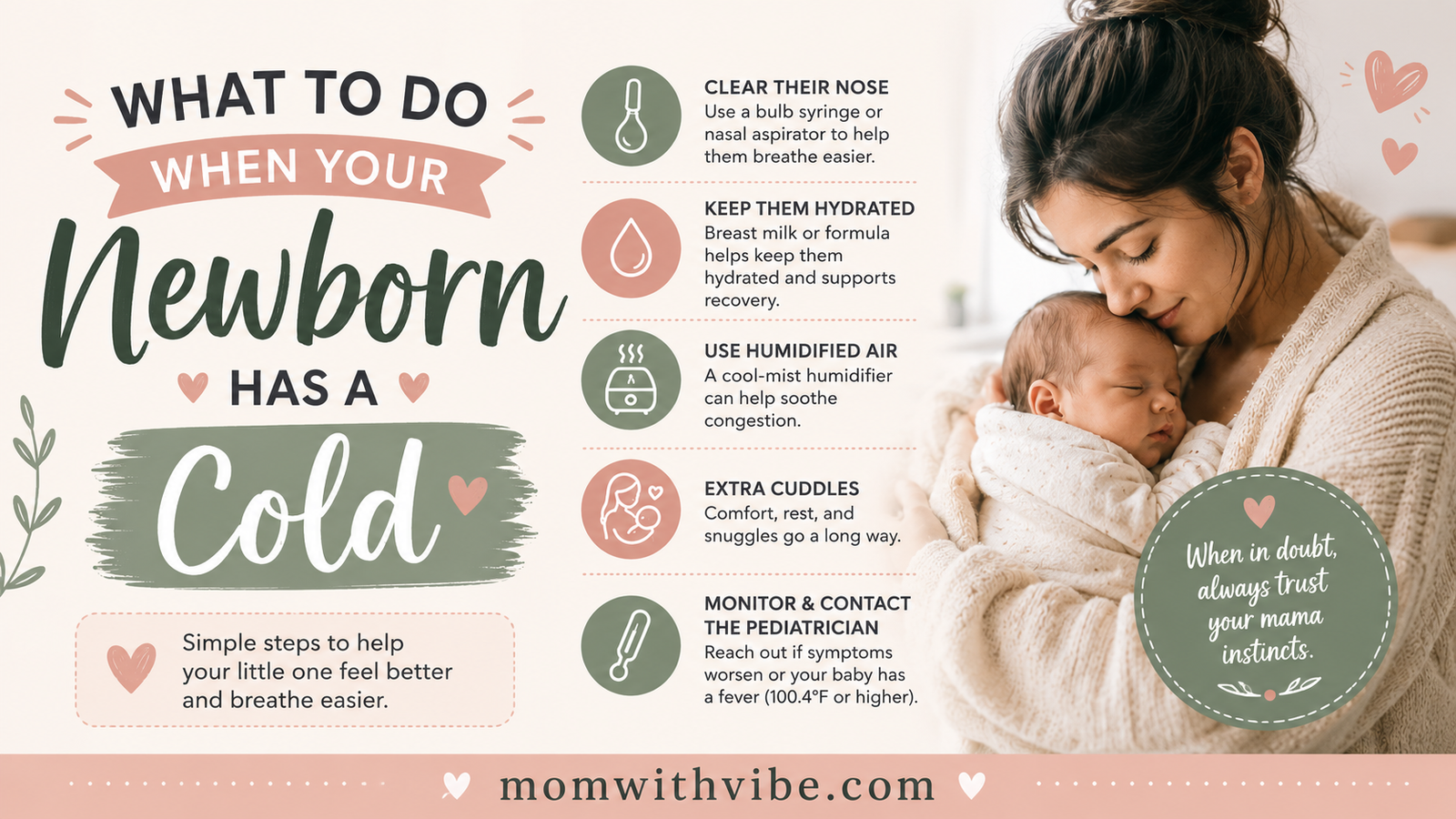
Use a rubber bulb syringe or nasal aspirator to clear mucus from your baby’s nostrils. A few drops of saline solution before suctioning can loosen thick secretions and make clearing the nose easier. It’s best to do this before each feeding and again before bedtime.
Related: Are Saline Nasal Drops for Babies Good? Risks and Precautions
2. Use a Cool-Mist Humidifier
Dry air can worsen congestion, but a cool-mist humidifier helps keep the air moist, making it easier for your baby to breathe. Remember to clean the humidifier daily to prevent mold and bacteria from building up.
3. Keep the Room Comfortable
Air that’s too warm can make your baby more uncomfortable. Dress them in light clothing and keep the room temperature around a warm but not hot 22°C (72°F). Watch for signs of overheating, such as sweating, since sweating can cause dehydration more quickly in babies.
4. Elevate the Head Slightly During Sleep
If your pediatrician agrees, you can place a towel under the head of your baby’s mattress to raise it slightly (never use pillows in a crib). This small incline helps mucus drain and makes breathing easier.
Related: How to Help Your Baby Sleep Better
5. Give Plenty of Fluids
Hydration helps recovery. Continue breastfeeding or formula-feeding as usual, even if your baby drinks smaller amounts. Shorter, more frequent feeds are better than fewer, larger ones when congestion makes feeding difficult.
Step 2: Keep Germs Away
Once your newborn catches a cold, your next goal is to stop it from spreading or getting worse.
-
Wash your hands before touching your baby or handling their bottles.
-
Ask visitors to postpone visits until your baby is better, and discourage anyone with symptoms from holding them.
-
Disinfect surfaces such as doorknobs, remote controls, and feeding equipment regularly.
-
Avoid smoking and strong scents near your baby, as they can irritate delicate airways.
Your baby’s immune system will strengthen over time, but for now, reducing their exposure to germs is essential.
Step 3: Watch for Warning Signs
Simple colds in newborns are rarely serious, but they can worsen quickly. It’s always best to be cautious and call your doctor if you notice any of the following:
-
Fever: A temperature higher than 38°C (100.4°F) in a baby under 3 months should be reported immediately.
-
Difficulty breathing: Rapid breathing, flaring nostrils, grunting, or chest retractions (skin pulling in between the ribs) are signs your baby is struggling to breathe.
-
Poor feeding: If your baby refuses to eat or has fewer than six wet diapers in 24 hours, dehydration may be setting in.
-
Unusual lethargy: Excessive sleepiness, weakness, or unresponsiveness should never be ignored.
-
Persistent cough or wheezing: These could signal bronchiolitis or another respiratory infection that needs medical attention.
-
Blue lips or skin: Call emergency services right away if this occurs.
When in doubt, trust your instincts. Babies under three months are more vulnerable to complications from even minor infections.
Related:9 Symptoms of Sinus Infection in Babies, Causes, and Treatment
Step 4: What You Shouldn’t Do
When caring for a sick newborn, it’s just as important to know what not to do.
-
Don’t give over-the-counter cough or cold medicines. These can cause serious side effects in infants.
-
Don’t use vapor rubs or essential oils. Many contain ingredients that can irritate your baby’s skin or airways.
-
Don’t force-feed a congested baby. Offer smaller, more frequent feeds instead.
-
Don’t ignore your instincts. If something doesn’t feel right, call your pediatrician—even if you can’t explain exactly why.
Step 5: When to Visit the Doctor
Even if your baby’s symptoms are mild, it’s often wise to visit your pediatrician, especially for babies under three months. The doctor will listen to your baby’s breathing and check for dehydration, ear infections, or other complications.
If your baby simply has a viral cold, your pediatrician will likely recommend continued hydration, rest, and home monitoring. Antibiotics won’t help since colds and other viral infections don’t respond to them.
If your baby develops severe symptoms such as breathing difficulty, blue lips, or a high fever, your doctor may recommend tests or hospital observation with oxygen support.
Step 6: Helping Your Baby Sleep Better
Sleep can be difficult when your baby’s nose is blocked. These small steps can make a big difference:
-
Use saline drops and suction before bedtime to clear nasal passages.
-
Keep the sleeping area calm, dim, and quiet.
-
Try a white noise machine or a gentle lullaby.
-
Feed your baby before sleep so they don’t wake up hungry.
Clinginess and fussiness are normal when a baby is sick. Offer extra cuddles and soothing. Rocking or contact naps can help them feel secure and rest more easily.
Related:10 Benefits of Co-Sleeping with Your Baby
Step 7: Support Your Own Health
Caring for a sick newborn can be emotionally and physically draining. Try to rest when your baby sleeps and accept help from others when offered. Wash your hands regularly, eat well, and stay hydrated to reduce your own risk of catching the cold.
If you’re breastfeeding, continue as often as possible. Your milk provides natural antibodies that can help your baby recover more quickly. Breastfeeding remains one of the best natural defenses a baby has.
How to Prevent Future Colds
You can’t completely prevent illness, but you can take steps to reduce how often your baby gets sick:
-
Keep your baby away from crowded places for at least the first 3 months.
-
Make sure anyone who handles your baby washes their hands first.
-
Keep vaccinations up to date.
-
Clean bottles, pacifiers, and toys regularly.
-
Avoid daycare or crowded environments during peak cold and flu seasons.
As your baby grows, their immune system will strengthen. Though it’s hard to remember during those long, sleepless nights, every mild cold helps their immunity develop for the future.
The Bottom Line
A newborn’s cold is never pleasant, but it’s rarely serious. With patience, gentle care, and close observation, your baby will recover in a few days. They may be uncomfortable for a short while, but soon they’ll be back to their bright-eyed, cooing self.
Trust your instincts—they matter more than anything else. If your baby isn’t improving or something feels off, call your pediatrician. It’s always better to be safe than sorry, and a little reassurance can bring peace of mind to both you and your baby.
Save the pin for later

- Asperger’s Syndrome in Babies: Early Signs and Next Steps - October 7, 2026
- 12 Beautiful Baby Names That Mean Forest, Plus Woodland Picks - September 27, 2026
- 15 Fantastic Baby Nicknames for Boys, From Sweet to Playful - September 27, 2026