
Watching your baby discover their world often involves them putting everything into their mouth. While many changes like extra drool or gum sensitivity are normal parts of development, it is easy to feel anxious when you spot something unexpected. Whether you notice white patches, unusual sores, or persistent fussiness during feeding, figuring out what warrants a doctor visit can be overwhelming.
Most baby mouth issues are harmless, but some signs require prompt medical attention to prevent complications. Parents frequently worry about common hurdles like common signs of baby teething or the discomfort of thrush, and knowing the difference between typical changes and genuine warning signs helps you stay calm. This guide highlights exactly when you should reach out to your pediatrician for extra support.
Understanding these milestones and potential health concerns is an important part of your parenting journey. You can use these ways to relieve teething pain to manage daily discomfort, but you should always monitor your little one closely for shifts in behavior or appetite. If you ever feel uncertain, calling your doctor is the best way to get peace of mind.
What is normal in a baby’s mouth, and what is not?
Understanding your baby’s oral health often feels like a guessing game. Since infants use their mouths to explore everything from soft blankets to their own fingers, it is common to notice changes in their gums and saliva. A simple way to get comfortable with what is normal involves watching for typical developmental patterns. Most of the time, what you see is just a healthy baby growing and learning. However, knowing how to distinguish between standard growth milestones and signs of illness will help you feel more confident in your daily care.

Common mouth changes that usually happen with teething
Teething is a major milestone that brings predictable physical changes. As those tiny teeth push through the gums, your baby will likely experience a few common symptoms. Drooling often increases significantly, which is a normal response to the underlying gum irritation. You might also notice your baby chewing on their hands, toys, or even the edge of a bib to apply counter-pressure to their sore gums.
Beyond the extra drool and chewing, your baby might show these signs of teething:
- Swollen gums: The area where the tooth is emerging may look puffy, red, or slightly bruised.
- Crankiness: You might notice your little one is more irritable than usual, especially as they get tired.
- Slight temperature: Teething may cause a minor rise in body temperature, but it should not result in a high fever.
While these signs are common, it is important to remember that teething should not cause severe distress. Your baby might be uncomfortable, but they should still show an interest in feeding. If you find yourself worried about how to manage these symptoms safely, you can read more about the risks of using teething tablets to help guide your choices. If your baby refuses to eat or seems to be in extreme pain, it is time to check with a professional.
Signs that point to a problem, not just teething
Some mouth changes are not related to teething and require a closer look. If you notice symptoms that fall outside the typical range, it may be a sign of infection, irritation, or other issues like thrush. You should not ignore these warning signs, as early intervention often makes treatment much easier.
Keep an eye out for these indicators that your baby may need medical care:
- Persistent mouth sores or blisters: While a single sucking blister on the lip is usually harmless, newborn lip blisters that appear in clusters or on other parts of the mouth require an evaluation.
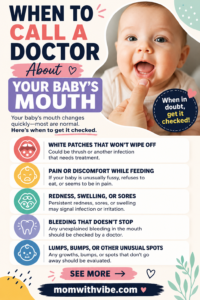
- White patches: If you see white spots on the tongue or inner cheeks that do not wipe away easily, this could be thrush in young babies.
- Unusual bleeding: Healthy gums might look red, but they should not bleed spontaneously.
- Feeding refusal: If your baby stops eating or shows clear signs of pain while sucking, this is a signal to call your doctor.
- Behavioral changes: A baby who appears unusually weak, lethargic, or exceptionally difficult to soothe may be dealing with more than just sore gums.
When in doubt, trust your instincts. If you notice mouth ulcers in babies or persistent bad breath that seems out of character, a quick conversation with your pediatrician provides clarity. Your doctor can help determine if the issue is a minor irritation or something that needs a specific treatment plan.
Call the doctor right away for these mouth symptoms
While many minor mouth changes are part of your baby’s growth, some indicators require immediate attention. Recognizing the difference between simple teething discomfort and a serious issue helps you protect your baby’s health. If you ever feel concerned about your little one’s condition, do not hesitate to contact your pediatrician. Trusting your instincts is the most important part of your role as a parent.
Feeding problems, fewer wet diapers, and other dehydration red flags
Dehydration in infants is a serious concern because it happens much faster than in older children or adults. Your baby depends on you for their hydration, and any disruption in their feeding pattern acts as a primary warning sign. If your baby refuses to nurse or won’t take their bottle, they may be struggling with underlying mouth pain or an illness that makes swallowing difficult.
Watch for these specific signs that indicate your baby needs medical care:
- Decreased wet diapers: A significant drop in the number of wet diapers, or a completely dry diaper for eight hours or more, is a major alert.
- Lack of tears: If your baby cries but you do not see any tears, their body may already be low on fluids.
- Dry mouth or sticky saliva: A parched mouth or thick, tacky saliva suggests that your baby is not getting enough hydration.
- Sunken soft spot: A fontanelle that appears depressed or sunken on the top of your baby’s head is a classic, urgent sign of dehydration.
When you notice these symptoms, identifying signs of baby dehydration is critical for preventing complications. Dehydration often stems from a baby being unable to swallow comfortably, so addressing the root cause alongside fluid intake is necessary. Consult Mayo Clinic’s guide to sick babies to learn more about when you should seek professional help for your little one.
White patches, mouth sores, or blisters that do not improve
A healthy baby’s mouth is generally pink and clean. If you see white patches on the tongue or inner cheeks, they could indicate oral thrush, a common fungal infection. You can gently try to wipe the white area away with a clean cloth. If the patch remains, or if it looks like a thick, cottage-cheese-like coating that doesn’t budge, it is time to call your pediatrician.
Viral sores or blisters also warrant professional attention. While a single, harmless blister on the lip from sucking is common, you should look for patterns that signal a deeper problem:
- Persistent sores: Any sore that lasts longer than two weeks should be evaluated by a doctor or dentist to rule out infections or other issues.
- Spreading blisters: If you notice clusters of blisters appearing around the mouth, gums, or tongue, they might be signs of viruses like hand, foot, and mouth disease.
- Refusal to eat: If the sores are clearly painful and causing your baby to avoid feeding, seek medical advice for relief options.
Always remember that recognizing signs of illness in newborns involves looking at the whole picture. If your baby has sores accompanied by a high fever or irritability, they need a proper diagnosis to get the right treatment. For more context on common viral causes, you can read about HFMD symptoms and complications to understand what to watch for.

Fever, swelling, bleeding, or a baby who seems very sick
Your baby’s overall behavior often gives the biggest clue that something is wrong. Any fever of 100.4 F or higher in a baby under three months old is an emergency, and you must call the doctor immediately. Beyond fever, watch for physical changes in the mouth area that indicate an infection or injury.
Swelling, in particular, should be monitored closely. If you see sudden, one-sided swelling in the jaw or face, it could be a sign of a dental abscess or a blocked salivary gland. Spontaneous bleeding, where gums bleed without any injury, is not normal and needs an exam. Furthermore, if your baby acts listless, is harder to wake than usual, or seems weak, these signs go beyond teething discomfort.
Trouble breathing or swallowing is an emergency
If your baby is struggling to breathe, choking, or drooling excessively because they cannot swallow their own saliva, get medical help right away. These symptoms are emergencies that require immediate intervention to ensure your baby’s airway remains clear. Do not wait for an appointment if your child seems unable to take in milk or saliva, as this indicates a serious blockage or reaction that a doctor must assess immediately.
What different baby mouth problems can look like
Knowing how to spot the difference between typical infant development and actual health concerns helps you feel more confident in your daily routine. While a baby’s mouth is constantly changing as they explore, certain patterns signal an underlying issue that needs a doctor’s eye. Common problems often stem from yeast infections, structural issues, or simple irritation from chewing and sucking. Keeping a close watch on your baby’s behavior and specific mouth appearance makes it much easier to decide when to seek professional advice.

How thrush looks and feels in a baby
Thrush is a common fungal infection that appears as white, velvety patches in the mouth. These patches frequently show up on the tongue, inner cheeks, or the roof of the mouth. Unlike leftover milk residue, these spots do not wipe away easily. If you try to clean them off, you might notice redness or even slight bleeding underneath.
Babies with thrush often struggle during feeding because their mouth feels sore. You might notice them acting particularly fussy, pulling away from the breast or bottle, or refusing to eat altogether. Because this infection can spread quickly, doctors usually suggest a specific treatment plan to clear it up. If you need help managing this at home, you can find safe home care tips for baby oral thrush to support your little one’s comfort.
When tongue tie may be the real issue
Tongue tie is a structural concern rather than an infection. It happens when the small strip of tissue connecting the tongue to the floor of the mouth is too short or tight. This restriction keeps your baby from moving their tongue properly, which causes several distinct feeding challenges.
Watch for these signs that suggest a potential tongue tie:
- Latch struggles: Your baby has trouble maintaining a good latch on the breast or bottle.
- Feeding cues: You hear clicking sounds while they nurse or take a bottle.
- Physical strain: The baby seems to tire out quickly during feeds or takes a very long time to finish.
- Parental pain: You experience significant nipple pain because your baby cannot latch deeply.
- Weight concerns: Your baby shows slow or inconsistent weight gain despite frequent efforts to feed.
If you suspect your baby has a restricted tongue, mention these observations to your pediatrician. They can assess the movement of your baby’s tongue and determine if a simple procedure would help improve their feeding experience.
Sores and blisters from irritation or infection
Mouth sores and blisters can appear for several reasons. Sometimes, a baby develops a small blister on the lip simply from frequent sucking or rubbing. This is usually harmless and resolves on its own. However, sores can also result from viruses, canker sores, or accidental injury.
Pay attention to any sore that looks angry, raw, or inflamed. If you notice clusters of blisters, sores that keep spreading to other parts of the mouth, or areas that do not heal after a few days, call your doctor. These signs often point to a viral infection or another condition that requires a professional assessment. If your baby seems to be in intense pain or suddenly refuses to eat, this is a clear sign that they need a medical checkup to rule out anything serious.
When you should make an appointment, even if it is not an emergency
Not every trip to the doctor needs to happen in a rush. Sometimes, the most important signs of a potential issue are subtle, slow to develop, or just plain persistent. While you know your baby best, certain patterns in their oral health suggest that a routine checkup is the right move. Bringing these concerns to your pediatrician or a dentist allows you to get ahead of small problems before they grow into larger sources of discomfort for your little one.
Symptoms that keep coming back or last too long
It is natural for babies to have occasional minor irritations in their mouth. However, you should pay close attention if these issues do not go away as expected. Any sore, white patch, or gum irritation that lingers for more than two weeks is a signal to schedule an office visit. Even if your baby seems generally happy, a persistent spot may indicate an underlying infection or a need for a different treatment approach.
Recurring symptoms often point to a specific cause that requires professional attention. Consider these scenarios:
- Repeated thrush: If you think you cleared up a yeast infection only to have it return, the yeast might be hiding on pacifiers or bottle parts. A doctor can help you identify the source and recommend a stronger or more effective treatment.
- Persistent sores: Frequent mouth sores might result from a viral infection, a nutritional deficiency, or a minor inflammatory condition. A quick check helps rule out these possibilities.
- Bad breath: While most baby breath is harmless, persistent, foul-smelling breath can sometimes signal an infection in the mouth, throat, or even the sinuses.
When you see signs that suggest your baby’s mouth health issues are not resolving, you are doing the right thing by requesting an appointment. You do not need to wait for a crisis to seek clarity or help.
Pain, fussiness, or feeding changes that are hard to explain
Feeding is a vital part of your baby’s daily routine, so changes in their habits are often the first sign that something is wrong. You might notice your baby pulling away from the breast or bottle, arching their back, or crying during a meal. While these behaviors can sometimes stem from gas or simple distraction, they also indicate that the act of sucking is uncomfortable.
Shortened feeding sessions or a sudden drop in appetite warrant a professional look if they happen repeatedly. A doctor can observe your baby during a feeding or check their oral structures to identify subtle issues that you cannot see at home. They might look for signs of a tight tongue tie or deep gum sensitivity that makes traditional feeding difficult.
If your baby is struggling to maintain their weight or seems physically distressed whenever they eat, please reach out to your care provider. Early intervention makes it easier to address these feeding roadblocks and helps your baby get back to happy, comfortable meals.
What to do before and after you call the doctor
Calling your pediatrician about your baby’s oral health can feel nerve-wracking, but having a simple plan helps you stay composed. Preparation allows you to provide the most accurate information quickly, which helps your care team give you the best guidance. Once you hang up, following a few gentle steps keeps your baby comfortable while you wait for your appointment or follow the advice given over the phone.

Information to have ready for the call
Before you pick up the phone, take a moment to gather the facts. Clear details help your doctor assess the situation without needing to guess. Write down these items so you don’t forget anything important while you are talking to the office staff:
- Basic vitals: Note your baby’s current age and take their temperature if you suspect a fever.
- Symptom specifics: Describe exactly what you see. Is it white patches, red sores, or swelling? Mention where these appear, such as the tongue, gums, or inner cheeks.
- Duration and progression: State when you first noticed the issue and whether it seems to be spreading or getting worse.
- Feeding patterns: Tell the doctor if your baby is eating less, refusing bottles or nursing, or showing signs of pain during feeds.
- Hydration markers: Count the number of wet diapers over the last 24 hours to help the doctor gauge fluid intake.
- Documentation: If it is safe and easy to do, take a clear, well-lit photo of the area. Doctors often appreciate being able to see what you are describing.
It is also helpful to ask the office if you should see your pediatrician or if they recommend a visit to a pediatric dentist for specialized care.
How to help your baby stay comfortable while waiting
Once you have received advice or scheduled your visit, focus on keeping your little one as relaxed as possible. Small changes in your care routine often make a big difference in how your baby handles mouth irritation. Stick to gentle, recommended practices to avoid adding extra distress to their sensitive gums or mouth.
Try these simple steps to support your baby:
- Increase feeding frequency: Offer smaller, more frequent feeds if your baby is struggling to finish a full bottle or nursing session.
- Keep the mouth clean: Follow any specific hygiene instructions your doctor provides, such as using a damp, soft cloth to gently clean the area.
- Manage the environment: Maintain a calm atmosphere, as stress can sometimes make a baby more sensitive to physical discomfort.
- Skip unverified remedies: Avoid using teething gels, honey, or other home remedies that are not explicitly approved for your baby’s age.
Remember that discomfort often makes babies want extra cuddles. Your presence is the best way to keep them calm while you wait for their symptoms to resolve or for your upcoming appointment. If the situation changes before your visit, contact your doctor again to update them on your baby’s condition. You are doing a great job by being observant and proactive.
Conclusion
Most changes you notice in your baby’s mouth are just a normal part of growing up. You will see plenty of drool and gum chewing during teething, which are usually harmless stages. However, some red flags demand a professional look. Always watch for poor feeding, signs of dehydration, or a persistent fever. You should also take action if you see sores that worsen over time, white patches that do not wipe away, or any trouble with breathing or swallowing.
These symptoms suggest your baby needs care beyond what you can provide at home. If you notice these warning signs, identifying concerning symptoms in children early helps you get the right support quickly.
Trust your instincts as a parent. It is always okay to call your pediatrician if you feel worried, even if the symptoms seem minor. A quick check provides the peace of mind you need to keep your little one happy and healthy.
Save pin for later

- Asperger’s Syndrome in Babies: Early Signs and Next Steps - October 7, 2026
- 12 Beautiful Baby Names That Mean Forest, Plus Woodland Picks - September 27, 2026
- 15 Fantastic Baby Nicknames for Boys, From Sweet to Playful - September 27, 2026