
Parents often come across the terms rainbow baby and sunshine baby while searching for words to describe their family story. The key difference is timing: a sunshine baby is born before a later pregnancy or infant loss, while a rainbow baby is born after a loss.
These are informal community terms, not medical diagnoses, and their meanings can vary between families. A new baby may bring comfort, fear, grief, hope, or a mix of feelings, and you don’t have to feel ready or joyful in a particular way to use, avoid, or question either label. If you’re considering another pregnancy, this guide on trying to conceive after miscarriage may offer helpful context.
The sections ahead explain the difference between a rainbow baby and a sunshine baby, along with the other terms you may hear and the feelings that can accompany them.
Rainbow Baby vs. Sunshine Baby: What the Terms Mean
The clearest difference is timing. A rainbow baby is born after a pregnancy or infant loss, while a sunshine baby is born before a later loss. Both phrases are informal, and families may use them differently.
What does rainbow baby mean?
A rainbow baby is a child born after a loss such as miscarriage, stillbirth, ectopic pregnancy, molar pregnancy, termination for medical reasons, neonatal death, or infant loss. Because definitions of pregnancy and baby loss can vary, families may use the term after many different experiences. March of Dimes explains pregnancy loss and grief in broader detail.
The name comes from the image of a rainbow appearing after a difficult storm. For some parents, it expresses hope after grief and acknowledges the possibility of joy returning. Still, a new baby does not replace the baby who died. Love for one child doesn’t cancel love for another, and a rainbow pregnancy may bring fear, sadness, or anxiety alongside happiness.
Some parents say “rainbow pregnancy” while they’re expecting and wait until the birth to use “rainbow baby.” Others use the terms more broadly, including a child conceived or welcomed through adoption, surrogacy, or another path after loss. Not every parent connects with the rainbow metaphor, so no family needs to claim the label.

What does sunshine baby mean?
A sunshine baby is a child born before a later pregnancy or child loss. Some parents use the phrase to honor the child who brought light into their lives before a painful experience changed their family story.
The term appears mostly in pregnancy-loss communities, so doctors, relatives, and friends may not recognize it. You might need to explain what it means, or choose different language that feels more natural.
A sunshine child is still a child, not a source of emotional care for a grieving parent. Parents can grieve and love at the same time, but the child shouldn’t be expected to comfort an adult, carry family sadness, or understand the loss as part of their role. Emotional support after miscarriage can help parents process those feelings separately.
A simple family timeline can make the difference clear
Consider this example:
- A family welcomes Child A.
- The family experiences a miscarriage or stillbirth.
- The family later welcomes Child B.
Child A may be called the sunshine baby, while Child B may be called the rainbow baby. The labels describe each child’s place in the family timeline, not their personality, health, behavior, or value.
After two losses, some online communities use “double rainbow baby” for a later child. That phrase is also informal and isn’t a medical term. Each family can decide whether any of these names feel comforting, accurate, or appropriate.
Why Parents Use Rainbow and Sunshine Baby Language
These terms carry emotional meaning beyond their simple timeline definitions. They help parents describe a family story that includes love, loss, hope, and memories that may be difficult to explain in ordinary conversation.
A rainbow baby can bring hope without erasing grief
A pregnancy or birth after loss can bring excitement, fear, guilt, gratitude, sadness, or numbness. These feelings may arrive together, sometimes within the same day. A parent may feel thankful for a healthy ultrasound while also grieving the baby who died.
That emotional mix is common after pregnancy loss. The American College of Obstetricians and Gynecologists explains emotional support after pregnancy loss, including support for grief, anxiety, and depression. Using the phrase rainbow baby doesn’t mean a parent has healed, moved on, or stopped remembering.
A rainbow baby is a new and separate child. The baby doesn’t replace the child who died, repair the family’s pain, or carry responsibility for making everyone happy. Parents can love their rainbow baby fully while continuing to miss another child.
A rainbow baby can bring new joy into a family without becoming the cure for its grief.
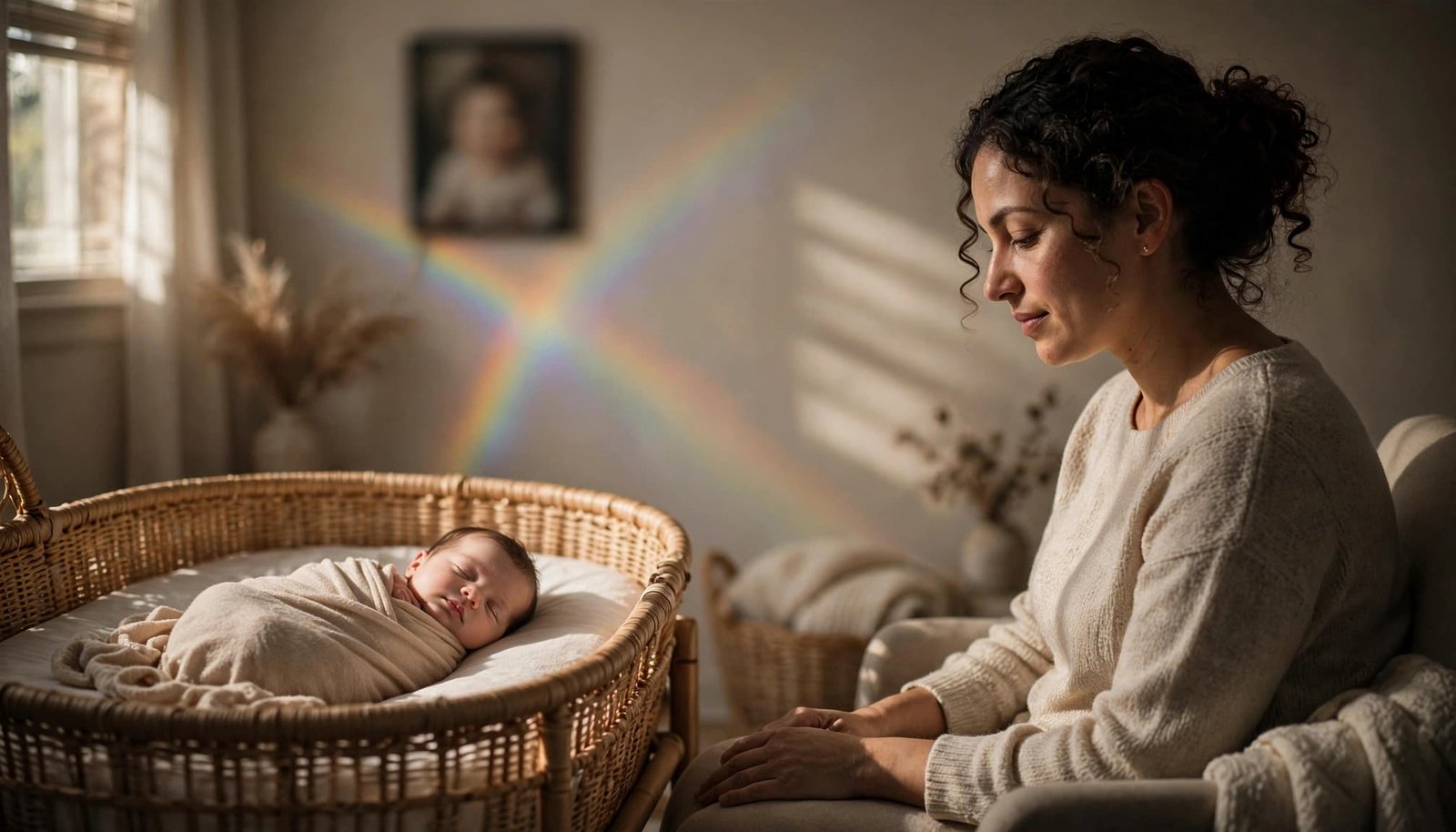
Language can hold both parts of the story. A parent might say, “We welcomed our rainbow baby after losing our first child,” if that wording feels honest. Another parent may prefer to discuss the loss separately or avoid labels altogether.
A sunshine baby honors life before the loss
Parents may use sunshine baby when they look back at an older child’s early years. The term can honor the period before miscarriage, stillbirth, or infant loss changed the shape of the family. It recognizes that this child brought light and love before a painful event.
Still, the label may feel uncomfortable. A child is more than a symbol of happiness before grief. They have their own personality, needs, memories, and future. Parents shouldn’t ask a sunshine child to comfort them, understand the loss, or take part in their healing.
Some families use the phrase privately, while others share it with relatives or online communities. Either choice is valid. If you notice that the label feels limiting, simply call your child by their name and describe the family timeline in ordinary words.
The same family may use both terms in different ways
Labels can change as grief changes. One parent may use rainbow baby often, while another may prefer subsequent pregnancy, baby after loss, or no label at all. Partners can honor the same child while choosing different words.
There is no required emotional timeline. You don’t have to include these terms in a birth announcement, birth story, social media post, or family conversation. If grief continues to affect sleep, daily life, or your ability to care for yourself, postpartum mental health support can help you find appropriate care. Naming the experience is optional, but receiving support never is.
What Pregnancy After Loss Can Feel Like for Parents
Pregnancy after loss often begins before a baby has a chance to feel real. A positive test can bring hope, but it can also wake up memories of the pregnancy that ended. Extra appointments, careful monitoring, and anxiety around familiar milestones may become part of daily life.
The emotional experience starts during pregnancy, which is why rainbow baby and rainbow pregnancy don’t mean exactly the same thing.

Rainbow pregnancy is not the same as a rainbow baby
A rainbow pregnancy is the pregnancy that follows a loss. A rainbow baby usually means the child born after that loss. The difference matters because pregnancy outcomes remain uncertain until birth.
Some parents use rainbow baby during pregnancy because the phrase feels hopeful. Others wait until their child arrives safely before using it. Neither choice is more correct. The term doesn’t predict a healthy pregnancy, an uncomplicated birth, or any particular outcome.
Loved ones and writers should ask which phrase a parent prefers. You might say, “Would you rather call this a rainbow pregnancy or a pregnancy after loss?” That small question respects the parent’s experience instead of assigning a label.
Anxiety can appear alongside excitement
A parent may feel grateful after a reassuring scan, then panic when symptoms change. A missed appointment, a quiet day of pregnancy symptoms, or a familiar ache can bring fear rushing back. Even when everything looks medically normal, the body may remember what happened before.
Certain moments can feel especially difficult:
- The week of a previous loss or the due date of the baby who died can bring unexpected grief.
- Ultrasounds, blood tests, and other scans may create fear before they provide reassurance.
- Baby showers, preparing a nursery, labor, and the first weeks after birth can all feel emotionally exposed.
Practical support can make these moments easier to manage. A partner might attend appointments, help write down questions, or handle baby-shower decisions. A parent may also benefit from support for pregnancy mood changes, counseling, or a pregnancy-after-loss group. Support may not remove fear, but it can keep fear from becoming something a parent carries alone.
When professional support may be helpful
Contact an obstetrician, midwife, or qualified mental health professional if grief, anxiety, panic, depression, sleep problems, or intrusive thoughts make everyday life difficult. Medical concerns during pregnancy also deserve a direct conversation with your health care provider.
Seeking help doesn’t mean you are ungrateful for your rainbow baby. It means you deserve care while holding hope and grief together. Postpartum Support International offers loss and grief resources, including support groups and referrals.
If you think you may harm yourself or someone else, seek urgent help now. Call or text 988 in the United States, call 911, or go to the nearest emergency room.
How to Use Rainbow Baby and Sunshine Baby Terms With Care
Rainbow baby and sunshine baby are optional labels, not titles that others can assign. The parent who experienced the loss should lead the wording, whether the conversation happens at home, in a birth announcement, or online.
Follow the parent’s words and ask when you are unsure
Start with the language the parent uses. If they say “my baby,” don’t replace it with “the fetus” or “the pregnancy.” Some parents prefer pregnancy, fetus, loss, or another term, while others use baby throughout their story. The March of Dimes guidance on miscarriage and grief recognizes that families may need space to remember and describe their loss in personal ways.
When you aren’t sure, ask gently:
- “What words feel right for you?”
- “How would you like me to talk about your baby?”
- “Would you like me to use the term rainbow baby?”
- “Is it okay if I share this part of your story?”
Your goal isn’t to correct someone’s language. You are showing respect for their experience. Mirror the words they choose, and remember that preferences can change over time. A parent might use rainbow baby during one season and prefer baby after loss later. Both choices deserve respect.

Avoid phrases that minimize pregnancy or infant loss
Some comments sound encouraging but can dismiss grief or place pressure on a future pregnancy. Avoid statements such as:
- “It was just a heavy period.”
- “At least you can try again.”
- “You are young.”
- “Everything happens for a reason.”
- “Your rainbow baby makes it worth it.”
The last phrase can make a later child sound like compensation for a death. A new baby may bring love and hope, but that child doesn’t erase the loss or repair the parent’s pain.
Simple words often offer more comfort. Try saying, “I am sorry,” “I remember your baby,” or “I am here to listen.” If you don’t know what to say, honesty is kinder than a quick explanation.
Do not let a label replace the child’s identity
A rainbow baby or sunshine baby is still an individual child with a name, personality, needs, and future. Parents may find the label meaningful, but they don’t have to describe their child as a miracle, healer, or replacement. Those words can create an emotional burden the child never agreed to carry.
For older children, keep explanations age appropriate. You can share a simple family story without giving private details about the pregnancy or loss. Before posting publicly, ask the parent and consider the child’s privacy, especially if the story includes a name, photo, medical detail, or birth history. A label may describe part of a family timeline, but the child’s own identity should always come first.
Choosing the Words That Feel Right for Your Family
There is no perfect phrase for a family shaped by pregnancy or infant loss. You may use rainbow baby, sunshine baby, subsequent pregnancy, your child’s name, or no special label at all. The right choice is the one that feels safe and honest in that moment.
There is no required way to honor a loss
You don’t have to use a symbolic term, post an announcement, hold a ceremony, or explain your family history to anyone. Grief doesn’t need a public record to be real.
Some parents find comfort in a memory box, a name, an anniversary ritual, a private letter, or a pregnancy-loss support group. Others prefer to keep the loss between a few trusted people. Both choices deserve respect. Support organizations such as Postpartum Support International’s loss resources offer several ways to seek help without requiring you to share more than you want.

Your comfort matters more than anyone else’s expectations. If a tradition brings peace, keep it. If it makes grief feel heavier, you can set it aside.
Use the terms differently in public and private settings
A parent might say rainbow baby with close friends but use baby after loss at a doctor’s appointment. At work, school, or online, a simpler phrase may feel easier. Many people haven’t heard these terms, so a little context can prevent confusion.
You could say, “We use rainbow baby to describe our child born after a loss.” You can also say, “We prefer to use our baby’s name.” Either sentence gives others useful guidance without requiring a full explanation.
Pause before sharing on social media. Public posts can remain searchable and may be seen by relatives, classmates, or your child years later. As your child grows, they may have their own feelings about being described as a rainbow or sunshine baby. Their privacy deserves consideration too.
Let your language change as your family grows
You don’t face a deadline for choosing a label, and you don’t have to keep using one. A family may use sunshine baby or rainbow baby during early grief, then later speak about the children by name or describe the family history in different words.
Partners may choose different terms, and both can be valid. Revisit your language after a birth, an anniversary, a new pregnancy, or a change in how you process the loss. The meaning belongs to your family, not to internet trends or outside expectations.
Conclusion
A sunshine baby is born before a later pregnancy or infant loss, while a rainbow baby is born after a loss. This timeline is the clearest difference, but families may use these terms in different ways.
Both labels are informal, symbolic, and optional. They aren’t medical terms, and no parent must use them in a birth announcement, family conversation, or personal story. If pregnancy after loss brings mixed emotions, ways to support your emotional health during pregnancy can offer a starting point alongside support from trusted people and health care professionals.
A new baby can bring love and hope without replacing the baby who died. Every family deserves room to grieve, remember, and describe its story in the words that feel honest and safe.

- Dry Cough in Kids: 5 Causes and Safe Solutions - September 23, 2026
- How to Help a Child Deal With Anxiety at Home - September 12, 2026
- How to Prepare Your Child for the First Day of School - September 12, 2026