
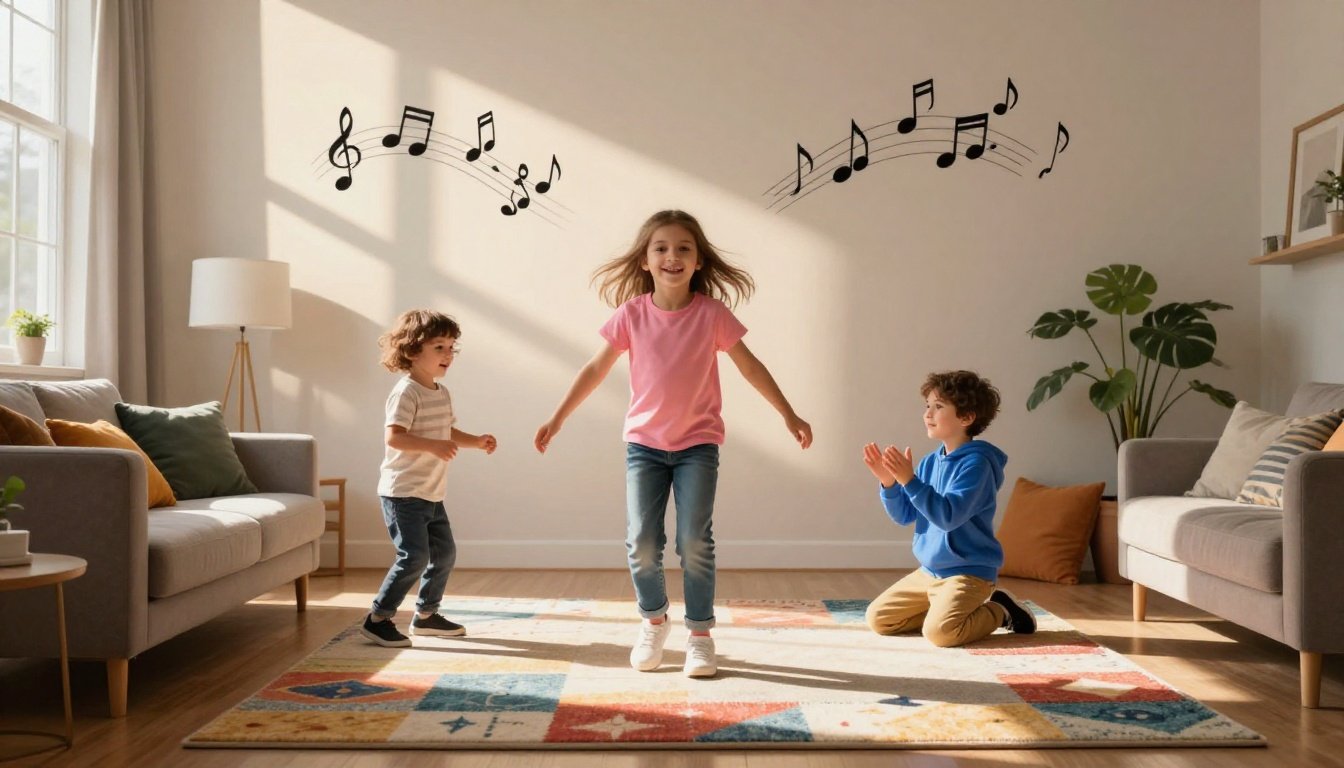
The kids arrive with big energy, but within minutes, the toys are scattered and someone is calling, “I’m bored!” Dance games for kids’ hangouts turn that restless moment into laughter and movement with little more than music, open space, and a few simple rules.
These ideas work indoors or outdoors, and children don’t need dance experience to join in. You’ll find music-based games, music-free choices, cooperative play, and easy rule changes for toddlers, school-age kids, and mixed-age groups. For more inspiration, explore these indoor movement games for children, then start with the first game below. Watch a kid-friendly freeze dance example here: https://www.youtube.com/watch?v=2UcZWXvgMZE
10 Dance Games for Kids’ Hangouts That Keep Everyone Moving
These six games are simple enough for a living room, backyard, or playroom. Set clear boundaries first, then keep rounds short so children can reset before boredom or frustration takes over.
Freeze Dance Makes Every Stop Feel Like a Surprise
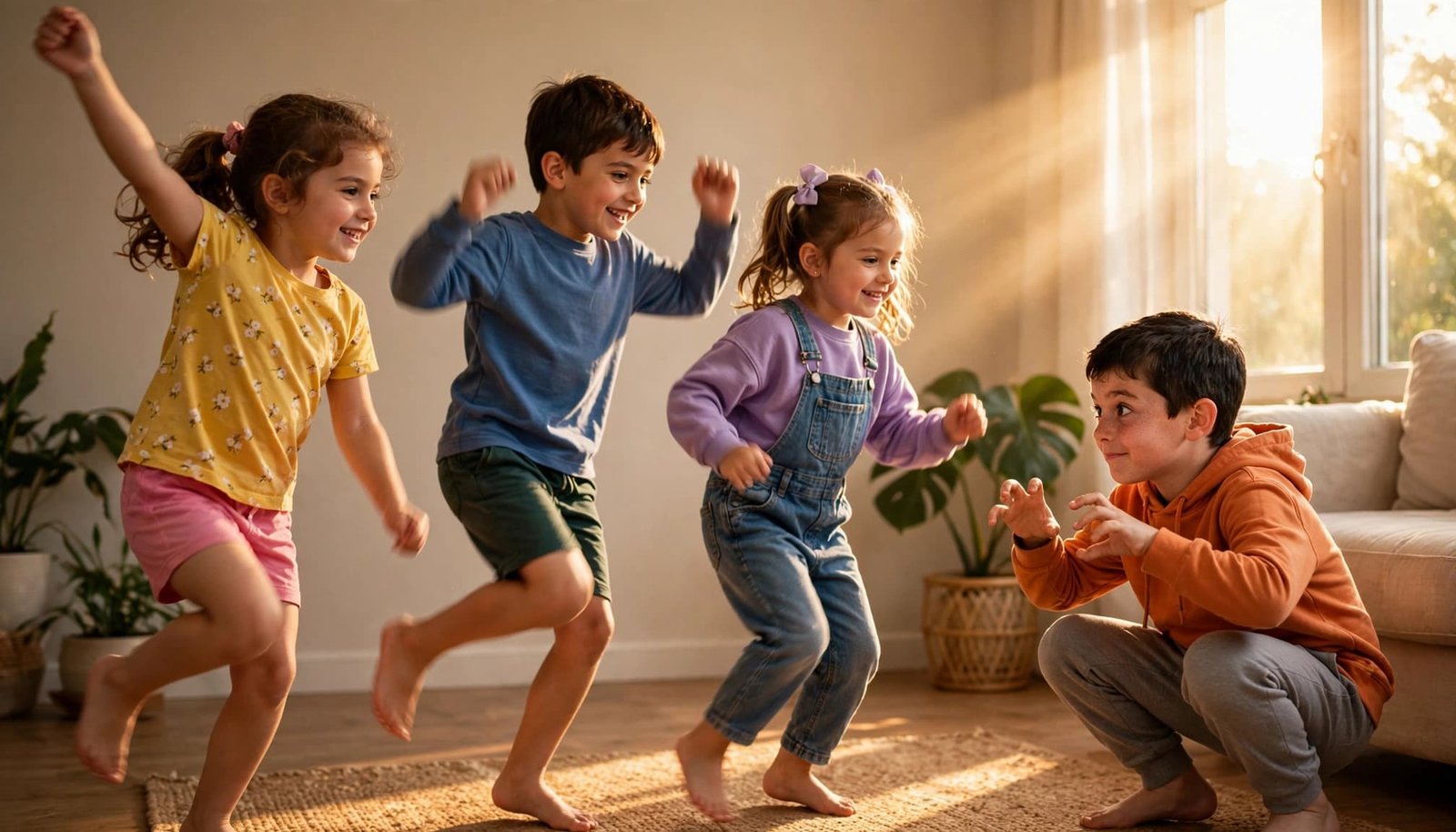
Play music while the children dance, then pause it without warning. Everyone freezes until the music starts again. For younger children, skip elimination. Let every child wiggle, reset, and rejoin the next round, especially if being “out” could bring tears.
Add a new freeze call each round, such as an animal pose, superhero landing, slow motion, or a funny facial expression. Children around age 2 can try simple stopping games, while freezing becomes easier for many children around age 4. A short song clip and quick restarts keep the room lively.
For more toddler-friendly movement ideas, try these dance and movement activities for toddlers.
Musical Statues Challenge Kids to Hold a Pose
Musical statues are a more statue-focused version of freeze dance. Children move while the music plays, and the adult pauses it to watch for clear movement. Older children can leave the game when they move, or everyone can earn a point for holding still.
For ages 3 and 4, use a no-elimination format. Give the group a point when everyone freezes, then celebrate a shared goal. Older children may enjoy structured judging, such as choosing the most creative pose or the steadiest statue.
Name a final statue pose before the last round, or let the last player choose the next song. You can also find more indoor movement ideas for young children.
Follow the Leader Turns Everyone Into a Choreographer
One child leads a line or circle while everyone copies. The leader might clap, spin, shake their shoulders, walk on tiptoes, take robot steps, or create a silly walk. After 30 seconds, choose a new leader so every child gets a turn.
Music helps set the mood, but you don’t need it. Count steadily, or let the leader choose the pace. Keep movements easy to copy, and remind children to leave space between bodies.
Dance Charades Let Kids Act Out Their Biggest Ideas
One child silently acts out a prompt through dance while everyone guesses. Use animals, sports, storybook characters, jobs, weather, or favorite foods. Younger children can use picture cards or choose between two options.
There are no wrong moves, which makes this game welcoming for shy children and mixed abilities. It also works well without music. Give each child a short turn, then let the group applaud every guess.
Balloon Dance Games Add a Gentle Team Challenge
Children keep a balloon in the air without using their hands, or play Balloon Lava by tapping it around the room before it touches the floor. Make both versions cooperative by having everyone protect one balloon or beat a shared time goal.
Adults should supervise closely, especially with toddlers. Keep uninflated balloons away from young children, and remove broken pieces immediately.
Dance Command Game Builds Energy Without Any Equipment
Call out commands such as dance, freeze, spin, tiptoe, wiggle, statue, and slow motion. For a memory version, children repeat the commands in the same order before adding another one.
In a noisy room, use a raised hand, clap, or light switch as the stop signal. Keep movements simple, and offer seated versions, such as hand dancing, shoulder shimmies, or facial expressions.
More Dance Games for Kids That Work With Small or Mixed-Age Groups
These five dance games add creativity, rhythm, and teamwork without needing a large group. They also adapt easily for toddlers, older children, and kids who prefer smaller movements.
Mirror Moves Encourage Careful Copying
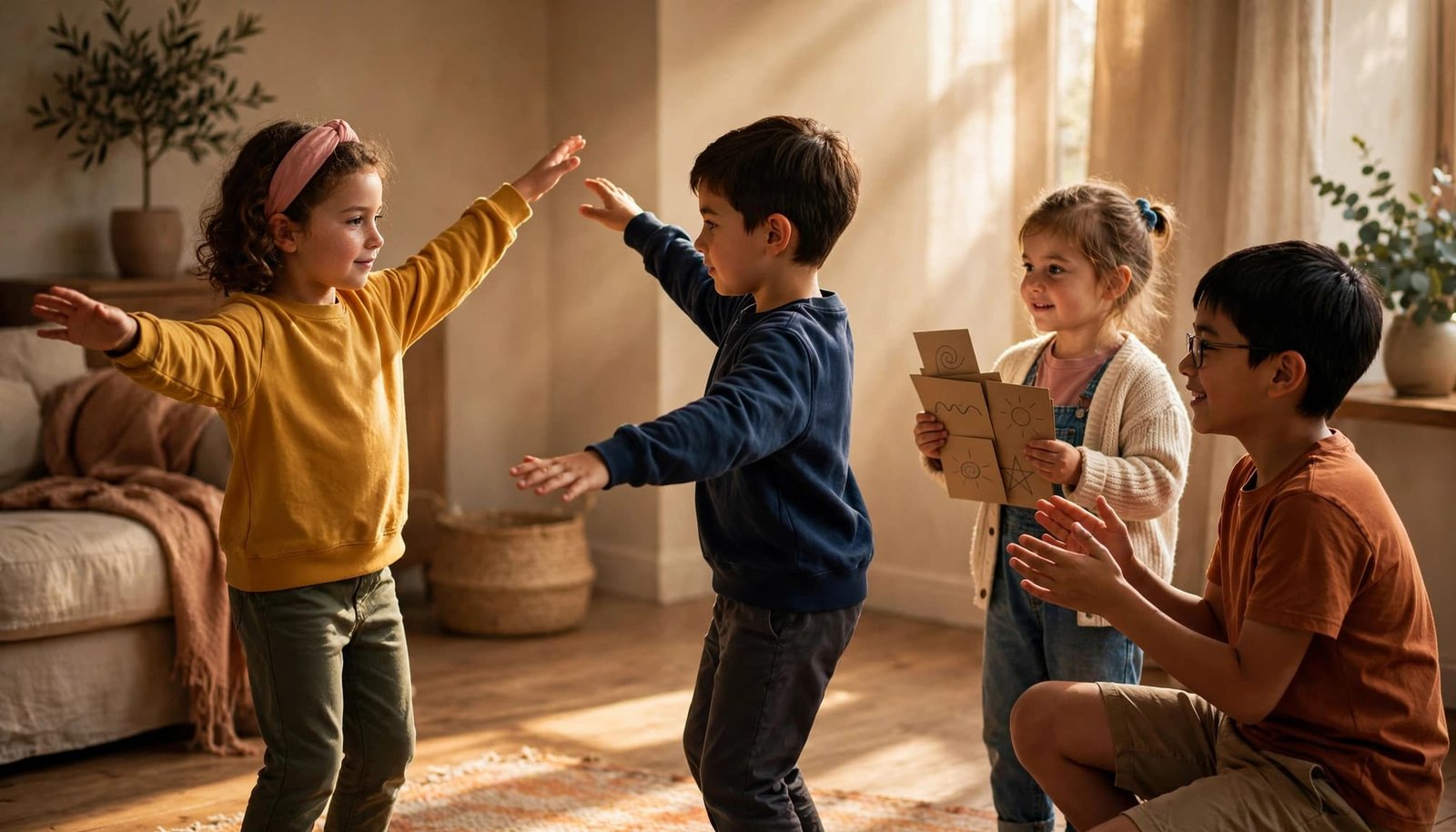
Pair the children and have one child become the leader. The leader creates slow movements while their partner copies them, as if both are standing in front of a mirror. Encourage smooth arm waves, gentle shoulder rolls, side steps, and simple poses instead of fast spins or jumps.
After 30 to 60 seconds, partners switch roles. For a larger group, choose one leader for the whole circle and let everyone mirror the same sequence. Children can also play while seated, using hand motions, arm movements, head turns, and funny facial expressions. This option helps children participate when the room feels crowded or standing becomes tiring.
Dance Dice Gives Every Round a Fresh Direction
Make simple dance dice with prompts for actions, body parts, speeds, and themes. One die might show robot arms, animal feet, or shoulder shimmies. Another can call for slow motion, tiny movements, or giant movements. Add themes such as underwater, outer space, jungle, or marching band.
Roll two dice together, then let the children combine the ideas. For example, “slow motion” and “animal feet” could become a sleepy penguin dance. If you don’t have dice, write prompts on cards and draw them from a bowl. Children can skip any movement that feels uncomfortable or unsafe, then choose a different prompt. These movement-based learning games also give older children a chance to invent prompts for younger players.
Dance Relay Races Focus on Creativity Instead of Speed
Mark a short path with a pillow, cone, or strip of tape. Children can form teams or stand in one line. Each child travels to the marker using a different dance style, returns, and tags the next player.
Suggest crab steps, moonwalk attempts, ballet walks, robot moves, or steps that match a drumbeat. Indoors, make a firm no-running rule and leave plenty of space between players. Rather than rewarding the fastest child, let the group choose the most creative move. That change keeps the game welcoming for children with different energy levels and movement abilities.
Pass the Move Builds a Group Routine
Have one child start with a simple move, such as a clap, step, or shoulder wiggle. The next child copies it and adds one new move. The group repeats the growing sequence before the next player adds another piece.
Use short patterns for younger children, while older kids can create longer routines. A circle format works well because everyone stays in place, takes a turn, and learns each person’s name. Keep the routine cooperative, so the group celebrates remembering the sequence instead of comparing dancers.
Musical Bumps Offer a Silly Way to Change Levels
Play music while children dance, then stop it at different moments. Instead of racing to sit first, call out a level change such as standing tall, kneeling, sitting, crouching, or making a small shape on the floor.
Remove pushing, grabbing, and elimination. Children can hold their shape until the music starts again, then rejoin the dance. An adult should choose movements that match the available space and the children’s abilities. The CDC recommends that children ages 3 to 5 stay active throughout the day, so short, playful rounds can fit naturally into a party or playdate. (CDC activity guidelines for children)
How to Choose the Right Dance Game for the Kids at Your Hangout
The best dance game matches the children, not just the playlist. Consider their ages, personalities, group size, energy levels, movement needs, and comfort with competition before you choose the first activity. When children feel capable and welcome, they join in more freely.
Match the Game to Their Ages and Personalities
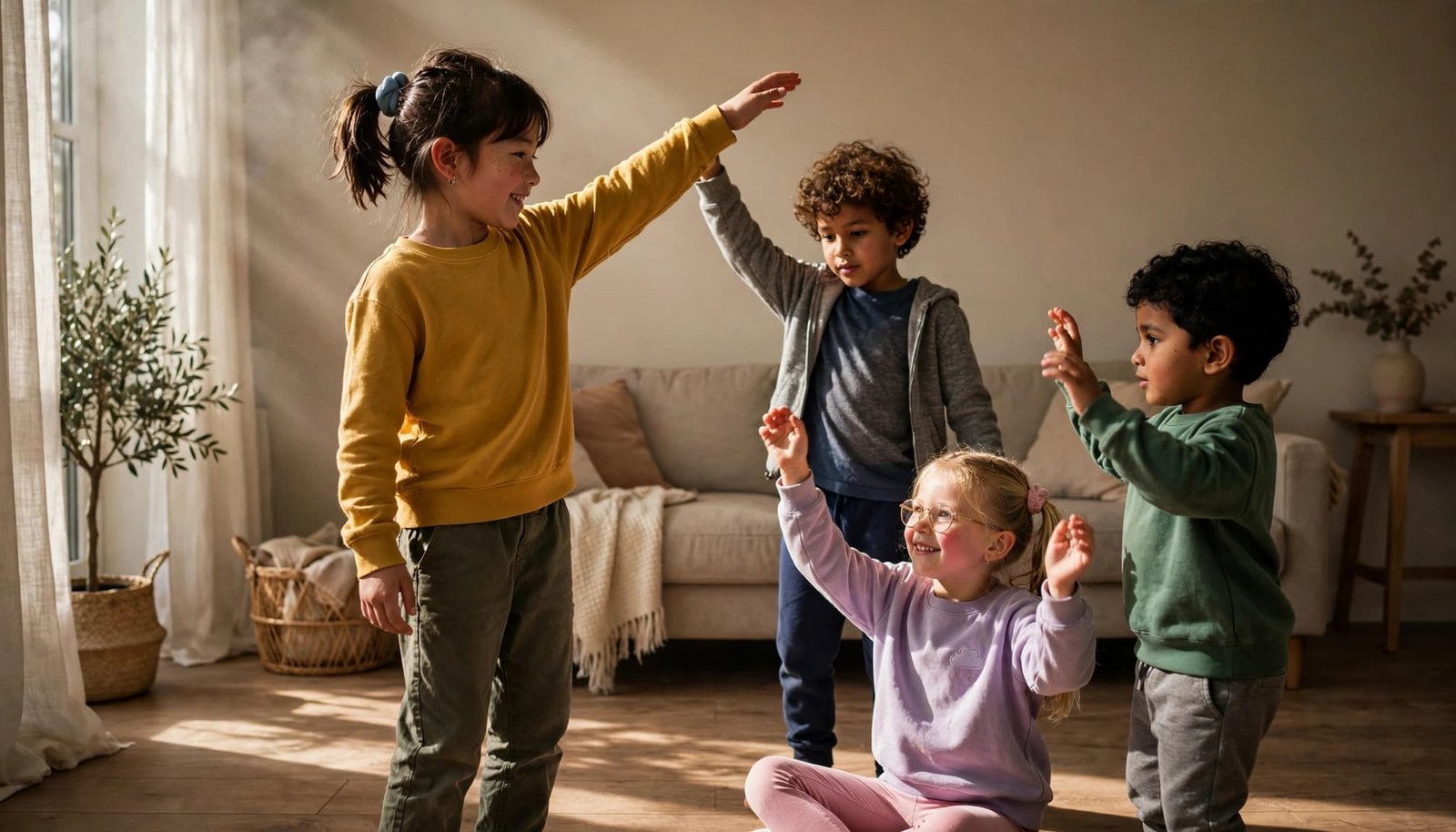
Preschoolers usually do best with imitation, simple commands, and reset-style play. Try Follow the Leader, Dance Command Game, or Freeze Dance without elimination. Keep directions short, demonstrate each movement, and restart quickly when attention wanders.
Elementary-age children often enjoy more creative challenges. Dance Charades, Dance Dice, Pass the Move, and dance relays give them room to make choices, guess, and invent their own moves. If the group includes several ages, let older children lead while younger children copy.
Personality matters just as much. A shy child may prefer standing near a trusted friend, using a picture prompt, or joining as the music helper before taking a turn. Games such as Follow the Leader and Dance Charades create participation without demanding a solo performance. These welcoming activities for preschoolers can also help children warm up when they don’t know one another.
Adjust for Energy, Group Size, and Movement Needs
Highly active children need clear boundaries and frequent chances to move. Choose relay variations, command games, or short freeze-dance rounds, then offer a calm activity such as Mirror Moves when the room becomes too loud. For small groups, partner games work well. Larger groups usually run more smoothly with circles, shared goals, or several children copying one leader.
Children with mobility differences can participate through seated dancing, hand motions, shoulder movements, facial expressions, or adapted paths. Ask caregivers about comfortable movements, equipment, communication preferences, and needed space. Give every child a meaningful role, and avoid rules that reward only speed, balance, or jumping.
The CDC recommends varied, age-appropriate, enjoyable activity, while federal guidance also supports noncompetitive movement for children. Read the CDC activity guidelines for children when planning active play beyond the hangout.
Start with a low-pressure game such as Follow the Leader or Dance Charades. Once the children feel comfortable, add points or team challenges only if the group enjoys competition. Shared goals, such as keeping everyone moving for one song, often keep the fun going longer than a winner-takes-all contest.
Set Up a Safe Dance Space Before the Music Starts
A few minutes of preparation can prevent a lively dance game from turning into a trip, bump, or overwhelmed child. Before the first song, make the room easy to move through, set clear boundaries, and explain how everyone can pause or opt out.
Use This Quick Safety Checklist
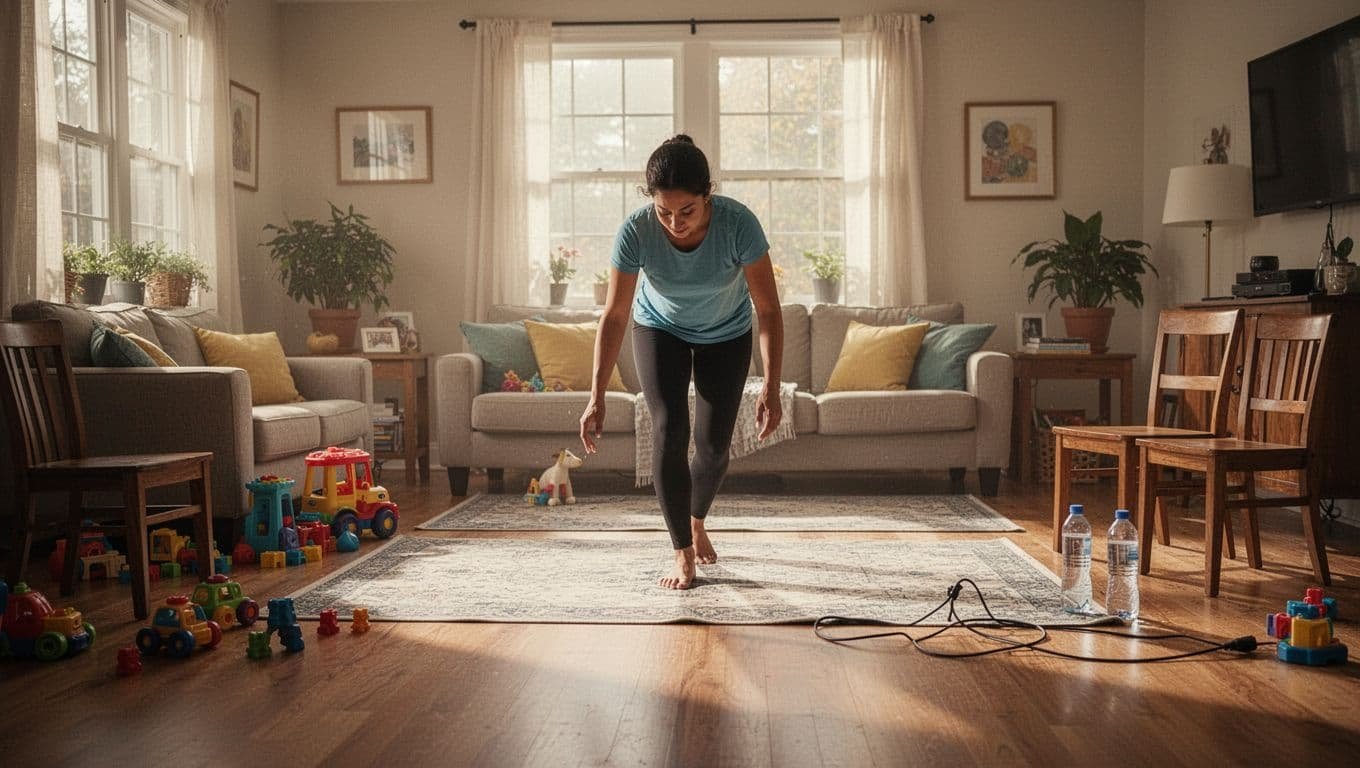
Walk through the space at the children’s eye level. Clear away anything that could become a hurdle or sharp surprise.
- Move toys, chairs, baskets, and small tables outside the dance area.
- Secure or remove slippery rugs, then check that the floor is dry and free of crumbs or loose objects.
- Tuck electrical cords against the wall, and keep children away from lamps, glass, sharp corners, and hard furniture edges.
- Mark the dance boundary with furniture placed well outside the play zone, floor tape, or a simple instruction such as, “Dance between the sofa and the wall.”
- Keep water bottles nearby, but place them outside the active area so nobody trips over them.
- Choose comfortable clothing that allows bending, reaching, and stepping without loose straps or trailing fabric.
Footwear depends on the floor. Bare feet may work on a clean, dry, nonslip surface, while secure sneakers or well-fitting indoor shoes are safer on a harder floor. Avoid slippery socks unless the room has a surface designed for them.
Set Clear Rules Before the Music Plays
An adult should control the music and the stop signal. A pause in the song, a raised hand, or one clear word such as “freeze” works better than several people calling instructions at once. Explain the rules before round one, then demonstrate the first movement.
Keep the music loud enough to hear without making children shout. If kids must raise their voices to speak, turn it down. Children can dance actively without a room-shaking speaker.
Balloon games need extra care. Use only intact, inflated balloons under close adult supervision, keep them away from faces, and remove broken pieces immediately. Never let young children handle uninflated balloons or balloon fragments. Skip balloon popping altogether, since a burst can startle children and create a sharp, uncomfortable sound.
Children should never be forced to spin, jump, touch another child, or remain in a game that feels uncomfortable. Offer seated movements, smaller gestures, or a quiet observation role without making a child explain their choice. Active play ideas for toddlers can also help you adapt movement for younger guests.
Keep rounds short, especially when the group is excited. Pause for frequent water breaks before anyone becomes thirsty, then finish with slow stretches, shoulder rolls, or three calm breaths. That gentle landing helps children leave the dance space without carrying all that energy into the next activity.
Make Every Dance Game Feel Fair, Fun, and Welcoming
A great dance game gives every child a way to join, even when confidence, coordination, or energy levels differ. Set the tone early by treating movement as shared play rather than a test that produces one winner.
Prevent One Child From Taking Over
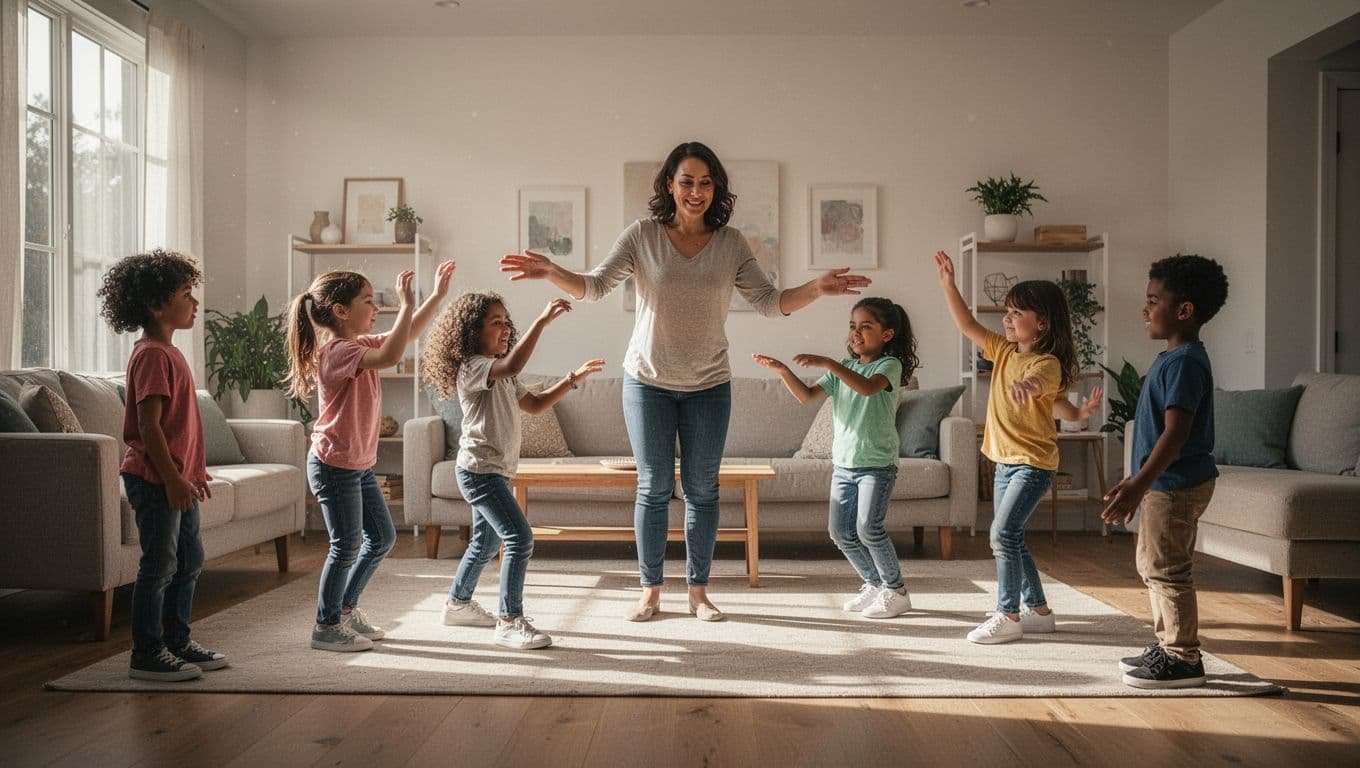
Rotate leaders every 30 to 60 seconds, especially during Follow the Leader, Dance Command, or Pass the Move. Use a simple order, such as moving around the circle, so children don’t have to compete for the next turn.
Team goals also spread attention across the group. Challenge everyone to keep a balloon moving for one song, remember five dance moves, or create a routine together. Praise creative effort, careful listening, and kind teamwork instead of celebrating only the fastest or loudest child.
A child may need to watch one round before joining. Let them stand beside you, hold the music button, choose a prompt, or clap along. Once they understand the rhythm, participation often feels easier.
For more ideas that build cooperation through active play, try these cooperative games for kids.
Replace Elimination With Better Choices
Elimination can make a child feel embarrassed after one missed cue. Instead, let players collect group points, choose the next prompt, become a helper, or simply reset and rejoin when the music starts again.
For example, a child who moves during Musical Statues can earn a point for inventing the next pose. During Freeze Dance, everyone can work toward five successful stops. These options keep the focus on participation and give children a reason to stay engaged.
A missed cue should change the next turn, not end a child’s place in the game.
A Simple 45-Minute Dance Plan
Keep the schedule flexible, but this order gives energy a natural rise and fall:
- Five minutes: Welcome dance with easy movements and names.
- Eight minutes: Freeze Dance with funny poses.
- Five minutes: Water break and quiet reset.
- Eight minutes: Dance Charades with picture prompts.
- Ten minutes: Cooperative balloon play with close adult supervision.
- Nine minutes: A calm closing song, slow stretches, or seated hand dancing.
The CDC recommends active play throughout the day for preschoolers, while older children benefit from regular daily physical activity. Short, enjoyable rounds fit naturally into a hangout without making the gathering feel like a workout.
Conclusion
The best dance games for kids’ hangouts don’t require perfect rhythm, special equipment, or a polished playlist. They need enough space, simple rules, and room for every child to move at their own comfort level. Freeze Dance, Follow the Leader, Dance Charades, and the other games in this guide can turn restless energy into shared laughter while adding more active play to the day.
Choose two or three games based on the children’s ages, personalities, and mood. Keep each round short, skip elimination when needed, and change the rules if the group loses interest or a child needs a different way to participate. You can find more ideas in these fun babysitting activities for kids.
A cleared floor, a few playful prompts, and an adult willing to join in can turn an ordinary kids’ hangout into a joyful memory. Often, the funniest moves are the ones nobody planned.

- Dry Cough in Kids: 5 Causes and Safe Solutions - September 23, 2026
- How to Help a Child Deal With Anxiety at Home - September 12, 2026
- How to Prepare Your Child for the First Day of School - September 12, 2026